长安汽车

Search documents
崔东树:2025年国内商用车交强险数据强势增长 今年1月商用车国内销量同比增19%
智通财经网· 2026-02-24 05:53
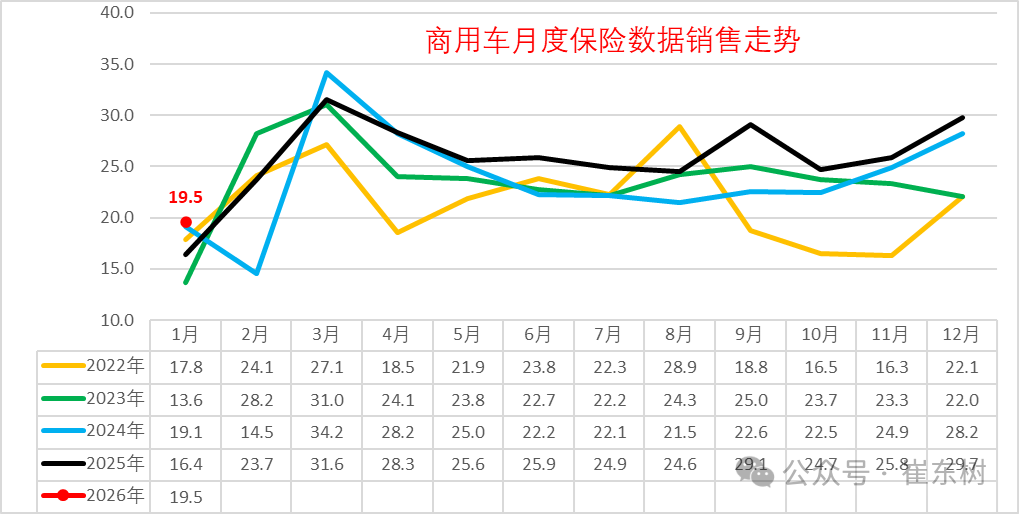
Core Viewpoint - The domestic commercial vehicle market is experiencing strong growth, particularly in the new energy vehicle (NEV) segment, driven by policies promoting vehicle updates and the increasing penetration of NEVs in the market [1][5]. Group 1: Commercial Vehicle Market Analysis - In January 2023, domestic commercial vehicle sales reached 200,000 units, a year-on-year increase of 19%, marking a new high for January in recent years [1][5]. - The total sales of commercial vehicles in 2025 are projected to reach 3.1 million units, representing a 9% year-on-year growth compared to 2022 [5]. - The penetration rate of NEVs in commercial vehicles is expected to reach 29% by 2025, indicating a robust growth trend [1][11]. Group 2: New Energy Commercial Vehicle Sales - In January 2026, NEV commercial vehicle sales are anticipated to hit 50,000 units, a 63% increase year-on-year, despite a 64% month-on-month decline [1][6]. - The total sales of NEV commercial vehicles in 2024 are projected to be 579,000 units, reflecting an 84% year-on-year growth [6]. - The NEV penetration rate in commercial vehicles reached 26% in January 2026, a 7 percentage point increase compared to the same period last year [11]. Group 3: NEV Penetration Rate - The penetration rate of NEVs in commercial vehicles was around 3% from 2019 to 2021, increasing to 9% in 2022, 11% in 2023, and expected to reach 20% in 2024 [11]. - The NEV penetration rate for trucks in January 2026 is 21%, while for buses, it is 54%, both showing significant improvements [13]. - The NEV penetration rate for heavy trucks is projected to reach 34%, and for light trucks, it is expected to be 20% [13]. Group 4: Market Structure and Competition - The commercial vehicle market is primarily supported by light and heavy truck manufacturers, with companies like Foton, Wuling, and Sinotruk leading in sales [14]. - The market share of heavy trucks is particularly strong in regions like Southwest and South China, with NEV heavy trucks showing good penetration rates [15][16]. - The light truck market is also seeing strong performance in regions such as Southwest and Northwest, with increasing growth in the South China market [17][18].




长安汽车:预计今年三季度前,长安金钟罩固态电池完成搭载机器人及装车验证
Xin Lang Cai Jing· 2026-02-24 04:58
每经AI快讯,长安汽车2月24日在互动平台表示,公司固态电池项目有序推进中,预计今年三季度前, 长安金钟罩固态电池完成搭载机器人及装车验证。 每经AI快讯,长安汽车2月24日在互动平台表示,公司固态电池项目有序推进中,预计今年三季度前, 长安金钟罩固态电池完成搭载机器人及装车验证。 ...

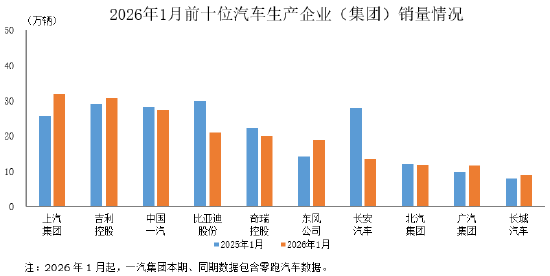
中汽协:1月汽车销量排名前十企业共销售196.2万辆,占销售总量的83.6%
Xin Lang Cai Jing· 2026-02-24 03:16
数据显示,1月份销量前十的企业分别是:上汽、吉利、一汽、比亚迪、奇瑞、东风、长安、北汽、广 汽、长城。 在上述十家企业中,与去年同期相比,上汽集团、吉利控股、东风公司、广汽集团和长城汽车销量呈不 同程度增长,其他企业销量均呈不同程度下降。 责任编辑:王翔 2月24日消息,据中国汽车工业协会统计分析,2026年1月,汽车销量排名前十位的企业(集团)共销售 196.2万辆,占汽车销售总量的83.6%。 2月24日消息,据中国汽车工业协会统计分析,2026年1月,汽车销量排名前十位的企业(集团)共销售 196.2万辆,占汽车销售总量的83.6%。 数据显示,1月份销量前十的企业分别是:上汽、吉利、一汽、比亚迪、奇瑞、东风、长安、北汽、广 汽、长城。 在上述十家企业中,与去年同期相比,上汽集团、吉利控股、东风公司、广汽集团和长城汽车销量呈不 同程度增长,其他企业销量均呈不同程度下降。 责任编辑:王翔 ...



山西证券研究早观点-20260224
Shanxi Securities· 2026-02-24 00:44
Industry Overview - The report highlights that North American capital expenditures are expected to continue growing, driven by AI investments, with a projected total of $660 billion in 2026, a 60% increase from 2025 and more than double the 2024 figures [6][7] - Major cloud service providers (CSPs) like Amazon, Google, and Microsoft are experiencing significant growth in their cloud businesses, with Amazon's cloud sales reaching $128.7 billion, a 20% year-on-year increase, and Microsoft's Azure revenue exceeding $75 billion, up 34% [6][7] - The integration of AI into traditional business models is revitalizing sectors such as search, advertising, and e-commerce, with AI-driven tools generating substantial new revenue streams [6][7] Company Analysis: Huafeng Technology (688629.SH) - Huafeng Technology anticipates a net profit of 338-388 million yuan for 2025, reflecting a year-on-year increase of 35.6-40.6 million yuan [9][10] - The company is focusing on the development of high-speed line modules and has a robust pipeline of domestic super-node projects, which are expected to accelerate production [9][10] - The demand for AI servers and related equipment is driving revenue growth, with the company projecting a significant increase in orders and production capacity for high-speed line modules [10] Company Analysis: Changan Automobile (000625.SZ) - Changan Automobile plans to repurchase shares worth 1-2 billion yuan to enhance investor confidence, with a clear sales target of 3.3 million vehicles for 2026, representing a 13.3% increase [12][14] - The company reported a total sales volume of 2.913 million vehicles in 2025, marking an 8.5% year-on-year growth, with a strong focus on electric vehicles, which saw a 51.1% increase [12][14] - Changan aims to launch 43 new models over the next three years and is investing 6 billion yuan in new energy vehicle development and smart platform projects [12][14][15]
一汽集团1月销售新车27.5万辆,数据包含零跑汽车销量
Zhong Guo Ji Jin Bao· 2026-02-22 07:08
日前,中汽协在发布的2026年1月汽车工业产销情况中表示,1月,汽车销量排名前十五位的集团销量合计为219.2万辆,同比下降3.8%,占汽车销售总量的 93.4%,低于去年同期0.6个百分点。 资料显示,2025年12月28日、29日,零跑汽车连发两份公告,相继披露战略融资及两项关联交易进展。公司不仅与一汽股权投资(天津)有限公司(以下简 称"一汽股权")达成37.44亿元内资股认购协议,还续签零部件采购框架协议并订立品牌国际化服务协议,全方位夯实技术研发、供应链保障及海外市场布 局。 市场销量排名前三的企业为上汽、吉利和一汽,合计市场份额为38.5%。其中,上汽以32.0万辆的销量位居首位,环比下降17.3%,同比增长24.5%,市场份 额13.6%;吉利销量30.9万辆,环比增长1.9%,同比增长5.2%,市场份额13.2%;一汽销量27.5万辆,环比下降25.2%,同比下降3.0%,市场份额11.7%。 值得注意的是,备注信息显示,一汽集团1月份销量数据包含零跑汽车数据。根据零跑汽车公布的2026年1月交付数据,当月全系交付量达32,059台,同比增 长27%。 | 1月市场集中度 | 企业名称 | 1 ...


江铃/日产争前二 五十铃升第四 雷达增幅放缓 1月皮卡销量榜出炉 | 头条
第一商用车网· 2026-02-21 11:56
2026年首月,国内皮卡在时隔近一年后重新实现同比正增长。尽管受市场透支及新能源购置税政策调整等因素影响,市场整体环比下 滑,但品牌竞争格局也呈现出新的变化。 | | 026EE | | | --- | --- | --- | | | 卡终端销量排行 | | | 排名 | 品牌 | 销量(辆) | | 01 | 长城 | 9185 | | 02 | 江铃 | 3097 | | 03 | 郑州日产 | 2989 | | 04 | 江西五十铃 | 1355 | | 05 | 江淮 | 829 | | 06 | 福田 | 742 | 具体请看第一商用车网带来的最新报道。 1月皮卡实销20814辆 同比增长3.33% 根据第一商用车网最新统计, 2026年1月,国内皮卡市场共计销售20814辆 (数据来源为交强险实销口径,不含专用类皮卡车型和出 口,下同),环比12月下滑18.56%,同比2025年1月增长3.33%,时隔近一年再次实现了同比正增长(上次同比增长为2025年2 月)。 从燃料类型来看,2026年1月份,国内柴油皮卡销量为14001辆,环比下滑12.82%,同比下降4.71%;纯电动皮卡销量为1295辆 ...




2025年中国运动型多用途乘用车(SUV)产量为1528.8万辆 累计增长8.9%
Chan Ye Xin Xi Wang· 2026-02-21 02:53
数据来源:国家统计局,智研咨询整理 上市企业:比亚迪(002594),长城汽车(601633),长安汽车(000625),广汽集团(601238),上汽集团 (600104) 知前沿,问智研。智研咨询是中国一流产业咨询机构,十数年持续深耕产业研究领域,提供深度产业研 究报告、商业计划书、可行性研究报告及定制服务等一站式产业咨询服务。专业的角度、品质化的服 务、敏锐的市场洞察力,专注于提供完善的产业解决方案,为您的投资决策赋能。 2020-2025年中国运动型多用途乘用车(SUV)产量统计图 相关报告:智研咨询发布的《2026-2032年中国汽车行业市场深度评估及投资机会预测报告》 根据国家统计局数据显示:2025年12月中国运动型多用途乘用车(SUV)产量为161万辆,同比增长 0.9%;2025年1-12月中国运动型多用途乘用车(SUV)累计产量为1528.8万辆,累计增长8.9%。 ...

中国十大最具发展潜力城市
泽平宏观· 2026-02-20 16:05
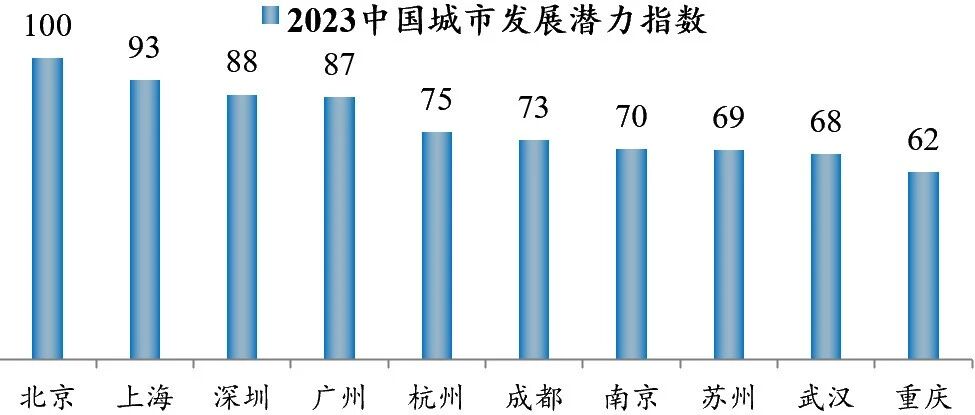
Core Viewpoint - The article discusses the competitive landscape of Chinese cities, highlighting the rapid urbanization and the emergence of new economic centers, while ranking the development potential of 337 cities in China, with Beijing, Shanghai, Shenzhen, and others leading the list [2]. Group 1: Beijing - Beijing is positioned as the political, cultural, international exchange, and technological innovation center of China, with a GDP exceeding 4.1 trillion yuan in 2022, making it the second-largest city after Shanghai [9][10]. - The service sector accounts for 84% of Beijing's economy, with finance, headquarters economy, and technological innovation as key pillars [10]. - Future plans include transforming Beijing into a world-class harmonious city while optimizing population distribution to enhance urban vitality [11][13]. Group 2: Shanghai - Shanghai has established itself as an international economic center, with a GDP of approximately 4.5 trillion yuan in 2022, and aims to rival New York in global economic influence [16][24]. - The city’s industrial structure is supported by the automotive, electronics, and financial sectors, with finance contributing 19.3% to the GDP [17][19]. - Shanghai plans to continue its open policies and develop into a globally competitive city, enhancing the Yangtze River Delta region [24]. Group 3: Shenzhen - Shenzhen's GDP surpassed 3.2 trillion yuan in 2022, marking it as the third-largest city in China, with a significant annual population increase of around 600,000 [25][26]. - The city is recognized as a leading innovation hub, with strategic emerging industries accounting for over 41% of its GDP [26]. - Future initiatives focus on enhancing collaboration within the Guangdong-Hong Kong-Macau Greater Bay Area to solidify its status as a global innovation city [29]. Group 4: Guangzhou - Guangzhou's GDP reached approximately 2.9 trillion yuan in 2022, ranking fifth nationally, with a strong manufacturing base in automotive and electronics [30][31]. - The city faces challenges in innovation capacity and financial sector development, with financial services contributing only 9.2% to the GDP [33]. - Future goals include enhancing its role as a national center city and participating in global economic cooperation [34]. Group 5: Hangzhou - Hangzhou's economy has shown robust growth, with a GDP of around 1.9 trillion yuan in 2022, driven by a vibrant private and digital economy [36][37]. - The city is recognized for its strong digital economy, with core digital industries contributing 27.1% to the GDP [37]. - Plans for the future include improving transportation infrastructure and fostering a more open and innovative business environment [41][42]. Group 6: Chengdu - Chengdu's GDP exceeded 2 trillion yuan in 2022, accounting for 36.7% of Sichuan province's economy, and it is recognized as a key economic hub in Western China [43][44]. - The electronics sector is a major contributor, with a significant portion of the industrial output [44]. - Future strategies involve enhancing its role as a national center city and collaborating with Chongqing to develop the Western economic highland [49]. Group 7: Nanjing - Nanjing's GDP approached 1.7 trillion yuan in 2022, with a per capita GDP of 179,000 yuan, ranking fifth among major cities [50][51]. - The city is focusing on developing its automotive, steel, electronics, and petrochemical industries while nurturing emerging sectors [51]. - Future aspirations include becoming an "innovation city" and enhancing its influence in the Yangtze River Delta region [54]. Group 8: Suzhou - Suzhou's GDP reached nearly 2.4 trillion yuan in 2022, making it the top city among prefecture-level cities in China [56]. - The city is recognized as a global industrial powerhouse, with significant contributions from electronics and manufacturing sectors [56]. - Future plans emphasize its role in the Yangtze River Delta urban cluster and advancing towards a high-tech manufacturing base [59].
智驾洗牌,“五大”要统一江湖了吗?
Jing Ji Guan Cha Wang· 2026-02-20 13:54
刘晓林/文 2025年9月公布的《智能网联汽车 组合驾驶辅助系统安全要求》强制性国家标准(征求意见稿)(下称《意见稿》)已结束公开征求意见阶段, 预计于2027年1月1日正式实施。这意味着,车企的智驾合规准备已进入一年倒计时。 这一被称为"智能驾驶史上最严新规"的落地,使得整车组合安全、极端场景测试、全生命周期合规迭代将成为硬性约束,行业准入门槛与持续运营成本也会 随之大幅抬升,车企研发路径和智驾行业的格局将不可避免地迎来震荡。是继续自研智驾技术还是采购成熟解决方案?这个一直伴随着汽车企业的命题,将 在2026年得到新的答案。 随着订单被华为、Momenta、地平线等几大智驾头部供应商瓜分,更现实的问题将浮出水面:全栈自研是否成为少数头部玩家的特权?绝大多数车企是否被 迫转向头部供应商?技术同质化与供应链集中风险如何化解?无规模优势的中小车企,能否在合规高压下找到生存支点?2026年,围绕智能驾驶技术主权、 供应链安全、规模效率的行业格局重构已经开启。 新规压顶:自研合规成本飙升 对整车企业而言,技术合规难度和能否承担自研成本,是智驾国标带来的最大挑战。 目前看来,虽然面临新规与成本的双重约束,但智驾行业并未 ...

大通/江铃份额超20%争冠!江淮/福田等逆增!1月轻客销2.7万辆
第一商用车网· 2026-02-20 13:34
Core Viewpoint - In January 2026, China's bus market experienced a year-on-year decline of 6%, with total sales reaching 35,200 units. The light commercial vehicle (LCV) segment, which is the largest in the bus market, ended its nine-month growth streak, with sales of 27,000 units, marking a year-on-year decrease of 12% [2][4][14]. Market Performance - The overall bus market sales in January 2026 were 35,200 units, reflecting a 45% month-on-month decline and a 6% year-on-year decrease. The light commercial vehicle sales accounted for 76.56% of the total bus market, slightly below the 2025 annual share of 78.07% and down nearly 5 percentage points from the previous year's 81.49% [2][5]. - The January 2026 sales of 27,000 units for light commercial vehicles were the third highest in the past five years, but still represented a significant drop from the previous year's peak of over 30,000 units [5][14]. Company Rankings and Market Shares - In January 2026, the top ten companies in the light commercial vehicle market collectively held a market share of 98.0%. The leading companies included SAIC Maxus with 26.0% and Jiangling Motors with 24.2%, both exceeding 20% market share [9][12]. - Among the top ten companies, five experienced sales growth while five saw declines. Notably, SAIC Maxus and Jiangling Motors reported year-on-year increases of 22% and 28%, respectively, while Changan Motors faced a significant decline of 59% [8][12]. Future Outlook - The light commercial vehicle market in January 2026 did not achieve a "good start," and the outlook for February remains uncertain regarding whether the market will regain growth or continue to decline [14].