
韦尔股份

Search documents
豪威集团(603501) - 关于控股股东部分股权质押的公告
2025-07-04 09:00
| 证券代码:603501 | 证券简称:豪威集团 | 公告编号:2025-072 | | --- | --- | --- | | 转债代码:113616 | 转债简称:韦尔转债 | | 豪威集成电路(集团)股份有限公司 关于控股股东部分股权质押的公告 本公司董事会及全体董事保证本公告内容不存在任何虚假记载、误导性陈 述或者重大遗漏,并对其内容的真实性、准确性和完整性承担法律责任。 重要内容提示: 豪威集成电路(集团)股份有限公司(以下简称"公司")控股股东虞 仁荣先生持有公司股份 333,472,250 股,占公司目前总股本的 27.40%;本次质押 情况变动后,虞仁荣先生累计质押股份为 195,308,400 股,占其持股比例的 58.57%。 一、本次股份质押的情况 公司于 2025 年 7 月 4 日获悉控股股东虞仁荣所持有本公司的部分股份被质 押,具体事项如下: 1、本次股份质押的基本情况 | 股东名称 | 是否为控 | 本次质押 | 是否为限售股 (如是,注明 | 是否补 | 质押起始日 | 质押到期日 | 质权人 | 占其所持 | 占公司总 | 质押融资 | | --- | --- | --- ...

佳能在“自动驾驶之眼”领域挑战索尼
日经中文网· 2025-07-04 05:45
Core Viewpoint - Canon has developed a new type of image sensor called "SPAD" (Single Photon Avalanche Diode), which excels in low-light conditions and reduces power consumption, targeting the automotive sensor market as a new growth area [1][3]. Group 1: Product Development - Canon's SPAD sensor is designed to perform well in dark environments, capable of detecting pedestrians from 120 meters away even in conditions darker than moonlight [5]. - The new sensor improves upon earlier prototypes by reducing power consumption to one-fourth of the 2022 trial product, aiming for practical applications and competitive pricing with CMOS sensors [5]. - Canon plans to start mass production of the SPAD sensor by 2031, marking its entry into the automotive market [3]. Group 2: Market Potential - The automotive sensor market is expected to grow significantly, with projections indicating a market size of 3.6929 trillion yen by 2030, which is 2.3 times larger than in 2024 [5]. - Canon aims for its camera segment to capture 50% of the overall automotive sensor market by 2030 [5]. Group 3: Competitive Landscape - The automotive sensor market is currently dominated by major players such as ON Semiconductor, OmniVision, and Sony Semiconductor Solutions, with Sony planning to increase its market share from 32% in FY2023 to 43% in FY2026 [6]. - Sony is also developing its own SPAD sensors for high-performance LiDAR applications, which will begin mass production in the fall of 2025, enhancing detection capabilities [7]. - The competition in the automotive sensor market is intensifying, with various manufacturers adopting different strategies regarding the use of cameras and LiDAR for Advanced Driver Assistance Systems (ADAS) and autonomous driving [7].


人工智能ETF(515980)红盘震荡,机构:预计AI是三季度寻找结构性机会的重心
Xin Lang Cai Jing· 2025-07-04 03:29
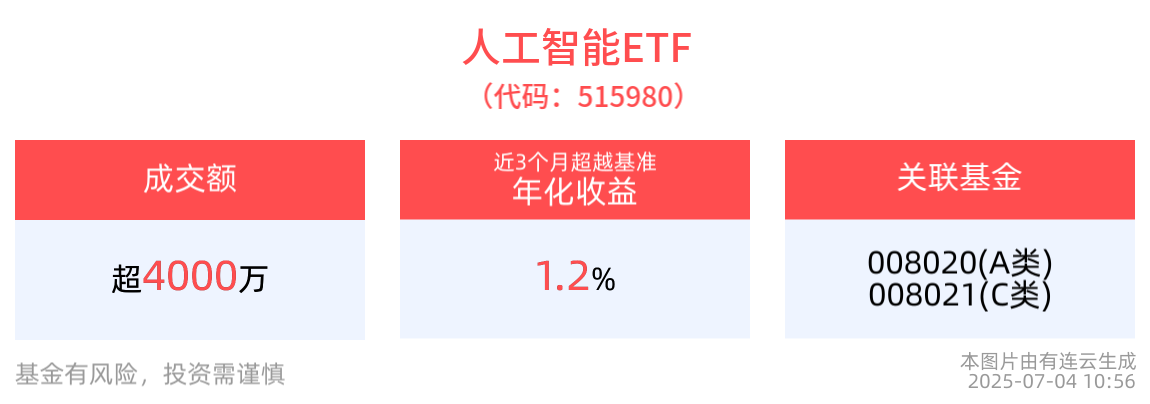
截至2025年7月4日 10:56,中证人工智能产业指数(931071)下跌0.03%。成分股方面涨跌互现,润泽科技(300442)领涨4.97%,光环新网(300383)上涨3.58%, 三七互娱(002555)上涨3.33%;晶晨股份(688099)领跌,拓邦股份(002139)、北京君正(300223)跟跌。人工智能ETF(515980)红盘震荡,最新价报1.03元。 截至7月3日,人工智能ETF近1年净值上涨36.25%。从收益能力看,截至2025年7月3日,人工智能ETF自成立以来,最高单月回报为30.38%,最长连涨月数 为3个月,最长连涨涨幅为43.97%,上涨月份平均收益率为6.80%,年盈利百分比为80.00%。截至2025年7月3日,人工智能ETF近3个月超越基准年化收益为 1.20%。 截至2025年6月27日,人工智能ETF近1年夏普比率为1.10。回撤方面,截至2025年7月3日,人工智能ETF今年以来相对基准回撤0.26%。 费率方面,人工智能ETF管理费率为0.50%,托管费率为0.10%。跟踪精度方面,截至2025年7月3日,人工智能ETF近1月跟踪误差为0.014%。 流动性 ...
美国EDA三巨头解禁,AI人工智能ETF(512930)回调整固,消费电子ETF(561600)交投活跃
Sou Hu Cai Jing· 2025-07-04 02:46
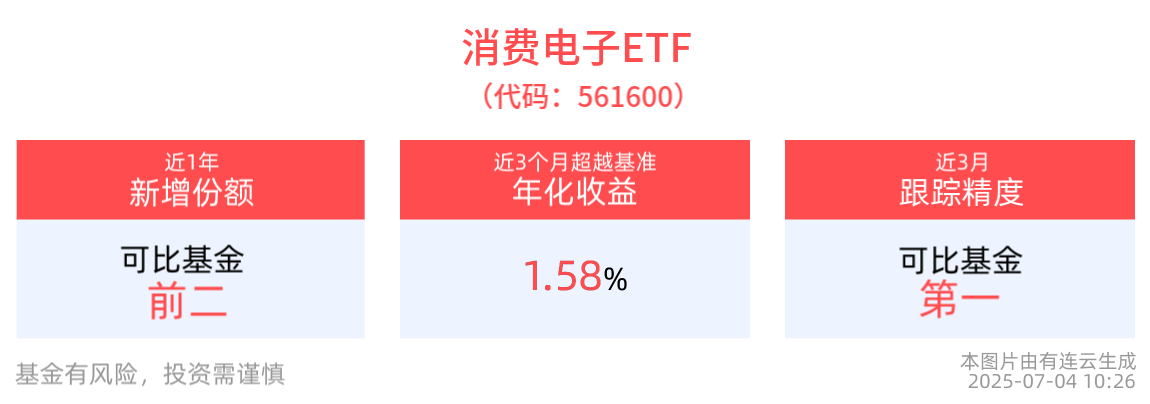
Group 1: AI Industry Insights - The AI theme index (930713) shows mixed performance among its constituent stocks, with Runze Technology (300442) leading with a 4.95% increase, while Fudan Microelectronics (688385) is the biggest loser [1] - The AI ETF (512930) has seen a slight decline of 0.37%, with a latest price of 1.35 yuan, and a trading volume of 35.6 million yuan during the session [1] - The U.S. Department of Commerce has lifted the requirement for semiconductor design software vendors to apply for government licenses to sell products to China, allowing companies like Siemens, Synopsys, and Cadence to resume services in China [1] Group 2: Consumer Electronics Sector - The Consumer Electronics Index (931494) has shown varied performance, with Jingwang Electronics (603228) leading with a 7.36% increase, while Lens Technology (300433) is the biggest loser [3] - The Consumer Electronics ETF (561600) has a latest price of 0.81 yuan, with a net value increase of 23.48% over the past year [3][4] - The trading volume for the Consumer Electronics ETF was 3.54 million yuan, with an average daily trading volume of 12.1 million yuan over the past week [4] Group 3: Online Consumption Trends - The Online Consumption Index (931481) has shown mixed results, with Giant Network (002558) leading with a 7.59% increase, while Alibaba Health (00241) is the biggest loser [6] - The Online Consumption ETF (159793) has a latest price of 0.9 yuan, with a net value increase of 42.80% over the past year [6][14] - The top ten weighted stocks in the Online Consumption Index account for 52.54% of the index, including Tencent Holdings (00700) and Alibaba Group (09988) [14] Group 4: Market Dynamics and Future Outlook - The "hard technology" sector is expected to perform well under the influence of AI, with domestic computing power chips and related infrastructure projected to see rapid growth in 2024 and maintain double-digit growth in Q1 2025 [2] - The valuation system in the technology sector is anticipated to be restructured, particularly in semiconductor manufacturing and design, which are areas of low domestic production [2] - The consumer electronics sector, particularly companies in the Apple supply chain, has seen valuation corrections, but leading companies in PCB and ODM are expected to benefit from AIoT and automotive electronics demand [2]
【IPO前哨】获宁德时代、小米入股,芯迈半导体有哪些看点?
Jin Rong Jie· 2025-07-04 02:32
Core Viewpoint - The semiconductor company Chipmunk Semiconductor Technology (Hangzhou) Co., Ltd. has submitted an application for listing on the Hong Kong Stock Exchange, amidst a surge of IPO activities in the semiconductor sector [1] Group 1: Company Overview - Chipmunk Semiconductor, established in 2019, specializes in power semiconductors and provides power management solutions through proprietary technology [2] - The company’s core business includes research, development, and sales of power management ICs and power devices, with applications in automotive, telecommunications, data centers, battery management systems, smartphones, and televisions [2] - Chipmunk Semiconductor ranks 11th in the global consumer electronics PMIC market and 2nd in the global OLED display PMIC market based on projected revenues for 2024 [2] Group 2: Financial Performance - The company has reported consecutive losses from 2022 to 2024, with revenues of 1.688 billion, 1.640 billion, and 1.574 billion RMB, and losses of 172 million, 506 million, and 697 million RMB respectively [4] - Adjusted annual profits for the same period were 238 million, 77 million, and -53 million RMB, with a declining gross margin of 37.4%, 33.4%, and 29.4% [4] - R&D expenditures increased significantly, accounting for 14.6%, 20.5%, and 25.8% of annual revenues from 2022 to 2024 [4] Group 3: Customer Concentration and Risks - The company heavily relies on power management IC products, which accounted for 98.0%, 97.4%, and 90.7% of total revenue from 2022 to 2024 [5] - Revenue from the top five customers represented 87.8%, 84.6%, and 77.6% of total revenue during the same period, indicating a high customer concentration risk [5] - The largest customer contributed 66.7%, 65.7%, and 61.4% of total revenue, highlighting potential vulnerabilities in the company's financial stability [5] Group 4: Future Prospects - Despite the losses, the company has a strong cash position, with cash and cash equivalents of 1.667 billion RMB as of April 30, 2025 [6] - The funds raised from the IPO are intended for enhancing R&D capabilities, expanding product offerings, potential strategic investments or acquisitions, improving sales and operational efficiency, and general corporate purposes [6]

芯火三十年:纵横四海(2013-2021)
3 6 Ke· 2025-07-03 07:27
Core Viewpoint - The Chinese semiconductor industry has undergone significant development from 2000 to 2021, driven by the collaboration of national, corporate, and financial forces, culminating in a complex landscape shaped by globalization and subsequent challenges from geopolitical tensions [2][57]. Group 1: Historical Development - From 2000 to 2012, the Chinese semiconductor industry entered its "root and sprout" phase, establishing an initial industrial chain [1]. - The year 2014 marked a pivotal moment with the establishment of the National Integrated Circuit Industry Investment Fund, which provided essential financial support for the industry [4][6]. - Between 2014 and 2017, this financial influx accelerated the growth of Chinese semiconductor companies through mergers, acquisitions, and investments, integrating them into the global supply chain [1][5]. Group 2: Financial Forces - The emergence of various financial institutions, such as Zhilu Capital and Wuyuefeng Capital, provided market-oriented investment capabilities, enhancing the ability to acquire overseas semiconductor firms [8][10]. - Notable acquisitions included the purchase of Rui Neng Semiconductor for 800 million RMB, which significantly advanced China's position in the power semiconductor sector [9]. - The establishment of the Zhongguancun Rongxin Industrial Alliance in 2015 facilitated collaboration among various investment institutions, enhancing the success rate of overseas acquisitions [22]. Group 3: Corporate Forces - Major corporations like Unisoc and Changjiang Electronics have expanded their influence through strategic acquisitions, such as Unisoc's purchase of RDA Microelectronics for 910 million USD, enhancing its capabilities in mobile communication chips [13][31]. - The collaboration between large enterprises and national funds has enabled significant mergers, such as Changjiang Electronics' acquisition of STATS ChipPAC for 780 million USD, positioning it among the top semiconductor packaging and testing companies globally [11][13]. - The rapid growth of these companies has contributed to the establishment of a competitive landscape in the semiconductor industry, with firms like Unisoc becoming a leading player in the global market [13][31]. Group 4: Challenges and Adjustments - The period from 2018 to 2020 saw increasing challenges due to U.S. sanctions and trade tensions, which hindered the ability of Chinese companies to pursue overseas acquisitions [39][46]. - The establishment of the second phase of the National Integrated Circuit Industry Investment Fund in 2019 aimed to strengthen domestic capabilities and support key sectors like IC design and AI [47][48]. - By 2021, the focus shifted towards restructuring and preparing for a new phase of development, as the global landscape for semiconductor investments became increasingly restrictive [56][54]. Group 5: Future Outlook - The Chinese semiconductor industry is entering a phase of self-reliance and independence, with a focus on enhancing domestic capabilities and reducing reliance on foreign technology [57]. - The collaboration among national, corporate, and financial forces is expected to continue driving innovation and growth in the sector, despite external pressures [57].



2025年将成为AI应用爆发元年,人工智能ETF(515980)交投活跃半日收红
Xin Lang Cai Jing· 2025-07-03 03:52
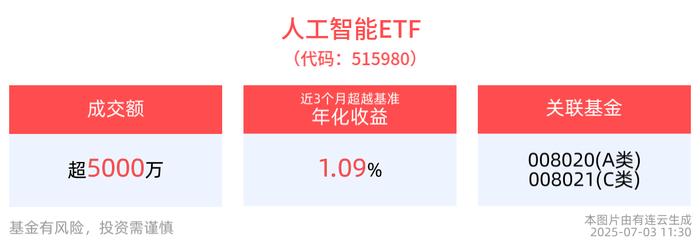
Core Viewpoint - The artificial intelligence (AI) sector is showing positive performance, with the CSI Artificial Intelligence Industry Index and related ETFs experiencing gains, indicating a growing interest and investment in AI technologies and companies [1][3][4]. Group 1: Market Performance - As of July 3, 2025, the CSI Artificial Intelligence Industry Index (931071) increased by 0.56%, with notable gains from stocks such as Xinyisheng (300502) up 2.70% and Zhongji Xuchuang (300308) up 2.21% [1]. - The AI ETF (515980) recorded a half-day increase of 0.49%, with the latest price at 1.02 yuan [1]. - The AI ETF's trading volume for the half-day reached 52.41 million yuan, with a turnover rate of 1.49% [3]. Group 2: ETF Performance Metrics - The AI ETF's latest scale reached 3.491 billion yuan, with a net buying amount of 16.65 million yuan on the previous trading day [3]. - Over the past year, the AI ETF's net value increased by 33.35%, with the highest monthly return since inception being 30.38% [3]. - The AI ETF has a year-to-date Sharpe ratio of 1.10 and a tracking error of 0.016% [3]. Group 3: Index Composition - The CSI Artificial Intelligence Industry Index is composed of 50 representative companies based on their AI business proportion, growth level, and market capitalization [4]. - As of June 30, 2025, the top ten weighted stocks in the index accounted for 52.07% of the total index weight, including companies like Zhongji Xuchuang (300308) and Xinyisheng (300502) [4][7]. Group 4: Industry Developments - The recent launch of the MiniMax-M1 model, the world's first open-source large-scale hybrid architecture inference model, positions it as the second-best in global rankings, showcasing advancements in domestic AI models [7]. - Industry analysts predict that 2025 will be a pivotal year for AI applications, driven by continuous improvements in domestic models and favorable policies [8].
AI高景气有望延续,人工智能ETF(515980)红盘蓄势,成分股新易盛涨近3%,深桑达A、石头科技涨逾2%
Sou Hu Cai Jing· 2025-07-03 02:51
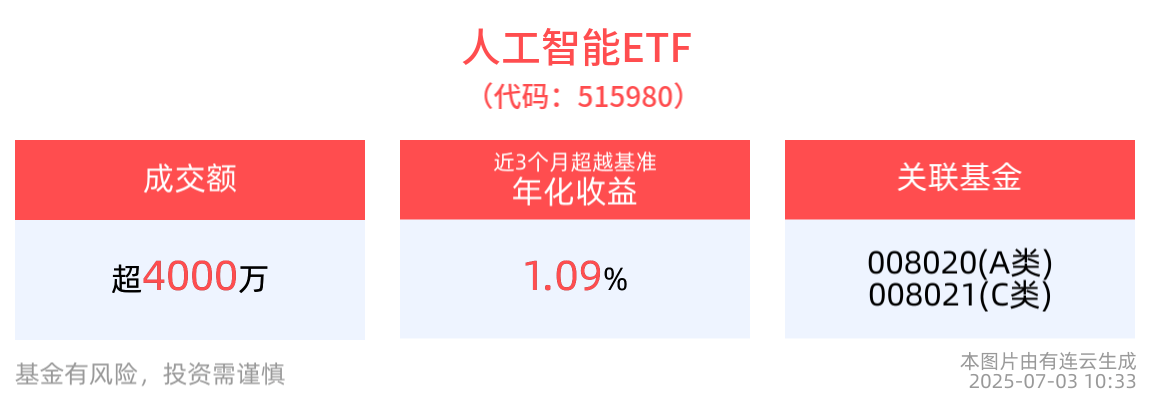
Core Viewpoint - The artificial intelligence (AI) sector is showing strong performance, with the China Securities Artificial Intelligence Industry Index (931071) and related ETFs reflecting positive trends in the market [1][4]. Group 1: Market Performance - As of July 3, 2025, the China Securities Artificial Intelligence Industry Index (931071) increased by 0.70%, with notable gains from stocks such as Xinyisheng (300502) up 2.95% and Shitou Technology (688169) up 2.52% [1]. - The AI ETF (515980) also saw an increase of 0.59%, indicating a positive sentiment in the AI investment space [1]. Group 2: Liquidity and Scale - The AI ETF recorded a turnover of 1.24% during the trading session, with a transaction volume of 43.44 million yuan, and an average daily transaction volume of 172 million yuan over the past week [3]. - The latest scale of the AI ETF reached 3.491 billion yuan, with leveraged funds continuing to invest, as evidenced by a net financing purchase of 16.65 million yuan on the previous trading day [3]. Group 3: Index Composition and Weighting - The China Securities Artificial Intelligence Industry Index is constructed from 50 representative listed companies based on their AI business proportion, growth level, and market capitalization, with the top ten weighted stocks accounting for 52.07% of the index [3]. - The top ten stocks in the index include companies like Zhongke Shuguang (603019) and Keda Xunfei (002230), with varying weightings that reflect their market significance [6]. Group 4: Investment Outlook - Fund manager Gao Zhe suggests that the current A-share market is in a volatile phase, but the AI sector remains a key area of growth, especially as the second quarter earnings reports approach [4]. - The AI industry is viewed as a high-certainty growth area, making it a focal point for investors seeking opportunities amidst market fluctuations [4].



龙软科技控股股东捐250万股给北大!A股现罕见“带锁捐赠”,受赠方承诺“不瞎卖”
Mei Ri Jing Ji Xin Wen· 2025-07-02 14:02
Core Viewpoint - The article highlights a significant donation of shares by the controlling shareholder of Longsoft Technology to the Peking University Education Foundation, marking a trend of charitable contributions from company shareholders in the A-share market [1][2]. Group 1: Donation Details - Longsoft Technology's controlling shareholder, Mao Shanjun, donated 2.5 million shares, representing 3.43% of the company's total share capital, to the Peking University Education Foundation [1][2]. - The market value of the donated shares, based on the closing price of 30.90 yuan per share on July 2, is approximately 77.25 million yuan [1][2]. - Following the donation, Mao Shanjun's shareholding in Longsoft Technology decreased to 42.34%, but he retains his status as the controlling shareholder [1][2]. Group 2: Purpose and Conditions of Donation - The donation aims to support the educational development of the School of Earth and Space Sciences at Peking University, enhancing teaching, research, and talent cultivation [2]. - The Peking University Education Foundation has made special commitments regarding the donated shares, including restrictions on selling the shares for 12 months and requiring prior communication with the controlling shareholder for any future sales [3]. Group 3: Trends in Charitable Donations - There has been an increasing trend of controlling shareholders of listed companies donating shares to educational institutions, with several notable cases in 2023, including donations from companies like Huaxi Biological and Weir Shares [4][5]. - A report indicates that over the past nine years, there have been 976 donors making significant contributions to universities, with a stable growth in large donations [5]. Group 4: Policy Support for Share Donations - The article mentions that policies have been established to support non-monetary donations, such as share donations, with tax benefits outlined by the Ministry of Finance and the State Administration of Taxation [6].

2025年中期电子行业投资策略报告:芯声澎湃,精彩纷呈-20250702
Wanlian Securities· 2025-07-02 13:10
Core Insights - The report indicates that the SW electronics industry has outperformed the CSI 300 index since the beginning of 2025, with a slight increase in valuation compared to recent years [1] - The performance in Q1 2025 shows record highs in revenue and net profit for the SW electronics sector, suggesting a positive outlook for the second half of 2025, particularly in semiconductor self-sufficiency, AI computing power construction, and terminal innovation [1][2] Semiconductor Self-Sufficiency - The intensifying US-China tech friction is accelerating the domestic substitution process in semiconductors, with China being the largest semiconductor equipment market globally [2] - The report highlights that the domestic market still has significant room for improvement in the localization of advanced process equipment, components, and materials, particularly in areas like photolithography machines and high-end photoresists [2][40] - The expansion of wafer fabs is expected to boost demand for semiconductor equipment, indicating a strong growth momentum in advanced processes [2] AI Computing Power Construction - The report notes that AI computing power construction has entered a competitive phase, with key segments including AI chips, advanced packaging, storage chips, and PCBs being critical to the computing power foundation [3] - Domestic internet companies are increasing their AI spending, supported by favorable policies for domestic AI innovation, leading to a gradual increase in the market share of domestic AI chips [3][39] - The storage chip market is expected to benefit from price increases due to adjustments in production plans by overseas manufacturers, with domestic storage companies likely to gain from this trend [3] Terminal Innovation - The report emphasizes that the combination of national subsidies and the AI innovation wave is driving growth in consumer terminals, with AI smartphones and AIPC expected to penetrate the market rapidly [4] - AI smartphones are projected to exceed a penetration rate of 30% in the smartphone market by 2025, with major brands like Apple, Huawei, and Xiaomi actively innovating in AI terminal products [4][39] - The report also mentions that the user base for AI applications is accelerating, with the potential for several billion-level AI application opportunities in the future [4][8] Investment Recommendations - The report suggests focusing on investment opportunities in semiconductor self-sufficiency, AI computing power construction, and terminal innovation [9] - Specific recommendations include investing in advanced process semiconductor industry chains, domestic AI chip leaders, and companies involved in advanced packaging and storage chips [9] - The report also highlights the importance of monitoring leading companies in the PCB sector and those involved in AI smartphone and AIPC developments [9]