Figure AI

Search documents
机器人爆单之后
Bei Jing Shang Bao· 2025-11-24 15:52
Core Insights - Goldman Sachs' supply chain report highlights a significant gap between optimistic production capacity plans and actual confirmed orders in the humanoid robot industry, indicating a typical characteristic of the current market [1] - The report suggests that while companies have planned annual production capacities ranging from 100,000 to 1,000,000 units, none have secured large, definitive orders [1] - The industry is facing scrutiny regarding the authenticity of product deliveries, as evidenced by public disputes among leading companies [3] Industry Developments - UBTECH, a leading humanoid robot company, has faced criticism regarding the authenticity of its delivery video, which was challenged by competitors citing visual discrepancies [3] - In response to the criticism, UBTECH released unedited footage to validate its claims, while also emphasizing its partnerships with major companies like BYD and Foxconn to drive commercialization [5][3] - The humanoid robot sector has seen over 18 significant orders exceeding 10 million yuan since 2025, with companies like UBTECH and ZhiYuan Robotics securing contracts in automotive manufacturing and smart logistics [5] Investment Trends - The investment landscape for humanoid robots has been robust, with over 100 financing events in the first half of 2025, totaling over 15 billion yuan [6] - Major investments have been made by top firms, indicating a shift in focus from speculative investments to evaluating actual delivery capabilities [6] - Despite the influx of capital and reported orders, there remains a gap in actual delivery volume, suggesting that the industry is still in the early stages of scaling up [6][7] Company Strategies - UBTECH aims for a production capacity of 5,000 units by 2026 and 10,000 units by 2027, with a target of delivering 500 humanoid robots in 2025 [8] - Accelerated Evolution, another key player, adopts a "small steps" approach, focusing on single-unit deliveries initially to refine production and service capabilities [8] - Both companies are navigating the competitive landscape by emphasizing delivery as the core logic for competition by 2025, transitioning from technology validation to large-scale commercial implementation [9][10]


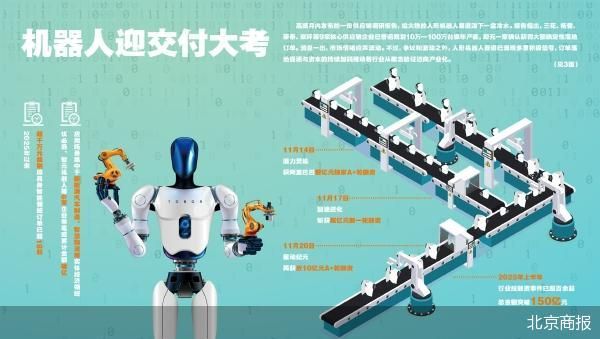
爆单之后,机器人的交付大考
Bei Jing Shang Bao· 2025-11-24 14:41
Core Viewpoint - Goldman Sachs' supply chain report casts doubt on the human-shaped robot industry, highlighting a significant gap between optimistic production capacity plans and actual confirmed orders [2] Group 1: Industry Overview - Nine core supply chain companies, including Sanhua and Topband, have planned annual production capacities ranging from 100,000 to 1,000,000 units, yet none have confirmed large-scale orders [2] - The report indicates that the expected global shipment of human-shaped robots will only reach 1.38 million units by 2035, contrasting sharply with the current production capacity plans of various companies [8] Group 2: Market Reactions - Following the report's release, the Wande Robot Index experienced fluctuations, initially rising by 1.12% on November 6, but subsequently declining, with a notable drop of 1.15% on November 7 [2] - After the release of a production delivery video by UBTECH, the Wande Robot Index rebounded by 0.52% on November 13 [2] Group 3: Controversies and Challenges - UBTECH's delivery video faced skepticism from industry peers, with Figure AI's founder publicly questioning the authenticity of the video, claiming that some robots were computer-generated [3][5] - UBTECH responded to the allegations by releasing unedited footage to demonstrate the authenticity of their robots [5] Group 4: Positive Signals - Despite controversies, there are positive developments in the human-shaped robot sector, with over 18 significant orders exceeding 10 million yuan since 2025, indicating a shift towards commercialization [6] - The industry has seen over 100 investment events in the first half of 2025, with total funding surpassing 15 billion yuan, reflecting a growing interest in actual delivery capabilities [7] Group 5: Company Strategies - UBTECH aims for large-scale delivery, targeting sectors like automotive manufacturing and smart logistics, with a production capacity plan to reach 5,000 units by 2026 and 10,000 units by 2027 [10] - Accelerated Evolution adopts a "small steps" approach, focusing on single-unit deliveries initially, gradually increasing order volumes as production capabilities mature [10] Group 6: Future Outlook - By 2025, delivery capabilities will become the core competitive logic in the robot industry, with a focus on cost reduction and production flexibility [11] - The interplay between demand, supply chain, and capital will be crucial for the industry to transition from order enthusiasm to actual delivery [11]
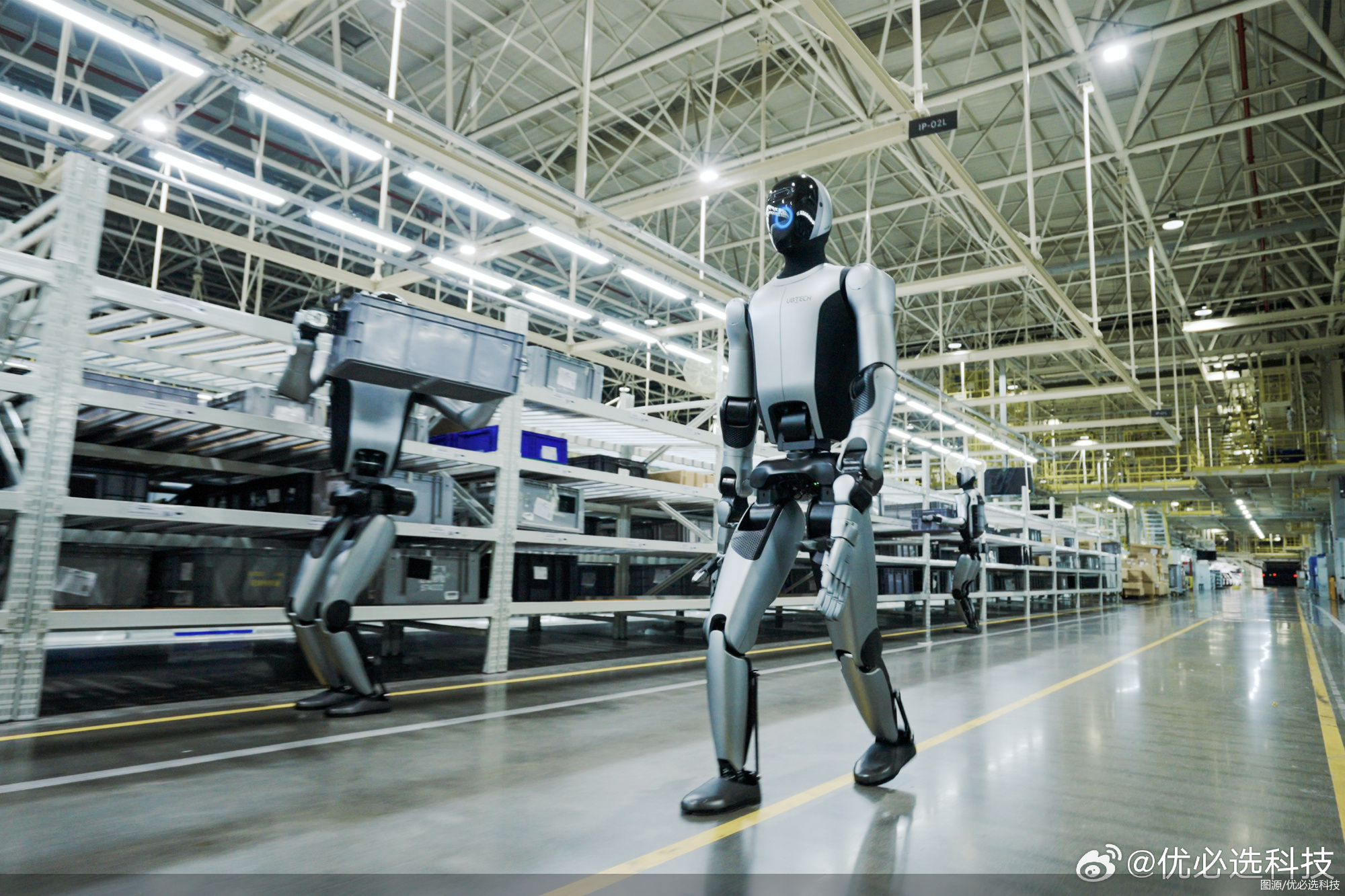
人形机器人产业周报:星动纪元完成近10亿元A+轮融资,Figure02已参与3万辆汽车生产-20251124
Guoyuan Securities· 2025-11-24 03:45
Investment Rating - The report maintains a "Recommended" investment rating for the humanoid robotics industry [7]. Core Insights - The humanoid robotics concept index experienced a decline of 5.68% from November 16 to November 21, 2025, underperforming the CSI 300 index by 1.91 percentage points. However, year-to-date, the humanoid robotics index has increased by 57.83%, outperforming the CSI 300 index by 41.26 percentage points [2][12]. - Notable stock performances include Weichuang Electric with a weekly increase of 18.56%, while Fangyuan Co. saw the largest decline at 21.32% [17]. Summary by Sections Weekly Market Review - The humanoid robotics index fell by 5.68% during the specified week, while year-to-date performance shows a significant increase of 57.83% [12][2]. - Weichuang Electric and Fangyuan Co. had the highest weekly gains and losses, respectively [17]. Weekly Highlights Policy Developments - Hubei's provincial leadership emphasized the need to enhance scene applications, particularly in integrating "Beidou + humanoid robots" and "Beidou + artificial intelligence" [20]. - Chongqing's Economic and Information Technology Commission released a plan to accelerate the application of embodied intelligent robots in enterprise digital transformation projects [21]. Product and Technology Iteration - Figure AI announced that its second-generation humanoid robot, Figure 02, has participated in the production of 30,000 vehicles at BMW's Spartanburg plant, loading over 90,000 components [22]. - UBTECH's annual production capacity for industrial humanoid robots is projected to reach 5,000 units by 2026 [22]. - Diguo Robotics partnered with Fourier to enhance humanoid robots' capabilities in emotional perception and semantic understanding [23]. Investment and Financing - The embodied intelligence company Star Epoch completed nearly 1 billion yuan in Series A+ financing, led by Geely Capital [25]. Key Company Announcements - GAC Group plans to initiate large-scale production of humanoid robots by 2027, aiming for a production value exceeding 1 billion yuan by 2030 [26]. - Gree Electric has developed core components for humanoid robots, including joint modules [27]. - Shengshi Technology is advancing the localization of the NAO robot supply chain and is set to launch the NAO7 model soon [27].
国内外机器人公司持续迭代推进量产,调整后继续关注机器人产业链
Orient Securities· 2025-11-23 11:50
Investment Rating - The report maintains a neutral investment rating for the automotive and parts industry [5] Core Insights - The report suggests that companies involved in the supply chain for Tesla, Figure, and domestic robot manufacturers are expected to benefit, with competitive domestic brands and those leading in intelligent driving technology likely to expand their market share [3][14] - Continued focus on humanoid robot chains, T chains, liquid cooling supply chains, Huawei supply chains, and intelligent driving supply chain companies is recommended [3][14] Summary by Sections Industry Overview - Domestic and international robot companies are iterating and advancing mass production, with a significant focus on the humanoid robot industry chain [2][11] - The humanoid robot sector is anticipated to enter a phase of scale production from 0 to 1 by 2026, with several companies accelerating their IPO processes [8][11] Sales Tracking - From November 1 to 16, 2025, the wholesale sales of passenger cars in China reached 1.021 million units, a year-on-year decrease of 14% [17] - Cumulative wholesale sales for the year reached 24.795 million units, reflecting a year-on-year growth of 11% [17] Market Performance - The automotive sector overall experienced a decline, with the automotive industry index down by 5.1%, underperforming compared to the CSI 300 index [31] - The report highlights significant declines across various sub-sectors, including passenger vehicles and automotive parts [31][32] Key Company Announcements - Companies like Geely and XPeng reported significant revenue growth, with XPeng's third-quarter revenue increasing by 101.8% year-on-year [46][45] - Geely's revenue for the first three quarters of 2025 was 239.477 billion yuan, a year-on-year increase of 26.4% [45]


扒完英伟达的84笔投资,我们发现一个秘密丨投中嘉川
投中网· 2025-11-23 07:04
Core Insights - The article highlights Nvidia's significant financial success and strategic investments in AI startups, indicating its dominant position in the AI revolution. Nvidia's operating profit surged by 65% year-over-year to $36 billion, while net profit also increased by 65% to $31.9 billion, marking a nearly 19-fold increase since the launch of ChatGPT 3.5 in November 2022 [6][8]. Investment Overview - Nvidia has made 251 investments in 244 startups since 2022, with 84 investments in 74 startups from January to November 2023 alone, surpassing the total of 76 investments made in 2024 [8][12]. - The majority of these investments focus on AI-related fields, particularly software applications, computational power, and energy, with 39 AI application companies receiving funding [12][14]. - The total funding for model-related companies reached over $28.6 billion, with a significant portion coming from a single round of financing by Musk's xAI [14][16]. Investment Signals - Nvidia's investments signal a narrowing focus on model-layer companies, indicating a trend towards consolidation in the AI model sector [20][23]. - The company is addressing energy supply issues by investing in nine energy or resource management startups, including those focused on nuclear fusion and renewable energy-driven data centers [24][27]. - A significant portion of Nvidia's investments (34 out of 39 AI software applications) targets enterprise clients, reflecting a strategic shift towards more stable and predictable revenue sources [29][32]. Financial Strategy - Nvidia's frequent investments are driven by its substantial cash reserves, which reached $60.6 billion, allowing for aggressive stock buybacks and dividends [37][40]. - The company aims to diversify its revenue sources, as 50% of its revenue currently comes from three clients, reducing reliance on a few major customers [40][42]. - Nvidia is also focused on exploring new business opportunities, as data center revenue accounted for 89% of total revenue, while autonomous driving revenue remains minimal [42].


“美国宇树”高管被裁,只因警告“产品安全性”?
Hua Er Jie Jian Wen· 2025-11-22 04:12
Core Insights - Figure AI, a humanoid robot startup, is facing a lawsuit from its former Chief Product Safety Officer, Robert Gruendel, who claims he was wrongfully terminated after raising safety concerns about the company's robots [1][2][3] Group 1: Lawsuit Details - Gruendel alleges that he warned executives about the robots' lethal capabilities, including an incident where a robot caused a quarter-inch crack in a steel refrigerator door during a malfunction [1][2] - The lawsuit seeks economic, compensatory, and punitive damages, along with a jury trial [1] - Gruendel claims that his concerns were viewed as an obstacle rather than a responsibility by the company, which led to his dismissal under the pretext of a vague "business direction change" [3] Group 2: Company Valuation and Investment - Figure AI's valuation has surged to $39 billion, a 15-fold increase since early 2024, following a funding round led by Parkway Venture Capital [1][4] - Notable investors include Jeff Bezos, Nvidia, and Microsoft, indicating strong market interest and confidence in the company's potential [4] - Gruendel's attorney highlights that California law protects employees who report unsafe practices, suggesting that this case may be one of the first whistleblower cases related to humanoid robot safety [4] Group 3: Industry Context - The humanoid robot market is still in its early stages, with competitors like Tesla and Boston Dynamics also pursuing advancements in this field [5] - A report from Morgan Stanley indicates that market adoption could accelerate in the 2030s, with the market potentially exceeding $5 trillion by 2050 [5]
快讯|智元A2创下吉尼斯世界纪录;Figure 02停产;LG宣布加大押注美国机器人技术等
机器人大讲堂· 2025-11-21 10:06
Group 1 - Zhiyuan Robotics announced that its humanoid robot, Zhiyuan Expedition A2, successfully completed a 106.286 km walking challenge from Suzhou Jinji Lake to Shanghai Bund, setting a Guinness World Record for the longest journey walked by a humanoid robot [2] - The robot achieved this feat without shutting down, thanks to its rapid hot-swappable battery system [2] Group 2 - Figure AI has officially ceased production of its Figure 02 humanoid robot, which had previously assisted in the production of over 30,000 BMW X3 vehicles and handled more than 90,000 metal parts [3][5] - The Figure 02 robot operated with a cycle time of 84 seconds and maintained an accuracy of over 99% during its deployment [5] Group 3 - A report by OpenPR predicts that the humanoid robot market will reach $13.8 billion by 2032, with a compound annual growth rate (CAGR) of 50.2% from 2024 to 2032, driven by advancements in AI, machine learning, and machine vision technologies [6][8] Group 4 - Google DeepMind has hired Aaron Saunders, a former executive from Boston Dynamics, to enhance its robotics capabilities, particularly in integrating AI models into robots [9][11] - This move is part of DeepMind's strategy to advance its Gemini Robotics initiative, enabling AI robots to operate without internet connectivity [11] Group 5 - LG Group is increasing its investment in robotics technology aimed at the U.S. market, including a partnership with Figure AI and potential supply relationships for humanoid robots [12][14] - LG is collaborating with Nvidia to accelerate the development of next-generation technologies, focusing on physical AI and digital twin systems [14]

Figure:第二代机器人已参与生产3万辆宝马汽车!机器人ETF(562500) 早盘震荡微涨,四分之三成分股飘红
Mei Ri Jing Ji Xin Wen· 2025-11-20 07:16
Group 1 - The core viewpoint of the news highlights the positive performance of the Robot ETF (562500), which has shown a slight increase of 0.1% in early trading, with a majority of its constituent stocks performing well, indicating a bullish trend in the robotics sector [1] - The ETF has seen significant capital inflow, with four out of the last five trading days recording notable net inflows, reflecting investor confidence in the robotics industry and presenting opportunities for further investment during market corrections [1] - Figure AI's announcement regarding the second-generation humanoid robot, Figure 02, which has participated in the production of 30,000 vehicles at BMW's Spartanburg plant, underscores the practical application and growing integration of robotics in manufacturing [1] Group 2 - CITIC Construction Investment Securities notes that investment in humanoid robots has transitioned from early thematic investment to a growth phase, with significant milestones expected from Tesla's AI prototypes leading to mass production plans by 2026 [2] - The Robot ETF (562500) is the only robot-themed ETF in the market with a scale exceeding 20 billion, covering various segments such as humanoid robots, industrial robots, and service robots, facilitating investor access to the entire robotics supply chain [2]
2025商用具身智能白皮书
艾瑞咨询· 2025-11-20 00:04
Core Insights - Embodied intelligence has gained significant traction globally, with Figure achieving a valuation of $39 billion despite zero revenue, while domestic players are securing commercial orders and projecting substantial revenue growth [1][2][9] - The Chinese government has integrated embodied intelligence into its strategic planning, emphasizing its importance in the industrial landscape [1][9] - The market for embodied intelligence is projected to reach trillions, with both China and the U.S. competing vigorously in this emerging sector [1][6] Definition and Understanding - Embodied intelligence is recognized as a crucial development in artificial intelligence, characterized by agents that interact with their environment through a physical body, showcasing autonomy and adaptability [2] - It represents a convergence of machine learning, computer vision, and robotics, marking a significant step towards practical AI applications [2] Commercial Applications - Different forms of embodied intelligence robots are evolving to meet diverse needs across sectors such as retail, dining, logistics, and healthcare [4] - Commercial applications focus on enhancing service experiences and operational flexibility in dynamic environments, while industrial applications prioritize efficiency and safety in structured settings [4] Strategic Importance - Embodied intelligence is pivotal in narrowing the technological gap between China and the U.S., driving innovation across various industrial sectors [6] - The competition in embodied intelligence is not only about economic benefits but also about enhancing national competitiveness and technological self-reliance [6] Policy Support - The Chinese government has actively promoted the development of embodied intelligence through various policies, funding initiatives, and standardization efforts [9] - Local governments are also implementing plans and pilot projects to support the industry, establishing funds and alliances to foster collaboration [9] Development Stages - The evolution of embodied intelligence can be categorized into three phases: conceptual development, technological accumulation, and application expansion driven by large models [11] - The current phase is characterized by rapid advancements, with the U.S. leveraging its computational advantages while China accelerates its catch-up through policy support and industrial collaboration [11] Bottlenecks and Challenges - The industry faces significant challenges, including data scarcity, technological maturity, and high costs associated with core components and computational resources [13][16] - The lack of high-quality operational data and the need for advancements in dexterous manipulation and generalization capabilities are critical hurdles [13] Data Acquisition and Solutions - Current data acquisition methods include remote operation, simulation, motion capture, and internet video, but high-quality data remains scarce [16] - The industry is exploring solutions such as "world models" and data collection training grounds to alleviate data challenges, with cities like Beijing and Shanghai accelerating the establishment of these facilities [19] Model Evolution - The VLA model is emerging as a consensus for development, integrating large language model reasoning with real-world perception and action capabilities [21] - This evolution is expected to lead to a significant leap in embodied intelligence capabilities, akin to the breakthroughs seen with large language models [21] Commercialization Trends - The commercialization of embodied intelligence is progressing through various stages, with initial applications focusing on low-complexity, high-ROI scenarios [31] - The industry is transitioning from hardware sales to service subscription models, indicating a shift towards more integrated business approaches [35] Global Market Outlook - The global market for embodied intelligence is anticipated to experience exponential growth, with projections indicating a market size of approximately 192 billion RMB by 2025 and a compound annual growth rate of 73% over the next five years [46] - China's market is expected to see significant growth, potentially reaching over 280 billion RMB by 2035, driven by a robust industrial ecosystem and competitive supply chains [50] Competitive Landscape - The competition in the embodied intelligence sector is characterized by three main players: AI-native challengers, traditional industrial players, and cross-industry giants [55] - The market is witnessing a trend towards consolidation, with product homogenization emerging as a concern, suggesting an impending wave of industry consolidation [57] Initial Players and Innovations - Companies like Tesla and Figure AI are leading the charge in developing humanoid robots, with Figure AI's valuation reaching $39 billion [64] - Innovations in dexterous manipulation and core component integration are critical for advancing the capabilities of humanoid robots [83][88]

人形机器人 “撕战” 升级!Figure CEO 怒锤优必选 CGI 造假,遭“一镜到底”实拍打脸?
Sou Hu Cai Jing· 2025-11-19 10:21
Core Viewpoint - The recent viral video showcasing the mass production delivery of UBTECH's Walker S2 humanoid robots has sparked significant discussion and controversy within the tech community, highlighting both technological advancements and skepticism regarding authenticity [1][3][4]. Group 1: Video and Controversy - The video released by UBTECH on November 13, titled "Sword Gathering, All Out to 'Pay'", features hundreds of Walker S2 robots moving in unison, marking the commencement of mass production delivery [3]. - Brett Adcock, CEO of Figure AI, publicly questioned the video's authenticity, suggesting that the rear robots displayed signs of CGI manipulation based on light reflection analysis [4][5]. - The video has elicited mixed reactions, with some viewers expressing awe at technological progress while others fear potential job losses or suspect it to be an AI-generated hoax [5]. Group 2: UBTECH's Response - In response to the skepticism, UBTECH released two follow-up videos to validate the authenticity of the original footage, showcasing staff interacting with the robots and providing a continuous shot of the robots in action [8]. - The use of drone footage and cinematic techniques in the videos aimed to reinforce the credibility of the mass production claims [9]. Group 3: Market Position and Orders - UBTECH's demonstration of mass production capabilities is supported by a solid order base, with total orders for the Walker series exceeding 800 million yuan since early 2025, indicating strong market demand [10]. - The company has established partnerships with leading firms such as BYD, Dongfeng Liuzhou, and Foxconn, covering key sectors like new energy vehicles and smart logistics [10]. Group 4: Industry Comparison - In contrast, Figure AI has been more cautious in its production goals, announcing a target to deliver 100,000 robots over the next four years, reflecting a different strategic approach to industrialization [11]. - The disparity in production capabilities highlights the varying technological paths and industrial strategies between companies in the humanoid robotics sector [11]. Group 5: Industry Evolution - The humanoid robotics industry is at a critical juncture, transitioning from technology demonstration to mass production, driven by significant advancements in core technologies such as motion control and environmental perception [13][15]. - There is a growing expectation from the market for robots to move beyond laboratory settings into real-world applications, emphasizing the need for practical, cost-effective industrial products [15][16]. - China's robust manufacturing ecosystem, characterized by a complete supply chain for core components, has positioned its companies, like UBTECH, ahead in the race for industrialization [16][18]. Group 6: Competitive Landscape - The competition in the humanoid robotics field is intensifying, with Chinese firms leveraging their supply chain advantages to establish a lead in mass production capabilities [18]. - The ongoing debate over the authenticity of UBTECH's video reflects broader competitive dynamics within the global humanoid robotics market, where the ability to convert technological innovations into commercially viable products is becoming increasingly critical [18].