南京银行

Search documents
银行业绩下行周期接近尾声 资产质量改善趋势确立
Jing Ji Guan Cha Wang· 2025-10-31 11:50
Core Viewpoint - The apparent stability of bank non-performing loan (NPL) ratios conceals deeper structural changes, indicating that the era of "soft landing" achieved through provisioning adjustments and risk rotation is nearing its end [2][8] Group 1: Banking Performance - China Construction Bank reported a 1.44% year-on-year increase in operating income to 560.281 billion yuan for the first three quarters of 2025, with net profit rising by 0.52% to 258.446 billion yuan [3] - The bank's asset quality remains robust, with a non-performing loan ratio of 1.32%, down 0.02 percentage points from the end of the previous year, and a provisioning coverage ratio of 235.05%, up 1.45 percentage points [3] - Other major banks, such as China Bank and Postal Savings Bank, also show varying levels of asset quality, with China Bank's NPL ratio at 1.24% and Postal Savings Bank's NPL ratio at 0.94% [4] Group 2: Risk Assessment - Some joint-stock banks are experiencing thinner provisioning buffers, with Everbright Bank's NPL ratio at 1.26% and a provisioning coverage ratio of 168.92%, nearing regulatory warning lines [5] - In contrast, certain regional banks demonstrate stronger risk resilience, such as Chengdu Bank with an NPL ratio of only 0.68% and a provisioning coverage ratio of 433.08% [6] - The focus of risk has shifted from corporate to retail, with banks like China Merchants Bank reporting an increase in attention loans, indicating rising concerns in personal lending sectors [7] Group 3: Future Outlook - The banking industry is expected to face a genuine stress test as excess provisioning space narrows and retail risks continue to emerge, marking a transition from scale expansion to quality prioritization [2][8] - The ability to balance risk clearance and sustainable profits will determine the future restructuring of the industry [8]







上市银行三季度财富管理大盘点,中收最高增两成达206.7亿,呈现私行、代销驱动等四大特征
Xin Lang Cai Jing· 2025-10-31 11:09
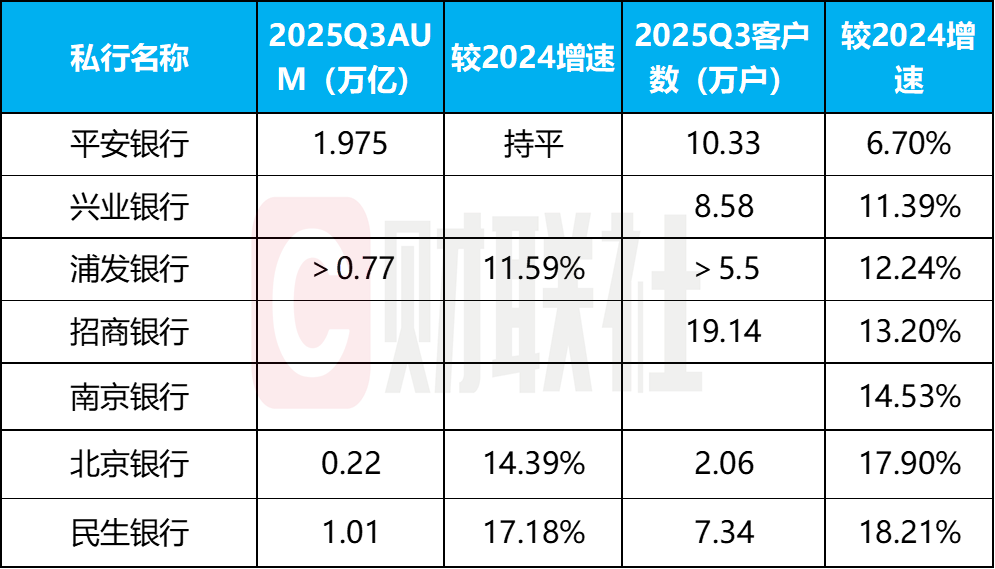
Core Insights - The wealth management business of banks has shown significant growth in Q3 2025, characterized by "private banking leadership, agency sales driving, digital empowerment, and cross-border expansion" [1][2][4] - Most banks are building retail financial service systems driven by wealth management, with rapid increases in business scale, customer numbers, and fee income [2][3] Group 1: Wealth Management Performance - Wealth management client numbers have steadily increased, with Nanjing Bank's wealth clients growing by 16.31% compared to the end of the previous year [2] - Citic Bank achieved its highest annual growth in Assets Under Management (AUM) in nearly three years [1] - China Merchants Bank's wealth management fee and commission income reached 20.67 billion yuan, a year-on-year increase of 18.76% [3] Group 2: Private Banking as a Growth Engine - Private banking clients have become a core growth engine, with most banks reporting over 10% growth in private banking client numbers since the beginning of the year [4][5] - Specific banks like Shanghai Pudong Development Bank and Beijing Bank have also seen over 10% growth in private banking AUM [5][6] Group 3: Agency Sales Driving Growth - Agency sales, including insurance, funds, and wealth management products, are the main growth drivers for banks [8] - Ping An Bank's agency insurance income grew by 48.7%, while China Merchants Bank's agency fund income increased by 38.76% [8] Group 4: Digital and Professional Services Integration - Banks are enhancing customer engagement through digital and professional services, with Shanghai Pudong Development Bank focusing on wealth management needs and launching a global wealth management platform [9] - Beijing Bank is leveraging its "Retail Crystal Ball System" to drive value creation through data-driven insights [9] Group 5: Cross-Border Wealth Management Demand - There is a growing demand for cross-border wealth management, with Standard Chartered Bank reporting a 30% increase in wealth management business due to strong market performance and cross-border demand [10][11] - The bank's affluent client base and AUM have seen significant growth, indicating a robust long-term outlook for wealth management revenue [11]
城商行板块10月31日涨1.06%,贵阳银行领涨,主力资金净流入2.96亿元
Zheng Xing Xing Ye Ri Bao· 2025-10-31 08:42
Core Insights - The city commercial bank sector experienced a rise of 1.06% on October 31, with Guiyang Bank leading the gains [1] - The Shanghai Composite Index closed at 3954.79, down 0.81%, while the Shenzhen Component Index closed at 13378.21, down 1.14% [1] Stock Performance - Guiyang Bank (601997) closed at 6.08, up 3.23% with a trading volume of 1.05 million shares and a transaction value of 638 million [1] - Qilu Bank (601665) closed at 6.05, up 2.89% with a trading volume of 1.23 million shares and a transaction value of 745 million [1] - Nanjing Bank (601009) closed at 11.31, up 2.26% with a trading volume of 766,400 shares and a transaction value of 859 million [1] - Other notable banks include Changsha Bank (601577) at 9.57, up 2.24%, and Ningbo Bank (002142) at 28.34, also up 2.24% [1] Capital Flow - The city commercial bank sector saw a net inflow of 296 million from institutional investors, while retail investors experienced a net outflow of 146 million and 150 million respectively [2] - The capital flow data indicates that Nanjing Bank had a net inflow of 12.9 million from institutional investors, but a net outflow of 59.7 million from speculative funds and 69 million from retail investors [3] - Ningbo Bank recorded a net inflow of 91.9 million from institutional investors, with outflows from both speculative and retail investors [3]





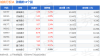
震荡市防御性更强!红利低波ETF(512890)近20个交易日资吸金超33亿
Xin Lang Ji Jin· 2025-10-31 04:09
Core Viewpoint - The three major indices experienced a decline, with the Shanghai Composite Index down by 0.63% and the ChiNext Index dropping over 1%, impacting the performance of the Dividend Low Volatility ETF (512890), which fell by 0.34% to 1.186 yuan [1][2]. Fund Performance - The Dividend Low Volatility ETF (512890) reported a trading volume of 2.44 billion yuan and a turnover rate of 1% [1][2]. - Over the past 10 trading days, the fund saw a net inflow of 1.15 billion yuan, with net inflows of 3.38 billion yuan over the past 20 days and 3 billion yuan over the past 60 days [2][3]. - As of October 30, 2025, the circulating scale of the Dividend Low Volatility ETF (512890) was 24.394 billion yuan [2]. Holdings and Market Trends - The top ten holdings of the Dividend Low Volatility ETF showed mixed performance, with notable declines in stocks like COFCO Sugar and Daqin Railway, while Nanjing Bank and Industrial Bank saw gains [3][4]. - The fund's strategy is positioned as a defensive measure amid changing market risk preferences, with a focus on infrastructure and stable growth sectors [5]. Investment Strategy - The Dividend Low Volatility ETF (512890) was established in December 2018 and has demonstrated stable historical performance, making it a potential tool for steady returns in asset allocation [5]. - Investors are encouraged to consider dollar-cost averaging and can access the fund through various share classes for those without stock accounts [5].
QFII选股“各有所好”,第三季度超120只A股获增持
Zheng Quan Shi Bao· 2025-10-30 23:16
Group 1 - The QFII system has become a significant channel for foreign capital to enter the A-share market since its introduction in 2002, with distinct stock selection preferences and investment styles compared to domestic funds [1][8] - In the third quarter, at least 121 stocks were increased in holdings by QFII, with the most significant increases not in the semiconductor sector but in electrical equipment, machinery, hardware, and chemicals [2][3] - Major QFII institutions like Morgan Stanley and Abu Dhabi Investment Authority have continued to increase their positions in A-shares, with a focus on a diversified portfolio of stocks [1][2] Group 2 - The top five industries with the most significant QFII increases in holdings in the third quarter were machinery, hardware equipment, electrical equipment, semiconductors, and chemicals [2] - Notably, only one stock from the banking sector, Nanjing Bank, was among the top 20 stocks increased by QFII, with a significant increase of 124 million shares by BNP Paribas [4] - Abu Dhabi Investment Authority has a concentrated investment style, holding only 22 stocks, and has made selective increases and decreases in its holdings, including a notable reduction in its stake in Zijin Mining [5][6] Group 3 - The GATES FOUNDATION TRUST has a concentrated portfolio with a preference for small-cap stocks, holding only two stocks at the end of the third quarter [6] - The Macau Monetary Authority has been active in increasing its holdings, particularly in the non-ferrous metals, food and beverage, and automotive sectors [7] - The QFII system is expected to expand further, with over 900 qualified foreign investors and ongoing reforms aimed at making it easier for foreign investors to participate in the Chinese market [8]




QFII选股“各有所好” 第三季度超120只A股获增持
Zheng Quan Shi Bao· 2025-10-30 22:11
Core Insights - The China Securities Regulatory Commission (CSRC) has officially released the "Optimization Work Plan for the Qualified Foreign Institutional Investor (QFII) System," which simplifies the investment preparation process for QFII and implements a green channel for sovereign funds, international organizations, and pension charitable funds [1][7] - Since the introduction of the QFII system in 2002, it has become a significant channel for foreign capital to enter the A-share market, with distinct investment styles and preferences compared to domestic funds [1][7] Investment Trends - As of October 30, 2023, QFII has continued to increase its holdings in A-shares, with at least 121 stocks receiving additional investments in the third quarter [2][3] - The sectors with the highest QFII investments are not in semiconductors but rather in electrical equipment, machinery, chemicals, and hardware [2][3] - Major QFII players like Morgan Stanley, Abu Dhabi Investment Authority, and JPMorgan have shown a preference for a diversified portfolio, with Morgan Stanley holding 244 stocks and UBS increasing its holdings in 29 stocks [2][3] Individual Stock Movements - Notable stocks that received increased QFII investments include Nanjing Bank, China XD Electric, and Oriental Yuhong, with significant increases in shareholdings from various QFII institutions [2][3] - The Abu Dhabi Investment Authority has made strategic adjustments, increasing its holdings in stocks like Baofeng Energy and Hengli Hydraulic while reducing its stake in others like Zijin Mining [4][5] Sovereign Fund Strategies - Middle Eastern sovereign funds, such as the Abu Dhabi Investment Authority and Kuwait Investment Authority, tend to have a more concentrated investment approach compared to their Western counterparts [4][5] - The Abu Dhabi Investment Authority's A-share holdings have decreased in value from approximately 9 billion yuan last year to about half of that by October 29, 2023, indicating profit-taking or tactical trading [4][5] Future Outlook - The QFII system is expected to expand further, with over 900 qualified foreign investors already participating, including various types of funds and institutions [7] - The CSRC aims to enhance the attractiveness of the QFII system for long-term foreign capital over the next two years, promoting a balanced development of onshore and offshore channels [7]


净息差现企稳迹象 上市银行三季报传暖意
Shang Hai Zheng Quan Bao· 2025-10-30 18:28
Core Insights - The overall performance of listed banks in China has shown signs of recovery, with many banks reporting improved profitability in the third quarter of 2025, supported by a stabilization in net interest margins [1][2][3]. Group 1: Financial Performance - The six major banks reported varying net profits and revenue growth rates for the first three quarters of 2025, with Industrial and Commercial Bank of China leading in net profit at 269.91 billion yuan, a year-on-year growth of 0.33% [1]. - Several banks, including China Merchants Bank and Huaxia Bank, demonstrated positive revenue growth in the third quarter, with China Merchants Bank achieving a revenue growth rate of 2.11% [3]. - Regional banks like Nanjing Bank and Chongqing Bank exhibited robust performance, with both reporting revenue and net profit growth rates exceeding 8% for the first three quarters [3]. Group 2: Asset Quality and Stability - The asset quality of listed banks has generally improved, with banks like Chongqing Bank and Shanghai Pudong Development Bank reporting declines in non-performing loan ratios [4]. - The stability of net interest income and the recovery of non-interest income are identified as key factors supporting the banks' profitability [4]. Group 3: Net Interest Margin - The net interest margin has shown signs of stabilization and recovery, which is a critical highlight in the current performance cycle of the banking sector [5]. - Regional banks such as Jiangyin Bank and Ruifeng Bank reported increases in their net interest margins, indicating effective management of asset-liability structures [5]. Group 4: Impact of Bond Market Volatility - The volatility in the bond market has emerged as a significant variable affecting non-interest income for some banks, leading to revenue pressures [6]. - For instance, China Merchants Bank reported a decline in revenue due to losses in fair value changes, attributed to fluctuations in the bond market [6]. - Huaxia Bank also experienced a substantial drop in fair value gains, which negatively impacted its revenue performance [6][7].





外资加仓A股!QFII,三季度增持至少121股
券商中国· 2025-10-30 14:07
Core Viewpoint - The China Securities Regulatory Commission (CSRC) has officially released the "Optimization Work Plan for Qualified Foreign Institutional Investor (QFII) System," which simplifies the investment preparation process for QFII and provides a green channel for sovereign funds, international organizations, and pension charitable funds [1][7]. Summary by Sections QFII Investment Trends - Since the introduction of the QFII system in 2002, it has become a significant channel for foreign capital entering the A-share market, with different investment styles compared to domestic funds [1]. - As of October 30, 2023, major QFII investors like Morgan Stanley, Abu Dhabi Investment Authority, and others have continued to increase their holdings in A-shares, with at least 121 stocks seeing an increase in shares held [2][4]. Sector Preferences - The most heavily weighted sectors among QFII investments are not semiconductors but rather hardware equipment, machinery, chemicals, electrical equipment, and pharmaceuticals [2]. - Notable increases in holdings include stocks like Nanjing Bank, China West Electric, and Oriental Yuhong, with UBS and Barclays being the most active in increasing their positions [2][3]. Middle Eastern Sovereign Funds - Middle Eastern sovereign funds, such as the Abu Dhabi Investment Authority, tend to have a more concentrated portfolio compared to their Western counterparts, holding fewer stocks [4]. - The Abu Dhabi Investment Authority increased its holdings in several stocks, including Bao Feng Energy and Hengli Hydraulic, while also reducing its stake in others like North Building Materials [4][5]. QFII System Expansion - The recent optimization plan aims to make it easier for qualified foreign investors to enter the Chinese market, with improvements in qualification approval, account opening, and fund transfer processes [7]. - The CSRC aims to implement these reforms within two years, including the establishment of rules for securities investment consulting services for foreign investors [7].

晨会纪要:2025年第184期-20251030
Guohai Securities· 2025-10-30 01:02
Group 1: Coal Industry Insights - In Q3 2025, the proportion of coal stocks in actively managed funds decreased to 0.30%, indicating a low level of investment in the coal sector, which is at its lowest since 2008 [4][5][6] - Coal prices have been recovering, with the price of thermal coal reaching 770 RMB/ton by October 24, 2025, marking a new high for the year [6] - The coal mining industry is expected to maintain upward price trends due to seasonal demand and supply constraints from production regulations, with long-term price increases driven by rising operational costs and regulatory pressures [6] Group 2: Easy Point Technology - In Q3 2025, Easy Point Technology reported a revenue of 9.8 billion RMB, a year-on-year increase of 46.8%, driven by the growth of its programmatic advertising platform [10] - The company’s gross margin decreased to 13.06%, primarily due to rising traffic acquisition costs and increased R&D and sales expenses [10][11] - The programmatic advertising platform has seen significant growth, with daily ad requests reaching 220 billion, and the company is investing heavily in R&D to enhance its service capabilities [11][12] Group 3: Amway Corporation - Amway reported a revenue of 16.79 billion RMB in the first three quarters of 2025, a year-on-year decrease of 6.8%, with net profit declining by 19.2% [14][15] - The company is optimizing its product structure and expanding into emerging markets, with a focus on maintaining strong relationships with global clients like Nike and Adidas [17] - Despite challenges, Amway is seeing improvements in its operational performance, particularly in its Vietnam operations [16][18] Group 4: Nanjing Bank - Nanjing Bank achieved a revenue of 419.49 billion RMB in Q3 2025, reflecting an 8.79% year-on-year growth, with net profit increasing by 8.06% [19][20] - The bank's total assets reached 2.96 trillion RMB, a 14.31% increase from the previous year, with a notable growth in corporate loans [20] - The bank's non-performing loan ratio improved to 0.83%, indicating a strengthening of its asset quality [21] Group 5: Linglong Tire - Linglong Tire reported a revenue of 181.61 billion RMB in the first three quarters of 2025, a 13.87% increase, although net profit fell by 31.81% due to rising raw material costs [22][24] - The company’s tire production and sales volumes increased, with a focus on expanding its global footprint through its "7+5" strategy [27][28] - Linglong Tire is positioned as a leader in the domestic market and is actively pursuing international expansion, including a significant investment in Brazil [27][29] Group 6: Wuxi Bank - Wuxi Bank's revenue grew by 3.87% year-on-year in the first three quarters of 2025, with a net profit increase of 3.78% [30][31] - The bank's loan growth exceeded 10%, with a significant increase in corporate loans, indicating strong demand for financing [31] - The non-performing loan ratio remained stable at 0.78%, reflecting effective risk management practices [32] Group 7: China Aluminum - China Aluminum reported a revenue of 1,765 billion RMB in the first three quarters of 2025, with a net profit increase of 20.65% [33][34] - The company benefited from lower costs and rising prices for aluminum and alumina, contributing to improved profitability [34][35] - Production volumes for key products increased, supporting the overall positive performance of the company [34] Group 8: Jin Zai Food - Jin Zai Food achieved a revenue of 18.08 billion RMB in the first three quarters of 2025, with a slight increase of 2.05%, while net profit declined by 19.51% [37][38] - The company’s Q3 revenue growth of 6.55% indicates a recovery in its core product lines, although profitability remains under pressure due to increased costs [38][39] - Jin Zai Food is focusing on quality and new product development to enhance its market position [39] Group 9: China Coal Energy - China Coal Energy reported a revenue of 1,105.8 billion RMB in the first three quarters of 2025, a decrease of 21.2%, with net profit down by 14.6% [40][41] - The company’s Q3 performance improved due to rising coal prices and cost reductions, with a notable increase in profit margins [41] - The coal production and sales volumes showed resilience despite price pressures, indicating operational efficiency [41]



QFII三季度新宠曝光 银行担当“压舱石”,高端制造获加仓
2 1 Shi Ji Jing Ji Bao Dao· 2025-10-30 00:56
Core Insights - QFII continues to favor core A-share assets amid ongoing structural market trends, with a notable focus on high-end manufacturing and tactical increases in defensive assets and sectors aligned with domestic production trends [1][7] QFII Investment Trends - As of October 28, nearly 40 QFII institutions held approximately 119.4 billion yuan in A-shares, reflecting a diversified investment strategy across various sectors [1][8] - QFII has increased holdings in over 500 A-share companies, with significant investments in banking, electrical equipment, building materials, chemicals, software services, machinery, and hardware [3][4] Key Stocks with Increased Holdings - Major stocks with significant QFII increases include: - Nanjing Bank (1.24 million shares by BNP Paribas) - China Xidian (7.285 million shares by JPMorgan Securities) - Other notable stocks include Oriental Yuhong, Baofeng Energy, Huasheng Tiancheng, Hengli Hydraulic, Huazi Technology, and Siyi Electric [4][5][6] Sector Preferences - QFII's top sectors for increased stock holdings include banking, electrical equipment, and computing, with banks attracting attention due to stable dividend yields and improving performance expectations [7][10] - The electrical equipment sector benefits from strong policy support and demand growth driven by energy transition and grid upgrades [7][10] Large Institutional Preferences - Large foreign institutions, such as Goldman Sachs, are diversifying their investments across various sectors, including machinery, hardware, consumer goods, pharmaceuticals, and more [11] - Goldman Sachs holds significant positions in 52 A-share companies, indicating a broad investment strategy [11] Market Outlook - Analysts suggest that the Chinese stock market is entering a more sustainable upward trend, with recommendations for investors to shift from "selling high" to "buying low" strategies [13] - Continued positive sentiment towards Chinese assets is reflected in the strategies of major investment firms [12][13]