平安银行

Search documents
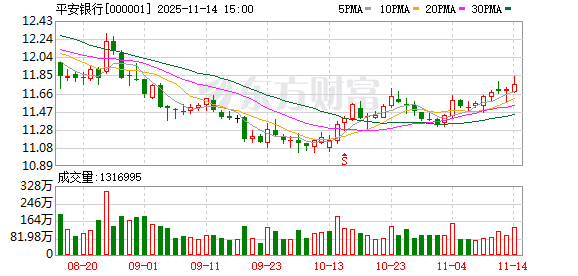
银行行业资金流入榜:平安银行等10股净流入资金超5000万元
Zheng Quan Shi Bao Wang· 2025-11-14 09:29
Market Overview - The Shanghai Composite Index fell by 0.97% on November 14, with only four sectors rising, led by the comprehensive and real estate sectors, which increased by 1.58% and 0.39% respectively [2] - The banking sector ranked third in terms of gains for the day [2] - A total of 26 sectors experienced net outflows of capital, with the electronics sector seeing the largest outflow of 21.65 billion yuan [2] Capital Flow Analysis - The banking sector saw a slight increase of 0.26% with a net inflow of 297 million yuan, comprising 42 stocks, of which 22 rose and 15 fell [3] - Among the banking stocks, 19 experienced net inflows, with 10 stocks receiving over 50 million yuan, led by Ping An Bank with an inflow of 163 million yuan [3] - Major banks with significant net inflows included Industrial and Commercial Bank of China and Postal Savings Bank, with inflows of 147 million yuan and 108 million yuan respectively [3] Individual Bank Performance - The top-performing banks in terms of capital flow included: - Ping An Bank: +0.43%, 68% turnover, 163.16 million yuan inflow [4] - Industrial and Commercial Bank of China: +0.49%, 11% turnover, 146.70 million yuan inflow [4] - Postal Savings Bank: +0.34%, 29% turnover, 108.33 million yuan inflow [4] - Conversely, banks with significant net outflows included Agricultural Bank of China, with a net outflow of 3.30 billion yuan, and Shanghai Pudong Development Bank, with a net outflow of 1.05 billion yuan [4]




一周银行速览(11.7—11.14)
Cai Jing Wang· 2025-11-14 09:09
Regulatory Voice - The People's Bank of China reported that by the end of October, the balance of RMB deposits reached 325.55 trillion yuan, a year-on-year increase of 8% [1] - The total balance of domestic and foreign currency deposits was 332.92 trillion yuan, growing by 8.3% year-on-year [1] - In the first ten months, RMB deposits increased by 23.32 trillion yuan, with household deposits rising by 11.39 trillion yuan [1] Industry Focus - The establishment of Xinjiang Rural Commercial Bank has been approved, marking a significant step in China's rural financial reform [2] - Xinjiang becomes the sixth province to have a provincial-level rural commercial bank, with expected assets exceeding 700 billion yuan upon opening [2] Corporate Dynamics - Xinyin Investment, a wholly-owned subsidiary of Industrial Bank, has been approved to commence operations with a registered capital of 10 billion yuan [7][8] - This marks the sixth licensed Asset Investment Company (AIC) approved in the industry, and the first initiated by a joint-stock bank [8] Financial Personnel - Changshu Bank announced a major management reshuffle, with the resignation of its president and vice president due to work changes [9] - The bank plans to appoint Lu Dingchang as the new president and chief compliance officer, alongside two new vice presidents [9] - Additionally, local state-owned shareholders have increased their stake in Changshu Bank, acquiring 561.93 million shares, raising their total holding to 3.98% [9] Industry Trends - Domestic private banking continues to thrive, with several banks reporting double-digit growth in private banking clients [3] - Ping An Bank has surpassed 100,000 private banking clients, joining the "100,000 Club" alongside six other banks [3] - A trend of integrating and shutting down independent credit card and direct banking apps is emerging among banks, reflecting a shift towards digital transformation [4] - Many small and medium-sized banks are actively removing long-term deposit products to optimize their liability structure and reduce costs [6]
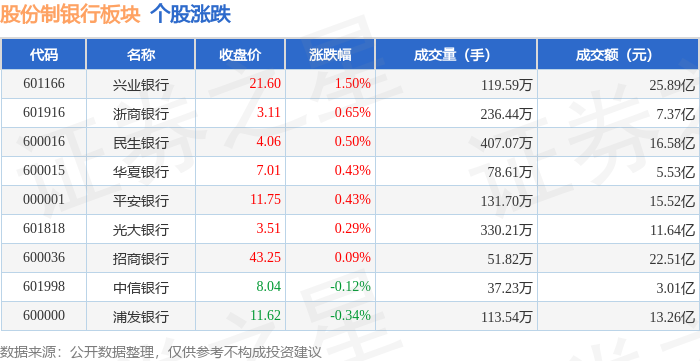
股份制银行板块11月14日涨0.32%,兴业银行领涨,主力资金净流入2.68亿元
Zheng Xing Xing Ye Ri Bao· 2025-11-14 08:58
Group 1 - The banking sector saw a slight increase of 0.32% on November 14, with Industrial Bank leading the gains [1] - The Shanghai Composite Index closed at 3990.49, down 0.97%, while the Shenzhen Component Index closed at 13216.03, down 1.93% [1] - The trading volume and turnover for various banks showed significant activity, with Minsheng Bank having a turnover of 1.658 billion yuan [1] Group 2 - The net inflow of main funds into the banking sector was 268 million yuan, while retail funds experienced a net outflow of 2.7098 million yuan [1] - The individual stock performance varied, with Industrial Bank increasing by 1.50% to a closing price of 21.60 yuan [1] - The overall trading activity indicated a mixed sentiment among investors, with some banks experiencing slight declines in their stock prices [1]

从“跑马圈地”到“精耕细作”:信用卡行业以创新发展破局
Zhong Guo Jin Rong Xin Xi Wang· 2025-11-14 08:18
Core Insights - The credit card industry in China is undergoing a transformation from rapid expansion to a focus on refinement and optimization of user experience, with a significant reduction in the number of credit cards issued over the past three years [1][4]. Industry Overview - The number of credit cards in China has decreased by over 90 million in recent years, with the total number standing at 715 million as of June 2023, marking a decline for 11 consecutive quarters [4]. - Major banks have reported declines in credit card loan balances and transaction volumes, indicating a broader trend of contraction within the industry [4]. Factors Driving Transformation - Regulatory policies have been implemented to guide the credit card business, including restrictions on issuing cards based solely on quantity and limiting the proportion of inactive cards [8]. - The rise of alternative payment methods, such as Huabei and Bai Tiao, has diverted users away from traditional credit cards, particularly among younger consumers [9]. - Changing consumer demands have led to a preference for fewer, more useful credit cards, resulting in cancellations of less utilized cards [9]. - Banks have been reducing cardholder benefits to manage operational costs, which has contributed to the decline in card ownership [10]. Strategic Adjustments - Despite the overall contraction, credit cards continue to play a vital role in facilitating payments and consumer spending [11]. - Banks are shifting their focus from quantity to quality, emphasizing product innovation and deeper integration with consumer spending habits [11]. - Various banks are adapting their strategies to target specific consumer segments, such as the elderly and young people, and are exploring partnerships with e-commerce platforms [12]. - Regulatory adjustments are being made to foster innovation in the credit card sector, including the exploration of online account opening and activation processes [13]. Future Outlook - The credit card industry is expected to maintain a positive growth trajectory, with banks encouraged to adopt differentiated services and leverage digital technologies for product innovation [15].

新华视点丨从“跑马圈地”到“精耕细作”:信用卡行业以创新发展破局
Xin Hua Wang· 2025-11-14 08:17
Core Insights - The credit card industry in China is undergoing a transformation from rapid expansion to a focus on refinement and optimization, with a significant reduction in the number of credit cards issued over the past three years [1][4][10] Market Trends - The total number of credit cards in China has decreased by over 90 million in recent years, with the current total at 715 million as of June 2023, marking a decline for 11 consecutive quarters [4][10] - Major banks have reported declines in credit card loan balances and transaction volumes, with specific examples including a reduction of approximately 20 billion yuan in credit card loan balances at China Merchants Bank and a 4.87% decrease at Citic Bank [4][10] Consumer Behavior - Consumers are increasingly selective about the credit cards they retain, with many choosing to cancel cards that are not frequently used or do not offer sufficient benefits [3][8] - The trend of consumers consolidating their credit cards reflects a demand for more tailored services, as many users now prefer to maintain only a few cards that meet their needs [8][9] Regulatory Environment - Regulatory policies have shifted to promote healthier credit card business practices, discouraging banks from focusing solely on the number of cards issued and requiring a reduction in dormant cards [7][10] - The introduction of regulations has led to a more cautious approach in card issuance, moving the industry from a phase of aggressive expansion to one of careful management and refinement [7][10] Competitive Landscape - The rise of alternative payment methods, such as "Huabei" and "Baitiao," has diverted users away from traditional credit cards, particularly among younger demographics [7][8] - Banks are adjusting their strategies to better align with consumer trends, focusing on product innovation and enhancing customer experiences to remain competitive in a shrinking market [10][12] Strategic Adjustments - Banks are exploring new consumer segments and adjusting their offerings, such as increasing installment credit for home renovations and targeting specific demographics like the elderly and young consumers [12][13] - Recent regulatory changes have allowed for more flexible credit card terms, including adjustments to overdraft interest rates, which may enhance the appeal of credit cards in a competitive market [13]






银行研思录25:银行股息率排名与中期分红进度梳理-20251114
CMS· 2025-11-14 03:02
Investment Rating - The report does not explicitly state an investment rating for the banking sector, but it provides detailed insights into dividend yields and distribution processes, which can inform investment decisions. Core Insights - The report outlines the latest dividend yields and mid-term dividend processes for A and H shares of listed banks, emphasizing the importance of accurately calculating dynamic dividend yields to avoid discrepancies across periods [1][2]. - It details the two processes for mid-term dividends following the 2023 revision of the regulatory guidelines, highlighting the conventional and simplified processes for implementing mid-term dividends [2]. - The report provides a comprehensive overview of key dates related to dividend distribution for both A and H shares, including the importance of purchasing shares before the ex-dividend date to qualify for dividends [3][4]. Summary by Sections Dynamic Dividend Yield Calculation - A simplified yet accurate method for calculating dynamic dividend yield is introduced, defined as "rolling 12-month EPS * cash dividend rate / share price," which helps avoid issues related to overlapping or missing annual and mid-term dividends [1]. - The report calculates the cash dividend rate using a standardized approach across different banks, resulting in a clear comparison of dividend yields as of November 13, 2025 [1]. Mid-Term Dividend Processes - The report explains the two processes for mid-term dividends: the conventional process requiring shareholder approval and a simplified process allowing for quicker implementation [2]. - The simplified process is designed to enhance flexibility for companies in distributing mid-term dividends, thereby improving shareholder returns [2]. Dividend Distribution Key Dates - For A shares, investors must purchase shares before the ex-dividend date to receive dividends on the same day, while H shares typically see a delay of about one month for dividend payments [3][4]. - The report outlines the differences in the dividend distribution timeline between A and H shares, emphasizing the need for investors to be aware of these timelines to maximize their returns [3][4]. Mid-Term Dividend Progress - As of November 13, 2025, 31 A-share banks have confirmed mid-term dividends, while 11 H-share banks have also confirmed their dividend distributions [9][11]. - The report categorizes banks based on their dividend status, detailing those that have implemented dividends, those that are pending, and those that have opted not to distribute dividends [9][10][11]. - It highlights that the end of 2025 and early 2026 is expected to be a peak period for mid-term dividend distributions, suggesting potential investment opportunities for dividend-seeking investors [11].





银行ETF指数(512730)涨近1%,多家中小银行中长期定存产品密集下架
Xin Lang Cai Jing· 2025-11-14 02:21
Group 1 - The core viewpoint of the news is that several small and medium-sized banks in China are actively adjusting their deposit products and interest rates to optimize their liability structure and reduce costs [1] - The China Securities Bank Index (399986) has shown a positive performance, with notable increases in stocks such as Industrial Bank (601166) and Zijin Bank (601860) [1] - Analysts predict that the upcoming expiration of a large volume of fixed-term deposits from December to March will lead to a further decline in risk-free interest rates for residents, prompting a shift of deposits towards insurance assets [1] Group 2 - The Bank ETF Index closely tracks the China Securities Bank Index and serves as an analytical tool for investors, categorizing the sample into various industry levels [2] - As of October 31, 2025, the top ten weighted stocks in the China Securities Bank Index account for 64.87% of the total index, with major banks like China Merchants Bank (600036) and Industrial Bank (601166) among them [2]
这些银行,悄悄发力理财代销
3 6 Ke· 2025-11-14 01:09
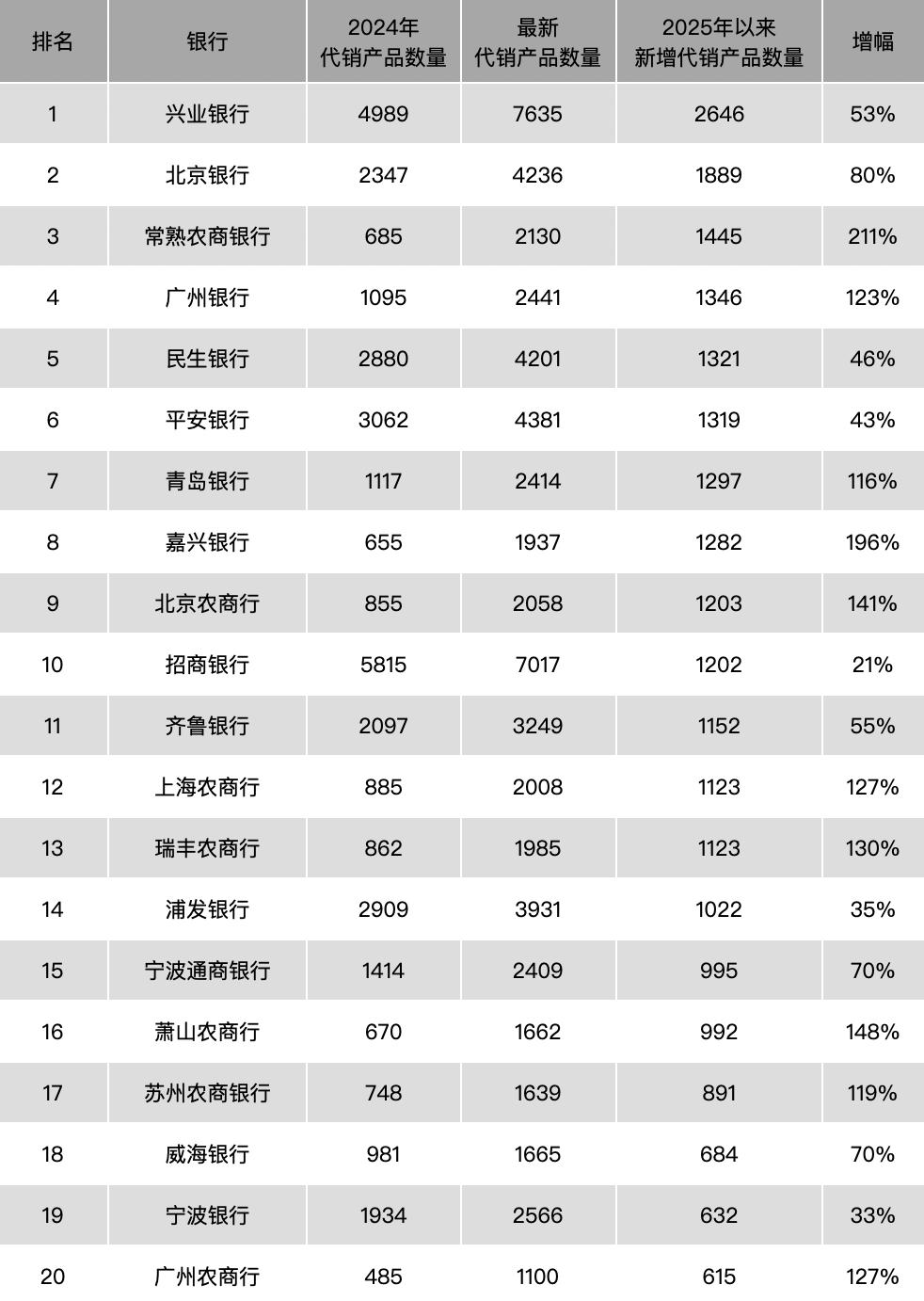
Core Insights - The banking wealth management distribution market has seen significant growth since 2025, with many banks rapidly increasing the number of wealth management products they distribute [2][3]. Distribution Growth - From the top 20 banks by incremental growth, at least 14 banks have added over 1,000 new wealth management products, with 10 banks doubling their product offerings compared to the end of last year, and some even exceeding a 200% increase [3][4]. - Notable banks include: - Industrial Bank: 7,635 products, a 53% increase [4] - Beijing Bank: 4,236 products, an 80% increase [4] - Changshu Rural Commercial Bank: 2,130 products, a 211% increase [4]. Performance Metrics - The wealth management distribution revenue for major banks has also increased significantly: - China Merchants Bank reported a wealth management distribution income of 7.014 billion yuan, an 18.14% year-on-year increase [8]. - Beijing Bank's distribution scale has exceeded last year's total, with a fee income growth of over 10% [8]. - Changshu Rural Commercial Bank's commission income grew over 57% in the third quarter, attributed to increased fees from agency wealth management services [8]. Market Dynamics - The wealth management distribution market has reached a new high, surpassing 32 trillion yuan, with 139 million investors holding wealth management products, a 12.7% year-on-year increase [10]. - The average annualized yield for cash management products is 1.33%, while fixed-income products yield 2.42%, indicating a competitive advantage over traditional savings [11]. Regulatory Changes - The implementation of the "Commercial Bank Agency Sales Business Management Measures" on October 1 has clarified standards and processes for distribution business [16]. - The market is witnessing a shift as many banks, especially smaller ones, are aggressively entering the wealth management distribution space to capture market opportunities amid narrowing interest margins [9][10]. Future Trends - The demand for retirement wealth management products is expected to grow, especially following the recent expansion of pilot programs for retirement financial products across the country [24][27]. - The market is preparing for increased competition as banks look to enhance their service capabilities and product offerings in response to evolving customer needs [23][24].
双11观察:为什么消费者“当然选平安”?
2 1 Shi Ji Jing Ji Bao Dao· 2025-11-13 23:27
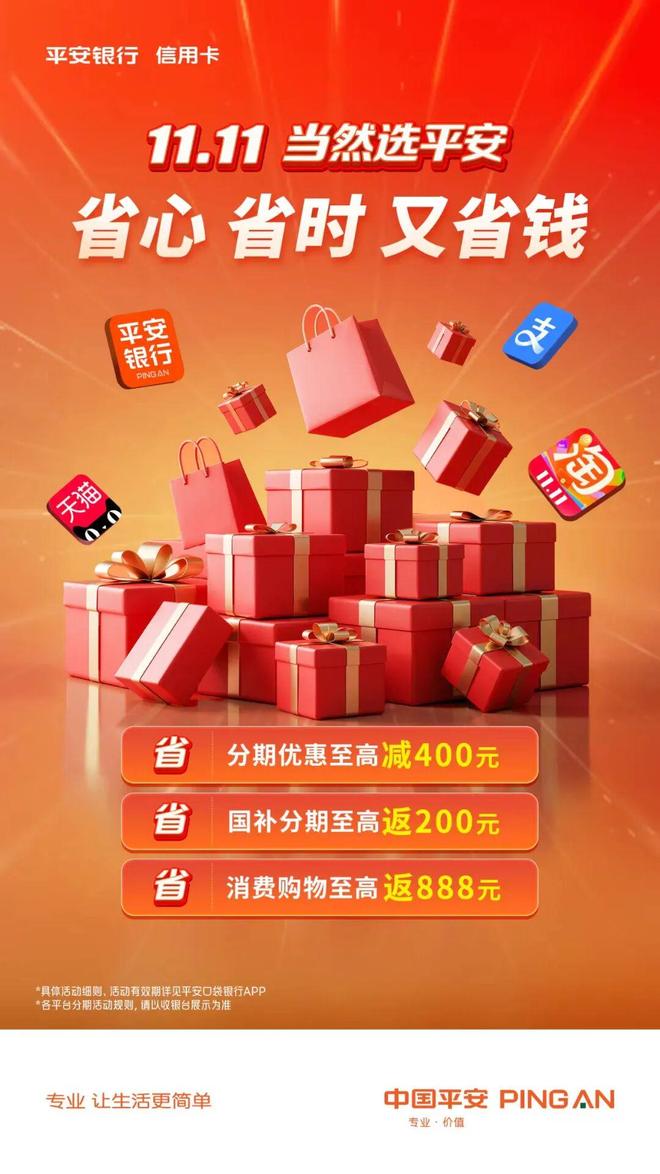
Core Insights - The Double 11 shopping festival serves as a significant indicator of China's consumer market vitality and reflects the interaction between macroeconomic policies and micro-market behaviors [1] - In 2025, the "Consumption Boost Year" initiative, launched by the Ministry of Finance and the Ministry of Commerce, aims to stimulate consumption recovery, with Double 11 playing a crucial role in this context [1] Policy Alignment - The "Three Savings" system of Ping An Credit Card aligns closely with national consumption promotion policies, facilitating effective conversion from policy advocacy to consumer action [4] - During Double 11, Ping An Credit Card introduced a "Payment Installment Discount up to 400 Yuan" campaign, covering major e-commerce platforms, effectively reducing consumer burdens [4] - The "National Subsidy Installment Red Packet" initiative combines government subsidies with financial installment tools, enhancing the accessibility of policy benefits for consumers [4] Value Return System - Ping An Credit Card offers diverse reward mechanisms, including "Super 88 Cashback," points redemption, and installment discounts as low as 1.7%, creating a comprehensive value return system [5] - Points can be redeemed on platforms like Alipay, JD.com, and Douyin, allowing for a maximum deduction of 10% on single orders, while the annualized interest rate for installment payments is as low as 3.1% [5] - This "Policy + Finance" innovation amplifies the effects of national consumption policies and highlights Ping An Credit Card's role in bridging macro policies to micro benefits [5] Brand Development - During Double 11, Ping An Credit Card expanded its brand recognition from a payment tool to a consumer partner through systematic scene layout and precise user communication [6] - The brand's strategy includes tailored discount strategies for different consumer segments, enhancing the promise of "saving time, effort, and money" [6] - The brand theme "Naturally Choose Ping An" is consistently communicated across various consumer events, reinforcing brand recognition and user loyalty [7] Long-term User Relationships - Ping An Credit Card emphasizes building long-term user relationships through flexible repayment options and multi-platform point redemption, enhancing user stickiness [7] - The combination of immediate discounts and long-term value propositions positions Ping An Credit Card as a trusted consumer partner [7] - The practices during Double 11 illustrate a financial brand's innovative path under policy guidance, achieving a win-win for consumers, merchants, and policies [8]
双11观察:为什么消费者“当然选平安”?
21世纪经济报道· 2025-11-13 23:24
Core Viewpoint - The Double 11 shopping festival serves as a significant indicator of China's consumer market vitality and reflects the interaction between macroeconomic policies and micro-market behaviors, especially under the "Consumption Boost Year" initiative launched by the Ministry of Finance and the Ministry of Commerce in 2025 [1][5]. Policy Alignment - The "Three Savings" system of Ping An Credit Card effectively translates national consumption promotion policies into consumer benefits, with initiatives like "Installment Discounts up to 400 Yuan" across major e-commerce platforms, reducing consumer burdens [5][6]. - The "National Subsidy Installment Red Packet" activity combines government subsidies with financial tools, enhancing the accessibility of policy benefits for consumers [5][6]. - A comprehensive value return system is established through various rewards, including cashback and point redemption, providing flexible financial arrangements for consumers [6][8]. Brand Development - Ping An Credit Card has evolved from a payment tool to a trusted consumption partner, creating a complete consumption ecosystem that includes installment discounts, cashback, and flexible repayment options [8][10]. - The brand theme "Naturally Choose Ping An" is consistently communicated across different consumption scenarios, reinforcing brand recognition and user loyalty [9][10]. - The strategy emphasizes both immediate discounts and long-term user relationships, enhancing user engagement and trust in the brand [10][11]. Market Trends - The ongoing recovery of the consumer market and the rationalization trend highlight the importance of understanding policy directions and user needs, positioning Ping An Credit Card as a sustainable reference for the financial industry in serving consumer needs [11].