邮储银行

Search documents
年终奖如何理财?银行主打“一站式配置”
Zhong Guo Zheng Quan Bao· 2026-01-03 13:43
Core Insights - The article emphasizes the importance of optimizing personal asset allocation during the year-end bonus season, highlighting various financial products that ensure safety while aiming for yield enhancement [1] Group 1: One-Stop Solutions - Multiple financial institutions, including Postal Savings Bank, Guangfa Bank, and Everbright Wealth, have launched targeted "one-stop" year-end bonus investment plans, focusing on stable and low-volatility options [1][2] - Guangfa Bank offers a tiered asset allocation strategy categorized as conservative, stable, and aggressive, aligning with different risk tolerances and return expectations [2] - Everbright Wealth suggests a fund allocation based on the purpose of the funds, dividing year-end bonuses into short-term, medium-term, and long-term categories, each corresponding to different types of fixed-income products [2] Group 2: Market Trends and Recommendations - The core trend for year-end bonus investments is a focus on stable and low-volatility products, with most recommended products falling within risk levels PR1 to PR2 [3] - Financial experts advise investors to analyze their financial situations, risk tolerance, and funding needs to create tailored year-end bonus investment plans [3] - Specific investment strategies are recommended based on different financial goals, such as cash or daily liquidity products for short-term needs and insurance products for long-term family security [3]

工农建交邮储等大行宣布数字人民币余额计息点评:数币余额开始付息,供需双向促规模增长
GUOTAI HAITONG SECURITIES· 2026-01-03 11:07
Investment Rating - The report assigns an "Overweight" rating for the industry, indicating a projected performance that exceeds the Shanghai and Shenzhen 300 Index by more than 15% [4][10]. Core Insights - Major banks, including ICBC, ABC, CCB, BOC, and PSBC, announced that starting January 1, 2026, digital RMB wallets will earn interest based on the current deposit rate, which is expected to enhance the promotion of digital RMB and drive its growth [2][4]. - The introduction of interest on digital RMB wallets marks a transition from a cash-like version (1.0) to a deposit currency version (2.0), addressing previous limitations that hindered user adoption and bank promotion [4]. - The interest policy is anticipated to activate both supply and demand sides of the digital RMB ecosystem, enhancing banks' willingness to promote digital RMB and increasing user interest due to the potential for earning interest on idle funds [4]. Summary by Sections Industry Overview - The report highlights the shift in digital RMB from a non-interest-bearing currency to an interest-bearing asset, which is expected to attract more users and expand the ecosystem [4]. Policy Implications - The interest payment policy aligns with the central bank's action plan, facilitating the integration of digital RMB into the banking system and allowing banks to utilize wallet balances for lending, thus generating interest income [4]. User Engagement - The report notes that the interest incentive will likely increase user retention of funds in digital RMB wallets, encouraging merchants to expand acceptance scenarios and promoting the continuous growth of the digital RMB ecosystem [4]. Investment Recommendations - The report suggests that digital RMB is transitioning into a digital deposit currency era, with banks likely to actively participate in its development. Companies providing compatible digital RMB terminal devices and services, such as Lakala, Yika, and Lianlian Digital, are recommended for investment [4][5].





回顾2025|第七届“蒙格斯智库年度作家”榜单揭晓
Xin Lang Cai Jing· 2026-01-03 07:12
来源:蒙格斯报告 探索前沿、研判趋势、赋能实践 于不确定性中锚定发展确定性 以理性洞察穿透时代迷雾 把握经济发展的核心脉搏 从DeepSeek的横空出世到AI泡沫风险防控 从美国关税冲突博弈到地缘政治解构 从资本市场起伏到消费活力提振 蒙格斯智库专家学者们 AI浪潮重塑产业生态 地缘博弈交织经贸变局 解构AI浪潮驱动的产业变革路径 拆解关税冲突背后的经贸博弈逻辑 预判资本市场波动趋势 探寻提振消费活力的有效路径 引领读者洞悉复杂变局 与不确定性交织下的财经核心脉络 感知时代转型进程中的强劲发展动能 为致敬过去一年的丰硕思想成果 蒙格斯特别推出年度重磅企划 "蒙格斯2025年度阅读量TOP10文章"以及 第七届"蒙格斯智库年度作家"评奖 致敬每一份智慧洞见与深度思考 展望崭新的2026年 期待专家学者们在前沿领域持续深耕细作 创作出更多映照时代的思想华章 房地产曾是中国经济高速发展的重要引擎,其金融化属性催生了行业繁荣,却也暗藏投机泡沫与高空置 率的隐忧——城镇住房空置率持续攀升,租售失衡导致刚需难满足、资源浪费等多重困境。当"堵"式调 控难破僵局,"租售并举"成为破题关键。文章聚焦房地产金融化的核心矛盾,探索 ...


近30笔千万级罚单!2025年银行业罚单大盘点
证券时报· 2026-01-03 05:27
Core Viewpoint - In 2025, the Chinese banking industry is undergoing significant regulatory scrutiny characterized by "strict regulation, strong accountability, and zero tolerance," leading to a notable increase in both the quantity and severity of penalties imposed on banks [1]. Group 1: Regulatory Environment - The number of penalties exceeding 10 million yuan in the banking sector reached nearly 30, affecting various types of institutions including state-owned banks, policy banks, joint-stock banks, city commercial banks, private banks, and bank-affiliated wealth management subsidiaries [2]. - Regulatory focus has expanded beyond traditional areas like credit management to include corporate governance, related party transactions, anti-money laundering, data security, and wealth management business oversight [2][4]. Group 2: Major Penalties - Major state-owned banks such as Bank of China, Industrial and Commercial Bank of China, and Agricultural Bank of China received substantial fines, with Bank of China facing a fine of 97.9 million yuan for issues related to corporate governance and asset quality management [4]. - In December 2025, China Communications Bank was fined 68.07 million yuan for violating multiple regulations, including account management and anti-money laundering obligations [4][5]. Group 3: Compliance and Risk Management - The penalties highlight a trend of inadequate compliance and risk management across various banking operations, including loan management, interbank transactions, and wealth management [7][10]. - The regulatory environment has intensified scrutiny on compliance with anti-money laundering regulations, with significant fines imposed for failures in customer identity verification and transaction reporting [8][9]. Group 4: Emerging Business Areas - New banking business models, such as wealth management subsidiaries and direct banks, are also facing strict regulatory penalties, indicating that the regulatory environment is not limited to traditional banking practices [13]. - For instance, Jiaoyun Wealth Management was fined 17.5 million yuan for non-compliance in product information disclosure and post-investment management [13]. Group 5: Double Penalty System - The implementation of a "double penalty system" has become prevalent, where not only institutions are fined but also individual responsible parties face penalties, enhancing accountability within financial institutions [15]. - This system links the career prospects of involved personnel directly to the compliance performance of their institutions, thereby increasing regulatory pressure [15]. Group 6: Future Outlook - The ongoing trend of strict regulation and accountability is expected to continue, prompting banks to improve their internal governance structures and compliance management systems [16]. - The adjustments in business processes and increased technological investments are anticipated to have a profound impact on the operational models and competitive landscape of the banking industry [16].



数字人民币实名钱包余额开始计付利息
Sou Hu Cai Jing· 2026-01-03 04:33
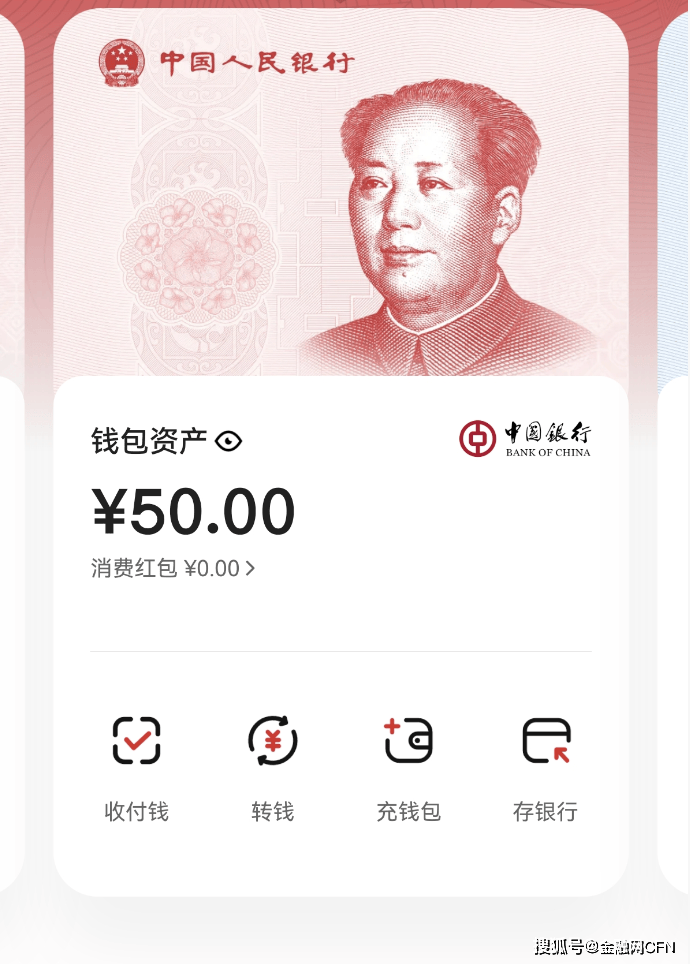
Core Viewpoint - The introduction of interest-bearing digital RMB wallets by six major state-owned banks marks a significant transition from a cash-like version to a deposit currency version, enhancing the functionality of digital RMB and aligning with the People's Bank of China's action plan for digital currency management [5][9]. Policy Core: Real-name Interest Calculation and Security Boundaries - The interest-bearing policy applies to personal and corporate real-name wallets, with interest calculated at a rate of 0.05% per annum, similar to current savings accounts, with quarterly interest payments [6]. - Non-real-name wallets, which only require mobile number verification, are excluded from interest calculations, emphasizing the importance of real-name systems for financial security [6]. Promotion Foundation: Scale and Scenarios - As of November 2025, digital RMB has processed 3.48 billion transactions totaling 16.7 trillion yuan, with 230 million personal wallets and 1.884 million corporate wallets established, indicating a growing user base [7]. - The application scenarios for digital RMB span various sectors, including retail, dining, education, and cross-border payments, showcasing its potential for widespread adoption [7]. Supporting Upgrades: App 2.0 Enhancing User Experience - The digital RMB App has been upgraded to version 2.0, addressing user needs for interest tracking and enhancing interface design with personalized themes, thereby improving user engagement [8]. In-depth Interpretation: Win-Win Institutional Innovation - The core significance of the interest-bearing policy lies in the transformation of digital RMB's legal status from a central bank liability to a commercial bank liability, creating a mutually beneficial incentive mechanism for users and banks [9]. - This initiative positions China as a leader in the global exploration of central bank digital currencies, reinforcing financial security through innovative regulatory measures [9].

数字人民币能计利息了!对你的钱包有何影响?
新华网财经· 2026-01-03 04:22
Core Viewpoint - Starting from January 1, 2026, digital yuan wallet balances will earn interest based on current deposit rates, marking a transition from "digital cash" to "digital deposit currency" [2][4]. Group 1: Significance of Digital Yuan Interest - The introduction of interest on digital yuan balances positions China as the first economy to pay interest on central bank digital currency (CBDC), which is expected to enhance user willingness to adopt digital yuan and expand its usage scenarios [2][4]. - Major state-owned banks, including ICBC, ABC, CCB, BOC, PSBC, and BOCOM, will implement this interest policy, aligning with the current deposit interest rates [4]. Group 2: Current Applications and Features - Digital yuan has established a presence in various sectors such as retail, dining, education, public services, and cross-border settlements, showcasing a versatile application model that integrates both online and offline capabilities [5]. - The digital yuan operates on a broad account system, supporting a decoupled banking account function, and is equivalent to physical RMB, possessing value characteristics and legal tender status [9]. Group 3: Payment Methods and User Experience - Users can download the "Digital Yuan" app, register a wallet, and convert bank funds into digital yuan through the app [11]. - Payment methods include QR code payments, NFC "tap-to-pay," and direct transfers using phone numbers or wallet IDs, transitioning from a cash-like 1.0 version to a deposit-like 2.0 version [12]. Group 4: Advantages of Digital Yuan - The issuance cost of digital yuan is lower as it eliminates the need for physical currency production, thus reducing costs associated with printing and maintaining physical money [20]. - Digital yuan transactions are recorded, aiding in the fight against illegal activities [21]. - The digital currency facilitates international transactions, promoting the global use of the RMB [22]. Group 5: Comparison with Other Payment Methods - Unlike WeChat and Alipay, which serve as wallets for various currencies, digital yuan functions as a direct form of money, enhancing the payment experience [16][18]. - Merchants will be required to accept digital yuan, while they can refuse other payment methods like WeChat and Alipay, which may incur service fees [25].

邮储信用卡绑定京东支付享福利
Jin Tou Wang· 2026-01-03 04:14
Group 1 - The promotional activities will take place from January 1, 2026, to February 20, 2026, daily from 00:00:00 to 23:59:59 [1][2] - The target audience for the promotions is holders of Postal Savings Bank of China (601658) credit cards [1] - The first binding discount activity offers a reduction of 5 yuan for purchases over 5.01 yuan when users bind their Postal Savings Bank credit card for the first time on JD.com, with a daily limit of at least 1,000 offers available [1] - The payment discount activity allows existing users who have already bound their Postal Savings Bank credit card to receive a 1 yuan discount on purchases over 88 yuan, with a daily limit of at least 5,000 offers [2]
重拳出击!近30笔千万级罚单!2025年银行业罚单大盘点
券商中国· 2026-01-03 03:33
Core Viewpoint - In 2025, the Chinese banking industry is undergoing significant regulatory scrutiny characterized by "strict regulation, strong accountability, and zero tolerance," leading to a notable increase in both the quantity and amount of penalties imposed on various banking institutions [1]. Regulatory Penalties Overview - The number of penalties exceeding ten million yuan has reached nearly 30, affecting a wide range of institutions including state-owned banks, policy banks, joint-stock banks, city commercial banks, private banks, and bank-affiliated wealth management subsidiaries [1]. - Penalties are not limited to traditional areas like credit management but also extend to corporate governance, related party transactions, anti-money laundering, data security, and wealth management [2]. Corporate Governance and Compliance - Major state-owned banks such as Bank of China, Industrial and Commercial Bank of China, and Agricultural Bank of China have received substantial fines for issues related to corporate governance and business management [3]. - The largest penalty of the year was imposed on Bank of China, amounting to 97.9 million yuan for various management issues [3]. - Regulatory focus has shifted to deeper issues such as the effectiveness of board responsibilities and the integrity of internal control processes [3]. Compliance and Anti-Money Laundering - There has been an intensified crackdown on compliance, particularly in the anti-money laundering sector, with significant fines imposed on banks for failing to adhere to basic financial management regulations [4]. - For instance, China Merchants Bank was fined 68.07 million yuan for violating 11 regulations related to account management and anti-money laundering [4]. Business Management Issues - The primary reasons for penalties in the banking sector include: - Inadequate management across various business areas such as loans, interbank transactions, and wealth management [6]. - Non-compliance with anti-money laundering responsibilities, including failure to identify customers and report suspicious transactions [7]. - Violations in foreign exchange and investment operations, including illegal currency transactions and improper investment disclosures [8]. - Insufficient implementation of regulatory requirements, leading to non-compliance in data reporting and employee management [9]. Emerging Business Areas - New banking business models, including wealth management subsidiaries and direct banks, have also faced penalties, indicating strict regulatory oversight in these emerging sectors [11]. - For example, a wealth management subsidiary was fined 17.5 million yuan for non-compliance in product information disclosure and post-investment management [12]. Double Penalty System - The implementation of a "double penalty system" has become a significant aspect of regulatory actions, where both institutions and responsible individuals face penalties [13]. - This system aims to link the career prospects of involved personnel directly to the compliance performance of their institutions, thereby enhancing accountability [14]. Summary of Penalties - A detailed overview of penalties reveals that various banks have faced significant fines for a range of compliance failures, with amounts often exceeding ten million yuan [15][16].



国有六大行集团宣布:数字人民币实名钱包余额按活期利率计息
Huan Qiu Wang· 2026-01-03 01:39
Group 1 - The six major state-owned banks in China will start paying interest on the balances of real-name digital RMB wallets at the same rate as current deposit rates, effective January 1, 2026 [1][3] - The current interest rate for current deposits is set at 0.05%, and only real-name wallets (categories one, two, and three) will earn interest, while anonymous wallets (category four) will not [1][3] - The People's Bank of China has introduced a new action plan to enhance the management and service system for digital RMB, which will officially launch on January 1, 2026 [3] Group 2 - The action plan allows banks to manage the assets and liabilities of digital RMB wallet balances independently, while ensuring the same level of security as traditional deposits through deposit insurance [3]
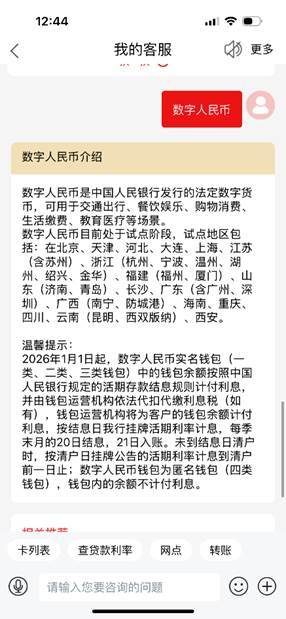
2025年险资举牌超30次再创新高,银行H股成“重仓区”
Xin Lang Cai Jing· 2026-01-02 23:44
登录新浪财经APP 搜索【信披】查看更多考评等级 2025年,保险资金举牌上市公司继续升温。 | 月份 | 保险公司 | 举牌标的 | 举牌后持股比例 | | --- | --- | --- | --- | | 1月 | 平安人寿 | 邮储银行H股 | 5% | | | 平安人寿 | 招商银行H股 | 5% | | | 新华人寿 | 杭州银行A股 | 5.87% | | | 阳光人寿 | 中国儒意H股 | 7.15% | | 2月 | 长城人寿 | 中国水务H股 | 5.02% | | | 平安人寿 | 农业银行H股 | 5% | | 3月 | 长城人寿 | 大唐新能源H股 | 5.0043% | | | 瑞众人寿 | 中信银行H股 | 5% | | | 中国人寿 | 电投产融A股 | 25.0540% | | | 平安人寿 | 招商银行H股 | 10% | | | 瑞众人寿 | 中国神华H股 | 5% | | 4月 | 新华人寿 | 北京控股H股 | 5% | | 5月 | 中邮人寿 | 东航物流A股 | 5% | | | 平安人寿 | 邮储银行H股 | 10% | | | 平安人寿 | 农业银行H股 | ...