
大成基金

Search documents
26只产品同时获批!首批浮动费率基金深度解析与投资策略指南来临!
市值风云· 2025-06-03 10:02
Core Viewpoint - The introduction of floating fee rate funds in China marks a significant shift in the asset management industry, aligning the interests of fund managers and investors by linking management fees to fund performance and holding periods [4][5][6]. Summary by Sections Introduction of Floating Fee Rate Funds - The China Securities Regulatory Commission released an action plan to promote high-quality development of public funds, emphasizing the establishment of a floating management fee mechanism linked to fund performance [2][4]. Characteristics of Floating Fee Rate Funds - The first batch of 26 floating fee rate funds has been approved, which redefines the traditional fixed fee model by dynamically linking management fees to performance and holding periods [4][5]. - Compared to traditional fixed rates (commonly 1.5%), the management fee for new products can fluctuate by 67% (ranging from 0.6% to 1.5%) [5][6]. - A "non-symmetric floating" rule is set, where if the fund underperforms the benchmark by 3%, the fee drops to 0.6%, and it only rises to 1.5% if it outperforms by 6% while achieving positive returns [5][6]. Implications for Fund Managers - Fund managers are now required to prioritize investor interests, as management fees can be significantly reduced if performance is poor, reflecting a strong commitment to aligning with investor outcomes [6]. - The new regulations place substantial performance pressure on fund managers, necessitating the selection of strong investment strategies and high-quality assets for these floating fee products [6]. Performance Analysis of Fund Managers - The article provides an analysis of the performance of fund managers associated with the newly launched floating fee rate funds, highlighting their historical returns over one, two, and three years [8][10]. - Notably, the fund manager Nong Bingli achieved a three-year return of 54.4%, focusing on technology and growth sectors [10][13]. Investment Strategies of Fund Managers - Nong Bingli's investment strategy emphasizes technology and consumer sectors, with a focus on leading companies in electronics, communications, and new energy [13][15]. - The article also discusses another fund manager, Zhou Yun, who adopts a conservative value investment approach, achieving consistent returns while maintaining a diversified portfolio [23][26]. Conclusion - The launch of floating fee rate funds represents a new phase in China's asset management industry, encouraging investors to choose products that align with their risk preferences and market conditions [37][38].

本周36只新基来袭:股混债QDII全品类上线 朱红裕、袁航、农冰立等名将“对决”
Xin Lang Ji Jin· 2025-06-03 08:50
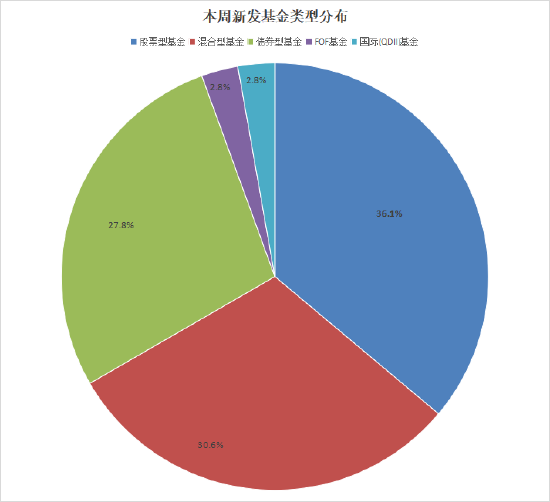
Group 1 - A total of 36 new funds were launched this week, including equity, mixed, QDII, and other types, from 26 fund companies such as Huatai-PineBridge, ICBC Credit Suisse, and Bosera [1][3] - Among the new funds, 13 are equity funds, 11 are mixed funds, 10 are bond funds, 1 is a FOF fund, and 1 is an international (QDII) fund, with equity and mixed funds accounting for 66.7% of the total [1] Group 2 - The top fund managers include Huatai-PineBridge, ICBC Credit Suisse, and Huafu, each launching 3 products, while others like Bosera and CMB have launched 2 products each [3] - Notable fund managers participating in the equity funds include Yin Hao from Bosera and Jiao Wenlong from ICBC Credit Suisse, focusing on popular sectors such as the Sci-Tech Innovation Board and innovative pharmaceuticals [4] Group 3 - 11 mixed funds were launched, with subscription thresholds as low as 1 yuan, and performance benchmarks including indices related to China's strategic emerging industries and the Hang Seng Index [6] - The mixed fund managers include veterans like Zhu Hongyu from CMB and younger managers like Nong Bingli from Invesco Great Wall [6] Group 4 - 10 bond funds were issued this week, including mixed secondary bond funds and pure bond funds, providing various options for investors based on their risk preferences [8] - The bond funds include products like Pengyang Heli A and Huisheng Hesheng Pure Bond, with subscription thresholds starting at 1 yuan [9] Group 5 - A QDII fund was launched after a 10-week hiatus, focusing on the Hang Seng Technology Index, with a subscription starting at 1 yuan and a performance benchmark tied to the index [10]
私募机构踊跃配置公募ETF ,科创、自由现金流成焦点
Huan Qiu Wang· 2025-06-03 05:57
Group 1 - The public ETF market has attracted diverse investors, including private equity institutions, since 2025, with 104 private equity institutions appearing in the top ten holders of 97 newly listed ETFs, holding a total of 1.783 billion shares as of May 31 [1][3] - Among the 104 private equity institutions, the majority are small institutions with management scales below 500 million, totaling 42. Medium-sized institutions, such as Zhufeng Asset, hold 240 million shares in ETFs, with a significant allocation to eight related products [3] - Large private equity institutions, with management scales above 5 billion, also show strong participation, with 13 institutions holding over 2 million shares in newly listed ETFs. Shixie Investment, a billion-level private equity institution, leads with an allocation of 50.055 million shares, focusing on multiple products including the Shanghai Stock Exchange Sci-Tech Innovation Board AI ETF [3] Group 2 - Private equity institutions have shown a strong preference for Sci-Tech themed ETFs and free cash flow ETFs, with their products appearing in the top ten holders of 33 newly listed Sci-Tech themed ETFs, holding a total of 571 million shares, indicating a sustained optimism towards the technology innovation sector [3] - Additionally, private equity institutions are among the top ten holders of 16 newly listed free cash flow ETFs, holding a total of 350 million shares. Notably, the Dachen CSI All-Index Free Cash Flow ETF and two other products received allocations exceeding 40 million shares from private equity institutions [4]

基金忠言|浮动费率基金货比货,如何避开坑,选到靠谱的?
Sou Hu Cai Jing· 2025-06-03 03:45
Core Viewpoint - The first batch of 26 floating rate funds is being issued, linking management fees to fund performance, which aims to encourage long-term investment strategies rather than short-term performance chasing [1][4]. Fund Management Fee Structure - Unlike traditional actively managed equity funds with a fixed management fee of 1.2%, these floating rate funds will charge a management fee of 1.5% if the investor holds the fund for over one year and the return exceeds the benchmark by 6%. Conversely, if the return underperforms the benchmark by more than 3%, the fee will drop to 0.6% [1]. - This fee structure reform is intended to shift the focus of fund management from short-term performance rankings to long-term performance against benchmarks [1][4]. Selection Criteria for Floating Rate Funds - Investors should assess the capability and experience of fund managers, as they are crucial to the fund's operation and long-term performance [1]. - Two types of "red flags" to watch for include: 1. Fund managers of older funds that have consistently underperformed their benchmarks but are still in charge [2]. 2. Newer fund managers with only one to three years of experience, whose investment strategies may lack stability [2]. Notable Fund Managers - Among the proposed fund managers for the floating rate funds, two categories stand out: 1. Mid-career managers with over five years of strong historical performance, such as Liu Jianwei from E Fund, who has outperformed benchmarks over the past 1, 3, and 5 years with an annualized return exceeding 11.2% [3]. 2. Senior managers with over ten years of experience, like Zhu Hongyu from China Merchants Fund, who has a diverse background in public and private funds, achieving an annualized return of over 12% since April 2022 [3]. Fund Manager Styles - Investors should consider the different investment styles of fund managers to find a suitable match for their risk tolerance: - Balanced style funds focus on diversified allocations across sectors like consumption, finance, and healthcare for steady growth [5]. - Growth style funds emphasize high-volatility sectors such as technology and renewable energy, suitable for risk-tolerant investors [5]. - Value style funds aim to identify undervalued assets, providing defensive strategies in volatile markets [5]. Impact of Fee Structure Reform - The reform of the fee structure is a significant step towards restoring the contractual spirit in public funds and is expected to change investment logic [4]. - Under the floating fee model, if a fund consistently underperforms its benchmark, management fees will decrease significantly, potentially leading to investor redemptions and prompting fund companies to enhance their research and investment capabilities [4].
ETF融资融券日报:两市ETF两融余额较前一交易日减少13.52亿元,华夏恒生互联网科技业(QDII-ETF)融资净买入达8723.79万元
2 1 Shi Ji Jing Ji Bao Dao· 2025-06-03 02:33
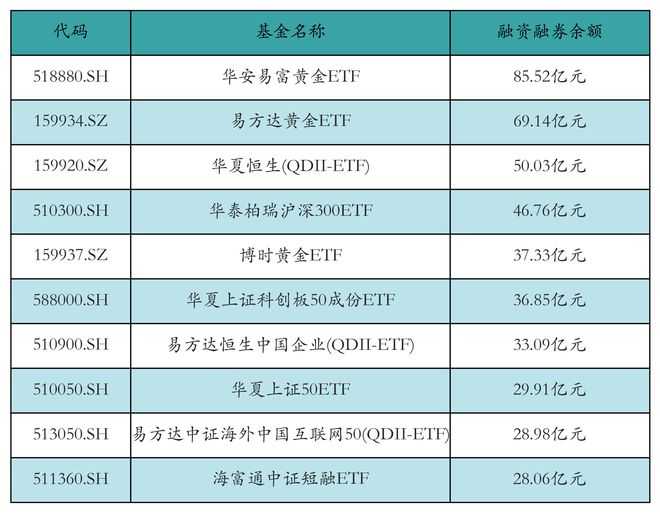
Market Overview - As of May 30, the total ETF margin balance in the two markets is 99.63 billion yuan, a decrease of 1.35 billion yuan from the previous trading day [1] - The financing balance is 94.43 billion yuan, down by 1.43 billion yuan, while the securities lending balance is 5.198 billion yuan, an increase of 79.83 million yuan [1] - In the Shanghai market, the ETF margin balance is 65.694 billion yuan, a decrease of 1.224 billion yuan, with a financing balance of 61.195 billion yuan, down by 1.291 billion yuan [1] - In the Shenzhen market, the ETF margin balance is 33.936 billion yuan, a decrease of 127 million yuan, with a financing balance of 33.238 billion yuan, down by 141 million yuan [1] ETF Margin Balance - The top three ETFs by margin balance on May 30 are: - Huaan Yifu Gold ETF (8.552 billion yuan) - E Fund Gold ETF (6.914 billion yuan) - Huaxia Hang Seng (QDII-ETF) (5.003 billion yuan) [2] - The top ten ETFs by margin balance include: - Huatai-PB CSI 300 ETF (4.676 billion yuan) - Bosera Gold ETF (3.733 billion yuan) - Huaxia Shanghai Stock Exchange Sci-Tech Innovation Board 50 ETF (3.685 billion yuan) [2] ETF Financing Buy Amount - The top three ETFs by financing buy amount on May 30 are: - Huatai-PB Southern Dongying Hang Seng Technology Index (QDII-ETF) (704 million yuan) - Huaxia Hang Seng Technology (QDII-ETF) (629 million yuan) - Hai Fu Tong CSI Short Bond ETF (549 million yuan) [3][4] ETF Financing Net Buy Amount - The top three ETFs by financing net buy amount on May 30 are: - Huaxia Hang Seng Internet Technology Industry (QDII-ETF) (87.2379 million yuan) - Yinhua CSI Innovative Drug Industry ETF (52.0896 million yuan) - Huatai-PB Southern Dongying Hang Seng Technology Index (QDII-ETF) (39.1981 million yuan) [5][6] ETF Securities Lending Sell Amount - The top three ETFs by securities lending sell amount on May 30 are: - Southern CSI 1000 ETF (93.662 million yuan) - Southern CSI 500 ETF (49.2873 million yuan) - Huaxia CSI 1000 ETF (23.8141 million yuan) [7][8]
年内新基金发行份额超过4000亿份;招商基金新增3位副总级首席丨天赐良基
Mei Ri Jing Ji Xin Wen· 2025-06-03 01:10
Group 1 - Fangzheng Fubon Fund announced the appointment of Li Yan as the new chairman, succeeding He Yagang who retired on May 28 [1] - Li Yan has been with Fangzheng Securities since January 2023, holding multiple senior positions including Vice President and Financial Responsible Person [1] Group 2 - Invesco Great Wall Fund announced that General Manager Kang Le will serve as the acting chairman following the departure of Li Jin on May 29 [2] - Kang Le has extensive experience in asset management, having previously worked at China Life Asset Management and CICC [2] Group 3 - Nine credit bond ETFs, including those from E Fund and Huaxia, have been approved as collateral for general pledged repos by the China Securities Depository and Clearing Corporation [3] - This marks the first batch of credit bond ETFs eligible for such collateral, with some products exceeding 10 billion yuan in scale [3] Group 4 - A total of 512 new funds have been established this year, with a combined issuance of 4060.84 billion units as of May 28 [4] - The largest fund issued this year is a mixed bond FOF with 6 billion units, while the share of equity funds has increased significantly from 21.14% to 40.59% [4] Group 5 - Over 40% of bond funds have reached new net asset value highs due to a recent recovery in the bond market [5] - Mid-to-long-term pure bond funds and mixed bond secondary funds have shown particularly strong performance [5] Group 6 - China Merchants Fund announced the appointment of three new deputy-level executives, including Wang Jing, Zhu Hongyu, and Chen Fangyuan, effective May 30 [6] - The new appointees have extensive backgrounds in investment management and fund operations [6] Group 7 - On May 30, the market experienced a decline, with the Shanghai Composite Index falling by 0.47% and the Shenzhen Component Index by 0.85% [7] - The total trading volume in the two markets was 1.14 trillion yuan, a decrease of 462 billion yuan from the previous trading day [7] Group 8 - The Greater Bay Area ETF led the market with a gain of 2.26%, while agriculture-related ETFs also performed strongly [8] - Conversely, the Xinchuang ETF saw the largest decline at 5.19%, along with a general pullback in Hang Seng internet-related ETFs [9]
超400亿资金狂涌!这类ETF迅速扩容
券商中国· 2025-06-01 23:20
Core Viewpoint - The bond ETF market is experiencing significant growth despite weak returns in the bond market, with substantial capital inflows and increased trading activity in bond ETFs [2][3][4]. Group 1: Market Performance - The bond market has shown volatility this year, with bond fund returns falling short of expectations, yet the bond ETF market continues to thrive [2][3]. - As of May 30, the total scale of bond ETFs has expanded from 1,740 billion to 2,890 billion, marking a 66% increase [6]. - In May alone, bond ETFs saw over 40 billion in net inflows, accounting for nearly half of the total net inflows for the year [4]. Group 2: Product Development - The bond ETF market has welcomed new products, including credit bond ETFs and long-duration interest rate bond ETFs, with the number of credit bond ETFs increasing from 3 to 11 this year [7]. - The introduction of the general pledge-style repurchase business for credit bond ETFs is expected to accelerate the expansion of the bond ETF market [5][8]. Group 3: Investor Engagement - There is a growing enthusiasm among investors for trading bond ETFs, with 10 out of the top 12 ETFs by trading volume on May 30 being bond ETFs [4]. - The liquidity and real-time trading capabilities of bond ETFs are highlighted as significant advantages over traditional bond funds, attracting more long-term capital [5]. Group 4: Future Potential - The bond ETF market in China still has considerable room for growth compared to developed markets, with potential categories like high-yield bonds and inflation-protected securities yet to be fully explored [9]. - The development of a diverse product ecosystem and a mature investor base is essential for the future growth of bond ETFs [10].

揭秘“股神”巴菲特的3大财富密码,普通人也能抄作业!
天天基金网· 2025-05-31 04:20
Core Viewpoint - Warren Buffett announced his decision to step down as CEO by the end of the year, marking the end of an era in the investment world [1] Group 1: Investment Philosophy - The concept of a "moat" in investing includes several categories, such as cost advantages in production and services, and demand-side advantages that are difficult for competitors to replicate [3] - The essence of a moat is an advantage that cannot be easily imitated or surpassed by competitors in the short to medium term [3] Group 2: Circle of Competence and Focus - The main challenge in executing a seemingly simple investment framework is the discrepancy between ideals and reality, particularly due to market volatility and unpredictability [4] - Understanding value investing, including concepts like margin of safety and circle of competence, is crucial for investors [4] Group 3: Time and Patience - Time and patience are fundamental yet challenging aspects of investing; even a modest annual return can lead to significant wealth accumulation over time through compounding [5] - Buffett's investment philosophy emphasizes the importance of waiting for the right opportunities, suggesting that only a limited number of investments (e.g., 20) may define an investor's success [6]

9只信用债ETF解锁质押新功能,债券ETF市场扩容按下加速键
Di Yi Cai Jing· 2025-05-30 10:19
Group 1 - The core viewpoint of the article is the significant innovation in the bond market with the introduction of the pledge mechanism for credit bond ETFs, allowing for enhanced liquidity and financing options [1][2][3] - Nine credit bond ETFs have been approved for inclusion in the general pledge repo collateral list, marking an important step in the development of fund repurchase trials [1][2] - The inclusion of credit bond ETFs in the pledge repo system is expected to broaden financing channels for investors and improve capital efficiency, addressing previous limitations in the credit bond ETF market [3][6] Group 2 - The nine credit bond ETFs included in the pledge repo system have shown strong fundraising capabilities, with a total issuance scale of 21.71 billion yuan, and their total scale has increased to 62.37 billion yuan, reflecting a growth of 1.87 times since their launch [3][4] - The average daily trading volume of these ETFs has been robust, with an average turnover rate of 58.73%, indicating high market activity [4][5] - The bond ETF market has experienced explosive growth, with the total scale reaching 284.13 billion yuan as of May 29, 2023, representing a 60% increase since the beginning of the year [6][8] Group 3 - The credit bond ETFs are seen as versatile tools that can provide stable coupon income while allowing for quick position adjustments through T+0 trading, enhancing investor returns [7][8] - The average return of the nine credit bond ETFs since the beginning of the year is 0.56%, outperforming the overall average return of the bond ETF market [8]
深证100指数ETF今日合计成交额1.40亿元,环比增加41.00%
Zheng Quan Shi Bao Wang· 2025-05-30 09:59
Core Viewpoint - The trading volume of the Shenzhen 100 Index ETFs increased significantly today, with a total trading volume of 140 million yuan, marking a 41% increase compared to the previous trading day [1] Trading Volume Summary - The E Fund Shenzhen 100 ETF (159901) had a trading volume of 92.62 million yuan, up 32.99 million yuan from the previous day, representing a 55.33% increase [1] - The Southern Shenzhen 100 ETF (159212) recorded a trading volume of 32.89 million yuan, an increase of 14.25 million yuan, with a growth rate of 76.48% [1] - The Founder Fubon Shenzhen 100 ETF (159961) saw a trading volume of 1.37 million yuan, up 970,000 yuan, reflecting a substantial increase of 245.94% [1] Market Performance Summary - As of market close, the Shenzhen 100 Index (399330) fell by 0.77%, while the average decline for related ETFs was 0.59% [1] - The E Fund Shenzhen 100 ETF (159901) and the Huaan Shenzhen 100 ETF (159706) experienced notable declines of 0.75% and 0.74%, respectively [1]