平安人寿

Search documents
华夏幸福:董事会对平安人寿临时提案不予提交股东大会审议
Zheng Quan Shi Bao Wang· 2025-12-22 11:49
人民财讯12月22日电,华夏幸福(600340)12月22日公告,公司董事会12月19日下午收到公司股东平安 人寿邮件,提议新增五项临时提案至公司2025年第三次临时股东大会审议,相关临时提案为:《关于将 与公司预重整、重整、清算有关事项认定为股东大会特别决议事项的议案》;《关于罢免公司第八届董 事会非独立董事冯念一的议案》;《关于选举仇文丽女士为公司第八届董事会非独立董事的议案》; 《关于同意公司配合 <债务重组计划> 的金融机构债权人委员会进行专项财务尽调的议案》;《关于要 求公司高级管理人员就董事会决议通过的债务重组计划执行情况严重不及预期的具体原因进行详细说明 并公开披露的议案》。 12月21日,公司召开董事会会议,审议了《关于公司股东要求增加公司2025年第三次临时股东大会临时 提案的议案》,该议案以1票同意,7票反对,0票弃权的投票结果,未通过公司董事会审议。 ...

险企年末密集“补血” 永续债为何成新主力?
Guo Ji Jin Rong Bao· 2025-12-19 15:44
Core Viewpoint - The issuance of perpetual bonds by insurance companies is increasing as they seek to strengthen their capital base and meet regulatory requirements, particularly in light of the upcoming end of the transition period for the new solvency regulations. Group 1: Bond Issuance Details - On December 18, Great Wall Life successfully issued 1 billion yuan of perpetual bonds with a coupon rate of 2.70% [1] - In December, several insurance companies, including Ping An Life and Dongwu Life, have issued perpetual bonds or capital supplement bonds, totaling 23.5 billion yuan [1] - The issuance of bonds is primarily aimed at enhancing the solvency levels of these companies and supporting their ongoing business development [3] Group 2: Regulatory and Market Context - The acceleration in bond issuance is attributed to the approaching end of the transition period for the "Solvency II" regulations, which has led to a concentrated release of previously accumulated capital needs [4] - The new accounting standards have increased the volatility of solvency ratios, prompting companies to issue bonds to quickly replenish capital and stabilize regulatory metrics [4] Group 3: Strategic Importance of Capital - The issuance of bonds is seen as a way to prepare for the next year's business operations and to reserve capital for long-term growth needs [4] - As the industry shifts towards protection-oriented and long-term savings products, sufficient capital is necessary to support business expansion and strategic investments [5] Group 4: Trends in Perpetual Bonds - Perpetual bonds have emerged as a key tool for insurance companies to supplement their capital, with a total issuance of 514.7 billion yuan by 12 companies since 2025 [6] - The supply of perpetual bonds is concentrated among large and medium-sized insurance institutions, as they meet the higher issuance criteria compared to smaller firms [7] Group 5: Long-term Capital Strategies - While bond issuance provides short-term capital relief, the long-term solution lies in enhancing the internal capital generation capabilities of insurance companies [8] - Companies are encouraged to focus on high-quality development, optimize their business structures, and improve operational efficiency to achieve sustainable growth [8][9]


险企年末密集“补血”,永续债为何成新主力?
Guo Ji Jin Rong Bao· 2025-12-19 15:40
Core Viewpoint - The issuance of perpetual bonds by insurance companies is accelerating as they seek to strengthen their capital base in response to regulatory requirements and market conditions [1][2][4]. Group 1: Recent Bond Issuances - On December 18, Great Wall Life successfully issued 1 billion yuan of perpetual bonds with a coupon rate of 2.70% [1]. - In December, several insurance companies, including Ping An Life and Dongwu Life, issued perpetual bonds or capital supplement bonds, totaling 23.5 billion yuan [1][3]. - The issuance of bonds is primarily aimed at enhancing the solvency levels of these companies and supporting sustainable business development [3][4]. Group 2: Factors Driving Bond Issuance - The acceleration in bond issuance is attributed to multiple factors, including the end of the transition period for the "Solvency II" regulations, which has increased the urgency for capital replenishment [2][4]. - New accounting standards have intensified the volatility of solvency ratios, prompting companies to issue bonds to stabilize regulatory metrics [4]. - The need to reserve capital for business development and to support growth in the following year is also a significant internal demand [4][5]. Group 3: The Role of Perpetual Bonds - Perpetual bonds have emerged as a key financing tool for insurance companies, with a total issuance of 35.77 billion yuan in 2023 [6]. - The issuance of perpetual bonds is concentrated among large and medium-sized insurance firms, as they meet the higher issuance criteria compared to smaller companies [7]. - Insurance companies must meet specific conditions to issue perpetual bonds, including maintaining a solvency ratio of at least 100% and ensuring that the balance of perpetual bonds does not exceed 30% of core capital [7]. Group 4: Long-term Capital Strategies - While bond issuance provides short-term capital relief, the insurance industry must focus on enhancing its internal capital generation capabilities for sustainable growth [8]. - Companies are encouraged to optimize their business structures, improve operational efficiency, and manage assets and liabilities effectively to achieve long-term stability [8][9]. - Emphasizing high-value protection and long-term savings products, along with prudent investment strategies, is essential for improving core profitability and ensuring a solid foundation for future growth [8][9].
600039获险资举牌
Shang Hai Zheng Quan Bao· 2025-12-19 04:39
12月18日晚间,四川路桥(600039)发布公告称,中邮保险于2025年12月17日通过二级市场买入股票的方式增持公司11.43万股,占公司总股本的 0.0013%。增持后,中邮保险持有四川路桥4.35亿股,占公司总股本的5.00%。此次权益变动不触及要约收购,且不会导致公司控股股东、实际控制人发生 变化。 险资举牌上市公司年内已近40次 值得注意的是,险资举牌今年持续升温。据不完全统计,年内险资举牌接近40次,创2016年以来新高。其中,险资对H股公司举牌次数超30次。 在此次举牌四川路桥之前,中邮保险年内已进行过三次举牌。分别是东航物流(601156.SH)、绿色动力环保(01330.HK)和中国通号(03969.HK),涉 及基建、环保和交通板块。 中邮保险有关负责人此前曾表示,展望"十五五",险资需在长期资本入市、科技攻关、城市更新、养老保障等领域当好"稳定器"。中邮保险将从锻造跨资 产、跨周期主动管理能力;健全长期资本运作机制;聚焦国家急需领域深化布局;塑造"稳健透明、专业可信"的长期资本品牌等四方面持续发力。 除中邮保险外,还包括平安人寿年内举牌了招商银行H股、邮储银行H股、农业银行H股等,长城 ...


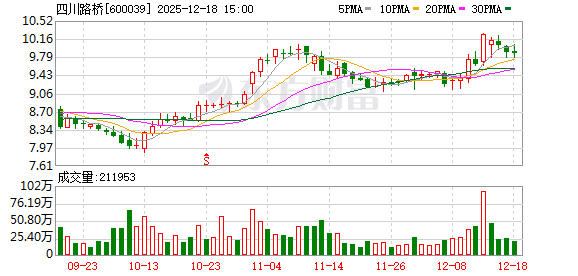
600039,获险资举牌
Shang Hai Zheng Quan Bao· 2025-12-18 23:29
12月18日晚间,四川路桥(600039)发布公告称,中邮保险于2025年12月17日通过二级市场买入股票的方式增持公司11.43万股,占公司总股本的 0.0013%。增持后,中邮保险持有四川路桥4.35亿股,占公司总股本的5.00%。此次权益变动不触及要约收购,且不会导致公司控股股东、实际控制人发生 变化。 业绩表现或为险资举牌原因之一 据披露,对于此次变动,中邮保险是基于自身发展投资需求和支持上市公司持续健康发展的规划安排进行长期投资。 公开信息显示,四川路桥主要从事工程建设、矿业及新材料、清洁能源等产业的投资、开发、建设和运营业务。工程建设板块,业务覆盖公路、铁路、市 政、房建、港航等"大土木"领域,具备投融资、设计、建设、运营、养护全产业链一体化发展能力。 今年以来,四川路桥整体业绩表现良好。财报显示,今年前三季度,四川路桥实现营收732.81亿元,同比增长1.95%;归母净利润53.00亿元,同比增长 11.04%;单三季度归母净利润25.20亿元,同比增长59.72%。 公司半年报披露,报告期内,其发布2024年度利润分配方案,现金分红32.84亿元,2024年度累计分红金额占当年归属于上市公司股 ...
人工智能抽干资本市场
投中网· 2025-12-18 06:45
Core Viewpoint - The article discusses the recent market dynamics surrounding AI stocks, particularly focusing on the significant fluctuations in the stock price of the newly listed company, Moer Thread, and the implications of institutional investment behavior in the A-share market [6][9]. Group 1: Market Reactions and Trends - Moer Thread announced plans to use up to 7.5 billion yuan of raised funds for financial management, which led to a market reaction resulting in a single-day drop of over 19% and a subsequent decline of 6.13% [6][9]. - The extreme market conditions in the AI sector have raised concerns about a potential liquidity crisis, as institutional investors appear to be heavily concentrated in a few high-profile stocks, leading to a "二八分化" (80/20 phenomenon) where the majority of stocks are declining while a few are surging [11][12]. - Institutional funds are increasingly clustering around specific sectors while showing less interest in individual stocks, indicating a shift in investment strategies [12][17]. Group 2: Institutional Investment Behavior - As of the third quarter of 2025, 922 public funds held shares in Cambricon, with a total holding value of approximately 71.3 billion yuan, indicating a significant trend of institutional investment in AI-related stocks [14]. - The inflow of institutional funds into AI stocks from October 8 to December 15, 2025, was substantial, with Cambricon receiving approximately 129.7 billion yuan, highlighting the growing interest in AI leaders [14][15]. - New regulations in the public fund industry are likely to further catalyze this extreme concentration of institutional funds, as fund managers may prefer to invest in well-established stocks with strong performance certainty [17][18]. Group 3: Market Liquidity and Structural Issues - The article notes that while the A-share market has seen significant inflows, the overall market sentiment is not as vibrant as in previous bull markets, with a notable lack of widespread participation among retail investors [20][23]. - Insurance funds are increasingly being directed into the stock market, with projections suggesting an annual influx of around 500 billion yuan starting in 2025, primarily through ETFs [23][24]. - The current market environment is characterized by a "量化" (quantitative) approach to investment, where traditional active management strategies are being overshadowed by quantitative products, leading to a peculiar liquidity situation where funds are concentrated in a few sectors [24][25]. Group 4: Global Market Influences - The article highlights that while institutional investors in A-shares remain optimistic about AI stocks, external factors such as the recent sell-off of tech stocks in the U.S. are impacting market sentiment and raising concerns about AI valuations [27][34]. - The ongoing global competition for computing power and AI capabilities is becoming a focal point in the U.S.-China tech rivalry, with implications for market dynamics and investment strategies [31][32].


规模超千亿元 保险公司密集发债
Jin Rong Shi Bao· 2025-12-17 11:59
Core Viewpoint - The trend of insurance companies issuing capital supplementary bonds and perpetual bonds for financing has become increasingly significant in 2023, driven by macroeconomic conditions, interest rates, market competition, and regulatory policies [1][2][3]. Group 1: Capital Supplementary Bonds - Recently, the Financial Regulatory Bureau approved Ping An Life to publicly issue up to 20 billion yuan of 10-year redeemable capital supplementary bonds [1]. - As of December 17, 2023, the total amount of capital supplementary bonds and perpetual bonds issued and approved for issuance in the insurance industry has reached 102.87 billion yuan [1]. - A total of 13 insurance companies have issued capital supplementary bonds this year, with a total issuance amount of 49.9 billion yuan and interest rates ranging from 2.15% to 2.8% [3]. Group 2: Perpetual Bonds - The total issuance of perpetual bonds in 2023 has reached 52.97 billion yuan, with interest rates between 2.2% and 2.95% [2]. - Perpetual bonds serve as an important tool for insurance companies to enhance their core capital, especially in light of stricter core capital recognition standards since the implementation of the "Solvency II" Phase II rules in 2022 [2]. - The transition period for the "Solvency II" Phase II project has been extended to the end of 2025, which is expected to lead to more insurance companies issuing bonds to alleviate capital pressure [2]. Group 3: Financing Structure Optimization - The choice of capital supplementary tools by insurance companies is influenced by the nature and purpose of the capital, with capital supplementary bonds primarily used to supplement subordinate capital and meet solvency requirements [4]. - Perpetual bonds, having no fixed maturity date, reduce repayment pressure but typically come with higher interest rates, increasing financial costs [4]. - The trend of optimizing capital structure through the issuance of both perpetual bonds and capital supplementary bonds is expected to continue, supporting the stable operation and sustainable development of insurance companies [5].
人工智能抽干资本市场?
Xin Lang Cai Jing· 2025-12-17 05:30
Core Viewpoint - The article discusses the extreme market conditions in the AI sector and concerns regarding the potential for newly listed stocks to underperform, contrasting this with past worries about high valuations and fundraising practices in the market [1] Group 1: Market Dynamics - Since July 2023, regulatory bodies have addressed issues such as oversupply in the A-share market, excessive fundraising, and violations related to stock reductions, aiming to restore profitability in the A-share market, which has significantly contributed to the current bull market [1] - The market has seen a significant concentration of funds in a few hot stocks, with over 80% of stocks declining while major AI concept stocks exhibit divergence [2] Group 2: Institutional Investment Trends - Institutional funds have shown a strong preference for AI stocks, with 922 public funds holding shares in Cambrian Technology, amounting to a quarterly change of approximately 33.4 billion yuan, representing 12.86% of circulating shares [3] - From October 8 to December 15, institutional inflows into Cambrian Technology reached approximately 129.7 billion yuan, with other AI stocks like SMIC and Haiguang Information also receiving substantial inflows [3][4] Group 3: Regulatory Impact on Fund Management - New regulations for public funds emphasize long-term performance and investor returns over sales metrics, potentially leading fund managers to concentrate on established stocks with strong performance certainty, thus exacerbating market polarization [4][5] Group 4: Liquidity and Market Behavior - The influx of long-term capital, particularly from insurance funds, is expected to provide around 500 billion yuan annually to the market starting in 2025, with a significant portion directed towards ETFs [6][7] - The current market liquidity is characterized by a concentration of funds in a narrow range of stocks, leading to a situation where the market appears active but is actually driven by a limited number of assets [7][8] Group 5: Global Market Influences - While institutional investors in A-shares remain optimistic about AI stocks, Wall Street has begun to reduce valuations, influenced by factors such as the Federal Reserve's policies and disappointing earnings reports from major tech companies [9][10] - The global computing power market is projected to grow significantly, with estimates indicating an increase from 1,397 EFLOPS in 2023 to 16 ZFLOPS by 2030, highlighting the ongoing competition in the AI sector [11][12] Group 6: Conclusion and Future Outlook - The narrative surrounding AI and the bull market in A-shares is compelling, but there are concerns about potential liquidity issues that could affect investors not heavily invested in AI stocks [13] - The current trend of capital flowing into a structurally volatile market raises the possibility of an impending structural bear market [13]
险资年内已举牌38次
21世纪经济报道· 2025-12-16 07:28
险资再度举牌 编辑丨曾芳 股市进入调整期,险资举牌速度加快,近日瑞众人寿发布公告称,该公司委托投资举牌青岛 啤酒H股股票,最新持股比例占青岛啤酒H股股本的5%。随着瑞众人寿举牌成功, 今年险 资的举牌次数达到38次,仅次于2015年的62次,为历史第二高。 回顾2025年险资举牌行为,呈现出举牌热情高涨、对同一标的多次举牌、举牌对象集中于 上市公司H股等特点。业内人士认为,预计2026年这一趋势仍将延续。从举牌资产所属板块 来看,传统板块仍具有压舱石地位,但科技板块的比重有望增加。 根据瑞众人寿的公告,12月5日,其买入青岛啤酒H股20万股,累计持有青岛啤酒H股 3276.4万股,占该上市公司H股股本的5%,从而触发举牌。 险资举牌是指保险公司持有或与其关联方及一致行动人共同持有上市公司5%股权,以及之 后每增持达到5%时需依规披露的行为。 距离瑞众人寿最近的一次举牌是在11月26日,彼时泰康人寿发布关于举牌复宏汉霖H股股票 的信息披露公告显示,其通过受托人泰康资产管理(香港)有限公司(以下简称"泰康资产 香港")管理的账户在二级市场买入复宏汉霖H股股份。2025年11月20日,泰康人寿买入复 宏汉霖H股股票 ...

瑞众人寿再入手青岛啤酒H股,解码险资“南下”投资新逻辑
Nan Fang Du Shi Bao· 2025-12-16 06:01
Core Insights - Insurance capital is actively entering the market, with a notable investment by Ruizhong Life in Qingdao Beer, coinciding with a regulatory adjustment that lowers investment risk factors for insurance funds [2][3] - The trend of insurance capital acquiring shares reflects a significant shift in investment logic within the industry, driven by policy incentives and pressure on liability-side returns [2][5] Group 1: Investment Activities - Ruizhong Life invested 10.64 million HKD to acquire 200,000 shares of Qingdao Beer, increasing its stake to 5% [3] - This marks the third time in 2025 that Ruizhong Life has made a significant investment in H-shares, focusing on high-dividend, undervalued core assets [3][4] - The total market value of Ruizhong Life's holdings in Qingdao Beer is approximately 1.571 billion CNY, indicating a long-term investment strategy [3] Group 2: Regulatory Environment - The National Financial Regulatory Administration has been adjusting risk factors for insurance company investments, which has facilitated increased equity asset allocations [7][8] - As of December 5, 2023, the risk factor for certain stocks was lowered, allowing for a potential influx of approximately 108.6 billion CNY into the market if insurance funds fully reallocate to these stocks [7][8] - The adjustments are seen as a means to encourage long-term holding behaviors among insurance capital, particularly in high-quality stocks and innovative enterprises [8] Group 3: Market Trends - There has been a significant increase in insurance capital's share acquisitions, with 38 instances recorded in 2025, the highest since 2016 [5][9] - H-shares have become the preferred investment target for insurance capital, with over 80% of acquisitions in 2025 being H-shares, attributed to their valuation advantages and higher dividend yields [5][6] - The shift in investment focus includes a growing interest in technology and pharmaceutical sectors, indicating a diversification of investment strategies beyond traditional high-dividend sectors [6][9]