
现代汽车集团

Search documents
“好邻居金不换!”李在明携韩商业天团访华 呼吁制造业创新合作
2 1 Shi Ji Jing Ji Bao Dao· 2026-01-05 15:50
Group 1: Economic Cooperation - The bilateral trade volume between China and South Korea has increased from $6.5 billion at the time of diplomatic relations in 1992 to $272.9 billion in 2024, with China being South Korea's largest trading partner and South Korea being China's second-largest trading partner [1][2] - The two countries aim to deepen cooperation in manufacturing innovation, supply chain collaboration, and explore new markets in consumer goods and services [2][5] - The ongoing negotiations for the second phase of the China-South Korea Free Trade Agreement (FTA) are expected to provide new momentum for corporate collaboration, particularly in emerging fields such as artificial intelligence, biopharmaceuticals, and green industries [5][6] Group 2: Cultural and Service Industry Collaboration - There is a growing interest in cultural and service industry cooperation, with popular travel experiences such as "Seoul Cultural Tours" and "K-Beauty Experiences" among Chinese youth, and "Shanghai Weekend Trips" favored by South Korean youth [6] - The collaboration in content industries, gaming, performances, and cultural platforms is seen as a vital link between manufacturing, consumer investment, and new market development [6] Group 3: Political Context and Future Outlook - The visit of South Korean President Yoon Suk-yeol to China is viewed as a significant diplomatic achievement, marking a renewed focus on strengthening bilateral relations [3][4] - The South Korean government emphasizes the importance of mutual respect and understanding in enhancing communication and cooperation with China [3] - The strategic partnership between China and South Korea is expected to evolve positively under the leadership of both countries, with a focus on economic stability and regional security [5][6]
“好邻居金不换!”李在明携韩商业天团访华,呼吁制造业创新合作
2 1 Shi Ji Jing Ji Bao Dao· 2026-01-05 13:48
Group 1: Economic Cooperation - The bilateral trade volume between China and South Korea has increased from $6.5 billion at the time of diplomatic relations in 1992 to $272.9 billion in 2024, with China being South Korea's largest trading partner [2] - The forum highlighted three main topics for discussion: manufacturing innovation, supply chain cooperation, and consumer goods market [3] - The two countries aim to deepen cooperation in emerging fields such as artificial intelligence, biopharmaceuticals, green industries, and the silver economy, as part of the ongoing negotiations for the second phase of the China-South Korea Free Trade Agreement [5] Group 2: Cultural and Service Industry Collaboration - There is a growing interest in cultural exchanges, with popular travel experiences like "Seoul Cultural Tours" and "K-Beauty Experiences" among Chinese youth, and "Shanghai Weekend Trips" favored by South Korean youth [6] - The collaboration in content industries, gaming, performances, and cultural platforms is expected to strengthen ties between manufacturing, consumer investment, and new market exploration [6] - Despite rising competition in certain industries, representatives believe that the strategic and mutual benefits of cooperation between the two countries remain unchanged [6] Group 3: Government Support and Future Outlook - The South Korean government is committed to enhancing cooperation with China to provide a favorable environment for businesses and expand cooperation channels [2][6] - The visit of President Yoon signifies a significant diplomatic achievement, aiming to restore comprehensive relations and plan for the future of bilateral ties over the next 30 years [3][4] - The emphasis on mutual respect and understanding in government communications is seen as crucial for the ongoing development of China-South Korea relations [4][5]

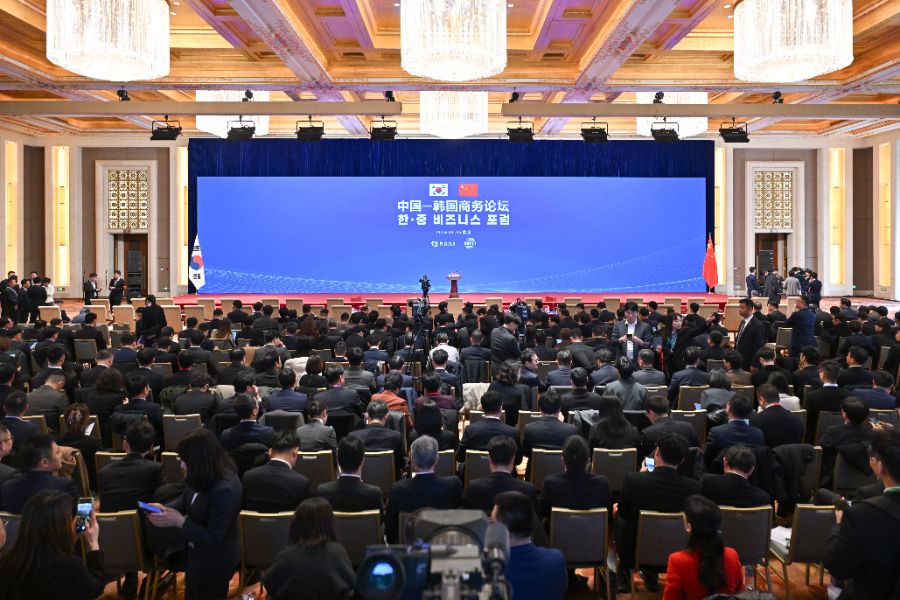
李在明:千金难买好邻居,韩中应在国际环境变化中坚持合作
Bei Jing Ri Bao Ke Hu Duan· 2026-01-05 12:01
Core Points - The China-Korea Business Forum held on January 5 in Beijing emphasized the importance of mutual trust and benefit in advancing cooperation between China and South Korea, which is considered the most valuable asset in their relationship [1][6] - This year marks the 34th anniversary of diplomatic relations between China and South Korea, with significant achievements in various fields of cooperation since the establishment of ties [1][6] Group 1: Historical Context and Trade Relations - Historical trade exchanges between Korea and China have played a crucial role, with Korean paper becoming an important carrier of Chinese knowledge and culture, which in turn promoted the development of Korean scholarship and culture [3][8] - Despite tensions in bilateral relations, trade between the two countries has never ceased, contributing to the prosperity, stability, and lasting peace in East Asia [3][8] Group 2: Current Cooperation and Future Opportunities - Both countries are enhancing their manufacturing competitiveness through innovation, with companies encouraged to learn from each other's policies and technologies to explore collaborative solutions [5][10] - Increased youth exchanges and cultural experiences are creating new cooperation opportunities in sectors such as content industry, gaming, performances, and cultural platforms, which serve as important links for further business collaboration [5][10] - The acceleration of negotiations on the China-Korea Free Trade Agreement for services and investments is expected to provide new momentum for business cooperation [5][10] Group 3: Forum Participation and Discussions - The China-Korea Business Forum was co-hosted by the China Council for the Promotion of International Trade and the Korea Chamber of Commerce and Industry, with over 400 attendees including government officials, business leaders, and scholars from both countries [5][10] - Key topics discussed included "manufacturing innovation, supply chain cooperation," "new markets for consumer goods," and "service industry cooperation," facilitating in-depth exchanges among entrepreneurs [5][10]
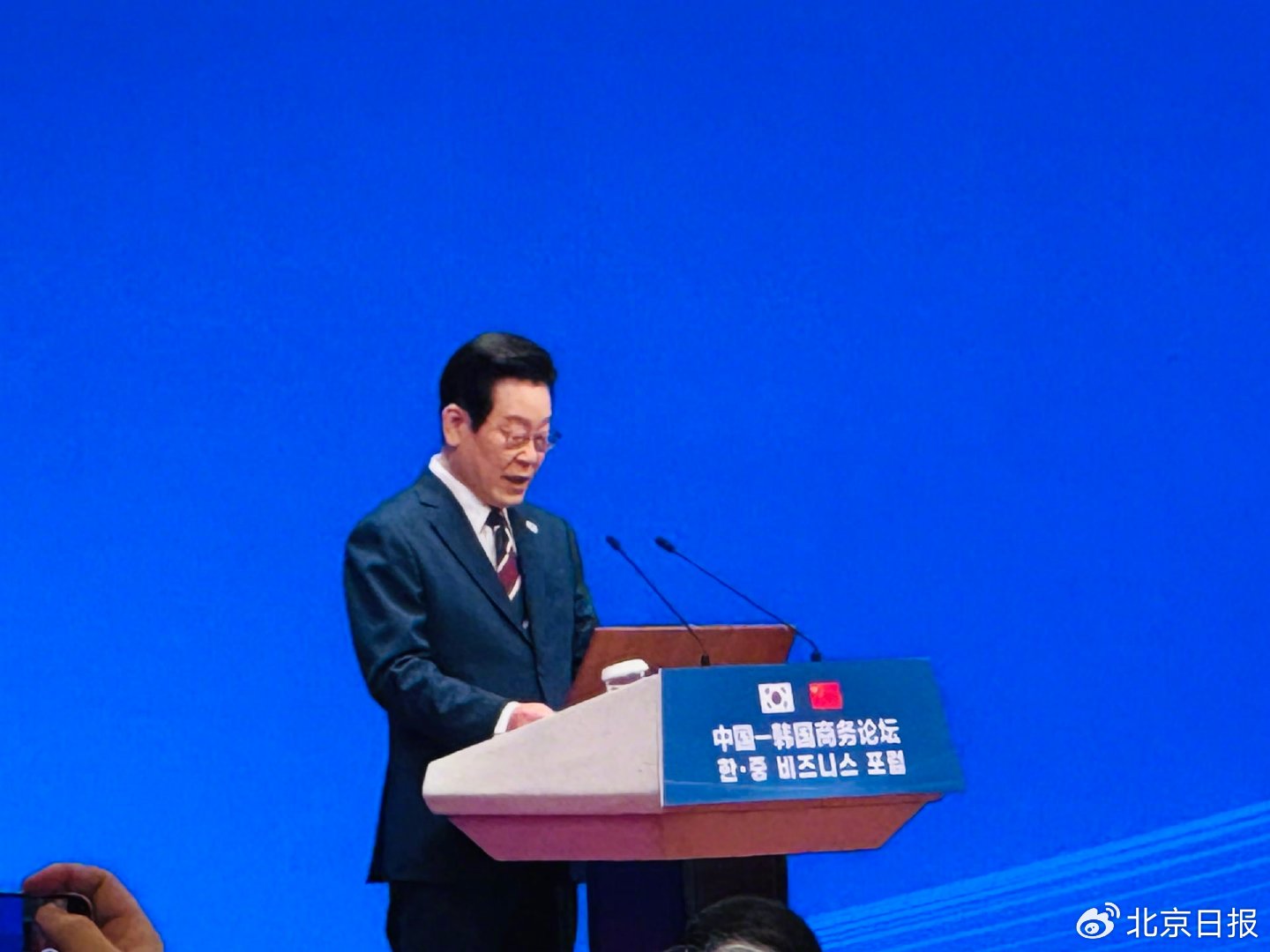
韩国四大财团访华!
国芯网· 2026-01-05 11:07
Group 1 - The article highlights the significance of the recent visit by South Korean President Lee Jae-myung to China, marking his first visit since taking office, accompanied by a large economic delegation from South Korea [2][4] - The economic delegation, led by prominent figures from major South Korean corporations, aims to strengthen economic ties and includes over 200 members, indicating a strong commitment to enhancing bilateral trade and cooperation [4] - Data shows that in 2024, the bilateral trade volume between China and South Korea is projected to reach $328.08 billion, reflecting a growth of 5.6%, with China being South Korea's largest trading partner for 21 consecutive years [4]
韩国四大财团掌门人都来了!
Di Yi Cai Jing· 2026-01-05 06:07
Core Viewpoint - The visit of South Korean President Lee Jae-myung to China marks a significant diplomatic effort to establish a more predictable framework for Sino-Korean relations amid ongoing U.S.-China strategic competition [7]. Group 1: Economic Delegation and Trade Dynamics - Accompanying President Lee is a large economic delegation of over 200 members, led by the Korea Chamber of Commerce and Industry, including leaders from major corporations like Samsung, SK Group, Hyundai, and LG [1]. - The bilateral trade structure between China and South Korea has undergone a significant transformation, with South Korea's trade surplus with China being disrupted, indicating a structural turning point in their economic relationship [5]. - In 2024, the bilateral trade volume is projected to reach $272.91 billion, reflecting a 2% increase, but a trade deficit of $6.83 billion is expected for the second consecutive year, down from $18 billion in 2023 [4]. Group 2: Changes in Trade Structure - The traditional trade model, where South Korea provided high-end intermediate goods and China handled manufacturing, is being altered as China reduces its dependency on South Korean imports in sectors like semiconductors and chemical materials [5]. - The shift in China's export structure, focusing more on Southeast Asia and other countries, has weakened South Korea's role as a key supplier of components [5]. - South Korea's export structure is highly concentrated, making it vulnerable to shocks, particularly in sectors like semiconductors and displays, which could lead to a reversal in trade dynamics [5]. Group 3: Future Cooperation and Risks - Future Sino-Korean trade is unlikely to revert to the previous vertical division of labor, instead moving towards a model of "limited competition and functional complementarity," with potential growth areas in renewable energy, biotechnology, and digital services [5]. - The primary risk in Sino-Korean relations is not competition but the potential for irrational decoupling due to misjudgments or policy shifts, highlighting the need for high-level communication to stabilize expectations [8]. - The visit is seen as an opportunity for South Korea to redefine its strategic role, aiming to act as a bridge in technology and rules rather than being passively affected by great power competition [8].
韩国四大财团掌门人都来了!
第一财经· 2026-01-05 06:05
Core Viewpoint - The article discusses the significant changes in the trade relationship between China and South Korea, highlighting a structural shift from a trade surplus for South Korea to a trade deficit, indicating a transformation in their economic dynamics [6][7]. Group 1: Trade Dynamics - In 2019, South Korea had a trade surplus of $289.7 billion with China, but by 2024, this had shifted to a trade deficit of $68.3 billion, marking a significant change in trade patterns [6][7]. - The trade surplus that South Korea enjoyed for years has been disrupted since 2023, reflecting deeper, long-term changes in the trade structure between the two countries [7]. - South Korea's reliance on exports of semiconductors, displays, and chemical products has made its trade vulnerable to cyclical downturns and geopolitical pressures, leading to the recent trade deficits [8]. Group 2: Economic Cooperation and Future Prospects - The visit of South Korean President Yoon Suk-yeol is seen as an opportunity to establish a more predictable framework for China-South Korea relations amidst ongoing U.S.-China strategic competition [8][9]. - Future cooperation areas identified include renewable energy, biotechnology, and aging-related industries, which are expected to provide stable growth opportunities for both countries [9]. - The article emphasizes the importance of high-level communication to prevent irrational decoupling due to misjudgments or policy shifts, which could destabilize investment and supply chain decisions [9][10].
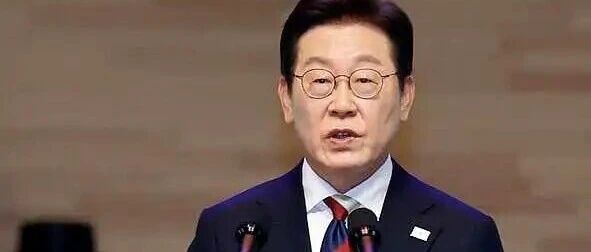
韩国四大财团掌门人都来了!200多家韩企来华寻找经贸新“稳定器”
Di Yi Cai Jing· 2026-01-05 05:54
Core Insights - The visit of South Korean President Yoon Suk-yeol to China marks a significant shift in the trade dynamics between South Korea and China, as Korean companies seek new opportunities and markets amid changing trade structures [1][4] Group 1: Trade Dynamics - The scale of the economic delegation accompanying President Yoon is notable, with over 200 members, including leaders from major corporations like Samsung, SK Group, Hyundai, and LG [1] - In 2019, the bilateral trade volume between South Korea and China was $243.43 billion, with South Korea exporting $136.2 billion and importing $107.23 billion, resulting in a trade surplus of $28.97 billion [3] - By 2024, the bilateral trade volume is projected to reach $272.91 billion, reflecting a 2% increase, but a trade deficit of $6.83 billion is expected for the second consecutive year [3] Group 2: Structural Changes in Trade - The trade surplus that South Korea enjoyed with China has been disrupted, indicating a structural turning point in the economic relationship, moving away from a model where South Korea provided high-end intermediate goods while China handled manufacturing [4] - China's advancements in sectors like semiconductors and chemical materials have reduced its dependency on South Korean imports, altering the previously established trade dynamics [4] - The concentration of South Korea's exports in semiconductors and chemical products poses risks, as any downturn in these sectors could lead to significant trade reversals [4] Group 3: Future Cooperation and Risks - The visit is seen as an effort to establish a more predictable framework for Sino-Korean relations amid ongoing U.S.-China strategic competition, aiming for a new normal of "competitive, cooperative, and predictable" interactions [5][6] - There is a focus on potential cooperation in renewable energy, biotechnology, and other sectors, which could serve as new growth points for the bilateral relationship [6] - Effective communication at high levels is crucial to prevent irrational decoupling due to misjudgments or policy shifts, particularly in sensitive areas like semiconductors and core materials [6]
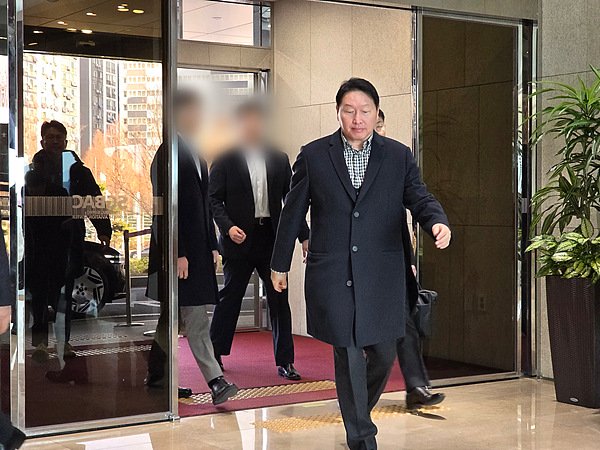
韩国财团掌门人集体访华,“努力寻找良好的增长契机”
Xin Lang Cai Jing· 2026-01-04 12:48
Group 1 - South Korean President Yoon Suk-yeol's visit to China marks the first official trip since taking office, focusing on economic cooperation [4][5] - The South Korean economic delegation, led by SK Group Chairman Chey Tae-won, includes over 200 business leaders from major companies such as Samsung, LG, and Hyundai [2][3] - The delegation aims to discuss collaboration in key industries like semiconductors and batteries, which are critical for both countries' economies [3][4] Group 2 - The visit is seen as a response to supply chain risks posed by U.S.-China competition, with an emphasis on enhancing cooperation in technology sectors [3] - Recent U.S. policy changes allow South Korean semiconductor companies to export equipment to their factories in China, potentially boosting collaboration [3] - The high-level nature of the delegation indicates a strong commitment from South Korean businesses to engage with China amid global economic shifts [3][6]
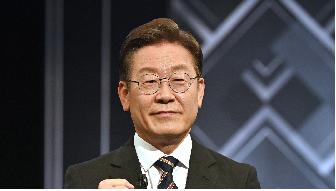
李在明开启任后首次访华,200余名韩企高管随行
2 1 Shi Ji Jing Ji Bao Dao· 2026-01-04 11:51
南方财经21世纪经济报道记者郑青亭、实习生陈俊康北京报道 1月4日下午,韩国总统李在明抵达北京首都国际机场,开启为期4天的国事访问。这是李在明就任总统 后首次访华,也是韩国总统时隔6年再次访华。访华前,李在明对媒体表示,韩国和中国在地理、经 济、历史、社会文化上有着不可分割的关系,稳定地管理好韩中关系有着重要意义,两国可以在文化、 经济、民间交流等领域展开合作。 中国社科院亚太与全球战略研究院研究员、中国周边战略研究室主任王俊生在接受21世纪经济报道采访 时表示,李在明选择在这一时间点访华,充分体现其对中韩关系的高度重视。"这是中韩领导人在庆州 会晤后仅两个月再次面对面交流,也是韩国总统时隔9年再次对中国进行国事访问,释放出十分明确的 积极信号。" 中国外交部发言人在答记者问时表示,中韩互为重要近邻和合作伙伴,期待在两国元首战略引领下,此 访为推动中韩战略合作伙伴关系进一步向前发展发挥积极作用。 据环球网报道,韩国国家安保室室长魏圣洛1月2日在新闻发布会上透露了李在明此次访华日程安排—— 李在明预计4日抵达北京,6日前往上海。在上海停留的两天内,他将参观韩国被日本殖民统治时期的大 韩民国临时政府旧址。据悉,2 ...
前瞻|韩总统李在明新年首访中国,外界期待“与尹锡悦不同”
Xin Lang Cai Jing· 2026-01-03 23:44
Group 1 - The visit of South Korean President Yoon Suk-yeol to China from January 4 to 7 marks the first state visit by a South Korean leader in nearly nine years, indicating a potential thaw in Sino-Korean relations [1][2] - The visit is accompanied by a large economic delegation of over 200 South Korean business leaders, including heads of major conglomerates, highlighting the economic significance of this diplomatic engagement [1][6] - The agenda includes discussions on supply chain investments, digital economy, and cooperation against transnational crime, with expectations of multiple memorandums of understanding being signed [3][7] Group 2 - The bilateral trade between China and South Korea reached $328.08 billion in 2024, reflecting a year-on-year growth of 5.6%, with China being South Korea's largest trading partner for 21 consecutive years [8] - The two countries are expected to discuss the second phase of the China-South Korea Free Trade Agreement negotiations, which have been a focus of recent diplomatic communications [7][8] - There is a strong emphasis on enhancing cooperation in high-tech sectors such as artificial intelligence and semiconductors, as both countries seek to address economic challenges and leverage their complementary strengths [6][7]