G42

Search documents
Stocks & ETFs to Benefit From Trump's Stargate Project
ZACKS· 2025-05-22 09:26
In early January, President Donald Trump announced a $500 billion artificial infrastructure (AI) infrastructure initiative, spearheading a new company called Stargate. Stargate identified NVIDIA (NVDA) , Microsoft (MSFT) , and British chip designer Arm (ARM) as "key initial technology partners" to build U.S.-based data centers to power artificial intelligence advancements. OpenAI revealed that $100 billion would be deployed immediately, with up to $500 billion invested over the next four years.U.S. Tech Gia ...


AI日报丨暴跌!英伟达中国市场份额从95%跌至50%,黄仁勋称美国对华AI芯片出口管制策略失败
美股研究社· 2025-05-21 11:59
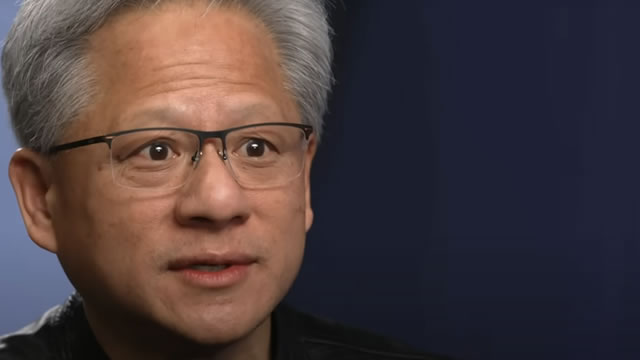
Group 1 - Baidu's founder, Li Yanhong, announced plans to train an additional 10 million AI talents over the next five years, building on the completion of a previous goal to train 5 million by 2024 [3] - Nvidia's CEO Jensen Huang stated that U.S. export controls on AI chips to China are a failure, with Nvidia's market share in China dropping from 95% to 50% since the Biden administration took office. He predicts China's AI market will reach $50 billion by 2026 [4] - Infineon is innovating the power architecture needed for future AI data centers by adopting 800 V high-voltage direct current (HVDC) centralized power generation technology, enhancing energy efficiency in data centers [5] Group 2 - Apple is preparing to allow third-party developers to use its AI models to create software, aiming to stimulate new application development and enhance device appeal [5] - Tesla's CEO Elon Musk indicated that Tesla and his AI company xAI will continue purchasing chips from Nvidia and AMD, with xAI planning to build a facility in Memphis with 1 million GPUs [6][7] - CITIC Securities reported that the rapid progress of AI agents is expected to sustain an upward trend in the AI industry chain, benefiting software companies with data, customers, and scenarios [9] Group 3 - Google is introducing an "AI Mode" in its search engine, which will enhance data visualization and analysis capabilities, allowing users to easily access and understand sports statistics [11] - The new AI Mode will include shopping features, enabling users to virtually try on clothes and providing a more interactive shopping experience [12][13] - Microsoft-backed G42 and Mistral AI are collaborating to develop next-generation AI platforms and infrastructure, focusing on AI model training and industry-specific applications [15][16]

文晶:中东为何成人工智能投资高地?
Huan Qiu Wang Zi Xun· 2025-05-20 22:47
Core Insights - The Middle East is emerging as a new hub for artificial intelligence (AI) development due to its unique geopolitical position and strong capital resources [1][2][3] - Major powers like the US and China are accelerating their strategic investments in the region, with significant technology deals and initiatives being established [1][2] - The integration of AI with the energy sector is a key driver, as AI's demand for energy is projected to increase significantly, aligning with the Middle East's abundant energy resources [1][2] Group 1: AI and Energy Sector Synergy - AI's operational data centers are experiencing a 12% annual increase in electricity consumption, with projections indicating that global data center electricity demand will more than double by 2030 [1] - The UAE has invested over $40 billion in clean energy projects, aiming for 30% of its electricity supply to come from clean energy by 2030 and 44% by 2050 [1] - Saudi Arabia plans to achieve 50% of its electricity from renewable sources by 2030, highlighting the region's strong potential for green energy development [1] Group 2: Policy Support for AI Development - The UAE has established itself as a leader in AI policy by appointing the world's first AI minister in 2017 and launching various initiatives to cultivate talent in the sector [2] - Saudi Arabia's Vision 2030 outlines a digital economy development blueprint, with a $40 billion fund announced in 2023 to support AI growth [2] - By 2030, AI is expected to generate $320 billion in economic value for the Middle East, according to PwC [2] Group 3: Economic Diversification and Future Challenges - Middle Eastern countries like Saudi Arabia and the UAE are actively seeking economic diversification to reduce reliance on oil, with AI presenting new opportunities for growth [3] - The rise of AI in the region is influenced by a combination of energy advantages, supportive policies, and geopolitical factors [3] - Future challenges include balancing competition and cooperation among major tech powers and addressing potential regional conflicts that may impact AI development [3]
Americas Technology_ Hardware_ AI infrastructure to benefit from newly announced US _ Middle East partnerships
2025-05-20 12:06
Summary of Key Points from the Conference Call Industry Overview - The conference call discusses the **AI infrastructure industry**, particularly focusing on partnerships between the **US** and the **Middle East** that are expected to benefit companies involved in AI infrastructure such as **DELL**, **ANET**, **SMCI**, and **CSCO** [2][10]. Core Insights and Arguments - **Partnership Announcements**: Recent partnerships worth several billion dollars between the US and Middle Eastern countries have been announced, enhancing visibility into the demand for Sovereign AI infrastructure, which had previously been underestimated due to lack of traction [2][10]. - **Investment Opportunities**: The US is set to receive significant investments from Saudi Arabia, including **$600 billion** announced on May 13th, which includes **$20 billion** for data center and energy infrastructure by **DataVolt** and **$80 billion** in technology investments across various companies [5][9]. - **AI Diffusion Rule Changes**: The US Department of Commerce rescinded the AI Diffusion rule, which would have imposed chip export restrictions, indicating a shift in regulatory landscape that could impact AI technology distribution [5][10]. - **NVIDIA's Export Agreement**: The US and UAE have agreed on a deal allowing **NVIDIA** to export **500,000 H100 GPUs** annually to the UAE, with **100,000 GPUs** allocated to **G42** for AI weather forecasting solutions [5][6]. Important Partnerships and Deals - **DataVolt and SMCI**: DataVolt announced a **$20 billion** deal with **Super Micro** to deliver GPU platforms for AI campuses in Saudi Arabia and the US [9][10]. - **Cisco Collaborations**: Cisco has entered into agreements with **G42** and **HUMAIN** to enhance AI infrastructure and explore cybersecurity solutions [9][10]. - **NVIDIA and HUMAIN Partnership**: NVIDIA will collaborate with HUMAIN to build AI factories in Saudi Arabia, deploying significant data center capacity supported by NVIDIA GPUs [9][10]. Market Sentiment and Future Outlook - The recent announcements are expected to improve investor sentiment towards AI infrastructure, especially following a series of negative headlines in the sector [2][10]. - The diversification of customer demand for AI infrastructure beyond US neo-clouds is highlighted, with companies like **SMCI** expanding their customer base [10][14]. - US hyperscalers such as **Google**, **Microsoft**, and **Oracle** are also participating in Middle Eastern investments, indicating a robust future demand for AI servers in the region [10][14]. Potential Risks - There are concerns regarding potential security risks associated with the KSA+UAE/US AI partnership, particularly regarding GPU diversion to China and unauthorized model use. However, these risks are expected to be mitigated by the operational control of US hyperscalers [14][10]. This summary encapsulates the key points discussed in the conference call, providing insights into the current state and future prospects of the AI infrastructure industry, particularly in the context of US-Middle East partnerships.

腾讯研究院AI速递 20250520
腾讯研究院· 2025-05-19 14:57
Group 1: OpenAI and G42 Data Center - OpenAI collaborates with G42 to build a 5 GW data center in Abu Dhabi, covering 10 square miles, larger than Monaco [1] - The project is part of the "Stargate" initiative, consuming power equivalent to five nuclear power plants, and is four times the size of the Texas Abilene facility [1] - G42 withdrew its investments in China due to U.S. concerns over its ties with Chinese entities, while Microsoft invested $1.5 billion and placed executives on G42's board [1] Group 2: NVIDIA's New Technologies - NVIDIA launched the new Grace Blackwell GB300 system, enhancing performance and allowing 72 GPUs to connect as a single giant GPU via MVLink technology [2] - The MVLink Fusion plan enables partners to integrate custom ASICs or CPUs into the NVIDIA ecosystem, supporting semi-custom AI infrastructure [2] - The Isaac GR00T platform and Cosmos physical AI model were introduced to strengthen robotics and digital twin technologies, with the Newton physics engine set to be open-sourced in July [2] Group 3: Huawei's Innovations - Huawei's Ascend introduced the CloudMatrix 384 super node and Atlas 800I A2 server, surpassing NVIDIA's Hopper architecture in DeepSeek model inference performance [3] - The "mathematics compensating for physics" strategy, utilizing FlashComm communication and AMLA algorithms, addresses challenges in deploying large-scale MoE models [3] - The CloudMatrix 384 super node achieves a throughput of 1920 Tokens/s at 50ms latency, while the Atlas 800I A2 reaches 808 Tokens/s at 100ms latency, with plans for open-sourcing related technologies [3] Group 4: Tencent's New QQ Browser - Tencent released a new version of the QQ browser, integrating QBot functionality, driven by Tencent's mixed Yuan and DeepSeek dual model, capable of extracting and organizing answers from the internet [4][5] - Key features include AI search, multimodal interaction, document interpretation and translation, intelligent writing, and learning assistance, with support for PC and mobile synchronization [5] - An AI toolbox is provided, including format conversion, information extraction, and document processing functions, operable without additional plugins directly in the browser [5] Group 5: Bilibili's AniSora Model - Bilibili open-sourced the animation video generation model Index-AniSora, supporting various anime-style video generation, selected for IJCAI25, and capable of efficient distributed training on Huawei's 910B chip [6] - The system includes two versions: V1.0 based on CogVideoX-5B and V2.0 based on Wan2.1-14B, supporting spatiotemporal masking and local control, covering 80-90% of application scenarios [6] - A dataset of tens of millions of text-video training data was built, and the first human preference reinforcement learning model in the animation field was open-sourced, containing 30,000 labeled samples [6] Group 6: Apple's Matrix3D Model - Apple, in collaboration with Nanjing University, released the Matrix3D model, which generates high-quality 3D scene models from just three photos and has been open-sourced [7] - Apple's leadership is pushing Siri to transition towards a ChatGPT-like model, with internal tests showing the chatbot nearing ChatGPT's capabilities, planning to add web search and app invocation features [7] - The company is cautiously handling Siri's upgrade strategy to avoid premature feature announcements and is considering separating Siri from the Apple Intelligence brand to mitigate negative impacts [7] Group 7: GenSpark's Agentic AI - GenSpark launched the world's first AI download agent tool, Agentic Download Agent, enabling file download and processing automation through natural language commands [8] - Utilizing a Mixture-of-Agents architecture, it integrates eight different scale language models and over 80 toolchains, reducing traditional time-consuming tasks to minutes [8] - An AI Drive smart cloud disk was introduced, supporting various digital asset formats and allowing secondary analysis of downloaded files, with an open API for enterprise system integration [8] Group 8: Granola's AI Note-Taking Product - Granola achieved a valuation of $250 million after completing Series B funding, becoming a preferred note-taking tool for founders and executives through its efficient personalized AI meeting recording feature [10] - The product's core advantage lies in empowering users with control, supporting real-time editing and personalized recording while protecting privacy by not saving audio [10] - The founder believes the key to AI tools is to enhance rather than replace human capabilities, with plans to evolve from a single note-taking tool to a comprehensive work platform integrating personal context [10] Group 9: Robotics Competition Achievements - The first ManiSkill-ViTac 2025 tactile-visual fusion challenge concluded, with Chinese teams winning three gold medals, to be reported at the ICRA 2025 conference [11] - The company Dexmal won gold in pure tactile control and tactile sensor design, improving success rates by 2-3 times through a dual paradigm learning framework, while another company won gold in visual-tactile control [11] - This event is the first public competition combining visual and tactile elements, promoting advancements in tactile-visual fusion algorithms and bridging the gap between laboratory research and real-world applications [11] Group 10: GitHub's Stance on Programming - GitHub CEO Thomas Domke countered the "programming is useless" argument, emphasizing that 2025 will be the year of programming agents, while human programmers will still be needed to manage the software lifecycle [12] - GitHub has released multiple SWE agent products, with Copilot users reaching 15 million, a fourfold increase, and plans to advance multi-agent "band mode" [12] - GitHub asserts that AI should serve as a high-level developer assistant, advocating for continuous learning in programming to maintain guidance and control over AI systems [12]



英伟达将调整对华芯片出口;OpenAI拟建设“巨无霸”数据中心丨智能制造日报
创业邦· 2025-05-19 03:13
Group 1 - Nvidia is seeking to reduce its reliance on large tech companies by forming new partnerships and selling AI chips to sovereign nations and challengers to major firms like Microsoft, Amazon, and Google [1] - Nvidia has announced a multi-billion dollar chip agreement with Saudi Arabia's Humain and is coordinating with the UAE to build one of the world's largest data centers, indicating a strategic shift to attract customers outside Silicon Valley [1] - Currently, large cloud computing groups account for over half of Nvidia's data center revenue, and the company aims to support emerging cloud players like CoreWeave, Nebius, Crusoe, and Lambda [1] Group 2 - Nvidia's CEO Jensen Huang stated that due to U.S. government restrictions on the export of the Hopper architecture H20 chip to China, the company is reassessing its market strategy in China and will not release further Hopper series chips [2] - The H20 chip, which has significantly reduced performance compared to the H100, is expected to lead to an 8% to 9% decline in Nvidia's data center revenue over the next few quarters according to Morgan Stanley analysts [2] - Huang emphasized that missing out on the Chinese AI chip market, projected to reach $50 billion in the coming years, would be a significant loss for the U.S. [2] Group 3 - OpenAI plans to collaborate with G42 in Abu Dhabi to build a massive data center covering 10 square miles, which would be one of the largest AI infrastructures globally, consuming 5 gigawatts of power [4] - This data center is part of OpenAI's "Stargate" initiative aimed at creating a supercomputing cluster designed for training and running advanced AI models to meet increasing computational demands [4] - The facility's scale is compared to five nuclear reactors and is larger than Monaco, highlighting the ambitious nature of OpenAI's infrastructure development [4]

OpenAI推出AI编程智能体Codex;谷歌开发者大会Google I/O即将召开丨全球科技早参
Mei Ri Jing Ji Xin Wen· 2025-05-18 23:51
Group 1: OpenAI Developments - OpenAI has launched Codex, its most powerful AI programming agent to date, optimized for software engineering tasks, generating cleaner and more precise code [2] - OpenAI plans to build a massive data center in Abu Dhabi in collaboration with G42, which will consume 5 gigawatts of power and cover an area of 10 square miles, aiming to meet the growing demand for AI computing power [6] Group 2: Qualcomm and AI Collaboration - Qualcomm is partnering with the newly established AI company Humain in Saudi Arabia to develop AI computing chips for data centers, showcasing Saudi Arabia's commitment to technological transformation [3] Group 3: Google I/O Conference - The Google I/O developer conference is set to take place on May 20-21, where significant updates related to Android, Chrome, Google Search, YouTube, and the AI chatbot Gemini are expected to be announced [4] Group 4: Apple AirPods Update - Analyst Ming-Chi Kuo has indicated that significant updates to Apple AirPods may not occur until 2026, reflecting the company's cautious approach to product development [5]
OpenAI“巨无霸”数据中心计划:重塑全球AI算力版图
Jing Ji Guan Cha Bao· 2025-05-18 14:59
Core Insights - OpenAI is leading a significant transformation in the AI industry through a massive infrastructure project in collaboration with G42 in Abu Dhabi, which will establish one of the largest AI data centers globally, consuming 5 gigawatts of power [1][2] Group 1: Project Overview - The data center will cover an area of 10 square miles (approximately 26 square kilometers) and will have a power capacity equivalent to five nuclear reactors, capable of powering 3 million American households [2] - The project will utilize a modular design, allowing multiple companies to share computing resources, thereby reducing investment risks and quickly responding to global AI development needs [2] Group 2: Strategic Partnerships - G42, a key partner in the project, has established a strategic relationship with OpenAI, with Microsoft investing $1.5 billion and its president joining the board, making Azure cloud services the foundational technology for the project [2] - This collaboration represents a "tech giant + sovereign fund + cloud service provider" model, positioning the Middle East as a new hub for global AI computing power [2] Group 3: Global Expansion Plans - OpenAI's "Star Gate" plan aims to invest $500 billion in the U.S. by 2029 to build 5-10 supercomputing parks, each with over 1 gigawatt of power support, with the first park in Texas already under construction [3] - The project in Texas involves Oracle as a core infrastructure partner, indicating a shift towards a distributed computing empire rather than relying solely on Microsoft [3] Group 4: Geopolitical and Energy Considerations - The establishment of large-scale data centers reflects a dual competition in energy and geopolitics, with the need for co-located power plants and data centers to support the 5-gigawatt computing clusters [4] - The UAE's low solar energy costs and experience in renewable energy development make it an attractive location for such projects, allowing OpenAI to avoid regulatory hurdles in the U.S. [4] Group 5: Investment Risks and Technical Challenges - The $500 billion investment carries significant commercial risks, with SoftBank linking its $30 billion investment to OpenAI's transition to a public benefit corporation [5] - The project faces technical challenges, including the need for efficient energy use in extreme desert conditions and potential supply chain issues with semiconductor availability, particularly NVIDIA chips [6] Group 6: Industry Impact and Competitive Landscape - OpenAI's ambitious computing strategy is reshaping industry standards, with plans to achieve a million-chip cluster, significantly surpassing competitors like Meta [7] - The global expansion and "sovereign AI infrastructure" strategy may further limit the international opportunities for Chinese tech companies, which face challenges in upstream areas like foundational model development and supercomputing infrastructure [7]
未知机构:semianalysis 最新:中东协议对全球AI设备的影响20250518-20250518
未知机构· 2025-05-18 12:55
Summary of Key Points from the Conference Call Industry Overview - The conference call discusses the impact of recent agreements between the United States, the United Arab Emirates (UAE), and Saudi Arabia on the artificial intelligence (AI) industry, particularly focusing on infrastructure and geopolitical dynamics [2][3][4]. Core Insights and Arguments 1. **Transformative Agreements**: The US has signed two significant agreements with the UAE and Saudi Arabia, which are expected to reshape the AI landscape by enhancing US leadership in AI infrastructure and alleviating bottlenecks such as power shortages [2][3]. 2. **Investment in AI Infrastructure**: The agreements are projected to unlock a capital influx exceeding $1 trillion, facilitating the construction of AI infrastructure both in the Gulf region and the US [3][4]. 3. **Data Center Capacity Growth**: The Middle East is anticipated to become a regional AI hub, with predictions indicating that by 2030, operational data center capacity in the region will exceed 6 GW, driven by investments from local companies like G42 [3][4]. 4. **G42's Role**: G42, a UAE-based AI giant, is set to import 500,000 high-end Nvidia chips annually and is leading the development of a 5 GW AI data center park, with the first phase of 1 GW already underway [5][6]. 5. **Saudi Arabia's Economic Plans**: Saudi Arabia's $600 billion economic plan includes rapid growth in data center capacity, although it remains more fragmented compared to the UAE [7][20]. 6. **Bilateral Investment**: Middle Eastern companies are expected to invest hundreds of billions into US AI infrastructure, with G42 already operating data centers in the US [8][20]. Additional Important Content 1. **Geopolitical Implications**: The agreements strengthen the technological ties between the US and the Gulf states, increasing their dependency on US hardware and software [3][12]. 2. **Risks and Security Concerns**: The collaboration raises concerns about GPU transfers to China and unauthorized model usage, necessitating strict security measures and KYC protocols [13][14][16]. 3. **Market Dynamics**: The influx of Middle Eastern capital is expected to lower financing costs and support AI infrastructure development, countering potential credit market tightening [9][10]. 4. **Competitive Landscape**: The agreements position the Middle East as a key customer for US technology, potentially sidelining competitors like China [12]. 5. **Investment from Major Tech Firms**: Companies like Oracle and AMD are committing significant funds to projects in Saudi Arabia, indicating strong interest from major players in the region's AI development [20]. Conclusion - Overall, the agreements between the US, UAE, and Saudi Arabia are poised to significantly impact the AI industry, enhancing infrastructure capabilities while presenting new geopolitical and security challenges [11][12].
全球版“星际之门”首站阿联酋?OpenAI、英伟达被爆参建5GW数据中心
华尔街见闻· 2025-05-17 04:13
Core Viewpoint - OpenAI is planning to participate in the construction of a large AI data center in the UAE, which may become one of the largest data centers globally, as part of its "Stargate" initiative aimed at expanding AI infrastructure worldwide [1][2]. Group 1: OpenAI's Involvement - OpenAI is expected to be a major tenant in a new 5GW data center park in Abu Dhabi, which is part of a broader initiative to support AI development [1]. - The 5GW power capacity planned for the data center park is equivalent to the total output of five nuclear reactors, significantly exceeding the scale of current data center projects announced by OpenAI and its competitors [2]. Group 2: Collaboration and Partnerships - The UAE and the US have agreed to establish a "US-UAE AI Accelerated Partnership" framework, which includes the development of a 1GW AI data center as part of the larger 5GW park [2]. - The partnership aims to deepen technological cooperation, with US companies operating data centers and providing cloud services in the UAE, ensuring strong security measures to prevent technology transfer [2]. Group 3: Strategic Developments - OpenAI's CEO Sam Altman was part of a delegation that accompanied former President Trump on a visit to the UAE, indicating high-level engagement between US tech companies and the UAE [3]. - OpenAI has launched a program called "OpenAI for Countries," aiming to expand the "Stargate" project globally, with plans for ten projects in various countries or regions [4]. - The establishment of the data center in the UAE is contingent on OpenAI's ability to secure sufficient advanced chips from Nvidia, with potential easing of restrictions on chip sales to the UAE being considered by the Trump administration [4].