
SK hynix

Search documents
韩国大买中国股票,宇树科技启动IPO,A股会迎来指数牛吗?
Sou Hu Cai Jing· 2025-07-23 07:03
Group 1 - The year 2025 marks a critical moment for global investors to reassess Chinese assets, with high-quality Chinese companies gaining international attention [1] - The success of these companies highlights the resilience and innovative potential of the Chinese economy, sparking renewed interest from international capital [1][6] - Chinese assets are becoming an indispensable part of international investment portfolios due to their unique appeal amid changing global economic dynamics [1] Group 2 - Recent market movements indicate a shift from small-cap stocks to core assets, as analysts predict a significant change in market style [2][4] - Core assets have played a crucial role in stabilizing the A-share market, with major banks' stocks acting as a stabilizing force for the overall index [2][4] - The potential for a significant index bull market is low, with a more likely scenario being a slow and steady market growth driven by core assets [4] Group 3 - Chinese assets have shown strong anti-drawdown capabilities, particularly in the first half of the year, attracting risk-averse funds during a downturn in Western markets [6] - The emergence of companies like the "Hangzhou Six Little Dragons" and "New Consumption Four Sisters" reflects the optimism of global investors towards Chinese technology and consumption sectors [6][7] - Compared to U.S. core assets, Chinese core assets are significantly undervalued, with the average valuation of the CSI 300 at 13 times and the Hang Seng Index at around 11 times, compared to over 30 times for U.S. indices [7] Group 4 - The current phase for Chinese assets is characterized by low valuations and the release of policy dividends, enhancing investment safety and potential profitability [7] - Korean investors are increasingly buying Chinese stocks, particularly in technology and emerging industries, indicating a shift in global investment attitudes towards China [7] - The ongoing IPO process of Yushu Technology is drawing attention, with its capital structure becoming clearer as it progresses through multiple funding rounds [10][12][14] Group 5 - Yushu Technology's revenue primarily comes from B2B orders from research institutions and AI companies, with its consumer market yet to fully open [16] - Notable investment strategies include focusing on high-quality companies with clear competitive advantages, as demonstrated by significant increases in holdings of leading consumer and technology stocks [19] - The investment landscape is advised to follow major trends and policies, with recommendations to focus on stable sectors while exploring emerging opportunities [20]






BERNSTEIN:2025 年第二季度人工智能服务器及边缘人工智能动态_夏季反弹
2025-07-14 00:36
Summary of Key Points from the Conference Call Industry Overview - The focus is on the **Global Semiconductors & Hardware** industry, specifically the **AI server and edge AI** sectors [2][3]. Core Insights and Arguments - **Investment Surge**: Total investment in upcoming and under-construction data centers has reached approximately **US$750 billion**, with major contributions from hyperscalers, neoclouds, and sovereign funds. Expected capex growth for major cloud service providers (CSPs) is **46% YoY in 2025** and **6% in 2026**, reaching **US$386 billion** [3][30]. - **AI Funding**: Primary market AI funding hit a record **US$60 billion** in 1Q25, largely driven by OpenAI's **US$40 billion** financing round, representing **53% of all global startup funding** [25][30]. - **Server Shipments**: High-end GPU server shipments are projected to grow over **50% in 2025**, while ASIC server shipments are expected to comprise nearly **45% of total AI chip shipments** this year [4][37]. - **Financial Performance**: The AI supply chain remains resilient, with companies like Accton, Gold Circuit, and Wiwynn seeing upward revisions in earnings due to stronger-than-expected demand for ASIC servers [6][38]. Important Developments - **Edge AI Innovations**: While edge AI technologies are gaining traction, they are still in the early stages. AI glasses shipments surged by triple digits YoY in 1Q25, indicating competitive dynamics in the market [7]. - **Key Projects to Monitor**: Upcoming developments include monitoring capex guidance from CSPs, progress on mega projects like Stargate, and advancements in TSMC's AP7/AP8 technologies [8][26]. Potential Investment Opportunities - **Chroma and Delta**: Rated as outperform with price targets of **NT$480** and **NT$490** respectively, benefiting from the AI wave [11][12]. - **NVIDIA**: Rated outperform with a price target of **US$185**, capitalizing on the datacenter opportunity [17]. - **Broadcom and Marvell**: Broadcom expects a **US$60-90 billion** serviceable available market (SAM) for AI revenue by FY2027, while Marvell anticipates a **53% CAGR** in its data center total addressable market (TAM) from 2023 to 2028 [53][56]. Other Notable Points - **Market Dynamics**: The AI server market is expected to drive the global server market to nearly **US$400 billion by 2026**, with a significant increase in the mix of AI servers [35][39]. - **Supply Chain Resilience**: Despite market volatility, the AI supply chain has shown resilience, with stock performance of key suppliers indicating a recovery trend [6]. This summary encapsulates the critical insights and developments discussed in the conference call, highlighting the robust growth and investment opportunities within the AI server and semiconductor sectors.


摩根士丹利:Investor Presentation-亚洲科技产业解析
摩根· 2025-07-02 03:15
June 30, 2025 07:55 AM GMT M Foundation Morgan Stanley Asia Limited+ Shawn Kim Equity Analyst Shawn.Kim@morganstanley.com +852 3963-1005 Duan Liu Equity Analyst Duan.Liu@morganstanley.com +852 2239-7357 Michelle Kim Research Associate Michelle.Kim1@morganstanley.com +852 3963-0183 S. Korea Technology Asia Pacific Industry View In-Line Morgan Stanley does and seeks to do business with companies covered in Morgan Stanley Research. As a result, investors should be aware that the firm may have a conflict of int ...
摩根士丹利:即将到来的波动,亚洲催化因素事件概述
摩根· 2025-07-02 03:15
Investment Rating - The report does not explicitly provide an investment rating for the industry or specific companies covered [4][5]. Core Insights - The report highlights upcoming volatility events that could significantly impact equity markets, particularly for large-cap, highly liquid stocks in the Asia Pacific region [1][2]. - A tracker of key upcoming events for major companies in the region is compiled, focusing on those with substantial market capitalization and trading volume, as well as smaller stocks known for price volatility in sectors like Healthcare and Materials [2][4]. Summary by Relevant Sections Upcoming Events - Key macro catalysts for Japan are included, indicating a focus on significant market-moving events [2]. - Specific companies and their anticipated catalysts are listed, such as: - ANTA Sports Products (2020.HK) with an operational update expected in early to mid-July 2025, monitoring for faster-than-industry performance [11]. - Fast Retailing (9983.T) with FY8/25 Q4 results due in October 2025, assessing if the bottom of performance in China is confirmed [11]. - Pop Mart International (9992.HK) expected to issue a positive profit alert in early to mid-July 2025 [11]. Sector-Specific Insights - In the Materials sector, companies like Aluminum Corp. of China (2600.HK) are monitored for aluminum demand, particularly from solar applications, with developments expected in the second half of 2025 [23]. - The report also tracks developments in the Semiconductor sector, with companies like Samsung Electronics (005930.KS) and TSMC (2330.TW) expected to provide updates on market outlook and revenue guidance in the second half of 2025 [25][26].
FormFactor (FORM) Earnings Call Presentation
2025-06-27 11:51
Company Overview - FormFactor has a global presence with approximately 2,150 employees and manufactures over 115 million MEMS probes annually[7] - The company's trailing twelve months (TTM) revenue as of October 30, 2024, was $742 million[7] - FormFactor is recognized by industry leaders such as Intel, Samsung, Micron, SK hynix, and TSMC[7] Financial Performance - In 2023, FormFactor's revenue was $663 million[20] - The company's non-GAAP EPS in 2023 was $0.73[20] - The free cash flow for 2023 was $11 million[20] - The non-GAAP gross margin in 2023 was 40.7%[20] - The target model revenue is $850 million, with a target non-GAAP EPS of $2.00[87] - The target free cash flow is $160 million[87] Market and Growth - The advanced probe card market is estimated to be $2.0 billion, while the engineering systems market is $0.5 billion[47] - The advanced probe card market is expected to grow at an annual rate of 8%[52] - The engineering systems market is expected to grow at an annual rate of 3%[52] - FormFactor estimates its growth in the advanced probe card market to be 10%+ CAGR[79]

BERNSTEIN:美国考虑取消对在华设有实验室的跨国企业的中国半导体设备许可证豁免
2025-06-27 02:04
Summary of Key Points from the Conference Call on Global Semiconductors and Semiconductor Capital Equipment Industry Overview - The focus is on the **Global Semiconductor Capital Equipment** industry, particularly the implications of potential changes in U.S. export controls affecting shipments to China [1][2][3]. Core Insights and Arguments - **Export Control Waivers**: Since October 2022, U.S. semiconductor capital equipment (semicap) companies have faced increasing restrictions on shipments to China. Non-Chinese customers with fabs in China have been receiving waivers, but the U.S. Commerce Department is considering canceling these waivers, which would require licenses for shipments [2][3]. - **Impact on Multinational Companies**: Major multinationals with significant capacity in China include **Samsung**, **SK hynix**, **TSMC**, and **UMC**. For instance, SK hynix has 35% of its DRAM capacity in China, while Samsung has 30% of its NAND capacity there [4][5]. - **WFE Spending**: The total WFE (Wafer Fabrication Equipment) spending by non-Chinese companies in China is projected to be around **$2 billion** in 2024, which is only about **4%** of the total WFE deployed in China and less than **2%** of the global WFE market estimated at **$108 billion** [5][6][33][37]. - **Memory Chip Exposure**: Memory chips are seen as the most exposed segment, with China-based fabs accounting for **10%** of global DRAM and **15%** of NAND capacity. However, case-by-case approvals for licenses may mitigate immediate impacts [6][39]. Additional Important Insights - **Deglobalization Trends**: Japanese semiconductor capital equipment companies are expected to benefit from deglobalization trends, as they can serve both U.S. and Chinese markets. Companies like **Tokyo Electron** and **Kokusai** may gain from increased demand for etching and deposition equipment [7]. - **Investment Implications**: - **AMAT (Applied Materials)**: Rated as Outperform with a target price of **$210.00**, driven by secular WFE growth and capital return strategies [10]. - **LRCX (Lam Research)**: Also rated Outperform with a target of **$95.00**, supported by a potential NAND upgrade cycle [10]. - **Tokyo Electron**: Rated Outperform with a target of **¥33,800**, expected to gain market share due to competitive pricing [11]. - **ASML**: Rated Market-Perform with a target of **€700.00**, reflecting a cautious outlook on growth relative to consensus estimates [14]. - **Domestic Chinese Companies**: Companies like **NAURA**, **AMEC**, and **Piotech** are rated Outperform, benefiting from domestic WFE substitution trends in China [15][16][17]. Conclusion - The semiconductor capital equipment industry is facing significant regulatory changes that could impact multinational companies operating in China. While immediate effects may be limited, the long-term implications of export controls and deglobalization trends will shape the competitive landscape. Investment opportunities exist in both established players and emerging domestic companies in China.


DRAM Demand Powers Micron's Growth: Can it Sustain Momentum?
ZACKS· 2025-06-18 16:35
Core Insights - Micron Technology's DRAM revenues increased by 47.3% year over year in Q2 fiscal 2025, reaching $6.12 billion, driven by demand in AI data centers, automotive, and mobile markets [2][11] - The DRAM segment, which constitutes 76% of Micron's total revenue, is experiencing significant growth due to rising average selling prices and strong demand for high-bandwidth memory (HBM) chips [2][4] - Micron is focusing on capacity expansion with a new DRAM fabrication facility in Boise, ID, supported by $6.1 billion from the CHIPS and Science Act, indicating sustained momentum in DRAM solutions [5][11] Financial Performance - Micron anticipates Q3 fiscal 2025 revenues of $8.80 billion, reflecting a year-over-year growth of 29.33% [6] - The Zacks Consensus Estimate for fiscal 2025 earnings suggests a remarkable year-over-year growth of 433%, while the 2026 estimate indicates a growth of 55.87% [13] Competitive Landscape - Micron operates in a highly consolidated global DRAM market, facing competition from major players like Samsung, SK Hynix, and Taiwan Semiconductor Manufacturing Company (TSMC) [7] - In the broader market, competitors such as Western Digital and Seagate also pose challenges, particularly in NAND and SSD segments [9] Valuation Metrics - Micron's forward price-to-sales ratio stands at 3.06X, which is lower than the industry average of 3.69X, suggesting potential undervaluation [12]
摩根士丹利:DeepSeek R2:AI推理新一代重量级模型?
摩根· 2025-06-16 03:16
Investment Rating - The report provides a cautious outlook on the technology sector in Asia Pacific, particularly focusing on the developments surrounding DeepSeek's R2 model [7]. Core Insights - DeepSeek's R2 model is anticipated to redefine AI development, pricing, and reliance on domestic AI chip supply chains in China, serving as a potential catalyst for accelerating AI application deployment [1][2]. - The R2 model is expected to achieve significant advancements in multilingual reasoning and code generation, offering a hybrid model with lower power consumption and smaller parameter scale, while being cost-effective compared to its predecessor R1 [2][9]. - The model's efficiency is projected to lower computational requirements, facilitating AI commercialization and expanding total demand, potentially disrupting the AI market [2][10]. Summary by Sections R2 Model Overview - R2 represents the second major iteration of DeepSeek's reasoning model, promising improvements in multilingual reasoning and code generation, with a focus on efficiency and cost reduction [2][9]. - The model is designed to be multimodal, featuring enhanced visual capabilities and a significant reduction in operational costs compared to R1 [2][13]. Supply Chain Developments - The R2 model is supported by a robust ecosystem of Chinese companies, leveraging Huawei's Ascend 910B chip cluster for training, which signifies a shift towards a localized supply chain [3][17]. - DeepSeek aims to reduce dependency on external chip manufacturers, contrasting with the previous reliance on NVIDIA GPUs for training the R1 model [17][20]. Market Impact - The report suggests that DeepSeek's advancements will benefit local GPU, GDDR, and China's HBM sectors, indicating a positive outlook for these industries amidst a broader AI market recovery [20][22]. - The performance of DeepSeek's models, particularly in the context of increasing computational demands during inference, is expected to drive further innovation and resource allocation within the AI ecosystem [20][23]. Competitive Landscape - DeepSeek's approach emphasizes software-driven resource optimization rather than hardware dependency, which could lead to significant cost reductions and efficient training of large models [23][24]. - The report highlights the competitive pressure on NVIDIA from Huawei's Ascend chips, which are designed to match NVIDIA's performance while being domestically produced [17][20].

国外大厂的HBM需求分析
傅里叶的猫· 2025-06-15 15:50
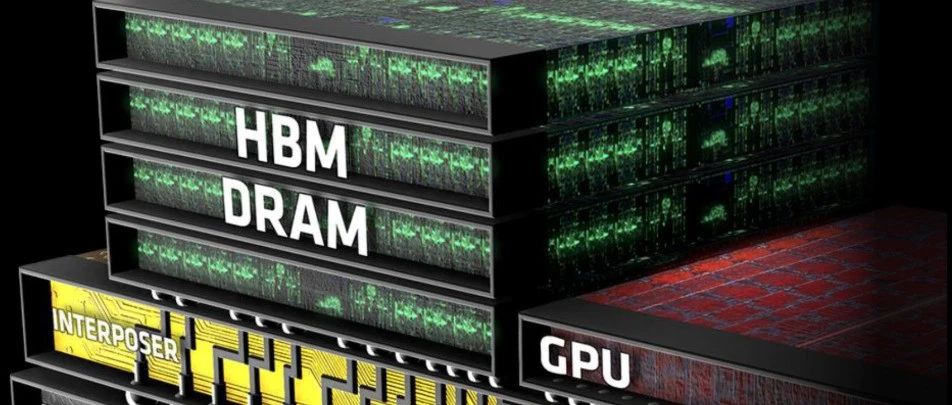
Core Viewpoint - The article discusses the projected growth in HBM (High Bandwidth Memory) consumption, particularly driven by major players like NVIDIA, AMD, Google, and AWS, highlighting the increasing demand for AI-related applications and the evolving product landscape. Group 1: HBM Consumption Projections - In 2024, overall HBM consumption is expected to reach 6.47 billion Gb, a year-on-year increase of 237.2%, with NVIDIA and AMD's GPUs accounting for 62% and 9% of the consumption, respectively [1] - By 2025, total HBM consumption is projected to rise to 16.97 billion Gb, reflecting a year-on-year growth of 162.2%, with NVIDIA, AMD, Google, AWS, and others contributing 70%, 7%, 10%, 8%, and 5% respectively [1] Group 2: NVIDIA's HBM Demand - NVIDIA's HBM demand for 2024 is estimated at 6.47 billion Gb, with a recent adjustment bringing the total capacity to 6.55 billion Gb [2] - In 2025, NVIDIA's HBM demand is expected to decrease to 2.53 billion Gb, with HBM3e 8hi and 12hi versions making up 36% and 64% of the demand, respectively [2] - Key suppliers for NVIDIA include Samsung and SK hynix, which play crucial roles in the HBM supply chain [2] Group 3: AMD's HBM Demand - AMD's HBM demand for 2025 is projected at 0.20 billion Gb for the MI300 series and 0.37 billion Gb for the higher-end MI350 series [3] - Specific models like MI300X and MI325 are designed to enhance storage density, with capacities reaching 192GB and 288GB, respectively [3] - AMD relies on SK hynix and Samsung for HBM3e 8hi and 12hi versions, which are vital for its production plans [3] Group 4: Google and AWS HBM Demand - Google's HBM demand for 2025 is expected to be 0.41 billion Gb, primarily driven by TPU v5 and v6 training needs [4] - AWS's HBM demand is estimated at 0.28 billion Gb, with Trainium v2 and v3 versions accounting for 0.20 billion Gb and 0.08 billion Gb, respectively [6] - Both companies utilize HBM configurations that enhance their AI training and inference capabilities, with a focus on reducing reliance on external suppliers [5][6] Group 5: Intel's HBM Demand - Intel's HBM demand is relatively small, accounting for about 10% of total demand in 2025, primarily focusing on HBM3e versions [7] - Key suppliers for Intel include SK hynix and Micron, with Intel exploring in-house chip development to reduce supply chain dependencies [7]

摩根士丹利:Investor Presentation-中国人工智能与存储市场展望
摩根· 2025-06-11 02:16
Investment Rating - Industry view is cautious [1] Core Insights - The report highlights a cautious outlook for the semiconductor industry, particularly in the context of AI and memory sectors, with a focus on potential recovery in the second half of 2025 impacted by tariff costs [7] - Long-term demand drivers include the reacceleration of AI semiconductor demand due to generative AI, which is expected to proliferate across various verticals outside the semiconductor industry [7] - The report indicates that the global semiconductor revenue peaked in the third quarter of 2024, with a forecasted decline in semiconductor exports from Korea since February 2025 [12][19] Summary by Sections Semiconductor Market Dynamics - The cyclical downturn is characterized by a shift from euphoria to pessimism, as indicated by the SOX Index performance [8] - Historical data shows that declines in semiconductor inventory days have historically signaled positive stock price appreciation [41] - The report notes that the domestic GPU supply chain may face dilution due to shipments of NVIDIA B30, impacting inferencing AI demand [7] Memory and Logic Cycles - Memory stock prices are seen as leading indicators for logic semiconductors, with the report suggesting that memory share price peaks lead logic semis [42][43] - The report forecasts a significant increase in HBM (High Bandwidth Memory) market size, projecting it to reach US$64 billion by 2027, with a CAGR of 107% from 2023 to 2027 [67] AI and Technology Trends - The report emphasizes the shift in value from hardware to application in the AI investment stack, indicating a growing focus on software and application development [73] - It is projected that local GPU revenue in China could grow to RMB 287 billion by 2027, driven by advancements in local manufacturing capabilities [90]