大成基金

Search documents
26只新型浮动费率基金开售,上一批同类产品至今收益如何?
Sou Hu Cai Jing· 2025-05-27 04:12
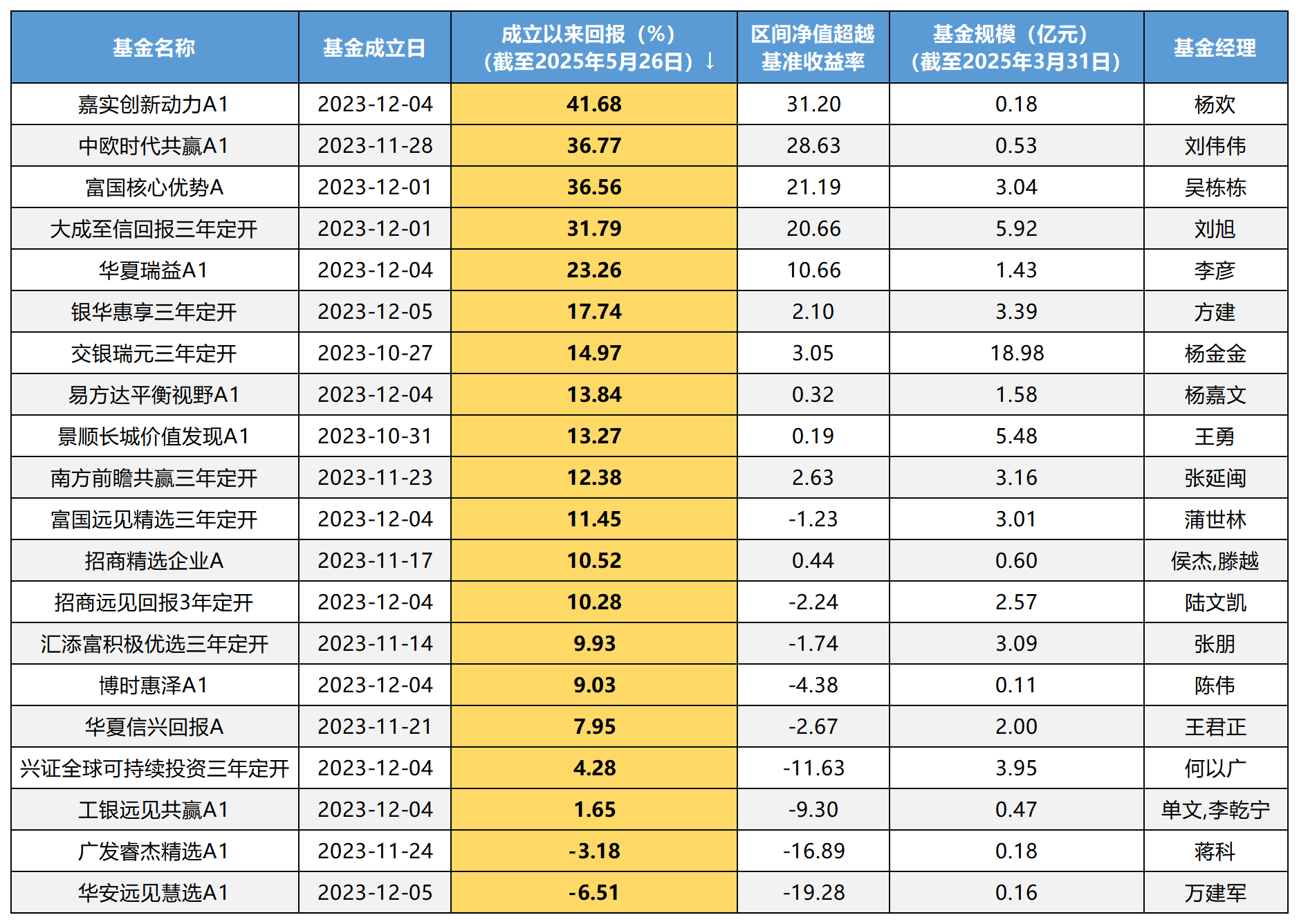
【大河财立方 记者 孙凯杰】随着《推动公募基金高质量发展行动方案》(以下简称《方案》)的出炉,市场动作频繁。 近日,《方案》出台后的首批26只新型浮动费率基金正式获批。5月24日,多只基金公布了招募说明书、基金合同、基金产品资料概要和基金托管协议;5月 27日,部分基金正式开启发售,发售期截至6月30日。 上一批集体发行的浮动费率基金, 大部分收益为正 从规模来看,这20只基金问世近两年来,并未形成太多的水花:除交银瑞元三年定开规模超18亿元外,其余19只基金规模均在6亿元以下。景顺长城价值发 现A1在发售时规模曾一度突破10亿元,如今也已经滑坡至5.48亿元。 但是从表现来看,他们普遍好于市场的相当一部分主动权益基金,绝大多数产品都跑赢了沪深300指数,18只都取得了正收益。 其中嘉实创新动力A1成立以来回报达到41.68%,区间收益最高;中欧时代共赢A1、富国核心优势A1、大成至信回报三年定开也都取得了超过30%的回报。 本次新型浮动费率基金显现出了"闪电"速度:从上报至获批,仅用时不到10天,充分贯彻了《方案》中提到的"要建立与基金业绩表现挂钩的浮动管理费收 取机制"和"对主动管理权益类基金和场外成熟宽 ...

ETF融资融券日报:两市ETF两融余额较前一交易日增加8.65亿元,海富通中证短融ETF融资净买入达1.04亿元
Sou Hu Cai Jing· 2025-05-27 02:41
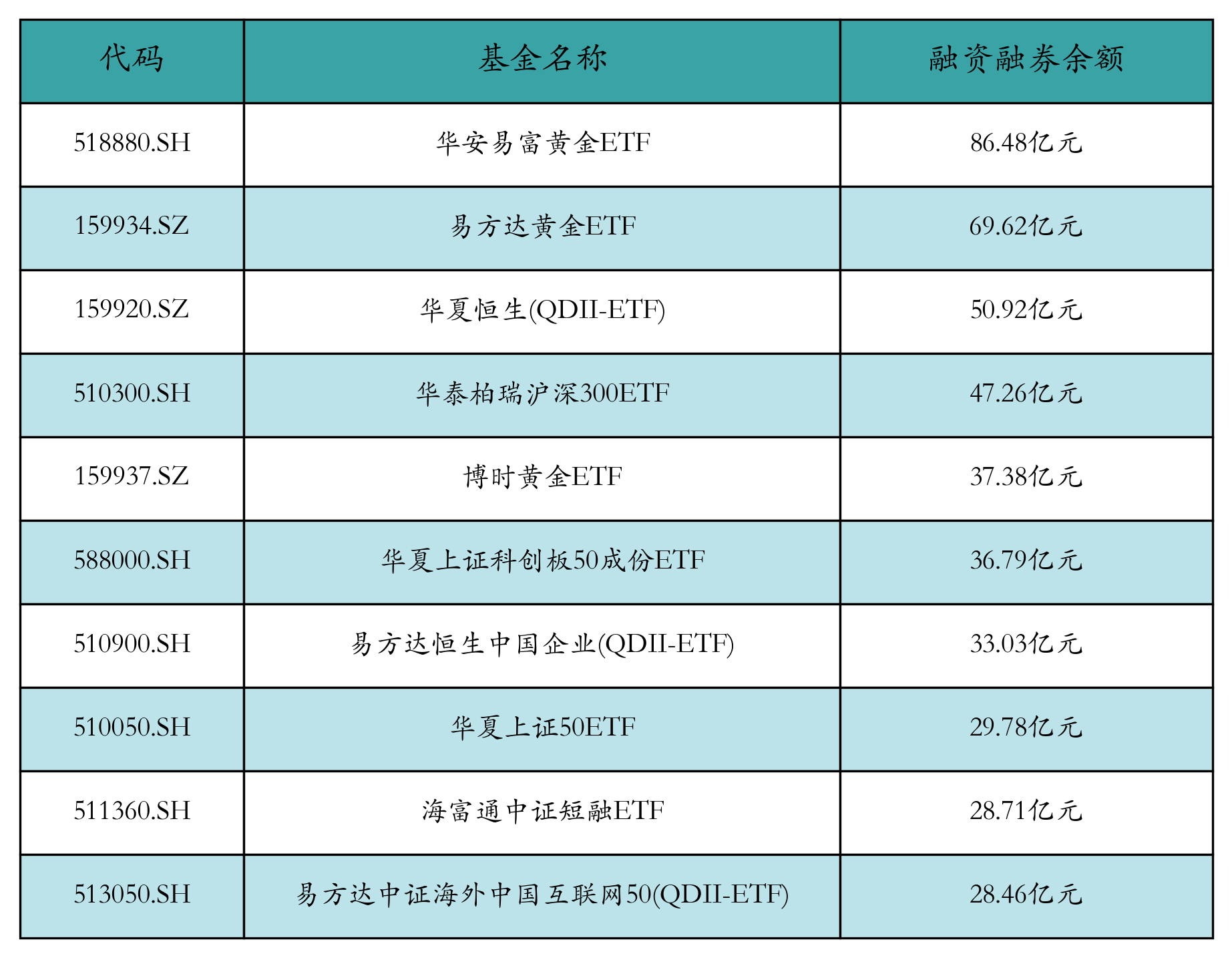
市场概况 | 代码 | 基金名称 | | --- | --- | | 518880.SH | 华安易富黄金ETF | | 159934.SZ | 易方达黄金ETF | | 159920.SZ | 华夏恒生(QDII-ETF) | | 510300.SH | 华泰柏瑞沪深300ETF | | 159937.SZ | 博时黄金ETF | | 588000.SH | 华夏上证科创板50成份ETF | | 510900.SH | 易方达恒生中国企业(QDII-ETF) | | 510050.SH | 华夏上证50ETF | | 511360.SH | 海富通中证短融ETF | | 513050.SH | 易方达中证海外中国互联网50(QDII- | ETF融资买入额 5月26日ETF融资买入额前三位分别为:华泰柏瑞南方东英恒生科技指数(QDII-ETF)(7.1亿元)、华夏恒生科技(QDII-ETF)(5.76亿元)和海富通中证短融 ETF(5.18亿元),前10具体见下表: | 代码 | 基金名称 | | --- | --- | | 513130.SH | 华泰柏瑞南方东英恒生科技指数(QDI] | | 51318 ...
ETF热门榜(2025年5月26日):中证短融相关ETF成交居前,标普500ETF(159612.SZ)交易活跃
Xin Lang Cai Jing· 2025-05-27 01:48
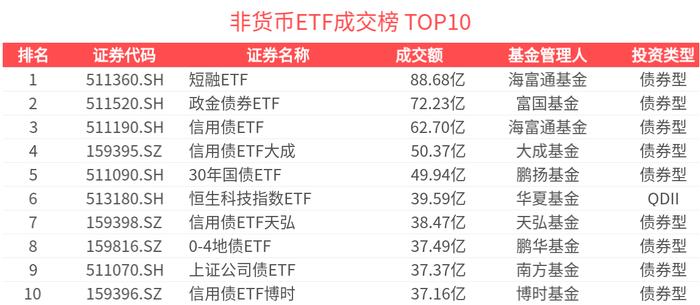
Core Insights - The total trading volume of non-monetary ETFs reached 177.379 billion yuan, with 39 ETFs exceeding 1 billion yuan in trading volume [1] - The Short-term Bond ETF, Policy Financial Bond ETF, and Credit Bond ETF led the market in trading volume, with respective volumes of 8.868 billion, 7.223 billion, and 6.270 billion yuan [1] - The S&P 500 ETF, Benchmark Treasury ETF, and S&P Consumer ETF had the highest turnover rates, at 552.15%, 262.01%, and 239.41% respectively [1][7] - The Short-term Bond ETF's latest share size is 3.88 million, tracking the China Securities Short-term Bond Index, which reflects the overall performance of investment-grade short-term bonds [1][2] - The Policy Financial Bond ETF's latest share size is 4.10 million, closely following the China Bond 7-10 Year Policy Financial Bond Index [2] - The S&P 500 ETF's latest share size is 3.47 million, tracking the S&P 500 Index, which includes 500 leading companies representing about 80% of the available market capitalization [2] Trading Volume Insights - The Short-term Bond ETF saw a trading volume increase of 20.87% compared to the previous trading day, with a turnover rate increase of 21.58% [1] - The Policy Financial Bond ETF's trading volume increased by 5.24% compared to the previous trading day, with a recent average trading volume of 10.957 billion over the last 5 days [2] - The S&P 500 ETF had an average trading volume of 1.395 billion over the last 5 days, indicating significant activity [3] Turnover Rate Insights - The S&P 500 ETF had a turnover rate of 552.15%, indicating high trading activity [7] - The Benchmark Treasury ETF and S&P Consumer ETF had turnover rates of 262.01% and 239.41% respectively, reflecting strong investor interest [7] Sector and Theme Insights - The industry-themed ETFs include the Hang Seng Technology Index ETF, which had a trading volume of 3.959 billion yuan [1] - The recent trading activity in the private enterprise ETF, information technology ETF, and Xinchuang ETF index showed significant volatility, with respective amplitudes of 11.70%, 9.86%, and 9.14% [8][11] - The private enterprise ETF's latest share size is 2.06 million, tracking the Private Enterprise 100 Index, which includes major companies in the power equipment sector [8] Performance Insights - The Short-term Bond ETF experienced a slight decline of 0.01% today, with a 5-day increase of 0.03% and a 20-day increase of 0.17% [1] - The Policy Financial Bond ETF saw a minor increase of 0.02%, with a 5-day increase of 0.23% and a 20-day increase of 0.18% [2] - The S&P 500 ETF increased by 3.22% today, with a 5-day increase of 0.28% and a 20-day increase of 6.81% [3]
这只北交所主题基金,有望重夺全市场公募基金业绩榜榜首
Mei Ri Jing Ji Xin Wen· 2025-05-26 13:38
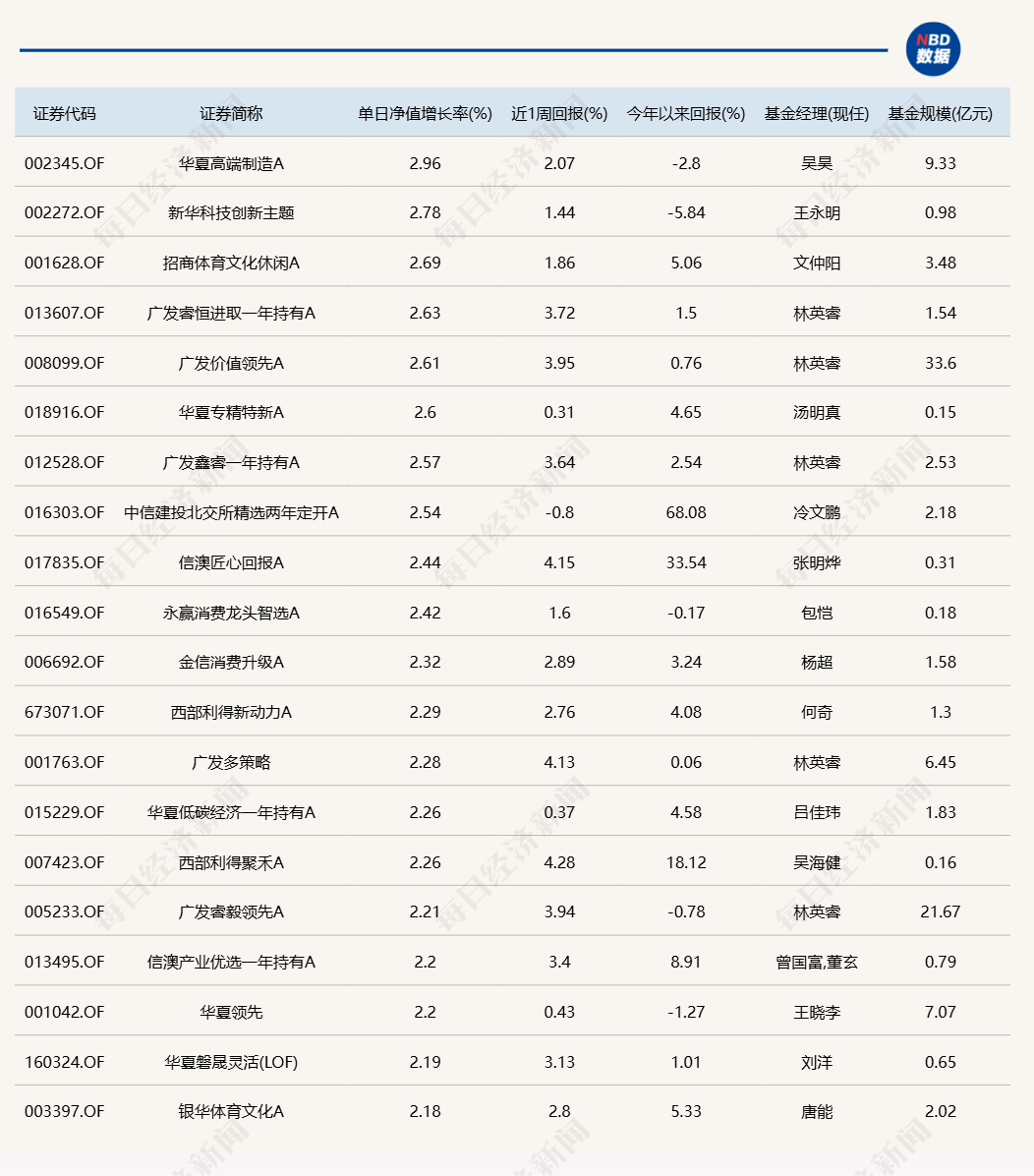
Market Performance - On May 26, the market experienced fluctuations with the ChiNext Index leading the decline. Sectors such as controllable nuclear fusion, smart logistics, PEEK materials, and IP economy saw significant gains, while innovative drugs, complete automobiles, traditional Chinese medicine, and vitamins faced notable declines. Over 3,700 stocks rose across the market [1] - The total trading volume in the Shanghai and Shenzhen markets was 1.01 trillion yuan, a decrease of 145.6 billion yuan compared to the previous trading day [1] Fund Performance - The top-performing funds for the day included: - Huaxia High-end Manufacturing A with a daily net value growth rate of 2.96% and a year-to-date return of -2.8% [2] - Xinhua Technology Innovation Theme with a daily growth of 2.78% and a year-to-date return of -5.84% [2] - China Merchants Sports Culture Leisure A with a daily growth of 2.69% and a year-to-date return of 5.06% [2] - The fund with the highest year-to-date return was the China Merchants North Exchange Innovation Small and Medium Enterprises Selected Fund, which rose approximately 1.4% on the day, bringing its year-to-date return to 68.51% [4] QDII Fund Insights - The QDII product, Huatai-PineBridge Hong Kong Advantage Selection, briefly topped the year-to-date return list but is expected to see a decline due to the weak performance of its major holdings in Hong Kong pharmaceutical stocks [3] - As of the latest data, the Huatai-PineBridge Hong Kong Advantage Selection A fund had a year-to-date return of 68.45%, leading the QDII products by a significant margin [6] Sector-Specific Insights - The pharmaceutical sector showed mixed results, with notable declines in stocks such as Hansoh Pharmaceutical (-0.19% for the day, 48.15% year-to-date) and Innovent Biologics (-2.45% for the day, 68.95% year-to-date) [4] - The market's top-performing fund in the North Exchange theme was the China Merchants North Exchange Selected Fund, which achieved a year-to-date return of 68.08% [5]
开勒股份(301070) - 301070开勒股份投资者关系管理信息20250526
2025-05-26 12:06
Group 1: HVLS Fan Business - HVLS fan is the main business of the company, achieving revenue of 244 million yuan in 2024 with a gross margin of 36.95% [2] - The company holds a leading position in the domestic HVLS fan industry and has competitive products in the international market [2] - In 2024, overseas revenue accounted for 23.31%, indicating potential for further market expansion [2] Group 2: AI Business Development - The company is advancing AI applications through its joint venture, Henan Yuzhi Kaile Intelligent Technology Co., focusing on smart office, smart travel, and smart healthcare [2][3] - The AI solutions provided include private cloud deployment and customized AI application model development, ensuring data security and compliance [3] Group 3: Smart Driving Initiatives - A cooperation agreement was signed with the Henan Automotive Industry Investment Group to promote digital and intelligent upgrades in the automotive sector [4] - The collaboration aims to develop technologies related to autonomous driving, including unmanned vehicles for transportation and logistics [4] Group 4: Smart Government Solutions - In April 2025, a joint launch of the "Deep Language Future" smart government all-in-one machine was announced, in collaboration with People's Daily Online [5] - The all-in-one machine supports localized deployment and ensures data security through encryption and permission management [7] Group 5: AI Medical Solutions - The AI medical sector focuses on providing various AI solutions for different medical applications, including smart hospital renovations and AI imaging model validation [6] - Collaborations have been established with several top-tier hospitals for research projects, aiming to enhance clinical, teaching, and research capabilities through AI and big data [6]
某“基金一哥”因风格漂移未获评级?
Sou Hu Cai Jing· 2025-05-26 09:11
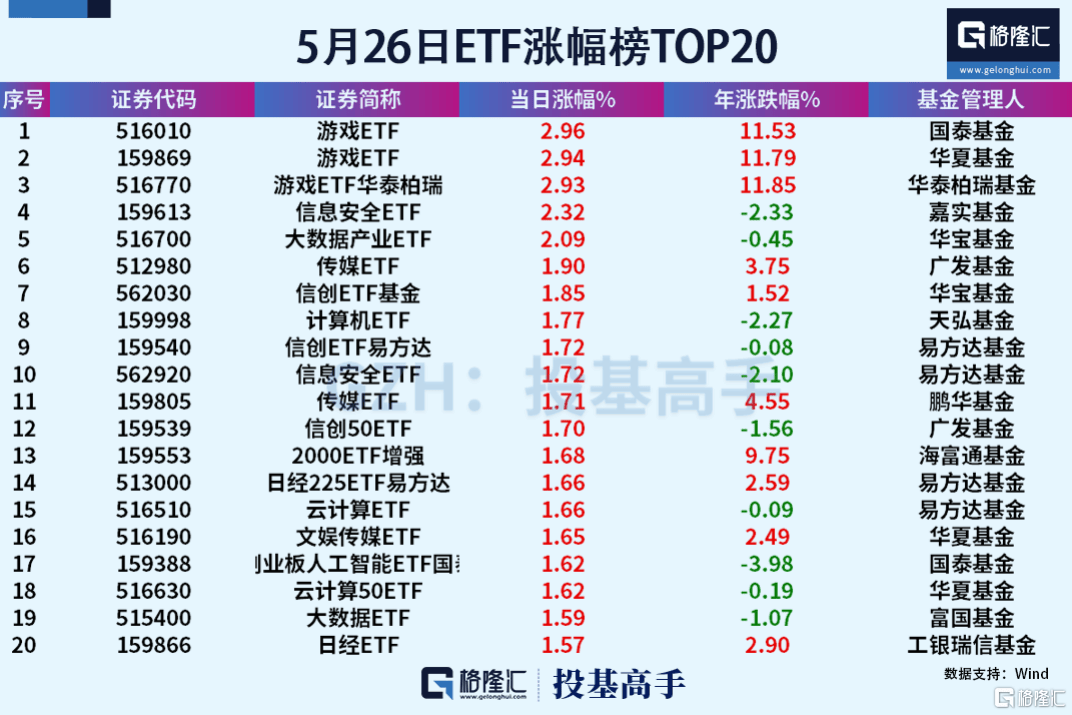
Group 1: Fund Manager Dynamics - A well-known 'fund king' has never received a rating from Jinan due to significant style drift, operating open-end funds like closed-end funds, raising industry concerns [1] Group 2: Market Insights - Goldman Sachs' chief China equity strategist Liu Jinjun and his team support an overweight stance on the Chinese stock market, citing potential resilience in the RMB exchange rate and an expected moderate improvement in corporate earnings [2] - The first batch of innovative floating-rate funds will start selling on May 27, with most products expected to close fundraising in June [3] - Credit bond ETFs are set to officially implement a pledge-style repurchase business, with several public fund institutions' credit bond ETFs meeting the necessary conditions [4] Group 3: Banking Sector - With domestic deposit rates declining, over 70% of A-share listed banks have a dividend yield exceeding 4%, and some banks have yields surpassing 8%, making bank stocks more attractive than traditional savings [5] Group 4: New Fund Launches - 15 new public funds were launched, with over 70% being equity funds, primarily index funds, covering various sectors including fintech, internet, pharmaceuticals, and consumer goods [6] Group 5: ETF Market Performance - A-shares experienced a collective adjustment, with the Shanghai Composite Index down 0.05%, Shenzhen Component down 0.41%, and ChiNext down 0.80%, while the Northbound 50 Index rose 1.94% [7] - The total market turnover was 10,339 billion, a decrease of 1,487 billion from the previous day, with nearly 3,800 stocks rising [7] - The gaming sector saw strong performance, with multiple gaming ETFs rising between 2.93% and 2.96% [9] Group 6: Hong Kong Market Trends - Hong Kong automotive stocks experienced a pullback, with the Hong Kong Stock Connect automotive ETF down 4.38% and the Hong Kong automotive ETF down 4.31% [11]
首批创新浮动费率基金本周开抢 众多产品细节曝光
Zheng Quan Shi Bao· 2025-05-25 18:19
Core Viewpoint - The first batch of innovative floating rate funds has been approved and is set to launch on May 27, marking a significant shift in the fund management fee structure aimed at better aligning with investor interests [1][2]. Fund Structure and Fee Details - The innovative floating rate funds will operate on an open-ended basis, with management fees determined by the holding period and annualized return during that period [2]. - For holdings of less than one year, a management fee of 1.20% will be charged. For holdings of one year or more, fees will vary based on performance: 1.50% for annualized excess returns over 6%, 0.60% for returns at or below -3%, and 1.20% for other scenarios [2][3]. Emphasis on Investor Protection - The fee structure is designed asymmetrically, with a maximum increase of 25% in management fees during good performance and a potential decrease of 50% during poor performance, emphasizing investor protection over manager incentives [3]. - Companies like交银施罗德基金 and 易方达基金 highlight that this floating fee model encourages long-term holding and aligns the interests of fund managers with those of investors [3][4]. Fund Manager Selection - Leading fund companies have appointed experienced managers for these products, including both seasoned veterans and promising newcomers, to ensure strong performance [4][5]. - Notable managers include 王明旭 from 广发基金 and 孙彬 from 富国基金, among others, indicating a strategic focus on performance-driven leadership [4][5]. Fundraising Goals and Strategies - Fundraising targets vary, with some companies setting caps as high as 80 billion and others as low as 20 billion, but many aim for a more conservative target of around 10 billion [6]. - Companies are focusing on long-term growth rather than immediate fundraising success, with strategies like initiating funds with significant internal investments to align interests with investors [6][7]. Industry Response and Future Outlook - The launch of floating rate funds is seen as a proactive response to regulatory changes aimed at enhancing the quality of public funds, with expectations for more products to be introduced in the future [6][7]. - Fund companies are committed to improving their investment capabilities and enhancing investor returns, fostering a sustainable ecosystem that benefits both managers and investors [7].
大曝光!原来这样“浮”?
Zhong Guo Ji Jin Bao· 2025-05-24 09:58
Core Viewpoint - The article discusses the introduction of floating management fee rate funds in China, highlighting the new fee structure and the competitive lineup of fund managers involved in this innovative product launch [1][10]. Summary by Sections Floating Management Fee Structure - The new floating management fee structure is based on three main factors: the holding period of the investor, the fund's performance relative to a benchmark, and whether the fund has generated profits [1]. - For short-term holdings (less than one year), the management fee remains at a fixed rate of 1.2% [2]. - For long-term holdings (over one year), there are three scenarios for fee calculation: 1. If the fund outperforms the benchmark (CSI 300 Index) by more than 6%, the management fee can increase to 1.5% [3]. 2. If the fund underperforms the benchmark by 3% or more, the management fee is reduced to a maximum of 0.6% [3]. 3. If the fund performs moderately, the fee remains at 1.2% [4]. - The fee structure aims to simplify understanding for investors and sales channels, with consistent rules across the first batch of floating fee funds [5]. Fund Manager Lineup - The initial batch of floating management fee funds features a strong lineup of fund managers, including experienced veterans and promising newcomers [6][7]. - Notable fund managers include senior executives from various fund companies, such as Wang Mingxu from GF Fund and Luan Chao from Huaan Fund, who are leading the management of these funds [7][8]. - The article highlights the presence of "champion" fund managers, such as Wang Xiaochuan from Yinhua Fund, who has recently gained recognition in the market [8]. Launch Timeline - The first batch of 26 floating management fee funds was approved by the China Securities Regulatory Commission (CSRC) in a remarkably short time frame of six working days [10]. - The initial offering of 16 funds is set to launch on May 27, with varying fundraising periods ranging from June 17 to August 26 [10].
下周发行!26只“新基金”,有何不同?
券商中国· 2025-05-24 09:50
Core Viewpoint - The approval and upcoming issuance of the first batch of 26 innovative floating fee rate funds represent a significant shift in the public fund industry towards performance-based fee structures, aiming to enhance investor returns and align fund management with investor interests [2][3][5]. Group 1: Fund Approval and Issuance - The first batch of 26 performance-based innovative floating fee rate funds received approval just one week after submission, indicating a highly efficient regulatory process [3]. - These funds are set to begin issuance on May 27, with multiple fund companies targeting around 1 billion yuan in issuance goals [7]. Group 2: Industry Response and Implications - The floating management fee fund reform is seen as a powerful means to optimize actively managed equity funds and shift the industry focus from scale to returns [2][3]. - Fund companies emphasize that this new fee structure will encourage long-term holding by investors and strengthen the performance benchmark's role in fund operations [5][10]. Group 3: Fee Structure and Management - The new floating fee structure consists of a base management fee plus an excess management fee, with the potential for significant adjustments based on performance relative to benchmarks [4][10]. - The fee adjustments are asymmetrical, allowing for a maximum increase of 25% in management fees during good performance, while a decrease of up to 50% is possible during poor performance, prioritizing investor protection [4][10]. Group 4: Managerial Expertise and Strategy - Fund companies are deploying experienced managers with a track record of stable performance to lead these new products, indicating a commitment to quality management [6]. - Companies are focusing on enhancing their investment strategies and aligning them with the new fee structures to ensure better risk-return profiles for investors [8][10]. Group 5: Market Positioning and Future Outlook - The innovative fee structures are designed to be more precise and tailored to individual investor experiences, moving away from traditional one-size-fits-all approaches [9][11]. - The industry anticipates that this floating fee model will become a standard practice, with more products expected to be launched in the future [8][12].
传奇基金经理出手了!
Ge Long Hui· 2025-05-24 07:12
Group 1 - The core viewpoint of the article highlights the impact of Trump's threats to impose tariffs on the EU and Apple, which has led to a significant decline in the U.S. stock market, particularly affecting major tech stocks like Apple [1][2] - The S&P 500 index has experienced a four-day decline, with Apple leading the drop among the tech giants, marking an eight-day losing streak [1] - Bill Ackman, a prominent hedge fund manager, has taken advantage of the market dip by buying Amazon shares after a significant price drop due to tariff concerns, indicating a potential undervaluation of the company [1][2] Group 2 - Ackman's investment strategy is supported by two main reasons: the resilience of Amazon Web Services (AWS) as the core profit driver and the limited impact of tariffs on Amazon's retail business, as less than 15% of its self-operated products are imported [2] - Ackman is recognized for his legendary investment acumen, having predicted the subprime mortgage crisis in 2007 and profiting significantly during the COVID-19 pandemic [2] - The article notes Ackman's strategic timing in selling Nike shares before the tariff announcement, raising questions about his investment decisions and market timing [2][4] Group 3 - Yang Dong, another notable fund manager, has made significant adjustments to his investment portfolio in April, reducing exposure to convertible bonds while increasing investments in sectors like real estate, power, and chemicals [5] - Yang's focus on domestic demand growth and the stabilization of the real estate market is seen as a key strategy for future investments [5] - He emphasizes that stocks remain a favorable investment choice compared to fixed-income assets, citing the potential for structural opportunities in consumption, healthcare, and new infrastructure [5] Group 4 - The first batch of new floating-rate funds has been rapidly approved, reflecting regulatory attention to enhancing the public fund industry [6][10] - These funds will feature a performance-based fee structure, linking management fees to investment performance, which is expected to improve active management capabilities and align interests between fund managers and investors [10][14] - The floating-rate funds are designed to encourage long-term investment by requiring a minimum holding period of one year to benefit from fee adjustments, thereby reducing short-term speculation [14]