中国财险

Search documents
大行评级|瑞银:上调中国财险目标价至18.7港元 维持“买入”评级
Ge Long Hui· 2025-08-05 03:20
该行上调中国财险2025至27年的除税后净溢利11%、5%及4%,以反映自然灾害损失低于预期及年初至 今股市表现改善,并重新调整增长预测。该行将该股目标价由16.3港元上调至18.7港元,续予"买入"评 级。 瑞银发表研究报告指,预计中国财险上半年总保费、汽车保费、非汽车保费的按年增长率与第一季基本 持平,分别为3.6%、3.4%及3.8%,并预计上半年保险收入增长超过5%。在承保盈利能力方面,该行估 计公司上半年的综合成本率将增加0.9个百分点至95.3%。汽车综合成本率持续受惠于佣金结构调整。在 非汽车业务方面,该行认为由于业务组合改善,健康险和农业险业务显著改善。因此估计上半年总承保 利润按年增29%。 ...
全市场唯一港股通非银ETF(513750)最新规模突破125亿元,近一个月获资金净流入超72亿元
Xin Lang Cai Jing· 2025-08-05 01:56
Group 1 - The Hong Kong Stock Connect Non-Bank ETF (513750) has seen a year-to-date increase of 49.50% since its low on April 10, 2025, closing at 1.64 yuan as of August 4, 2025 [1] - The ETF's trading volume reached 8.82 billion yuan with a turnover rate of 7.04%, and the average daily trading volume over the past week was 16.99 billion yuan [1] - The current size of the ETF is 12.516 billion yuan, with a net inflow of 14.25 billion yuan over the last five trading days, and over 72 billion yuan in net inflows in the past month [1] Group 2 - The CSI Hong Kong Stock Connect Non-Bank Financial Theme Index (931024) tracks up to 50 listed companies in the non-bank financial sector, with the top ten weighted stocks accounting for 78.19% of the index [2] - Major stocks in the index include China Ping An, AIA, and Hong Kong Exchanges, each representing over 14% of the index [2] - The report from Minsheng Securities indicates that positive policy adjustments, such as interest rate cuts, are expected to boost market sentiment and support the long-term value growth of quality listed companies [2] Group 3 - Guotai Junan's report anticipates that the performance of listed brokerage firms in the first half of the year will exceed expectations, with increased market financing demand [3] - The Hong Kong Stock Connect Non-Bank ETF is the first and only ETF tracking the non-bank index, with over 60% of its holdings in the insurance sector [3] - The ETF reflects the overall performance of non-bank financial theme listed companies within the Hong Kong Stock Connect range [3]
中国在沙漠,悄悄干了件大事
3 6 Ke· 2025-08-04 09:13
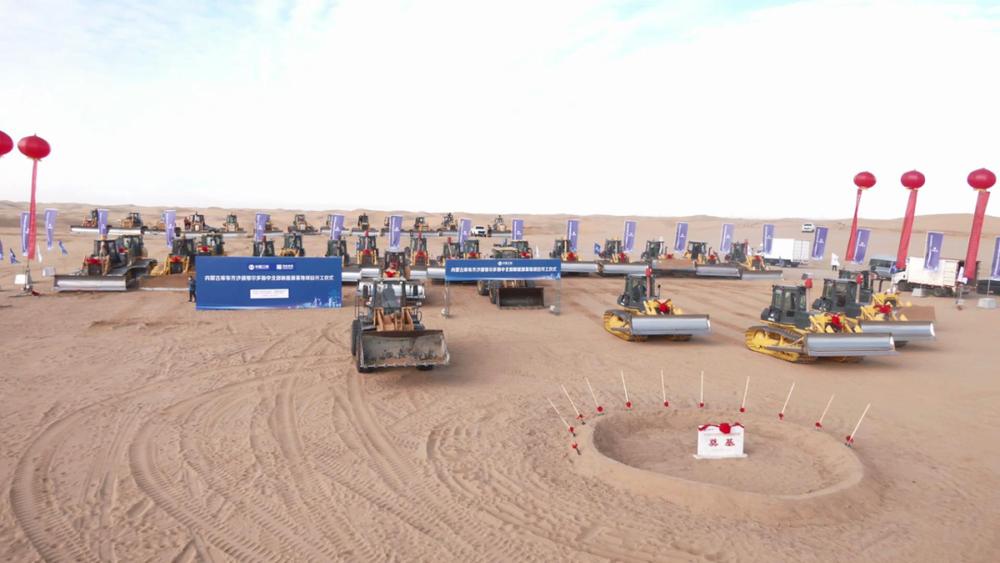
Core Points - China is constructing the world's largest solar and wind power base in the Kubuqi Desert, with a planned total installed capacity of 450 million kilowatts, equivalent to the total output of 20 Three Gorges Dams [4][2][12] - The project aims to transform barren desert areas into productive land by integrating agriculture with renewable energy production, showcasing a unique "photovoltaic + agriculture" model [24][26][28] - The initiative is part of China's broader strategy to utilize its vast desert areas for renewable energy generation, addressing both energy needs and environmental restoration [17][20][29] Group 1 - The Kubuqi Desert solar power station has already converted 27,000 acres of desert into an oasis, demonstrating the potential for large-scale solar energy projects in arid regions [8][6] - The solar power station in Qinghai's Talatan covers an area of 609 square kilometers, comparable to the entire land area of Singapore, and has significantly improved local environmental conditions [10][12] - The investment in the Kubuqi Desert project exceeds 80 billion yuan, highlighting the scale and ambition of China's renewable energy initiatives [4][2] Group 2 - China's photovoltaic capacity has been steadily increasing, with a cumulative installed capacity that ranks first globally for nine consecutive years, accounting for over 70% of the world's production of polysilicon, wafers, and cells [31][20] - The "photovoltaic + agriculture" model not only generates clean energy but also contributes to local economic development by integrating crop cultivation and livestock farming into solar power projects [26][28] - The approach of using solar panels to create microclimates for plant growth has proven effective in desert areas, allowing for sustainable land use and environmental restoration [23][24]

中报期在即,持续关注绩优个股及优质红马
Changjiang Securities· 2025-08-03 13:44
Investment Rating - The report maintains a "Positive" investment rating for the investment banking and brokerage industry [7] Core Insights - The brokerage sector is experiencing high growth in performance as indicated by preliminary reports, with increasing allocation value. The insurance sector is also expected to see a rise in new business value driven by an increase in value ratios. The equity market continues to rise, leading to favorable expectations for investment returns and profit growth. Current valuations imply a pessimistic long-term investment outlook, but the report considers current valuations to be safe, given the medium to long-term interest rate spread levels [2][4] - The report recommends companies with stable profit growth and dividend rates, including Jiangsu Jinzhong, China Ping An, and China Pacific Insurance, which have clear advantages in business models and market positions. Additionally, it suggests focusing on New China Life, China Life, Hong Kong Exchanges and Clearing, CITIC Securities, Dongfang Wealth, Tonghuashun, and Jiufang Zhitu Holdings based on performance elasticity and valuation levels [2][4] Summary by Sections Industry Overview - The non-bank financial index decreased by 2.4% this week, with a relative excess return of -0.6% compared to the CSI 300, ranking 22 out of 31 industries. Year-to-date, the non-bank financial index is up by 4.0%, with a relative excess return of +1.0%, also ranking 21 out of 31 [5] - The market has seen a decline in activity, with an average daily trading volume of 18,096.34 billion yuan, down 2.11% week-on-week, and an average turnover rate of 2.12%, down 2.50 basis points [5] Brokerage Sector - The brokerage sector's performance has been weak overall, with the securities sector down 3.1% this week. The report highlights that the average daily trading volume and turnover rate are above the 2024 averages, indicating a gradual recovery in brokerage business profitability [17][39] - Margin financing balances have increased to 1.98 trillion yuan, up 2.21% week-on-week, indicating a recovery in credit business [46] Investment Business - The equity market has seen an overall decline, with the CSI 300 index down 1.75% and the ChiNext index down 0.74%. The report notes that the proportion of equity investments in brokerage assets is approximately 10%-30%, while bond investments account for 70%-90% [43][44] Insurance Sector - The insurance industry reported a cumulative premium income of 37,350 billion yuan in June 2025, reflecting a year-on-year increase of 5.31%. The report indicates that the premium income from property insurance was 9,645 billion yuan, up 5.10%, while life insurance income was 27,705 billion yuan, up 5.38% [21][22] - The total assets of the insurance industry reached 39.22 trillion yuan as of June 2025, with a quarter-on-quarter increase of 2.08% [26][27]



非银行业周报20250803:回调之后,积极布局非银板块-20250803
Minsheng Securities· 2025-08-03 08:34
Investment Rating - The report maintains a positive investment rating for the non-bank sector, suggesting a favorable outlook for both insurance and securities companies [6]. Core Insights - The reintroduction of VAT on bond interest is expected to have a limited impact on insurance companies, with a continued focus on "tax-exempt assets + high dividends" strategies in the investment sector [1]. - The overall investment style for insurance capital is expected to remain "fixed income +", but with a potential increase in equity allocation as net investment income may face pressure due to declining long-term interest rates [2]. - The non-bank sector has shown resilience, with the non-bank index outperforming the broader market in July, driven by strong performance from securities and insurance indices [3]. - Domestic policies are expected to support market recovery, with ongoing efforts to enhance the attractiveness and inclusivity of the capital market [4]. Summary by Sections Market Review - Major indices experienced a decline, with the non-bank sector showing relative strength, particularly in the insurance index, which was less affected by market fluctuations [10]. - The non-bank financial index fell by 2.40%, while the insurance index only decreased by 0.15% [10]. Securities Sector - The report highlights a robust performance in the securities sector, with significant increases in trading volumes and IPO underwriting [18]. - As of August 1, 2025, the cumulative IPO underwriting scale reached 566.81 billion, and refinancing underwriting was 8103.24 billion [18]. Insurance Sector - The insurance sector is expected to benefit from a dual enhancement of "dividends + capital gains" as policies encourage long-term capital market participation [5]. - Key insurance companies to watch include Sunshine Insurance, China Pacific Insurance, New China Life, Ping An, China Life, and China Property Insurance [44]. Investment Recommendations - The report suggests a focus on expanding equity allocations within insurance portfolios, with a positive outlook for the performance of major securities firms [43][44].

景顺长城港股通全球竞争力C近一周下跌3.14%





Jin Rong Jie· 2025-08-03 05:07
Core Insights - The Invesco Great Wall Hong Kong Stock Connect Global Competitiveness C Fund (012228) has a latest net value of 0.8108 yuan, with a weekly return of -3.14%, a three-month return of 6.14%, and a year-to-date return of 17.87% [1] - The fund was established on August 12, 2021, and managed by Zhou Hanying, with a total scale of 250 million yuan as of June 30, 2025 [1] - The top ten stock holdings of the fund include Tencent Holdings, Alibaba-W, Pop Mart, Xiaomi Group-W, Giant Bio, Zijin Mining, NetEase Cloud Music, China Pacific Insurance, SMIC, and SF Holding, accounting for a total of 47.14% of the portfolio [1]
研判2025!中国钓鱼用具行业市场现状及发展趋势分析:行业规模恢复增长态势,未来产品将不断升级创新[图]
Chan Ye Xin Xi Wang· 2025-08-01 22:34
Core Insights - The report titled "2025-2031 China Catastrophe Insurance Industry Market Competition Landscape and Investment Potential Assessment" provides a comprehensive analysis of the catastrophe insurance industry in China, covering market development environment, operational status, competitive landscape, key enterprise performance, and future trends and investment forecasts [1] Group 1: Industry Overview - The report consists of twelve chapters, starting with an introduction to the catastrophe insurance industry and its overall operational status [1] - It includes a detailed analysis of the current state of the catastrophe insurance market and its competitive structure [1] Group 2: Global Development Analysis (2020-2024) - The report discusses the global catastrophe insurance industry's development from 2020 to 2024, including the types, principles, and functions of catastrophe insurance [3] - It provides insights into the global natural disaster trends and losses during this period, as well as the operational status of the global catastrophe insurance market [3] Group 3: China Development Analysis (2020-2024) - The report analyzes the development of the catastrophe insurance industry in China, identifying existing problems and providing suggestions for improvement [4] - It examines the economic performance of the catastrophe insurance sector, including underwriting and claims analysis [4] Group 4: Market Analysis (2020-2024) - The report evaluates the market development of catastrophe insurance in China, including regulatory conditions and intermediary development [4] - It also analyzes market equilibrium, demand, supply, and product coverage levels [4] Group 5: Competitive Landscape (2020-2024) - The report outlines the competitive landscape of the catastrophe insurance industry in China, including structural analysis and competitive strategies of key enterprises [6] - It features a SWOT analysis of major companies in the industry, such as China People's Insurance Company, China Pacific Insurance Company, and Ping An Insurance Company [7][9] Group 6: Future Trends and Investment Forecast (2025-2031) - The report forecasts the development trends of the catastrophe insurance industry in China from 2025 to 2031, including market demand and pricing trends [8] - It assesses the investment environment and potential returns in the catastrophe insurance sector for the upcoming years [8]
河北加快推进农业灾后恢复生产
Xin Hua She· 2025-08-01 21:38
Group 1 - Recent heavy rainfall in Hebei has adversely affected agricultural production, prompting local authorities to mobilize resources for disaster recovery efforts [1] - Agricultural experts are providing on-site guidance for farmers, focusing on soil preparation and replanting strategies to mitigate losses from crop failures [1] - In Zhangjiakou, local leaders are coordinating drainage efforts and advising farmers on pest control to minimize damage to crops affected by flooding [1] Group 2 - Transportation infrastructure is critical for agricultural disaster relief and the distribution of agricultural products, as seen in the recovery efforts in Dule Township, Baoding [2] - The local government quickly organized machinery and repair teams to restore damaged roads, enabling the transportation of fresh peaches [2] - Agricultural insurance is playing a vital role in helping farmers recover, with insurance companies implementing expedited claims processes to provide financial support to affected farmers [2]
中证港股通非银行金融主题指数下跌2.48%,前十大权重包含友邦保险等
Jin Rong Jie· 2025-08-01 12:24
Core Points - The Shanghai Composite Index decreased by 0.37%, while the CSI Hong Kong Stock Connect Non-Bank Financial Theme Index fell by 2.48%, closing at 4035.71 points with a trading volume of 25.566 billion yuan [1] - The CSI Hong Kong Stock Connect Non-Bank Financial Theme Index has seen a significant increase of 10.89% over the past month, 38.14% over the past three months, and 42.39% year-to-date [1] - The index consists of up to 50 listed companies that meet the non-bank financial theme criteria from the Hong Kong Stock Connect securities, reflecting the overall performance of these companies [1] Index Composition - The top ten holdings of the CSI Hong Kong Stock Connect Non-Bank Financial Theme Index are: Ping An Insurance (14.9%), AIA Group (13.76%), Hong Kong Exchanges and Clearing (13.34%), China Life Insurance (9.53%), China Pacific Insurance (7.15%), China Continent Insurance (6.47%), New China Life Insurance (4.2%), People's Insurance Company of China (3.81%), CITIC Securities (2.82%), and Shandong Hi-Speed Holdings (2.36%) [1] Market Structure - The market segment of the CSI Hong Kong Stock Connect Non-Bank Financial Theme Index is entirely composed of the Hong Kong Stock Exchange, with a 100% allocation [2] - The index is fully focused on the financial sector, with a 100% representation of financial companies [3] - The index samples are adjusted biannually, with adjustments occurring on the next trading day after the second Friday of June and December [3]

近16年财险公司增资分红盘点:有五家公司分红金额超过股东投入,有54家公司股东累计投入金额高达1490亿元,但从未分过红!
13个精算师· 2025-08-01 11:41
Core Viewpoint - The insurance industry has experienced significant capital inflows and profitability over the past 16 years, but there is a stark divide between companies that distribute dividends and those that do not, indicating a polarization in operational performance [2][3][14]. Group 1: Dividend Distribution in the Insurance Industry - From 2009 to 2024, the insurance industry has cumulatively distributed dividends amounting to 214.4 billion, with a total of 231 dividend distributions [7]. - The cumulative profit of the insurance industry over the same period is 606.4 billion, with a notable increase from 4 million in 2009 to 27.4 billion in 2024 [9]. - Only 35 out of 89 companies that have increased capital have distributed dividends, highlighting that 54 companies have not distributed any dividends despite significant capital inflows [10][11]. Group 2: Capital Inflows and Profitability - The insurance industry has seen a total of 325.3 billion in new shareholder capital over the past 16 years, with 249 instances of capital increases [8]. - The 35 companies that have distributed dividends accounted for 54% of the total new capital inflows, while the 54 companies that have not distributed dividends accounted for 46% of the inflows but have collectively incurred losses of 31.5 billion [13]. - The profitability of the 35 dividend-distributing companies reached 637.9 billion, surpassing the total profit of the entire industry, while the other 54 companies reported cumulative losses [13][14]. Group 3: Performance of Leading Companies - Among the companies with over 10 dividend distributions, notable performers include PICC Property and Casualty, Ping An Property & Casualty, and Taikang Property, with five companies having cumulative dividends exceeding their total shareholder contributions [17]. - The top ten companies in terms of cumulative dividends from 2009 to 2024 have been identified, showcasing the leaders in the industry [15][17]. - The industry is characterized by two camps: leading companies that have transitioned into a profit-sharing phase and others that continue to struggle with capital increases without returns [14].