傅利叶

Search documents
从后空翻炫技到上岗巡检!高交会五年蝶变:机器人集体“务实”,全产业链瞄准量产落地
Mei Ri Jing Ji Xin Wen· 2025-11-15 11:45
Core Insights - The robotics industry showcased at the 27th China International High-Tech Achievements Fair (CIHTAF) has evolved from novelty displays to practical applications, with a focus on real-world usability and integration into various sectors [1][2][4] Industry Evolution - Five years ago, robots were primarily viewed as visual spectacles, with products like the AlienGo robot dog capturing attention through impressive stunts [2][4] - By 2025, the focus has shifted to diverse forms of robots, including quadrupedal, wheeled, bionic robots, digital humans, and robotic arms, emphasizing their functional capabilities [2][4] Application and Functionality - Exhibitors at the fair are now prioritizing the practical applications of robots, demonstrating their abilities in tasks such as autonomous navigation, obstacle avoidance, and interactive communication [4][6] - The integration of advanced technologies like AI voice recognition and computer vision has enhanced the functionality of robots, allowing for real-time interaction and improved operational efficiency [4][6] Market Expansion - The number of exhibitors has doubled, with 22 dedicated exhibition areas for robotics, indicating a significant growth in the industry and its applications [6] - Companies are increasingly exploring new application boundaries, with humanoid robots being utilized in various sectors, including industrial and healthcare environments [6][9] Product Development and Challenges - The maturity of robotic products, particularly robot dogs, has improved significantly, with ongoing iterations based on real-world feedback [8] - Despite advancements, humanoid robots still face challenges in achieving efficiency comparable to human workers, necessitating ongoing development and customization for specific tasks [11]


人形机器人的头部,绝非多余的 “装饰”
机器人大讲堂· 2025-11-15 10:18
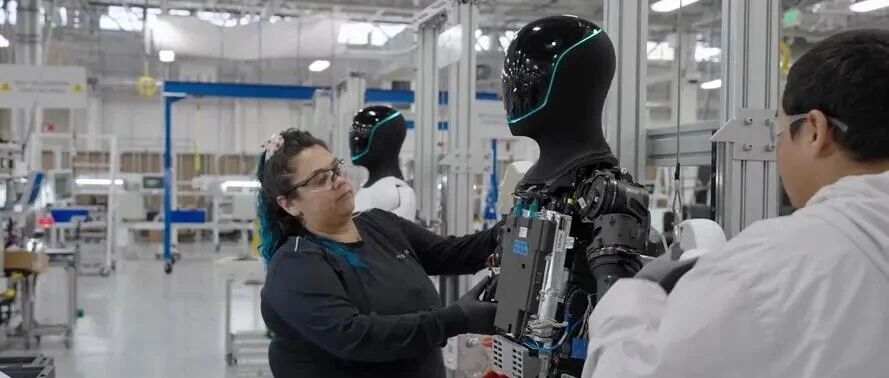
Core Viewpoint - The article discusses the importance of humanoid robot head design, arguing that it is essential for perception, interaction, and structural optimization, contrary to the view that humanoid features are unnecessary [1][22][25]. Group 1: Perception Capabilities - The head of humanoid robots serves as the optimal platform for sensory systems, directly influencing the precision, range, and efficiency of perception [3][5]. - Human-centric design principles dictate that the head's height aligns with human eye level (approximately 1.5-1.7 meters), maximizing the robot's ability to perceive its environment [3][4]. - Without a head, sensory devices would be poorly positioned, leading to decreased recognition accuracy and limited environmental awareness [4][8]. Group 2: Interaction and Social Integration - The head is crucial for emotional connection and interaction, especially in service scenarios like healthcare and education, where human-like features enhance user acceptance [10][11]. - Proper layout of interaction devices (speakers, displays) on the head aligns with human communication habits, improving interaction efficiency [11][13]. - Humanoid robots with heads can simulate human expressions, reducing psychological barriers and fostering trust during interactions [10][13]. Group 3: Structural and Control Optimization - The head contributes to the robot's structural balance, with its weight distribution mimicking human proportions to ensure stability during movement [15][17]. - Key control modules are often integrated into the head, allowing for rapid processing and response to sensory input, enhancing operational safety [15][17]. - Advanced neck designs in humanoid robots improve dynamic perception and interaction capabilities, further emphasizing the head's structural significance [17][18]. Group 4: Technological Evolution and Industry Trends - The design of humanoid robot heads is evolving towards lightweight, high-integration, and functional solutions, addressing earlier criticisms of impracticality [18][21]. - Major industry players are investing in head design, recognizing its role in driving technological advancements across the robotics ecosystem [21][25]. - The head is seen as a "soul carrier" of humanoid robots, embodying the blend of technical rationality and humanistic needs, essential for future developments in the field [22][23].
高交会“开箱”:384超节点“深圳首秀”,机器人能唠嗑,无人车“长千里眼”
Mei Ri Jing Ji Xin Wen· 2025-11-14 10:33
Core Viewpoint - The 27th China International High-Tech Achievements Fair (CIHTAF) in Shenzhen showcases advanced technologies and products, attracting over 5,000 companies from more than 100 countries, with a focus on high-end technology and innovation [1][4]. Group 1: Event Highlights - The fair features over 90% of physical exhibits, with more than 100 launch and roadshow events, and over 20% of the exhibits being debut showcases [1]. - The event includes the global debut of the Cyborg-W01 wheeled robot and the establishment of the world's first robot product development design engineering service center in Bao'an District, Shenzhen [1][4]. Group 2: Key Technologies and Products - The Ascend 384 super node, valued at approximately 200 million yuan, consists of 12 computing cabinets and 4 bus cabinets, providing up to 300 PFLOPs of dense BF16 computing power, nearly double that of NVIDIA's GB200 NVL72 system [6]. - A high-precision mid-to-long-range digital lidar, which enhances the detection capabilities of autonomous vehicles, was also showcased, aimed at meeting mass production needs [9]. Group 3: Robotics Focus - Humanoid robots and various types of robots, including cleaning and interactive robots, attracted significant attention at the fair [3][11]. - The robotics industry is rapidly advancing, with Shenzhen's Bao'an District establishing a complete ecosystem from core components to system integration and application scenarios, aiming to bridge the gap between R&D and industrialization [11].

傅利叶携最新工业场景解决方案亮相2025高交会 推动智能机器人在现实场景规模化应用
Zheng Quan Shi Bao Wang· 2025-11-14 08:03
Core Insights - The 27th China International High-Tech Achievements Fair (CIHTAF) opened in Shenzhen, focusing on the theme "Human-Machine Symbiosis, Intelligent Future" with a showcase of cutting-edge robotics technology and innovative products [1] - Fourier, a smart robotics company, presented its GRx series humanoid robots and the latest "Industrial Scene Solutions," demonstrating the integration of embodied intelligence in industrial manufacturing and human-machine collaboration [1] Group 1: Technology and Innovation - Fourier's Vice President, Zhai Yanqi, highlighted the company's technological layout and application plans in AI and embodied intelligence, emphasizing the closed-loop capability of robots in "perception-decision-action" [1] - The company has developed a comprehensive product system that includes core components, robot design, and application solutions, promoting the large-scale application of intelligent robots in real-world scenarios [1] Group 2: Industrial Applications - During the event, multiple GRx robots efficiently collaborated to perform tasks such as box handling, material transfer, and sorting, showcasing their ability to work together in complex environments [1] - The FOCUS (Fourier Orchestrated Control and Unification System) platform underpins the industrial solutions, focusing on high-frequency tasks like box handling and material sorting, creating a full-chain closed-loop operation system [2] Group 3: Interactive Solutions - In addition to industrial applications, Fourier introduced an interactive game "Tic-Tac-Toe" designed for health and companionship scenarios, integrating cognitive training concepts into a lightweight game format [2] - The robot utilizes visual models for precise perception of the game state and employs logical algorithms for real-time decision-making, enhancing the interactive experience with emotional feedback [2] - This initiative demonstrates the extensibility of the GRx series platform, supporting technology migration and functional deployment across different robot models, thereby increasing compatibility and scalability for future products [2]
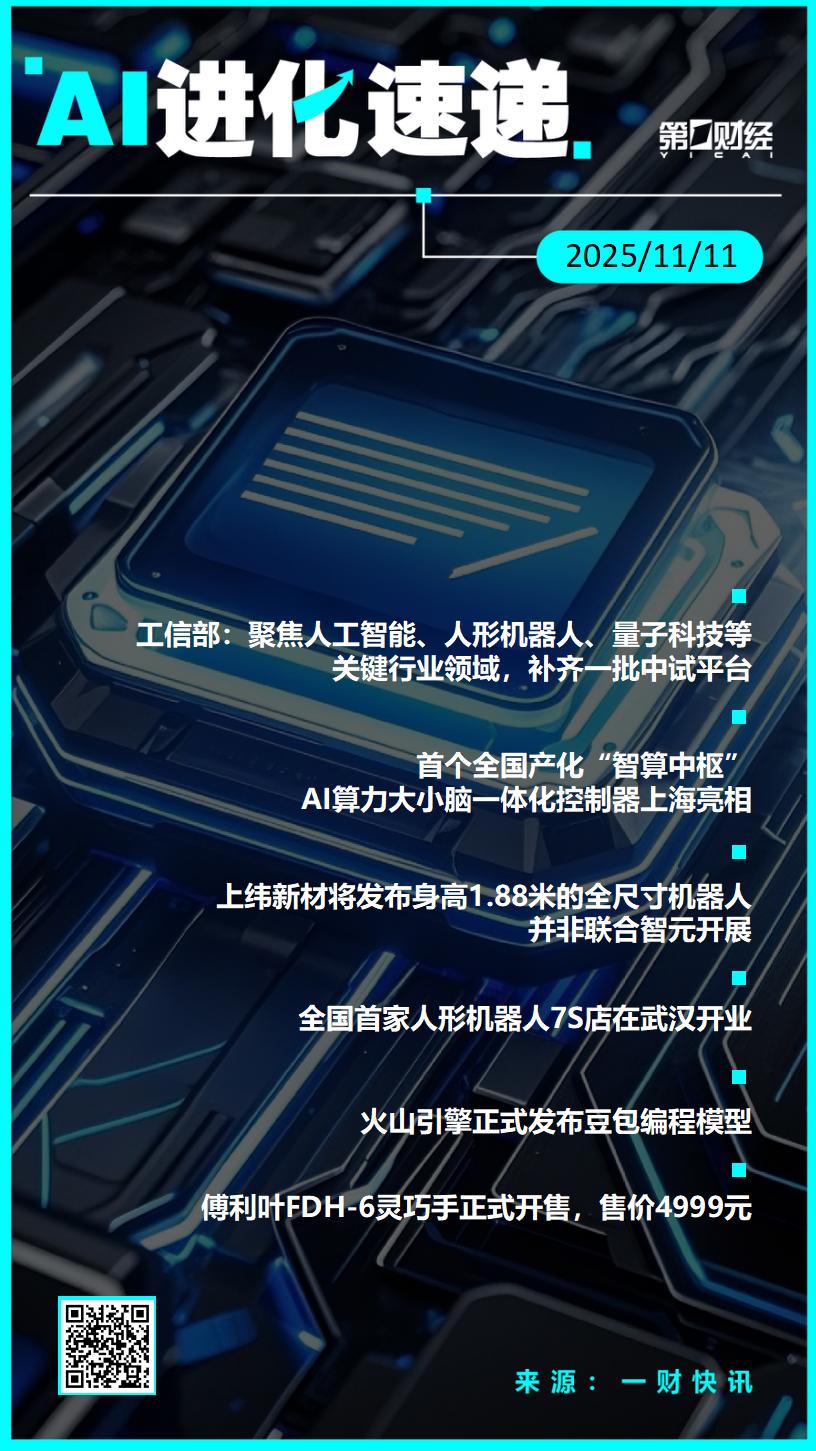
AI进化速递丨上纬新材将发布身高1.88米的全尺寸机器人
Di Yi Cai Jing· 2025-11-11 12:33
Group 1 - The Ministry of Industry and Information Technology focuses on key industries such as artificial intelligence, humanoid robots, and quantum technology, aiming to enhance a number of pilot test platforms [1] - The first fully domesticated "Intelligent Computing Center" AI integrated controller was unveiled in Shanghai [1] - The first humanoid robot 7S store opened in Wuhan [1][3] Group 2 - Shangwei New Materials will launch a full-size robot with a height of 1.88 meters, not in collaboration with United Zhiyuan [1] - Volcano Engine officially released the Doubao programming model [1][3] - Fourier FDH-6 dexterous hand is officially on sale, priced at 4999 yuan [1][3]

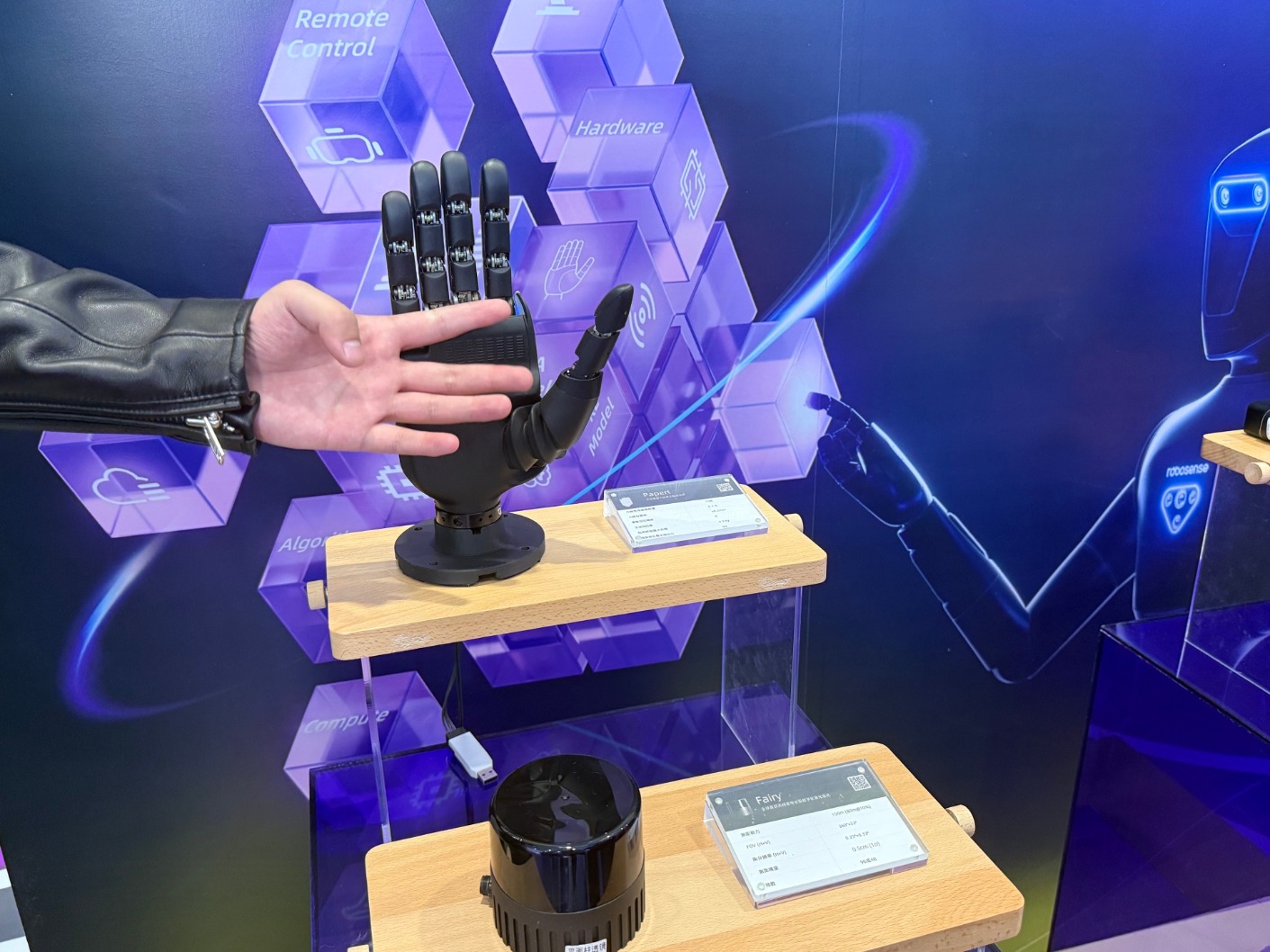
傅利叶FDH-6灵巧手11月11日正式开售
Bei Jing Shang Bao· 2025-11-11 10:01
北京商报讯(记者 陶凤 王天逸)11月11日,傅利叶宣布FDH-6灵巧手正式开售,新品发售价4999元。 据称,该产品为六自由度灵巧结构、铝合金一体化骨架。 ...
浦东:以开放创新破局 架起链接世界的桥梁
2 1 Shi Ji Jing Ji Bao Dao· 2025-11-10 11:04
Core Insights - The eighth Hongqiao International Economic Forum emphasizes the development path of Pudong in global economic governance, focusing on global supply chain management and the dual interaction of "bringing in" and "going out" [1][2] Economic Performance - Pudong's GDP has reached 1.34 times that of 2020, and its total import and export volume has increased to 1.25 times [2] - Pudong accounts for 25% of Shanghai's foreign-funded enterprises and nearly 50% of multinational company headquarters and foreign R&D centers, showcasing strong resilience and vitality [2] Open Policy and Innovation - Pudong has achieved a level of openness equivalent to CPTPP and DEPA, with 100% openness in manufacturing and the implementation of a 30-day visa-free entry policy for the upcoming Oriental Hub [2][5] - The region has established a comprehensive service network for enterprises "going out," enhancing global cooperation [2][5] Innovation Ecosystem - Pudong is home to major scientific facilities and has developed a full-chain layout in integrated circuits, biomedicine, and artificial intelligence, with over 150 specialized model enterprises in AI [3][4] - The "Qingchuang 15 Measures" and "Pearl Plan" provide a supportive environment for talent and innovation, with a total fund of over $140 billion for financial services [5] Global Cooperation and Future Outlook - The forum highlighted the importance of open cooperation as an inevitable choice to seize opportunities and address challenges in economic globalization [6] - Pudong aims to deepen high-level institutional openness, creating a better business environment and fostering collaboration with global partners [6]
浦东“引力场”:中外企业共绘产业新图景
2 1 Shi Ji Jing Ji Bao Dao· 2025-11-07 00:48
(原标题:浦东"引力场":中外企业共绘产业新图景) 21世纪经济报道记者孙燕 上海报道 11月6日,第八届虹桥国际经济论坛"浦东与世界:共筑开放之路 共绘产业新图景"分论坛在国家会展中心(上海)举办。 在分论坛之前的推介环节,霍尼韦尔、傅利叶等中外企业分享了他们和浦东发展紧密相连、相互成就的故事。 作为上海国际经济、科技创新中心建设的核心区,浦东拥有上海25%的外资企业、近50%的跨国公司总部和外资研发中心。 霍尼韦尔大中华区总裁余锋回忆道,上世纪90年代他来到了浦东,担任一家外企的总经理。由于浦东改革开放的政策和卓越的营商环境,在三年 时间里他所带领的业务增长了16倍。 从上世纪90年代在上海成立了中国投资有限公司,到2024年在浦东成立了中国的研发中心,霍尼韦尔在浦东不断加码,增加投资。 "由于浦东充沛的人才储备、卓越的政策环境和高度国际化的营商氛围,霍尼韦尔中国已经成为全球最重要的战略市场、研发中心、科创制造基地 之一。"余锋表示。 近年来,在"双碳"政策的指引下,霍尼韦尔和浦东的多家企业积极探索打造智能、绿色、低碳的建筑,然后推广到全国各地。目前其以上海为中 心,在全国各地的30多个城市为250多条轨 ...
2025年智慧养老产业发展白皮书
Tou Bao Yan Jiu Yuan· 2025-11-04 12:04
Investment Rating - The report does not explicitly state an investment rating for the smart elderly care industry Core Insights - The smart elderly care industry in China is rapidly evolving through technological integration and innovative models to address the challenges posed by an aging population, which is expected to reach 30% by 2050, significantly higher than the global average [5][18] - The industry is focusing on creating a comprehensive health management ecosystem that covers the entire life cycle of elderly care, showcasing significant breakthroughs from technology application to system construction [5] Summary by Sections Overview of the Smart Elderly Care Industry - The aging population in China is accelerating, with the proportion of individuals aged 65 and above expected to reach 30% by 2050, indicating a severe challenge for social and economic development [18][20] - The report highlights the structural challenges in the current elderly care service supply system, including insufficient total supply, uneven resource distribution, and a shortage of professional caregivers [6] Demand Environment - The acceptance of smart products among the elderly is steadily increasing, with 43.08% of users spending 1-3 hours daily using these products [6][39] - The demand for personalized leisure and entertainment services is significantly higher among elderly individuals living with family compared to those living alone, indicating a strong expectation for functionality in multi-generational households [6] Supply Situation - Smart elderly care products are evolving from single-function devices to comprehensive solutions, with wearable devices forming a health management loop covering prevention, diagnosis, and rehabilitation [7] - The report emphasizes the need for a smart transformation in elderly care services to enhance sustainability and meet the growing demand [6] Policy Environment - The report outlines a systematic approach to policy development in the smart elderly care sector, emphasizing the integration of technology and the enhancement of service quality to improve the well-being of the elderly [33] Economic Environment - Investment strategies in the elderly care sector are shifting from quantity to quality, focusing on high-quality projects in areas such as artificial intelligence, robotics, and digital platforms [35] - The report notes significant investment activity in the elderly care robot sector, with a notable increase in funding for companies developing companion and rehabilitation robots [37] Technological Environment - The health IoT is driving the development of automated and intelligent health services, with technologies such as blockchain enhancing data security and sharing [45][47] - The integration of various technologies is crucial for creating a seamless health management ecosystem that meets the needs of the elderly [47] Industry Chain Analysis - The smart elderly care industry chain consists of upstream technology support, midstream product and service integration, and downstream application scenarios, forming a collaborative ecosystem [51][53] - The report highlights the importance of integrating resources from various sectors to create a comprehensive elderly care solution that includes home care, community support, and institutional care [52]
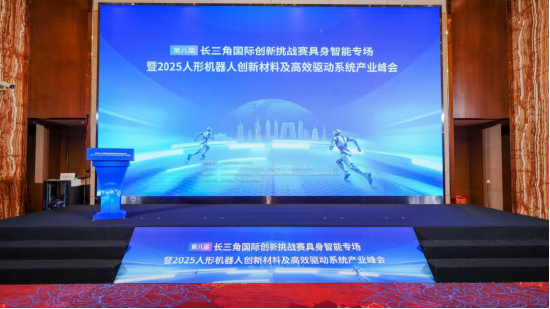
上海市科委二级巡视员李祖兴、普陀区委副书记赵勇在机器人峰会中表示,推动更多金种子企业落地
Xin Lang Zheng Quan· 2025-10-31 07:12
Core Insights - The eighth Yangtze River Delta International Innovation Challenge focuses on embodied intelligence, aiming to build a comprehensive innovation ecosystem through collaboration among research institutions, universities, and industry representatives [3][4]. Group 1: Event Overview - The event attracted over 300 participants from the embodied intelligence sector, emphasizing the importance of ecological co-construction, technological breakthroughs, and industrial upgrades [3]. - The Yangtze River Delta International Innovation Challenge has facilitated over 1,400 cooperation agreements with a total contract value of nearly 7 billion yuan over the past eight years [4]. Group 2: Industry Collaboration - A total of 54 key technology demands were published by over 30 companies in the embodied intelligence field, with a total demand amounting to 50.13 million yuan [5]. - Four collaborative projects in the Yangtze River Delta, including "hydrogen energy drone inspection" and "robotic visual navigation systems," were successfully signed, with total investments exceeding 10 million yuan [5]. Group 3: Policy and Support Initiatives - The "Seed Plan" for innovative enterprises in Putuo District offers up to 300,000 yuan in funding for outstanding projects and up to 200,000 yuan in annual rent subsidies for startups in high-quality incubators [7]. - The Putuo District aims to establish a core technology support system focusing on multi-modal large models, specialized datasets, and large-scale computing power to drive innovation in key sectors such as industrial manufacturing and healthcare [7]. Group 4: Industry Insights and Future Directions - Industry experts discussed the application of humanoid robots in industrial scenarios and breakthroughs in elderly care robotics during keynote speeches [8]. - The event included in-depth discussions on lightweight magnesium alloy solutions and non-crystalline soft magnetic materials, addressing energy loss in drive systems and forming industry consensus [8].