Cerebras

Search documents
X @TechCrunch
TechCrunch· 2025-09-30 13:04
Cerebras initially filed to go public in September 2024 but ran into several regulatory delays due to foreign investments. https://t.co/LvadfeTCvV ...
AI chip company Cerebras raises $1 billion in pre-IPO funding round
CNBC· 2025-09-30 13:00
Cerebras CEO Andrew Feldman, front row, second from left, participates in a ribbon-cutting ceremony for the company's data center in Oklahoma City on Sept. 22, 2025.AI chipmaker Cerebras filed to go public exactly a year ago. The company has yet to take the plunge, but has now bought itself more time to stay private.Cerebras said Tuesday that it's raised $1.1 billion in new funding at a valuation of $8.1 billion as it tries to take on Nvidia, the world's most valuable company, in the booming market of artif ...


光物质通道:AI 用 3D 光子互连板 --- Lightmatter Passage _ A 3D Photonic Interposer for AI
2025-09-22 00:59
Summary of Lightmatter Passage Conference Call Industry and Company Overview - **Industry**: AI and Photonic Computing - **Company**: Lightmatter, known for its Passage M1000 "superchip" platform utilizing photonic technology to enhance AI training capabilities [1][3][13] Core Points and Arguments 1. **Exponential Growth of AI Models**: The scale of AI models has increased dramatically, with models now reaching hundreds of billions or even trillions of parameters, necessitating thousands of GPUs for training [3][4] 2. **Challenges in AI Training**: The industry faces significant challenges in scaling AI training, particularly due to the slowdown of Moore's Law and the limitations of traditional electrical interconnects, which create bottlenecks in data communication and synchronization [7][10][11] 3. **Lightmatter's Solution**: The Passage M1000 platform addresses the interconnect bottleneck by employing a 3D photonic stacking architecture, integrating up to 34 chiplets on a single photonic interposer, achieving a total die area of 4,000 mm² [13][14] 4. **Unprecedented Bandwidth**: The Passage platform delivers a total bidirectional bandwidth of 114 Tbps and 1,024 high-speed SerDes lanes, allowing each chiplet to access multi-terabit-per-second I/O bandwidth, effectively overcoming traditional I/O limitations [17][21] 5. **Comparison with Competitors**: Lightmatter's approach contrasts with other industry players like NVIDIA and Cerebras, who focus on maximizing single-chip performance or building ultra-large chips. Lightmatter emphasizes optical interconnects to achieve high bandwidth communication across chiplets [30][42][44][52] Additional Important Insights 1. **Nature Paper Validation**: A study published in *Nature* demonstrated the feasibility of photonic processors for executing advanced AI models, achieving near-electronic precision, which complements Lightmatter's focus on interconnect solutions [22][23][82] 2. **Future of AI Acceleration**: The combination of Lightmatter's optical interconnects and the advancements in photonic computing suggests a paradigm shift towards hybrid electronic-photonic architectures, breaking through performance ceilings in AI acceleration [82][83] 3. **Scalability and Efficiency**: Lightmatter's Passage aims to simplify AI deployments and improve efficiency by collapsing datacenter-level communication into a single "superchip," potentially offering better cost efficiency and flexibility compared to traditional methods [42][52][78] Conclusion - The emergence of Lightmatter's Passage platform represents a significant advancement in addressing the challenges of modern AI training, providing a breakthrough pathway through innovative photonic interconnect technology [84]

设计软件巨头高调上市,能否终结科技行业IPO“寒冬”?
财富FORTUNE· 2025-08-09 13:03
Core Viewpoint - The recent IPO of Figma has reignited discussions about IPO pricing and the significant first-day stock price surge, which rose by 333% on its debut, followed by a 27% drop the next day, raising questions about whether this will encourage other startups to pursue IPOs and end the tech industry's "IPO winter" [1][2]. Group 1: IPO Market Dynamics - Successful IPOs are seen as positive signals for the market, with examples like Chime's recent IPO, which saw a 37% increase on its first day [2]. - The current IPO landscape is characterized by a slow pace, with only 18 venture-backed companies going public by June 30, largely due to policy uncertainties and the lingering effects of over-funding in 2021 [3]. - Investors are increasingly looking for companies that can generate at least $200 million in revenue and maintain high growth rates, with a strong emphasis on free cash flow rather than profitability [3]. Group 2: Potential IPO Candidates - Canva is highlighted as a strong candidate for an upcoming IPO, boasting a valuation of $32 billion and annual revenues of $3 billion with a 35% year-over-year growth rate, making it a compelling case following Figma's performance [4]. - Other potential IPO candidates mentioned include Revolut, Midjourney, Motive, and Anduril Industries, with Anduril predicted to be the next tech company to go public due to its alignment with national security interests [6][7]. - Cerebras, a chip manufacturer, is also noted as a potential IPO candidate, although its plans have been delayed due to regulatory concerns [5]. Group 3: Market Sentiment and Investor Behavior - The surge in Figma's stock price is attributed more to market conditions and retail investor enthusiasm rather than the company's fundamentals, as many investors were drawn to the novelty of a new listing [5]. - The trend of maintaining private status among high-valuation companies like OpenAI, Stripe, and SpaceX is noted, as these companies prefer to avoid public scrutiny while still accessing private capital [6]. - The potential for around 300 other companies to consider IPOs indicates a robust pipeline of candidates looking to enter the public market [7].

OpenAI时隔6年再度开源,两款推理模型,o4-mini级,手机和笔记本能跑
3 6 Ke· 2025-08-06 03:23
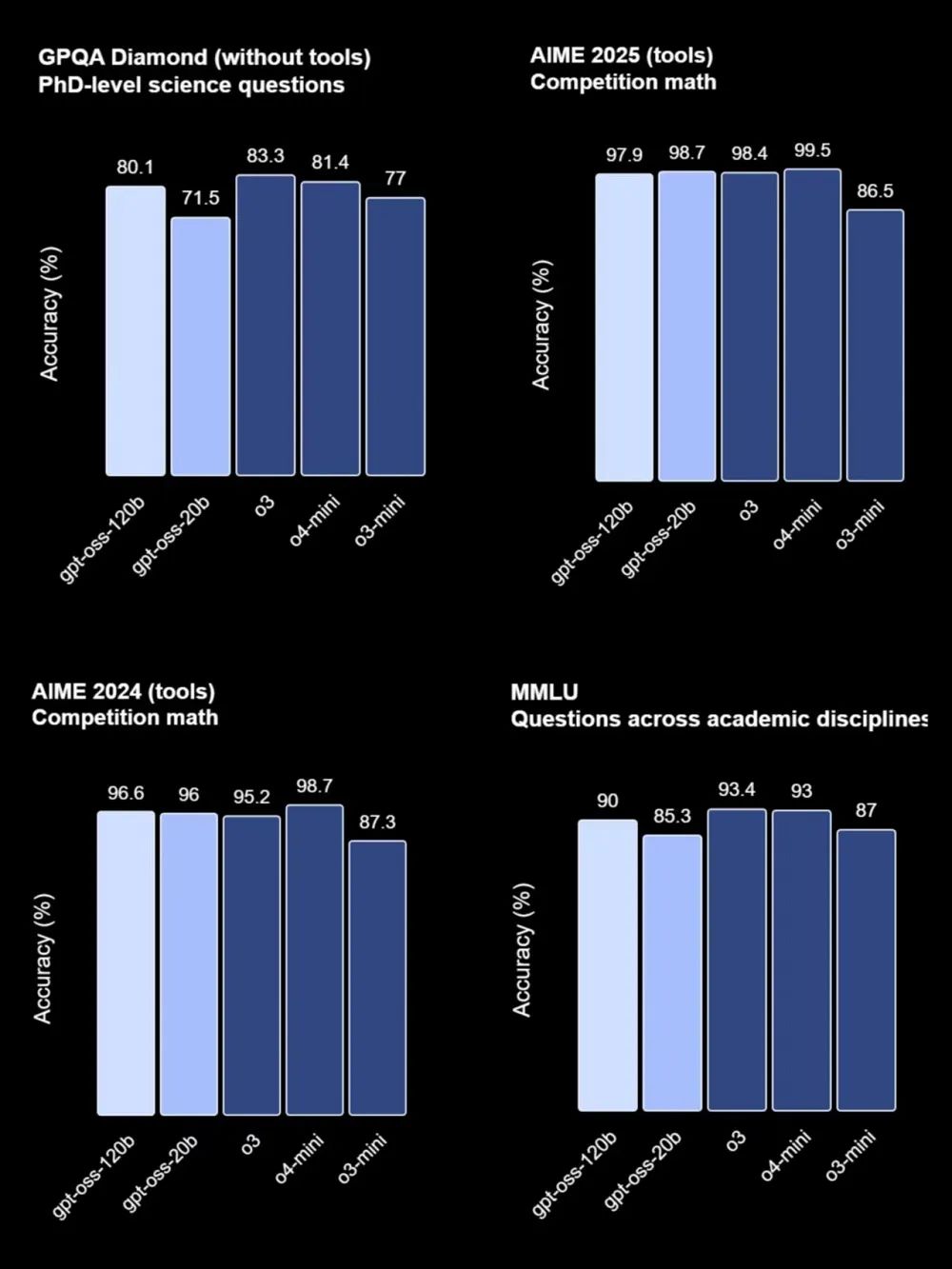
Core Insights - OpenAI has released two long-anticipated open-source models: gpt-oss-120b and gpt-oss-20b, both utilizing the MoE architecture for efficient deployment [1][2][3] - The gpt-oss-120b model can run efficiently on a single 80GB GPU, while the gpt-oss-20b requires only 16GB of memory for edge devices, providing local model options for AI applications [1][2][3] - The models have shown competitive performance in benchmark tests, with gpt-oss-120b performing similarly to OpenAI's o4-mini and gpt-oss-20b comparable to o3-mini [1][2][3] Model Specifications - gpt-oss-120b has 117 billion total parameters, activating 5.1 billion parameters per token, while gpt-oss-20b has 21 billion total parameters with 3.6 billion active parameters per token [29][30] - Both models support a context length of up to 128k tokens and utilize advanced attention mechanisms to enhance efficiency [29][30] Performance and Compatibility - The gpt-oss-120b model has achieved a record inference speed of over 3000 tokens per second, while gpt-oss-20b can run on mobile devices, although some experts question the feasibility of this claim [10][45][22] - At least 14 deployment platforms, including Azure and Hugging Face, have already integrated support for these models, indicating strong industry adoption [9][10] Community and Industry Response - While many users celebrate the release, there are concerns regarding the lack of transparency in the training process and data sources, limiting the open-source community's ability to fully leverage the models [9][27][29] - OpenAI's decision to open-source these models is seen as a response to previous criticisms regarding its openness, potentially influencing more developers and companies to adopt these technologies [47]
传英伟达(NVDA.US)“挑战者”Groq接近完成新一轮融资,估值或翻倍至60亿美元
Zhi Tong Cai Jing· 2025-07-30 07:09
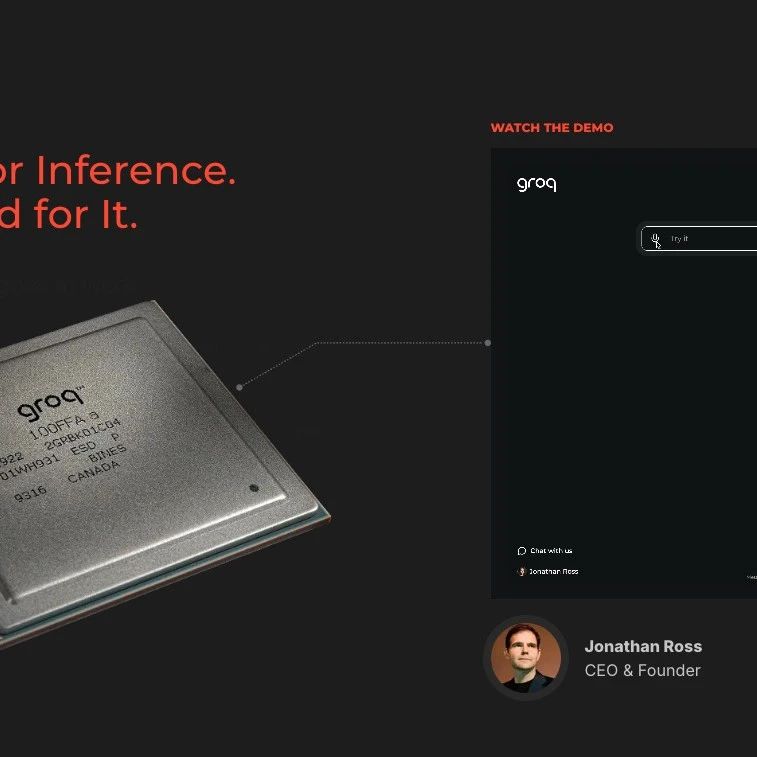
Group 1 - Groq is negotiating a new round of financing amounting to $600 million, with a valuation close to $6 billion, which would double its valuation from $2.8 billion in August 2024 if successful [1] - The current financing round is led by Disruptive, based in Austin, with participation from various institutions including BlackRock, Neuberger Berman, TypeOne Ventures, Cisco, KDDI, and Samsung Catalyst Fund [1] - Groq has raised approximately $1 billion in total funding prior to this round, indicating strong investor interest in the AI chip sector [1] Group 2 - Groq's chips, known as Language Processing Units (LPU), are specifically designed for inference rather than training, targeting real-time data interpretation [2] - The AI inference chip market is competitive, with several startups including SambaNova, Ampere, Cerebras, and Fractile also vying for market share [2] - Groq's CEO Jonathan Ross highlighted the company's differentiation strategy, noting that Groq's LPU does not use expensive high-bandwidth memory components, unlike Nvidia's chips [2]
AI芯片的黄金时代
半导体行业观察· 2025-07-25 01:44
Core Viewpoint - The article discusses the exponential growth in hardware capabilities, particularly in the context of artificial intelligence, drawing parallels to Moore's Law and the concept of "doubling" in computing power [4][6]. Group 1: Hardware Advancements - Significant advancements in hardware have been made since the 1950s and 1960s, with a focus on the exponential nature of growth in computing power [3][4]. - The Cerebras WSE-2 chip can perform approximately 7.5 petaFLOPS, while the WSE-3 can reach 125 petaFLOPS, showcasing the power of parallel processing [6][7]. - The evolution of hardware has transitioned from single-core to multi-core systems, highlighting the increasing complexity and capability of modern chips [6]. Group 2: AI and Hardware Acceleration - The article emphasizes the role of hardware acceleration in driving advancements in artificial intelligence, with a historical perspective on the evolution of processing capabilities [9][10]. - Innovations such as quantization in GPU design can significantly enhance efficiency, with 4-bit multipliers being several orders of magnitude more efficient than 32-bit multipliers [13][14]. - The concept of "smart clusters" is introduced, where companies are working on designing intelligent hardware systems to optimize AI performance [16]. Group 3: Global Supply Chain and Impact - The article highlights the complexity of the global supply chain involved in chip production, which can span multiple continents and countries [16]. - The importance of rare earth minerals and chemicals in the semiconductor industry is noted, with Taiwan's dominance in chip manufacturing being a key point [16]. - The current phase of hardware acceleration is described as being at a "hockey stick curve," indicating rapid growth and potential future developments [17].

马斯克背后的“神秘大金主”:四人小团队、十年28%年化收益!
Hua Er Jie Jian Wen· 2025-07-18 07:06
Core Insights - Vy Capital is a key financial backer of Elon Musk's ventures, including SpaceX and xAI, with an impressive annualized return of approximately 28% since its inception in 2014 [1][4] - The firm has decided to stop raising external funds and will focus on managing and investing its own capital, indicating it has accumulated sufficient returns to operate independently [1][2] Group 1: Relationship with Musk's Empire - Vy Capital has a deep strategic partnership with Musk, being a major investor in SpaceX and xAI, entering SpaceX when its valuation was only $15 billion and now targeting a valuation of $400 billion [2] - The firm also supports Neuralink and BoringCo, with Neuralink's valuation nearly doubling to $9 billion over the past two years [2] - Vy Capital was a significant backer in Musk's $44 billion acquisition of Twitter (now X), committing $700 million to the deal [2][3] Group 2: Elite Team and Performance - The success of Vy Capital is attributed to its small but highly skilled team of four investment professionals and around 20 total employees, managing approximately $15 billion in assets [4] - The firm is led by Alexander Tamas and John Hering, with Tamas having a background at Goldman Sachs and DST Global, and Hering being a successful entrepreneur [4] - Vy Capital has achieved an annualized return of about 28% over the past decade, showcasing its effective investment strategy [4] Group 3: Diverse Investment Portfolio - Vy Capital's investments extend beyond Musk's companies, including stakes in Reddit, Zomato, and Upgrade, demonstrating a diversified investment strategy [5] - In the AI sector, the firm has invested in Cerebras, which is considering going public this year, and has early support in Coalition, a company co-founded by Hering [6]
Google 收编Windsurf,xAI估值或达2000亿美元:2025年投资机构怎么看? | Jinqiu Select
锦秋集· 2025-07-12 06:24
Core Insights - The article highlights a significant shift in the AI industry, driven by major acquisitions and skyrocketing valuations, indicating a new era of competition among tech giants and startups [1][2] - The AI supercycle is reshaping the landscape, with capital and technology becoming critical tools for survival and success in the evolving market [1][2] Macro Background and Nature of Tech Investment - Over the past 70 years, technology investment has focused on identifying and capitalizing on major technological shifts, from the computer revolution to the current AI revolution [3] - The rise of mobile internet and cloud computing has fundamentally changed service delivery models, with AI's impact expected to surpass previous technological waves [5] - The tech sector now accounts for nearly 50% of market value, reflecting a fundamental shift in economic growth drivers [8] - Future projections suggest that the tech sector's market share could rise to 75-80% as AI infrastructure becomes increasingly integrated into traditional industries [11] Dynamics and Risks in the Tech Market - The volatility of tech investments is highlighted, with examples like Nvidia experiencing multiple significant drawdowns [12] - The market has seen a continuous cycle of company replacements, with a significant portion of top companies being replaced every five years [14][15] - The article discusses the challenges of accurately predicting investment trends, particularly during periods of market volatility [20][21] Analysis of the AI Supercycle - Major strategic shifts by large companies signal the onset of the AI supercycle, with examples including Microsoft's significant growth in token processing [49] - The capital expenditure for cloud service providers has dramatically increased, with projections for 2025 rising from $152 billion to $365 billion, indicating a surge in AI-related investments [50] - ChatGPT's rapid user growth has disrupted traditional search behaviors, showcasing the transformative impact of AI on consumer habits [59] Private Market: Formation of a New Ecosystem - The private market is evolving, with a shift from traditional venture capital to a more complex ecosystem involving family offices and sovereign wealth funds [102][103] - AI has become a dominant force in private market financing, accounting for over 50% of total funding [107] - The article notes a resurgence in IPO activity, with companies like CoreWeave and Circle showing strong post-IPO performance, indicating a recovery in market confidence [121][129]


速递| 英伟达竞对Groq的估值冲60亿美元,中东金主加持
Z Potentials· 2025-07-11 06:11
Core Viewpoint - Groq, a challenger to Nvidia in the AI chip market, is in talks to raise $300 million to $500 million at a post-money valuation of $6 billion, reflecting a doubling of its valuation from a year ago [1][2]. Group 1: Company Overview - Groq specializes in the inference market with its LPU chips designed for open-source model inference, aiming to compete with Nvidia's offerings while being less powerful than Nvidia's Hopper and Blackwell training chips [1][2]. - The company has raised over $1 billion in equity financing from notable investors including BlackRock, Cisco, and Samsung [1]. - Groq's revenue is projected to increase from $90 million last year to approximately $500 million this year, driven by agreements with Saudi Arabia and Finland [2]. Group 2: Product and Market Position - Groq's chips are intended for running existing AI applications rather than training new models, which typically require significant chip resources and expensive networking [3]. - The company has approximately 70,000 chips operational, which is at least 30% below its initial target for the first quarter [4]. - Groq faces challenges in persuading AI developers to switch from Nvidia's platform, despite increasing sales efforts in the Middle East due to limited Nvidia supply in the region [4]. Group 3: Competitive Landscape - The AI chip market is seeing significant investment, with 24 startups raising over $7 billion, indicating a competitive environment for companies like Groq [4]. - Other startups, such as SambaNova Systems, are also targeting the Middle East market, providing chip systems and software support to major companies like Saudi Aramco [4]. - D-Matrix, another AI chip developer, is currently in the process of raising $300 million, highlighting the ongoing funding efforts within the sector [5].