
XREAL

Search documents
AI走出屏幕:谷歌与XREAL联合发布AR眼镜“Project Aura”
Feng Huang Wang· 2025-12-09 13:52
Core Insights - Google, in collaboration with Chinese AR hardware company XREAL, unveiled key details of its AR glasses project "Project Aura" at The Android Show event, marking the first instance where Gemini AI can "see the world" [1] - Project Aura aims to integrate Google's Gemini AI multimodal capabilities with the AR glasses' cameras and sensors for real-time understanding and interaction with the user's environment [1] - The device features a 70-degree optical see-through field of view provided by XREAL and is powered by XREAL's self-developed X1S spatial computing chip [1] Company and Industry Summary - XREAL's founder and CEO Xu Chi emphasized that glasses are a natural carrier for the next generation of smart terminals, and the incremental data generated is crucial for AI development [1] - The core hardware development of Project Aura is primarily conducted by a Chinese team, with both the optical system and chip being self-developed, and the supply chain rooted in the Yangtze River Delta region [1] - Google stated that the Android XR system aims to provide an open and unified platform for extended reality, with Project Aura scheduled for market launch in 2026 [1]

激光雕刻机品牌xTool单日GMV破亿,Linkedin年收入首次突破10亿美元
Xin Lang Cai Jing· 2025-12-09 13:47
Non-Gaming - LinkedIn is becoming the most profitable player among social media platforms, with mobile consumer spending expected to exceed $1 billion for the first time in 2025, a 35% year-on-year increase. Its revenue per download (RpD) has surged from $1.43 in 2020 to $12.40 in 2025, marking an increase of nearly 8.7 times over five years, driven by enhanced Premium subscription benefits [2][10]. AI - Google announced three updates regarding AI glasses during a live event: the launch of the first Android XR headset, Samsung Galaxy XR, featuring travel mode, PC connectivity, and virtual avatar capabilities; the upcoming release of the first consumer-grade AR glasses powered by Gemini AI in collaboration with Chinese company XREAL in 2026; and the integration of Google’s Nano Banana image editing capabilities into the AI glasses [4][13]. - xTool, a consumer-grade laser engraving machine brand, reported a 50% year-on-year increase in GMV during Black Friday and Cyber Monday promotions, achieving a single-day GMV of over 100 million RMB for the first time. The company has successfully transformed into a direct-to-consumer brand focused on laser and printing tools [6][15]. - Hinge launched a new AI feature called "Convo Starters" to help users initiate conversations, generating personalized opening suggestions based on photos or prompts. Data indicates that 72% of users are more likely to date when receiving a "like + message," and messages can double the matching success rate [6][15]. - Keling AI introduced two new features for its latest model "Keling O1": a "Subject Library" for users to upload multi-angle reference images and a "Comparison Template" for integrating prompts and reference images into a clear Before & After display, enhancing creative efficiency [6][15]. E-commerce - According to data from delivery management platform Scurri, online order volume in the UK increased by 15% during Black Friday/Cyber Monday (November 28 to December 1), with consumers showing a preference for placing orders on Cyber Monday, resulting in a 70% higher order volume compared to Black Friday [6][15]. Gaming - A game named "毛糸クラッシュ - パズル ドラゴンゲーム" has climbed to the 29th position on Japan's iOS download chart, rising 12 places, with a monthly revenue of $150,000 [7][16].



Google眼镜杀回来了!最强AI上头,两大潮牌站台,还有一款中国造
36氪· 2025-12-09 13:35
Core Viewpoint - Google is re-entering the smart glasses market with a new strategy focused on Android XR and AI capabilities, aiming to create a robust ecosystem for XR devices and applications [4][47]. Group 1: Android XR Overview - Android XR is a new system designed for XR devices, compatible with most applications from the Google Play Store, providing a comprehensive platform for developers and manufacturers [12][15]. - The system is expected to attract more third-party manufacturers, expanding the XR ecosystem and increasing the production of applications and content [17][49]. - Google has partnered with various companies, including Samsung and XREAL, to develop Android XR, which is seen as a more open and appealing platform compared to competitors like Meta and Apple [44][47]. Group 2: Product Launches - Google introduced several XR devices, including Project Aura, a wired XR glasses product that offers dual-eye XR effects in a lightweight form, suitable for outdoor use [21][30]. - Two additional wireless glasses were announced, focusing on fashion and everyday wear, with one being an AI glasses model without a display and the other featuring a single AR display for basic notifications [33][40]. - The new products are set to launch in 2024, with Google emphasizing the importance of user experience and privacy features [31][39]. Group 3: Market Position and Future Outlook - Google aims to learn from past experiences with Google Glass, focusing on a more structured approach to product development and market entry [47][51]. - The company is optimistic about the growth potential of the XR market, leveraging its existing app ecosystem and AI capabilities to create unique use cases for smart glasses [49][54]. - Future developments will include a wireless dual-eye XR glasses product, which is expected to be a significant upgrade but will not be available until 2027 [46].

谷歌Gemini AI“睁眼看世界”,核心硬件中国研发
Guan Cha Zhe Wang· 2025-12-09 11:57
Core Insights - Google unveiled Project Aura and Android XR system, positioning it as the most complete hardware sample for Android XR to date [1] - The core goal of Android XR is to create an open, unified extended reality platform that integrates AI into the real world [1] - Project Aura is recognized as the "first native spatial eye" of Gemini AI, combining XREAL's optical, chip, and spatial algorithm capabilities [1] Group 1 - AI technology is rapidly evolving, with large language models enabling AI to "hear and speak," multimodal models allowing AI to "see and draw," and world models helping AI "understand real physical space" [1] - Project Aura aims to fundamentally change the current state of AI, allowing Gemini to construct "continuous, interactive, and understandable" spatial semantic models in the real world [1] - Aura integrates XREAL's optical, chip, and spatial algorithms with Google's Android XR and Gemini AI, completing a closed loop of "seeing → understanding → interacting" [1] Group 2 - XREAL's founder emphasized that agents should not just be software but "hardwareized agents" to maximize AI capabilities, with glasses being a natural carrier for the next generation of smart terminals [2] - The latest X-Prism optical system achieves a 70° field of view, enabling practical AR applications where digital content overlays seamlessly onto the environment [2] - Aura utilizes the X1S chip for low-latency, high-precision spatial intelligence, forming the foundational infrastructure for "spatial AI" [2] Group 3 - Project Aura's core hardware development is primarily conducted by a Chinese team, with the X-Prism optical system and X1S chip being independently developed and produced in China [4] - The complete supply chain is rooted in the Yangtze River Delta, achieving the highest global efficiency in iteration and production [4] - Shanghai serves as XREAL's global R&D center and future AI terminal innovation hub [4] Group 4 - The industry is experiencing structural changes, with no single company able to encompass all innovations in systems, AI, and hardware [5] - A global innovation alliance is deemed necessary for the next generation of computing platforms, with China positioned to define future standards due to its complete manufacturing chain and rapid hardware innovation [5] - Project Aura is set to officially enter the market in 2026 [5]
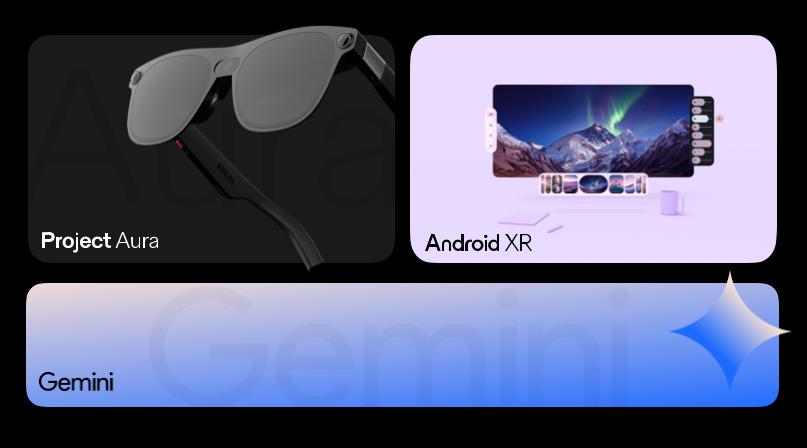
AI不再困于屏幕:谷歌发布Project Aura,开启物理世界智能交互新范式
Huan Qiu Wang· 2025-12-09 09:42
Core Insights - Google officially launched Project Aura, an XR hardware reference design, in collaboration with Chinese AR hardware company XREAL, marking a significant advancement in Android XR operating system architecture [1][3] - Project Aura integrates Gemini AI with spatial awareness capabilities, transitioning AI from a "screen-based intelligence" to a "physical world intelligence" [1][3] Group 1: Project Aura Overview - Project Aura is positioned as the closest realization of the ideal Android XR hardware, enabling Gemini AI to construct environmental semantic maps and understand user intentions in real-time [3][5] - The strategic goal of Android XR is to create an open and unified extended reality platform, embedding AI into the real world [3][5] Group 2: Technical Innovations - Project Aura features a 70° optical field of view (FOV), the largest practical limit for consumer AR, enhancing the natural integration of digital content with the physical environment [5][6] - The X1S spatial computing chip, developed by XREAL, is optimized for spatial AI, providing a high-efficiency inference link from sensor input to semantic output [6][8] - Gemini AI is deeply integrated into the Android XR operating system, functioning as an OS-level service rather than a standalone application, enabling continuous and context-aware interactions [6][8] Group 3: Manufacturing and Future Outlook - Project Aura's core technology relies heavily on Chinese manufacturing, with key components like the X-Prism optical module and X1S chip developed and produced in China [8] - The global supply chain for Project Aura is based in the Yangtze River Delta, facilitating rapid hardware iteration cycles [8] - Project Aura is set to be commercially available by 2026, potentially transforming the XR industry from "display devices" to "spatial intelligent terminals" [8]
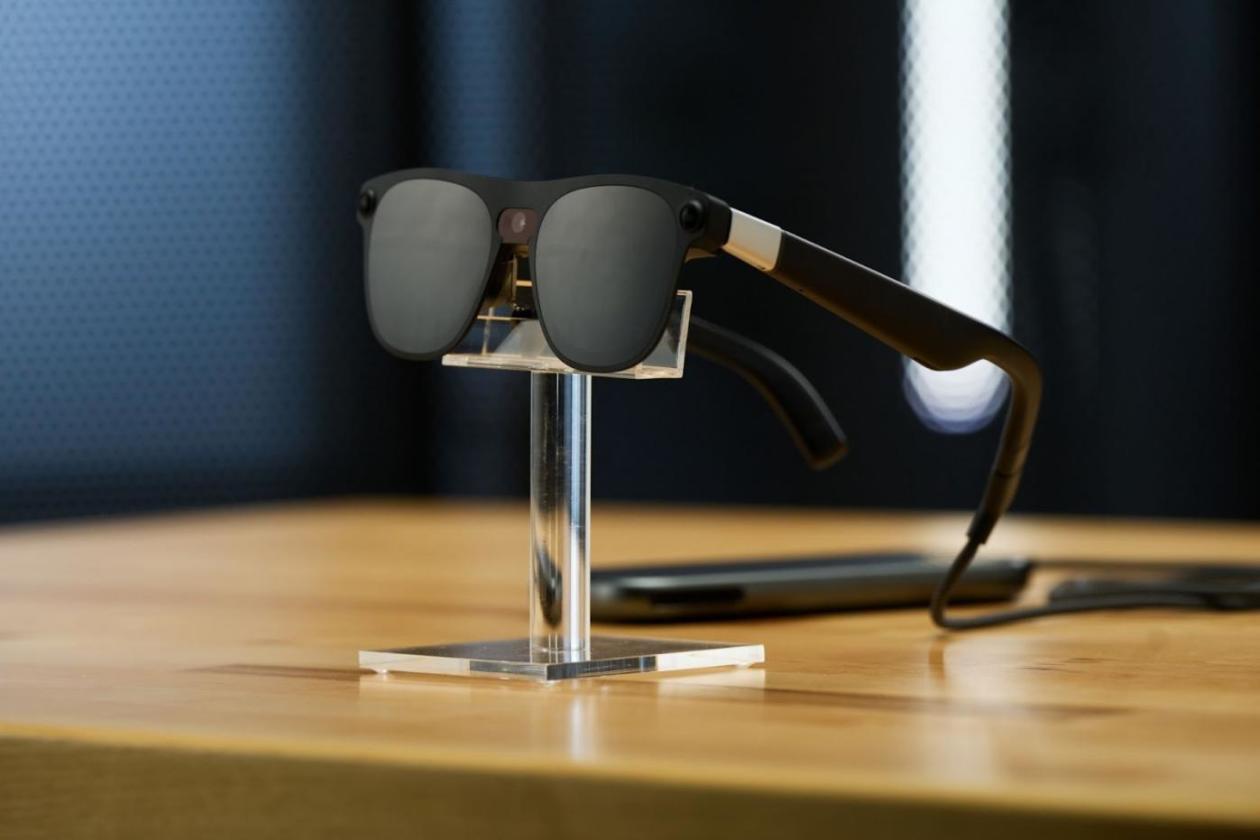
谷歌XR眼镜时隔13年回归 中国团队加持核心硬件研发
Zhong Guo Jing Ying Bao· 2025-12-09 09:16
Core Insights - Google is re-entering the AR/AI glasses market with Project Aura, marking a long-term strategic investment in the next generation of computing platforms after 13 years since Google Glass [4][6] - The launch of three XR smart glasses, including wired XR glasses Project Aura and two AI glasses in collaboration with Samsung, Gentle Monster, and Warby Parker, highlights the integration of Android XR platform and Gemini AI [2][4] - The collaboration with Chinese AR glasses manufacturer XREAL signifies a shift in global XR industry dynamics, with Chinese companies leading in manufacturing while international giants focus on system integration [2][9] Group 1: Product Development - Project Aura features a significant upgrade in optical systems and spatial computing chips, primarily developed by a Chinese team, showcasing a complete closed-loop of "see-understand-interact" [5][8] - The X-Prism optical system enhances the field of view to 70°, surpassing the early Google Glass and meeting the maximum practical field standard for consumer AR [6] - The X1S spatial computing chip, designed for AR scenarios, addresses previous AR device shortcomings such as inaccurate positioning and delayed responses [6] Group 2: Market Positioning - The Android XR operating system aims to resolve the long-standing issue of ecological fragmentation in the XR industry, allowing developers to adapt existing applications to AR environments without rebuilding ecosystems [7] - The focus on lightweight, scenario-based applications indicates a shift from attempting to replace smartphones to creating "AI + visual" auxiliary terminals [4][7] - The partnership with XREAL provides a dual benefit for the Chinese XR industry, enhancing XREAL's brand value and technical standards while pushing domestic supply chains towards high-value segments [9] Group 3: Future Outlook - Project Aura is set to launch globally in 2026, with developers already able to access technical documentation [9] - The collaboration reflects a new trend in global XR industry division, where Chinese firms dominate manufacturing while international companies profit from system integration [9] - The potential for this partnership to lead to the accumulation of independent intellectual property and foster cluster innovation in the supply chain is a key area to watch [9]
谷歌把Gemini放进AI眼镜了 Meta和苹果能一战吗?
Di Yi Cai Jing· 2025-12-09 07:21
Core Insights - Google is re-entering the smart glasses market with a new focus on AI integration, leveraging advancements in generative AI and a mature hardware supply chain [1][2] - The company aims to compete directly with Apple and Meta by offering a range of smart glasses tailored to different user needs, supported by its Gemini AI model [2][4] Group 1: Product Development - Google announced three different smart glasses in collaboration with Samsung and XREAL, designed to seamlessly integrate AI and XR into users' lives [1][2] - The Galaxy XR headset, priced at $1,799, is positioned as a direct competitor to Apple's Vision Pro, which costs $3,500 [2] - Upcoming products include Project Aura, a wired XR glasses model set to launch in 2026, which will combine features of heavy headsets and lightweight glasses [3][4] Group 2: Features and Functionality - The Galaxy XR headset received a system update introducing features like virtual display, digital likeness, and travel mode, which are comparable to Apple's offerings [3] - Future smart glasses will include a non-display AI model with built-in speakers and cameras for natural interaction with Gemini, and a display model for navigation and translation [4] Group 3: Market Positioning and Strategy - Google aims to establish a unified Android XR platform that integrates hardware, software, and AI across various devices, positioning itself strongly in the smart glasses market [4] - Industry experts predict that the evolution of AI capabilities will lead to a significant shift in consumer technology, with smart glasses potentially replacing smartphones by 2027 or 2028 [5]


谷歌把Gemini放进AI眼镜了,Meta和苹果能一战吗?
Di Yi Cai Jing· 2025-12-09 07:16
Core Insights - Google is re-entering the smart glasses market, leveraging advancements in generative AI and a mature hardware supply chain, following the failure of Google Glass years ago [1][4] - The company aims to create a diverse range of smart glasses that seamlessly integrate AI and XR into users' lives, addressing different consumer needs and styles [5][6] - Google is positioning itself as a competitor to Apple and Meta in the XR space, with the potential for significant market impact due to its advancements in AI models like Gemini [4][15] Product Development - Google announced a collaboration with Samsung and XREAL to develop three different models of smart glasses, with a focus on integrating AI capabilities [1][5] - The Galaxy XR headset, priced at $1,799, is positioned as a direct competitor to Apple's Vision Pro, which costs $3,500 [5] - Upcoming products include Project Aura, a wired XR glasses model set for release in 2026, which will combine features of heavy headsets and lightweight glasses [6][10] Features and Functionality - The Galaxy XR will receive a system update introducing features like virtual displays, digital avatars, and travel modes, enhancing user experience [6] - Future smart glasses will include a lightweight AI model with built-in speakers, microphones, and cameras for natural interaction with the Gemini AI [10][13] - Display-type AI glasses will feature screens that provide useful information, such as navigation and translation, directly in the user's line of sight [13] Strategic Vision - Google's strategy in the XR field aims to unify hardware, software, and AI through the Android XR platform, allowing it to compete effectively in the smart glasses market [15] - The collaboration with XREAL is seen as a significant step towards realizing the potential of AI in everyday applications, with expectations for a transformative impact on consumer technology [15] - Industry experts predict that by 2027 and 2028, smart glasses may replace smartphones, driven by the emergence of AI-native multimodal operating systems [15]
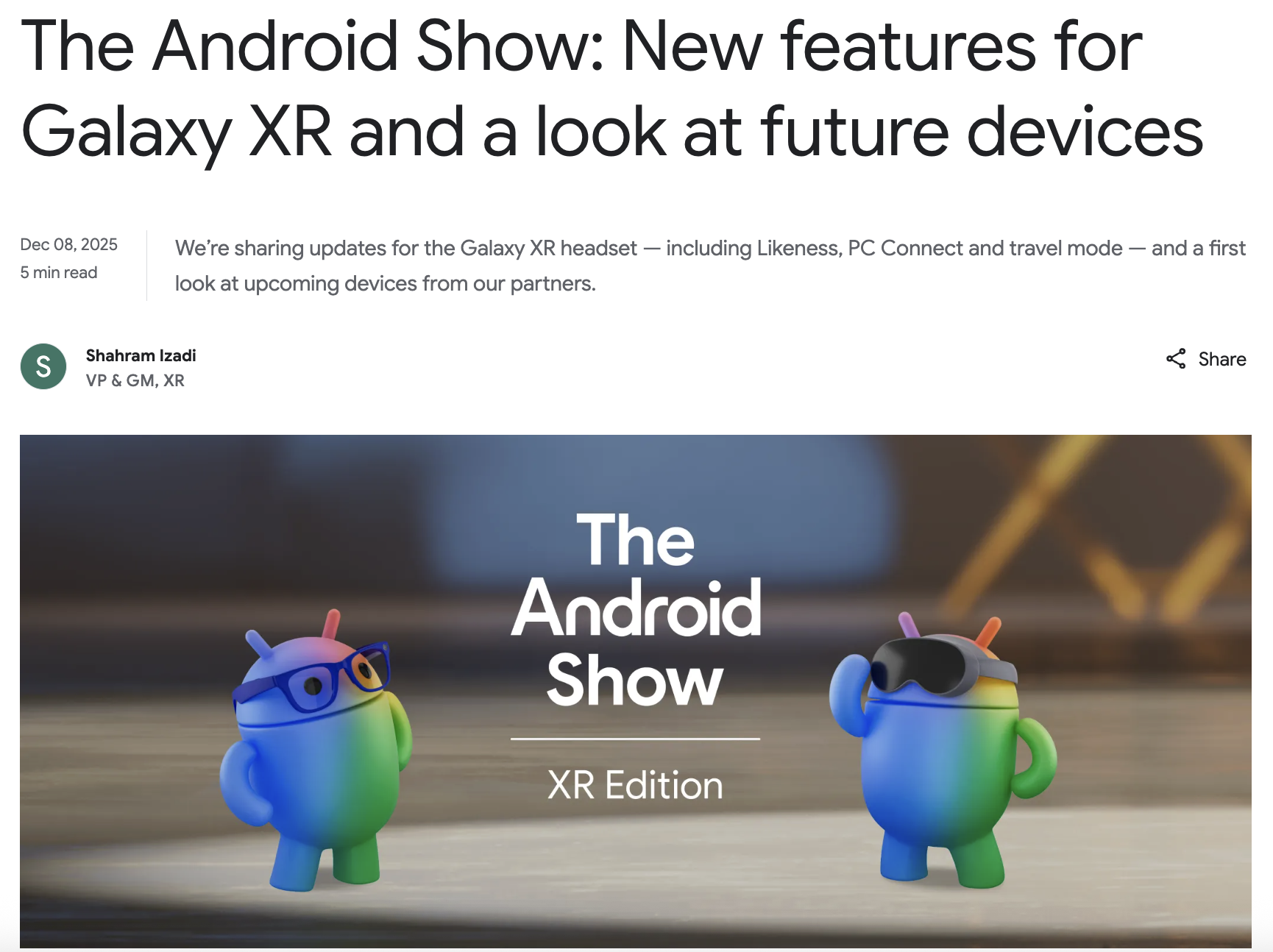
谷歌联手XREAL,AR眼镜Project Aura定档2026年
Guo Ji Jin Rong Bao· 2025-12-09 05:25
Core Insights - The smart glasses industry is entering a new phase with significant product launches from major companies like Alibaba and Li Auto, indicating a growing market interest and competition [1] - Google has announced the Project Aura, a flagship AR device designed for the Android XR platform, set to launch globally in 2026, marking a strategic move to create a unified extended reality ecosystem [3][4] Group 1: Industry Developments - Alibaba's Quark launched AI glasses integrated with Tongyi Qianwen, while Li Auto introduced its AI smart glasses, Livis, showcasing rapid advancements in the domestic tech sector [1] - Google, in collaboration with XREAL, unveiled Project Aura, which aims to redefine the interaction between AI and the real world through an open and unified XR platform [3] Group 2: Company Highlights - XREAL, a leading player in the AR market, has maintained the largest market share for AR glasses globally for four consecutive years, with a projected 38% market share in 2024 [4] - XREAL's CEO has indicated that the company is on track for dual leadership in revenue and profitability within the AR glasses sector, with a goal of achieving full profitability by 2026 [4] - The core hardware development for Project Aura has been primarily conducted by a Chinese team, highlighting the country's capabilities in optical systems and spatial computing technology [4] Group 3: Strategic Collaborations - The partnership between Google and XREAL is seen as a significant step towards establishing standards in the next generation of computing platforms, emphasizing the need for global innovation alliances [5] - XREAL's CEO noted that China's complete manufacturing chain and rapid hardware innovation position it to define future industry standards, particularly in AI and AR technologies [5]
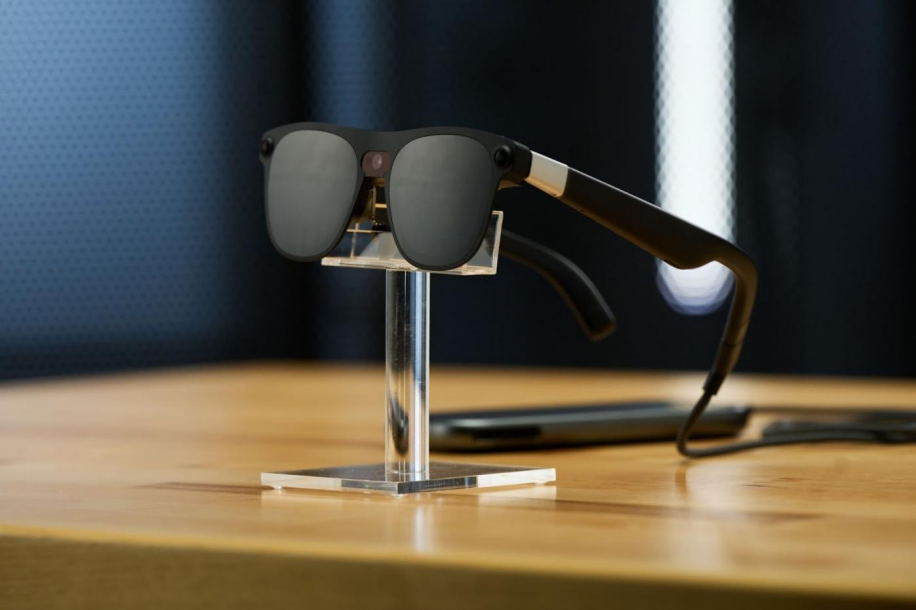
谷歌与XREAL联合发布Project Aura
Zheng Quan Shi Bao Wang· 2025-12-09 03:43
Core Insights - Google unveiled key details about its smart glasses Project Aura and the Android XR system at The Android Show on December 9, 2023, positioning it as the most complete hardware sample closest to the ideal form of Android XR [1] Group 1 - Project Aura utilizes the self-developed XREAL X1S chip [1] - The product is set to officially launch in 2026 [1]