
华能国际

Search documents
华能国际(600011) - 2025 Q2 - 季度财报
2025-07-29 12:20
华能国际电力股份有限公司2025 年半年度报告 公司代码:600011 公司简称:华能国际 华能国际电力股份有限公司 2025 年半年度报告 1 / 274 华能国际电力股份有限公司2025 年半年度报告 重要提示 一、 本公司董事会、监事会及董事、监事、高级管理人员保证半年度报告内容的真实性、准确 性、完整性,不存在虚假记载、误导性陈述或重大遗漏,并承担个别和连带的法律责任。 二、 未出席董事情况 | 未出席董事职务 | 未出席董事姓名 | 未出席董事的原因说明 | 被委托人姓名 | | --- | --- | --- | --- | | 董事 | 李来龙 | 因其他事务未能亲自出 | 王葵 | | | | 席会议 | | | 董事 | 曹欣 | 因其他事务未能亲自出 | 王葵 | | | | 席会议 | | | 董事 | 丁旭春 | 因其他事务未能亲自出 | 高国勤 | | | | 席会议 | | | 董事 | 王剑锋 | 因其他事务未能亲自出 | 高国勤 | | | | 席会议 | | 三、 本半年度报告未经审计。 四、 公司负责人王葵、主管会计工作负责人文明刚及会计机构负责人(会计主管人员)周远晖 声 ...
华能国际(600011) - 华能国际董事会提名委员会工作细则
2025-07-29 12:16
HZD-4-DB-3-2025 华能国际电力股份有限公司董事会提名委员会工作细则 华能国际电力股份有限公司 董事会提名委员会工作细则 第一章 总则 第一条 为规范华能国际电力股份有限公司(简称"公 司")董事及高级管理人员的选任,完善公司治理结构,根 据《中华人民共和国公司法》《上市公司治理准则》等有关 法律、法规和规范性文件、公司上市地监管规则的有关规 定及《华能国际电力股份有限公司章程》(简称"《公司章 程》"),结合公司实际,公司特设立董事会提名委员会(简 称"提名委员会"),并制定本工作细则。 第二条 提名委员会是董事会下设的专门委员会,主 要负责拟定公司董事、高级管理人员的选择标准和程序, 对董事、高级管理人员人选及其任职资格进行遴选、审核 以及有关法律、法规和规范性文件、公司上市地监管规则、 《公司章程》及其附件和本工作细则规定的其他职责,对 董事会负责。 第二章 人员组成 第三条 提名委员会由三至七名董事组成,独立董事 应占多数。 第四条 提名委员会委员由董事长、二分之一以上独 立董事或者全体董事的三分之一提名,并由董事会选举产 生。 1 HZD-4-DB-3-2025 华能国际电力股份有限公司 ...
华能国际:2025年上半年净利润92.62亿元,同比增长24.26%
Xin Lang Cai Jing· 2025-07-29 12:13
华能国际公告,2025年上半年营业收入1120.32亿元,同比下降5.70%。净利润92.62亿元,同比增长 24.26%。 ...
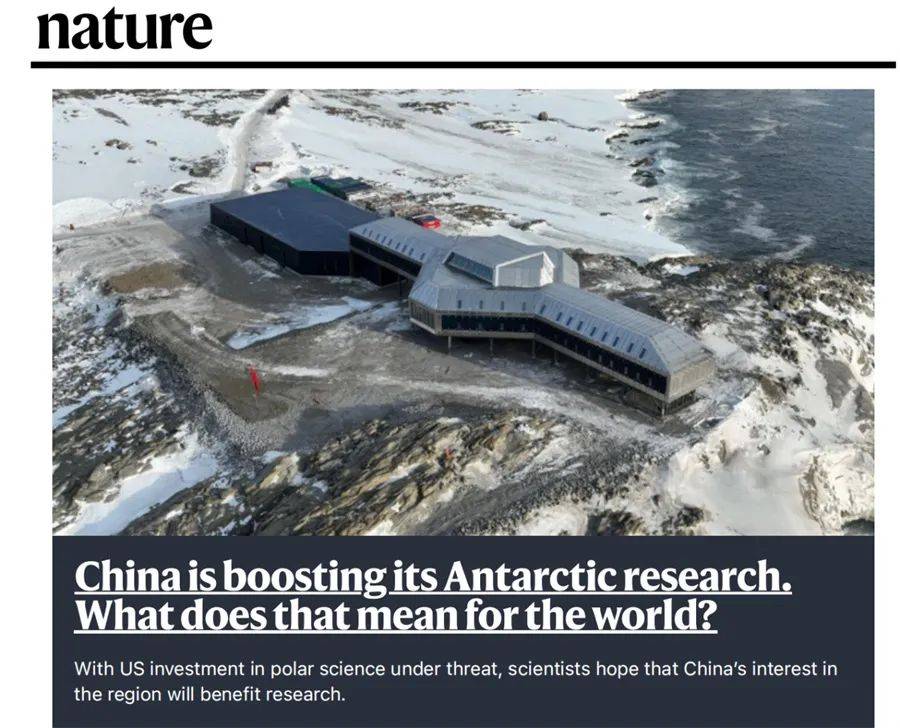
山西智慧点亮南极!太原理工引领极地能源革命
Sou Hu Cai Jing· 2025-07-28 23:24
Core Insights - China's Antarctic research is gaining international attention, particularly the Qinling Station's clean energy system, showcasing China's scientific capabilities and the strength of Shanxi universities in polar exploration [1][12] Group 1: Antarctic Research Developments - The Qinling Station is China's first research station in the southern Antarctic, focusing on marine and terrestrial ecology, sea ice, geophysics, and wildlife studies, highlighting its strategic significance [4] - The unique geographical location of the Qinling Station provides ideal conditions for addressing various Antarctic research challenges, as noted by international experts [4] Group 2: Clean Energy System Implementation - The clean energy system deployed at Qinling Station integrates photovoltaic, wind, energy storage batteries, and hydrogen storage, expected to meet over 50% of the station's energy needs [6] - The total capacity of photovoltaic and wind energy at the station reaches 230 kW, accounting for 60% of the total power generation capacity, with innovative hydrogen energy used for long-term energy storage [6][10] - In extreme conditions, the system can provide approximately 2.5 hours of power at a maximum load of 150 kW, ensuring the safe operation of research equipment and living facilities [8] Group 3: Collaborative Efforts and Technological Advancements - Taiyuan University of Technology plays a crucial role in the project, collaborating with various institutions since 2021 to tackle technical challenges in polar research [9] - The research team has developed key technologies for low-temperature fuel cells and energy management systems, specifically designed for the harsh Antarctic environment [10] - The clean energy system project was approved in November 2023, with successful deployment and operation scheduled for March 2025, marking a new chapter in China's polar green research [10] Group 4: Supportive Research Infrastructure - Taiyuan University of Technology has established the world's first extreme environment simulation facility to ensure the clean energy system's stable operation under harsh Antarctic conditions [11] - The university has also authored a twelve-year development outline for clean energy utilization in Antarctica, guiding future technological advancements in this field [11]

火力发电项目可行性研究报告-市场全景调研分析及投资可行性研究预测 (商业计划书)
Sou Hu Cai Jing· 2025-07-28 08:21
Industry Overview - Thermal power generation refers to the process of generating electricity by burning fuels such as oil, coal, and natural gas to produce heat, which is then used to convert water into high-temperature, high-pressure steam that drives generators. Despite the rapid development of renewable energy, thermal power will remain a significant component of electricity supply in the short term. Innovations in materials and manufacturing processes will drive the industry towards higher performance and more environmentally friendly solutions [1]. Development History - The thermal power generation industry in China has developed over more than 70 years, forming a complete industrial system dominated by coal power and supplemented by gas power. As of the end of December 2024, the total installed power generation capacity in the country is approximately 3.35 billion kilowatts, a year-on-year increase of 14.6%. Among this, thermal power capacity is about 1.45 billion kilowatts, up 3.8%; solar power capacity is approximately 890 million kilowatts, up 45.2%; and wind power capacity is about 520 million kilowatts, up 18.0% [2]. Market Competition Status - The national thermal power market has formed a diversified competitive landscape led by five major central enterprises and supplemented by local state-owned enterprises and private capital. Major companies like the State Energy Group and Huaneng leverage their advantages in the industrial chain to stabilize fuel price fluctuations. Provincial energy groups maintain strong influence in local markets due to favorable policies. As the electricity spot market trial progresses, competition among power generation groups is shifting from installed capacity to cost control per kilowatt-hour, with some companies enhancing marginal profits through digital fuel management systems and optimized unit scheduling strategies. The market competition is expected to show three significant trends: leading companies will enhance industry concentration through mergers and acquisitions, specialized operators will capture the frequency regulation service market relying on technological advantages, and cross-industry competitors will enter the comprehensive energy service field with new models. Market players need to prepare strategically by establishing flexible asset portfolios to cope with policy fluctuations, cultivating carbon asset management capabilities to seize market opportunities, and building digital infrastructure to improve operational efficiency. Ultimately, the companies that succeed will be those that can ensure energy security while proactively positioning themselves for a zero-carbon transition [5][7]. Development Trends - The next decade will be a critical phase for the transformation of China's thermal power generation industry. From the perspective of energy security, the dominant position of coal as a primary energy source will not change in the short term, but the role of thermal power will inevitably shift from a base-load power source to a regulating power source, requiring companies to reassess asset values. Technological advancements such as 700℃ ultra-supercritical and IGCC will enhance industry efficiency, while artificial intelligence-enabled smart operations may become a new breakthrough for cost reduction and efficiency improvement. The policy environment will reshape the industry's profit model through improved capacity compensation mechanisms and expanded carbon market coverage. The future of the thermal power industry lies not in repeating past scale expansions but in innovatively defining its new role in the new power system. In this process, technological iteration serves as the oar, market mechanisms as the rudder, and the concept of sustainable development should be the ever-burning lighthouse guiding the way. The Chinese thermal power industry is writing its own transformation chapter in the grand narrative of the energy revolution [8].
央企加快向“新”发力,努力开启增长“第二曲线”
Di Yi Cai Jing· 2025-07-28 05:46
Core Insights - The State-owned Assets Supervision and Administration Commission (SASAC) is focusing on exploring effective ways for investors to promote technological and industrial innovation, enhancing the "innovation resilience" of central enterprises [1][3] - Central enterprises are encouraged to accelerate the cultivation of new productive forces and shift from "sweat-type growth" driven by substantial input to "wisdom-type growth" driven by technological innovation [1][2] Group 1: Strategic Focus - SASAC emphasizes the importance of strategic orientation and long-termism, balancing traditional and emerging industries while expanding strategic emerging industries and future industries [1][3] - Central enterprises are urged to enhance their technological innovation capabilities and apply these innovations to specific industries and supply chains, transforming traditional industries and nurturing emerging ones [3][4] Group 2: Investment Trends - In 2022, central enterprises completed investments in strategic emerging industries totaling 2.7 trillion yuan, a year-on-year increase of 21.8%, with these investments accounting for over 40% of total investments for the first time [6][7] - In the first quarter of 2023, investments in strategic emerging industries by central enterprises grew by 6.6% year-on-year, with 79 future industry-related enterprises established [7] Group 3: Sectoral Development - Central enterprises are focusing on sectors such as artificial intelligence, quantum technology, and biomanufacturing, aiming to enhance their core competitiveness and development momentum [6][8] - SASAC is promoting a stable growth mechanism for investments in emerging industries, with a focus on high-quality investments that lead to high-value growth [5][7]

绿电赋能京津冀
Jing Ji Ri Bao· 2025-07-27 21:57
今年上半年,华润电力在冀北地区布局的重要新能源项目——围场满族蒙古族自治县西龙头200MW风 电项目成功实现并网发电。项目负责人张佳介绍,该项目的投运将有效改善区域能源结构,年提供清洁 电力约5亿千瓦时,相当于减少标煤消耗6.14万吨。 在顶层设计方面,围场县专门聘请北京勘测设计研究院科学编制清洁能源产业发展规划,立足"三区三 线"划定成果和国土空间规划的"一张图",已累计建成清洁能源项目79个。 在投资主体选择上,围场县建立围场经营主体名录库和培育库,按照"引大引强"的目标选择投资主体。 通过广泛内引外联,截至目前,已经有华能、华润、国电等央企、国企在内的30余家国内知名企业入驻 围场。 与此同时,围场县全力打造"储能装备制造特色产业集群"+"钒锂电池、氢储能、抽水蓄能"的"1+N"产 业集群,力求在"输"上突破,在"储"上变强。围场县正以清洁能源为笔,在冀北大地描绘出一幅绿色发 展的新画卷,为区域能源结构优化和京津冀协同发展注入持续动力。 (文章来源:经济日报) 围场县发展和改革局局长温长军表示,通过"发、输、储、用"一体化的清洁能源深度开发,截至去年 底,围场全域总装机达到728.81万千瓦,年发电量可 ...
国家人工智能应用中试基地(能源领域电力方向)发布
Sou Hu Cai Jing· 2025-07-27 14:21
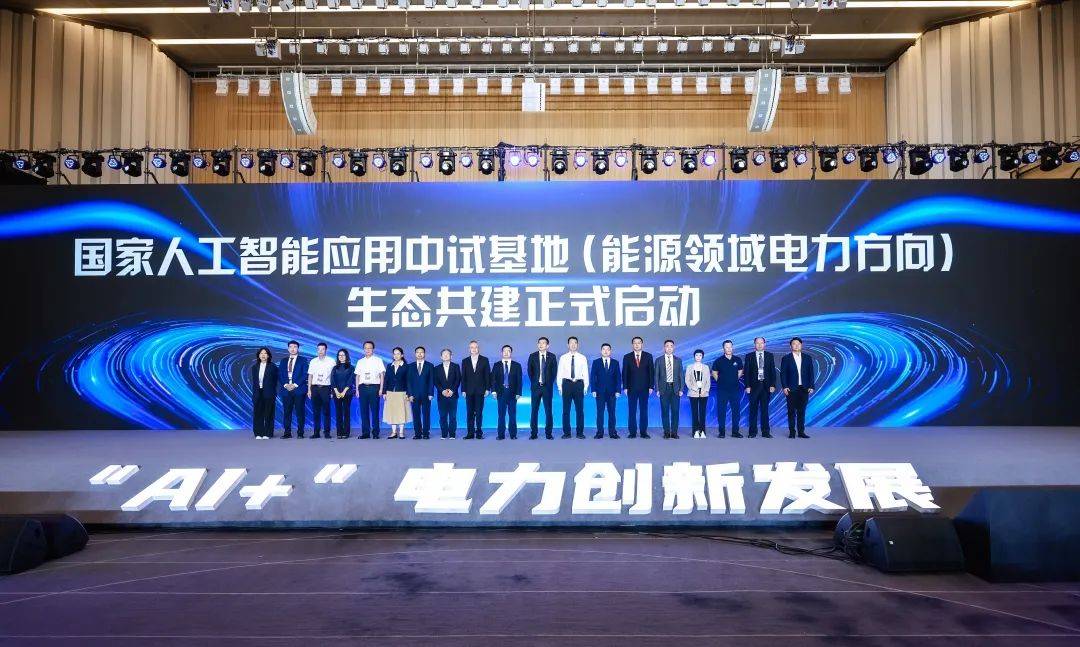
Core Viewpoint - The establishment of the National Artificial Intelligence Application Pilot Base in the energy sector aims to bridge the gap between AI technology research and practical application in the power industry, with a projected annual growth of 25% in the AI application market by 2027 [1][3]. Group 1: AI Pilot Base Overview - The AI pilot base will collaborate with 19 enterprises and research institutions, including China Huadian and Baidu, to develop over 10 typical industry application scenarios by 2027 [1][3]. - The base will provide diverse services such as testing certification, result transformation, product development, and ecological support to address the disconnect between research outcomes and practical applications in the power AI sector [3][5]. Group 2: Operational Mechanism - The pilot base serves as an open and shared incubation platform, offering computational support, data samples, and a complete toolchain for enterprises to test and validate AI technologies in realistic power grid scenarios [3][5]. - The base will focus on technologies that address significant industry needs and common application bottlenecks, thereby reducing barriers to the adoption of new technologies [5][8]. Group 3: Industry Collaboration and Ecosystem - The sustainable operation of the pilot base relies on collaborative efforts from government, research institutions, technology companies, and power enterprises to facilitate the flow of innovative elements such as data, computational power, and algorithms [5][8]. - The base aims to create a benchmark for collaborative innovation in the industry, promoting the development of standardized solutions and accelerating the intelligent upgrade of the power sector [5][11]. Group 4: Future Directions - The company plans to leverage the pilot base to tackle high-value scenarios like renewable energy power forecasting, enhancing the integration of AI with the power industry [11].
6月风光新增装机回落,绿电有望迎来反转
GOLDEN SUN SECURITIES· 2025-07-27 10:47
Investment Rating - The report maintains a rating of "Buy" for the industry [3]. Core Viewpoints - The report indicates a significant drop in new installations of solar and wind power in June, suggesting that the supply-side pressure is easing, and green electricity is expected to experience a reversal [2][10]. - The increase in the proportion of renewable energy is expected to stimulate the demand for flexible power generation, benefiting coal-fired power plants and aiding in the absorption of renewable energy [2]. - The report emphasizes the importance of focusing on the power sector, particularly coal-fired power companies with resilient quarterly performance and leading firms in flexible coal-fired power transformation [2]. Summary by Sections Industry Overview - As of June 30, the total installed power generation capacity in the country reached 3.65 billion kilowatts, a year-on-year increase of 18.7%. Solar power capacity was 1.1 billion kilowatts, up 54.2%, and wind power capacity was 570 million kilowatts, up 22.7% [7][13]. - In June, new installations of solar and wind power dropped significantly, with solar power adding 14.36 GW and wind power adding 5.11 GW, down 78.56% and 21.21% respectively from May [7][13]. - The average utilization hours of power generation equipment decreased by 162 hours year-on-year to 1504 hours [7][13]. Electricity Demand - In June, the total electricity consumption increased by 5.4%, with the first, second, and third industries, as well as residential electricity consumption, showing growth rates of 8.7%, 2.4%, 7.1%, and 4.9% respectively [7][10]. - The third industry's electricity demand showed resilience, with internet and related services growing by 27.4% year-on-year [7][10]. Investment Recommendations - The report recommends focusing on coal-fired power companies such as Huaneng International, Huadian International, and Baoneng New Energy, as well as leading firms in flexible coal-fired power transformation like Qingda Environmental Protection [2]. - It also suggests prioritizing undervalued green electricity operators, particularly in the Hong Kong market, and companies with high stock project ratios and short-term revenue certainty [2]. Market Performance - The report notes that during the week of July 21-25, the Shanghai Composite Index rose by 1.67%, while the electricity and public utilities sector index fell by 0.03%, underperforming the broader market [55][56].



中国华能以科技创新引领产业升级 积极服务重大战略 助力保障能源安全(走企业,看高质量发展)
Ren Min Ri Bao· 2025-07-26 21:36
Core Viewpoint - China Huaneng is focusing on high-quality development through technological innovation and actively contributing to national energy security while promoting low-carbon transportation and energy solutions [1][3][8] Group 1: Technological Innovations - The company has deployed 100 electric unmanned mining trucks powered entirely by photovoltaic green electricity, capable of carrying 90 tons over 60 kilometers [1] - Huaneng's compressed air energy storage project can store 2.8 million kilowatt-hours of electricity, sufficient to charge approximately 100,000 electric vehicles [2] - A new carbon capture solution developed by Huaneng is expected to reduce CO2 capture costs by over 40% [3] Group 2: Renewable Energy Projects - Huaneng's 1 million kilowatt wind power project in Turpan has achieved full capacity grid connection, utilizing innovative "anti-wind hub" technology [1] - The company is developing a multi-energy complementary energy base in Longdong, with a planned renewable energy capacity of 6 million kilowatts [7] - Huaneng's offshore floating photovoltaic platform "Yellow Sea No. 1" is designed to withstand waves up to 10 meters high [2] Group 3: Traditional Industry Upgrades - Huaneng is implementing large-scale equipment upgrades, including a new high-efficiency coal-fired power unit that reduces coal consumption by over 190,000 tons annually [5][6] - The company is also upgrading wind turbines to increase capacity, with a project expected to boost annual electricity generation by 267% [6] Group 4: Energy Supply and Demand - In 2024, Huaneng's electricity generation is projected to exceed 850 billion kilowatt-hours, with coal production reaching 110 million tons [8] - The company is committed to ensuring energy supply amidst extreme weather and high demand, maintaining a focus on both traditional and emerging industries [8]