重庆银行

Search documents
固收周报20250706:关于25年下半年转债策略的三点思考-20250706
Soochow Securities· 2025-07-06 08:24
证券研究报告·固定收益·固收周报 固收周报 20250706 关于 25 年下半年转债策略的三点思考 2025 年 07 月 06 日 证券分析师 李勇 执业证书:S0600519040001 010-66573671 liyong@dwzq.com.cn 证券分析师 陈伯铭 执业证书:S0600523020002 chenbm@dwzq.com.cn 相关研究 《日本居民财富配置 30 年变迁—低 利率时代系列(六)》 2025-07-03 《利柏转债:工业模块化制造龙头》 2025-07-03 [Table_Summary] ◼ 上周(0630-0704)海外避险情绪整体回落,美债跌美股涨,其中科技 股由于盈利预期改善领涨,外围以伊冲突止战、美越贸易协议达成,越 南全方面对美国开放市场,存在一定示范效应,市场信心得到提振;同 时 6 月非农数据虽然不及预期,但市场增加年内联储降息押注, fedwatch 显示目前 7 月降息概率升至 27.4%,9 月降息概率高达 78%。 美债收益率整体仍在寻找趋势,继上上周波段下探后,上周受避险情绪 整体回落影响,转而上行,我们仍认为美债仍存在较强配置吸引力,期 限上 ...
全市场发行超6200亿元 中小银行加速入局科创债
经济观察报· 2025-07-05 08:34
Core Viewpoint - The issuance of technology innovation bonds (科创债) has gained momentum, with various banks participating actively, indicating a strong market response to the supportive policies introduced for these bonds [2][6][12]. Group 1: Issuance Overview - As of July 3, 2025, a total of 419 technology innovation bonds have been issued, with an aggregate issuance scale exceeding 620 billion yuan, highlighting the growing interest in this financial instrument [2]. - Among the issuers, banks have emerged as the main players, having issued 27 bonds with a total scale of over 220 billion yuan [2][3]. Group 2: Bank Participation - Large banks lead in issuance scale, while small and medium-sized banks are also entering the market, with 11 banks participating in the issuance process [3][4]. - The issuance scale of city commercial banks and rural commercial banks collectively reached 391 billion yuan, with notable contributions from banks like Beijing Bank (80 billion yuan) and Shanghai Bank (50 billion yuan) [6][7]. Group 3: Interest Rates and Credit Ratings - The credit ratings of the issuers are predominantly high, with most banks rated AAA, except for one rated AA+ [3][7]. - The interest rates for technology innovation bonds vary, with large banks offering rates between 1.17% and 1.65%, while small and medium-sized banks have higher rates, with some reaching up to 1.95% [3][10]. Group 4: Fund Utilization - The funds raised through technology innovation bonds are primarily directed towards supporting technology loans and investing in bonds issued by technology innovation enterprises, creating a synergistic effect [11]. - Major banks have consistently used the proceeds for "issuing technology loans," while some also invest in technology innovation enterprises' bonds [11]. Group 5: Future Trends - The market is expected to see innovations in bond products and an expansion of issuing entities, with banks likely to introduce more flexible bond terms to cater to the specific needs of technology enterprises [12]. - There is a growing emphasis on technology finance as a strategic focus for banks, particularly among small and medium-sized banks, which may accelerate their participation in the technology innovation bond market [12].






又一银行可转债,触发强赎!
券商中国· 2025-07-04 23:08
Core Viewpoint - The article discusses the recent triggering of mandatory redemption for convertible bonds issued by Qilu Bank, highlighting the impact of rising bank stock prices on convertible bond mechanisms [1][2][3]. Summary by Sections Qilu Bank Convertible Bond Redemption - On July 4, Qilu Bank's stock price closed at 6.52 yuan per share, triggering the mandatory redemption of its convertible bond "Qilu Convertible Bond" due to the stock price exceeding the redemption conversion condition for five consecutive trading days [1][2]. - The bond's conversion price was adjusted to 5.00 yuan per share, and the stock price had to be at least 130% of this conversion price for the redemption to be triggered [2][4]. Stock Performance and Redemption Mechanism - Qilu Bank's stock has seen a significant increase of 22.08% year-to-date, which directly contributed to the triggering of the mandatory redemption mechanism for the convertible bonds [3][4]. - The bank's board approved the early redemption of the "Qilu Convertible Bond," with the redemption price set at 100.4932 yuan per bond, and the redemption date scheduled for July 7 [1][4]. Market Context and Trends - The article notes that several banks, including Chengdu Bank and Suzhou Bank, have also triggered mandatory redemptions of their convertible bonds, with a total issuance amount of 480 billion yuan involved [11]. - The trend of mandatory redemptions is attributed to the overall rise in A-share bank stocks since September of the previous year [11][12]. Capital Supplementation - Convertible bonds are seen as a favorable tool for banks to supplement their core Tier 1 capital, especially when stock prices are low [15]. - The article emphasizes that successful conversion of these bonds into equity is crucial for banks to count them towards their core capital, otherwise, they must repay the principal and interest at maturity [8][15].

科创债全市场发行超6200亿元 中小银行加速入场
Jing Ji Guan Cha Wang· 2025-07-04 09:54
Core Insights - The launch of the Science and Technology Innovation Bonds (科创债) has attracted various participants, with a total issuance of 419 bonds amounting to over 620 billion yuan as of July 3, 2025 [2] - Large banks are leading the issuance, while small and medium-sized banks are also entering the market, increasing the number of issuers to 11 [2] - The credit ratings of the issuers are predominantly high, with most rated AAA, and the interest rates for small and medium-sized banks are higher compared to large banks [2][4] Issuance Overview - As of June 30, 2025, policy banks and state-owned banks are the main issuers, with the China Development Bank issuing 3 bonds totaling 20 billion yuan, and major state-owned banks collectively issuing 1.1 billion yuan [4] - The issuance scale of various banks includes 550 billion yuan from joint-stock banks and 391 billion yuan from city and rural commercial banks [4][5] - The issuance of floating-rate bonds has also been noted, with Sichuan Bank issuing the first floating-rate 科创债 [5] Interest Rates - The overall interest rates for 科创债 are relatively low, with the weighted average interest rate for commercial banks decreasing by 5 basis points [6] - The lowest rates are observed in the China Development Bank's bonds, with rates as low as 1.17% for short-term bonds [6] - Small and medium-sized banks face higher issuance rates, with some reaching up to 1.95% [6] Fund Utilization - The funds raised through 科创债 are primarily directed towards supporting technology loans and investing in bonds issued by technology innovation enterprises [7] - Major banks have a consistent focus on issuing 科创债 for technology loan disbursement, while some joint-stock and city commercial banks also invest in technology innovation bonds [7] Future Trends - There is potential for innovation in bond products and expansion of issuers in the 科创债 market, with banks likely to introduce more flexible bond terms [8] - Small and medium-sized banks are expected to design issuance plans that align with local industry characteristics and technology enterprise funding needs [8]



年内超20家银行高管“变阵”,“70后”已成主流,“80后”加速补位
Jin Rong Shi Bao· 2025-07-04 06:11
Group 1 - The banking industry is experiencing a significant adjustment in management, with numerous high-level executive changes across various banks, including state-owned, joint-stock, and city commercial banks [1][2] - Over 20 commercial banks have seen new appointments for vice presidents and above this year, indicating a trend towards a more dynamic leadership structure [1] - The approval of new executives by the financial regulatory authority has been a common theme, with several banks announcing new appointments and awaiting regulatory approval [1][2] Group 2 - There is a noticeable trend towards younger executives in the banking sector, with a majority of new appointments being individuals born in the 1970s and 1980s, reflecting a shift in management demographics [3] - The push for younger leadership is driven by the need for digital transformation and strategic shifts within banks, as well as policy encouragement for management iteration [3] - The frequency of executive changes in the banking industry has increased, suggesting a growing density of talent exchange, which is linked to the acceleration of digital transformation and internal operational changes [3] Group 3 - The executive appointment mechanism in banks is undergoing profound changes, with a diversification in recruitment methods, including market-based selection for many small and medium-sized banks [4] - Market-based recruitment is seen as a way to enrich the talent pool and enhance management effectiveness, which is crucial for high-quality development in the competitive banking landscape [4] - Several small and medium-sized banks have made leadership changes this year, indicating a strategic move to seek new growth momentum through personnel adjustments [4]




科创债发行规模超6200亿元 逾七成评级AAA
Zheng Quan Shi Bao· 2025-07-03 18:52
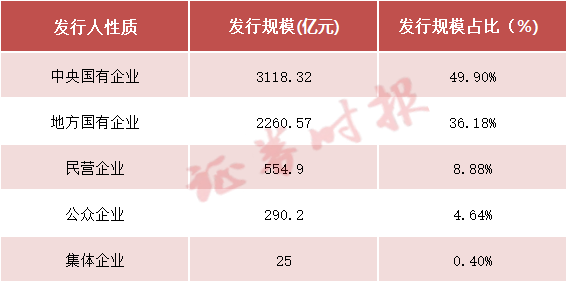
Core Viewpoint - The issuance of technology innovation bonds (referred to as "Sci-Tech Bonds") has seen a significant increase since the policy was implemented in May, with a total issuance exceeding 620 billion yuan by early July, primarily driven by state-owned enterprises [1][2]. Group 1: Issuance Overview - As of July 3, a total of 419 Sci-Tech Bonds have been issued, with a total issuance scale surpassing 620 billion yuan [1]. - Central state-owned enterprises (SOEs) and local SOEs are the main issuers, accounting for 49.90% and 36.18% of the total issuance, respectively [1]. - The average rating of issuers has remained high, with 74.70% of the bonds rated AAA since May 7 [1]. Group 2: Industry Participation - Banks have emerged as the primary issuers of Sci-Tech Bonds, with 23 banks issuing a total of 224.1 billion yuan [1]. - Notable issuers include China Construction Bank with 30 billion yuan, and several other major banks each issuing 20 billion yuan [1]. Group 3: Expansion to Smaller Banks - In June, smaller banks such as Chongqing Bank and Nanjing Bank began participating in the issuance of Sci-Tech Bonds [2]. - Various private equity investment institutions have also started issuing Sci-Tech Bonds, supported by recent credit enhancement measures [2]. Group 4: Interest Rates and Comparisons - The issuance rates for many Sci-Tech Bonds have reached historical lows for the issuers, benefiting from a low-interest-rate environment and policy support [2]. - AAA-rated Sci-Tech Bonds have a weighted average issuance rate significantly lower than that of non-Sci-Tech bonds of the same rating, with differences ranging from 2 to 47 basis points across various issuer types [2]. Group 5: Market Support for SMEs - The Sci-Tech Bond market indirectly supports small and medium-sized technology enterprises through funding from financial institutions and large SOEs [3]. - The long-term health of the bond market will require a more diversified range of issuers and enhanced credit accessibility for lower-rated entities [3].

超千家机构调研上市银行 宁波银行是“人气王”
Zheng Quan Ri Bao· 2025-07-03 16:28
Core Viewpoint - The surge in institutional research on listed banks in the first half of the year indicates a significant increase in market interest in bank stocks, particularly focusing on credit issuance, dividend plans, and asset quality [1][2]. Group 1: Institutional Research Trends - In the first half of the year, 19 A-share listed banks received over 1,000 institutional research visits, with Ningbo Bank, Changshu Bank, and Hangzhou Bank being the most popular [1][2]. - The focus of institutional research has been on key operational areas of banks, especially credit allocation and dividend strategies [2][3]. Group 2: Credit Issuance and Dividend Plans - Ningbo Bank, Changshu Bank, and Hangzhou Bank were the top three banks in terms of research visits, with 235, 192, and 153 visits respectively [2]. - Hangzhou Bank reported that its credit issuance has improved compared to the previous year, with a focus on strategic sectors such as technology and manufacturing [2]. - Chongqing Bank has maintained a high cash dividend level for 11 consecutive years since its H-share listing, with plans for a sustainable dividend strategy [3][4]. Group 3: Asset Quality and Net Interest Margin - Many banks expressed confidence in maintaining stable asset quality throughout the year, with measures in place to enhance risk management [5][6]. - Suzhou Bank reported a net interest margin of 1.34% at the end of Q1, which is a slight decrease compared to the end of 2024, but better than the industry average [6]. - The overall expectation is for a marginal improvement in asset quality, supported by policy measures and digital risk management [5][6].


ST天圣: 关于为全资子公司提供担保的进展公告
Zheng Quan Zhi Xing· 2025-07-03 16:15
Summary of Key Points Core Viewpoint - Tian Sheng Pharmaceutical Group Co., Ltd. has approved a guarantee for its wholly-owned subsidiary, Tian Sheng Pharmaceutical Group Chongqing Drug Research Institute Co., Ltd., to secure a loan of RMB 5 million from Chongqing Bank for a term of three years [1][2]. Group 1: Guarantee Overview - The board of directors approved the guarantee for the subsidiary to apply for credit from Chongqing Bank [1]. - The loan amount is RMB 5 million with a repayment period of three years [2]. - The company signed a guarantee contract and a mortgage contract with Chongqing Bank to secure the loan [1][2]. Group 2: Contract Details - The guarantee contract specifies that Tian Sheng Pharmaceutical Group Co., Ltd. is the guarantor for the loan taken by its subsidiary [2]. - The principal amount of the loan is RMB 5 million, with interest and penalties calculated as per the main contract [2]. - The mortgage contract also states that the company will cover all related costs, including legal fees and other expenses incurred during the enforcement of the mortgage [2]. Group 3: Financial Overview of the Subsidiary - Tian Sheng Pharmaceutical Group Chongqing Drug Research Institute Co., Ltd. was established on March 22, 2010, with a registered capital of RMB 50 million [3][4]. - The total assets of the subsidiary as of December 31, 2024, were RMB 5,098.31 million, with total liabilities of RMB 240.60 million [5]. - The subsidiary reported a net profit of RMB 125.17 million for the year ending December 31, 2024, but incurred a loss of RMB 212.66 million for the first quarter of 2025 [5]. Group 4: Guarantee Amounts - The total external guarantee amount for the company and its subsidiaries is RMB 202 million, with a total balance of RMB 152.24 million, representing 7.59% of the equity attributable to the parent company as of December 31, 2024 [5]. - There are no overdue guarantees or litigation issues related to external guarantees [5].

持续放量!科创债发行规模超6200亿元
Zheng Quan Shi Bao· 2025-07-03 15:04
Core Insights - The issuance of technology innovation bonds (referred to as "Sci-Tech Bonds") has surged since the policy was implemented in May, with a total of 419 bonds issued and a cumulative issuance scale exceeding 620 billion yuan [1][3][2] - Central and local state-owned enterprises dominate the issuance landscape, accounting for nearly 86% of the total issuance, while private and public enterprises contribute a smaller share [3][4] - The introduction of various support mechanisms and the expansion of issuing entities are expected to enhance the effectiveness of the bond market in supporting technological innovation [1][3] Issuance Scale and Participants - As of July 3, the total issuance scale of Sci-Tech Bonds reached 624.9 billion yuan, with central state-owned enterprises issuing 311.8 billion yuan (49.9%) and local state-owned enterprises issuing 226.1 billion yuan (36.2%) [3][4] - The banking sector has emerged as a key player, with 23 banks issuing a total of 224.1 billion yuan in Sci-Tech Bonds, led by China Construction Bank with 30 billion yuan [4][5] Interest Rates and Cost Advantages - The current low-interest environment has resulted in generally lower issuance rates for Sci-Tech Bonds, with some bonds achieving historical lows for their issuers [7] - For AAA-rated bonds, the average issuance rate is significantly lower than that of non-Sci-Tech bonds of the same rating, indicating a cost advantage for issuers in the Sci-Tech sector [7] Funding Utilization - The funds raised through Sci-Tech Bonds are primarily directed towards supporting technology loans and investments in technology innovation companies, optimizing asset allocation for banks and investment firms [10] - Private equity firms are utilizing Sci-Tech Bonds as a new funding avenue, allowing them to replace earlier investments with low-cost, long-term capital [10][11] Policy Impact and Future Outlook - The new policies surrounding Sci-Tech Bonds facilitate easier access to funding for technology enterprises, particularly benefiting small and medium-sized enterprises by lowering the barriers to bond issuance [11] - The encouragement of long-term bond issuance aligns with the funding needs of technology innovation, ensuring stable financial support for R&D and business expansion [11]
持续放量!科创债发行规模超6200亿元
证券时报· 2025-07-03 14:54
债市"科技板"下科创债落地以来,各类主体发行科创债热情持续高涨。 Wind数据显示,自5月份科技创新债券(简称"科创债")相关政策落地以来,截至7月3日,全市场已发行 419只科创债,发行规模超6200亿元。其中,银行作为科创债重要的新增发行主体,目前已发行27只科创 债,发行规模超2200亿元。 业内人士指出,科创债2.0时代扩容发行主体,并完善一系列配套支持机制,推动市场进一步扩容,债券 市场支持科技创新的质效将有效提升。 发行规模突破6200亿元 5月7日,中国人民银行、中国证监会联合发布《关于支持发行科技创新债券有关事宜的公告》(以下简称 《公告》),从丰富科技创新债券产品体系和完善科技创新债券配套支持机制等方面,对支持科技创新债 券发行提出多项重要举措。 自5月7日以来,科创债发行持续放量。Wind数据显示,截至7月3日,债市"科技板"下科创债已发行419 只,发行规模达6248.98亿元。 从发行人的性质来看,中央国企和地方国企是科创债发行的主力。截至目前,中央国有企业发行科创债 3118.32亿元,占比49.90%;地方国有企业发行科创债2260.57亿元,占比36.18%;民营企业、公众企 业 ...