晶澳科技

Search documents
洞鉴光伏·8月刊:“反内卷”持续发酵,光伏底部反转节点来临
Minsheng Securities· 2025-08-07 11:50
Investment Rating - The report suggests a positive outlook for the photovoltaic industry, emphasizing a shift from price competition to value competition due to government policies aimed at curbing "involution" [4][21][28]. Core Insights - The report highlights the government's strong stance on addressing "involution" in the photovoltaic sector, with multiple high-level meetings and policy announcements aimed at promoting fair competition and phasing out outdated production capacity [4][19][21]. - Prices across various segments of the photovoltaic supply chain are beginning to rise, indicating a potential recovery in profitability. For instance, as of July 30, 2025, the price of polysilicon dense material and granular silicon reached 44 RMB/kg, marking increases of 22.22% and 27.54% respectively since early June [4][32]. - Export data shows a mixed performance, with inverter exports increasing by 7.40% year-on-year in the first half of 2025, while module exports decreased by 23.94% [4][56]. Summary by Sections Industry Chain: Price Increases and Profit Recovery - The report notes that various segments of the photovoltaic industry are experiencing price increases, with polysilicon prices rising significantly due to government interventions and market adjustments [4][30][32]. - The report anticipates that the profitability of the photovoltaic supply chain will improve as prices stabilize and rise, driven by government policies and market dynamics [4][28]. Industry Dynamics: Government Policies and Market Response - The government has issued strong signals to combat "involution," emphasizing the need for quality over price in the photovoltaic sector. This includes new regulations aimed at preventing below-cost pricing and promoting sustainable competition [4][19][21]. - The report outlines a timeline of key policy announcements that have reinforced the government's commitment to addressing "involution" and promoting a healthier market environment [4][20]. Export and Installation Data - In the first half of 2025, domestic inverter exports totaled 30.595 billion RMB, reflecting a year-on-year increase, while module exports saw a decline [4][56]. - Domestic installations reached 212.21 GW in the first half of 2025, a 107.07% increase year-on-year, although June saw a significant month-on-month decline in new installations [4][61]. Investment Recommendations - The report recommends focusing on leading companies in the polysilicon segment, such as Xiexin Technology and Tongwei Co., as well as major players in the photovoltaic supply chain like JinkoSolar and JA Solar [4][69]. - It also highlights the potential for companies involved in high-efficiency TOPCon technology and auxiliary materials to benefit from the ongoing industry adjustments [4][69].
硅业分会:上下游僵持博弈 单晶硅片价格持稳运行
智通财经网· 2025-08-07 07:35
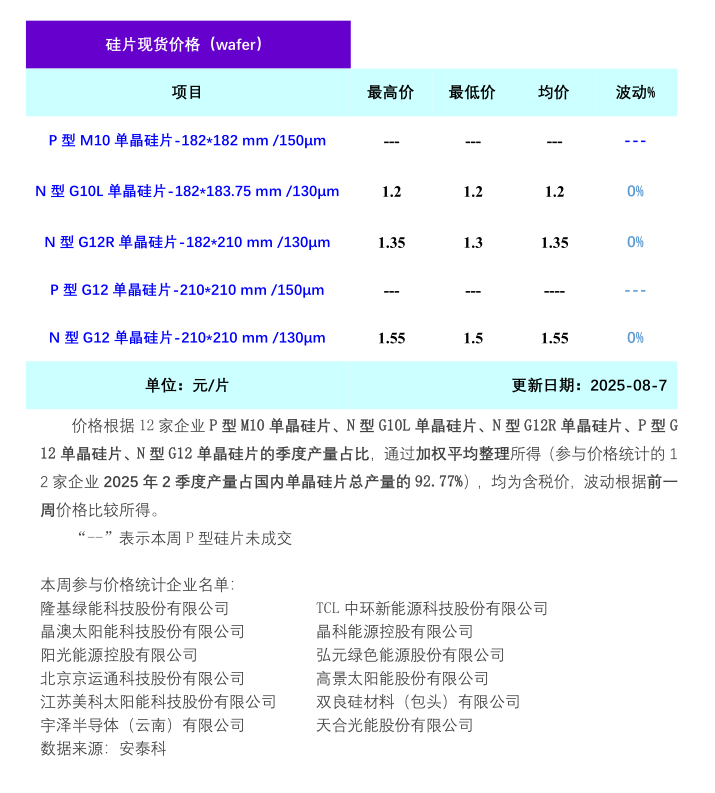
Price Stability - The prices of monocrystalline silicon wafers have stabilized this week, with N-type G10L wafers priced at 1.2 yuan/piece, N-type G12R wafers at 1.35 yuan/piece, and N-type G12 wafers at 1.55 yuan/piece, all remaining unchanged from last week [1][2][3]. Market Dynamics - The silicon wafer market is currently in a stalemate phase, with downstream demand decreasing due to sensitivity to cost changes and a halt in battery inventory accumulation, leading to reduced procurement needs [1][2]. - On the supply side, manufacturers are reluctant to lower prices due to stable silicon material prices and low wafer inventory, indicating a strong willingness to maintain prices [1]. Production Rates - The overall industry operating rate remains stable, with two leading companies operating at 50% and 46%, while integrated companies operate between 50% and 80%, and other companies also range from 50% to 80% [1]. Future Outlook - The market sentiment is increasingly cautious, with expectations of short-term price fluctuations in the silicon wafer market, influenced mainly by downstream component market demand and battery purchasing rhythms [2].

一个搞钱路子,从光伏开始
Hu Xiu· 2025-08-07 07:13
Core Viewpoint - The photovoltaic industry is beginning to explore financial innovations, particularly through the tokenization of real-world assets (RWA), which can enhance financing options and allow ordinary investors to participate in the sector [2][3][4]. Group 1: RWA's Impact on the Photovoltaic Industry - RWA represents an innovative financing method that digitizes hard-to-split and illiquid assets like solar power plants, enabling them to be traded in the Web 3.0 ecosystem [5][6]. - The successful issuance of RWA by GCL-Poly Energy, which raised over 200 million RMB in cross-border financing, marks a significant milestone for the photovoltaic sector [3][4]. - The introduction of RWA is expected to transform the heavy asset nature of the photovoltaic industry, providing new avenues for financing and investment [4][14]. Group 2: Changes in Financing and Market Dynamics - The photovoltaic sector is experiencing a shift in its underlying logic, with many state-owned enterprises looking to divest solar projects due to changing market conditions [12][13]. - The competition landscape is evolving, with local state-owned enterprises and investment platforms taking the lead in acquiring solar assets previously held by central state-owned enterprises [12][13]. - GCL-Poly Energy's RWA issuance is seen as a new exit strategy for investors, allowing global participation in the photovoltaic market [14][15]. Group 3: RWA Issuance Process - The RWA issuance process involves a combination of asset and data chains, requiring clear asset ownership and stable revenue predictions [16]. - The issuance of RWA necessitates the involvement of various intermediaries, including asset appraisers, auditors, and legal advisors, to ensure compliance with regulations [21][22]. - The digitalization of assets leads to the creation of tradable tokens representing the rights to the revenue generated by solar power plants, with the first issuance targeting licensed investment institutions in Hong Kong [18][27]. Group 4: Future Prospects and Ecosystem Development - The potential for RWA issuance extends beyond the photovoltaic sector to other high-information industries such as energy, finance, and healthcare [21]. - The development of a robust ecosystem for RWA is still in its early stages, requiring more asset providers and funding participants to engage [25]. - Major photovoltaic asset holders are showing interest in RWA, indicating a growing trend towards this financing model as regulatory frameworks evolve [26][27].


【安泰科】单晶硅片周评-上下游僵持博弈 硅片价格持稳运行(2025年8月7日)
中国有色金属工业协会硅业分会· 2025-08-07 07:04
Group 1 - The core viewpoint of the article indicates that the silicon wafer prices have stabilized this week, with no significant changes observed in the market [1][2] - The average transaction prices for N-type G10L, G12R, and G12 silicon wafers are 1.2 yuan, 1.35 yuan, and 1.55 yuan per piece respectively, all remaining unchanged from the previous week [1][3] - The market is currently in a stalemate phase, with downstream demand decreasing due to sensitivity to cost changes and a pause in battery stocking, while upstream suppliers are reluctant to lower prices due to stable silicon material prices and low inventory [1][2] Group 2 - Downstream battery and component prices have also remained stable, with mainstream battery prices at 0.28-0.29 yuan/W and component prices at 0.66-0.67 yuan/W [2] - The overall operating rate in the industry is stable, with leading companies operating at rates of 50% and 46%, while integrated companies operate between 50%-80% [1] - The market sentiment is increasingly cautious, with expectations of short-term price fluctuations and long-term price trends influenced by terminal component market demand and downstream battery purchasing rhythms [2]
上游原料价升、下游采买增加 硅片价格持续上涨
Mei Ri Jing Ji Xin Wen· 2025-08-06 16:51
Group 1 - The price of silicon wafers has increased due to the rebound in upstream polysilicon prices, with manufacturers setting prices to avoid losses rather than competing for sales [1][2] - In the last week of July, the average price of N-type G10L monocrystalline silicon wafers was 1.2 yuan/piece, up 9.09% week-on-week; N-type G12R wafers averaged 1.35 yuan/piece, up 8.00%; and N-type G12 wafers averaged 1.55 yuan/piece, up 7.64% [2] - The increase in silicon wafer prices is attributed to rising raw material costs and increased downstream orders, with manufacturers adhering to pricing guidelines [1][2] Group 2 - The production cost of silicon wafers has risen due to increasing polysilicon prices, which have gone from 35,000 yuan/ton to 45,000 yuan/ton [3] - The overall operating rate in the industry remained stable, with major companies operating at 50% and 40% capacity [2][3] - From the second half of 2024, pure silicon wafer producers are adopting a strategy of not pursuing high operating rates and focusing on sales-based production [2] Group 3 - The National Energy Administration reported that new renewable energy installations reached 268 million kilowatts in the first half of the year, a 99.3% increase year-on-year, with solar power installations doubling [3] - The Ministry of Industry and Information Technology has issued a notice to implement energy-saving inspections in the polysilicon industry, which may lead to a concentration of production capacity among leading companies [4] Group 4 - Major photovoltaic companies have reported expected losses for the first half of 2025, with Longi Green Energy forecasting a net loss of 2.4 to 2.8 billion yuan [6] - Despite the losses, the domestic component sector has begun to turn a profit, and new markets in the Middle East and Southeast Asia are showing significant growth [6][7] - The industry is expected to see a recovery in prices due to policy impacts on polysilicon, although achieving a balance between supply and demand remains challenging [6][7] Group 5 - The inventory of polysilicon in the industry has decreased by approximately 30,000 to 40,000 tons since the beginning of the year, with some inventory being consumed and some accumulated due to rising prices [8] - Currently, there is no new polysilicon production capacity, and some companies have halted production lines [8]

晶澳科技:无逾期担保
Zheng Quan Ri Bao Zhi Sheng· 2025-08-06 13:42
(编辑 任世碧) 证券日报网讯 8月6日晚间,晶澳科技发布公告称,截至2025年7月31日,公司提供担保余额为人民币 567.46亿元(其中担保金额为外币的按月末汇率折算统计),占公司2024年度经审计归属于上市公司股 东净资产的203.42%。公司无逾期担保、无涉及诉讼的担保,无因担保被判决败诉而应承担的损失。 ...

晶澳科技(002459) - 关于2025年度公司提供担保的进展公告
2025-08-06 11:30
证券代码:002459 证券简称:晶澳科技 公告编号:2025-070 债券代码:127089 债券简称:晶澳转债 2、担保进展情况 关于 2025 年度公司提供担保的进展公告 本公司及董事会全体成员保证信息披露的内容真实、准确、完整,没有虚假 记载、误导性陈述或重大遗漏。 一、合并报表范围内担保情况概述 1、担保额度审批 晶澳太阳能科技股份有限公司 晶澳太阳能科技股份有限公司(以下简称"公司")于2024年12月10日召开 第六届董事会第三十一次会议、2024年12月30日召开2024年第三次临时股东大会, 审议通过了《关于2025年度公司与下属公司担保额度预计的议案》,同意公司为 合并报表范围内下属公司提供担保、下属公司之间互相担保、下属公司为公司提 供担保,2025年度新增担保额度总计不超过人民币880亿元,其中向资产负债率 为70%以上的担保对象的新增担保额度为不超过568亿元,向资产负债率为70% 以下的担保对象的新增担保额度为不超过312亿元。担保范围包括但不限于申请 融资业务发生的融资类担保(包括贷款、银行承兑汇票、外汇衍生品交易、信用 证、保函等业务)以及日常经营发生的履约类担保。担保种类包括 ...
大涨近5%,“反内卷”观察信号再度显现
Zheng Quan Shi Bao· 2025-08-06 10:58
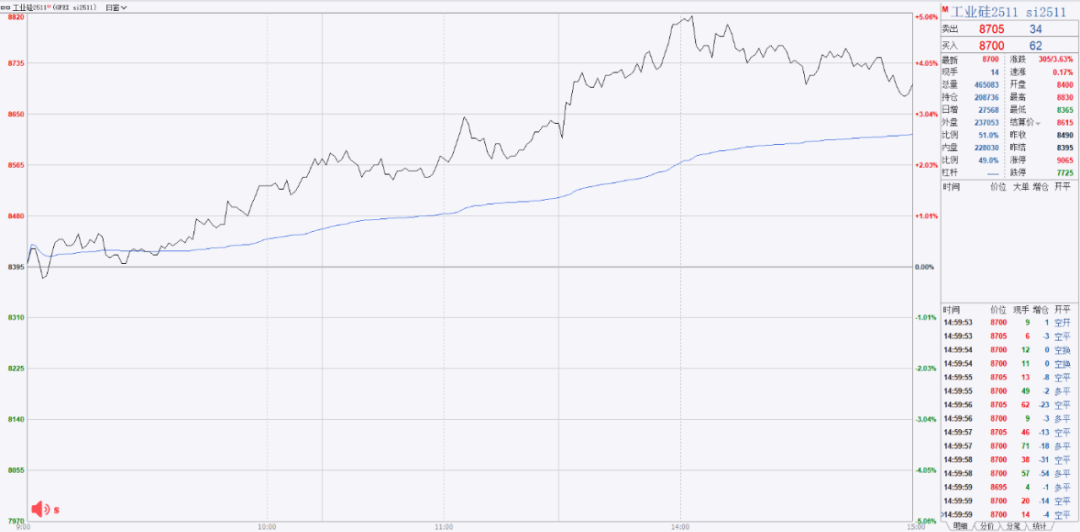
与此同时,工信部对41家多晶硅厂展开专项节能监查,9月底前各地需报送结果。另外,行业内产能收储行动预期也较为强烈。业内期待更多产能整合措 施真正落地,硅业分会预测国内多晶硅年产能将减少至230万吨。银河期货据此测算显示,整合后价格上限或达60000—65000元/吨。 近期,多家光伏龙头企业披露了2025年半年度业绩预告,已经揭示了内卷下的行业困境。其中,隆基绿能预计上半年归母净利润亏损24亿元到28亿元,同 比减亏24.43亿元到28.43亿元;通威股份预计上半年归母净利润亏损49亿元至52亿元;晶澳科技预计上半年归母净利润亏损25亿元至30亿元。 8月6日,多晶硅和工业硅期货盘中一度大涨近5%。 自光伏产业掀起整治无序竞争的浪潮以来,多晶硅的价格走势被视作观察"反内卷"进程的信号。自8月份以来,多晶硅和工业硅的价格走势陷入震荡。相 比焦煤,多晶硅在7月份大涨52.73%之后,并没有出现大幅回调,而是高位震荡。市场对于多晶硅市场产能整合进一步给予更多期许。 中信期货认为,在多重政策预期的影响下,多晶硅价格短期走势仍高度依赖于政策信号的强弱与兑现节奏,未来一个月或将是政策落地的关键窗口期。若 相关供给侧改革措 ...
大涨近5%!“反内卷”观察信号,再度显现!
券商中国· 2025-08-06 10:06
Core Viewpoint - The article discusses the recent fluctuations in the prices of polysilicon and industrial silicon, highlighting the impact of government policies aimed at reducing competition in the photovoltaic industry and the expected consolidation of production capacity [3][4]. Group 1: Price Trends and Market Expectations - On August 6, polysilicon and industrial silicon futures saw a significant increase of nearly 5% [1]. - Since the beginning of August, polysilicon and industrial silicon prices have been volatile, with polysilicon prices experiencing a 52.73% increase in July without a major pullback, indicating market expectations for further capacity consolidation [3]. - The Ministry of Industry and Information Technology is conducting energy-saving inspections on 41 polysilicon manufacturers, with results due by the end of September [4]. Group 2: Industry Performance and Financial Forecasts - Major photovoltaic companies have disclosed their performance forecasts for the first half of 2025, revealing significant losses: Longi Green Energy expects a net loss of 2.4 to 2.8 billion yuan, Tongwei Co. anticipates a loss of 4.9 to 5.2 billion yuan, and JA Solar forecasts a loss of 2.5 to 3 billion yuan [4]. - The China Securities Futures believes that the short-term price trends of polysilicon will heavily depend on the strength and timing of policy signals, with the next month being crucial for policy implementation [4]. Group 3: Investment Trends and Market Sentiment - The largest photovoltaic ETF (515790) has seen a net inflow of 3.39 billion yuan since June 23, leading to a significant increase in fund shares [5]. - However, following a series of restrictions from the exchange after July 23, there has been a continuous net outflow of funds, with fund shares dropping to 16.565 billion yuan by August 5 [5].


广发基金包揽前7月20亿元以上规模权益基金跌幅前3名
Sou Hu Cai Jing· 2025-08-06 08:20
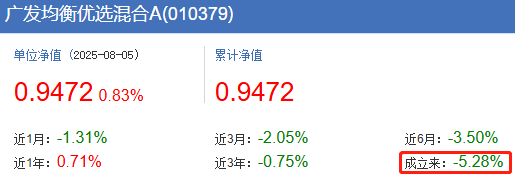
Core Viewpoint - In the first seven months of the year, three funds managed by GF Fund have recorded the largest declines among actively managed equity funds with assets over 2 billion yuan, indicating significant underperformance in the current market environment [1][6]. Fund Performance Summary - The three underperforming funds are: - GF Value Advantage Mixed Fund: -10.9% performance [1][6] - GF Balanced Preferred Mixed A: -7.79% performance [1][6] - GF High-end Manufacturing Stock A: -7.00% performance [1][6] - The GF Balanced Preferred Mixed A fund has experienced a cumulative loss of 5.28% since its inception on January 11, 2021, while the GF Balanced Preferred Mixed C has a cumulative loss of 7% [2]. Fund Management and Strategy - Both GF Value Advantage Mixed and GF Balanced Preferred Mixed A are managed by Wang Mingxu, who has extensive experience in investment management [1]. - The investment strategy of these funds focuses on undervalued blue-chip stocks, including major holdings in companies like Midea Group and Kweichow Moutai [1]. High-end Manufacturing Fund Insights - The GF High-end Manufacturing Stock A fund, managed by Zheng Chengran, has maintained a focus on the renewable energy sector since 2022, with top holdings in companies such as Sungrow Power Supply and LONGi Green Energy [4]. - Despite its early establishment, the GF High-end Manufacturing Stock A fund has a positive cumulative return, while the GF High-end Manufacturing Stock C has seen a cumulative loss exceeding 45% since its inception on September 16, 2020 [4][5].