
腾讯云

Search documents
前百度最牛技术转投字节跳动搞AI,目标1000亿
Sou Hu Cai Jing· 2025-06-20 08:39
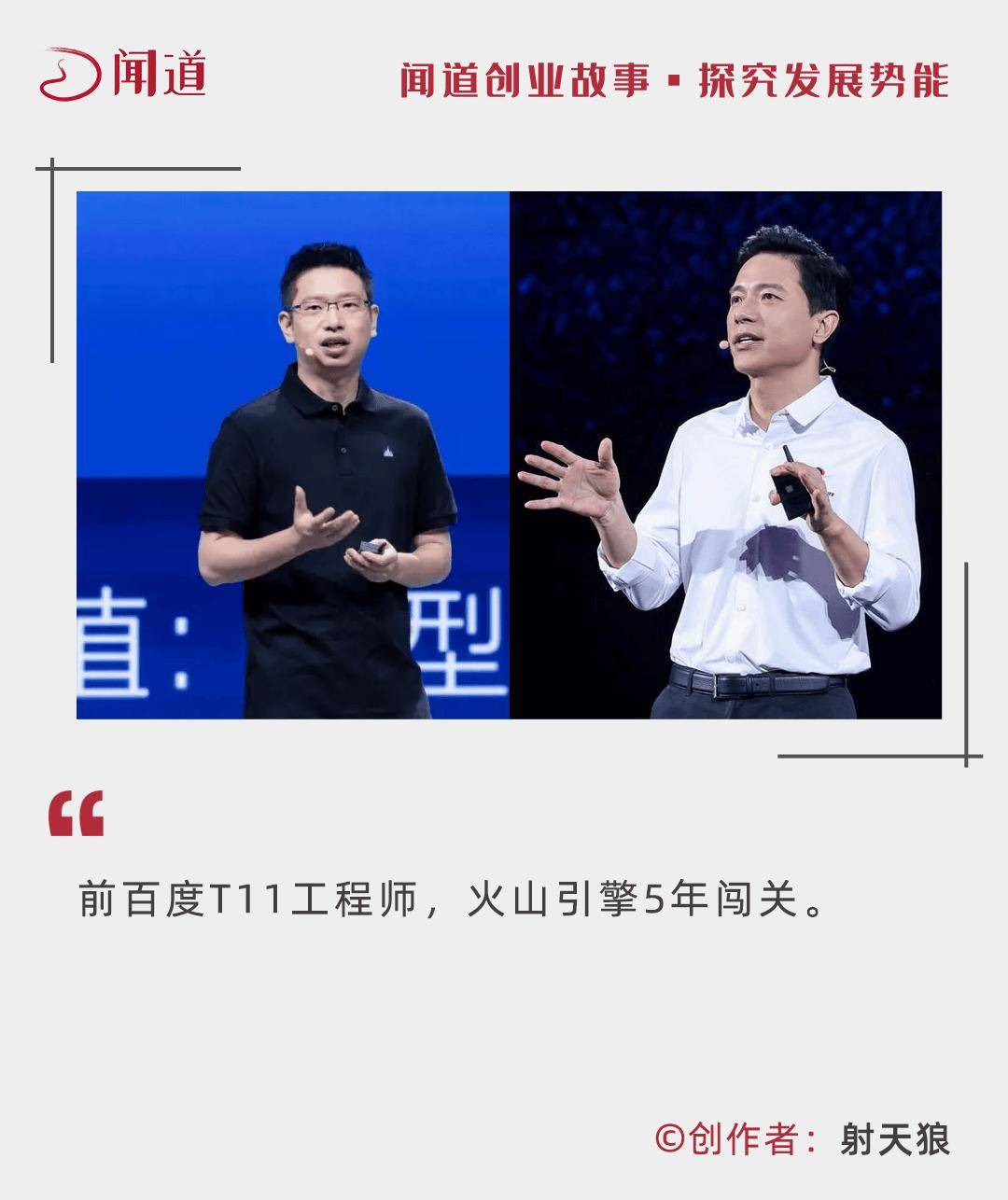
Core Viewpoint - ByteDance's acquisition of Yao Ling Er Si Technology marks a strategic move to enhance its capabilities in the internet healthcare sector while also attracting top talent from Baidu [5][6]. Group 1: Company Strategy and Leadership - The acquisition of Yao Ling Er Si Technology is seen as a way for ByteDance to not only expand its business but also to secure a team of highly skilled professionals from Baidu [5]. - Tan Dai, who was appointed as the general manager of Volcano Engine, has set an ambitious revenue target of over 100 billion yuan for the next 8-10 years [7][10]. - Despite initial skepticism from the industry regarding ByteDance's late entry into the cloud computing market, Tan Dai's leadership has positioned Volcano Engine as one of the six core business segments of ByteDance [6]. Group 2: Market Position and Performance - As of June 2023, Volcano Engine's model, Doubao 1.6, has achieved significant usage growth, with daily token usage exceeding 16.4 trillion, a 137-fold increase from its launch [8]. - According to IDC, Doubao holds a 46.4% market share in China's public cloud model market, serving major clients including nine of the top ten smartphone manufacturers and 70% of systemically important banks [8]. - Volcano Engine's revenue is projected to surpass 10 billion yuan in 2024, placing it in the third tier among major Chinese cloud service providers [12]. Group 3: Competitive Landscape - The competitive landscape is characterized by a race among major players, with Alibaba Cloud leading the market with revenues around 600 billion yuan, while Volcano Engine aims to close the gap with Baidu Smart Cloud [12][13]. - The rivalry extends to the AI model sector, where both Doubao and Baidu's Wenxin models are engaged in a price war, reflecting the intense competition in the AI cloud service market [16][24]. - Tan Dai emphasizes the importance of scale in achieving competitive advantage, asserting that Volcano Engine can leverage ByteDance's vast resources to optimize performance and reduce costs [24][26]. Group 4: Future Outlook - Tan Dai believes that as long as global conditions remain stable, achieving the 100 billion yuan revenue target is feasible, with a focus on maintaining leadership in the domestic AI sector [10]. - The strategic support from ByteDance's CEO Liang Rubo at the Volcano Engine conference signifies a commitment to long-term investment and innovation in AI technologies [27][28].

金融与AI融合持续深化:【AI金融新纪元】系列报告(四)
Soochow Securities· 2025-06-11 10:23
Investment Rating - The report recommends a positive investment outlook for the financial technology sector, specifically highlighting companies such as Tonghuashun, Dongfang Caifu, and Hengsheng Electronics, while suggesting to pay attention to Dingdian Software, Jinzhen Co., Changliang Technology, and Xinzhi Software [6]. Core Insights - The integration of AI in finance is expected to enhance operational efficiency and create new business opportunities across various financial sectors, including brokerage, internet finance, insurance, and banking [6][27]. - The financial industry is witnessing a significant increase in technology investment, with a total expenditure of 359.8 billion yuan in 2023, primarily driven by banks [11][14]. - AI is set to benefit both existing and new business models in the financial sector, improving backend efficiency and enabling personalized financial products and services [6][27]. Summary by Sections 1. AI and Financial Technology - The report outlines the evolution of financial technology from IT automation to internet finance and now to AI-driven solutions, marking a transformative phase in the industry [4][5]. - AI is becoming a core component of financial services, enhancing customer engagement and operational efficiency [6][27]. 2. AI Empowering Brokerage Firms - AI systems are expected to reduce costs and improve efficiency in brokerage operations, leading to increased revenue across various business lines [30][41]. - The integration of AI in brokerage firms is facilitating the development of new business models and enhancing existing services [30][41]. 3. AI in Internet Finance - AI is enhancing the operational efficiency of internet finance companies, leading to cost reductions and increased revenue [47][49]. - The deployment of AI models is expected to create new business opportunities in the internet finance sector, particularly in areas like intelligent investment advisory and customer service [47][49]. 4. AI in the Insurance Sector - The insurance industry is leveraging AI to improve underwriting efficiency and enhance research capabilities, leading to better risk management and customer service [62][64]. - AI is facilitating the automation of various processes within the insurance value chain, resulting in increased operational efficiency [70][75]. 5. AI in Banking - AI is transforming banking operations by enhancing customer service and risk management capabilities, leading to a more personalized banking experience [6][27]. - The integration of AI in banking is expected to drive innovation in financial products and services, improving overall service delivery [6][27].



公有云“内卷式”价格战升级 云计算市场迎来生死之战
Xi Niu Cai Jing· 2025-06-09 03:22
Core Viewpoint - The cloud computing industry is experiencing a significant price war initiated by major players like Alibaba Cloud, which has led to a reshaping of the market dynamics and poses challenges for smaller cloud providers [2][12][13] Group 1: Price War Dynamics - Alibaba Cloud has launched its largest price reduction ever, with core product prices dropping between 20% and 55%, affecting over 100 products and 500 specifications [2] - JD Cloud has responded with a commitment to undercut prices by an additional 10%, putting pressure on smaller competitors [2] - The price war is seen as a potential catalyst for industry restructuring, raising questions about its impact on innovation [2][13] Group 2: Financial Performance of Major Players - Alibaba Cloud reported a revenue of 106.37 billion yuan in 2024, a year-on-year increase of 37.78%, indicating a strategy of increasing public cloud penetration to dilute costs [2] - The utilization rate of Alibaba Cloud's core products has increased significantly, leading to substantial energy savings [2] - Despite revenue growth, profit margins are under pressure, with Industrial Fulian's cloud computing business showing a gross margin of only 4.99% [3][4] Group 3: Challenges for Smaller Cloud Providers - Smaller cloud providers are facing a "profit margin recovery" while experiencing revenue pressure, with companies like Kingsoft Cloud and Yuke Data showing mixed financial results [5] - Smaller firms are adopting strategies such as focusing on high-value areas like AI computing to survive in a competitive landscape [5][12] - The cash flow risks for smaller players are evident, with some reporting significant declines in revenue and negative cash flow [5] Group 4: Investment and Resource Allocation - Major players are extending the price war into the AI sector, with Alibaba Cloud's AI model prices dropping to the lowest in the industry [6][8] - Alibaba Cloud plans to invest 380 billion yuan in AI infrastructure over the next three years, while Tencent Cloud has a similar plan of 500 billion yuan [8] - The rapid growth in AI computing demand presents both opportunities and challenges for smaller firms, which struggle to keep pace with larger competitors [12] Group 5: Market Concentration and Future Outlook - The market concentration is increasing, with the top three players holding 71% of the cloud infrastructure market share, indicating a trend towards oligopoly [11] - The price war is accelerating market reshaping, with smaller firms' market share being further compressed [12] - The industry is at a crossroads, where innovation requires resource investment, and the ongoing price war is altering resource distribution [14][15] Group 6: Strategies for Survival - Smaller cloud providers need to focus on niche markets and strengthen their technological barriers to survive [17] - Embracing open ecosystems and avoiding direct competition with larger firms are essential strategies for smaller players [17] - Regulatory measures may be necessary to prevent larger firms from abusing their market dominance and to preserve innovation space for smaller companies [17]

人工智能行业专题研究:MCP协议加速AI Agent生态繁荣
Yuan Da Xin Xi· 2025-06-06 07:45
Investment Rating - The industry investment rating is "Positive" [5] Core Insights - AI Agents represent the third stage of AI development, transitioning from simple Q&A and content generation to becoming true "executors" capable of completing actual work tasks independently by 2025 [1][17] - The Model Context Protocol (MCP) is redefining the paradigm for AI Agents, acting as a crucial infrastructure that enhances the interaction between AI models and external services, making it more natural and precise [2][22] - Major tech companies are actively developing AI Agent products, indicating a shift from technical competition to ecological value reconstruction in the AI Agent industry [3][36] Summary by Sections MCP Protocol Restructuring AI Agent Paradigm - AI Agents are defined as the third stage of AI development, capable of representing users in actions [10] - The MCP protocol standardizes tool interfaces, allowing for cross-platform interoperability and enhancing AI model capabilities [19][22] Acceleration of AI Agent Applications - Tech giants like ByteDance and Alibaba are focusing on AI Agent products, with rapid iterations expected from Q4 2024 to early 2025 [3][36] - The market shows a strong preference for general-purpose AI Agents, with significant funding differences between general and vertical industry AI startups [39] Investment Recommendations - The MCP protocol is likened to the "HTTP protocol" of the AI era, marking a transition to a standardized phase of AI development [46] - Recommended companies to watch include: 1) Business platform BIP: Yonyou Network; 2) Office: Kingsoft Office; 3) AIGC: iFlytek, Wanjun Technology [46][47]




人工智能行业专题研究:MCP协议加速AIAgent生态繁荣
Yuan Da Xin Xi· 2025-06-06 07:04
Investment Rating - The investment rating for the industry is "Positive" [5] Core Insights - AI Agents represent the third stage of AI development, transitioning from simple Q&A and content generation to becoming true "executors" capable of completing actual work tasks independently by 2025 [1][15] - The Model Context Protocol (MCP) is redefining the paradigm for AI Agents, serving as a crucial infrastructure that enhances the interaction between AI models and external services, making it more natural and precise [2][20] - Major tech companies are actively investing in AI Agent products, indicating a shift from technical competition to ecological value reconstruction in the AI Agent industry [2][34] Summary by Sections MCP Protocol Restructuring AI Agent Paradigm - AI Agents are identified as the third stage of AI development, with capabilities to represent users in actions [1][8] - The MCP protocol standardizes tool interfaces, allowing for seamless data interaction and decision execution across platforms [17][20] Acceleration of AI Agent Applications - Tech giants are rapidly deploying AI Agent products, with a noticeable shift towards ecological value reconstruction [34] - The market shows a strong preference for general-purpose AI Agents, with significant funding differences compared to vertical industry-focused agents [37] Investment Recommendations - The MCP protocol is likened to the "HTTP protocol" of the AI era, marking a transition to a standardized era of AI development [3][44] - Recommended companies to focus on include: Yonyou Network (commercial platform), Kingsoft Office (office solutions), iFlytek, and Wankong Technology (AIGC) [3][44] Industry Key Company Profit Forecasts - Profit forecasts for key companies indicate a positive outlook, with expected net profits for Yonyou Network, Kingsoft Office, iFlytek, and Wankong Technology showing growth from 2025 to 2027 [45]
Z Research|我们距离Agent的DeepSeek时刻还有多远(AI Agent 系列二)
Z Potentials· 2025-06-06 02:44
Core Insights - The article discusses the evolution and differentiation of AI Agents, emphasizing the need to distinguish between genuine innovative companies and those merely capitalizing on the concept of AI Agents [1][19][22]. Group 1: AI Agent Framework - The operation of AI Agents is broken down into three layers: perception, decision-making, and execution, highlighting the importance of each layer in the overall functionality of AI Agents [10][14][15]. - The "white horse is not a horse" concept is introduced to analyze the diversity of AI Agents in the market, categorizing them into pure, neutral, and free forms based on their operational characteristics [17][18]. Group 2: Technological Evolution - The article identifies the internalization of Agentic capabilities as a necessary evolution for LLMs, with examples from OpenAI's o4-mini and Anthropic's Claude 4 showcasing different design philosophies [30][38]. - Engineering integration is increasingly contributing to model capabilities, with tools like Prompt Engineering revealing significant potential for Agent products [2][31]. Group 3: Multi-Agent Systems - The limitations of Single-Agent systems are discussed, including memory constraints and the complexity of tool interactions, leading to the conclusion that Multi-Agent systems are becoming essential for overcoming these challenges [79][80]. - Multi-Agent architectures offer advantages in complexity, robustness, and scalability, allowing for parallel exploration of solutions and improved adaptability to human collaboration [82][83]. Group 4: Future Directions - The article suggests that the future of AI Agents will involve a competition between "experience universality" and "deep reliability," with hybrid architectures likely becoming a common choice [40][41]. - The emergence of protocols like MCP (Model Context Protocol) and A2A (Agent-to-Agent Protocol) is highlighted as a significant development in facilitating communication and tool integration among AI Agents [61][70].

光模块CPO午间异动拉升,创业板人工智能ETF华夏涨超3%
Zheng Quan Zhi Xing· 2025-06-05 05:25
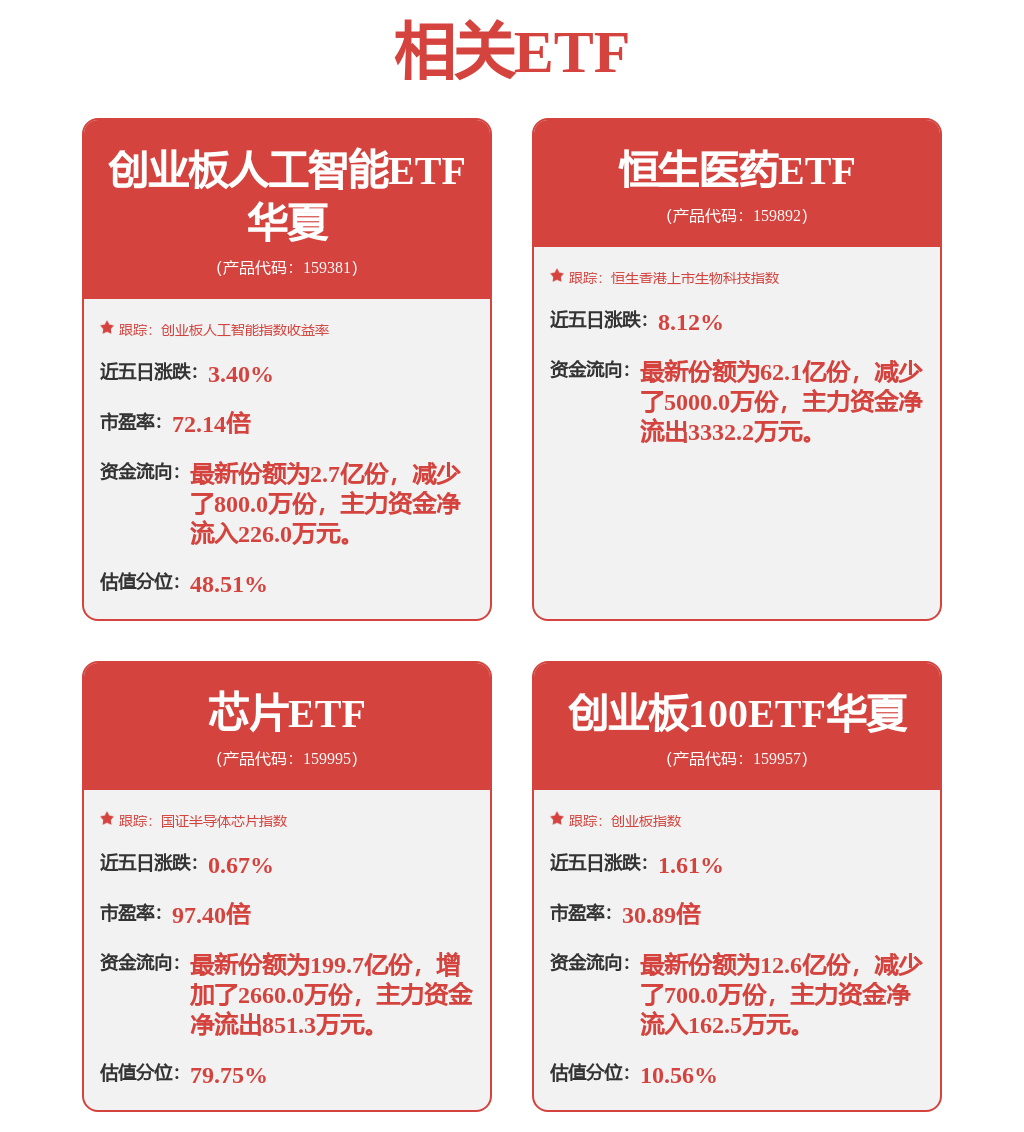
Group 1 - The AI computing power sector is showing strong performance, with significant gains in optical module stocks and related companies [1] - The domestic market for optical modules is expected to benefit from the expansion of data centers by major cloud providers, which hold a combined market share of approximately 71% [1] - Major global companies like Amazon, Google, Microsoft, and Meta are projected to significantly increase their capital expenditures, collectively exceeding $300 billion by 2025 [1] Group 2 - The Huaxia AI Computing ETF (159381) is highlighted for its low fee structure and high elasticity, tracking the entrepreneurial board AI index [2] - The top ten holdings of the Huaxia AI Computing ETF include leading optical module companies and key players in the chip design and cloud computing sectors [2] - The annual management fee for the Huaxia AI Computing ETF is 0.15%, with a custody fee of 0.05%, making it one of the lowest in its category [2]

神州信息发布“乾坤”企业级数智底座 AI模型迭代速度将提升10倍以上
Zheng Quan Shi Bao Wang· 2025-06-03 11:42
Core Insights - The widespread application of AI large models is becoming a significant driving force for new developments in the financial industry, reshaping core competitiveness and promoting deep integration of finance and technology [1] - The "QianKun" enterprise-level intelligent foundation released by Shenzhou Information is the first of its kind based on the "cloud-digital integration" concept, featuring three technological characteristics: cloud-native, digital-native, and AI-native [1][2] Group 1 - Shenzhou Information emphasizes the need to address "data barriers, input-output, and security guarantees" to promote large model applications in finance [1] - The "QianKun" intelligent foundation can help financial institutions achieve a doubling of infrastructure resource utilization, a 30%-50% increase in R&D efficiency, over 60% improvement in data utilization, and a tenfold increase in AI model iteration speed [2] - Several banks, including Hengfeng Bank and Beijing Bank, are actively embracing AI by developing unique models and knowledge systems to enhance their AI capabilities [2] Group 2 - Shenzhou Information and Huawei have launched a joint intelligent agent for financial knowledge Q&A, aimed at improving user experience through efficient information retrieval [3] - A framework agreement has been signed between Shenzhou Information and Tencent Cloud to promote domestic database applications in response to the growing demand for big data solutions in the financial sector [3]

2025年中国企业跨境电商行业洞察报告
Sou Hu Cai Jing· 2025-06-02 13:44
Core Insights - The report highlights the transformation of cross-border e-commerce from an optional strategy to a crucial necessity for Chinese enterprises in the context of significant changes in global trade dynamics [1] Group 1: Explosive Growth - In the first three quarters of 2024, China's cross-border e-commerce achieved a total import and export volume of 1.88 trillion RMB, representing a year-on-year growth of 11.5%, with exports growing by 15.2%, significantly outpacing overall foreign trade growth [2][29] - The rise of social e-commerce is a key driver, with the global social commerce market expected to reach $688 billion in 2024, growing by 20%, and projected to exceed $1 trillion by 2028 [2][31] Group 2: Dual Track Approach - Chinese enterprises primarily utilize two pathways for international expansion: B2B and B2C models [3][33] - The B2B model focuses on bulk trade between businesses, emphasizing supply chain management [3] - The B2C model targets direct sales to consumers, which can be further divided into platform-dependent and independent brand models [4][5] Group 3: Multi-Dimensional Globalization - Chinese enterprises are expanding beyond simple product exports to a multi-dimensional global strategy, including product, technology, and service exports [7][8][9] - Key sectors for product exports include consumer electronics, new energy vehicles, and fashion [7] - Technology exports involve digital technologies like 5G and AI, while service exports include logistics and brand services [8][9] Group 4: Regional Focus - Different markets exhibit unique characteristics, with mature markets like Europe and North America focusing on brand value and supply chain efficiency [10] - Southeast Asia is identified as the fastest-growing e-commerce region, driven by a young population and digitalization [11] - Emerging markets in the Middle East and Latin America present significant growth opportunities [12] Group 5: Benchmark Brands - Temu is rapidly expanding, projected to reach a GMV of $54 billion in 2024, significantly aided by its semi-managed model [13] - SHEIN is recognized as a leading fashion brand with a strong influence on Gen Z, driven by supply chain innovation [14] - TikTok Shop is emerging as a strong player in social commerce, with a projected GMV exceeding $50 billion in 2024 [15] Group 6: Future Trends - Six consumer trends are anticipated to shape product selection by 2025, including gardening, smart home integration, and outdoor living [17][18][22] - The "dopamine economy" emphasizes emotional value in consumption, while sleep-related products are expected to see increased demand [19][20] Group 7: Infrastructure Support - The growth of cross-border e-commerce relies on foundational support from payment solutions, logistics networks, and cloud services [23] - Companies like Ant International and Cainiao are pivotal in providing global payment and logistics solutions [23]




神州信息发起成立行业首个AIGC大模型金融生态体系
Zheng Quan Ri Bao Wang· 2025-06-02 13:01
Group 1 - The core viewpoint of the news is the launch of the "QianKun" enterprise-level digital intelligence foundation white paper by Digital China Information Service Group, which aims to enhance the efficiency and capabilities of financial institutions through advanced technology [1] - The "QianKun" platform features three main technological characteristics: cloud-native, digital-native, and AI-native, providing comprehensive solutions for enterprise-level development platforms, governance, cloud-native platforms, and AI platforms [1] - The platform is expected to significantly improve resource utilization, research and development efficiency, data utilization, and AI model iteration speed for financial institutions, marking it as a new productivity platform for the financial sector [1] Group 2 - Digital China has initiated the first domestic cloud financial core system alliance, collaborating with major cloud providers like Huawei Cloud, Tencent Cloud, and Alibaba Cloud to meet the demand for efficient, stable, and secure core application systems in the financial industry [2] - The company also established the first AIGC large model financial ecosystem to support the digital transformation of financial institutions, focusing on low-cost, high-efficiency, high-security, and high-availability services for large model construction [2] - The collaboration with various partners aims to build a comprehensive AIGC ecosystem that spans from basic hardware to upper-layer application software, addressing multiple aspects such as core applications, domestic cloud, and domestic chips [2]