
默沙东

Search documents
20cm涨停!盟科药业定增落地,海鲸药业10亿入主
Feng Huang Wang· 2025-09-23 06:25
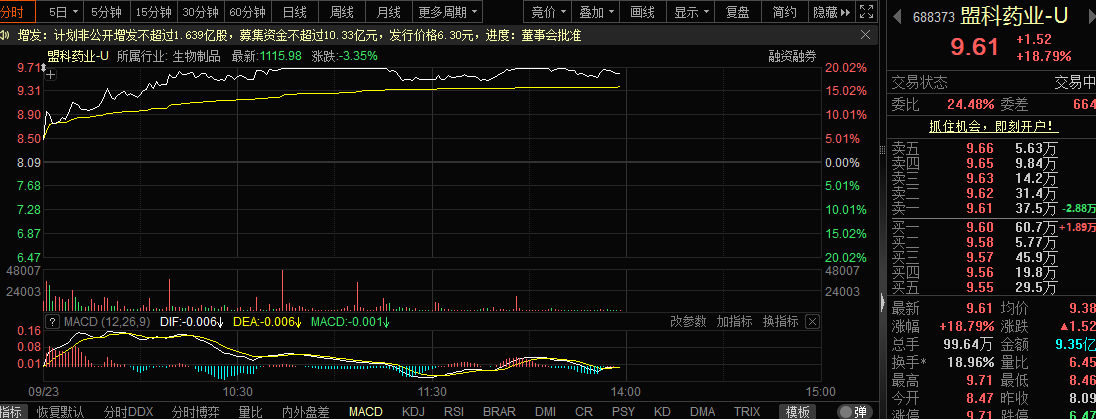
Core Viewpoint - Mengke Pharmaceutical (688373.SH) experienced a significant stock price increase following the announcement of a private placement plan to issue shares to Nanjing Haiqing Pharmaceutical Co., Ltd, which will result in Haiqing becoming the controlling shareholder of Mengke [1][3]. Group 1: Share Issuance Details - Mengke Pharmaceutical plans to issue 163,901,373 shares at a price of 6.30 CNY per share, raising a total of 1.033 billion CNY [1]. - After the issuance, Haiqing Pharmaceutical will hold 20% of Mengke's shares, making it the controlling shareholder, with Zhang Xiantao becoming the actual controller [1][2]. Group 2: Financial Structure and Use of Proceeds - The funds raised will be used for ongoing R&D investments and to improve the company's financial structure by reducing the debt-to-asset ratio and increasing liquidity [3]. - Mengke's debt-to-asset ratio is projected to rise from 18.91% at the end of 2022 to 59.45% by mid-2025 [3]. Group 3: Strategic Collaboration - The partnership with Haiqing Pharmaceutical is expected to enhance Mengke's sales revenue and reduce costs through strategic cooperation in commercialization, pharmaceutical research, and production processes [3]. - Mengke anticipates that if market resource integration is successful, sales revenue from products could reach 260 million CNY, 388 million CNY, and 600 million CNY from 2026 to 2028 [3]. Group 4: Product Portfolio and Market Position - Mengke's only commercialized product, Contizolam, has faced slow market uptake despite being approved in June 2021 and included in the national medical insurance directory in December 2021 [5]. - Sales figures for Contizolam have shown gradual improvement, with revenues of 4.82 million CNY in 2022, 9.08 million CNY in 2023, and projected 13 million CNY in 2024 [5][7]. Group 5: Clinical Development and Future Prospects - Mengke is expanding the indications for Contizolam into pediatric use and is conducting clinical trials for new drugs targeting resistant bacteria [7]. - The company has not yet achieved profitability, with net losses of 220 million CNY, 421 million CNY, 441 million CNY, and 139 million CNY from 2022 to mid-2025 [7].


国金证券:首予中国生物制药(01177)“买入”评级 目标价11.25港元
智通财经网· 2025-09-23 06:01
Group 1 - The company is covered for the first time by Guojin Securities, which gives a "buy" rating and forecasts revenue of 33.41 billion, 37.17 billion, and 41.70 billion yuan for 2025, 2026, and 2027 respectively, with year-on-year growth of +15.75%, +11.24%, and +12.21% [1] - The net profit attributable to the parent company is projected to be 4.63 billion, 4.75 billion, and 5.28 billion yuan for the same years, with year-on-year growth of +32.17%, +2.75%, and +11.17% [1] - The company has a solid position as a leading pharmaceutical player, with a steady increase in revenue and operating profit, and a significant rise in R&D investment, which accounted for 18.1% of revenue in H1 2025, up from 11.1% in 2020 [1] Group 2 - The company acquired Lixin Pharmaceutical for approximately 500 million USD, enhancing its oncology product pipeline [2] - The drug Anlotinib has been approved for 9 indications, and its combination with PD-1 has shown superior results in head-to-head trials against other treatments [2] - The company aims to license out innovative products as a key strategic goal, with promising candidates in oncology and respiratory fields, potentially generating recurring revenue from business development transactions starting in 2025 [3]


国金证券:首予中国生物制药“买入”评级 目标价11.25港元
Zhi Tong Cai Jing· 2025-09-23 05:59
Core Viewpoint - Company is positioned as a leading player in the biopharmaceutical industry, with a strong focus on innovation and growth in revenue and profit margins [1][2][3] Group 1: Financial Projections - Company is expected to achieve revenues of 334.12 billion, 371.66 billion, and 417.04 billion CNY in 2025, 2026, and 2027 respectively, representing year-on-year growth of +15.75%, +11.24%, and +12.21% [1] - Projected net profit attributable to shareholders is 46.26 billion, 47.53 billion, and 52.84 billion CNY for the same years, with year-on-year growth of +32.17%, +2.75%, and +11.17% [1] - Earnings per share (EPS) are forecasted to be 0.25, 0.25, and 0.28 CNY for 2025, 2026, and 2027 [1] Group 2: Strategic Developments - Company has acquired Lixin Pharmaceutical for approximately 500 million USD, enhancing its oncology product pipeline [2] - The acquisition includes key products such as LM-299 and LM-305, which have been licensed to major pharmaceutical companies [2] - Anlotinib has been approved for 9 indications, showing promising results in head-to-head trials against competitors [2] Group 3: Innovation and R&D Focus - Company has significantly increased R&D investment, with 18.1% of revenue allocated to R&D in the first half of 2025, up from 11.1% in 2020 [1] - The number of approved innovative products has reached 19, with innovative product revenue accounting for 44.4% of total revenue in the first half of 2025 [1] - Company aims to leverage its innovative products, such as CDK2/4/6 inhibitors and HER2 bispecific antibodies, to establish a competitive edge in the international market [3]
智飞生物上市15年“滑铁卢”:HPV疫苗批签发暴跌95%,代理依赖症撕开73%营收缺口
Hua Xia Shi Bao· 2025-09-22 06:53
Core Viewpoint - Zhifei Biological, once thriving on the agency of Merck's HPV vaccine, is now facing multiple challenges including high inventory, difficult receivables, and transformation issues, resulting in its worst interim performance since its listing in 2010 [2][3]. Financial Performance - In the first half of 2025, Zhifei Biological reported revenue of 4.919 billion yuan, a year-on-year decline of 73.06%. The net profit attributable to shareholders was a loss of 599 million yuan, a year-on-year decrease of 126.72%, marking the first half-year loss since the company's listing [3][5]. - The company has been in a continuous loss state for four consecutive quarters [5]. Business Model Challenges - The "agency + self-developed" business model has revealed several risks amid industry fluctuations. The agency business is heavily reliant on upstream suppliers, and any changes in their strategies can directly impact performance. Additionally, the long development cycle and high investment in self-developed products pose risks of product shortages if new products are not timely launched [7]. - Balancing agency introduction and self-development is crucial for domestic vaccine companies. While agency business can quickly enrich the product line, it is essential to choose products with market potential and technological advantages [7]. Dependency on HPV Vaccine - Zhifei Biological's business is highly dependent on the agency of Merck's HPV vaccine, which contributed approximately 68% of revenue in 2024. The company faces two core challenges: increasing channel conflicts as international manufacturers collaborate directly with local firms, and relatively low contribution from self-developed products, which accounts for less than 20% of revenue [8]. Decline in Product Sales - In the first half of 2025, the batch issuance volume of core agency products significantly declined, particularly the four-valent HPV vaccine, which dropped from 466,000 units in the first half of 2024 to 0 units, a decrease of 100%. The nine-valent HPV vaccine issuance fell from 18.272 million units to 4.239 million units, a decline of 76.8% [10][11]. - The revenue from agency products halved, decreasing from 51.89 billion yuan in 2023 to 24.67 billion yuan in 2024, and further down to 4.37 billion yuan in the first half of 2025, a year-on-year decrease of 75.2% [12]. Self-Developed Products - Self-developed product revenue in the first half of 2025 was 500 million yuan, accounting for 10.15% of total revenue, with a gross margin of 78.50%, although this was an 8.06 percentage point decline year-on-year [14]. - The batch issuance volume of self-developed products like ACYW135 and Hib vaccines saw significant declines, with Hib vaccine issuance down 66.46% year-on-year [15][16]. R&D Investment - The company has historically maintained a low R&D expense ratio, below 4%, compared to peers. Although the R&D expense ratio reached 8.5% in the first half of 2025, this was primarily due to a significant drop in revenue [17]. - The projected annual R&D investment for 2025 is approximately 1.27 billion yuan, which is less than the previous year's 1.391 billion yuan [17].


百奥赛图的抗体王国:超级BD入口
Xin Lang Zheng Quan· 2025-09-19 07:40
Core Insights - The Chinese innovative pharmaceutical industry is entering a significant era of external business development (BD), with over 70 external licensing agreements signed in the first half of 2025, totaling over $60 billion, setting historical records [1][3][4] - The surge in BD transactions is driven by the alignment of supply from Chinese companies and the global demand from multinational pharmaceutical firms facing patent cliffs in the next 3-5 years [1][2][4] - Companies like Hengrui Medicine and Baiyue Biotechnology exemplify two distinct models in this landscape: a "heavyweight model" focusing on extensive R&D capabilities and a "lightweight model" leveraging efficiency and cost advantages [6][7][11] Industry Trends - The trend of external BD is expected to continue as multinational companies seek cost-effective innovative pipelines before finding higher-value sources [4][5] - Morgan Stanley predicts that by 2040, annual sales from innovative drugs originating in China will reach $220 billion, with 35% of FDA-approved innovative drugs coming from Chinese pipelines [4] Company Strategies - Hengrui Medicine, with a robust R&D team and numerous projects, has seen significant revenue from BD transactions, nearing 2 billion RMB in upfront payments in the first half of 2025 [7][19] - Baiyue Biotechnology's "Thousand Mice, Ten Thousand Antibodies" plan has redefined its business model, allowing for a vast library of candidate antibodies and a more efficient drug discovery process [10][11][12] Competitive Advantages - Baiyue Biotechnology's model allows for rapid access to high-quality antibodies, significantly reducing the time from discovery to clinical testing, from an average of 5.5 years to 12-18 months [12][13] - The company's approach enables a "target freedom" for innovative drug companies, allowing them to explore multiple targets with lower costs and risks [14][27] Market Position - Baiyue Biotechnology has established itself as a leader in the industry, with 80 new agreements signed in the first half of 2025, reflecting a 60% year-on-year growth [19] - The company's partnerships with major pharmaceutical firms like Merck and IDEAYA Biosciences highlight its growing influence and the high demand for its antibody discovery platform [20][21][24] Future Outlook - The open nature of Baiyue Biotechnology's model allows for shared access to its antibody library, increasing the chances of success for various companies in the innovative drug sector [26][27] - As the "Thousand Mice, Ten Thousand Antibodies" plan continues to evolve, Baiyue Biotechnology is positioned to become a significant player in the BD era of innovative pharmaceuticals [27][28]
上海促进高端医疗器械发展;华龛生物完成数亿元B+轮融资
2 1 Shi Ji Jing Ji Bao Dao· 2025-09-15 23:41
Policy Developments - Shanghai Municipal Government issued the "Action Plan for Promoting the Full-Chain Development of High-End Medical Device Industry," aiming to approve over 500 domestic Class III medical device registrations and over 100 products for overseas markets by 2027 [1] - The plan also targets the cultivation of two leading enterprises with an annual output value exceeding 10 billion yuan and the establishment of three high-end medical device industrial clusters [1] Drug and Device Approvals - Merck announced that its new non-nucleoside cytomegalovirus (CMV) inhibitor, Letermovir Tablets (II), has been approved by the NMPA in China for preventing CMV infection in adult and pediatric patients undergoing hematopoietic stem cell transplantation [3] - Borui Pharmaceutical received approval from the NMPA to conduct clinical trials for BGM0504 Tablets in overweight/obese adults, which is a dual agonist of GLP-1 and GIP receptors [4] - Kangtai Biological's Sabin strain inactivated poliovirus vaccine (Vero cells) has been approved for market release, enhancing the company's product portfolio [5] Capital Market Activities - Beijing Huakan Biotechnology completed a B+ round financing of several hundred million yuan, attracting multiple leading investment institutions [6][7] - Shanghai Pharmaceuticals' controlling shareholder plans to increase its stake by acquiring 55 million to 74 million H-shares within the next 12 months [8] - Painova Medical successfully completed a B round financing, focusing on the development of high-performance medical devices in neurosurgery [9] Industry Developments - Zhongshan Hospital, in collaboration with Huawei and others, launched the "Meta-Medical Simulation Laboratory" to test AI medical applications [10] - Xisoft Technology announced a strategic acquisition of Yicai Medical Management, aiming to integrate software, data, and consulting services for healthcare institutions [11] - A new type of biohybrid crawling robot has been developed, revealing the connection between neural signals and muscle drive, with potential applications in complex biological systems [12]



HPV疫苗二十年终破局
虎嗅APP· 2025-09-14 13:37
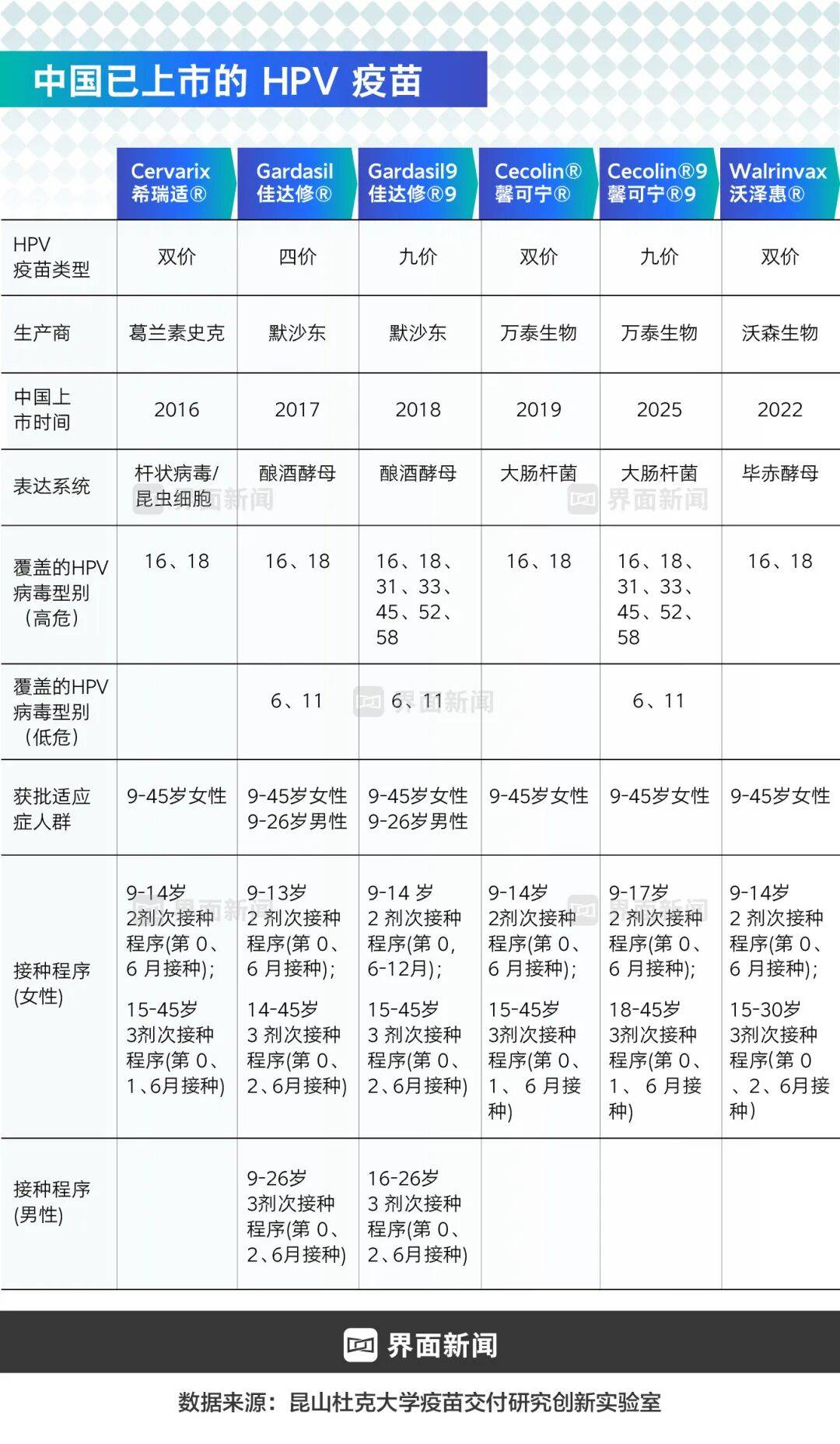
Core Viewpoint - The inclusion of the HPV vaccine in China's national immunization program marks the first expansion in 18 years, aimed at improving women's health and addressing the rising incidence of cervical cancer among younger populations [2][16]. Group 1: HPV Vaccine Overview - The HPV vaccine is now part of the national immunization program, which previously focused mainly on children under six years old [2][16]. - As of now, there are six approved HPV vaccines in China, including both imported and domestic options [4][10]. - The HPV vaccine is recognized as the most effective method for preventing cervical cancer, which is primarily caused by high-risk HPV types [8][9]. Group 2: Demand and Coverage - Despite a surge in demand for HPV vaccines, the coverage rates remain low, with only 10.15% of eligible women receiving the first dose by 2022 [11][12]. - The high cost of vaccines has been a barrier to access, with imported vaccines priced between 580 to 800 RMB per dose [10][14]. - Public awareness and misconceptions about vaccine safety have also contributed to low uptake rates [15][36]. Group 3: Government Initiatives and Support - The Chinese government is committed to promoting HPV vaccination, aligning with the WHO's goal of eliminating cervical cancer by 2030 [16][28]. - Pilot programs in various cities have successfully increased vaccination rates, demonstrating the effectiveness of government-led initiatives [21][25]. - The national immunization program aims to provide equitable access to vaccines, particularly for underserved populations [34]. Group 4: Economic Considerations - The economic evaluation of HPV vaccination is crucial for justifying its inclusion in the national program, focusing on cost-effectiveness and public health benefits [27][28]. - The reduction in newborn numbers has also created budgetary space for expanding the immunization program [31][32]. - The competition among vaccine suppliers has led to significant price reductions, making vaccines more accessible [30]. Group 5: Future Prospects - The integration of HPV vaccines into the national immunization program is expected to significantly increase vaccination rates, similar to past experiences with other vaccines [37]. - Domestic manufacturers are ramping up production capacity, ensuring a stable supply of vaccines [37]. - Ongoing research and development in HPV vaccines, including the introduction of a nine-valent vaccine, indicate a positive trend in cervical cancer prevention efforts in China [37].
HPV疫苗二十年终破局
Hu Xiu· 2025-09-13 08:46
Core Points - The National Immunization Program in China is expanding for the first time in 18 years to include the HPV vaccine, aimed at protecting women's health [1][2] - The inclusion of the HPV vaccine is a significant step in public health, as it targets a demographic that has been largely overlooked in previous immunization efforts [3][4] Group 1: HPV Vaccine Overview - The HPV vaccine is now part of the National Immunization Program, which previously focused mainly on children under six years old [3][4] - There are currently six HPV vaccines approved in China, including both imported and domestic options [6][7] - The HPV vaccine is recognized as the most effective method for preventing cervical cancer, which is primarily caused by high-risk HPV types [4][11] Group 2: Demand and Accessibility - Despite high demand for the HPV vaccine, the penetration rate remains low, with only 10.15% of women aged 9-45 having received the first dose by 2022 [17][18] - The cost of the HPV vaccine has been a barrier, with prices for imported vaccines ranging from 580 to 800 RMB per dose [15][22] - Public awareness and education about the HPV vaccine are critical for increasing vaccination rates, as misinformation has led to hesitancy among potential recipients [24][56] Group 3: Government Initiatives and Support - The Chinese government is committed to promoting the HPV vaccine, aligning with the World Health Organization's goals for cervical cancer prevention [26][27] - The inclusion of the HPV vaccine in the National Immunization Program is expected to enhance accessibility and affordability, benefiting a broader population [28][55] - Local pilot programs have shown success in increasing vaccination rates, with some regions achieving over 90% coverage among eligible girls [36][58] Group 4: Future Prospects - The introduction of the HPV vaccine into the National Immunization Program is anticipated to significantly boost vaccination rates, similar to past experiences with other vaccines [58][59] - Domestic manufacturers are ramping up production capacity, with the potential to supply millions of doses annually [61] - Ongoing research and development in the HPV vaccine space, including the introduction of a nine-valent vaccine, indicate a positive trend towards improved public health outcomes [63]
商业头条No.91 | HPV疫苗二十年终破局
Xin Lang Cai Jing· 2025-09-13 05:04
Core Insights - The Chinese government has expanded its National Immunization Program for the first time in 18 years to include the HPV vaccine, aimed at protecting women's health [1][14][28] - The inclusion of the HPV vaccine is a response to the rising incidence of cervical cancer in China, with 150,700 new cases reported in 2022, indicating a trend towards younger patients [2][8] - The HPV vaccine is recognized as the most effective preventive measure against cervical cancer, which is primarily caused by high-risk HPV types [2][6] Vaccine Availability and Market Dynamics - Currently, six types of HPV vaccines are approved in China, including both imported and domestic options [4][5] - The demand for HPV vaccines has surged, but the penetration rate remains low, with only 10.15% of eligible women receiving the first dose in 2022 [8][10] - The price of imported HPV vaccines has been a barrier, with costs for a complete vaccination series reaching around 4,000 yuan, while domestic vaccines are priced lower [11][10] Public Awareness and Education - Public awareness and education about HPV and the vaccine are critical, as misinformation has led some women to avoid vaccination [12][13] - The government plans to enhance public education efforts to counteract vaccine hesitancy and misinformation [28][29] Implementation and Future Prospects - The inclusion of the HPV vaccine in the National Immunization Program is expected to significantly increase vaccination rates, similar to past experiences with other vaccines [30][31] - The government aims to achieve a high coverage rate by optimizing vaccination processes and encouraging local initiatives [28][21] - The introduction of domestic nine-valent HPV vaccines is anticipated to further improve access and affordability for the population [32]



中新健康丨HPV疫苗市场争夺白热化,政策调整对企业影响几何?
Zhong Guo Xin Wen Wang· 2025-09-12 15:15
Group 1 - The Chinese government will introduce HPV vaccination services for eligible girls and include HPV vaccines in the national immunization program, which is expected to enhance women's health protection [1][3] - The market for HPV vaccines has shifted from a "blue ocean" to a "red ocean," indicating increased competition among vaccine manufacturers [6] - Domestic companies such as Wantai Biological Pharmacy and Watson Bio have received approvals for their HPV vaccines, breaking the previous monopoly held by Merck's Gardasil 9 [3][4] Group 2 - Financial data shows significant revenue declines for major vaccine manufacturers in the first half of 2025, with Watson Bio's revenue down 19.47% and Wantai Biological's down 38.25% [6][7] - The approval of male indications for HPV vaccines by Merck and ongoing clinical trials by domestic companies indicate a growing focus on the male market, which is expected to become highly competitive [9] - The inclusion of the bivalent HPV vaccine in the national immunization program could lead to increased sales through government procurement [8]
