
DeepSeek

Search documents
除了美元和比特币,美国几乎所有领域都在被中国反转
Sou Hu Cai Jing· 2025-09-05 13:57
Group 1: Manufacturing Strength - China's "Made in China 2025" initiative aims to increase the localization rate of core components in high-tech manufacturing to 70% by 2025, up from 40% in 2020 [1] - China is significantly advancing in high-end sectors like electric vehicles and batteries, dominating global exports, while the U.S. manufacturing sector is shrinking due to supply chain disruptions and increased tariffs [3][5] - By 2025, China's electric vehicle market is expected to account for over 50% of the global market, with companies like BYD leading in battery technology [7] Group 2: Technological Advancements - China is leading in advanced materials and automation, with the highest global usage of robots and significant improvements in factory efficiency [5] - China's investment in AI accounts for 25% of the global total, with rapid iteration and application in various fields, including 5G technology [14][18] - Reports indicate that by 2029, China's computing market is projected to grow eight times larger than that of the U.S., marking a significant shift in technological capabilities [10] Group 3: Social and Economic Dynamics - China's social stability and effective governance attract global talent, while the U.S. faces challenges such as rising violence and social unrest, impacting its competitiveness [20][24] - China's economic policies focus on sustainable development and improving living standards, transitioning rapidly from a middle-income to a high-income economy by 2023 [26] - The perception of China's stability and vibrancy is changing among experts, with many acknowledging the effectiveness of China's infrastructure and governance [28] Group 4: Future Outlook - The ongoing advancements in manufacturing, technology, and social stability suggest that China's momentum is unlikely to diminish, while the U.S. is adjusting to these changes [30] - Collaboration between China and the U.S. could yield global benefits, although disparities remain in the financial sector, particularly regarding the dominance of the U.S. dollar [31]

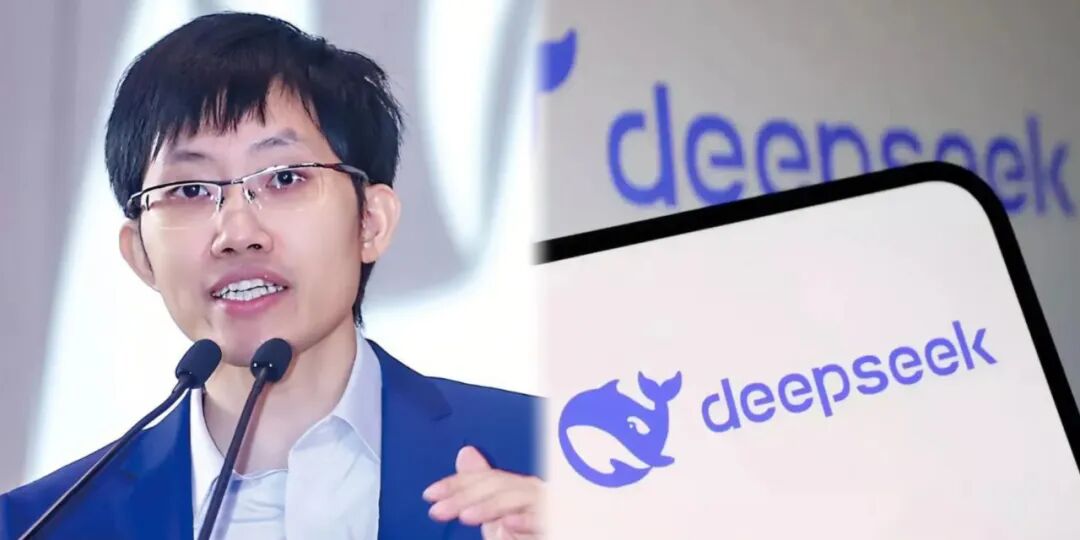
DeepSeek新模型曝光,梁文锋亲自督战,要和OpenAI硬碰硬
3 6 Ke· 2025-09-05 12:48
Core Viewpoint - DeepSeek is developing a new AI model with advanced AI Agent capabilities, aiming to compete directly with OpenAI's offerings, with a planned release in Q4 of this year [2][4]. Group 1: AI Agent Development - The new AI system will learn from past actions and improve itself, capable of completing complex tasks with minimal user input [4][7]. - AI agents are seen as the next significant development in AI, differing from traditional chatbots by having autonomous decision-making and task execution capabilities [7][10]. - The industry is recognizing 2025 as a pivotal year for AI agents, with DeepSeek's entry into this space being a strategic move [10][12]. Group 2: Market Context and Competition - DeepSeek's previous model, R1, was released nearly nine months ago, and the upcoming product is expected to revitalize the company's market presence [4][22]. - The competitive landscape includes major players like Microsoft and Google, as well as domestic giants such as Alibaba and Tencent, all of whom are investing in AI agents [10][19]. - DeepSeek's market share has significantly declined, with a reported 72.2% drop in monthly downloads from 81.1 million to 22.6 million [23][24]. Group 3: Challenges and Expectations - DeepSeek faces challenges such as slow response times, user attrition, and a need for a significant breakthrough to regain market confidence [22][26]. - The company has been criticized for not adequately addressing user needs and for its slow product rollout, leading to skepticism about its future [22][23]. - There is anticipation regarding whether DeepSeek can deliver a "big surprise" that could restore its former success in the AI market [27].

消息称DeepSeek四季度发布新一代模型:聚焦智能体,梁文锋督战
Feng Huang Wang· 2025-09-05 10:36
Group 1 - DeepSeek is developing an advanced AI model with intelligent agent capabilities to compete with US rivals like OpenAI [1] - The new AI model will execute multi-step operations with minimal user input and learn from past actions [1] - DeepSeek's founder, Liang Wenfeng, aims to release the new software in the last quarter of this year [1] Group 2 - DeepSeek's R1 model, released in January, mimics human reasoning at a development cost of only a few million dollars [1] - Since the R1 model, DeepSeek has only made minor upgrades while competitors have launched numerous new models [1] - The trend in the tech industry is towards developing intelligent agent software to simplify personal and work tasks [1][2] Group 3 - The goal of DeepSeek and the industry is to create increasingly autonomous AI systems capable of initiating and completing complex real-world tasks with minimal human intervention [2] - Currently, AI agents still require significant "adult supervision" [2]
突发!Anthropic 禁止“中国控股公司”使用 Claude 等产品
程序员的那些事· 2025-09-05 08:46
Core Viewpoint - Anthropic, the company behind the AI model Claude, has updated its sales restrictions, labeling China as a "hostile country" and prohibiting companies controlled by Chinese entities from using its services regardless of their operational location [4][5]. Group 1 - Anthropic's new policy restricts access to its services for any entity that is more than 50% owned by companies based in regions deemed unsupported, such as China [5]. - This restriction also applies to other countries considered restricted, including Russia, Iran, and North Korea [6]. Group 2 - Dario Amodei, co-founder and CEO of Anthropic, has shown strong hostility and bias against China's AI development, questioning the legitimacy of achievements by Chinese AI companies [8]. - In 2025, Amodei publicly supported the U.S. government's export control framework for AI, advocating for stricter limitations on AI chip exports to China [9].

美国AI独角兽宣称停止服务中国公司,针对DeepSeek?
Guan Cha Zhe Wang· 2025-09-05 08:26
Core Points - Anthropic, a leading AI model developer, announced the immediate cessation of services to "Chinese-controlled companies" due to legal, regulatory, and security risks [1] - The ban extends beyond mainland China to include overseas subsidiaries, cloud service intermediaries, and organizations with Chinese investment backgrounds [1] - The company claims this decision is driven by "U.S. national security" concerns, aiming to prevent adversarial nations from leveraging its models for AI development [1] Company Overview - Anthropic was founded in 2021 by former OpenAI employees and has gained recognition for its Claude 4 series language model, particularly in coding capabilities [3] - The company primarily targets enterprise clients, generating most of its $875 million annual revenue from its Claude Enterprise product [3] - Recently, Anthropic completed a funding round of approximately $13 billion, raising its valuation to $183 billion, making it the fourth most valuable unicorn globally [3] Competitive Landscape - The announcement appears to target Chinese AI companies, particularly DeepSeek, which has emerged as a competitor following its R1 model's debut [3][4] - DeepSeek's advancements have raised concerns in the U.S. about losing its technological dominance in the AI sector, prompting calls for stricter export controls [4] - U.S. government entities, including the Department of Defense and NASA, have already implemented restrictions on using DeepSeek technology in official capacities [4]

US Jobs Report; DeepSeek To Prep New Model | Horizons Middle East & Africa 9/5
Bloomberg Television· 2025-09-05 07:45
JOUMANNA: GOOD MORNING. THIS IS "HORIZONS: MIDDLE EAST AND AFRICA. " FUN AND CURRENCY TRADERS AWAIT TODAY'S U.S. JOBS REPORT WITH INVESTORS ALMOST FULLY PRICING AND A FED RATE CUT THIS MONTH. CHINA'S DEEPSEEK IS WORKING ON THE A MODEL WITH MORE ADVANCED FEATURES TO COMPETE WITH U.S. RIVALS, INCLUDING OPENAI. AND OIL ON EDGE AS TRADERS AWAIT UN-OPEC-PLUS MEETING THAT COULD SEE THE GROUP SIGN OFF ON ANOTHER SUPPLY HIKE. IT HAS JUST GONE 8:00 A.M. ACROSS THE EMIRATES. TRADERS AROUND THE WORLD ARE BRACING FOR T ...

X @Bloomberg
Bloomberg· 2025-09-05 05:29
RT Saritha Rai (@SarithaRai)New!DeepSeek is developing an artificial intelligence model with more advanced AI agent features to compete with US rivals like OpenAI in a newer frontier of the technology - via @business(Gift link: free to read until Sept 12)https://t.co/hUq88bGEnc https://t.co/DTfACBcRSW ...
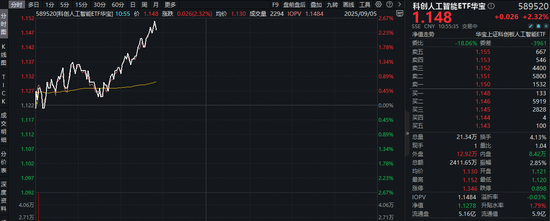
国产AI王者归来!科创人工智能ETF(589520)盘中拉升2.5%!DeepSeek或将发布Al Agent,AI是长期主线?
Xin Lang Ji Jin· 2025-09-05 03:05
Group 1 - The core viewpoint of the news highlights the strong performance of the domestic AI industry, particularly the rise of the Science and Technology Innovation Artificial Intelligence ETF (589520), which saw an intraday increase of over 2.5% [1] - The AI industry is experiencing a series of catalytic events, including the development of an advanced AI model by DeepSeek, which aims to compete with global players like OpenAI, with expectations for a commercial explosion in AI agents by 2025 [3] - Huawei's recent launch of the Mate XTs foldable smartphone, featuring the Kirin 9020 chip, marks a significant return of the Kirin brand after four years, indicating a boost in the domestic supply chain [4] Group 2 - Apple's upcoming product launch on September 9 is anticipated to further stimulate the supply chain, with analysts suggesting that the combination of tariff resolutions and increased AI investments will lead to a valuation recovery for Apple suppliers [5] - The current market trend in the semiconductor sector is seen as a rebound in domestic capabilities, with expectations for significant growth in domestic computing power, particularly in AI applications [5] - The Science and Technology Innovation Artificial Intelligence ETF (589520) is positioned to benefit from policy support and the trend of domestic substitution, focusing on companies that are well-placed in the AI industry chain [6] Group 3 - The ETF's top holdings reflect a high concentration in the semiconductor sector, which accounts for nearly half of the fund's assets, indicating a strong offensive strategy [6][7] - As of July 31, 2025, the top ten holdings of the ETF represent over 67% of the fund's net asset value, showcasing a focused investment approach [9]


传Deepseek将发布AI智能体;字节辟谣切割芯片业务
2 1 Shi Ji Jing Ji Bao Dao· 2025-09-05 02:35
Group 1: Technology Developments - DeepSeek is developing a new AI model with advanced capabilities aimed at competing with OpenAI, targeting a release in Q4 of this year [2] - OpenAI has opened its ChatGPTProjects service to free users, allowing for better organization of conversations into dedicated topic folders [4] - WeRide has launched its Robotaxi GXR for 24-hour unmanned commercial operation in Guangzhou [7] Group 2: Company Valuations and Financials - Xiaohongshu's valuation has surged by $5 billion in three months, reaching $31 billion, reflecting strong market confidence in its business model [5] - Xizhi Technology has completed a C-round financing exceeding 1.5 billion yuan, with Tencent participating as an investor [9] Group 3: Market Performance - Huawei's smartwatch shipments have surpassed Apple's for the first time, marking a significant shift in the global market [6] - The upcoming iPhone 17 Air is expected to start at $1,099, with significant upgrades in storage and memory across the new models [11] Group 4: Product Launches - Huawei has launched the Mate XTs, its second foldable smartphone, starting at 17,999 yuan, featuring significant performance enhancements [10]

特斯拉Optimus 3人形机器人原型亮相;上半年国内消费级AI/AR眼镜市场销量同比增长73%!
Mei Ri Jing Ji Xin Wen· 2025-09-05 01:54
Market Overview - The market experienced a decline on September 4, with the Shanghai Composite Index falling by 1.25% to close at 3765.88 points, particularly impacting technology stocks [1] - The AI ETF, Huaxia (589010), dropped by 6.99%, with a total decline of 14.37% over the past five trading days, indicating a correction after the significant gains in July and August [1] - Major holdings in the AI ETF saw substantial declines, with Lingyun Optics leading at a drop of 14.61%, followed by Cambricon at 14.45%, and other companies like Lanke Technology and Aerospace Hongtu also experiencing declines exceeding 8% [1] - The Robot ETF (562500) fell by 3.80%, with notable declines in holdings such as Yuntian Lifei at 8.13% and Qinchuan Machine Tool at 7.99% [1] - Total trading volume reached 21.33 billion yuan, indicating active market participation, with the Robot ETF seeing a net inflow of 8.56 billion yuan over the past five trading days [1] Industry Highlights - Marc Benioff, founder of Salesforce, shared a video showcasing a prototype of Tesla's Optimus humanoid robot, which can respond to voice commands and is expected to replace human labor with salaries ranging from $200,000 to $500,000 [2] - CINNO Research reported that the sales of consumer-grade AI/AR glasses in China are projected to reach 262,000 units in the first half of 2025, marking a 73% year-on-year increase, with no-screen AI glasses being the main growth driver at a 463% increase [2] - The forecast for AI/AR glasses shipments in China by 2025 is 900,000 units, representing a 133% year-on-year growth, with the industry expected to surpass 100 billion yuan in three years [2] Institutional Insights - According to Cinda Securities, humanoid robot technology is rapidly evolving, moving from diverse solutions to more centralized approaches, with significant advancements expected in the capabilities of the third-generation robot, Optimus 3 [4] - The anticipated capabilities of Optimus 3 include performing complex household tasks, which could set a global benchmark for humanoid robots [4] ETF Information - The Robot ETF (562500) is noted for being the only ETF in the market with a scale exceeding 10 billion yuan, offering the best liquidity and comprehensive coverage of the Chinese robotics industry [5] - The Huaxia AI ETF (589010) is characterized by its 20% price fluctuation limit and flexibility in small and mid-cap stocks, aiming to capture pivotal moments in the AI industry [5]
