
大疆

Search documents
感受科技带来的生活品质提升
Xi An Ri Bao· 2025-09-22 02:53
Group 1 - The event "Smart Connection for a Brilliant Future" in Xi'an showcases electronic consumer products, automotive exhibitions, and cultural tourism, aiming to enhance consumer experience and promote local industries [1][2] - The electronic consumer products section features 25 brands including Huawei, Xiaomi, and DJI, presenting a wide range of products from smartphones to smart home devices, highlighting the integration of technology in daily life [1][2] - The automotive section includes 28 car manufacturers, offering various types of vehicles and exclusive promotions such as cash discounts and subsidies, enhancing consumer purchasing power [2] Group 2 - The event serves as a platform for companies to display their latest products and technologies, fostering interaction between industries and consumers, and promoting a vibrant consumption atmosphere in the city [2][3] - Since the beginning of the year, the city's old-for-new consumption program has provided subsidies totaling 4.749 billion, benefiting over 5.723 million consumers and driving consumption worth 46.654 billion [2] - The city’s business bureau plans to continue innovating consumption scenarios and enriching consumption formats to stimulate consumer potential and enhance the city's attractiveness [3]
命运与共好伙伴 | 传承中瑞建交精神 开创合作共赢的未来
人民网-国际频道 原创稿· 2025-09-22 01:29
Group 1 - The core viewpoint emphasizes the historical and ongoing cooperation between China and Sweden, highlighting the significance of trade and cultural exchange over the past 75 years [1][2][3] - Sweden has over 600 companies actively operating in the Chinese market, with nearly 10,000 Swedish enterprises engaged in trade with China, showcasing the depth of economic ties [1][2] - The establishment of a green transition investment working group signifies a new momentum for future cooperation between the two countries [2] Group 2 - Recent years have seen China and Sweden become each other's largest trading partners in Asia and Northern Europe, with bilateral trade maintaining stable growth [2] - Investment from China to Sweden has increased by approximately 70% since 2024, indicating a robust investment relationship [2] - Cultural exchanges, including events and activities in both countries, have fostered mutual understanding and appreciation, enhancing people-to-people connections [3]
无人机跨越山海 借“东风”全球起航|聚焦东博会
Zheng Quan Shi Bao· 2025-09-22 00:45
Core Insights - Chinese drones are becoming a prominent representation of the country's technological strength at the 22nd China-ASEAN Expo, showcasing their versatility in various applications from firefighting to logistics and agriculture [1][3][7] Industry Overview - Southeast Asian countries are particularly interested in drones for agricultural applications, with a focus on large-scale fertilization and pesticide spraying due to their developed agricultural sectors [3][5] - DJI's agricultural drones are primarily exported to regions like the Middle East and Africa, with increasing interest from Southeast Asia [3][7] Technological Advancements - Hydrogen-powered drones are gaining attention at the expo, with companies like Xieqihydrogen showcasing their innovations in fuel cell technology, which offers longer endurance compared to lithium battery drones [5][6] - The demand for hydrogen drones is emerging, particularly for agricultural uses, although export restrictions currently limit full drone exports [5][6] Market Dynamics - China is the world's largest exporter of civilian drones, holding approximately 70% of global patent applications in the drone sector, indicating its dominance in technology and production [7][8] - The export volume of Chinese drones reached 2.2854 million units in the first seven months of 2025, marking a 65.6% year-on-year increase, with export value rising by 34.7% to $1.527 billion [7][8] Future Projections - The low-altitude economy in China is projected to reach a market size of 1.5 trillion yuan by 2025 and 3.5 trillion yuan by 2035, driven by strong market demand and technological capabilities [8]
无人机跨越山海 借“东风”全球起航|聚焦东博会
证券时报· 2025-09-22 00:19
Core Viewpoint - The article highlights the growing prominence of Chinese drones at the 22nd China-ASEAN Expo, showcasing their technological strength and expanding international market presence, particularly in Southeast Asia [1][7]. Group 1: Agricultural Drones - Southeast Asian countries show significant demand for drones in agricultural applications, particularly for large-scale fertilization and pesticide spraying [3]. - DJI's agricultural drones, such as the T100 and T70 series, are designed to meet these specific needs and have already been exported to regions like the Middle East and Africa [3]. - The core competitive advantage of DJI's agricultural drones lies in their after-sales service, ensuring quick response times for repairs and maintenance [3]. Group 2: Hydrogen-Powered Drones - Hydrogen-powered drones are gaining attention at the expo, with companies like Xieqihydrogen showcasing their innovations in hydrogen fuel cell technology [5]. - These drones are suitable for various applications, including photovoltaic cleaning, logistics, and inspection, and offer significantly longer endurance compared to lithium battery drones [5]. - There is interest from Southeast Asian countries in establishing assembly plants for hydrogen drones, indicating a potential for local production and market expansion [5]. Group 3: Market Growth and Industry Leadership - China has established itself as the world's largest exporter of civilian drones, accounting for approximately 70% of global patent applications in the drone sector [7]. - In the first seven months of 2025, China exported 2.2854 million drones, marking a 65.6% increase year-on-year, with export value reaching $1.527 billion, a 34.7% increase [7]. - The low-altitude economy in China is projected to reach a market size of 1.5 trillion yuan by 2025 and 3.5 trillion yuan by 2035, driven by strong market demand and technological capabilities [8].

“打卡”智能产品,分享购物体验,“科技购”成外国人来华消费新趋势
Huan Qiu Shi Bao· 2025-09-21 22:47
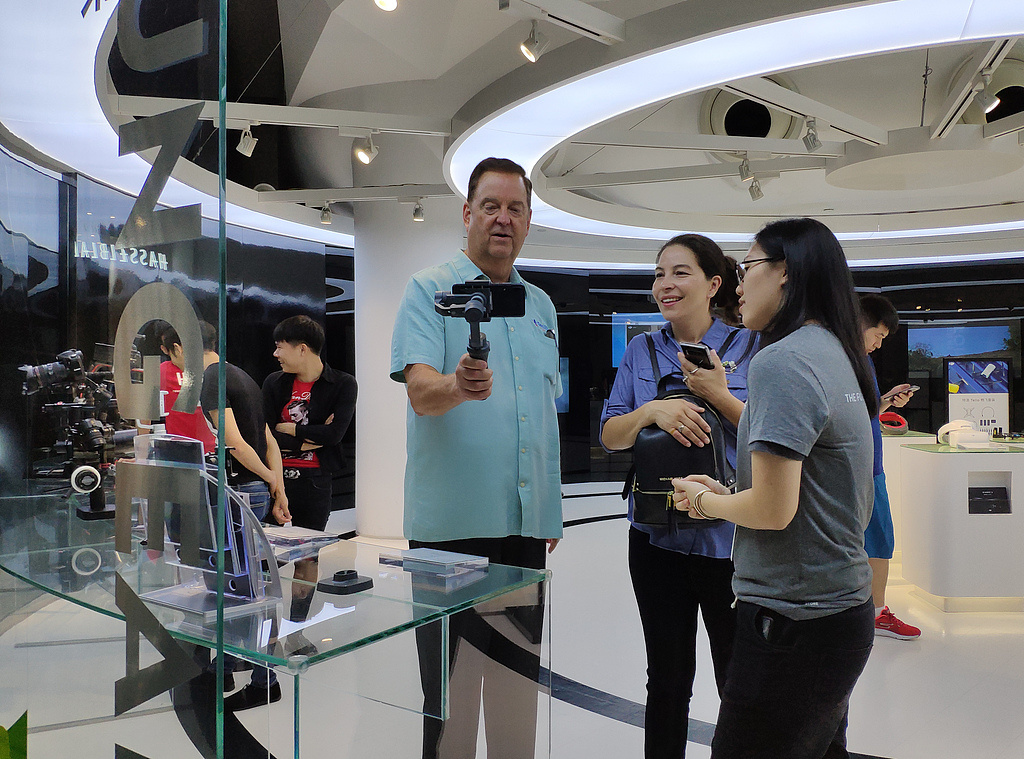
Core Insights - The global consumer electronics market is projected to exceed $1 trillion by 2025, with China playing a crucial role in this growth [1] - Foreign tourists, particularly younger individuals, are increasingly visiting China not just for cultural experiences but to purchase innovative Chinese electronic products [1] Group 1: Consumer Behavior - Tourists are actively seeking out Chinese tech products, with experiences like visiting tech stores becoming essential parts of their travel itineraries [3] - Many foreign consumers are well-informed and have specific products in mind when shopping in China, often looking for high-quality and unique items that may not be available in their home countries [6] - The trend of purchasing Chinese tech products is driven by the perception of superior quality and value compared to similar products in their home markets [6][9] Group 2: Product Popularity - Action cameras and drones are among the most sought-after products by foreign consumers visiting China [4] - The demand for Chinese tech products is not limited to local brands; foreign brands are also found to be cheaper in China compared to their prices in developed countries [6][8] Group 3: Market Trends - The shift in foreign consumer behavior indicates a move from seeking low-cost items to prioritizing high-tech, customized, and innovative products [9][10] - The increasing influence of Chinese tech products on international social media platforms highlights their growing global appeal [6][7] Group 4: Shopping Experience - The introduction of tax refund services and improved shopping infrastructure enhances the overall experience for foreign consumers in China [10] - Recommendations for improving services for international customers include enhancing international payment systems and creating immersive product experiences [10]
无人机跨越山海 借“东风”全球起航
Zheng Quan Shi Bao· 2025-09-21 17:41
Group 1 - Chinese drones are becoming a prominent representation of China's technological strength at the 22nd China-ASEAN Expo, showcasing their versatility in various fields such as firefighting, cross-border logistics, agriculture, and urban transportation [1][4] - DJI's agricultural drones are particularly popular among Southeast Asian exhibitors, with significant interest in using drones for large-scale agricultural applications like fertilization and pesticide spraying [2][4] - The agricultural drones from DJI are primarily exported to regions like the Middle East and Africa, with growing exports to Southeast Asia [2][4] Group 2 - Hydrogen-powered drones are gaining attention at the expo, with companies like Xieqihydrogen showcasing their innovations in hydrogen fuel cell technology for drones [3] - Hydrogen drones are more expensive than lithium battery drones but offer significantly longer endurance, making them suitable for applications in high-altitude and cold environments [3] - There is a growing interest from Southeast Asian countries in hydrogen drones for agricultural purposes, although export restrictions currently limit the export of complete drones [3] Group 3 - China has established itself as the world's largest exporter of civilian drones, holding approximately 70% of global patent applications in the drone sector [4][5] - The export volume of Chinese drones reached 2.2854 million units in the first seven months of 2025, marking a year-on-year increase of 65.6%, with an export value of $1.527 billion, up 34.7% [4] - The low-altitude economy in China is projected to reach a market size of 1.5 trillion yuan by 2025 and 3.5 trillion yuan by 2035, indicating significant growth potential [4][5]
“数”联山海 “智”造未来
Xin Hua She· 2025-09-21 02:34
Group 1 - The 22nd China-ASEAN Expo and Business and Investment Summit opened in Nanning, Guangxi, showcasing over 3,200 enterprises from 60 countries and covering a total exhibition area of 160,000 square meters, highlighting new achievements in China-ASEAN cooperation [1] - The event featured the first-ever 10,000 square meter artificial intelligence pavilion, with participation from over 100 leading domestic companies and startups, making it a "super stage" for digital cooperation between China and ASEAN [2] - A series of AI applications were demonstrated, including a bomb disposal robot and a coffee-making robot, showcasing the potential of digital economy innovations [3] Group 2 - The establishment of the China-ASEAN AI Ministerial Roundtable and the China-ASEAN Business Council AI Professional Committee aims to provide a mechanism for AI cooperation, with discussions on smart cities, manufacturing, and agriculture [4] - The China-Vietnam Friendship Port is highlighted as China's first cross-border smart port, utilizing satellite navigation and AI technologies to enhance customs efficiency [5] - The digital infrastructure connectivity is emphasized, with plans for a new international communication hub in Nanning to facilitate data transmission to ASEAN countries, significantly reducing transmission delays [6] Group 3 - The China-ASEAN Free Trade Area 3.0 upgrade is expected to be signed this year, promoting a more inclusive and modern trade agreement that enhances AI cooperation potential [8] - The China-ASEAN AI Innovation Cooperation Center has signed 51 domestic AI projects and 16 projects with ASEAN enterprises, covering multiple AI fields [8] - The center aims to develop AI models tailored for ASEAN countries, transforming AI technology into a driving force for regional economic growth [9]
VLA搞到现在,可能还是情绪价值的内容偏多一些......
自动驾驶之心· 2025-09-20 16:03
Core Insights - The article discusses the current state of end-to-end (E2E) technology in both academia and industry, highlighting the differences in approach and data availability between the two sectors [1][4][5] - It emphasizes the importance of data iteration speed in the AI model development process, suggesting that a slow data iteration can hinder technological advancements [2][4] - The article also explores the role of reinforcement learning in enhancing Vision-Language Models (VLA), particularly in scenarios where there are no definitive correct answers [6][7][9][10] Summary by Sections End-to-End Technology - The academic field is experiencing a proliferation of end-to-end methodologies, with various approaches emerging [1] - In contrast, the industrial sector is more pragmatic, facing computational limitations that exclude some popular models, but benefiting from vast amounts of data [4] - The success of models like ChatGPT is attributed to the internet's ability to provide extensive data, which is also true for the automotive industry where companies can easily gather massive driving data [4] Data and Technology Iteration - The article stresses that as technology evolves rapidly, the iteration of datasets must keep pace; otherwise, it will impede technological progress [2] - Research teams are increasingly publishing datasets alongside their papers to maintain high-impact outputs [3] Reinforcement Learning and VLA - Reinforcement learning is suitable for problems where there are no correct answers, only characteristics of correct and incorrect answers [7] - The training process in reinforcement learning allows for the identification of optimal solutions based on reward systems, thus reducing the need for extensive demonstration data [9] - The article notes that while short-term results of VLA applications may be uncertain, the long-term potential is widely recognized [10][11] Future of VLA - The article suggests that the importance of algorithms in VLA models extends beyond mere performance metrics; factors such as data availability and training strategies are crucial [12] - The community is encouraged to engage in discussions about the development and challenges of autonomous driving technologies [5][13][16]
“美国人发明的,咋又成了中国主场?这就是当下全球经济态势…”
Guan Cha Zhe Wang· 2025-09-20 15:08
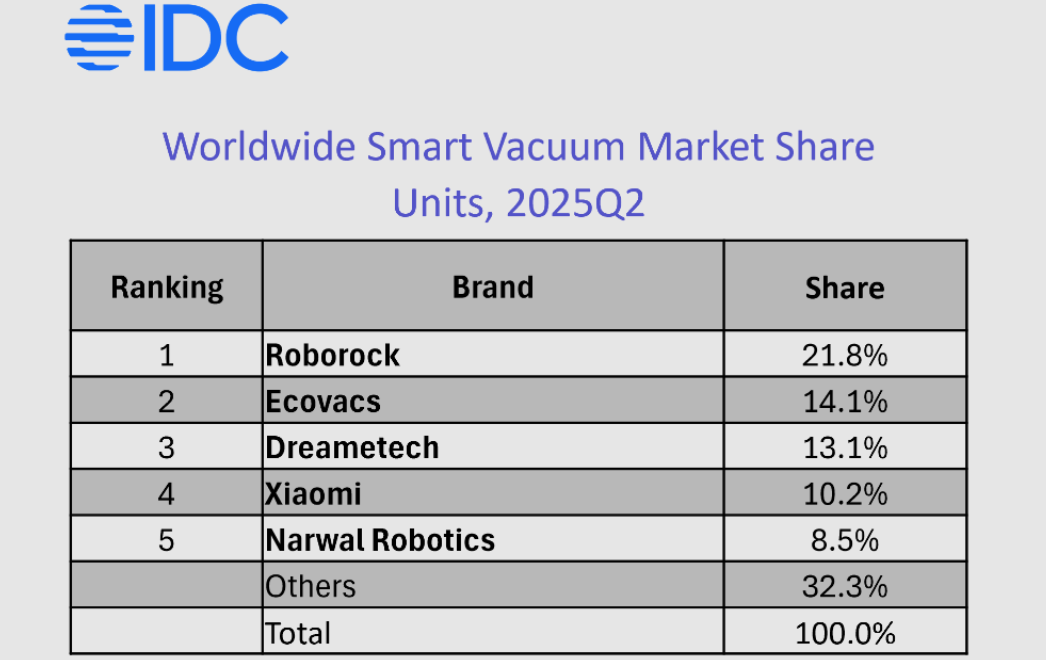
Core Viewpoint - The article highlights the shift in the global market for robotic vacuum cleaners, where Chinese companies have overtaken American firms, particularly iRobot, which was once a pioneer in this field. By the second quarter of 2025, the top five manufacturers will all be Chinese, collectively holding nearly 70% of the market share [1][4]. Market Share and Rankings - According to IDC, the top five robotic vacuum brands in 2025 will be Roborock (21.8%), Ecovacs (14.1%), Dreametech (13.1%), Xiaomi (10.2%), and Narwal Robotics (8.5%), with others making up 32.3% of the market [2]. - Roborock leads in several overseas markets, including Turkey, where its market share exceeds 50%. The company has seen a 65.3% year-on-year increase in North America, covering over 700 cities [3][4]. - Ecovacs has experienced a 35.9% year-on-year growth, focusing on a diverse product matrix and high-end markets, achieving a 14.1% international market share [3][4]. - Dreametech has captured the top position in Europe with a 25.5% market share, also showing strong growth in the Middle East, Africa, and North America [3][4]. - Xiaomi maintains a stable market share in the mid-range segment, leveraging brand recognition and cost-effectiveness in emerging markets [3][4]. - Yunji Smart has entered the top five globally with an 8.5% market share, focusing on low-penetration regional markets and differentiated strategies [4]. Growth and Innovation - The global robotic vacuum market has seen a 33% year-on-year increase in shipments, reaching 15.35 million units in the first half of the year [4]. - Chinese brands are not solely relying on price advantages; they are investing heavily in marketing and R&D. For instance, Ecovacs' R&D expenditure rose from 549 million yuan in 2021 to 1.34 billion yuan in the first three quarters of 2024 [5]. - The rapid product development cycle among Chinese manufacturers is evident, with new products being launched as frequently as every quarter [7]. Market Potential and Competition - Currently, only about 5% of households in China own a robotic vacuum, compared to approximately 15% in the U.S., indicating significant growth potential in the market [7]. - The entry of new players, including DJI and Midea, highlights the competitive landscape, with the market still considered a blue ocean despite the pressure on existing companies [7]. - The U.S. market remains the most profitable globally, prompting Chinese brands to focus on expanding their presence there, with channel expansion and operations being critical for success [7].



攻守有度,增量可期:如何看待影石与大疆的互相跨界?
Changjiang Securities· 2025-09-20 12:25
Investment Rating - The report maintains a "Buy" rating for the company YingShi Innovation [12] Core Viewpoints - The report emphasizes the importance of cross-industry collaboration between YingShi and DJI, highlighting the shared technological foundations and the pursuit of incremental growth opportunities [4][10] - Both companies are expected to capture additional market share in the handheld smart imaging and drone sectors, with new product lines and software subscriptions likely to contribute to revenue growth [10] Summary by Sections Cross-Industry Exploration - The launch of DJI's OSMO 360 panoramic camera and YingShi's Antigravity A1 8K panoramic drone marks a significant cross-industry move, driven by the commonality in core technologies such as image processing and stabilization algorithms [7][21] - YingShi is projected to hold an 82% share of the global consumer panoramic camera market by 2024, while DJI has a 76% share of the global drone market as of 2023 [7][28] Differentiation and Competitive Strategy - YingShi focuses on leveraging its algorithm capabilities and user demand insights for differentiated competition, while DJI capitalizes on its established hardware and supply chain advantages to maintain cost leadership [8][37] - The report notes that YingShi's Ace Pro 2, equipped with AI dual chips, leads in night scene shooting and noise reduction, contributing to a significant revenue increase in 2024 [43][50] Growth Potential - The report outlines optimistic growth scenarios for both companies, with projections for the global handheld smart imaging device market reaching 88.5 million units by 2027 and the global consumer drone market potentially reaching $13.7 billion by 2030 [9][10] - YingShi's revenue from handheld smart imaging devices could reach between 22.9 billion to 53.1 billion yuan depending on market conditions, while its drone revenue could range from 7.7 billion to 19.2 billion yuan [9][10] Investment Recommendations - The report concludes that the cross-industry strategies of both companies are likely to yield significant growth, with ample opportunities to capture market share from competitors [10][26]