小鹏汇天

Search documents
AI技术爆发 汽车业迎智能化革命
Zhong Guo Qi Che Bao Wang· 2025-12-16 02:25
Core Insights - The automotive industry is entering an era of universal intelligent driving by 2025, with AI technology deeply integrated into smart cockpits and autonomous driving, marking a significant transformation in the sector [2][3] Group 1: Intelligent Driving and AI Integration - "Intelligent driving equity" has emerged as a key theme, with traditional automakers and new players racing to adopt advanced driving systems, leading to the prediction of 2025 as the "year of universal intelligent driving" [3] - BYD has launched its self-developed "Tianshen Eye" advanced driving system, enhancing the driving experience across its entire model range and supporting sales growth [3] - The overall cost of intelligent driving has significantly decreased due to technological advancements, enabling systems to be integrated into vehicles priced around 100,000 yuan or lower [3][6] Group 2: VLA Model and Its Advantages - The introduction of VLA (Visual Language Action) models by various automakers signifies a trend in intelligent driving, addressing the unpredictability of traditional end-to-end models [4][5] - VLA models enhance the ability to handle complex scenarios and provide interpretability in decision-making, mimicking human driving logic [5] - Companies like Li Auto have upgraded their systems to VLA architecture, improving spatial understanding and communication capabilities [5] Group 3: Robotaxi Commercialization - The commercial application of L4-level autonomous taxis (Robotaxi) is accelerating, with cities like Shanghai seeing the deployment of driverless vehicles [7] - The Robotaxi market in China is projected to grow from $54 million in 2025 to $47 billion by 2035, with over 50,000 Robotaxis expected to operate in more than 10 cities by 2030 [8] - Companies like Xiaoma Zhixing and Wenyan Zhixing reported significant revenue growth in their Robotaxi businesses, indicating a rapid commercialization trend [9][10] Group 4: Emerging Technologies and Opportunities - The automotive industry is also focusing on embodied intelligence, flying cars, and humanoid robots as new opportunities for growth by 2025 [11][12] - The development of flying cars is seen as a transformative innovation in transportation, with companies targeting 2026 for mass production [12] - The integration of industrial internet technologies in automotive manufacturing is redefining production processes and driving the shift towards intelligent manufacturing [12][13]


AI技术爆发,汽车业迎智能化革命
Zhong Guo Qi Che Bao Wang· 2025-12-16 01:41
Core Insights - The automotive industry is entering an era of universal intelligent driving by 2025, with AI technology deeply integrated into smart cockpits and autonomous driving, marking a significant transformation in the industry [2][3] - "Intelligent driving equity" has emerged as a key theme, with traditional automakers and new players racing to adopt advanced driving systems, indicating a shift towards a more accessible intelligent driving experience for consumers [3][4] Industry Trends - The introduction of advanced driving systems like BYD's "Tian Shen Zhi Yan" and XPeng's XNGP system is enhancing the driving experience and supporting sales growth [3] - The overall cost of intelligent driving technology is decreasing, enabling its adoption in more affordable vehicles, thus broadening consumer access [3][4] - The VLA (Visual Language Action) model is becoming a highlight in automotive intelligence, offering better handling of complex scenarios and improving the interpretability of driving decisions [4][5] Market Dynamics - The Robotaxi market is accelerating, with companies like Pony.ai and Baidu obtaining operational licenses in major cities, indicating a rapid commercialization of autonomous taxi services [6][7] - The Chinese Robotaxi market is projected to grow from $54 million in 2025 to $47 billion by 2035, with over 50,000 Robotaxis expected to operate in more than 10 cities by 2030 [7][8] Financial Performance - Companies like Pony.ai and WeRide are reporting significant revenue growth, with Pony.ai's Robotaxi business revenue increasing by 89.5% year-over-year, reflecting the rapid commercialization of autonomous driving [8][9] Technological Innovations - The emergence of embodied intelligence, flying cars, and humanoid robots is becoming a focus for automotive companies, with significant advancements in these areas expected by 2025 [9][10] - The integration of industrial internet technologies is redefining automotive manufacturing, enhancing efficiency and quality while reducing costs [10][11] Policy and Regulation - The Chinese government is actively promoting the development of intelligent connected vehicles through various policies, which are expected to guide the industry's growth and ensure compliance with safety standards [12][13] - Recent policies emphasize the importance of a structured approach to the commercialization of intelligent driving technologies, aiming to prevent over-marketing and ensure reliability [13][14]


瞭望 | “电动中国”越见清晰
Xin Hua She· 2025-12-15 09:26
Group 1: Core Vision of "Electric China" - The core logic of "Electric China" is to reshape the energy foundation with green energy, construct a mobile energy network through transportation electrification, and achieve a societal leap in intelligence through equipment smartization [1][5][11] - The vision is driven by breakthroughs in battery technologies such as solid-state batteries, sodium-ion batteries, and perovskite batteries, which collectively accelerate the realization of the "Electric China" vision [1][15] Group 2: Energy Transition and Historical Context - The transition of energy power has historically influenced the rise and fall of great powers, with coal and oil being pivotal in the first and second industrial revolutions respectively [2] - The current technological revolution and industrial transformation are marked by the competition between the US and China, particularly in artificial intelligence, which is increasingly tied to energy [2][3] Group 3: China's Advantages in Energy and AI - China possesses significant advantages in STEM talent and AI research, with a large pool of graduates and nearly half of the world's AI researchers, which positions it favorably in the AI competition [3] - The low-cost clean energy in China's western regions significantly reduces electricity costs for large data centers, providing a competitive edge in AI development [3] Group 4: Development of New Energy Sources - China has made substantial progress in renewable energy, contributing over half of the global new installed capacity in renewable energy in 2023, with wind and solar power leading the world [6] - The construction of major hydropower projects, such as the Yarlung Tsangpo River downstream hydropower project, is set to enhance China's energy capacity significantly [6] Group 5: Growth of the New Energy Vehicle Industry - The new energy vehicle (NEV) industry in China has transitioned from a follower to a leader, becoming the largest market and technology source globally, with significant growth in production and market share [7][8] - In October 2025, NEV sales reached 1.715 million units, marking a 20% year-on-year increase and surpassing 50% of total new car sales for the first time [8] Group 6: Expansion into Low-Altitude and Maritime Sectors - The "Electric China" vision is expanding into low-altitude air transport, with significant developments in electric vertical take-off and landing (eVTOL) aircraft, indicating a new economic frontier [9] - The maritime sector is also seeing a shift towards electric vessels, with nearly 900 electric ships expected to be operational by 2025, showcasing the feasibility and economic viability of electric technology in shipping [10] Group 7: Intelligent Upgrading of Society - The integration of smart technology across various sectors, including smart cities and smart agriculture, is creating a new operational paradigm that enhances energy efficiency and decision-making [11] - The vision aims to create a fully integrated system where energy flows create value, transportation networks are interconnected, and devices contribute to a smarter society [11] Group 8: Technological Innovation and Policy Support - The realization of the "Electric China" vision requires both institutional innovation and breakthroughs in core technologies, necessitating a multi-faceted approach involving policy guidance, enterprise innovation, and research collaboration [12][15] - The focus on developing solid-state batteries, sodium-ion batteries, and perovskite solar cells is critical for advancing the energy transition and maintaining competitive advantages [15]


“广州低贸会”开幕 院士解码低空经济发展关键点
Guang Zhou Ri Bao· 2025-12-13 02:09
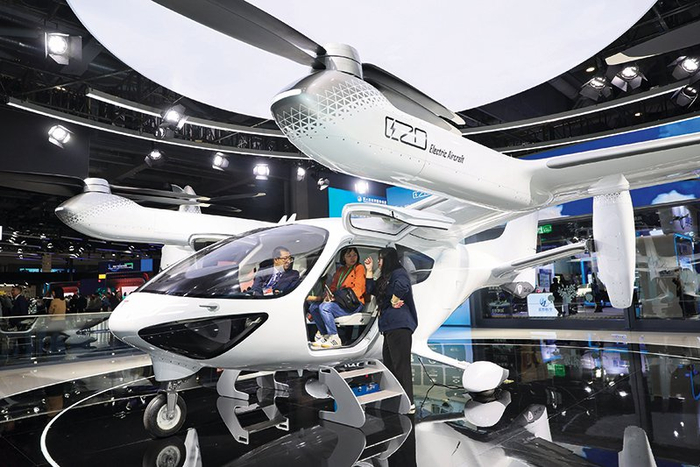
Core Viewpoint - The 2025 International Low Altitude Economic Trade Expo and the 8th Global Unmanned Systems Conference opened in Guangzhou, highlighting the significance of low altitude economy development in China and showcasing Guangdong's leading role in this sector [2][4]. Group 1: Event Overview - The Guangzhou Low Trade Fair is recognized as one of the highest-standard, most comprehensive, and internationally oriented professional exhibitions in the low altitude economy field [2]. - Over 350 enterprises and institutions participated in the expo, with more than 255 local companies from Guangdong, accounting for over 70% of the exhibitors [4]. Group 2: Industry Insights - According to experts, low altitude economy represents a new blue ocean for China's economic development, with over 70 types of traditional aviation models and around 70 eVTOL models currently under research [5]. - There are 19,979 registered drone operating companies in China, with more than 4.06 million registered products [5]. Group 3: Challenges and Opportunities - Key challenges for the low altitude economy include energy challenges related to battery technology, efficiency challenges concerning autonomous intelligence, and airspace opening challenges [5]. - Guangdong is leading in low altitude economic output, number of enterprises, drone production, and export value, supported by a comprehensive industrial chain [5]. Group 4: Technological Innovations - The expo showcased cutting-edge technologies across the entire low altitude economic industry chain, with major companies like EHang, DJI, and XPeng displaying new products [7]. - New products included EHang's EH216-S, the world's first fully certified manned aircraft, and innovative ground-based systems for low altitude operations [7]. Group 5: Security Solutions - A notable feature of the expo was the display of anti-drone products, including portable defense systems and detection devices, indicating a growing market for security solutions in low altitude operations [8].
2025国际低空经济贸易博览会在广州开幕
Zhong Guo Xin Wen Wang· 2025-12-13 01:51
Core Insights - The 2025 International Low Altitude Economy Trade Expo (Guangzhou) has opened, showcasing the entire industrial chain of low altitude economy, attracting over 350 enterprises and institutions [1][2] - Guangdong has emerged as a leader in the low altitude economy, with over 15,000 related enterprises, accounting for more than 30% of the national total, and a projected output value exceeding 180 billion yuan in 2024 [1][2] Group 1 - The expo highlights the collaborative development of the low altitude economy across manufacturing, application, and service sectors, demonstrating China's comprehensive strength in this field [1] - Guangdong's production of consumer drones accounts for 70% of the global market, while industrial drones represent 50% [1] - The province has established 64 general airports, over 1,400 takeoff and landing points, and nearly 700 drone flight routes, showcasing significant infrastructure development [2] Group 2 - Local enterprises and institutions from Guangdong make up over 70% of the exhibitors, covering the entire value chain including eVTOL, drone systems, low altitude intelligence, radar countermeasures, and meteorological services [2] - Innovative products such as the "Low Altitude Route Operation Safety Capability Assessment Testing" and integrated safety hubs were showcased for the first time at the expo [2] - A forthcoming conference will focus on innovative applications and support elements in the low altitude economy, gathering experts and industry representatives to discuss logistics, cross-border flights, and public services [3]
2025国际低空经济贸易博览会在广州举行
Nan Fang Du Shi Bao· 2025-12-13 00:29
Core Insights - The 2025 International Low Altitude Economic Trade Expo and the 8th Global Unmanned Systems Conference will be held in Guangzhou from December 12 to 14, focusing on the entire low-altitude economic industry chain [1] - The event aims to showcase cutting-edge technologies, equipment achievements, and application scenarios to promote collaborative development in the low-altitude industry, highlighting China's comprehensive strength in this field and Guangdong's leading role [1] Industry Overview - The low-altitude economy is becoming a crucial driver for new productive forces and economic growth in Guangdong, with over 15,000 related enterprises in the province, accounting for more than 30% of the national total [3] - Guangdong's low-altitude economic output is projected to exceed 180 billion yuan in 2024, marking its entry into the trillion-yuan scale [3] - The province dominates the drone market, producing 70% of global consumer drones and 50% of industrial drones, showcasing significant market share [3] Infrastructure and Achievements - Guangdong has established 64 general airports, over 1,400 takeoff and landing points, and nearly 700 drone flight routes, along with approximately 66,000 5G-A base stations [3] - The province has expanded application scenarios, including the world's first cross-sea and cross-city eVTOL route and the Greater Bay Area's first ultra-long drone logistics route [3] - The equipment manufacturing industry chain is complete, with EHang's EH216-S being the world's first manned eVTOL with all four necessary certifications, and XPeng's flying car factory currently in trial production in Guangzhou [3] Event Participation and Innovations - The expo features over 350 participating companies and institutions, with more than 255 local enterprises from Guangdong, representing over 70% of the exhibitors [4] - The event showcases a comprehensive view of the low-altitude economy's "manufacturing, application, and service" collaboration, reflecting Guangdong's clustering effect and innovative vitality [4] - Innovative products such as the "Low Altitude Route Operation Safety Capability Assessment Testing" and integrated safety hubs were presented for the first time [4] Future Developments - The Guangdong Low Altitude Economic Company will host a specialized report meeting on "Innovative Application Scenarios and Element Support for Low Altitude Economy" at the upcoming 2025 Guangdong-Hong Kong-Macao Greater Bay Area Low Altitude Economic High-Quality Development Conference [5] - The meeting will gather experts, scholars, and representatives from the industry and financial institutions to discuss application experiences and support paths for logistics, cross-border flights, transportation, public services, production operations, and cultural tourism [5]
2025国际低空经济贸易博览会在穗开幕
Zhong Guo Xin Wen Wang· 2025-12-12 14:01
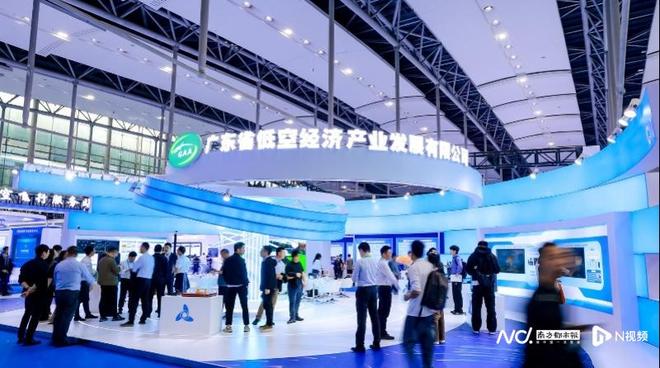
Core Insights - The 2025 International Low Altitude Economic Trade Expo opened in Guangzhou, showcasing the entire industrial chain of low altitude economy, attracting over 350 enterprises and institutions to participate [1][2] Group 1: Industry Overview - Guangdong has become a leading hub for low altitude economic development, with over 15,000 related enterprises, accounting for more than 30% of the national total [1] - The low altitude economic output in Guangdong is projected to exceed 180 billion yuan in 2024, marking the province's entry into the trillion-yuan scale [1] - In the drone sector, Guangdong produces 70% of the world's consumer drones and 50% of industrial drones [1] Group 2: Infrastructure and Achievements - Guangdong has established 64 general airports, over 1,400 takeoff and landing points, and nearly 700 drone flight routes, along with approximately 66,000 5G-A base stations [2] - The province has expanded application scenarios, including the world's first cross-sea and cross-city eVTOL route and the Greater Bay Area's first ultra-long drone logistics route [2] - The equipment manufacturing supply chain is complete, with the EH216-S from EHang being the world's first manned eVTOL with all four certifications, and XPeng's flying car factory has begun trial production in Guangzhou [2] Group 3: Innovations and Future Events - The expo featured innovative products such as a "Low Altitude Route Operation Safety Capability Assessment Testing - Triad Solution" and an integrated safety hub called "Low Altitude Police Pavilion" [2] - A forthcoming conference on high-quality development of low altitude economy in the Guangdong-Hong Kong-Macao Greater Bay Area will focus on innovative application scenarios and supporting elements in logistics, cross-border flight, transportation, public services, production operations, and cultural tourism [4]
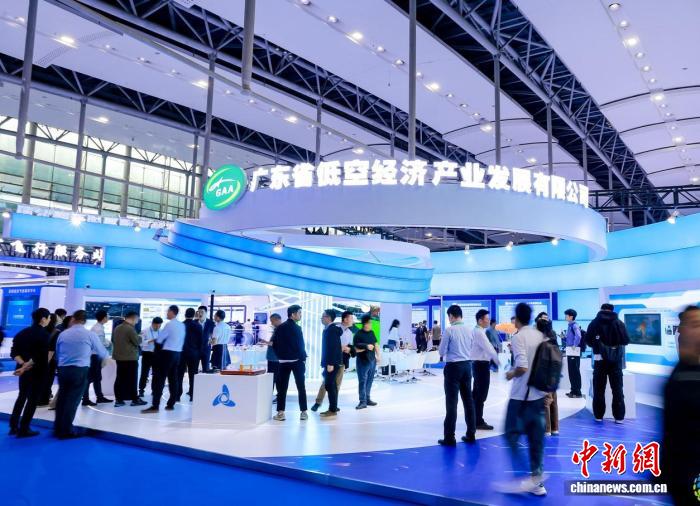
中国新能源汽车加速智能化 竞逐低空智慧交通新赛道
Zhong Guo Xin Wen Wang· 2025-12-12 04:51
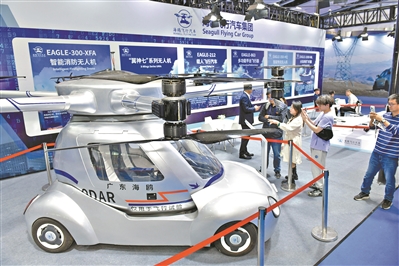
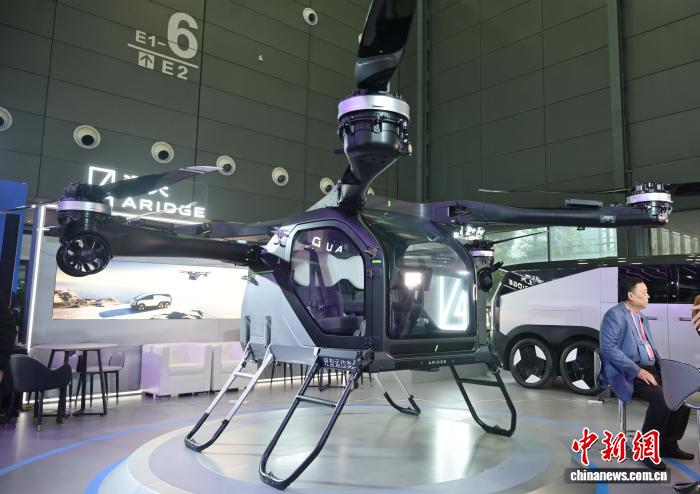
Core Insights - The 21st China (Changsha) International Auto Expo showcases the rapid advancement of intelligent technology in China's new energy vehicle (NEV) sector, with major automakers competing in the low-altitude smart transportation market [1][3] - By October 2025, the penetration rate of NEVs in China is expected to exceed 40%, with L2-level and above intelligent driving functions becoming increasingly common, driven by AI as a core engine for industry transformation [3] - The Chinese NEV industry is undergoing a significant transformation, focusing on electrification, intelligence, connectivity, and sharing, reshaping the global automotive landscape [3][4] Industry Developments - The exhibition highlights the integration of advanced intelligent technologies in NEVs, with features like millimeter-wave radar, laser radar, and intelligent driving assistance systems becoming standard in mid-range models [1] - The demand for smarter and safer NEVs is rising, with 90% of consumers willing to pay extra for advanced intelligent driving services, indicating a shift in consumer preferences [3] - The introduction of solid-state batteries is expected to significantly enhance the range of NEVs, while companies are also exploring low-altitude smart transportation solutions [3] Innovations in Flying Cars - The global debut of the first split-type flying car, "Land Carrier," has garnered attention, with plans for mass production in Guangzhou [4] - Chinese companies are focusing on developing flying cars that can operate in both ground and aerial environments, featuring capabilities such as electric flight, distributed drive, and vertical takeoff and landing [4] - The evolution of NEVs is transforming them from mere transportation tools into "evolving mobile intelligent spaces," leading the industry towards greener, smarter, and more premium offerings [4]

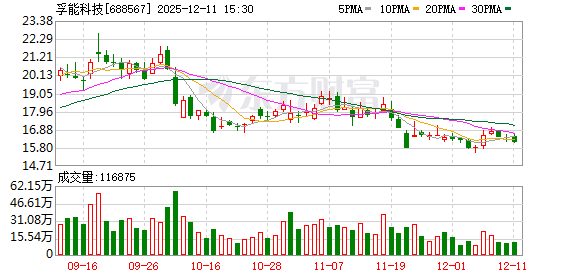
孚能科技:半固态电池方面,公司目前半固态电池出货量已达GWh级别
Zheng Quan Ri Bao· 2025-12-11 13:36
(文章来源:证券日报) 证券日报网讯 12月11日,孚能科技在互动平台回答投资者提问时表示,半固态电池方面,公司目前半 固态电池出货量已达GWh级别,半固态电池出货量占比较高。目前,公司半固态电池已获得三一重 卡、一汽解放、美国头部eVTOL客户、上海时的、小鹏汇天、沃飞长空、零重力等多领域头部客户认 可。全固态电池方面,公司已完成向某头部人形机器人客户送样硫化物全固态电池,目前客户反馈产品 性能与安全表现均达到预期。 ...

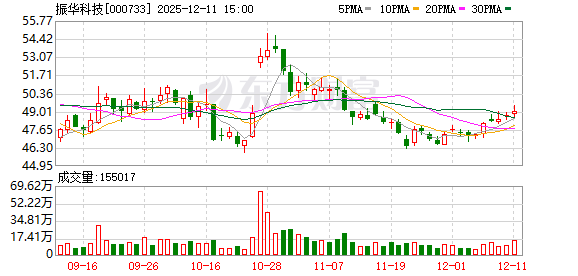
振华科技:子公司贵州振华华联电子有限公司为小鹏汇天提供机电组件类产品
Mei Ri Jing Ji Xin Wen· 2025-12-11 07:39
(文章来源:每日经济新闻) 振华科技(000733.SZ)12月11日在投资者互动平台表示,公司子公司贵州振华华联电子有限公司为小 鹏汇天提供机电组件类产品。 每经AI快讯,有投资者在投资者互动平台提问:请问贵公司与小鹏汇天有哪些具体的合作? ...