腾讯控股

Search documents
港股风向标|科技权重止跌恒指放量反弹 机构看好顺周期涨价机会
Sou Hu Cai Jing· 2026-02-27 14:36
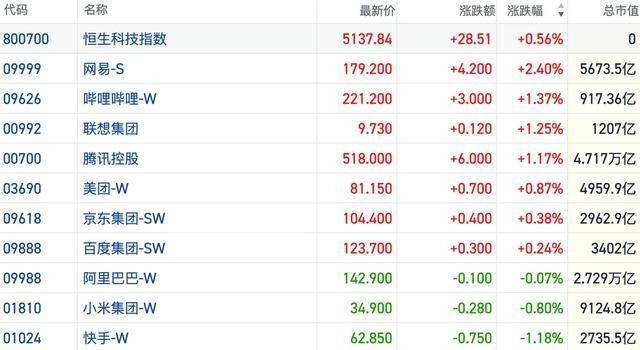
Market Overview - The Hong Kong stock market showed signs of recovery, with the Hang Seng Index rising by 0.95% to close at 26,630 points, while the Hang Seng China Enterprises Index and the Hang Seng Tech Index increased by 0.51% and 0.56% respectively [1][2]. Technology Sector Performance - Major tech stocks led the market rebound, with Tencent's stock price reaching 530 HKD during the day. Other tech companies such as NetEase, Meituan, JD.com, and Baidu also saw positive performance [2][3]. Stock Performance Data - Notable stock performances included: - Tencent Holdings (00700) at 518.00 HKD, up by 6.00 HKD (+1.17%), with a total market capitalization of 4.717 trillion HKD - NetEase (09999) at 179.20 HKD, up by 4.20 HKD (+2.40%), with a market cap of 567.35 billion HKD - Meituan (03690) at 81.15 HKD, up by 0.70 HKD (+0.87%), with a market cap of 495.99 billion HKD [3]. Sector Movements - Other sectors such as banking, real estate, and coal also showed strength, while power, steel, and oil stocks were active [4]. - Conversely, sectors like aviation, consumer electronics, and building materials experienced declines [4]. Market Dynamics - The overall trading volume in the Hong Kong market was 288.42 billion HKD, indicating increased liquidity. Short selling amounted to 36.55 billion HKD, representing 12.67% of the total trading volume, highlighting ongoing market divergence [4]. - The market is experiencing rapid rotation of hot and cold sectors, with cyclical stocks like steel and rare earths gaining strength, while AI-related sectors such as storage and chips faced declines [5][7]. Policy Implications - Recent meetings by the Central Political Bureau emphasized the need for more proactive macro policies to expand domestic demand and optimize supply, which may provide further support for the market [7]. A-Share Market Correlation - The A-share market mirrored the performance of the Hong Kong market, with a total trading volume of approximately 24,880.24 billion HKD, showing a decrease of about 504.22 billion HKD from the previous trading day. Over 3,200 stocks rose, particularly in the cyclical sector [8].

春节 AI 大战烧了 100 多亿元,然后呢?
Xin Lang Cai Jing· 2026-02-27 14:19
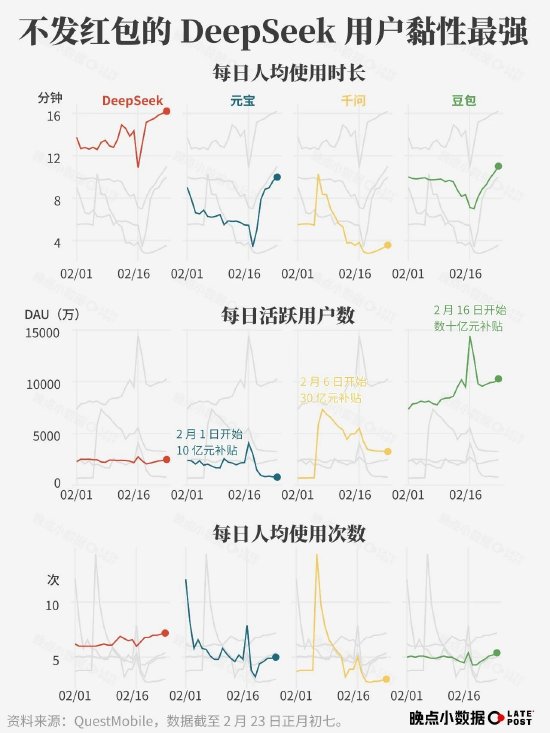
Core Insights - The article discusses the impact of significant cash subsidies by major internet companies on user engagement and retention for AI applications during the Chinese New Year period. Group 1: User Engagement and Subsidies - Major internet companies invested over 100 billion RMB in cash subsidies during the Spring Festival to attract users to their AI applications [10][21]. - At the peak of the subsidies, ByteDance's Doubao had 140 million daily active users (DAU), Alibaba's Qianwen had 73 million, and Tencent's Yuanbao had 40 million [21]. - However, after the subsidies ceased, user engagement dropped sharply, with Yuanbao returning to pre-subsidy levels and Qianwen experiencing a smaller decline due to ongoing but reduced subsidies [10][21]. Group 2: User Retention Challenges - Despite the initial surge in user numbers, the retention of these users is contingent on the product's ability to meet user needs, as evidenced by the lower average usage time of AI applications compared to established platforms like WeChat and Douyin [22][23]. - The average usage time for Doubao, Yuanbao, and Qianwen during the Spring Festival was only around 10 minutes, significantly lower than the 2 hours for WeChat and Douyin [22][23]. Group 3: Competitive Landscape - The competition among AI companies intensified during the Spring Festival, with firms releasing new models and increasing application updates to capture market share [5][22]. - Companies are aware that the spike in daily active users is temporary and are focused on maintaining a competitive edge rather than expecting a permanent transformation from a single promotional event [23].
港交所今年来新受理IPO申请177宗
Zhong Guo Xin Wen Wang· 2026-02-27 13:43
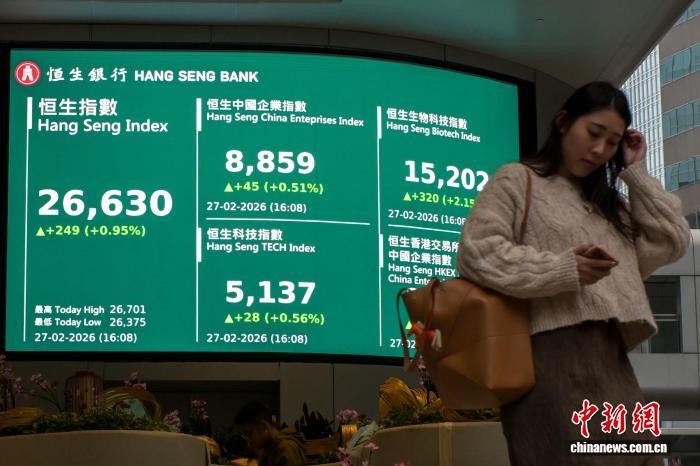
(机遇香港)港交所今年来新受理IPO申请177宗 香港特区政府财经事务及库务局局长许正宇26日表示,当前香港股市持续向好,市场总市值已升至50万 亿港元,新股上市活跃度提升,资金持续流入并带动资产及财富管理行业发展。 广告等商务合作,请点击这里 中新社香港2月27日电 (记者 戴小橦)港股市场2月行情27日正式收官,截至当日收盘,三大指数集体收 涨,恒生指数报26630.54点,上涨249.52点,涨0.95%,恒生科技指数涨0.56%,国企指数涨0.51%。 2月27日,香港恒生指数收市报26630.54点,上涨249.52点,升幅为0.95%,全日成交金额为2884.2亿港 元。 中新社记者 陈永诺 摄 当日,香港交易及结算所有限公司(简称"港交所")公布,截至2月27日,港交所今年以来新增上市公司 24家;2026年以来,港交所新受理首次公开招股(IPO)申请共计177宗。 板块方面,27日市场呈现结构性行情。科网股多数上涨,商汤涨4.92%,网易涨2.4%,腾讯控股涨 1.17%,美团涨0.87%,百度集团涨0.24%。煤炭股走高,中国秦发涨8.09%,中煤能源涨6.82%,兖矿能 源涨4.09%,首 ...

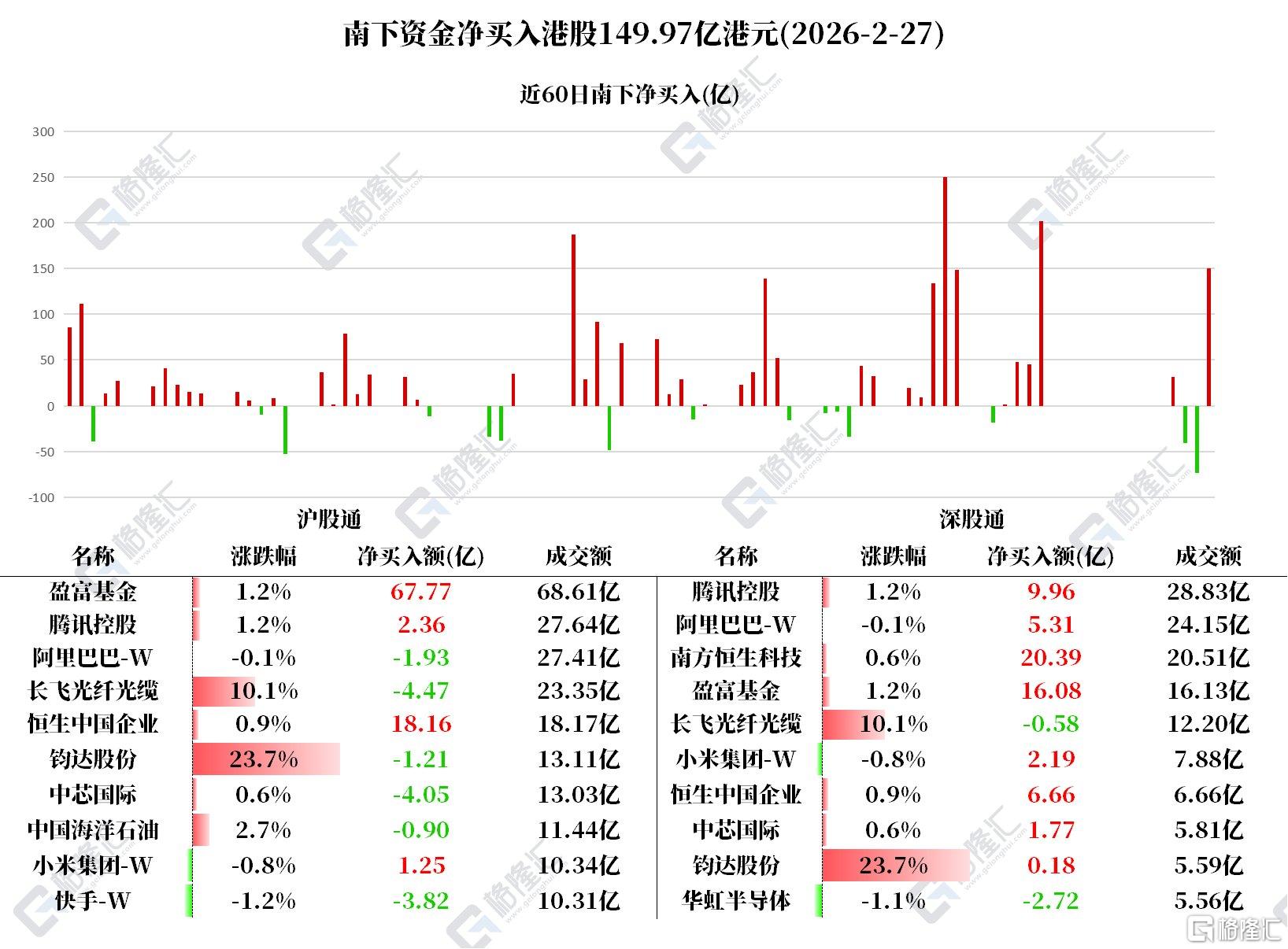
2月27日南向资金追踪:盈富基金、恒生中国企业、南方恒生科技净买入额居前,分别为83.85亿港元、24.82亿港元、20.39亿港元





Jin Rong Jie· 2026-02-27 13:25
恒生指数今日涨0.95%,报26630.54点,大市成交2884.20亿港元。 披露的南向资金成交股中,盈富基金、恒生中国企业、南方恒生科技分别获净买入83.85亿港元、24.82 亿港元、20.39亿港元;长飞光纤光缆、快手-W、华虹半导体分别遭净卖出5.05亿港元、3.82亿港元、 2.72亿港元。 港股通成交数据披露(沪深合计) 证券简称成交金额净买入额收盘价涨跌幅盈富基金 0280084.74亿港元83.85亿港元26.90港元1.20%恒生中国企业 0282824.83亿港元24.82亿港元90.92港元0.87%南方恒生科技 0303320.51亿港元20.39亿港元5.03港元0.60%腾讯控股 0070056.47亿港元12.32亿港元518.00港元1.17%小米集团-W 0181018.21亿港元3.44亿港元34.90港元-0.80%阿里巴巴-W 0998851.56亿港元3.39亿港元142.90港元-0.07%中国海洋石油 0088311.44亿港元-0.90亿港元25.32港元2.68%钧达股份 0286518.70亿港元-1.04亿港元40.20港元23.69%中芯国际 0098 ...
(机遇香港)港交所今年来新受理IPO申请177宗
Zhong Guo Xin Wen Wang· 2026-02-27 13:25
板块方面,27日市场呈现结构性行情。科网股多数上涨,商汤涨4.92%,网易涨2.4%,腾讯控股涨 1.17%,美团涨0.87%,百度集团涨0.24%。煤炭股走高,中国秦发涨8.09%,中煤能源涨6.82%,兖矿能 源涨4.09%,首钢资源涨3.37%。 当日,香港交易及结算所有限公司(简称"港交所")公布,截至2月27日,港交所今年以来新增上市公司 24家;2026年以来,港交所新受理首次公开招股(IPO)申请共计177宗。 香港特区政府财经事务及库务局局长许正宇26日表示,当前香港股市持续向好,市场总市值已升至50万 亿港元,新股上市活跃度提升,资金持续流入并带动资产及财富管理行业发展。 中新社香港2月27日电 (记者戴小橦)港股市场2月行情27日正式收官,截至当日收盘,三大指数集体收 涨,恒生指数报26630.54点,上涨249.52点,涨0.95%,恒生科技指数涨0.56%,国企指数涨0.51%。 2月27日,香港恒生指数收市报26630.54点,上涨249.52点,升幅为0.95%,全日成交金额为2884.2亿港 元。中新社记者陈永诺摄 中国工商银行(亚洲)证券业务部分析员叶泽恒接受中新社记者采访时表 ...
AI应用爆发背后存“同质化”问题 “小而美”智能体或成突围关键
Mei Ri Jing Ji Xin Wen· 2026-02-27 12:52
Core Insights - The AI industry is transitioning from a "technology frenzy" to a "value realization" phase, with a focus on developing specialized intelligent agents to overcome challenges of application homogenization and low ROI [1][4][9] Group 1: Industry Trends - By 2025, China's AI core industry is projected to exceed 900 billion yuan, with over 5,300 companies, making AI applications a crucial driver for digital transformation [2] - The AI application market saw over 23,000 new companies in 2023, with 80% concentrated in common areas like intelligent customer service and voice assistants, leading to a high similarity in product interfaces [2][3] - The market is experiencing a surge in AI shopping, exemplified by Alibaba's 3 billion yuan promotional campaign, which has sparked competition among major players like Tencent and ByteDance [1] Group 2: Challenges in AI Applications - The industry faces three main bottlenecks: application homogenization, difficulties in commercial monetization, and mismatched supply and demand for computing power [2][3][7] - AI applications are struggling with low user engagement, with quality content reaching less than 0.3% of the target audience, resulting in a 65% overall loss rate in the domestic AI application market in 2023 [3][6] - Many AI products rely on similar underlying logic, leading to minimal perceived differences for users, which contributes to the homogenization issue [3][4] Group 3: Financial and Operational Insights - Despite high demand, many AI companies have not achieved substantial financial transformation, with token consumption in industrial AI applications showing significant scale compared to consumer-level products [6] - The average utilization rate of computing power in AI data centers is below 20%, leading to high energy consumption and operational inefficiencies [7] - Companies are currently facing a mismatch between high investment in AI capabilities and low revenue generation, indicating a need for better monetization strategies [7][8] Group 4: Future Directions - Experts suggest a shift from general models to specialized intelligent agents in high-value sectors like healthcare and education to address the challenges of homogenization and improve ROI [7][8] - The future of AI competition will depend on the ability to solve specific problems rather than merely utilizing large models, emphasizing the importance of industry-specific knowledge [9]
资金动向 | 北水连续6日净买入小米,抛售快手、中芯国际
Ge Long Hui A P P· 2026-02-27 12:28
据统计,南下资金已连续6日净买入小米,共计35.6896亿港元。 南下资金今日净买入港股149.97亿港元。 其中:净买入盈富基金83.85亿、恒生中国企业24.82亿、南方恒生科技20.39亿、腾讯控股12.32亿、小米集团-W 3.43亿、阿里巴巴-W 3.38亿;净卖出长飞光 纤光缆5.05亿、快手-W 3.81亿、华虹半导体2.72亿、中芯国际2.28亿、钧达股份1.03亿。 阿里巴巴-W:旗下个人AI助手"千问"正式进军AI硬件领域,今年将面向全球市场推出多款不同形态的AI硬件产品。千问将在西班牙巴塞罗那举行的2026年 世界移动通信大会(MWC)上发布首款同名AI眼镜,并于3月2日开启线上线下全渠道预约。据阿里内部人士透露,除AI眼镜之外,千问还会在年内陆续发布 AI指环、AI耳机等产品,并面向全球市场发售。 快手-W:快手2026春节活动收官,平台数据显示,受"摇发财树"等红包玩法及年味主题活动带动,DAU规模再创历史新高,连续两年春节破峰。 小米集团-W:于2月26日回购283.2万股B股股份,耗资约9999.7万港元。 中芯国际:中邮证券研报指出,中芯国际产业链切换迭代效应持续,25Q4淡季 ...

2025年医疗大模型品牌推荐:海量知识深度整合,智能生成革新医疗范式
Tou Bao Yan Jiu Yuan· 2026-02-27 12:15
2025 年医疗大模型品牌推荐 2025 年医疗大模型品牌推荐 海量知识深度整合,智能生成革新医疗范式 | 一、市场背景 | 2 | | --- | --- | | 1.1 摘要 | 2 | | 1.2 医疗大模型定义 | 2 | | 1.3 市场演变 | 2 | | 二、市场现状 | 3 | | 2.1 市场规模 | 3 | | 2.2 市场供需 | 3 | | 三、市场竞争 | 3 | | 3.1 市场评估维度 | 3 | | 3.2 市场竞争格局 | 4 | | 3.3 十大品牌推荐 | 4 | | 四、发展趋势 | 5 | | 4.1 底层算法与数据质量升级 | 6 | | 4.2 应用形态与部署模式多元化 | 6 | | 4.3 商业模式与生态构建平台化 | 6 | 自 2019 年医疗大模型诞生以来,其发展经历了从通用模型的基础能力迁移,到专业医 疗知识的深度对齐,再到多模态与临床工作流融合的快速演进。早期模型如 BioBERT、ClinicalBERT 通过生物医学语料预训练夯实了基础能力;随后 Med-PaLM、 HuaTuoGPT 等模型通过指令微调与知识增强,在医学问答、报告生成等任务中展 ...
阿里千问进军AI硬件,港股AI应用走强!港股互联网ETF(513770)上探逾1%,基金经理:当前是中长期低点
Xin Lang Cai Jing· 2026-02-27 11:45
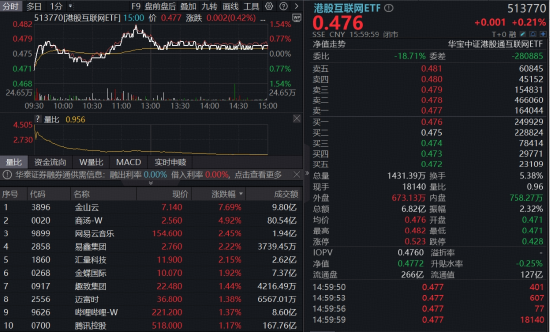
2月27日,港股盘中走强,恒生科技指数一度涨近1.5%,收涨0.56%。互联网龙头多数收涨,AI应用方 向表现领先,金山云一度两位数涨幅,收涨逾7%;哔哩哔哩-W、腾讯控股涨超1%,美团-W跟涨,阿 里巴巴-W一度涨近2%,收盘微跌0.07%。港股AI核心资产——港股互联网ETF(513770)早盘下探回 升,场内价格一度上涨1.47%,收涨0.21%。 | 分时 多日 1分 · | | | | F9 盘前盘后 叠加 九转 面线 工具 6 (7) > | | 港股互联网ETF O | | 513770 | | --- | --- | --- | --- | --- | --- | --- | --- | --- | | | | | 513770[港股互取网ETF] 15:00 价 0.477 涨跌 0.002(0.42%) | | (2) | | | | | 0.48 | | | | | 1.54% | 0.476 | | +0.001 +0.21% | | 0.479 | | | | | D.77799 | SSE CNY 15:59:59 闭市 | | T+0 院 元 四 日 元 | | | | | | ...
50亿红包AI战之后:谁在退场,谁能留下
3 6 Ke· 2026-02-27 11:20
Core Insights - The AI competition during the recent Spring Festival has significantly transformed social interactions, with major companies investing heavily to capture market share and educate users about AI [1][2][3] - The total investment from major players like Tencent, Alibaba, ByteDance, and Baidu exceeded 5 billion yuan, surpassing previous years' spending on similar promotional activities [1][2] Group 1: User Engagement and Market Dynamics - The engagement on social media platforms surged, with over 371 trending topics related to AI models on Weibo, accumulating 12.7 billion views and nearly 26.9 million interactions during the festival [1] - The rapid adoption of AI applications was evident, with significant increases in app downloads and user activity, such as the "Yuanbao" app reaching a peak of 1.2 billion in WeChat index within hours of its launch [3][5] - The competition among major players led to a dramatic increase in daily active users (DAU), with "Doubao" achieving 145 million, "Qianwen" at 73.5 million, and "Yuanbao" at 40.5 million during the festival [11] Group 2: Competitive Strategies and Outcomes - Companies aimed to replicate the success of past mobile payment wars by heavily subsidizing user acquisition, but the challenge remains whether these users will continue to engage post-subsidy [2][21] - "Qianwen" emerged as a dark horse, experiencing a 940% increase in user participation after launching its "Spring Festival Treat Plan," which significantly boosted its DAU [15][16] - "Doubao" maintained its lead due to effective marketing strategies, leveraging its parent company ByteDance's ecosystem for user acquisition and retention [15][16] Group 3: Industry Trends and Future Outlook - The AI industry is witnessing a clear bifurcation, with large companies focusing on user engagement and ecosystem integration, while smaller firms concentrate on technological advancements and B2B services [22][23] - The competition is expected to shift from casual interactions to solving real user needs, as companies like "Qianwen" and "Antifor" integrate AI into practical applications like e-commerce and health services [23][25] - The high operational costs associated with AI applications pose a challenge for sustainability, as the industry grapples with the balance between user growth and profitability [25]