
阿斯利康

Search documents
医药行业周报:关注小核酸药物上游配套产业链-20260119
Huaxin Securities· 2026-01-19 07:03
Investment Rating - The report maintains a "Recommended" investment rating for the pharmaceutical industry as of January 19, 2026 [1] Core Insights - 2025 marked a significant year for Chinese innovative drugs going global, with a total transaction amount of $135.655 billion, including $7 billion in upfront payments and 157 deals, setting historical highs. The trend continues into 2026, with notable licensing agreements from companies like Yilian Biotech and Rongchang Biotech, indicating strong global competitiveness for Chinese innovative drugs [2] - Major companies are increasingly investing in the small nucleic acid field, with significant acquisitions and clinical approvals. For instance, China National Pharmaceutical Group acquired Hangzhou Hejiya Biopharmaceutical for 1.2 billion RMB, while international firms like Novartis and GSK are also advancing in this area [3] - The GLP-1 market is expected to grow despite new pricing systems, with ongoing collaborations and new product launches anticipated in 2026. The market for GLP-1 drugs is projected to remain robust due to the large patient population for weight loss and diabetes [4] - The oral autoimmune drug market is gaining attention, with promising results from Takeda's new TYK2 inhibitor for psoriasis. Other domestic companies are also advancing in this space, exploring new targets for oral small molecules [5] - The brain-computer interface sector is poised for industrialization, with companies like Neuralink set to produce devices in 2026. Domestic advancements and regulatory support are enhancing the potential for this technology in medical applications [6] - The ZAP-X radiation therapy device is expected to capture a significant market share in China, with rapid growth projected in non-invasive tumor radiation treatment, driven by increasing clinical recognition and adoption [8] Summary by Sections Industry Trends - The pharmaceutical sector is witnessing a resurgence in interest towards innovative drugs, with a notable increase in the innovative drug index by 8.97% since early January 2026, outperforming the CSI 300 index by 6.77 percentage points [2] Company Recommendations - Recommended companies include: - **Yuekang Pharmaceutical** and **Sunshine Nuohua** in the small nucleic acid space - **Yahong Pharmaceutical** and **Yifang Biotechnology** in the autoimmune sector - **Zhongsheng Pharmaceutical** in the GLP-1 market - **Baiyang Pharmaceutical** for ZAP-X radiation therapy - **Meihao Medical** for brain-computer interface technology [10] Market Opportunities - The non-invasive tumor radiation treatment market is projected to grow from 27.2 billion RMB in 2018 to 59.4 billion RMB by 2024, with a compound annual growth rate of 13.9% [8]




JPM亮点归纳,年报预告陆续披露,积极把握超预期机会
ZHONGTAI SECURITIES· 2026-01-19 04:40
Investment Rating - The report maintains an "Overweight" rating for the pharmaceutical and biotechnology industry [2]. Core Insights - The report highlights the ongoing performance of the pharmaceutical sector, with a focus on the upcoming annual earnings forecasts and the potential for exceeding expectations. The sector has shown a return of 7.08% since the beginning of 2026, outperforming the CSI 300 index by 4.88% [8][12]. - Key catalysts in the industry include significant partnerships and acquisitions, such as AbbVie’s $6.5 billion upfront payment for RC148 and a $1 billion collaboration between Eli Lilly and NVIDIA to accelerate AI drug development [4][10]. - The report emphasizes the importance of innovative drug chains and the AI+ theme, suggesting that these areas will continue to attract investment and yield positive results [4][5]. Summary by Sections Industry Overview - The pharmaceutical sector's total market capitalization is approximately 74,744.70 billion yuan, with a circulating market value of 68,522.64 billion yuan [2]. - The report notes that the pharmaceutical sector is currently valued at 23.4 times PE based on 2026 earnings forecasts, which is a premium of 13.7% compared to the overall A-share market [15]. Market Dynamics - The report indicates that the pharmaceutical sector has experienced a mixed performance, with medical services up by 3.29% while other segments like medical devices and traditional Chinese medicine have seen declines [8][12]. - The report also mentions that the market is transitioning to a more rational and steady growth phase, moving away from the initial volatility seen at the start of the year [4]. Key Company Performances - Notable companies such as WuXi Biologics, Sangamo Therapeutics, and Tigermed have been highlighted for their strong performance, with WuXi Biologics showing a significant increase of 26.53% in January [24]. - The report suggests continued monitoring of companies involved in AI and small nucleic acid technologies, as they are expected to lead future growth in the sector [5][9]. Investment Recommendations - The report recommends focusing on companies that are well-positioned within the innovative drug chain and AI+ sectors, as these are anticipated to provide substantial returns [4][5]. - Specific stocks recommended include WuXi Biologics, Sangamo Therapeutics, and Tigermed, which have shown promising growth trajectories [24].



跨国药企“必备”肿瘤药中国药企还有机会卖
Jing Ji Guan Cha Wang· 2026-01-16 16:20
Core Viewpoint - The recent exclusive licensing agreement between Rongchang Biologics and AbbVie for the dual-specific antibody drug RC148, targeting PD-1/VEGF, highlights the competitive landscape in the oncology drug market, with significant financial implications for both companies [1][5]. Group 1: Licensing Agreement Details - Rongchang Biologics has entered into an exclusive licensing agreement with AbbVie for RC148, which is currently in Phase II clinical trials [1]. - The deal includes an upfront payment of $650 million and potential milestone payments up to $4.95 billion, along with tiered royalties on net sales, bringing the total potential value of the agreement to $5.5 billion [1]. - Following the announcement, Rongchang Biologics' stock surged, with a 20% increase in A-shares and a 7.87% increase in Hong Kong shares [1]. Group 2: Market Context and Comparisons - The PD-1/VEGF target has seen multiple drugs developed, with over five similar drugs already in the market, leading to skepticism about the market share for later entrants [1][4]. - Other Chinese biotech firms have also engaged in significant licensing deals for PD-1/VEGF drugs, with notable transactions including a $500 million upfront payment from Summit to Kanyos Biologics and a $1.25 billion upfront payment from a partnership involving 3SBio and Pfizer [4]. - Despite being ranked lower in the market, Rongchang Biologics' deal value is comparable to that of Kanyos Biologics, raising questions about the valuation of later-stage products [5]. Group 3: Future Prospects and Trends - There is an expectation for continued licensing transactions in the PD-1/VEGF space, driven by efficacy, different indications, and combination therapies [8]. - Companies with PD-1/VEGF candidates that have not yet been licensed are actively seeking opportunities, with the potential for significant deals depending on product data and market conditions [8]. - Major multinational pharmaceutical companies, including Eli Lilly, Novartis, and AstraZeneca, have not yet announced new PD-1/VEGF acquisitions, indicating potential future market activity [9].
和黄医药(HCM.US)涨逾5% SACHI III期研究结果于《柳叶刀》发表
Zhi Tong Cai Jing· 2026-01-16 15:24
Core Viewpoint - HCM (HCM.US) shares rose over 5% to $16.12 following the publication of SACHI III trial results in The Lancet, highlighting the potential of savolitinib and osimertinib combination therapy for specific lung cancer patients [1] Group 1: Company Overview - HCM announced the results of the SACHI III trial, which focuses on the combination therapy of savolitinib and osimertinib for treating EGFR mutation-positive locally advanced or metastatic non-small cell lung cancer patients who progressed after first-line EGFR TKI treatment [1] - Savolitinib is a potent and highly selective oral MET TKI co-developed by AstraZeneca and HCM, with AstraZeneca responsible for commercialization [1] - Osimertinib is an irreversible third-generation EGFR TKI [1] Group 2: Research and Approval - The SACHI study data supports the approval of the savolitinib and osimertinib combination therapy, which is expected to be granted in China by June 2025 [1]
美股异动 | 和黄医药(HCM.US)涨逾5% SACHI III期研究结果于《柳叶刀》发表
智通财经网· 2026-01-16 15:18
Core Viewpoint - Hutchison China MediTech (HCM.US) shares rose over 5% to $16.12 following the publication of SACHI III trial results in The Lancet, indicating positive developments in cancer treatment [1] Group 1: Company Developments - Hutchison China MediTech announced the results of the SACHI III trial, which studied the combination therapy of savolitinib and osimertinib for treating EGFR mutation-positive locally advanced or metastatic non-small cell lung cancer patients who progressed after first-line EGFR TKI treatment [1] - Savolitinib is a potent and highly selective oral MET TKI co-developed by AstraZeneca and Hutchison China MediTech, with AstraZeneca responsible for commercialization [1] - Osimertinib is an irreversible third-generation EGFR TKI [1] Group 2: Regulatory Approval - Based on the data from the SACHI study, the combination therapy of savolitinib and osimertinib is expected to receive approval in China by June 2025 [1]
和黄医药再涨超4% 月内累涨逾两成 SACHI III期研究结果于《柳叶刀》发表
Zhi Tong Cai Jing· 2026-01-16 03:14
Core Viewpoint - Hutchison China MediTech (00013) has seen its stock price increase by over 20% in the month, with a current rise of 3.68% to HKD 24.8, and a trading volume of HKD 142 million. This surge is attributed to the publication of the SACHI III study results in The Lancet, which highlights the efficacy of a combination therapy for specific lung cancer patients [1]. Group 1 - Hutchison China MediTech announced the results of the SACHI III study, which focuses on a combination therapy of savolitinib and osimertinib for treating EGFR mutation-positive locally advanced or metastatic non-small cell lung cancer patients who have progressed after first-line EGFR TKI treatment [1]. - The SACHI study data indicates that the combination therapy of savolitinib, a potent and selective oral MET TKI co-developed with AstraZeneca, and osimertinib, an irreversible third-generation EGFR TKI, has shown promising results [1]. - Based on the findings from the SACHI study, the combination therapy is expected to receive approval in China by June 2025 [1].
港股异动 | 和黄医药(00013)再涨超4% 月内累涨逾两成 SACHI III期研究结果于《柳叶刀》发表
智通财经网· 2026-01-16 03:05
Core Viewpoint - Hutchison China MediTech (00013) has seen its stock price increase by over 20% in the month, with a current rise of 3.68% to HKD 24.8, and a trading volume of HKD 142 million, following the publication of SACHI III trial results in The Lancet [1] Group 1: Company Developments - Hutchison China MediTech announced the results of the SACHI III trial, which studied the combination therapy of savolitinib and osimertinib for treating EGFR mutation-positive locally advanced or metastatic non-small cell lung cancer patients who progressed after first-line EGFR tyrosine kinase inhibitor (TKI) treatment [1] - The SACHI trial results indicate that the combination therapy of savolitinib, a potent and selective oral MET TKI co-developed with AstraZeneca, and osimertinib, an irreversible third-generation EGFR TKI, has shown promising outcomes [1] - Based on the data from the SACHI study, the combination therapy is expected to receive approval in China by June 2025 [1]
10亿美元押注!英伟达、礼来剑指AI制药,药物研发变革加速
2 1 Shi Ji Jing Ji Bao Dao· 2026-01-15 09:25
Core Viewpoint - Nvidia and Eli Lilly announced a collaboration to establish an AI Joint Innovation Lab aimed at addressing long-standing challenges in the pharmaceutical industry through artificial intelligence technology [1] Group 1: Collaboration Details - The AI Joint Innovation Lab will integrate Eli Lilly's expertise in drug discovery, development, and manufacturing with Nvidia's strengths in AI, accelerated computing, and AI infrastructure [1][2] - Both companies plan to invest up to $1 billion over the next five years in talent, infrastructure, and computing power to support the lab [1][2] - The lab will be located in the San Francisco Bay Area and will employ a co-location model to facilitate close collaboration between Eli Lilly's pharmaceutical scientists and Nvidia's AI model engineers [2] Group 2: AI Applications in Drug Development - The initial focus will be on building a continuous learning system that connects Eli Lilly's smart wet lab with Nvidia's computational dry lab, enabling AI-assisted experiments [2][3] - The collaboration will explore AI applications beyond drug discovery, including clinical development, manufacturing, and commercial operations, integrating multimodal models, agent-based AI, robotics, and digital twins [3] Group 3: Industry Trends and Market Potential - The AI pharmaceutical sector has seen significant collaborations among major pharmaceutical companies, indicating a potential reshaping of the global drug development landscape [2][4] - According to McKinsey, the global AI pharmaceutical market could reach between $28 billion and $53 billion in the long term, with China's AI pharmaceutical industry expected to exceed 500 billion yuan by 2025 to 2030 [5] - The shift in the pharmaceutical industry's approach to AI, with a growing preference for external solutions over in-house development, is driving continued investment and collaboration in the AI pharmaceutical space [6] Group 4: Future Outlook - Analysts predict that 2026 may see leading companies in the AI + pharmaceutical sector achieve significant performance and valuation improvements, marking a period of valuation reconstruction [7] - The deep integration of AI and pharmaceuticals is becoming an industry consensus, with major players and capital focusing on accelerating drug development into a new phase driven by technology [7]


和黄医药盘中涨超3% SACHI III期研究结果于《柳叶刀》发表
Xin Lang Cai Jing· 2026-01-15 02:43
Core Viewpoint - Hutchison China MediTech Limited (00013) has seen its stock price increase by 2.39% to HKD 23.98 following the announcement of positive results from the SACHI III clinical trial published in The Lancet [6]. Group 1: Company Announcement - On January 14, Hutchison China MediTech announced the results of the SACHI III trial, which studies the combination therapy of Savolitinib (沃瑞沙®) and Osimertinib (泰瑞沙®) for treating EGFR mutation-positive locally advanced or metastatic non-small cell lung cancer patients who have disease progression after first-line EGFR TKI treatment [6]. - The SACHI study focuses on patients with MET amplification and evaluates the efficacy of the combination therapy [6]. Group 2: Drug Information - Savolitinib is a potent and highly selective oral MET TKI co-developed by AstraZeneca and Hutchison China MediTech, with AstraZeneca responsible for commercialization [6]. - Osimertinib is an irreversible third-generation EGFR TKI [6]. - Based on the data from the SACHI study, the combination therapy of Savolitinib and Osimertinib is expected to be approved in China by June 2025 [6].

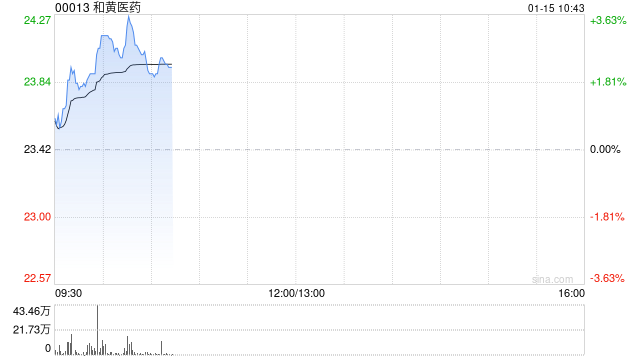
港股异动 | 和黄医药(00013)涨超3% SACHI III期研究结果于《柳叶刀》发表
智通财经网· 2026-01-15 02:18
Core Viewpoint - Hutchison China MediTech Limited (和黄医药) shares rose over 3%, currently trading at 24.1 HKD, with a transaction volume of 57.28 million HKD, following the announcement of positive results from the SACHI III study published in The Lancet [1] Group 1: Company Announcement - On January 14, Hutchison China MediTech announced the results of the SACHI III study, which evaluates the combination therapy of Savolitinib (赛沃替尼) and Osimertinib (奥希替尼) for treating EGFR mutation-positive locally advanced or metastatic non-small cell lung cancer patients who have progressed after first-line EGFR TKI treatment [1] - The SACHI study focuses on patients with MET amplification and demonstrates the efficacy of the combination therapy [1] Group 2: Drug Information - Savolitinib is a potent and highly selective oral MET TKI co-developed by AstraZeneca and Hutchison China MediTech, with AstraZeneca responsible for commercialization [1] - Osimertinib is an irreversible third-generation EGFR TKI [1] - Based on the data from the SACHI study, the combination therapy of Savolitinib and Osimertinib is expected to receive approval in China by June 2025 [1]