
鱼跃医疗

Search documents
资本市场崛起“镇江板块”
Xin Lang Cai Jing· 2025-12-20 22:07
(来源:新华日报) □ 本报记者 晏培娟 艾培 通讯员 郑菡 12月15日,记者在江苏天工钛晶新材料有限公司的项目现场看到,厂房已进入主体施工阶段。通过打造 国内先进的等离子雾化制粉生产线,一个高端钛合金粉末生产基地正在加速建设。这家由江苏天工科技 股份有限公司(下称"天工股份")控股,于今年8月设立的新公司,正全力切入增材制造(3D打印)的 产业链上游,填补国内高端钛合金粉末领域的空白。作为钛合金新材料领域的国家级专精特新"小巨 人"企业,天工股份依托国内首创的短流程制备技术,自今年5月在北交所上市以来市值已突破125亿 元,目前居北交所市值前五。 今年以来,资本市场"镇江板块"总量增至26家,其中境内上市公司23家,数量居全省第六。值得一提的 是,今年以来镇江北交所上市企业增量位列全省第二。金融活水持续浇灌科创"沃土",为镇江产业强 市"一号战略"注入强劲动能。镇江市委书记马明龙表示,将以更有力度的金融服务,推动资金链和创新 链无缝衔接、资金链和产业链深度融合、资金链和人才链良性互动,深入打好"扬帆计划""云帆计划"等 金融赋能"组合拳",帮助企业更好地借力资本东风、实现扬帆远航。 "镇江速度"凸显,上市 ...
聚焦数智化重构采购生态 共探企业健康消费市场新机遇丨新经济观察
Sou Hu Cai Jing· 2025-12-19 12:15
Group 1 - The health consumption market is experiencing new development opportunities due to increased health awareness among residents, upgraded consumption structures, and ongoing policy benefits [2] - A "2026 Billion Brand Alliance" was established during the JD Health Business Merchant Conference, aimed at expanding the government-enterprise market for its partners [2] - The CEO of JD Health emphasized that "employee health is corporate productivity," indicating a shift in corporate health management from a welfare option to a key pillar of organizational development [2] Group 2 - The digital procurement ecosystem is enabling precise matching and efficient connection between supply and demand in the corporate health consumption market [3] - Digital procurement platforms are breaking down information barriers, allowing quality health consumption suppliers to directly reach corporate demand, particularly benefiting small and medium-sized health enterprises [3] - Companies are utilizing digital tools to accurately capture employee health needs, achieving personalized health benefit procurement [3]



——蚂蚁集团旗下AI健康助手蚂蚁阿福上线点评:从低频咨询到高频陪伴,AI医疗激活医药险全链路闭环
EBSCN· 2025-12-19 07:11
Investment Rating - The report maintains a rating of "Increase" for the pharmaceutical and biotechnology industry, indicating an expected investment return that exceeds the market benchmark index by 5% to 15% over the next 6-12 months [5]. Core Insights - The launch of "Ant Financial's AI Health Assistant" named "Antifufu" has led to a significant increase in downloads, reaching the top 3 in the Apple App Store and surpassing 15 million monthly active users, positioning it as the leading AI health management app in China [1]. - The AI companion model of Antifufu is expected to enhance user engagement and retention by transforming healthcare interactions from low-frequency to high-frequency, effectively linking patients with pharmaceuticals and services [2]. - Antifufu's integration of over 500 national-level experts into its AI model provides a 24/7 accessible service, democratizing access to top-tier medical resources [1][2]. - The seamless integration of medical consultation, online medication purchase, and insurance services creates a comprehensive "medical + pharmaceutical + insurance" ecosystem, significantly reducing transaction friction and enhancing user experience [2]. - Antifufu is the first domestic large model to pass a dual-domain credible assessment by the National Communication Institute, marking a transition from experimental validation to industrial application, which is expected to alleviate concerns from B-end institutions regarding the reliability of large models [3]. Summary by Sections AI + Home Devices - Antifufu has opened access to smart devices from nine major brands, including Yuyue and Omron, allowing for unified processing of health data, which is particularly beneficial for users in lower-tier cities [4]. - The combination of AI doctors and home devices is anticipated to serve as a digital family doctor, replacing offline consultations in grassroots markets [4]. AI + Offline Health Checkups - Alibaba and Ant Financial are significant strategic investors in Meinian Health, which possesses the largest offline health checkup database in China, providing essential data for calibrating Antifufu's AI model [4]. - Meinian's health reports can be interpreted through Antifufu, enhancing the value of both platforms [4]. AI + Pharmaceutical Retail and Services - The primary outcome of online consultations is medication purchases, with chain pharmacies positioned to capture the precise demand generated by Antifufu [4]. - Companies such as Alibaba Health and Shuyu Pingmin are recommended for investment consideration due to their close partnership with Antifufu [4].
掘金企业健康消费市场 京东健康企业业务携手合作伙伴成立亿元品牌联盟
Zheng Quan Ri Bao Wang· 2025-12-19 03:46
12月18日,京东健康企业业务商家大会暨2026年亿元品牌联盟成立仪式在京举行。大会围绕"以力聚新,同心共健"主题, 与参会嘉宾共同就企业健康消费市场的发展机遇、数字化升级路径、阳光采购生态共建等方向,深入探讨如何通过供应链合 力,来为企业客户带来更优质、便捷、全面的健康产品与服务体验。 京东集团SEC委员、京东健康CEO曹冬在致辞中指出,"员工健康即是企业生产力"已成为广泛共识,企业健康管理正从福 利选项演进为组织发展的关键基石。京东健康依托京东集团超千亿的企业市场规模和百万级客户基础,以及自身具有的"超级 医药供应链"能力,致力于成为企业健康消费领域最值得信赖的首选合作企业。 2025年,京东健康表现强劲,营收与盈利实现双增长,合作商家数量已突破15万家。京东健康企业业务合作品牌超过800 个,其中在企业端市场,销售额千万级以上合作品牌达20余个,百万级以上合作品牌超200个,呈现出高质量增长态势。 京东集团副总裁、政企业务总裁李永明在分享中指出,京东深耕政企采购行业超十年,服务超800万家政企客户,其中涵 盖3万多家大型企业,为品牌商构筑广阔增长空间。今年以来,营养、保健、滋补、医疗器械等健康品类在政企 ...

研判2025!中国妇科手术治疗仪行业发展历程、政策环境、产业链、发展现状及未来趋势分析:女性健康意识的提升,妇科手术治疗仪迎来广阔的发展空间[图]
Chan Ye Xin Xi Wang· 2025-12-19 01:43
Core Viewpoint - The gynecological surgical treatment device industry in China is experiencing significant growth, with the market size projected to increase from 50 million yuan in 2017 to 334 million yuan by 2024, reflecting a compound annual growth rate (CAGR) of 31.2% due to rising clinical demand driven by women's health issues and increased awareness [1][8]. Industry Overview - Gynecological surgical treatment devices utilize physical therapy to treat gynecological diseases, with core technologies including infrared thermal radiation, electrical stimulation, and drug ion introduction [3]. - The devices are effective for conditions such as vaginitis, pelvic inflammatory disease, adnexitis, and cervicitis, improving local blood circulation and immune function [3]. Market Dynamics - The main products in the market include microwave therapy devices, radiofrequency therapy devices, infrared therapy devices, low-frequency pulse therapy devices, ozone nebulization therapy devices, and multifunctional integrated therapy devices [4]. - The industry has evolved through three stages: early development (pre-2010), technological upgrades (2010-2020), and intelligent development (2020-present), with increasing integration of AI and big data [5][6]. Policy Support - National policies, such as the "Healthy China 2030" strategy and the "14th Five-Year Plan for Medical Equipment Industry Development," are promoting the enhancement of healthcare services and the modernization of medical equipment, which supports the growth of the gynecological surgical treatment device industry [1][6]. Competitive Landscape - Key players in the industry include companies like Maikangde, Kaili Medical, and Pumen Technology, which focus on cost-effectiveness and localized services [10]. - The market also includes numerous small and medium enterprises, with competition primarily centered around pricing and distribution channels [10]. Future Trends - The industry is moving towards intelligent and precise treatment solutions, with advancements in AI and big data enhancing the operational convenience and treatment accuracy of devices [12][13]. - There is a broad future development space as women's health awareness increases and medical technology advances, with new technologies like remote healthcare emerging [13]. - The application of gynecological surgical treatment devices is expanding into grassroots healthcare settings, supported by government subsidies for medical equipment updates [14].


京东健康发起2026年亿元品牌联盟
Xin Lang Cai Jing· 2025-12-18 13:19
Core Insights - JD Health has established the "2026 Billion Brand Alliance" with five brands to accelerate market expansion in the government and enterprise sectors [1][3] - The CEO of JD Health emphasized that employee health is now recognized as a key driver of organizational productivity, shifting health management from a welfare option to a foundational element of development [1][3] - JD Health aims to become the most trusted partner in the corporate health consumption sector, leveraging JD Group's extensive market scale and supply chain capabilities [1][3] Company Performance - By 2025, JD Health's partner merchants exceeded 150,000, with over 800 brands collaborating in the enterprise market [1][3] - More than 20 brands have achieved sales exceeding 10 million, while over 200 brands have surpassed 1 million in sales within the enterprise sector [1][3] - JD Group has served over 8 million government and enterprise clients, including more than 30,000 large enterprises, with significant growth in health-related product categories [1][3] Strategic Directions - JD Health has outlined three core development strategies for 2026: "Foundation Action," "Prairie Fire Plan," and "Doubling Battle" [4][5] - "Foundation Action" focuses on strengthening product and supply chain foundations, enhancing B2B supply chain collaboration, and improving customer satisfaction and repurchase rates [5] - "Prairie Fire Plan" aims to innovate centralized procurement models and scale them, addressing various corporate health needs [5] - "Doubling Battle" targets the rapidly growing corporate medical fund sector, offering integrated health benefits and claims solutions to create competitive advantages [5]
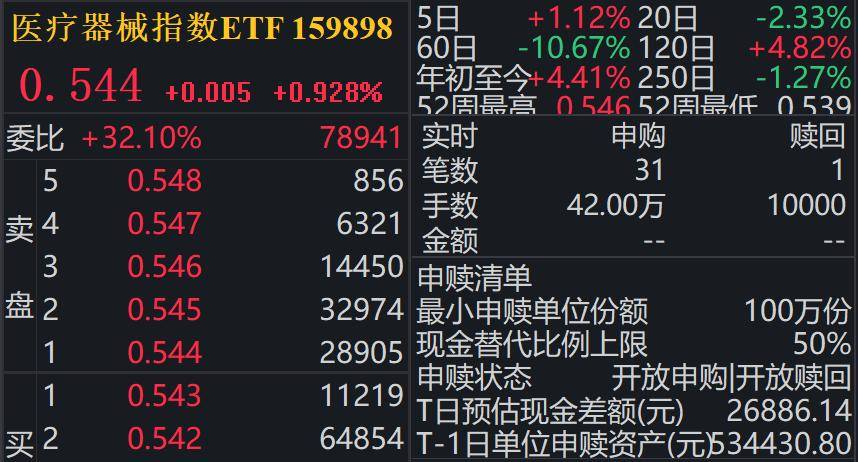
医疗器械指数ETF(159898)盘中净流入超2200万,机构:器械板块拐点或至,催化较多的方向有望诞生涨幅数倍个股
Sou Hu Cai Jing· 2025-12-18 07:08
Core Viewpoint - The medical device sector in China is experiencing a strong performance, with significant inflows into the medical device index ETF, indicating a potential turning point for the industry [1][2]. Group 1: Market Performance - The medical device index ETF (159898) saw an intraday increase of 0.93%, with over 22 million in net inflows on the day [1]. - Key stocks within the ETF include Di'an Diagnostics, which rose by 8.65%, and Anbiping, which increased by over 7% [1]. Group 2: Industry Trends - The domestic medical device industry is in a rapid development phase, with multiple negative impacts being released, suggesting the sector is entering a turning point [2]. - Citic Securities anticipates that the medical device sector may see performance improvements in Q4 and 2026, with opportunities for valuation recovery in individual stocks [3]. Group 3: Investment Opportunities - Focus areas for investment include innovative medical devices with large market potential and low domestic production rates, as well as themes like mergers and acquisitions, brain-computer interfaces, AI in healthcare, surgical robots, and exoskeleton robots [3]. - The medical device sector is characterized by high technical barriers and complex supply chains, with emerging technologies like brain-computer interfaces being highlighted in national planning [3]. Group 4: ETF Composition - The medical device index ETF (159898) tracks the CSI All-Share Medical Device Index, primarily focusing on leading companies in the ChiNext and STAR Market, which together account for over 80% of the index [4].
“AI+医疗”概念股应声上涨,板块行情受蚂蚁新产品“阿福”拉动
Jin Rong Jie· 2025-12-18 03:41
Core Viewpoint - The healthcare sector experienced a broad rally, with several stocks showing significant activity, driven by the launch of Ant Group's AI health application "Antifufu" which has over 15 million monthly active users and ranked second on the Apple App Store download list [1] Group 1: Stock Performance - Meian Health surged over 10% [1] - Weining Health increased by 8.65% [1] - Industry leader Alibaba Health rose by 2.47% [1] - Yuyue Medical saw a slight increase of 0.76% [1] Group 2: Market Sentiment - The integration of AI technology with health management is expected to open new growth opportunities, positively impacting overall market sentiment in the healthcare sector [1]




2025年中国生命支持医疗器械行业产业链、市场规模、竞争格局及发展趋势研判:行业具有高增长潜力,国产化率将持续快速提升[图]
Chan Ye Xin Xi Wang· 2025-12-18 01:43
Core Insights - The global life support medical device market is projected to reach $75.1 billion in 2024 and is expected to exceed $80 billion in 2025, with a potential to surpass $100 billion in the next five years [3][5] - The domestic life support medical device market in China is rapidly growing, with an estimated market size of 55.7 billion yuan in 2024, expected to reach 61.95 billion yuan in 2025, and potentially reaching 93.2 billion yuan in the next five years [5] Industry Definition and Classification - Life support medical devices are critical equipment used to replace or assist the function of vital organs in emergency situations, primarily utilized in ICUs, emergency rooms, operating rooms, and pre-hospital care [2][3] - Key categories of life support medical devices include blood purification equipment, monitors, ventilators, anesthesia machines, ECG machines, defibrillators, and CPR devices [2][3] Current Industry Development - The life support medical device sector is characterized by high-risk equipment that plays a crucial role in medical rescue and care [3] - The industry has seen rapid market expansion, with significant growth expected in the coming years [3][5] Industry Chain - The upstream of the life support medical device industry includes raw materials, electronic components, biological materials, high-performance batteries, precision sensors, packaging materials, and software systems [5] - The midstream focuses on the research and manufacturing of life support medical devices, while the downstream includes medical institutions, home users, and rehabilitation centers [5] Competitive Landscape - The life support medical device market is marked by high technical barriers and growth potential, with leading domestic companies including Mindray, Yuyue Medical, and Weigao [7] - The market is relatively concentrated, with foreign companies dominating the high-end segment while domestic brands are making breakthroughs in the mid-to-low end and advancing towards high-end products [7] Development Trends - The life support medical device industry is increasingly recognized as essential in modern medicine, with a focus on integrated, precise, and intelligent technologies [10] - The demand for life support medical devices is expected to grow due to the aging population and the rising need for critical care related to severe and emergency patients [10]



国产CGM出海竞速:从产品输出到生态共建,“抢滩”全球动态血糖监测市场
Cai Jing Wang· 2025-12-17 14:53
Core Insights - The current dynamic continuous glucose monitoring (CGM) market is experiencing a "price war," prompting Chinese manufacturers to target overseas markets to capture a share of the global multi-billion dollar market [1][2] - Chinese CGM companies such as Weitai Medical, Sanofi Biologics, and others are expanding into regions like India, Southeast Asia, and Europe, previously dominated by international giants [1][2][3] Market Expansion - Chinese CGM manufacturers are focusing on emerging markets like Indonesia and Algeria, where there is a growing demand for medical devices and relatively flexible market entry requirements [2][3] - Weitai Medical has recently received approval for its LinX CGM system in India, which has a significant diabetic population of nearly 90 million [1][2] - Sanofi Biologics has reported explosive growth in Indonesia, attributing this to a local team and tailored products [2][3] Regulatory Landscape - The European market is seen as a "test stone" for CGM companies due to its high regulatory standards and established healthcare systems [3] - Several Chinese CGM products have obtained EU CE certification, facilitating easier entry into other markets [3] Technological Advancements - Chinese CGM manufacturers are shifting from a "Made in China" image to a "Smart Manufacturing" approach, focusing on improving product accuracy and user experience [4][5] - The average absolute relative difference (MARD) value, a key performance indicator for CGM accuracy, has improved significantly, with leading brands now achieving values below 10% [5] Future Directions - The competition in the CGM market is expected to evolve beyond hardware specifications to include comprehensive diabetes management solutions [6][7] - The integration of advanced technologies, such as iCGM systems and artificial pancreas concepts, represents the future direction of diabetes management [7] Challenges and Considerations - Intellectual property issues pose significant challenges for Chinese CGM companies entering the global market, with patent litigation being a common concern in the US and Europe [8] - The global blood glucose monitoring market is valued at over $30 billion, and Chinese companies must enhance their technological capabilities and brand recognition to compete effectively [8] Strategic Outlook - The year 2026 is projected to be a critical juncture for Chinese CGM companies, influenced by FDA registration progress, EU healthcare access, and local production initiatives in emerging markets [8]
