
Google

Search documents
TotalEnergies(TTE) - 2025 Q4 - Earnings Call Presentation
2026-02-11 14:00
2025 Results & 2026 Objectives Delivering accretive energy growth, while strengthening resilience Delivering accretive energy growth, while strengthening resilience February 11, 2026 February 2026 – Results and Objectives | 2 Table of contents 03 | Safety, our core value 04 | Relentlessly reducing emissions 06 | 2025: delivered growth while preparing 2030+ 07 | Delivered on our growth objectives 08 | Sustaining attractive distributions supported by accretive growth and strong balance sheet 09 | Disciplined ...

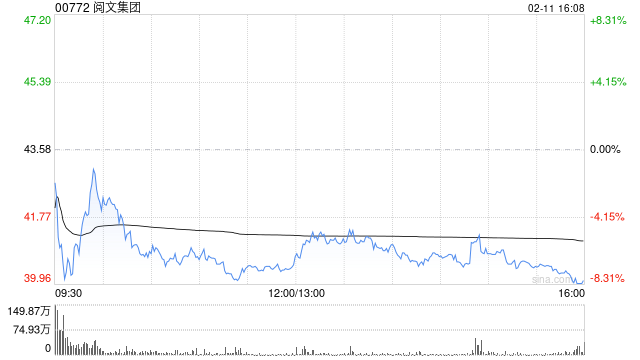
里昂:字节Seedance 2.0发布属全球娱乐行业关键时刻 阅文集团料受益
Xin Lang Cai Jing· 2026-02-11 08:18
Group 1 - The release of ByteDance's Seedance 2.0 video model marks a pivotal moment in the global entertainment industry, indicating the widespread adoption of AI-generated content (AIGC) in short videos, micro-dramas, and future mid-to-long video platforms [2][6] - The disruption will begin at the content production level, as the enhanced model allows for the visualization of stories through one-click prompts, potentially transforming distribution channels and testing existing players' ability to integrate and monetize this new wave of engaging content [2][6] - The micro-drama industry and IP owners are expected to benefit in the near term due to their defensive positioning, with companies like China Literature (00772) poised to gain from the demand for mid-tail IPs and their own micro-drama operations and investments [2][6] Group 2 - Kuaishou-W (01024) released its Keling 3.0 model on February 5, showcasing improvements in controllability, character consistency, visual realism, and multilingual generation capabilities, making it a strong competitor in the market [3][7] - The competition for generative video models is intense globally, with over 10 major companies, including Google, Vidu, xAI, OpenAI, Alibaba-W (09988), ByteDance, Kuaishou, PixVerse, Lightricks, Runway, MiniMax-WP (00100), and Luma Labs, vying for leadership [3][7] - Long-term, it is believed that ByteDance possesses a full-stack capability ranging from cloud services (Giant Engine) and toolkits (CapCut) to distribution platforms (Douyin/Hongguo) [3][7]



人工智能周报(26年第6周):Anthropic发布ClaudeOpus4.6-20260211
Guoxin Securities· 2026-02-11 07:35
Investment Rating - The report assigns a "Neutral" investment rating for the AI industry in 2026 [1]. Core Insights - Major companies are significantly increasing their investments in AI, focusing on talent acquisition, computing power infrastructure, and marketing expenditures. The competition for consumer-facing AI Agent products is expected to intensify during the Spring Festival period in China [2]. - The report suggests focusing on companies with the most certainty in computing power and large models, including Alibaba, Baidu, and Tencent [2]. Summary by Sections Company Dynamics - SpaceX has fully acquired xAI, with a post-merger valuation of $1.25 trillion. The merger will allow xAI to operate as a subsidiary of SpaceX, integrating its Grok model with Starlink satellite data [17]. - Meta has launched a series of AI advertising tools, including AI Video Generation 2.0, which simplifies the creative production process for advertisers [20]. - Kunlun Technology has released the Skywork desktop version, a local multi-model AI office agent that emphasizes data security and ease of use [21]. - OpenAI has launched two core products, including an upgraded programming model and an enterprise-level AI platform [22]. - Meta is testing an independent AI video application called Vibes, focusing on AI-generated content [23]. - Google, Amazon, Meta, and Microsoft have announced a combined investment of $610 billion in AI infrastructure for 2026 [24]. Underlying Technology - Step 3.5 Flash model by Step Star has been released, utilizing a sparse MoE architecture to address computing power challenges [25]. - Alibaba's Tongyi Qianwen team has open-sourced the Qwen3-Coder-Next programming model, achieving high performance with low computational costs [26]. - Anthropic has released Claude Opus 4.6, significantly expanding the context window to 1 million tokens [26]. - The Chinese Academy of Sciences has introduced the "Feiyu-1.0" model, focusing on coupled computing technology for environmental research [27]. Industry Policy - The Ministry of Industry and Information Technology has issued a notice to enhance AI computing power infrastructure through a national interconnected node system [28]. Investment Recommendations - The report emphasizes the importance of monitoring companies with strong positions in computing power and large models, particularly during the rapid deployment of AI Agent products [29].
人工智能周报(26年第6周):Anthropic发布Claude Opus 4.6-20260211
Guoxin Securities· 2026-02-11 07:10
Investment Rating - The report assigns a "Neutral" investment rating for the AI industry in 2026 [1] Core Insights - Major tech companies are significantly increasing their investments in AI, focusing on talent acquisition, computing power infrastructure, and marketing expenditures. The competition for consumer-facing AI Agent products is expected to intensify during the Spring Festival period in China [2] - The report suggests focusing on companies with the most certainty in computing power and large models, including Alibaba, Baidu, and Tencent [2] Summary by Sections Company Dynamics - SpaceX has fully acquired xAI, with a post-merger valuation of $1.25 trillion. The merger will allow xAI to operate as a subsidiary of SpaceX, integrating its Grok model with Starlink satellite data [17] - Meta has launched a series of AI advertising tools, including AI Video Generation 2.0, which simplifies the creative production process for advertisers [20] - Kunlun Technology has released the Skywork desktop version, a local multi-model AI office agent that prioritizes data security and ease of use [21] - OpenAI has launched two core products, including an upgraded programming model and an enterprise-level AI platform [22] - Meta is testing an independent AI video application called Vibes, focusing on AI-generated content [23] - Google, Amazon, Meta, and Microsoft have announced a combined investment of $610 billion in AI infrastructure for 2026 [24] Underlying Technology - Step 3.5 Flash model by JUMP Star has been released, utilizing a sparse MoE architecture to address computing power challenges [25] - Alibaba's Tongyi Qianwen team has open-sourced the Qwen3-Coder-Next programming model, achieving high performance with low computational costs [26] - Anthropic has released Claude Opus 4.6, significantly expanding the context window to 1 million tokens [26] - The Chinese Academy of Sciences has introduced the "Flying Fish-1.0" model, focusing on coupling computation technology [27] Industry Policy - The Ministry of Industry and Information Technology has issued a notice to improve AI computing power infrastructure through a national interconnected node system [28] Investment Recommendations - The report emphasizes the importance of monitoring companies with strong positions in computing power and large models, particularly during the rapid deployment of AI Agent products [29]
里昂:字节Seedance 2.0发布属全球娱乐行业关键时刻 阅文集团(00772)料受益
智通财经网· 2026-02-11 06:03
Group 1 - The release of ByteDance's Seedance 2.0 video model marks a pivotal moment in the global entertainment industry, indicating the widespread adoption of AI-generated content (AIGC) in short videos, micro-dramas, and future mid-to-long video platforms [1] - The enhanced model allows for the visualization of stories through one-click prompts, which will disrupt content production and challenge existing players to integrate and monetize this new wave of engaging content [1] - The micro-drama industry and IP owners are expected to benefit defensively in the near term, with companies like Reading Group (00772) poised to gain from the demand for mid-tail IPs and their own micro-drama operations and investments [1] Group 2 - Kuaishou-W (01024) has improved its K可灵 3.0 model, enhancing controllability, character consistency, visual realism, and multilingual generation capabilities, making it a strong competitor in the market [2] - The competition among generative video models is intense globally, with over 10 major companies, including Google, Vidu, xAI, OpenAI, Alibaba-W (09988), ByteDance, Kuaishou, PixVerse, Lightricks, Runway, MiniMax-WP (00100), and Luma Labs, vying for leadership [2] - Long-term, it is believed that ByteDance possesses full-stack capabilities from cloud services (Juliang Engine) to toolkits (CapCut) and distribution platforms (Douyin/Hongguo) [2]
中国半导体:云半导体业务出货与利润增长有望进一步推升上行空间Greater China Semiconductors-Cloud Semis Further upside ahead from shipment and margin growth
2026-02-11 05:57
Summary of Conference Call Notes Industry Overview - **Industry**: Greater China Semiconductors, specifically focusing on cloud semiconductors - **Key Trend**: Global cloud capital expenditures (capex) are projected to increase by 57% year-over-year (Y/Y) in 2026, indicating strong demand for cloud semiconductors driven by CPU, GPU, and ASIC server growth [1][2] Key Points Cloud Capex Growth - **Projected Capex**: Ongoing cloud capex is expected to reach $735 billion in 2026, with the top four cloud service providers (CSPs) reporting a 64% Y/Y increase in Q4 2025 [2] - **Major Contributors**: The growth is primarily driven by Amazon, Meta, and Google, maintaining a trend of over 60% growth for three consecutive years [2] Company-Specific Insights - **Aspeed Technology**: - Expected to achieve mid to high teens quarter-over-quarter (Q/Q) revenue growth in Q1 2026, primarily due to strong demand for CPU and GPU servers [3] - Anticipated gross margin expansion due to supply constraints and strong demand for cloud-related peripherals [5] - Price target raised to NT$12,345, reflecting a 69x price-to-earnings (P/E) ratio for 2026 estimates, with an expected 77% EPS growth [6][51] Market Dynamics - **Supply Constraints**: Shortages in key components such as memory and CPUs are likely to support better pricing and margin expansion for cloud semiconductors [5] - **BMC and ASIC Demand**: Aspeed is positioned to benefit from increased demand for its BMC controllers, particularly with Google adopting its AST2700 for TPU v7e [13][48] Financial Projections - **Revenue Contributions**: - ASIC racks are expected to contribute 11% and 25% of Aspeed's total revenue in 2026 and 2027, respectively [14] - Revenue from Google’s TPU is projected to contribute 5.0% and 15.2% of total addressable market (TAM) revenue in 2026 and 2027 [21] - **Earnings Estimates**: - Aspeed's earnings estimates for 2026, 2027, and 2028 have been revised upwards by 6%, 18%, and 24%, respectively, driven by higher BMC and BIC shipment forecasts [48] Additional Insights - **Market Positioning**: Aspeed is expected to gain market share among both CSP and enterprise customers due to its strong product mix and supply constraints [6] - **Future Outlook**: The focus will shift to 2027 capex and developments from the upcoming GTC in March 2026 [7] Conclusion The semiconductor industry, particularly in the cloud segment, is poised for significant growth driven by increasing capital expenditures from major CSPs. Aspeed Technology is well-positioned to capitalize on this trend, with strong revenue growth and margin expansion anticipated in the coming years.
全球 IO 硬件:存储对云资本开支的通胀效应;对 ODM 品牌商利润的通缩效应-Global IO Hardware-Memory's inflationary impact on cloud capex; deflationary impact on ODMbrand margins
2026-02-11 05:56
Summary of Key Points from the Conference Call Industry Overview - The conference call focuses on the **Global I/O Hardware** industry, particularly the **memory market** and its implications for **hyperscale capital expenditures (capex)** and **hardware margins** due to rising demand from AI applications and server requirements [2][8]. Core Insights and Arguments 1. **Memory Pricing Forecasts**: - UBS forecasts a **289% increase** in DRAM pricing per Gb from 2025 to 2027, surpassing the previous cycle's 89% rise [2][13]. - NAND pricing is expected to rise **144%**, exceeding the 92% rebound seen in 2024 [2][13]. 2. **Hyperscale Capex Growth**: - Hyperscale capex is projected to reach **US$827 billion** in 2026 and **US$915 billion** in 2027, reflecting increases of **43%** and **28%** respectively [3][27]. - Memory costs are estimated to add approximately **US$100 billion** annually to hyperscale capex, increasing from **US$53 billion** in 2025 to **US$155 billion** in 2026 and **US$252 billion** in 2027 [3][25]. 3. **Impact on PC and Smartphone Markets**: - PC unit forecasts for 2026 have been revised down from **267 million** to **255 million**, indicating a **4% decline** year-over-year [4]. - Smartphone unit sell-in estimates have also been reduced from **1.28 billion** to **1.20 billion**, reflecting a **5% decline** in 2026 [4]. 4. **Brand and ODM Margin Pressures**: - The rising memory costs are squeezing margins for brands and ODMs, with DRAM now accounting for **18%** of PC BOM costs and potentially **24%** for high-end smartphones by H226 [4][9]. - ODMs are forced to pass through memory costs, which boosts sales but does not enhance gross or operating profits, leading to lower margins [4][9]. 5. **Investment Preferences**: - Analysts recommend favoring AI hardware and components over traditional PC and branded companies due to the higher memory costs impacting margins [5]. Additional Important Insights 1. **Server Demand and Memory Costs**: - The demand for AI and traditional servers is strong, with server unit forecasts for 2025-26 revised up from **+6%** to **+13%** year-over-year [2][14]. - A typical data center server's memory cost is expected to rise from **46%** to **67%** of total server costs due to increased memory pricing [15]. 2. **Long-term Memory Cycle**: - The memory pricing cycle is described as the strongest in decades, with expectations of sustained under-supply into 2027 [10][13]. 3. **Capex and Cash Flow Dynamics**: - The capital intensity for internet companies is projected to rise from **10%** of capex/sales pre-AI to approximately **35%** in 2026, with a significant portion of capex financed through operating cash flow [28]. 4. **Future Outlook**: - The aggressive push for compute resources to meet growing cloud workloads and AI demands is expected to continue, although future growth rates may slow as spending becomes increasingly financed by debt and equity [28]. This summary encapsulates the critical insights and projections discussed during the conference call, highlighting the significant impact of memory pricing on the hardware industry and the strategic shifts in investment focus towards AI-related technologies.

YouTube lawyer sees no addiction from half hour of videos a day in trial
Business· 2026-02-11 02:51
Core Argument - The trial against Google and Meta Platforms Inc. centers on a 20-year-old woman, Kaley, who is presented as a victim of social media addiction, despite her own claims and evidence suggesting she does not consider herself addicted [1][2][3] Company and Industry Insights - The trial is a significant test for numerous lawsuits targeting major social media companies, including TikTok and Snap, which have settled prior to the trial [4] - Kaley's average YouTube usage was reported as 29 minutes per day over the last five years, with only 4 minutes and 9 seconds spent on autoplay suggestions daily [11][12] - Kaley's lawyer accused social media platforms of intentionally designing features to keep children engaged, likening it to a slot machine [9][11] - Meta and Google have denied allegations of fostering addiction, emphasizing user control over features like autoplay and infinite scroll [7][8] - Kaley's social media interactions were predominantly on TikTok (71%), followed by Snapchat (15%), Instagram (12%), and YouTube (2%) [16] - The defense argued that Kaley's psychological distress stemmed from family issues and bullying, rather than social media usage [16][19] - Kaley's mental health treatment records show minimal references to social media addiction, with over 260 sessions focusing on other issues [21][22] - High-profile testimonies are expected from Meta's Adam Mosseri and CEO Mark Zuckerberg, as well as YouTube's Neal Mohan, alongside expert witnesses in child psychology [22]


X @BSCN
BSCN· 2026-02-11 02:13
🚨 BREAKING: LAYER ZERO HAS CHAIN MOGGED THE ENTIRE CRYPTO SPACE.In a surprising turn of events, @LayerZero_Core announced the launch of its new chain, bringing in partners like @The_DTCC and @Google.The chain promises to be faster than existing chains, including @solana, while having the decentralization of @ethereum. ...
X @TechCrunch
TechCrunch· 2026-02-10 20:45
Google sent personal and financial information of student journalist to ICE https://t.co/W6BeJUx9bQ ...