京东方

Search documents
增量扩面!债券市场“科技板”加速支持科技创新
Xin Hua Wang· 2025-10-25 23:10
Core Viewpoint - The launch of the "Technology Board" in the bond market has accelerated the support for technological innovation financing, with significant growth in the issuance of technology innovation bonds since its establishment on May 7, 2023 [1][2]. Group 1: Market Performance - From May 7 to the end of September, a total of 530 institutions issued technology innovation bonds amounting to 1,167.267 billion yuan, with 88 financial institutions contributing 319.67 billion yuan and 442 non-financial enterprises issuing 847.597 billion yuan [1]. - Approximately 280 entities in the interbank bond market have issued technology innovation bonds totaling 670 billion yuan, with nearly half of the technology enterprises having bond maturities of 3 years or more, and equity investment institutions averaging 5.8 years [1][2]. Group 2: Characteristics of Technology Innovation Bonds - The average coupon rate for technology innovation bonds issued by technology enterprises and equity investment institutions is around 2%, showcasing a low financing cost [1]. - The issuance of technology innovation bonds is characterized by a diverse structure of technology enterprises, flexible issuance methods, and a broad distribution of issuers [1][2]. Group 3: Mechanism Innovations - The rapid growth in the issuance of technology innovation bonds is attributed to innovations in disclosure requirements, rating systems, risk-sharing mechanisms, and issuance processes [2]. - The People's Bank of China and the China Securities Regulatory Commission have created a risk-sharing tool for technology innovation bonds, providing low-cost re-lending funds to purchase these bonds and collaborating with local governments and market-based credit enhancement institutions [2]. Group 4: Future Development - While positive results have been achieved in supporting technology enterprises through technology innovation bonds, further development requires continuous collaboration among various stakeholders, including local governments, enterprises, investors, and intermediaries [4]. - Sustainable expansion of technology innovation bonds will depend on the ongoing role of policy tools, diversified product design, and enhanced transaction mechanisms to address financing challenges for enterprises [4].
2025绵阳企业50强发布!附完整榜单
Sou Hu Cai Jing· 2025-10-25 21:05
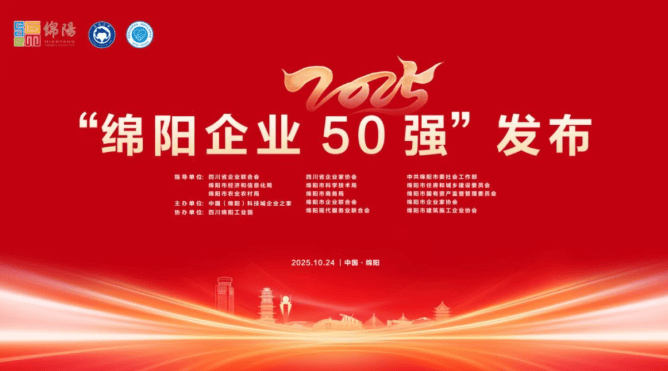
Core Insights - The 2025 Mianyang Top 50 Enterprises list was released, showcasing the resilience and growth of local companies despite a complex external environment [4][6] - The total revenue of the top 50 enterprises reached 492.57 billion, with total assets exceeding 1.1 trillion, reflecting a year-on-year growth of 4.99% [4] - The report highlights the dominance of the secondary industry, with 72% of enterprises and 84.91% of revenue coming from this sector, particularly in electronics, food and beverage, and advanced materials [4][6] Summary by Category Overall Performance - The top 50 enterprises achieved a net profit of 7.47 billion, showing a slight increase of 0.23% [4] - There are 2 enterprises with revenues exceeding 100 billion and 7 with revenues over 10 billion, indicating strong leadership within the sector [4] Industry Structure - The secondary industry comprises 72% of the enterprises, contributing 84.91% of total revenue, underscoring the industrial dominance [4] - The electronics industry alone generated 236.57 billion, making it a key driver of regional economic development [4] Ownership Structure - State-owned enterprises account for 52% of the total number, contributing 65.1% of revenue and 84.84% of tax revenue, highlighting their significant role [6] - Private enterprises make up 48% of the total, contributing 34.9% of revenue, showcasing their vitality [6] Regional Distribution - The majority of the top 50 enterprises are concentrated in Fucheng District, Science City New District, Anzhou District, and Jiangyou City, which together account for 66% of the top enterprises and 93.54% of total revenue [6] Future Outlook - The Mianyang Enterprise Home and the Mianyang Enterprise Federation aim to enhance services to address challenges in financing, labor, and market expansion, fostering a supportive environment for growth [15]





融通基金何天翔旗下融通100A/B三季报最新持仓,重仓宁德时代
Sou Hu Cai Jing· 2025-10-25 15:25
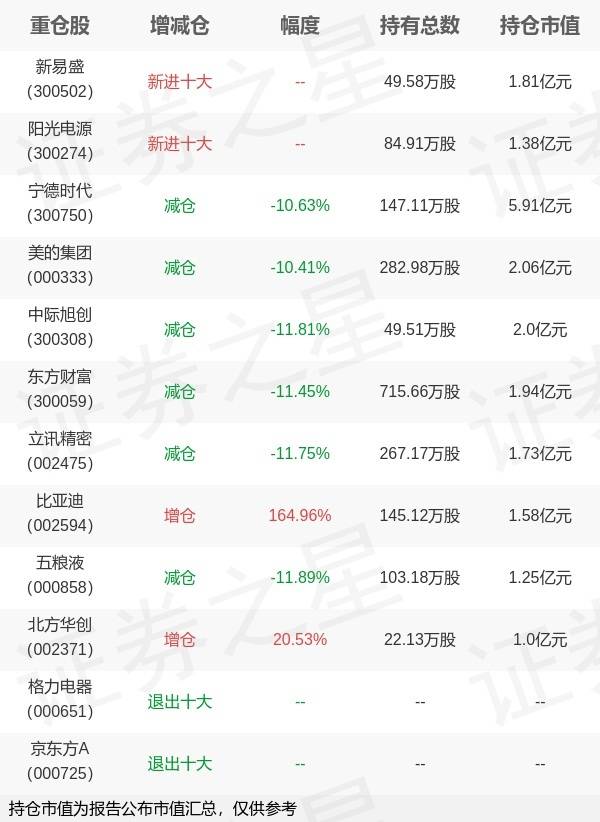
Group 1 - The core viewpoint of the article is that the Rongtong ShenZhen 100 Index Fund, managed by He Tianxiang, reported a net value growth rate of 25.61% over the past year, with significant changes in its top holdings for the third quarter [1] Group 2 - The fund's largest holding is CATL (宁德时代), which has a holding percentage of 11.64%, despite a reduction in shares by 10.63% to 1.4711 million shares, valued at 5.91 billion [1] - New additions to the top ten holdings include Xinyi Semiconductor (新易盛) and Sungrow Power (阳光电源), with holdings of 495,800 shares (valued at 1.81 billion) and 849,100 shares (valued at 1.38 billion) respectively [1] - Other notable changes include a reduction in holdings for Midea Group (美的集团) by 10.41% to 2.8298 million shares (valued at 2.06 billion) and for Luxshare Precision (立讯精密) by 11.75% to 2.6717 million shares (valued at 1.73 billion) [1] - The fund has exited from previous top holdings such as Gree Electric Appliances (格力电器) and BOE Technology Group (京东方A) [1]





加快高水平科技自立自强!四中全会“划重点”,企业提速布局新质生产力
Hua Xia Shi Bao· 2025-10-25 11:58
Core Insights - The Fourth Plenary Session of the 20th Central Committee of the Communist Party of China emphasized accelerating high-level technological self-reliance and building a modern industrial system centered on advanced manufacturing [1][2] - China's high-tech industry is transitioning from "following" to "running alongside" and even "leading" in certain areas, driven by technologies like AI, 5G, and cloud computing [1][2] Group 1: Industrial Development - The session highlighted the importance of strengthening the foundation of the real economy, focusing on intelligent, green, and integrated development [2] - China's semiconductor display industry has captured 70% of the global LCD market, showcasing significant progress in the sector [2] - The OLED technology is becoming the mainstream display technology, with Chinese companies like BOE and TCL investing heavily in production lines [2] Group 2: Technological Innovation - Companies like Visionox are focusing on transforming technological innovations into new productive forces, aiming to enhance China's position in the global high-end market [3] - The integration of digital supply chains is crucial for reducing costs and increasing efficiency in industries such as automotive [3][4] - JD Industrial has developed a supply chain model that significantly reduces procurement time and inventory costs for clients [4] Group 3: AI and Automation - The rise of AI large models is making artificial intelligence a focal point of global innovation, with increasing integration into B-end industries [5][6] - Intelligent agents are being widely applied across various sectors, including manufacturing, healthcare, and finance, enhancing operational efficiency [6] - The emphasis on technology innovation driving industrial innovation aims to ensure that technological advancements are effectively utilized in practical applications [6][7]

10月24日消费电子R(480030)指数涨4.24%,成份股佰维存储(688525)领涨
Sou Hu Cai Jing· 2025-10-25 10:51
Core Insights - The Consumer Electronics R Index (480030) closed at 8836.31 points, up 4.24%, with a total transaction volume of 121.795 billion yuan and a turnover rate of 2.21% [1] - Among the index constituents, 44 stocks rose, with Baiwei Storage leading at a 10.7% increase, while 4 stocks fell, with Transsion Holdings leading the decline at 1.1% [1] Index Performance - The top ten constituents of the Consumer Electronics R Index include: - Luxshare Precision (12.98% weight, latest price 63.91, market cap 465.38 billion yuan) [1] - Shenghong Technology (7.49% weight, latest price 308.98, market cap 268.92 billion yuan) [1] - BOE Technology Group (5.91% weight, latest price 4.05, market cap 151.53 billion yuan) [1] - Zhaoyi Innovation (5.77% weight, latest price 221.08, market cap 147.52 billion yuan) [1] - Omnivision Technologies (5.37% weight, latest price 132.62, market cap 159.99 billion yuan) [1] - GoerTek (3.93% weight, latest price 33.28, market cap 116.50 billion yuan) [1] - Dongshan Precision (3.89% weight, latest price 69.15, market cap 126.66 billion yuan) [1] - TCL Technology (3.36% weight, latest price 4.18, market cap 86.95 billion yuan) [1] - Blue Shadow (2.79% weight, latest price 29.77, market cap 157.31 billion yuan) [1] - Changdian Technology (2.72% weight, latest price 40.95, market cap 73.28 billion yuan) [1] Capital Flow - The net inflow of main funds into the index constituents totaled 7.213 billion yuan, while retail funds saw a net outflow of 4.669 billion yuan [1] - Detailed capital flow for key stocks includes: - Luxshare Precision: 1.885 billion yuan net inflow from main funds [2] - Shenghong Technology: 965 million yuan net inflow from main funds [2] - Zhaoyi Innovation: 719 million yuan net inflow from main funds [2] ETF Information - The Consumer Electronics ETF (product code: 159732) tracks the National Securities Consumer Electronics Theme Index, with a recent five-day change of -0.81% and a P/E ratio of 47.20 times [4] - The latest share count is 3.18 billion, down by 9 million shares, with a net inflow of 34.477 million yuan from main funds [4]
增量扩面! 债券市场“科技板”加速支持科技创新
Xin Hua She· 2025-10-25 10:12
Core Viewpoint - The launch of the "Technology Board" in the bond market has significantly increased the issuance of technology innovation bonds, facilitating the flow of funds into the technology innovation sector [1][2]. Group 1: Issuance and Market Dynamics - From May 7 to the end of September, 530 institutions issued technology innovation bonds totaling 1,167.267 billion yuan, with 88 financial institutions contributing 319.67 billion yuan and 442 non-financial enterprises contributing 847.597 billion yuan [1]. - Approximately 280 entities in the interbank bond market issued technology innovation bonds worth 670 billion yuan, with nearly half of the technology enterprises having bond maturities of three years or more, and equity investment institutions averaging 5.8 years [1][2]. - The average coupon rate for technology innovation bonds issued by technology enterprises and equity investment institutions is around 2%, indicating a low financing cost [1][2]. Group 2: Mechanisms and Innovations - The issuance of technology innovation bonds is supported by innovations in disclosure requirements, rating systems, risk-sharing, and issuance mechanisms, which have adapted to the high-growth and high-risk characteristics of technology enterprises [2][3]. - The People's Bank of China, in collaboration with the China Securities Regulatory Commission, has created a risk-sharing tool for technology innovation bonds, providing low-cost re-lending funds to purchase these bonds and collaborating with local governments and market-based credit enhancement institutions [2]. Group 3: Future Development and Sustainability - While the support for technology enterprises through technology innovation bonds has shown positive results, continued efforts from all parties are needed for sustainable growth [4]. - Future expansion of technology innovation bonds requires ongoing policy support, interaction among local governments, enterprises, investors, and intermediaries, as well as diversified product design and enhanced trading mechanisms to address financing challenges [4].
财经深一度|增量扩面!债券市场“科技板”加速支持科技创新
Xin Hua She· 2025-10-25 08:39
Core Insights - The launch of the "Technology Board" in the bond market has accelerated the financing of technological innovation, with a total issuance of 1,167.267 billion yuan in technology innovation bonds from May 7 to the end of September [1] - The bond market's "Technology Board" facilitates the issuance of technology innovation bonds by financial institutions, technology companies, and equity investment institutions, indicating a significant breakthrough in supporting technological innovation [2] Group 1 - A total of 530 institutions have issued technology innovation bonds, with 319.67 billion yuan from 88 financial institutions and 847.597 billion yuan from 442 non-financial enterprises [1] - Approximately 280 entities in the interbank bond market have issued technology innovation bonds totaling 670 billion yuan, with nearly half of the technology companies issuing bonds with a maturity of three years or more [1][2] - The average coupon rate for technology innovation bonds issued by technology companies and equity investment institutions is around 2%, showcasing low financing costs and diverse issuer structures [1][2] Group 2 - The issuance of technology innovation bonds is driven by innovations in disclosure requirements, rating systems, risk-sharing mechanisms, and issuance processes [2] - The People's Bank of China and the China Securities Regulatory Commission have created risk-sharing tools for technology innovation bonds, providing low-cost re-lending funds to purchase these bonds [2] - The bond market is exploring new quantitative models for rating technology innovation bonds, incorporating key variables such as patent quality, R&D investment, and technology maturity into the rating functions [3] Group 3 - The positive outcomes of supporting technology companies through technology innovation bonds have been recognized, but further development requires continuous collaboration among various stakeholders [4] - Sustainable expansion of technology innovation bonds will depend on the ongoing role of policy tools, as well as the interaction between local governments, enterprises, investors, and intermediaries [4]
财经深一度丨增量扩面!债券市场“科技板”加速支持科技创新
Xin Hua Wang· 2025-10-25 08:34
Core Viewpoint - The launch of the "Technology Board" in the bond market has accelerated the support for technological innovation financing, with significant growth in the issuance of technology innovation bonds since its establishment on May 7, 2023 [1][2]. Group 1: Market Performance - From May 7 to the end of September, a total of 530 institutions issued technology innovation bonds amounting to 1,167.267 billion yuan, with 88 financial institutions contributing 319.67 billion yuan and 442 non-financial enterprises contributing 847.597 billion yuan [1]. - Approximately 280 entities in the interbank bond market have issued technology innovation bonds totaling 670 billion yuan, with nearly half of the technology enterprises issuing bonds with a maturity of 3 years or more, and equity investment institutions averaging a maturity of 5.8 years [1][2]. Group 2: Mechanism Innovation - The issuance of technology innovation bonds has been driven by innovations in disclosure requirements, rating systems, risk-sharing, and issuance mechanisms, which have reshaped the ecosystem for technology enterprises [2]. - The People's Bank of China, in collaboration with the China Securities Regulatory Commission, has created a risk-sharing tool for technology innovation bonds, providing low-cost re-lending funds to purchase these bonds and collaborating with local governments and market-based credit enhancement institutions [2]. Group 3: Rating System - Unlike traditional industry bonds that rely heavily on quantitative indicators such as total assets and net assets, the rating of technology innovation bonds requires a new rating methodology that incorporates key variables such as patent quality, R&D investment, technology maturity, industry attractiveness, and policy benefits into the rating function [3]. Group 4: Future Development - While the support for technology enterprises through technology innovation bonds has shown positive results, further development requires continuous collaboration among various stakeholders, including local governments, enterprises, investors, and intermediaries, to enhance the quality and efficiency of financing services for technological innovation [4].
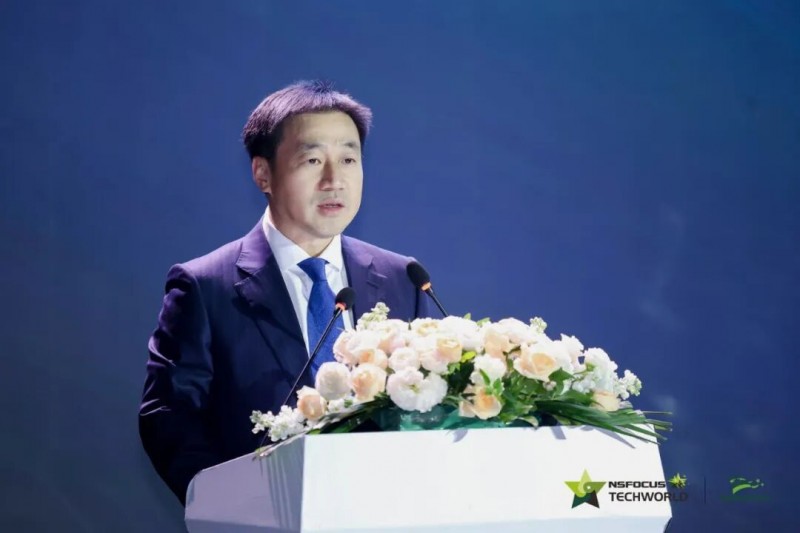
弈动 Dynamic·数智跃迁 博弈无界|2025TechWorld智慧安全大会在京召开
Sou Hu Wang· 2025-10-25 00:39
Core Insights - The 2025 TechWorld Smart Security Conference, themed "Dynamic·Digital Intelligence Leap, Boundless Game," was held in Beijing, focusing on AI security, data security, and offense-defense confrontation [1][2] - The conference, hosted by Green Alliance Technology for the thirteenth consecutive year, has become a significant annual exchange platform for China's cybersecurity industry, witnessing the evolution from point protection to systematic and intelligent security [1][2] Group 1: Company Initiatives - Green Alliance Technology emphasizes "data" and "intelligence" as core directions, focusing on AI security, data security, and practical offense-defense strategies, continuously deepening innovation and implementation [3] - The company is building a new ecosystem for AI security, integrating intelligent capabilities into traditional security products, and enhancing AI security governance and protection capabilities [3] - In data security, Green Alliance Technology is developing a comprehensive security system based on the "identification-protection-circulation-governance" framework, ensuring safe and compliant data utilization [3][19] Group 2: Industry Trends - The rapid development of the intelligent economy has made data a key driver of economic growth, with a shift from "digital industrialization" to "industrial digitalization" in China's digital economy [4][6] - AI is becoming a critical force in global technological competition, with the power industry focusing on building secure, trustworthy, and controllable intelligent systems based on industry-specific large models [8] - The emergence of large models in AI is transforming security offense and defense into a new phase of intelligent games, highlighting the need for effective defenses in the AI era [20] Group 3: Conference Highlights - The conference featured various forums discussing the latest innovations and technological breakthroughs in AI security, data security, and practical offense-defense strategies, promoting deep integration and collaborative development in the cybersecurity industry [27][30] - Keynote speakers included experts from various sectors, emphasizing the importance of AI in enhancing cybersecurity capabilities and the need for a comprehensive approach to data governance [28][29] - The event marked a significant evolution in China's cybersecurity landscape, transitioning from academic discussions to a comprehensive industry event that showcases advancements in AI, data security, and practical defense strategies [30]

加快高水平科技自立自强!四中全会“划重点”,企业提速布局新质生产力|四中全会时间
Hua Xia Shi Bao· 2025-10-24 15:08
Group 1 - The core viewpoint of the article emphasizes the importance of accelerating high-level technological self-reliance and establishing a modern industrial system centered on advanced manufacturing in China [2][3]. - The recent developments in China's high-tech industry reflect a significant shift from "following" to "running alongside" and even "leading" in certain areas, driven by technologies such as artificial intelligence, 5G, and cloud computing [2][3]. - The semiconductor display industry has seen remarkable growth, with China now holding a 70% share of the global LCD market and making strides in the OLED sector, indicating a transition from scale competition to technology and value competition [3][4]. Group 2 - The construction of a modern industrial system aims to strengthen the foundation of the real economy, focusing on intelligent, green, and integrated development while maintaining a reasonable proportion of manufacturing [3]. - Companies like Visionox are accelerating the transformation of technological innovation into new productive forces, with plans to expand their OLED production capabilities and enhance their market position [4]. - The integration of digital supply chains is becoming a key driver for cost reduction and efficiency in the real economy, exemplified by JD Industrial's solutions that significantly reduce procurement times and inventory costs for clients [5]. Group 3 - The article highlights the role of AI and intelligent agents in bridging the gap between technology and industry, with applications expanding across various sectors including manufacturing, healthcare, and finance [6]. - The emphasis on technological innovation driving industrial innovation is crucial, as it aims to ensure that technological advancements are effectively implemented in practical applications [6]. - The importance of security in the innovation process is underscored, with industry leaders advocating for a shift from price competition to innovation competition, ensuring a secure environment for technological advancements [7].