联影医疗

Search documents
以技术创新为核心驱动力 全面提升全球市场竞争力
Zhong Guo Zheng Quan Bao· 2025-07-21 20:16
Core Insights - Union Medical has established itself as a leader in the high-end medical equipment industry, focusing on core technology research and development, and has achieved significant market share in China and abroad [1][2][3] Company Overview - Founded in 2011, Union Medical specializes in high-performance medical imaging equipment, radiation therapy products, life science instruments, and digital healthcare solutions [1][2] - The company went public on the Shanghai Stock Exchange's Sci-Tech Innovation Board in August 2022, raising over 10 billion yuan to support its R&D efforts [1][2] Market Position - Union Medical ranks first in the domestic market share for imaging products (excluding ultrasound and DSA) as of 2024, with overseas business revenue increasing by over 35% year-on-year [1][2] - The company has filed over 9,300 patent applications, with more than 80% being invention patents, and has received regulatory approvals for over 140 products [2] Technological Innovation - The company has developed a complete self-research system covering key components such as magnets, RF amplifiers, and detectors, and has made significant breakthroughs in core technologies [2][4] - In 2024, Union Medical's R&D investment reached 2.26 billion yuan, accounting for 21.95% of its total revenue [3][4] AI Integration - Union Medical has over 20 AI-enabled medical devices approved by the FDA, positioning it as a leader in the industry [4][5] - The company aims to integrate AI with cloud platforms and big data to enhance decision-making processes across the entire patient care continuum [5] Global Expansion - Union Medical has established a global presence, with operations in over 85 countries and regions, and has set up regional headquarters and R&D centers in key markets [6][7] - In 2024, the company's overseas revenue reached 2.27 billion yuan, accounting for 22% of total revenue, reflecting its successful international strategy [6][7] Future Outlook - The company plans to continue building localized business teams and expanding its service network in key countries to enhance its global influence in the high-end medical equipment sector [7]

从试验田到创新基座:科创板六载淬炼中国硬核科技
Zhong Guo Zheng Quan Bao· 2025-07-21 20:16
Core Insights - The Sci-Tech Innovation Board (STAR Market) has evolved from a "test field" to a robust foundation for innovation, supporting 589 hard-tech companies and fostering a vibrant ecosystem for technological advancement [1][2] - The introduction of the "1+6" policy and the establishment of the Sci-Tech Growth Layer enhance the inclusivity and adaptability of the STAR Market, providing a comprehensive financial support system for companies throughout their lifecycle [1][7] - The STAR Market has successfully allowed 54 unprofitable companies to go public, with 22 of them achieving profitability post-listing, demonstrating the effectiveness of the market in supporting early-stage tech firms [2][6] Group 1: Market Development - The STAR Market has seen a significant number of companies with special identifiers like "U" for unprofitable firms, indicating a friendly environment for innovative companies [2] - High R&D investment is crucial for the growth of tech companies, with the STAR Market allowing unprofitable firms to access necessary capital, alleviating financial pressure during their early development stages [2][5] - As of 2024, the total R&D investment from STAR Market companies reached 1680.78 billion, with a median R&D investment to revenue ratio of 12.6%, leading all A-share sectors [4][6] Group 2: Innovation and R&D - Continuous high R&D investment has led to significant advancements in technology, with over 380 companies achieving international standards in their products or technologies [6] - The STAR Market has facilitated the emergence of groundbreaking products, such as the first non-spherical artificial lens in China, breaking the monopoly of foreign companies in the field [6] - Companies like Pylon Technologies have leveraged STAR Market support to enhance their R&D capabilities and expand their global presence, achieving significant milestones post-listing [5][6] Group 3: Policy and Regulatory Framework - The "STAR Market Eight Measures" introduced in June 2022 aim to deepen reforms and enhance the financing convenience for light-asset, high-R&D companies [7] - The establishment of the Sci-Tech Growth Layer and the expansion of the fifth set of standards provide a more inclusive capital market pathway for technology-driven enterprises [7] - Recent policy changes have led to a surge in mergers and acquisitions, with over 110 new industry mergers reported since the introduction of the "Eight Measures," reflecting a vibrant market environment [7][8]
链聚科创板
Shang Hai Zheng Quan Bao· 2025-07-21 19:54
Core Insights - The Sci-Tech Innovation Board (STAR Market) has officially launched, with a total market value exceeding 7 trillion yuan, showcasing the emergence of strong industrial clusters in various sectors [1] - Over six years, the STAR Market has fostered 589 "hard tech" listed companies, raising over 1.1 trillion yuan in direct financing, significantly reshaping the innovation ecosystem [1] - The board has successfully transformed over 120,000 invention patents into tangible benefits for society, enhancing public welfare [1] Industry Developments - In the integrated circuit sector, a complete industrial chain covering design, manufacturing, packaging, materials, and equipment has formed, with 120 listed companies leading the way [3] - Major players like SMIC and Huahong Semiconductor have achieved significant milestones, such as breaking international monopolies and reaching international quality standards [3] - The average R&D intensity of integrated circuit companies on the STAR Market is 22.5%, exceeding the industry average by 10 percentage points [3] Biopharmaceutical Sector - The STAR Market's fifth listing standard has opened crucial financing channels for unprofitable innovative drug companies, with 19 out of 20 companies under this standard successfully launching self-developed drugs [4] - Zai Lab, the first unprofitable drug company listed on the STAR Market, has achieved multiple innovative drug approvals, establishing itself as a benchmark for internationalization in drug innovation [4] High-end Equipment Manufacturing - The STAR Market has created a collaborative innovation matrix in high-end equipment manufacturing, with 127 companies covering critical industries such as high-speed rail and nuclear power [5] - China Railway Signal & Communication Corporation holds a 65% market share in high-speed rail signal control systems, ensuring the safety of the national high-speed rail network [5] Social Impact - The technological breakthroughs from the STAR Market have translated into real benefits for the public, significantly reducing drug prices and improving access to medical resources [6] - Innovative drugs have substantially lowered the economic burden on patients, with some treatments seeing price reductions of over 75% [6] - Domestic medical equipment has improved accessibility, with companies like United Imaging Healthcare breaking international monopolies and producing high-end medical devices [7] Financial Performance - Over 60% of STAR Market companies have introduced cash dividend plans, totaling 38.8 billion yuan, with over 290 companies distributing more than 30% of their profits [9] - The board has also seen significant share buyback and increase plans, with a total amount nearing 38 billion yuan [9] Institutional Innovations - The STAR Market has implemented continuous institutional innovations to address the financing challenges of "light asset, high R&D investment" companies, allowing for a higher refinancing ratio [10] - The establishment of the "Sci-Tech Growth Layer" provides a transitional platform for unprofitable tech companies, enhancing their growth prospects [10] Long-term Vision - The STAR Market has become a core nurturing ground for new productive forces, with 379 companies recognized as national "little giants" and 415 as manufacturing "champions" [12] - The board's R&D investment reached 168 billion yuan, more than three times its net profit, reflecting a strong commitment to innovation [12] - The ongoing reforms aim to further unleash the potential of the STAR Market, enhancing its role in both technological advancement and societal value [13]


寄语科创板
Shang Hai Zheng Quan Bao· 2025-07-21 19:53
Group 1 - The establishment of the Sci-Tech Innovation Board (STAR Market) has provided a nurturing environment for "hard technology" companies, fostering innovation and high-quality development over the past six years [1][13] - Companies like Haiguang Information have significantly improved their governance, innovation, and competitiveness, benefiting from the STAR Market's supportive policies and funding environment [2] - The STAR Market has enhanced the capital market's inclusivity and support for high-quality development of unprofitable technology companies, as demonstrated by companies like Baili Tianheng [3] Group 2 - The STAR Market has been a crucial engine for China's innovation-driven development strategy, injecting vitality into the sci-tech industry [4] - Companies such as United Imaging Healthcare have experienced increased brand influence, easier financing, and more flexible talent incentives due to their listing on the STAR Market [5] - The STAR Market's inclusive policies have allowed companies like Yingshi Innovation to focus on technological breakthroughs and international expansion [6] Group 3 - China Communications Construction Company has effectively utilized the STAR Market's financing mechanisms to support its technological innovation and industry upgrades [7] - JinkoSolar has leveraged the STAR Market to enhance its strategic foundation for global development and technological innovation [8] - The STAR Market has played a significant role in supporting the growth of hard technology enterprises, as highlighted by various companies' experiences [9] Group 4 - Companies like Tuojing Technology have overcome development bottlenecks and achieved profitability within a year of listing on the STAR Market, demonstrating the platform's effectiveness [10] - Zhongkong Technology has gained substantial funding support for its research and development in AI and robotics, solidifying its leading position in industrial automation [11] - Kaisa Biotech has utilized the STAR Market to enhance its capital support for technological innovation in biomanufacturing [12] Group 5 - The STAR Market has become the preferred listing venue for hard technology companies, attracting industry leaders and hidden champions [14] - Companies are optimistic about the STAR Market's future reforms, which are expected to further support the growth of innovative technology firms [15]
中证医疗优势50指数报892.89点,前十大权重包含爱尔眼科等
Sou Hu Cai Jing· 2025-07-21 14:44
Core Viewpoint - The China Securities Medical Advantage 50 Index has shown a recent upward trend, reflecting the performance of leading companies in the medical sector, despite a year-to-date decline. Group 1: Index Performance - The China Securities Medical Advantage 50 Index has increased by 5.31% over the past month and by 5.29% over the last three months, but has decreased by 2.32% year-to-date [2] - The index was established on December 31, 2015, with a base value of 1000.0 points [2] Group 2: Index Composition - The top ten weighted companies in the index are: Aier Eye Hospital (9.85%), Huatai Medical (9.05%), New Industry (6.52%), Aimeike (4.97%), United Imaging (4.72%), Mindray Medical (4.69%), Yuyue Medical (3.56%), Furuide (3.34%), Jianfan Bio (3.21%), and Lepu Medical (3.16%) [2] - The index's holdings are primarily listed on the Shenzhen Stock Exchange (60.14%) and the Shanghai Stock Exchange (39.86%) [2] Group 3: Industry Breakdown - The index's sample companies are categorized as follows: medical consumables (35.25%), medical devices (29.57%), in vitro diagnostics (25.33%), and medical services (9.85%) [2] - The index samples are adjusted biannually, with adjustments occurring on the next trading day after the second Friday of June and December [3]

AMAC专用设备指数上涨1.29%,前十大权重包含北方华创等
Jin Rong Jie· 2025-07-21 14:37
Group 1 - The AMAC Specialized Equipment Index increased by 1.29%, closing at 3496.58 points with a trading volume of 81.175 billion [1] - The AMAC Specialized Equipment Index has risen by 5.85% in the past month, 8.72% in the past three months, and 7.57% year-to-date [1] - The index is based on the classification guidelines from the China Securities Association and includes 43 industry classification indices [1] Group 2 - The top ten holdings of the AMAC Specialized Equipment Index include: North China Innovation (6.49%), Mindray Medical (6.42%), Sany Heavy Industry (5.43%), and others [1] - The market share of the AMAC Specialized Equipment Index is 57.23% from the Shenzhen Stock Exchange and 42.77% from the Shanghai Stock Exchange [1] Group 3 - The industry composition of the AMAC Specialized Equipment Index shows that industrials account for 53.32%, healthcare for 24.75%, and information technology for 17.44% [2] - Other sectors include energy (1.75%), consumer discretionary (0.89%), financials (0.59%), materials (0.51%), utilities (0.39%), real estate (0.24%), and consumer staples (0.13%) [2]





联影医疗_ Risk Reward Update
2025-07-21 14:26
Summary of Shanghai United Imaging Healthcare Co. Conference Call Company Overview - **Company**: Shanghai United Imaging Healthcare Co (688271.SS) - **Industry**: Healthcare, specifically medical imaging equipment - **Current Stock Price**: Rmb127.90 (as of July 18, 2025) - **Price Target**: Rmb140.00, revised from Rmb145.00 [1][2] Key Financial Insights - **Revenue Growth**: Projected to grow by 15% in 2Q25 [1] - **Net Profit Growth**: Expected to grow by only 1% due to significant price cuts amid intense competition in provincial Value-Based Purchasing (VBP) programs, leading to a decline in Operating Profit Margin (OPM) [1] - **Long-term Revenue Forecast**: Revenue estimates for 2025-27 have been increased by 2.4%, 2.8%, and 2.8% respectively [2] - **Net Profit Estimates**: 2025 net profit estimate lowered by 12% due to lower Gross Profit Margin (GPM) assumptions and higher operating expenses; 2026 and 2027 estimates trimmed by 8% and 7% respectively [2] Market Position and Growth Potential - **Market Growth**: The China medical imaging equipment market is expected to grow at a 7.4% CAGR from 2020 to 2030, driven by low penetration rates [8] - **Competitive Advantage**: UIH is expected to benefit from favorable policies and maintain a cost advantage over global peers [8] - **International Sales**: Sales outside of China are anticipated to outpace domestic growth in the near term [8] - **Recurring Revenue**: Expected to expand due to increased installations of high-end equipment and penetration into top-tier clients, which is favorable for margin expansion [8] Risk Factors - **Regulatory Risks**: Potential unfavorable changes in anti-graft campaign timelines and fiscal stimulus rollouts could impact growth [14] - **Geopolitical Risks**: Global expansion may be hindered by geopolitical tensions or local political issues [14] - **Market Competition**: Intense competition in the domestic market could further pressure margins [1][21] Investment Thesis - **Valuation**: The current price target of Rmb140.00 is based on a discounted cash flow (DCF) methodology, with key assumptions including a WACC of 8.8% and a terminal growth rate of 4.0% [6] - **Earnings Projections**: EPS estimates for 2025 are 1.5 Rmb, with projections increasing to 3.3 Rmb by 2027 [3] - **Stock Rating**: The stock is rated as Equal-weight, indicating that its expected performance is in line with the average total return of the industry [3][16] Additional Insights - **AI Integration**: The company is a pioneer in integrating AI through its sister company, which may enhance its competitive edge [9] - **Market Share Gains**: UIH is expected to gain market share through favorable regulatory developments and margin expansion strategies [21] This summary encapsulates the key points from the conference call regarding Shanghai United Imaging Healthcare Co, highlighting its financial outlook, market position, risks, and investment thesis.
新气象,科创板开市六周年!589股上市,总市值近8万亿元
Sou Hu Cai Jing· 2025-07-21 13:48
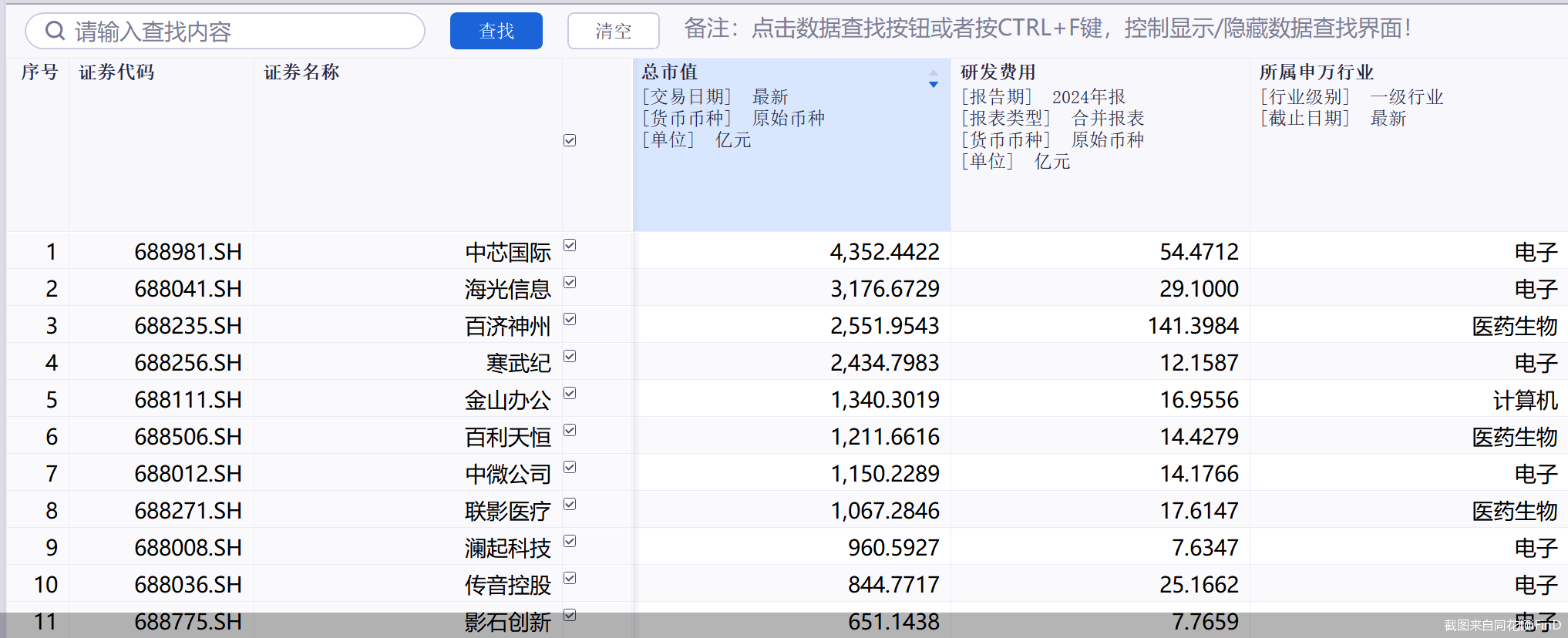
2019年7月22日,科创板鸣锣开市。作为资本市场改革的"试验田",科创板快速成长,已走过六周年。六年时间里,科创板持续发挥温床效应,累计接纳589 家企业,上市企业总市值合计近8万亿元。整体来看,科创板企业"硬科技"成色鲜明,2024年科创板企业研发费用合计超过1500亿元。经梳理,截至目前, 还有37家IPO公司正在排队科创板,伴随着"1+6"政策措施持续落地深化,更多科技型企业也将选择登陆科创板上市。 除了上市企业之外,科创板"后备军"数量也不少。经北京商报记者统计,目前处在受理、问询、过会、提交注册、注册生效但未发行的科创板IPO企业数量 共37家。 上交所官网显示,目前科创板IPO处于受理阶段的共有有研复材、亚电科技、钶锐锶、视涯科技4家企业,均于今年6月刚刚获得受理;处于问询阶段的企业 有27家。此外,1家公司已上会获通过、3家公司提交注册、1家公司中止(财报更新)、1家注册生效但尚未发行。 总市值近8万亿元 开市六年以来,科创板市场规模不断扩大。据同花顺iFinD统计,截至7月21日,科创板共有589只个股,合计总市值约8万亿元,其中诞生了中芯国际、海光 信息、百济神州等多家龙头企业。 经梳理, ...

把握业绩高增个股,长期关注“创新+复苏”
Xinda Securities· 2025-07-21 12:49
Investment Rating - The investment rating for the pharmaceutical and biotechnology industry is "Positive" [2] Core Insights - The pharmaceutical and biotechnology sector has shown a weekly return of 4.00%, outperforming the CSI 300 by 2.91%, ranking second among 31 primary sub-industry indices [3][8] - The report emphasizes the importance of innovation and recovery as key investment themes, highlighting the ongoing enthusiasm for innovative drugs driven by policy incentives and clinical data [10] - Notable mergers and acquisitions, such as China Biopharmaceutical's acquisition of Lixin Pharmaceutical for approximately $1 billion, are seen as significant milestones in the industry [9][10] Summary by Sections 1. Industry Overview - The pharmaceutical and biotechnology sector's monthly return was 9.44%, ranking fourth among 31 primary sub-industry indices, with the medical services sub-sector leading with a 15.72% increase [8][22] - The chemical pharmaceuticals sub-sector had the highest weekly return of 6.86% [32] 2. Market Performance and Valuation - The current PE (TTM) for the pharmaceutical and biotechnology industry is 30.03, which is below the historical average of 30.89 [14][17] - The industry has shown a 21.25% increase over the last six months, outperforming the CSI 300 by 14.79% [12][14] 3. Stock Performance - Top-performing stocks in the past week include Borui Pharmaceutical, Lisheng Pharmaceutical, and Nanxin Pharmaceutical, with increases of 42.35%, 41.68%, and 34.95% respectively [37] - In the Hong Kong market, stocks like Sanofi Biologics and Lepu Medical have also shown significant gains of 63.79% and 62.04% [41] 4. Industry and Company Dynamics - Recent policy developments include the Shanghai Municipal Drug Administration's action plan for regulating online drug sales from 2025 to 2027 [44] - The National Healthcare Security Administration has initiated the eleventh batch of centralized drug procurement, which will include 55 varieties [44]
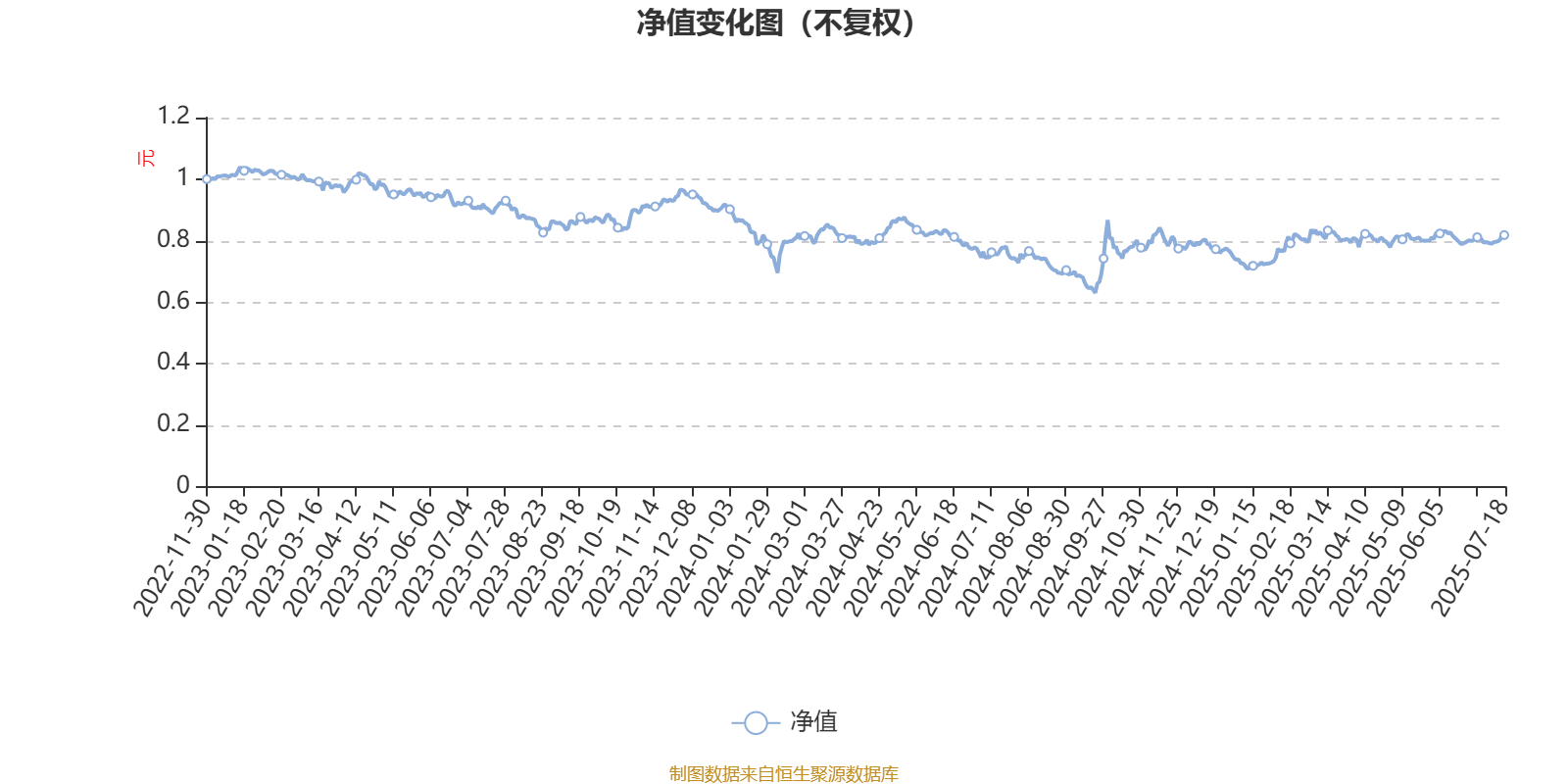
中加医疗创新混合发起式A:2025年第二季度利润20.21万元 净值增长率1.9%
Sou Hu Cai Jing· 2025-07-21 09:42
AI基金中加医疗创新混合发起式A(016756)披露2025年二季报,第二季度基金利润20.21万元,加权平均基金份额本期利润0.015元。报告期内,基金净值 增长率为1.9%,截至二季度末,基金规模为1088.67万元。 该基金属于偏股混合型基金,长期投资于医药医疗股票。截至7月18日,单位净值为0.818元。基金经理是薛杨,目前管理2只基金近一年均为正收益。其 中,截至7月18日,中加龙头精选混合A近一年复权单位净值增长率最高,达19.43%;中加医疗创新混合发起式A最低,为5.32%。 基金管理人在二季报中表示,本基金持续关注AI医疗进展,业内已经出现了更多对可落地的医疗模型以及应用的尝试,但依然缺少成熟的商业模型。器械 板块,一些公司经过近年的持续努力,出海已经初具规模,在集采已经完成的背景下,出海业务有望贡献这些公司的第二增长曲线。本基金二季度主要增加 了对器械的持仓。 截至7月18日,中加医疗创新混合发起式A近三个月复权单位净值增长率为2.89%,位于同类可比基金136/138;近半年复权单位净值增长率为13.82%,位于 同类可比基金122/138;近一年复权单位净值增长率为5.32%,位于同类 ...