
中国人民银行

Search documents
大抛售重启,美债只剩7307亿,机会难得,中国抛售突然加速
Sou Hu Cai Jing· 2025-09-21 20:43
Core Insights - China has significantly reduced its holdings of US Treasury bonds, selling $25.7 billion in July 2025 alone, bringing its total holdings down to $730.7 billion, the lowest since 2009, and a 41% decrease from the peak of $1.3 trillion in 2013 [1][15][17] - This reduction in US debt holdings coincides with increased purchases of US Treasuries by the UK and Japan, indicating a shift in global financial dynamics [1][2] Group 1: China's Debt Reduction Strategy - China's reduction of US Treasury bonds has been ongoing since April 2022, with total reductions of $173.2 billion in 2022, $50.8 billion in 2023, and $57.3 billion in 2024 [2][4] - As a result of this strategy, China has fallen to the third-largest holder of US debt, surpassed by the UK and Japan [2] Group 2: Strategic Considerations Behind the Reduction - The US government's debt has ballooned to $37 trillion, raising concerns about fiscal sustainability and the credibility of the dollar as a global reserve currency [4][6] - The actual yield on 10-year US Treasuries is around 4%, while Chinese government bonds yield only 1.85%, making US debt less attractive [6] - Trade tensions with the US have also motivated China to reduce its holdings as a form of financial countermeasure [6] Group 3: Shift to Gold and Diversification - Concurrently, China has been increasing its gold reserves, which reached 74.02 million ounces by August 2025, as part of a strategy to diversify its foreign exchange reserves [8][10] - The current gold reserves represent only 7.3% of China's international reserves, indicating room for growth towards a target of 10% [8] Group 4: Global Financial Implications - China's actions may lead to a decline in US Treasury prices and a rise in yields, potentially increasing borrowing costs for the US government and corporations [10][14] - The reduction in US debt holdings is contributing to a broader trend of "de-dollarization," with the share of dollar assets globally dropping to 58.7% in 2024 [10][14] Group 5: Strategic Transition in Reserve Management - China's strategy is shifting from passive holding to active optimization of its foreign exchange reserves, with a focus on enhancing the international role of the renminbi [14][15] - The establishment of a digital renminbi and gold settlement system is part of this strategy, aimed at reducing reliance on the US dollar [14][15] Group 6: Future Outlook - The trend of reducing US Treasury holdings is expected to continue as part of China's long-term strategy to optimize its foreign exchange reserves [17] - This capital movement is reshaping the global financial landscape, as China seeks to establish a new financial order centered around gold [17]


央行调整14天期逆回购操作方式释放三重信号
Zheng Quan Ri Bao· 2025-09-21 15:25
Core Viewpoint - The People's Bank of China (PBOC) has made significant adjustments to the 14-day reverse repurchase operation to enhance liquidity management and better meet the diverse funding needs of different institutions [1][2][3] Group 1: Adjustment of 14-day Reverse Repo - The 14-day reverse repo operation will now adopt a fixed quantity, interest rate bidding, and multiple price bidding, allowing institutions to quote based on their funding needs and risk preferences [2][3] - This change clarifies the positioning of the 14-day reverse repo as a liquidity tool and strengthens the policy status of the 7-day reverse repo operation rate [2][3] Group 2: Transition to Price-based Monetary Policy - The adjustment reflects a continued shift towards a price-based monetary policy framework, which began with the 7-day reverse repo operation being adjusted to fixed interest rates and quantity bidding [2][3] - The PBOC aims to enhance the market's pricing capabilities and improve the transmission of interest rates from short to long-term [3] Group 3: Flexibility and Precision in Liquidity Management - The PBOC's liquidity management is becoming more flexible and precise, with the ability to adjust operation times and scales based on liquidity needs [3][4] - The upcoming 14-day reverse repo operations may be conducted ahead of holidays to meet liquidity demands, indicating a proactive approach to liquidity management [3][4] Group 4: Adequate Liquidity Tools - The PBOC has a well-stocked toolbox for liquidity management, including various tools for different time frames, ensuring a balanced distribution of liquidity resources [4] - The central bank is likely to continue to provide liquidity based on economic and market conditions while optimizing structural monetary policy tools to support high-quality economic development [4]
新版人民币已经发行!腐败分子或要失眠了?大清洗要来了
Sou Hu Cai Jing· 2025-09-20 17:48
Core Viewpoint - The rapid promotion of digital RMB is underway, but its actual functions and impacts are less dramatic than public speculation suggests [3][6][10] Group 1: Digital RMB Overview - Digital RMB is a legal currency in digital form, issued and managed by the People's Bank of China, with the same value characteristics as physical RMB [3][4] - As of the first quarter of 2025, digital RMB has covered 341 cities, serving over 900 million people, with a total transaction amount reaching 3.92 trillion yuan [3][7] Group 2: Key Features of Digital RMB - Unlike third-party payment tools, digital RMB is a legal currency and supports "dual offline payments," allowing transactions without network coverage [4][6] - It incorporates a privacy protection mechanism, following the principle of "small amount anonymity, large amount traceability" [6][7] Group 3: Benefits and Impact - Digital RMB enhances payment convenience, especially in remote areas, with a coverage rate of 35% in such regions, benefiting approximately 120 million people [7][8] - It reduces transaction costs for small and micro businesses, saving around 1.27 billion yuan in payment fees [7][8] Group 4: Public Perception and Challenges - Approximately 62% of respondents are accustomed to existing payment methods and show no strong desire to switch to digital RMB [8][9] - Concerns about security and privacy persist, with 47% of respondents expressing worries about these issues [8][9] Group 5: Future Outlook - Digital RMB is expected to coexist with various payment methods, contributing to a diversified payment system [10] - The development of digital RMB will drive the digital transformation and innovation of the financial system, enhancing accessibility and efficiency in financial services [10]

中国抛售257亿美债,美财长对人民币夸上了:兑换美元更强了
Sou Hu Cai Jing· 2025-09-20 17:02
风起云涌:中国减持美债,全球资产配置重塑格局 2025年7月,中国抛售257亿美元美国国债的举动,不仅令华尔街的心弦为之一紧,更标志着一个长达十五载的金融版图正在悄然重塑。曾经中国稳坐美国国 债最大海外持有国宝座,峰值时持有量一度突破1.3万亿美元,然而如今,这一数字已骤降至7307亿美元,创下2009年以来的历史新低,不足巅峰时期的三 分之二。 与此同时,全球资本市场的另一番景象则引人瞩目。在日本悄然增持38亿美元美国国债之际,英国却以413亿美元的惊人增幅,创下历史新高,这与中国的 大幅减持形成了鲜明对比,让全球投资者不禁为之侧目。 在中国减持美债的同时,另一项资产的增持则显得尤为突出——黄金。中国人民银行已连续10个月增持黄金,截至2025年8月末,黄金储备已攀升至7402万 盎司。作为一种非主权信用储备资产,黄金不受单边制裁的影响,能够有效地对冲美元单一货币风险,成为中国优化外汇储备结构的重要选择。 事实上,中国减持美债并非一日之寒。自2022年4月持仓量跌破万亿美元大关以来,中国便开启了持续性的"瘦身"模式:2022年累计减持1732亿美元,2023 年减少508亿美元,2024年则减少了573亿美 ...
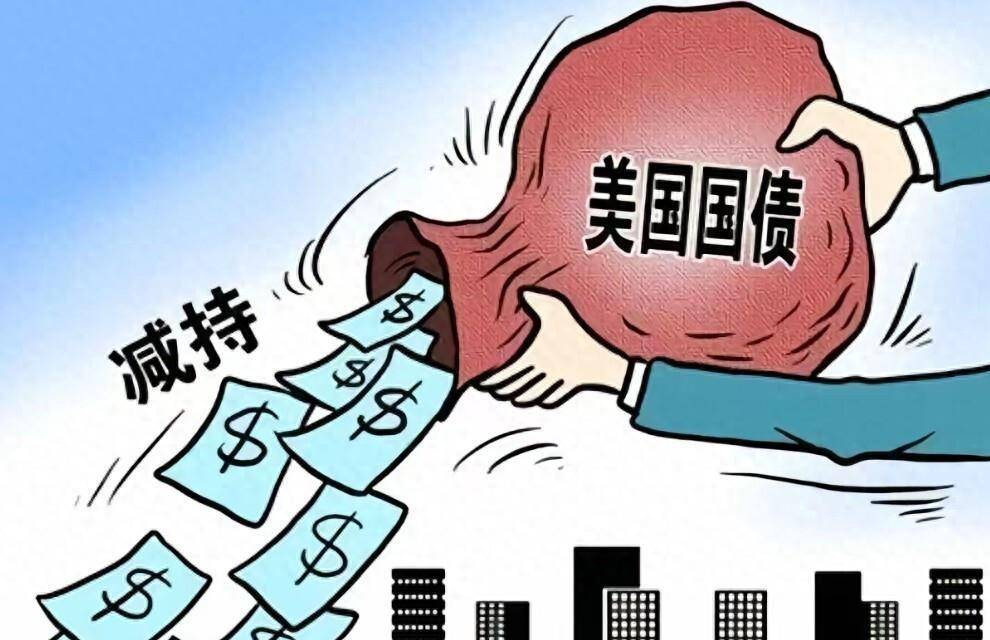
最新披露:中国大规模减持美债,一个月抛了超1800亿元!央行已连续10个月买入黄金,专家:黄金不受单边制裁影响,可对冲美元风险
Mei Ri Jing Ji Xin Wen· 2025-09-20 04:41
Group 1 - The core point of the news is that China has significantly reduced its holdings of U.S. Treasury bonds, with a notable decrease of $25.7 billion in July 2025, bringing its total holdings to $730.7 billion, the lowest level since 2009 [1][2]. - This reduction in U.S. Treasury holdings marks the fourth time China has decreased its investments in U.S. debt since the beginning of 2025, continuing a trend that has persisted for several years [2][3]. - The decline in U.S. Treasury holdings is attributed to various factors, including concerns over U.S. fiscal policies, rising national debt, and the weakening of the U.S. dollar's credibility [3][4]. Group 2 - In contrast to China's reduction, Japan and the UK have increased their holdings of U.S. Treasury bonds, highlighting China's unique position in the current market [3]. - The People's Bank of China has been increasing its gold reserves for ten consecutive months, with the latest figures showing reserves of 7.402 million ounces, indicating a strategic shift towards gold as a hedge against dollar risks [7][8]. - The proportion of gold in China's official international reserves is currently 7.3%, which is significantly lower than the global average of around 15%, suggesting room for further increases in gold holdings [8].

央行调整14天期逆回购操作规则
Zhong Guo Zheng Quan Bao· 2025-09-19 20:18
(上接A01版)公开市场7天期逆回购操作利率的政策地位得以明确。但14天期逆回购操作利率长期以 来是7天期加15BP,也被市场参与者认为具有一定政策属性。 ● 本报记者 彭扬 9月19日,中国人民银行发布公告称,为保持银行体系流动性充裕,更好满足不同参与机构差异化资金 需求,即日起,公开市场14天期逆回购操作调整为固定数量、利率招标、多重价位中标,操作时间和规 模将根据流动性管理需要确定。 "启动14天期逆回购操作提前投放跨节资金,展现适度宽松的货币政策取向。"业内专家表示,近年来央 行通常在"十一"和春节长假前启动14天期逆回购操作,启动时间根据节假日安排和机构需求灵活调整, 以提前为机构提供跨节资金,保持流动性充裕。 本次14天期逆回购操作的启动时点略早于往年,使得实际占款日达到17天。叠加前期央行已经通过买断 式逆回购净投放了3000亿元资金,这有利于进一步缓解季末、长假前机构的预防性资金需求,保障跨 季、跨节资金面平稳。 从招标方式看,此次公告称,14天期逆回购采用美式招标,进一步强化了7天期逆回购操作利率的政策 地位。梳理近期央行工作可以发现,这是强化7天期逆回购政策利率地位的又一举措。 上述专家表 ...
7月减持257亿美元,中国美债持仓再创新低
Di Yi Cai Jing· 2025-09-19 14:55
Group 1 - China has reduced its holdings of U.S. Treasury bonds for the fourth time since 2025, with a significant reduction of $25.7 billion in July, bringing its total holdings down to $730.7 billion, the lowest level since 2009 [1] - The trend of reducing U.S. Treasury holdings has been ongoing for several years, with reductions of $173.2 billion in 2022, $50.8 billion in 2023, and $57.3 billion in 2024 [1] - In 2025, the reduction pace has intensified, with alternating months of increases and decreases, but primarily focused on reductions [1] Group 2 - In July, while Japan and the UK increased their U.S. Treasury holdings, China's reduction was particularly notable [2] - Factors contributing to China's reduction include U.S. tariff policies causing market panic and concerns over the U.S. fiscal situation, leading to a sell-off of long-term U.S. bonds [2] - The credibility of the U.S. dollar has been severely impacted due to domestic tax cuts and increased spending under the Trump administration, as well as questions regarding the independence of the Federal Reserve [2] Group 3 - In contrast to the reduction in U.S. Treasury holdings, the People's Bank of China has been steadily increasing its gold reserves, continuing a trend that began in late 2022 [3] - As of August 2025, China has increased its gold reserves for ten consecutive months, even in a high gold price environment [3] - The strategy of reducing U.S. Treasury holdings while increasing gold reserves aligns with the principle of maximizing returns on reserve assets amid global economic uncertainties [3][4] Group 4 - The diversification of asset allocation is a fundamental principle that China needs to follow in optimizing its reserve asset structure [4]
央行公告 14天期逆回购操作规则 即日起调整
Zhong Guo Zheng Quan Bao· 2025-09-19 14:54
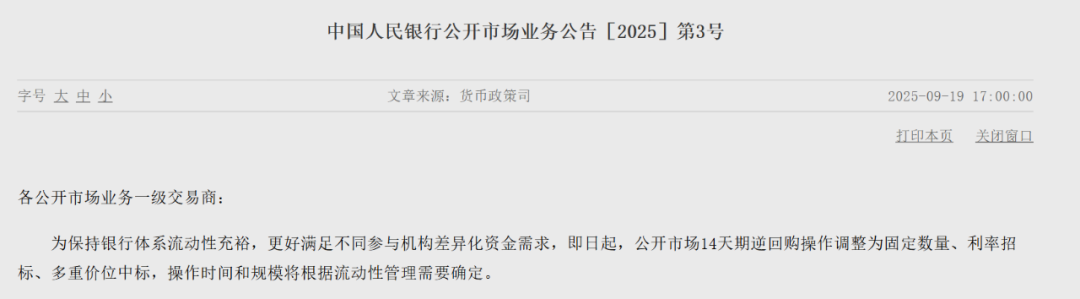
Core Viewpoint - The People's Bank of China (PBOC) has announced adjustments to the 14-day reverse repurchase operations to maintain ample liquidity in the banking system and better meet the differentiated funding needs of various institutions [1][3]. Group 1: Policy Adjustments - The 14-day reverse repurchase operations will now be conducted through fixed quantity, interest rate bidding, and multiple price-level bidding, with operation time and scale determined based on liquidity management needs [1][4]. - This adjustment is expected to occur slightly earlier than in previous years, providing institutions with preemptive funding ahead of holidays [3]. Group 2: Market Impact - The PBOC has already injected 300 billion yuan through reverse repos, which will help alleviate the preventive funding needs of institutions before the quarter-end and holidays [3]. - The new bidding method allows for market-driven pricing, enhancing the ability of institutions to reflect their differentiated funding needs [3]. Group 3: Future Outlook - The PBOC aims to flexibly combine long, medium, and short-term operation varieties based on liquidity conditions and institutional demands, leading to more precise and efficient liquidity management [5].
货币市场日报:9月19日
Xin Hua Cai Jing· 2025-09-19 13:47
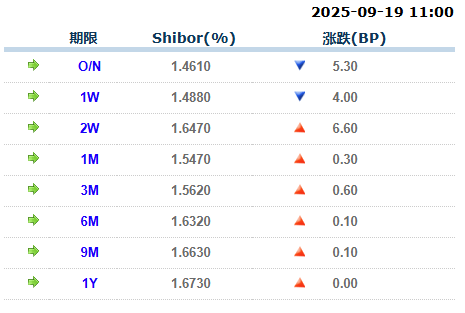
Core Points - The People's Bank of China (PBOC) conducted a 7-day reverse repurchase operation of 354.3 billion yuan at an interest rate of 1.40%, maintaining the previous rate, resulting in a net injection of 124.3 billion yuan due to 230 billion yuan maturing that day [1] - This week, the PBOC performed a total of 1.8268 trillion yuan in reverse repurchase operations, with 1.2645 trillion yuan maturing, leading to a net injection of 562.3 billion yuan [1] - The Shanghai Interbank Offered Rate (Shibor) saw a decline in overnight and 7-day rates, with the overnight Shibor down by 5.30 basis points to 1.4610% and the 7-day Shibor down by 4.00 basis points to 1.4880% [1][2] - The 14-day Shibor increased by 6.60 basis points to 1.6470% [1][2] Market Rates - In the interbank pledged repo market, most rates fell, while DR014 rose. Specifically, the weighted average rates for DR001 and R001 decreased by 4.8 basis points and 8.4 basis points, respectively, with transaction volumes increasing by 257.8 billion yuan and 67.3 billion yuan [4] - The weighted average rates for DR007 and R007 also fell by 4.7 basis points and 4.5 basis points, with transaction volumes decreasing by 38.9 billion yuan and 80.1 billion yuan [4] - The overall funding environment on September 19 was described as relaxed, with stable trading across various maturities [9] Bond Market - The primary market for negotiable certificates of deposit (NCDs) saw 100 issues with a total issuance of 205.31 billion yuan on September 19 [9] - In the secondary market, yields for various maturities showed slight increases, with the 1-month and 3-month government bonds remaining stable at 1.58%, while the 6-month bond rose by approximately 0.5 basis points to 1.645% [10] - The yield spread between 1-year and 9-month bonds was 0.25 basis points, remaining unchanged from the previous day [10] Future Outlook - The PBOC announced adjustments to the 14-day reverse repurchase operations to fixed quantity and interest rate bidding, indicating a focus on maintaining liquidity in the banking system [12] - Upcoming press conferences will address the achievements in the financial sector during the 14th Five-Year Plan period, highlighting the government's commitment to financial stability and development [12]
央行调整14天期逆回购机制,释放何种信号?
Sou Hu Cai Jing· 2025-09-19 13:20
9月19日,中国人民银行官网发布公告,宣布将14天期逆回购操作调整为固定数量、利率招标、多重价 位中标(即美式招标)。业内专家告诉记者,启动14天期逆回购操作提前投放跨节资金,展现适度宽松 的货币政策取向。 近年来央行通常在"十一"和春节长假前启动14天期逆回购操作,启动时间根据节假日安排和机构需求灵 活调整,以提前为机构提供跨节资金,保持流动性充裕。本次14天期逆回购操作的启动时点略早于往 年,使得实际占款日达到17天。 记者关注到,此次14天期逆回购调整为采用美式招标,业内专家分析称,这也进一步强化了7天期逆回 购操作利率的政策地位。记者还了解到,此次启动并调整14天期逆回购操作,是对央行流动性管理工具 箱的进一步优化。 叠加前期央行已经通过买断式逆回购净投放了3000亿元资金,这有利于进一步缓解季末、长假前机构的 预防性资金需求,保障跨季、跨节资金面平稳。 责编:陈玉尧 | 审核:李震 | 监审:古筝 (来源:央视财经 ) ...