大疆创新

Search documents
松禾资本厉伟:做创业者身边最坚定的“时间合伙人”
Shang Hai Zheng Quan Bao· 2025-11-05 18:41
Core Insights - The article emphasizes the importance of patience in technology investment, highlighting that successful investment requires a long-term commitment and understanding of the industry dynamics [2][4][9] Investment Philosophy - The founder of Songhe Capital, Li Wei, believes that technology investment is not a gamble but requires professionalism, courage, and patience [4][9] - Professionalism is crucial as different technology sectors require specialized knowledge and expertise [4] - Courage is necessary to support companies through their non-linear growth paths, which may deviate from initial expectations [4] - Patience is essential, as high-tech companies often take years to mature, with some requiring over a decade from angel investment to IPO [4][9] Investment Focus - As of September 2025, Songhe Capital has invested in over 200 technology companies, including notable firms like SenseTime, Aibee, and Defang Nano [2][4] - The investment strategy focuses on three main areas: digital technology centered on artificial intelligence, precision medicine based on genetic testing, and breakthroughs in innovative materials [9] Entrepreneurial Support - Li Wei views investors as companions to entrepreneurs, providing support and guidance throughout different stages of a company's growth [5][7] - The article illustrates the collaborative relationship between Songhe Capital and its portfolio companies, such as BGI Genomics, where the firm provided crucial funding and resources to overcome challenges [3][6] Market Trends - The article discusses the long-term nature of technological innovation, emphasizing that sectors like information technology, optical chips, aerospace, synthetic biology, and artificial intelligence are characterized by extended development cycles [9] - Li Wei stresses the need for Chinese companies to master hard technology to compete globally, aligning investment strategies with national priorities and macro trends [9]



北京未来企业家实训营二期开营,首期促成20余个意向合作项目
Xin Jing Bao· 2025-11-05 07:05
据了解,自2025年7月25日首期实训营开班以来,已有6家企业落户丰台,注册资金累计2.4亿元,另有5 家意向企业正在洽谈,首期学员间已促成20余个意向合作项目。 编辑 刘梦婕 二期实训营以"丰聚英才 企航未来"为主题,由中共丰台区委、丰台区人民政府主办,100名企业管理者 将共同开启为期3个月的系统化培育之旅。 相较于首期实训营,本次实训的100名成员来自不同区域,除丰台区的90名学员外,还有来自河北雄安 新区、湖北十堰的学员。实训营二期延续"百人一季""三平台(大咖会客厅、标杆研习会、场景模拟 舱)五步走(政策解码、破界对话、智行研学、实战领航、成果共享)"体系,新增3天军事课堂,锤炼 企业家决策韧性与执行基因。 本期实训营将持续至明年3月,设计杭州-上海(AI+机器人)、合肥-武汉(量子科技+生物医药)、深 圳-东莞(智能制造)三条线路,学员将走进云深处科技、科大讯飞、大疆创新等企业参观学习。同 时,还将组织学员走进丽泽金融商务区、天坛智能医工产业园等丰台区重点功能区。 新京报讯(记者姜慧梓)11月4日,丰台区主办的北京未来企业家实训营二期在北京大学开营。首期实 训营已于10月底结束,6家企业落户丰台, ...
深圳再出超级IPO,55岁大叔为无人机造“心脏”:年入7亿,64次第一
3 6 Ke· 2025-11-03 05:02
Core Insights - The article highlights the rapid growth and opportunities in the drone power system sector, particularly focusing on the company Haoying Technology, which is preparing for an IPO to raise 1.96 billion yuan [3][4]. Company Overview - Haoying Technology, founded in 2005, has evolved from a model car power system provider to a key supplier of drone power systems, with products distributed in over 120 countries. The company aims for a revenue of 738 million yuan and a net profit of 152 million yuan in 2024, with drone power systems accounting for over 50% of its revenue [3][12]. - The founder, Zhang Jie, identified a gap in the market for domestic high-end brushless power systems, leading to the establishment of Haoying Technology [9][10]. Market Opportunities - **Scene Demand Explosion**: There is a significant increase in demand for high-capacity and long-endurance power systems in logistics, emergency response, and power inspection sectors, with a projected annual growth rate exceeding 45% over the next three years [5][15]. - **Core Technology Breakthrough**: The integration of AI with adaptive power systems is a key direction, potentially enhancing endurance by 20%-30% and reducing failure risks. The current technology conversion rate is below 30%, indicating substantial room for growth [6][15]. - **Policy Benefits**: The gradual relaxation of airspace regulations and simplified flight approvals are expected to boost the adoption of drones, thereby increasing the demand for power systems [7][15]. - **Market Structure Opportunities**: The global drone power market is still fragmented, with Haoying's market share at only 4.12% in 2024. Companies with comprehensive self-research capabilities and stable supply chains are positioned to capture more market share [8][14]. Industry Growth - The global civil drone market is projected to grow from 30.9 billion yuan in 2019 to 110.8 billion yuan in 2024, with a compound annual growth rate (CAGR) of 24.14%. The industry-level drone segment is expected to grow even faster at a CAGR of 33.33% [13]. - The drone power system market in China is anticipated to expand from 4.3 billion yuan in 2019 to 10.3 billion yuan in 2024, with a CAGR of 19.05% [13]. Competitive Landscape - The drone power system market consists of both integrated manufacturers like DJI and specialized third-party suppliers such as Haoying Technology. The market remains competitive with high entry barriers for new players [14].
影石创新全景相机2025年全球市占率超85%,连续8年全球第一
Zheng Quan Shi Bao Wang· 2025-10-31 11:49
Core Insights - The global and Chinese handheld smart imaging device market is expected to undergo significant changes by 2025, with Yingshi Innovation (Insta360) maintaining a leading position in the panoramic camera sector, holding over 85% of the global market share in the first three quarters of 2025 [1][5]. Market Positioning - Yingshi Innovation has achieved a global market share of 75% and over 60% in the domestic market as of Q3 2023, solidifying its leading position [1][5]. - DJI entered the panoramic camera market in July 2023 and quickly captured approximately 17.1% of the global market share and 37.1% of the domestic market through aggressive pricing strategies [1][5]. Competitive Landscape - The competitive landscape in the action camera segment is intensifying, with Yingshi holding a global share of 38.6% and DJI at 34.6% as of Q3 2023, while GoPro's share has decreased to 15.7% [5][11]. - Yingshi's revenue for Q3 2023 grew by 92.64% year-on-year, with a cumulative revenue of 6.611 billion yuan for the first three quarters, reflecting a year-on-year growth of 67.18% [11]. Market Growth Potential - The global handheld smart imaging device market is projected to reach a size of 79.93 billion yuan by 2030, with a compound annual growth rate (CAGR) of 15.9% from 2020 to 2030 [11][12]. - The entry of new players like DJI is expected to stimulate market expansion, as evidenced by significant increases in app downloads and active user numbers for both Yingshi and DJI in major global markets [11][12]. Strategic Advantages - Yingshi has built a strong competitive moat through six generations of product iterations, focusing on panoramic stitching algorithms, software ecosystems, and user communities, making it difficult for new entrants to disrupt its leading position [12].

影石董事长朋友圈“阴阳”大疆“垄断”,消费电子暗战变明战
凤凰网财经· 2025-10-31 09:50
Core Viewpoint - A business war ignited by social media comments is unfolding between two tech giants in Shenzhen,影石创新 and 大疆, highlighting the competitive landscape in the consumer electronics sector [1][5]. Group 1: Market Dynamics - 大疆 captured 43% of the global market share in the panoramic camera sector within three months of launching its first product, indicating aggressive market penetration [3][9]. - The competition has intensified as both companies have shifted from a non-competing stance to a full-scale market battle, with影石 being the leader in panoramic cameras and 大疆 dominating the drone market [5][12]. - 大疆's price cuts on popular products have been interpreted as a strategy to eliminate competition, with significant price reductions on models like Osmo Pocket 3 and Action 4 [6][7]. Group 2: Financial Performance -影石 reported a revenue of 29.40 billion yuan in Q3 2025, a year-on-year increase of 92.64%, but its net profit declined by 15.90%, indicating a struggle with profitability despite revenue growth [10][11]. - For the first three quarters of 2025,影石's cumulative revenue reached 66.11 billion yuan, up 67.18% year-on-year, while net profit fell by 5.95% [10]. Group 3: Strategic Responses - 刘靖康's comments about 大疆's "monopoly" may serve to divert attention from影石's financial challenges and create a narrative for strategic expansion [11]. - Both companies are expanding into new markets, with 大疆 launching a robot vacuum and影石 increasing R&D investment, reflecting their need to grow beyond their current market positions [20][21]. - The competition is not just about products and pricing but has evolved into a battle for market influence and narrative control within the industry [21].


好盈科技闯关科创板:无人机心脏能否跳出低空红海?
3 6 Ke· 2025-10-31 05:11
Core Viewpoint - The IPO of Shenzhen Haoying Technology Co., Ltd. has been accepted by the Shanghai Stock Exchange, marking a significant milestone for the leading domestic enterprise in the drone power system sector as the industry experiences rapid growth driven by low-altitude economic policies [1][3]. Industry Overview - The global drone power system market is projected to grow from 4.311 billion yuan in 2019 to 10.308 billion yuan by 2024, with a compound annual growth rate (CAGR) of 19.05%. By 2029, the market size is expected to reach 21.593 billion yuan, maintaining a CAGR of 16.26% from 2025 to 2029 [4]. - The competitive landscape of the drone power system industry is characterized by low market concentration and numerous participants, leading to ongoing price wars, technology battles, and patent disputes [4][6]. Company Positioning - Haoying Technology holds a 4.12% global market share among third-party suppliers, placing it in the first tier of the industry. However, this leading position is not secure in a highly fragmented market [6][7]. - The company faces competition from two main camps: first, the self-research camp represented by leading manufacturers like DJI, which have developed their own power systems, and second, the professional third-party suppliers, where Haoying Technology is positioned [4][6]. Financial Performance - Haoying Technology's revenue is projected to grow from 468.0182 million yuan in 2022 to 739.9737 million yuan in 2024, reflecting a growth rate of 35.3% compared to 2023 [8][9]. - The company has expanded its workforce from 859 to 1,407 employees, a growth of 63.8%, raising concerns about whether this rapid expansion aligns with revenue growth and the impact of labor costs on profits [9][10]. Strategic Challenges - The company holds 306 patents, including 86 invention patents, but the quality and coverage of these patents may not be sufficient to withstand competition from larger players [7]. - High customer dependency on major clients could weaken bargaining power, as these clients may consider developing their own power systems for reasons of supply chain security and cost efficiency [7][12]. Future Outlook - Haoying Technology aims to transition from being a pure technology supplier to an ecosystem builder, focusing on establishing irreplaceable technological advantages in specific niches and fostering deeper collaborations with manufacturers [12][13]. - The company's IPO is seen as a strategic opportunity for transformation, with the potential to evolve into a key player in the low-altitude economy [13].

突发!大疆被意大利调查!
是说芯语· 2025-10-31 02:17
Group 1 - The Italian Competition Authority (AGCM) has launched an investigation into DJI's European subsidiary and its Italian importer Nital for allegedly pressuring retailers to set product prices [1][3] - AGCM received reports that DJI and Nital monitored the prices charged by retailers, warning those who did not comply with the pricing guidelines on Nital's website, including threats of supply disruption [1][3] - AGCM stated that this practice, known as resale price maintenance, could violate EU regulations and may result in fines if the allegations are substantiated [3] Group 2 - In response to the investigation, DJI expressed its commitment to adhering to strict legal and regulatory standards and stated it would cooperate fully with the authorities during the investigation [3]

影石董事长朋友圈「阴阳」大疆「垄断」,消费电子暗战变明战
Feng Huang Wang Cai Jing· 2025-10-31 02:08
Core Viewpoint - A business war ignited by social media comments is unfolding between two tech giants in Shenzhen, with Liu Jingkang of YingShi Innovation and Wang Tao of DJI at the forefront of this confrontation [1][5]. Group 1: Market Dynamics - DJI has captured 43% of the global panoramic camera market within three months of launching its first product, posing a significant threat to YingShi [3][10]. - DJI's market share in the action camera sector has reached 66%, surpassing GoPro to become the global leader [9][10]. - The competition has intensified as both companies have shifted from a non-aggression stance to a full-scale market battle, with price wars and public disputes becoming common [5][15]. Group 2: Financial Performance - YingShi reported a revenue of 29.40 billion yuan for Q3 2025, a year-on-year increase of 92.64%, but its net profit fell by 15.90%, indicating a "growth without profit" situation [13]. - For the first three quarters of 2025, YingShi's cumulative revenue reached 66.11 billion yuan, up 67.18% year-on-year, while net profit declined by 5.95% [13]. - In contrast, DJI's revenue is projected to be around 800 billion yuan in 2024, significantly larger than YingShi's expected revenue of 55.74 billion yuan, highlighting the scale disparity between the two companies [20]. Group 3: Strategic Responses - Liu Jingkang's comments about DJI's "monopoly" may be a strategic move to shift focus from YingShi's financial struggles and create a favorable narrative for its expansion plans [14]. - DJI's aggressive pricing strategy aims to deter competitors by making the market less profitable, while YingShi seeks to leverage marketing tactics to gain traction in the public discourse [7][19]. - Both companies are expanding into new markets, with DJI launching a vacuum robot and YingShi increasing its R&D investment, indicating a mutual recognition of the need for growth beyond their current segments [22]. Group 4: Industry Implications - The ongoing rivalry reflects a broader trend in the tech industry, where intense competition may lead to either collaborative growth or a zero-sum game scenario [23]. - The rapid technological advancements and high product substitutability in the consumer electronics sector make it challenging for any single company to achieve true monopoly status [9][19].
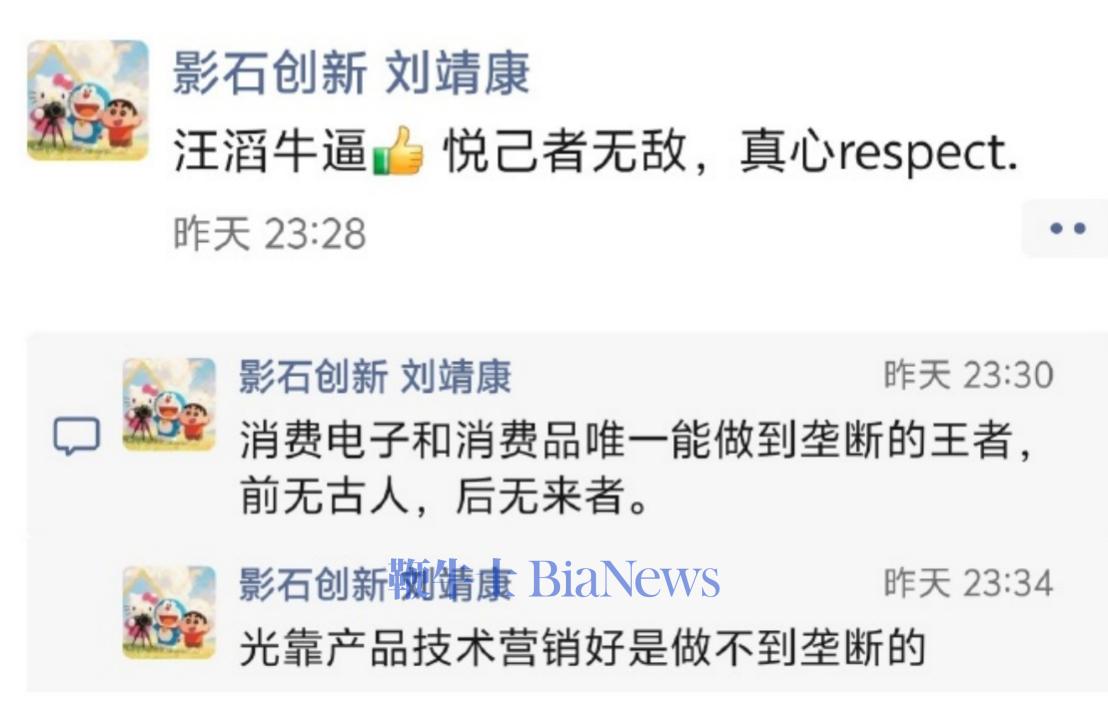
千亿攻防战:从刘靖康朋友圈看影石与大疆的生死竞速
Zhong Guo Neng Yuan Wang· 2025-10-31 01:35
Core Insights - The interaction between Liu Jingkang, chairman of Yingshi Innovation, and Wang Tao, chairman of DJI, highlights the competitive dynamics in the consumer electronics market, particularly in the drone and panoramic camera sectors [1][3] Group 1: Competitive Landscape - DJI launched its first panoramic camera, Osmo 360, at a price point 800 yuan lower than Yingshi's flagship product, X5, directly targeting Yingshi's core market [3] - Yingshi responded by announcing its own panoramic drone, Yingshi Antigravity A1, aiming to penetrate DJI's drone market [3] - In October, DJI significantly reduced prices on several popular products, which was perceived as a strategy to suppress competition, while Yingshi countered with promotional offers to affected customers [3] Group 2: Financial Performance - Yingshi reported Q3 2025 revenue of 2.94 billion yuan, a year-on-year increase of 92.64%, but net profit attributable to shareholders decreased by 15.90% due to increased R&D expenses [4] - R&D expenses surged by 164.81% year-on-year, with a significant portion allocated to the panoramic drone project [4] Group 3: Market Position and Strategy - Yingshi holds a 67.2% market share in the global panoramic camera market, maintaining its position as the leader for six consecutive years, despite the niche nature of the market [4] - The global panoramic camera market reached 5.03 billion yuan in 2023, with a projected growth to 7.85 billion yuan by 2027, while the drone market is expected to reach 402.5 billion yuan by 2030 [4] - DJI commands over 70% of the consumer drone market and has quickly gained market share in the panoramic camera sector, capturing 49% of the Chinese e-commerce market and 43% globally with the Osmo 360 [4] Group 4: Industry Dynamics - Liu Jingkang acknowledged the competitive pressure from DJI when Yingshi decided to enter the drone market, indicating a strategic awareness of industry dynamics [5] - He described DJI as a formidable competitor, emphasizing the importance of competing with strong players in the industry [5]

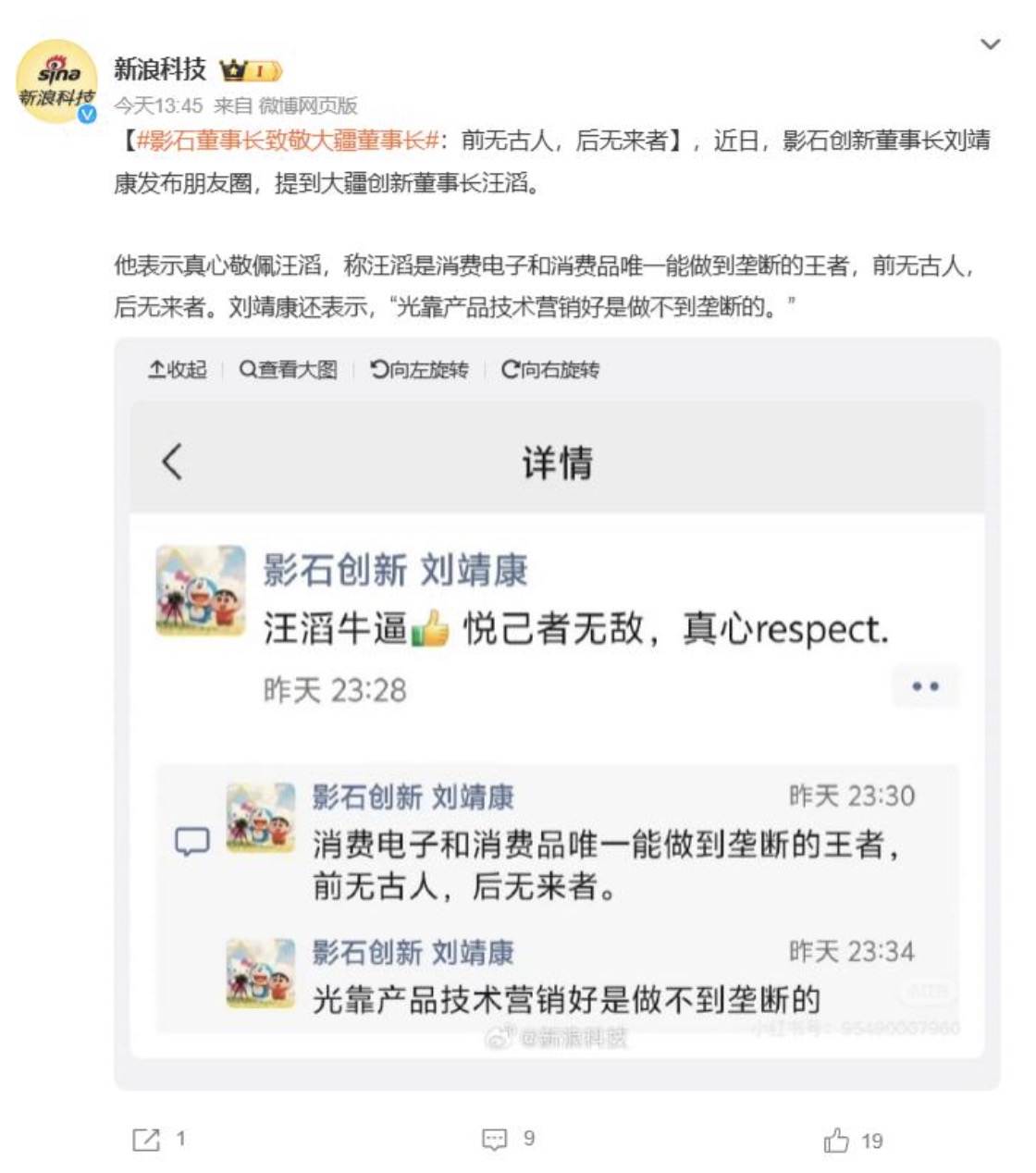
强势布新局 | 2025年10月产业园区暨基础设施投资发展报告
Sou Hu Cai Jing· 2025-10-30 11:13
Group 1 - The core viewpoint emphasizes the acceleration of high-level technological self-reliance and innovation as key drivers for economic growth, supported by national strategies and policies [4][9][16] - In September, the industrial added value above designated size grew by 6.5% year-on-year, indicating a recovery in growth rate, with a notable divergence between traditional and technology sectors [4][12][15] - The Producer Price Index (PPI) has remained stable for two consecutive months, reflecting a gradual "anti-involution" effect in the economy [4][15] Group 2 - The scale of private equity and venture capital funds in China has reached 14.4 trillion yuan, with state-owned science and technology innovation funds playing a crucial role in nurturing new productive forces [4][17] - Major industrial parks are adopting a "landlord + shareholder" transformation strategy, establishing multiple funds with scales reaching billions [4][18] - The AI infrastructure market is projected to grow by 122.4% year-on-year in the first half of 2025, with significant investments from tech giants like Nvidia and Alibaba Cloud [4][17][20] Group 3 - Ten investment events focusing on "new productive forces" have been monitored, covering various sectors such as low-altitude economy and digital ecology [5][23] - Financing rates for group companies have shown a mild increase, providing funding assurance for project implementation [5][26][28] - The issuance of REITs in industrial parks is expanding, with 20 projects totaling approximately 130 billion yuan, accounting for about 25% of the total market value of REITs [6][29][30] Group 4 - The secondary market performance of park REITs has been under pressure, with a decline of 3.78% over the past six months, indicating challenges in valuation and market acceptance [6][30][31] - Several REIT projects are facing operational challenges, with some reporting losses, highlighting the need for improved cash flow and tenant retention strategies [6][33]