
晨光股份

Search documents
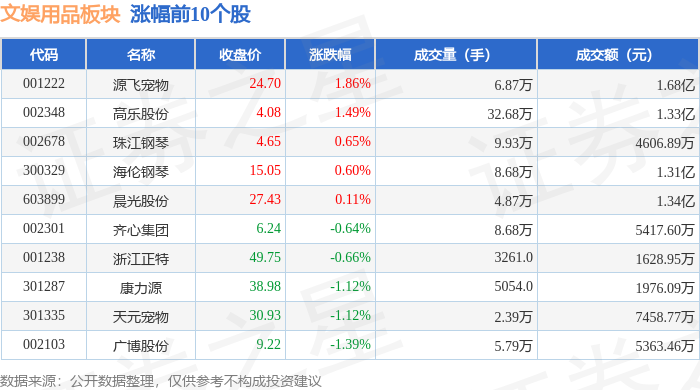
文娱用品板块10月16日跌1.11%,创源股份领跌,主力资金净流出7082.28万元
Zheng Xing Xing Ye Ri Bao· 2025-10-16 08:20
Market Overview - The entertainment products sector declined by 1.11% on October 16, with Chuangyuan Co. leading the drop [1] - The Shanghai Composite Index closed at 3916.23, up 0.1%, while the Shenzhen Component Index closed at 13086.41, down 0.25% [1] Individual Stock Performance - Chuangyuan Co. (300703) saw a significant decline of 6.60%, closing at 29.56 with a trading volume of 93,000 shares and a transaction value of 282 million [2] - Other notable declines included Shuhua Sports (605299) down 3.44% and Yingpais (002899) down 3.01% [2] - Conversely, some stocks like Yuanfei Pet (001222) and Gaole Co. (002348) experienced slight increases of 1.86% and 1.49% respectively [1] Capital Flow Analysis - The entertainment products sector experienced a net outflow of 70.82 million from institutional investors, while retail investors saw a net inflow of 70.89 million [2] - The individual stock capital flow showed that Yuanfei Pet had a net inflow of 17.56 million from institutional investors, while it faced a net outflow of 19.03 million from retail investors [3] - Yingpais also had a net inflow of 12.32 million from institutional investors, but a net outflow of 17.63 million from retail investors [3]


轻工造纸行业2025年三季报业绩前瞻:供应链全球化趋势明确,加速包装格局变化,Q3内外销个股业绩分化
Shenwan Hongyuan Securities· 2025-10-15 15:40
Investment Rating - The report maintains a positive outlook on the light industry and paper sector for Q3 2025, indicating a favorable investment rating [1]. Core Insights - The globalization of supply chains is accelerating changes in the packaging landscape, with leading companies increasing their market share and improving profitability [2]. - Q3 2025 is expected to see a divergence in performance among companies, influenced by supply chain advantages and growth potential [2]. - The report highlights specific companies with projected revenue and profit growth, indicating a robust performance in certain segments despite challenges in others [5][6]. Summary by Sections Packaging and Printing - Companies like Yutong Technology and Baosteel Packaging are expected to see slight revenue growth, while others like Meiyingsen may face revenue pressure but maintain profit growth [2][3]. - The overall packaging sector is benefiting from the global supply chain shift, with many companies reporting stable or improving profit margins [2][3]. Export Sector - Companies such as Jiangxin Home and Qianjiang Motorcycle are projected to experience significant revenue growth, with estimates of over 30% for Q3 2025 [6][7]. - The report notes that the export sector is showing resilience, with several companies adapting well to changing market conditions [6][7]. Two-Wheel and Motorcycle Sector - Companies like Aima Technology and Spring Wind Power are expected to report revenue growth of over 10% in Q3 2025, driven by seasonal demand and market adjustments [10][11]. - The sector is experiencing a mix of growth and challenges, with some companies facing declines due to regulatory changes [10][11]. Home Furnishing Sector - The report indicates that companies like Oppein Home and Kuka Home are facing revenue declines, while others like Joy Home are expected to show resilience with slight growth [12][14]. - The home furnishing market is under pressure from policy changes, but some segments are performing better than others [12][14]. Light Consumer Goods - Companies such as Dongkang Oral and Jeya are projected to see significant revenue and profit growth, with estimates indicating over 60% growth for Jeya in Q3 2025 [13][16]. - The light consumer goods sector is showing a positive trend, with several companies benefiting from strong demand and effective marketing strategies [13][16]. Paper Industry - The report anticipates a mixed performance in the paper sector, with some companies like Sun Paper expected to see profit declines due to price pressures, while others may experience stability [18][19]. - The paper industry is facing challenges from raw material price fluctuations, but certain segments are expected to maintain profitability [18][19].


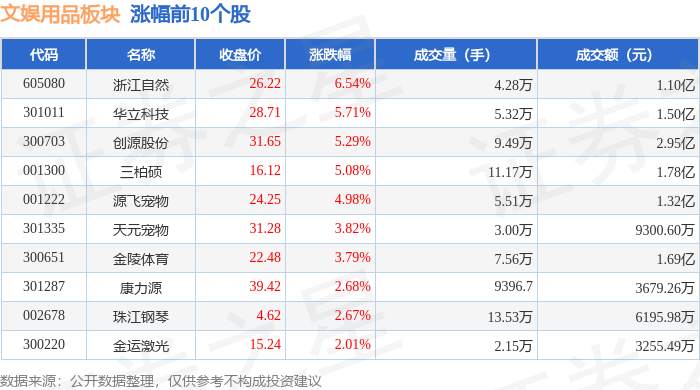
文娱用品板块10月15日涨1.76%,浙江自然领涨,主力资金净流入815.91万元
Zheng Xing Xing Ye Ri Bao· 2025-10-15 08:37
Market Overview - The entertainment products sector increased by 1.76% on October 15, with Zhejiang Natural leading the gains [1] - The Shanghai Composite Index closed at 3912.21, up 1.22%, while the Shenzhen Component Index closed at 13118.75, up 1.73% [1] Stock Performance - Zhejiang Natural (605080) closed at 26.22, up 6.54% with a trading volume of 42,800 shares and a turnover of 110 million yuan [1] - Huali Technology (301011) closed at 28.71, up 5.71% with a trading volume of 53,200 shares and a turnover of 150 million yuan [1] - Chuangyuan Co. (300703) closed at 31.65, up 5.29% with a trading volume of 94,900 shares and a turnover of 295 million yuan [1] - Other notable performers include Sanbai Shuo (001300) up 5.08% and Yuanfei Pet (001222) up 4.98% [1] Capital Flow - The entertainment products sector saw a net inflow of 8.16 million yuan from institutional investors, while retail investors contributed a net inflow of 31.14 million yuan [2] - However, speculative funds experienced a net outflow of 39.29 million yuan [2] Individual Stock Capital Flow - Yingpais (002899) had a net inflow of 36.38 million yuan from institutional investors, but a net outflow of 18.95 million yuan from speculative funds [3] - Morning Light (6688809) saw a net inflow of 15.65 million yuan from institutional investors, with a net outflow of 5.18 million yuan from speculative funds [3] - Zhejiang Natural (605080) experienced a net inflow of 12.93 million yuan from institutional investors, but a net outflow of 13.66 million yuan from retail investors [3]

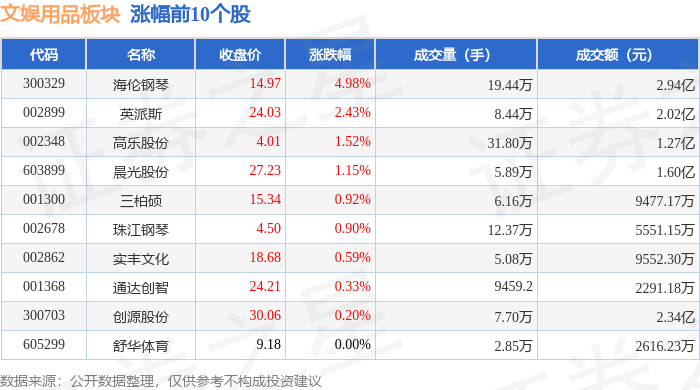
文娱用品板块10月14日跌0.06%,金陵体育领跌,主力资金净流出1.26亿元
Zheng Xing Xing Ye Ri Bao· 2025-10-14 08:39
Market Overview - The entertainment products sector experienced a slight decline of 0.06% on October 14, with Jinling Sports leading the drop [1] - The Shanghai Composite Index closed at 3865.23, down 0.62%, while the Shenzhen Component Index closed at 12895.11, down 2.54% [1] Stock Performance - Notable gainers in the entertainment products sector included: - Helen Piano: Closed at 14.97, up 4.98% with a trading volume of 194,400 shares and a turnover of 294 million yuan [1] - Yingpais: Closed at 24.03, up 2.43% with a trading volume of 84,400 shares and a turnover of 202 million yuan [1] - Gaole Co.: Closed at 4.01, up 1.52% with a trading volume of 318,000 shares and a turnover of 127 million yuan [1] - Conversely, Jinling Sports saw a significant decline, closing at 21.66, down 4.33% with a trading volume of 77,200 shares and a turnover of 171 million yuan [2] Capital Flow - The entertainment products sector saw a net outflow of 126 million yuan from institutional investors, while retail investors experienced a net inflow of 82.96 million yuan [2] - The capital flow for specific stocks showed: - Morning Light Co.: Net inflow of 13.99 million yuan from institutional investors, but a net outflow of 15.94 million yuan from retail investors [3] - Gaole Co.: Net inflow of 5.65 million yuan from institutional investors, with a net outflow of 2.49 million yuan from retail investors [3] - Pearl River Piano: Net inflow of 2.57 million yuan from institutional investors, with a net outflow of 1.69 million yuan from retail investors [3]




文娱用品板块10月13日跌1.44%,创源股份领跌,主力资金净流出5034.82万元
Zheng Xing Xing Ye Ri Bao· 2025-10-13 12:38
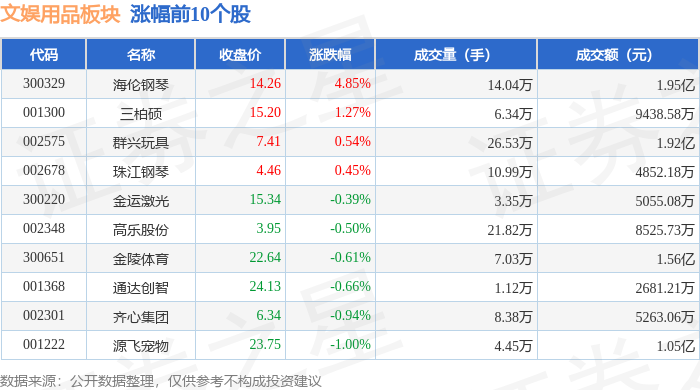
Market Overview - The entertainment products sector experienced a decline of 1.44% on October 13, with Chuangyuan Co. leading the drop [1] - The Shanghai Composite Index closed at 3889.5, down 0.19%, while the Shenzhen Component Index closed at 13231.47, down 0.93% [1] Stock Performance - Notable gainers included: - Helen Piano (300329) with a closing price of 14.26, up 4.85% on a trading volume of 140,400 shares and a turnover of 195 million yuan [1] - Sanbai Shuo (001300) closed at 15.20, up 1.27% with a trading volume of 63,400 shares and a turnover of 94.39 million yuan [1] - Significant decliners included: - Chuangyuan Co. (300703) which closed at 30.00, down 6.77% with a trading volume of 119,700 shares and a turnover of 355 million yuan [2] - Zhejiang Zhengte (001238) closed at 49.41, down 3.02% with a trading volume of 9,770 shares and a turnover of 47.78 million yuan [2] Capital Flow - The entertainment products sector saw a net outflow of 50.35 million yuan from institutional investors, while retail investors contributed a net inflow of 78.61 million yuan [2][3] - Specific stock capital flows indicated: - Qunxing Toys (002575) had a net inflow of 12.76 million yuan from institutional investors, but a net outflow of 11.52 million yuan from retail investors [3] - Zhejiang Zhengte (001238) experienced a net inflow of 5.13 million yuan from institutional investors, but a net outflow of 5.25 million yuan from retail investors [3]
刘强东的第六个IPO来了:从年亏13亿到年赚7.6亿,京东工业携中东资本敲钟!
Sou Hu Cai Jing· 2025-10-09 08:38
Core Insights - JD Industrial is preparing for its sixth IPO, focusing on B2B procurement of industrial supplies, indicating a strategic shift from traditional retail to enterprise services [1][2] - The company claims to be the industry leader with a projected transaction volume of 2024, serving 10,600 key clients, including half of China's top 500 enterprises [1] - Despite its leading position, JD Industrial holds only 1.5% of the overall enterprise procurement market share, highlighting significant competition from established players and new entrants [1][2] Financial Performance - In 2022, JD Industrial reported a loss of 1.3 billion, but is projected to achieve a profit of 760 million in 2024, showcasing a significant turnaround [1] - The majority of revenue, approximately 90%, is generated from product sales, with a low gross margin of 16%, while high-margin service revenue accounts for less than 10% [1] Customer Retention Challenges - The retention rate of key customers has declined from 139.3% to 105.7%, and the average transaction value has decreased from 1.4 million to 1.2 million, indicating difficulties in maintaining customer loyalty [2] - Nearly 40% of JD Industrial's revenue is derived from JD Group, raising concerns about dependency and sustainability as the company prepares for independent listing [2] Competitive Landscape - The competitive environment is intense, with established competitors like Guanjie and Zhenkunxing, as well as new entrants from the office supplies sector and platforms like Taobao entering the B2B space [1][2] - The market is characterized by fierce competition, likened to a "battle of deities," emphasizing the need for JD Industrial to establish a sustainable competitive advantage in a vast market [2]
得力“崴脚”,如何得利?
Sou Hu Cai Jing· 2025-10-04 03:25
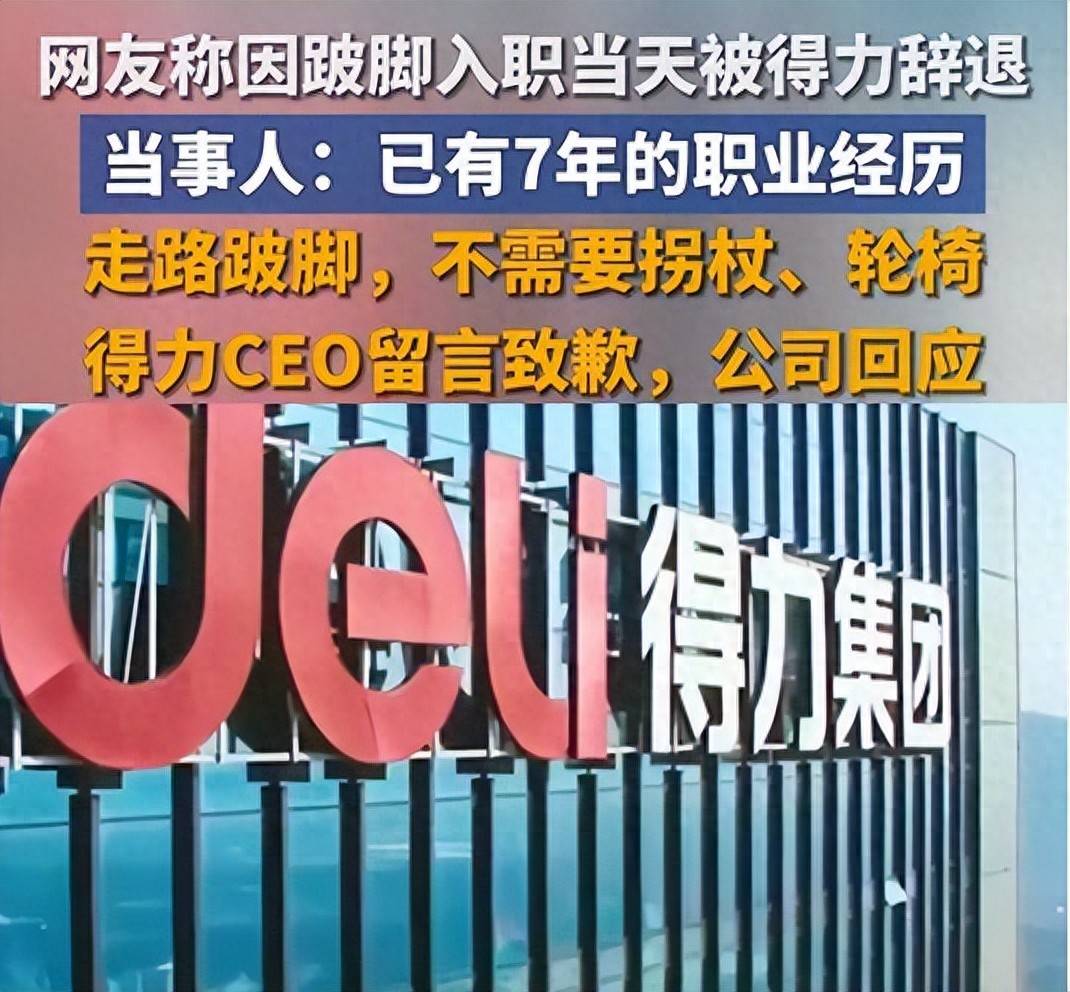
Core Viewpoint - Deli Group is facing challenges in its core business and is attempting to pivot towards the "IP economy" to attract younger consumers, as evidenced by recent marketing initiatives and product launches [3][10][11]. Group 1: Company Challenges and Responses - A recent incident involving the dismissal of an employee due to a physical condition has prompted Deli Group to issue an apology, highlighting the company's sensitivity to public perception [3]. - Deli Group has been struggling in its main business and is shifting its strategy to adapt to changing market conditions, particularly targeting the Z generation with new marketing approaches [3][10]. - The company has launched a "Super Stationery Festival" in 26 major cities, featuring collaborations with popular IPs to create a unique consumer experience [3][7]. Group 2: Marketing and Product Strategy - Deli Group has been actively collaborating with well-known IPs, releasing new products every 1-2 months since last year, aiming to capture the emotional value of younger consumers [5][7]. - The first "Super Stationery Festival" in February attracted over 100,000 visitors in its opening week, indicating strong consumer interest in the new product offerings [7]. - The company is focusing on integrating innovative designs and color aesthetics into its products to appeal to the younger demographic [5][10]. Group 3: Industry Context and Competition - The rise of the "IP economy" has prompted both Deli Group and its competitor, Morning Glory, to adapt their strategies, with Morning Glory having entered this space earlier [8][10]. - The current market for stationery is evolving, with younger consumers now being a significant target demographic, necessitating a shift in product offerings from traditional stationery to more innovative and engaging items [11][13]. - The overall environment for the "IP economy" in China is still in its early stages, presenting both opportunities and challenges for established companies like Deli Group [13][15].

实用性与情绪价值并重 国产文具创意“破圈”
Zhong Guo Chan Ye Jing Ji Xin Xi Wang· 2025-09-30 02:10
Core Insights - The stationery market is experiencing a surge in consumption during the back-to-school season, with innovative products like fingerprint unlock pencil cases and stress-relief pens becoming popular among students [1] - The shift from traditional stationery to creative and experiential consumption reflects changing consumer preferences, particularly among the "Z generation" [2] Product Innovation - The core competitiveness of stationery has evolved from durability and practicality to comfort and uniqueness, with consumers now prioritizing humanization and novelty [2] - Innovative products such as visual radius compasses and break-resistant pencils are gaining traction, enhancing the writing experience and addressing functional pain points [2][3] Emotional Value and Social Needs - "Guzi-style" stationery targets emotional and social needs, with brands increasingly focusing on the emotional value of products rather than just functionality [4] - The "Guzi economy" is emerging in the stationery sector, where products are designed to provide social tags and emotional companionship, appealing to the younger demographic [5] Market Trends - The domestic stationery market is witnessing a shift towards emotional consumption, with brands like Morning Glory leading the way by integrating IP-derived products with stationery [4][5] - The IP licensing market in China is projected to reach 156.1 billion yuan by 2024, indicating a growing trend towards emotional and collectible stationery [5] Cultural Integration and Global Expansion - Domestic brands are leveraging "black technology" and IP collaborations to penetrate the high-end stationery market, traditionally dominated by Japanese brands [6][7] - The integration of cultural elements into stationery products is accelerating the "Guochao" (national trend) movement, with brands expanding into Southeast Asia, the Middle East, and Europe [7] Future Outlook - The stationery industry is expected to evolve beyond traditional learning and office settings, integrating with cultural creativity, tourism experiences, and commercial retail [8]
「小鼻嘎」胜利,玩具越小越可爱
3 6 Ke· 2025-09-29 00:48
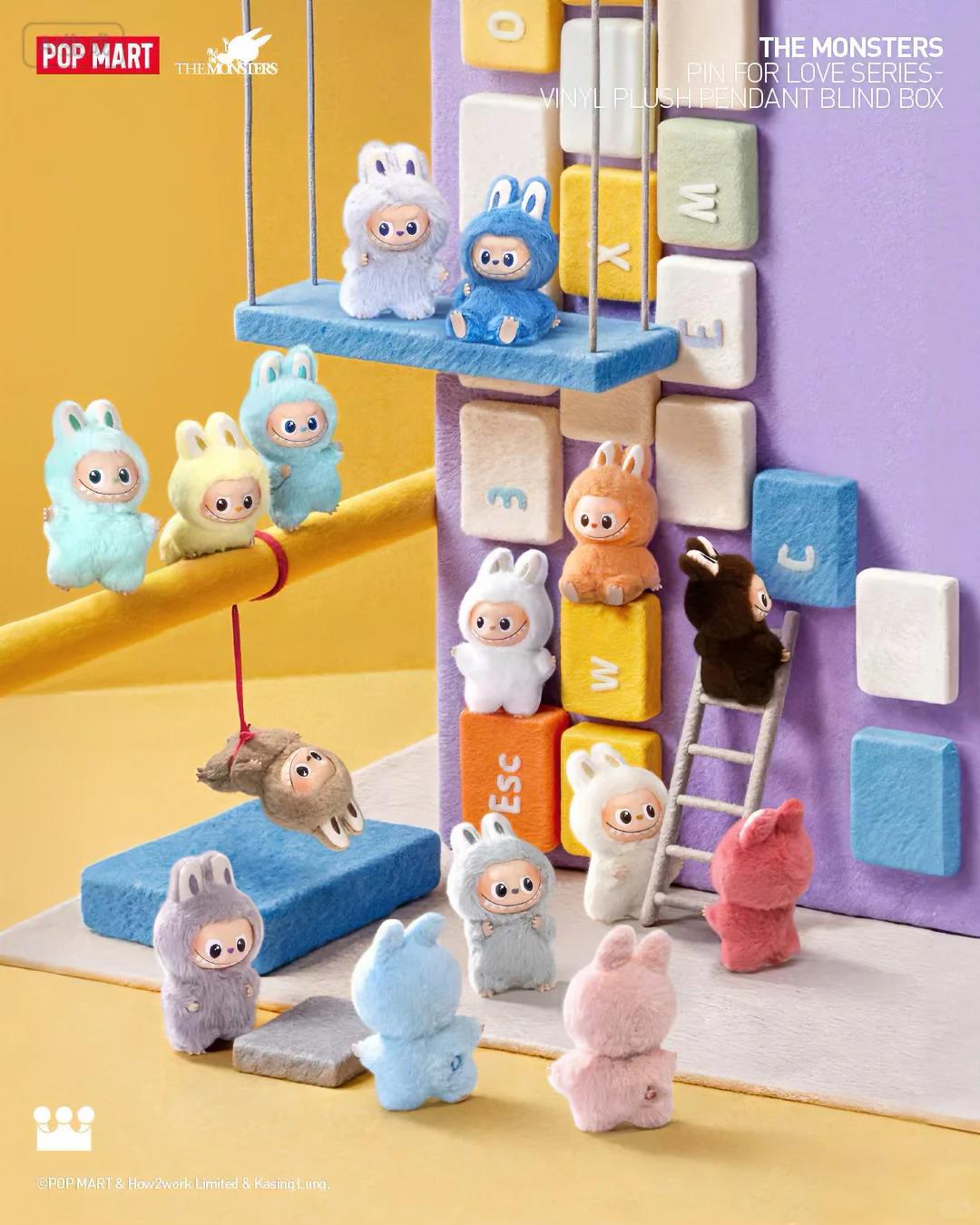
Core Insights - The mini toy market has evolved from a niche collector's segment to a significant consumer category, driven by changing consumption and aesthetic values among young people [1][31] - The trend of miniaturization in toys reflects a broader shift towards lightweight consumption and emotional connection, catering to the desire for personalized and unique products [30][31] Market Trends - The mini toy segment, particularly "萌粒" (mini figures), is projected to reach a market size of 72.7 billion yuan in 2024, with blind box figures being a popular category among manufacturers [2] - Mini toys are characterized by their small size, low price point (5-30 yuan), and strong emotional value, making them appealing to students and working professionals alike [4][9] Consumer Behavior - The rise of social media has popularized terms like "小鼻嘎," which refers to mini toys, indicating a cultural shift towards these products [2][8] - Mini toys serve as personal symbols in social contexts, enhancing individual expression and identity among consumers [4][9] Product Innovation - Leading brands like Pop Mart and others are at the forefront of the miniaturization trend, using it as a strategy to extend IP value and reach a broader audience [9][11] - Mini toys are increasingly integrated into everyday life, with products designed for various scenarios, such as keychains and stress-relief items [4][13] Cultural Impact - The mini toy phenomenon has sparked a unique cultural movement, with UGC (user-generated content) becoming a significant driver of consumer engagement and creativity [26][28] - The DIY aspect of mini toys allows consumers to personalize their products, further enhancing their emotional connection to the items [30][31] Industry Dynamics - The mini toy market is witnessing increased competition, with both established brands and new entrants leveraging IP collaborations and innovative designs to capture consumer interest [11][15] - The success of mini toys is also attributed to their adaptability in various retail environments, including pop-up stores and online platforms, which facilitate consumer interaction and engagement [24][30]

2025世界设计之都大会今开幕“设计之都”15年来产业规模已超1.6万亿元 上海设计:全球认可的品质符号
Jie Fang Ri Bao· 2025-09-25 01:53
Core Insights - The 2025 World Design Capital Conference (WDCC) has opened in Shanghai, marking the fourth year of hosting this event and the 15th anniversary since Shanghai was designated a "City of Design" by UNESCO in 2010 [1] - Over the past 15 years, Shanghai's creative and design industry has experienced a double-digit annual growth rate, expanding from 472.4 billion yuan to over 1.6 trillion yuan, with 21 national industrial design centers and 200 municipal design innovation centers established [1] Industry Impact - Design has become a tangible competitive advantage for companies, as evidenced by Dyson's bladeless fan and Apple's iPhone, which helped shift market dominance from Nokia [2] - Shanghai's enterprises, such as Chando, have successfully leveraged design in their products, with their "Ice Muscle Water" selling over 80 million bottles in 12 years, showcasing sustainable design practices that significantly reduce carbon emissions [2] - The eVTOL aircraft developed in Shanghai features a unique "tilt-rotor" design, enhancing both vertical takeoff and high-speed flight capabilities, leading to a recent procurement agreement with UAE's Autocraft for 350 units valued at 1 billion USD [2] Design in Urban Development - The integration of design in various sectors such as integrated circuits, biomedicine, artificial intelligence, high-end equipment, and new energy vehicles is evident, with notable products like the C919 aircraft and advanced medical imaging devices [3] - The transformation of Shanghai's industrial reputation from the 1970s to the current "fashion eight products" reflects the city's evolving design landscape, with innovative products gaining market traction [3] - The annual "Shanghai Design 100+" competition has attracted over 2,600 entries from 17 countries, serving as a platform for emerging brands and generating over 250 billion yuan in economic impact [3] Global Design Influence - Shanghai's design initiatives have enhanced the city's brand power and global resource allocation capabilities, with iconic landmarks and events like the Shanghai Design Week and Shanghai Fashion Week showcasing its design prowess [4] - The establishment of the "International Design Hundred" organization and various international collaborations highlight Shanghai's commitment to nurturing design talent and fostering global recognition [4] - The release of the strategic document "Opinions on Building a World-Class 'Design Capital'" in February 2022 underscores Shanghai's ambition to become a leading design city by 2030, marking a shift from design as a mere tool to a core urban development philosophy [4]