
中国联通

Search documents
“二次放号”泄露个人信息?“旧号新用”安全隐患如何破
Bei Jing Ri Bao Ke Hu Duan· 2025-10-21 03:15
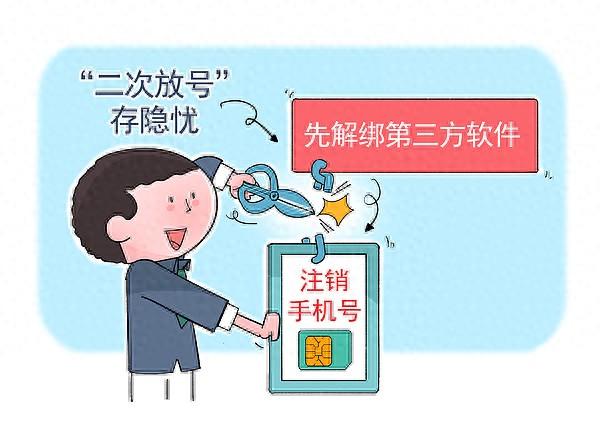
Core Points - The incident involving the late singer Li Wen highlights significant concerns regarding personal privacy and digital asset management due to the practice of number recycling by telecom operators [1][4][14] - Users are increasingly sharing their experiences of issues arising from recycled numbers, indicating a widespread problem that raises questions about the security mechanisms of platforms and the responsibilities of telecom operators [4][14] Summary by Sections Incident Overview - A recent case where a new phone number user accessed the account of the late singer Li Wen on a music platform due to number recycling has sparked widespread discussion about privacy and security [1][4] - Many users reported similar experiences, such as receiving debt collection calls for previous users or accessing personal information linked to recycled numbers [4][5] Telecom Operators' Practices - Investigations reveal that the three major telecom operators primarily offer recycled phone numbers, with no new number segments available [3][7] - The process of recycling involves a "cooling-off" period, but operators lack the authority to unlink third-party services associated with old numbers [7][14] Legal and Regulatory Insights - Legal experts emphasize that the primary responsibility for unlinking accounts lies with users, who must manage their digital assets carefully [14][15] - Telecom operators are expected to take reasonable measures to ensure the security of recycled numbers, but they are not held to an absolute standard of ensuring complete disconnection from previous users [15][16] Recommendations and Solutions - The introduction of the "One Certificate Inquiry" service by the Ministry of Industry and Information Technology allows users to check which accounts are linked to their phone numbers, although it does not support one-click unbinding [11][13] - Experts suggest that telecom operators and platforms should enhance their responsibilities, including better user notifications about unlinking accounts and implementing stricter verification processes for account access [16][18] Consumer Guidance - Users are advised to proactively unlink their accounts from various services before canceling their phone numbers and to check for any residual accounts linked to new numbers [17][18] - In cases of harassment or issues arising from recycled numbers, users should document evidence and report to relevant authorities [17][18]

分红能力盘点:消费服务篇:自由现金流资产系列15
Huachuang Securities· 2025-10-21 01:13
Group 1: Stable Cash Flow Assets - Pharmaceutical commerce has a cash flow ratio of 55% in Q2 2025, indicating a stable cash flow generation capacity since 2021[11] - The hotel and catering industry shows a cash flow ratio of 49% in Q2 2025, with an average cash flow ratio of 50% from 2016 to 2024[18] - General retail has a cash flow ratio of 49% in Q2 2025, supported by reduced capital expenditures and inventory depletion[25] - Telecom operators maintain a cash flow ratio of 39% in Q2 2025, benefiting from stable demand and high user retention[32] Group 2: Improving Cash Flow Assets - The trade sector exhibits a cash flow ratio of 63% in Q2 2025, significantly improved due to reduced capital expenditures and inventory shrinkage[41] - The potential shareholder return rate for the trade sector is 7.1%, while the actual return is only 1.9%, indicating substantial room for dividend release[44] Group 3: Assets Under Pressure - The tourism and scenic area sector has a cash flow ratio of 21% in Q2 2025, with profitability still below pre-pandemic levels[51] - Professional services show a cash flow ratio of 13% in Q2 2025, with a significant decline in profitability due to weak demand[55] - Medical services have a cash flow ratio of 25% in Q2 2025, with profitability under pressure and limited dividend release potential[61] - The education sector has a cash flow ratio of 52% in Q2 2025, but profitability remains constrained post-regulatory changes[67] Group 4: High Expenditure Assets - The automotive services and IT services sectors are still in a high expenditure phase, with capital expenditures exceeding 1.5 in Q2 2025, indicating a new cycle of high spending driven by technological advancements[3]
国产品牌被曝将集中上线,eSIM手机怎么办理?
Guan Cha Zhe Wang· 2025-10-21 01:09
Core Insights - The iPhone Air's domestic version has begun pre-sales on October 17 and will be fully launched on October 22, with most smartphone brands expected to adopt eSIM technology by early next year [1][4] - The three major telecom operators in China have announced that eSIM services are currently in the commercial trial phase, only supporting offline activation at service centers [1][4] - eSIM technology integrates SIM card functions into the phone's internal chip, enhancing convenience and allowing for more flexible internal layouts, particularly beneficial for high-end devices [3][6] Industry Developments - eSIM services are currently limited to the iPhone Air (model A3518), with plans for more models to be supported in the future [1][4] - China Mobile plans to introduce more devices that support both traditional SIM cards and eSIM, focusing on domestic technology development for eSIM chips and operating systems [1][3] - Over 170,000 users have already pre-ordered eSIM-enabled devices, indicating strong market interest [4] Competitive Landscape - The introduction of eSIM may increase competition among telecom operators, as it lowers the barriers for consumers to switch providers, potentially impacting revenue from traditional services [3][4] - China Unicom is leveraging partnerships with smart hardware manufacturers to advance eSIM technology and differentiate its offerings [3][4] - OPPO has launched its Find X9 series, with the Pro version set to support eSIM and satellite communication, highlighting the trend towards integrating advanced technologies in smartphones [6][7] Market Projections - Global eSIM smartphone connections are projected to reach 1 billion by the end of 2025 and 6.9 billion by 2030, representing 76% of total smartphone connections [7][8]

引领边缘AI新时代——湾芯展“边缘AI赋能硬件未来创新论坛”成功落幕
半导体行业观察· 2025-10-21 00:51
Core Viewpoint - The article discusses the rapid evolution of AI technology, particularly the rise of edge AI, which is transforming various industries and creating new opportunities for innovation and collaboration in the hardware sector [1][40]. Group 1: AI Technology and Industry Transformation - AI technology is penetrating various sectors at an unprecedented speed, with edge AI bringing intelligent computing from data centers to end devices, revitalizing the smart hardware industry [1]. - The integration of computing power, algorithms, and data is leading to innovative applications such as personal intelligent agents and large models on the edge, driving advancements in consumer electronics, industrial manufacturing, smart cities, and autonomous driving [1]. - Shenzhen is emerging as a global growth hub for the AI industry, supported by strong electronic information industry foundations, a complete supply chain, and a favorable policy environment [1]. Group 2: Policy and Ecosystem Support - Since 2025, Shenzhen has introduced a series of significant policies to support the AI industry, including funding subsidies, open scenarios, and computing power support, establishing a comprehensive AI industry support system [1]. - The "Action Plan for Accelerating the Construction of an AI Pioneer City in Shenzhen (2025-2026)" outlines Shenzhen's strategic ambition to become a globally influential AI city, promoting a "one area, one brand" industrial development pattern [1]. Group 3: Forum Highlights and Innovations - The "Edge AI Empowering Hardware Future Innovation Forum" held in Shenzhen gathered top experts and industry leaders to discuss technological frontiers, industry trends, and development opportunities under policy incentives [2]. - Keynote speeches highlighted advancements in edge AI technologies, including low-power, high-efficiency chips designed for personal intelligent agents, and the importance of balancing computing power, memory, and energy consumption in edge AI applications [5][8]. Group 4: Future Trends and Predictions - The AI industry is transitioning from a "training era" to a "reasoning era," with a focus on efficiency rather than scale, indicating a shift in competitive dynamics within the computing power industry [11]. - Predictions suggest that by 2025, the reasoning computing power will surpass training computing power, and the usage of domestic AI chips will exceed that of foreign chips for the first time [11]. Group 5: Technological Innovations and Solutions - Various companies are developing innovative solutions to address the challenges of edge AI, such as the introduction of new NPU architectures that enhance flexibility and efficiency in AI computations [8][9]. - The emergence of RISC-V architecture is highlighted as a transformative force in the semiconductor market, with expectations of significant market share growth by 2030 [20][21]. Group 6: Infrastructure and Global Expansion - Companies like China Unicom are building global computing networks to support enterprises' international expansion, addressing challenges related to dispersed computing power and network complexity [14][15]. - The integration of AI with global infrastructure aims to provide seamless connectivity and enhanced operational efficiency for businesses venturing abroad [14][15]. Group 7: Testing and Standards Development - The establishment of a comprehensive testing system for AI chips is crucial for ensuring efficiency and safety in the rapidly growing AI chip industry, with plans to develop national and industry standards by 2027 [39]. - The focus on application scenario-based testing and collaborative adaptation is essential for supporting the industry's growth and addressing the unique challenges posed by AI technologies [39].

国内首款eSIM手机即将发售!多家公司早有布局相关业务
Zheng Quan Shi Bao· 2025-10-21 00:48
Core Insights - Apple CEO Tim Cook announced the official launch of the iPhone Air in China on October 22, which is the first smartphone in the country to utilize eSIM technology, eliminating the physical SIM card slot [1] - Major Chinese telecom operators, including China Unicom, China Mobile, and China Telecom, have received approval to commence eSIM services, marking a significant shift towards a "cardless era" in mobile technology [1][2] - The global eSIM market is projected to grow significantly, with an estimated 1 billion eSIM-enabled smartphones by the end of 2025 and 6.9 billion by 2030, representing 76% of total smartphone connections [2] Industry Developments - The eSIM technology integrates SIM card functions into the phone's internal chip, allowing for a more compact design and improved features such as water and dust resistance [2] - Domestic brands are quickly adapting to the eSIM trend, with OPPO announcing an eSIM version of its Find X9 series set to launch in November [1] - The eSIM industry involves a complex ecosystem, including chip design, platform management, operator services, device integration, and end-user applications, with expectations for collaborative growth and maturity [3] Company Activities - Several companies have been actively involved in the eSIM space, including Unisoc, which has launched multiple eSIM products compliant with GSMA standards [4] - Eastcompeace has developed an embedded operating system and eSIM management platform that has received GSMA security certification [5] - Megmeet has established a mature eSIM solution with large-scale production capabilities across 4G and 5G platforms [5] Market Performance - eSIM concept stocks have seen an average increase of 42.42% this year, significantly outperforming the Shanghai Composite Index [7] - Six stocks have recorded gains exceeding 50%, including Hengbao Co., Eastcompeace, and Chutianlong [7] - Despite the overall positive trend, some stocks have experienced significant pullbacks, with several dropping over 30% from their year-to-date highs [7]
7天6板,600403,最新人气王!国内首款eSIM手机将发售,多家A股公司已抢先布局
Zheng Quan Shi Bao· 2025-10-20 17:56
Group 1: eSIM Technology and Market Development - eSIM technology is entering a new commercial phase in China, with major telecom operators like China Mobile, China Unicom, and China Telecom officially launching eSIM services for mobile phones [3][4] - The first eSIM phone in China, the iPhone Air, will be released on October 22, marking a significant milestone in the transition to a "no card" era for mobile devices [3][4] - Domestic brands such as OPPO and vivo are quickly following suit, with OPPO launching its eSIM-compatible phone in November and other brands expected to introduce similar products soon [3][4] Group 2: Industry Impact and Future Projections - eSIM is expected to become a mainstream communication solution, with predictions indicating that by the end of 2025, global eSIM smartphone connections will reach 1 billion, and by 2030, this number will grow to 6.9 billion, accounting for 76% of total smartphone connections [4] - The technology is seen as a key infrastructure for transforming the communication industry, enhancing user experience, and contributing to the development of the digital economy in China [4] Group 3: A-Share Market Performance and Company Involvement - Several A-share companies, including Unisoc, Eastcompeace, and Megmeet, have made significant advancements in eSIM technology, with products already in mass production and compliance with international standards [6] - The average increase in eSIM concept stocks has been 42.42% this year, significantly outperforming the Shanghai Composite Index, with six stocks rising over 50% [6][7] - Despite some stocks experiencing significant pullbacks, 14 eSIM concept stocks have received positive ratings from brokerage firms, indicating strong institutional interest [7]

国内首款eSIM手机即将发售 多家公司早有布局相关业务
Zheng Quan Shi Bao· 2025-10-20 17:10
Core Insights - Apple CEO Tim Cook announced the launch of the iPhone Air in China on October 22, which is the first smartphone in the country to use eSIM technology, eliminating the physical SIM card slot [1] - The launch follows the approval of eSIM services by major Chinese telecom operators, marking the official entry of eSIM technology into the mobile phone market in China [1][2] - The global eSIM market is projected to grow significantly, with an estimated 1 billion eSIM smartphone connections by the end of 2025 and 6.9 billion by 2030, representing 76% of total smartphone connections [2] Industry Developments - The eSIM ecosystem involves a complex supply chain including chip design, platform management, operator services, device integration, and end-user applications, with expectations for collaborative development and maturation of the industry [3] - Several companies in the A-share market have been actively developing eSIM capabilities, including Unisoc, which has launched multiple eSIM products compliant with GSMA standards [4] - Eastcompeace has successfully developed an embedded operating system and eSIM IoT management platform that received GSMA security certification [5] - Megmeet has established mature eSIM solutions with large-scale production on 4G/5G chip platforms [6] - Chutianlong's eSIM products have been approved by China Unicom, and Wanma Technology has been a long-term provider of eSIM solutions across various standards [7] Market Performance - eSIM concept stocks have seen an average increase of 42.42% year-to-date, significantly outperforming the Shanghai Composite Index, with six stocks rising over 50% [8] - Some eSIM concept stocks have experienced significant pullbacks from their year-to-date highs, with declines exceeding 30% for several companies [9] - A total of 14 eSIM concept stocks have received "positive" ratings from brokerage firms, with eight stocks rated by more than ten institutions, including ZTE, Guanghetong, China Telecom, China Mobile, and Megmeet [9]



eSIM还在半路上
Bei Jing Shang Bao· 2025-10-20 15:35
Core Viewpoint - The three major Chinese telecom operators have collectively announced the approval for commercial eSIM services, with Apple and OPPO launching eSIM-enabled devices, indicating a significant shift towards a "no-card revolution" in the industry [1][4][6]. Group 1: Industry Developments - China Mobile, China Unicom, and China Telecom have received official approval to launch eSIM services, marking a new phase in mobile technology [1]. - Apple will release the eSIM-enabled iPhone Air on October 22, while OPPO plans to introduce the Find X9 Pro with eSIM support [1][4]. - The rollout of eSIM technology is expected to face challenges in terms of operational rules and practical implementation, as indicated by varying responses from service staff regarding eSIM activation procedures [1][3]. Group 2: Market Response - Initial responses from telecom staff regarding eSIM services have been inconsistent, highlighting a lack of clarity and training on new procedures [3][4]. - Currently, the availability of eSIM devices is limited, with only a few models, primarily from Apple, being ready for market [5][6]. - OPPO's eSIM model is still undergoing approval processes, and other major brands like Huawei and Xiaomi have not yet launched eSIM-enabled smartphones [5][6]. Group 3: Future Trends - The global eSIM smartphone connection is projected to reach 1 billion by the end of 2025 and 6.9 billion by 2030, indicating a strong growth trajectory for eSIM technology [7]. - The advantages of eSIM, such as space-saving in devices and enhanced user flexibility, are clear, but the transition from traditional SIM cards will require significant adjustments in service models and regulations [6][7].


苹果“引爆”eSIM手机商用,国产芯片供应企业:合作模式还待清晰|eSIM重返系列观察②
Mei Ri Jing Ji Xin Wen· 2025-10-20 15:08
Core Viewpoint - The approval of eSIM commercial trials by China's three major telecom operators marks a significant step towards the widespread adoption of eSIM technology in smartphones, with the iPhone Air leading the charge in the domestic market [1][2]. Group 1: eSIM Commercialization - China Mobile, China Unicom, and China Telecom have received approval to conduct eSIM commercial trials across all 31 provinces in China, allowing users to register for networks without a physical SIM card [1]. - The iPhone Air, set to launch on October 22, is the first smartphone in China to support only eSIM, achieving over 100 million yuan in sales within one second during pre-sales [1]. - Domestic manufacturers like Huawei and OPPO are expected to follow suit by launching their own eSIM-enabled smartphones [1]. Group 2: Supply Chain and Technology - The supply of domestic eSIM chips is still in the early stages, with companies like Unisoc and Tongfu Microelectronics being key players in the supply chain [1][3]. - Unisoc has developed eSIM chip technology that is compatible with over 400 global operators, but the final selection of domestic operators and partners remains unclear [1][6]. - The eSIM chip supply process is hindered by the need for clear operational protocols and collaboration models between telecom operators and smartphone manufacturers [6]. Group 3: Industry Development and Future Prospects - The eSIM market in China has experienced various phases, including exploration, trial, suspension, and re-initiation, with significant advancements made since 2015 [2][3]. - Companies like Huada Semiconductor and Changdian Technology are actively developing new technologies and expanding their market presence in the eSIM sector [4][5]. - The future of the eSIM market is contingent on the successful establishment of a collaborative ecosystem among industry players, as emphasized by the three major telecom operators [7].

eSIM来了,但还在来的路上
Bei Jing Shang Bao· 2025-10-20 14:50
Core Viewpoint - The launch of eSIM technology by major Chinese telecom operators marks a significant shift in mobile connectivity, but practical implementation faces challenges in terms of service and operational rules [1][2][7]. Group 1: eSIM Launch and Initial Reactions - Major telecom operators in China, including China Mobile, China Unicom, and China Telecom, received approval for eSIM services and announced their launch on October 13 [1]. - Apple is set to release the iPhone Air with eSIM technology on October 22, while OPPO plans to introduce its Find X9 Pro model with eSIM support [1][3]. - Initial inquiries at telecom service centers reveal a lack of clarity and readiness regarding eSIM services, indicating that staff are still familiarizing themselves with the new technology [2][3]. Group 2: Challenges in Implementation - The current eSIM offerings are limited, with only a few models available for consumers, primarily the iPhone Air, while OPPO's eSIM model is expected to launch later [3][6]. - Operational challenges include the requirement for users to visit physical stores for eSIM activation, which complicates the user experience and slows down adoption [8]. - Experts suggest that telecom operators need to revise existing service models and regulations to facilitate smoother transitions to eSIM technology, including rules for number portability and cross-region service [8][9]. Group 3: Future Outlook - The potential for eSIM technology to revolutionize the mobile industry is evident, with predictions indicating that by the end of 2025, there will be 1 billion eSIM-enabled smartphones globally, increasing to 6.9 billion by 2030 [8]. - The advantages of eSIM, such as saving physical space in devices and enabling multiple numbers on a single chip, highlight its importance in the future of mobile technology [8][9].