
劲仔食品

Search documents
劲仔食品:第三季度归母净利润6083.35万元,同比下降14.77%
Xin Lang Cai Jing· 2025-10-23 11:02
劲仔食品10月23日晚间公告,2025年第三季度实现营业收入6.85亿元,同比增长6.55%;归属于上市公 司股东的净利润6083.35万元,同比下降14.77%;基本每股收益0.1362元。前三季度实现营业收入18.08 亿元,同比增长2.05%;归属于上市公司股东的净利润1.73亿元,同比下降19.51%;基本每股收益 0.3874元。 ...
劲仔食品:2025年前三季度净利润约1.73亿元
Mei Ri Jing Ji Xin Wen· 2025-10-23 10:59
每经AI快讯,劲仔食品(SZ 003000,收盘价:11.81元)10月23日晚间发布三季度业绩公告称,2025年 前三季度营收约18.08亿元,同比增加2.05%;归属于上市公司股东的净利润约1.73亿元,同比减少 19.51%;基本每股收益0.3874元,同比减少19.78%。 截至发稿,劲仔食品市值为53亿元。 每经头条(nbdtoutiao)——四次登上央视,知名大佬"消失"5年,我们在水果仓库找到了他!从月薪 5000到千亿市值公司联席总裁,他45岁再创业 (记者 曾健辉) ...
劲仔食品(003000) - 2025 Q3 - 季度财报
2025-10-23 10:45
Financial Performance - The company's revenue for Q3 2025 reached ¥684,529,502.05, representing a 6.55% increase year-over-year[5] - Net profit attributable to shareholders decreased by 14.77% to ¥60,833,499.04 for the quarter, and by 19.51% to ¥172,821,482.30 for the year-to-date[5] - The company's basic earnings per share for Q3 2025 was ¥0.1362, a decrease of 15.03% year-over-year[5] - Total operating revenue for the current period reached ¥1,808,428,530.48, an increase of 2.5% compared to ¥1,772,030,198.14 in the previous period[18] - Net profit attributable to shareholders of the parent company was ¥172,821,482.30, down 19.5% from ¥214,703,467.87 in the previous period[19] - Operating profit decreased to ¥197,859,172.11, a decline of 22.3% from ¥254,941,271.54 in the previous period[18] - The company’s total comprehensive income for the period was ¥173,147,174.91, down from ¥214,644,016.48 in the previous period[19] - Basic earnings per share decreased to ¥0.3874 from ¥0.4829 in the previous period, reflecting the decline in net profit[19] Cash Flow and Investments - The net cash flow from operating activities for the year-to-date was ¥281,468,276.06, down 30.67% compared to the previous year[5] - The net cash flow from operating activities was ¥281,468,276.06, down 30.7% from ¥405,991,139.30 in the previous period[21] - The company reported a net cash outflow from investing activities of ¥410,132,693.54, an improvement from a larger outflow of ¥564,440,963.46 in the previous period[21] - Cash and cash equivalents decreased from CNY 674,636,699.86 to CNY 334,467,932.41, a reduction of about 50.5%[15] - Cash and cash equivalents at the end of the period were ¥238,367,932.41, a decrease from ¥306,678,644.21 at the end of the previous period[21] Assets and Liabilities - The total assets as of September 30, 2025, were ¥2,205,803,136.94, an increase of 1.79% from the end of the previous year[5] - Total assets increased from CNY 2,167,038,656.12 to CNY 2,205,803,136.94, an increase of approximately 1.8%[16] - Total liabilities increased from CNY 736,647,882.40 to CNY 863,302,070.82, an increase of about 17.2%[16] - The company reported a total equity of CNY 1,342,501,066.12, with a slight decrease in capital reserve from CNY 515,836,157.89 to CNY 518,495,262.04[16] Shareholder Information - Total number of common shareholders at the end of the reporting period is 30,123[12] - The largest shareholder, Zhou Jinsong, holds 38.22% of shares, totaling 172,325,527 shares, with 129,244,145 shares pledged[12] Operational Metrics - The weighted average return on equity was 4.23%, down 1.06% from the previous year[5] - The accounts receivable increased by 130.31% to ¥46,810,061.93, indicating a rise in customer payments due[9] - The company reported a 39.84% increase in fixed assets, totaling ¥598,148,482.81, due to increased investments[9] - The company has a short-term loan of CNY 319,000,000.00, up from CNY 299,500,000.00, reflecting an increase of approximately 6.3%[16] - The company’s inventory decreased from CNY 317,108,643.77 to CNY 270,599,733.77, a decline of about 14.6%[15] - The company’s long-term borrowings increased to ¥90,000,000.00, marking a 100% increase, indicating a strategy to leverage for growth[9] - The company’s long-term borrowings stand at CNY 90,000,000.00, indicating a new debt issuance[16] Research and Development - Research and development expenses increased to ¥38,539,705.56, up 11.1% from ¥34,692,420.23 in the previous period, indicating a focus on innovation[18] Other Information - The company received government subsidies amounting to ¥5,280,761.86 during the quarter, contributing to its non-operating income[6] - The third quarter financial accounting report of the company is unaudited[23]
劲仔食品:第三季度净利润为6083.35万元,下降14.77%
Xin Lang Cai Jing· 2025-10-23 10:45
劲仔食品公告,第三季度营收为6.85亿元,同比增长6.55%;净利润为6083.35万元,下降14.77%。前三 季度营收为18.08亿元,同比增长2.05%;净利润为1.73亿元,下降19.51%。 ...
万辰集团苦觅“救命稻草”:创始人留置后辞任,闭店潮来袭,二代港股IPO求输血?
Sou Hu Cai Jing· 2025-10-23 03:30
Core Insights - Wancheng Group, originally a mushroom business, has transformed into a snack retail giant with over 15,000 stores, achieving a revenue growth of over 100 times in three years, but faces challenges with a low net profit margin of approximately 2% and significant profit distribution to minority shareholders [1][2][3] - The company is undergoing a leadership transition following the detention and resignation of founder Wang Jiankun, with his sister Wang Liqing taking over as chairman and his son Wang Zenning becoming the general manager, establishing a family management structure [1][9] Financial Performance - For the first three quarters of 2025, Wancheng Group reported a revenue of 36.562 billion yuan, a year-on-year increase of 77.37%, and a net profit attributable to shareholders of 855 million yuan, up 917.04% [1] - Despite high revenue, the net profit margin remains low at 2.34%, with a net profit margin of only 4.35% [2] - The company’s revenue surged from approximately 359 million yuan in the first three quarters of 2022 to 36.562 billion yuan in the same period of 2025, indicating a significant growth trajectory [3] Business Strategy and Challenges - Wancheng Group's rapid expansion has led to a high cost structure, with operating costs rising in line with revenue growth, indicating a lack of economies of scale [4] - The company employs a low-price strategy to capture market share, resulting in a diluted profit margin and increased competition among stores [4][14] - The high asset-liability ratio of 66.35% as of the third quarter of 2025 raises concerns about financial stability, with a significant portion of liabilities being short-term [5] Governance and Management Issues - The governance structure is heavily influenced by family members, with four out of eight board members being from the Wang family, raising concerns about the independence of the board [9][12] - The recent leadership changes and the family-centric governance model may pose challenges for the company's IPO plans, as market confidence has been shaken by the founder's legal issues [11][12] - The profit distribution structure has led to a significant portion of profits being allocated to minority shareholders, particularly benefiting Wang Zenning, which could create distrust among other shareholders [6][7] Market Position and Competitive Landscape - Wancheng Group's market position is threatened by increasing competition in the snack retail sector, with other brands like Mingming Hen Mang also pursuing IPOs and showing stronger financial performance [12] - The company faces risks from a saturated market where multiple brands compete for the same customer base, leading to potential store closures and reduced growth rates [12][14] - Quality control issues have emerged, with numerous consumer complaints regarding product safety and service, which could impact brand reputation and customer loyalty [14][15]

两个魔芋概念股的资本故事:盐津铺子向左,卫龙向右
3 6 Ke· 2025-10-22 12:22
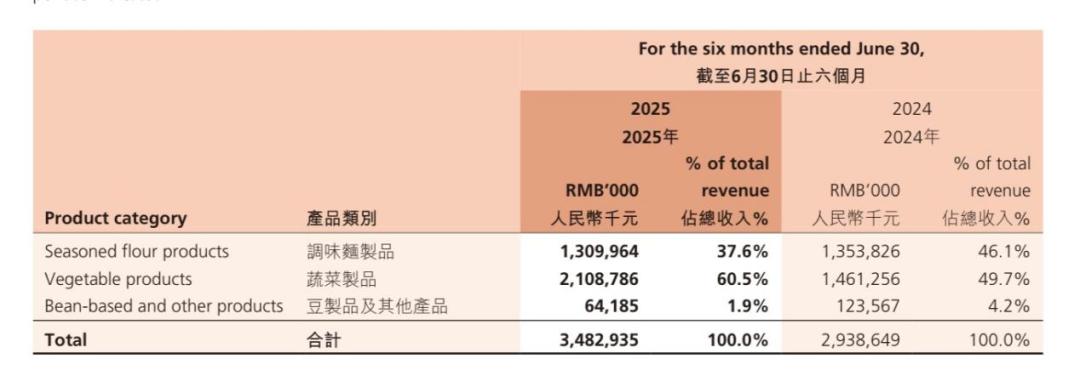
Core Insights - The konjac industry has transformed from a niche ingredient to a mainstream product in the snack market, driven by its low-fat and low-calorie appeal, resonating with consumer desires for guilt-free indulgence [1][3] - Capital markets have reacted positively, with stocks of leading companies like Yanjinpuzi and Weilong seeing significant price increases, indicating investor confidence in the konjac trend [1][5] Industry Dynamics - The konjac product narrative has shifted from health-focused messaging to emphasizing taste and texture, as companies adapt to changing consumer preferences [4][3] - The competitive landscape is intensifying, with numerous brands entering the market, leading to a shift from a "hot product" phase to a "red ocean" of competition [6][7] Financial Performance - Weilong's vegetable product revenue, primarily driven by konjac, grew by 59.1% in 2024, reaching 3.37 billion RMB, while Yanjinpuzi's konjac product revenue surged by 76.1% to 838 million RMB [5][8] - Both companies are experiencing rising costs, with konjac powder prices doubling in 2024, impacting profit margins [6][5] Strategic Positioning - Weilong relies heavily on konjac for brand transformation, with vegetable products now constituting 60.5% of its revenue, while Yanjinpuzi maintains a diversified product portfolio, using konjac as a growth engine [8][11] - The operational strategies differ: Weilong focuses on brand narrative and consumer engagement, while Yanjinpuzi emphasizes supply chain efficiency and distribution network [15][14] Market Outlook - The konjac market in China is projected to exceed 30 billion RMB by 2025, with a compound annual growth rate of approximately 11.8% [7][8] - The sustainability of growth for Weilong and Yanjinpuzi will depend on their ability to manage costs and adapt to market dynamics [7][13]
万辰集团苦觅“救命稻草”:创始人留置后辞任,开店神话变闭店潮,二代港股IPO求输血?
Sou Hu Cai Jing· 2025-10-22 04:30
Core Insights - Wancheng Group, originally a mushroom business, has transformed into a snack retail giant with over 15,000 stores, achieving over 100 times revenue growth in three years, but faces challenges with a low net profit margin of approximately 2% and significant profit distribution to minority shareholders [1][2][4] Financial Performance - In the first three quarters of 2025, Wancheng Group reported revenue of 36.562 billion yuan, a year-on-year increase of 77.37%, and a net profit attributable to shareholders of 855 million yuan, up 917.04% [2] - Despite high revenue, the net profit margin remains low at 2.34%, with a net profit margin of only 4.35% [2] - The company experienced a loss of 82.93 million yuan in 2023, with a net profit margin of -0.89%, and a slight recovery in 2024 with a profit of 294 million yuan, resulting in a net profit margin of 0.91% [2][4] Business Model and Strategy - Wancheng Group's rapid growth is attributed to its aggressive expansion strategy, including the acquisition and integration of regional snack brands under the "Haoxianglai" brand [4] - The company's gross profit margin for its snack business was 11.69% in the first three quarters of 2025, which is still considered low compared to traditional snack companies [4] - High operational costs, including sales and management expenses, have eroded profitability, with total operating costs reaching 32.289 billion yuan in the first half of 2025, a 74.87% increase [6] Governance and Management Changes - Following the detention of founder Wang Jiankun, a power transition occurred with his sister Wang Liqing becoming chairperson and his son Wang Zenning as general manager, establishing a family management structure [1][10] - The governance structure raises concerns as family members hold a majority of board seats, potentially limiting independent oversight [11][14] Market Position and Competition - Wancheng Group's market strategy has led to a high asset-liability ratio of 66.35% as of the third quarter of 2025, with significant short-term liabilities [7] - The company is planning an IPO on the Hong Kong Stock Exchange to raise funds for further expansion, but faces scrutiny over its governance and financial health [12][13] Challenges and Risks - The company has faced operational challenges, including a significant number of store closures and a drastic reduction in new store openings, indicating potential issues with its expansion strategy [16] - Complaints regarding product quality and customer service have surfaced, highlighting risks associated with its low-cost business model [16][17]

卫龙投10亿建基地,麻辣王子23.5亿造智能工厂,辣条巨头们为何疯狂加码产能?
Xin Lang Cai Jing· 2025-10-17 02:36
Core Insights - Major players in the Chinese spicy strip industry are aggressively expanding production capacity to capture market share amid increasing competition [1][6] - Weaker market positions for leading brands like Wei Long are prompting them to seek growth opportunities in Southeast Asia [1][13] Production Capacity Expansion - Wei Long has invested approximately 1 billion yuan in a new production base in Nanning, which will support its business development and expansion into Southeast Asia [3][5] - The new facility will cover an area of about 170 acres and integrate R&D, production, logistics, and marketing [3] - Mala Wangzi has also launched a new smart spicy strip factory in Hunan, with a total investment of 2.35 billion yuan and an expected annual output value of 9 billion yuan [5] - Jin Zai Food has opened a smart food industry park in Beihai, Guangxi, with an annual production capacity of 1.2 billion packages [5] Competitive Landscape - The Chinese savory snack market is becoming increasingly competitive, with major brands like Pepsi's Lay's leading with a 3.3% market share, followed closely by Wei Long and Wang Wang [6] - In the spicy strip segment, Wei Long holds a 23.91% market share, but this represents a decline of 2.34% from the previous year [6] - Competitors like Xian Ge and Mala Wangzi are gaining market share, with Xian Ge at 6.74% and Mala Wangzi at 5.07% [6] Differentiation Strategies - Xian Ge focuses on a "crispy" texture and offers lower prices compared to Wei Long, targeting specific regional markets [7][9] - Mala Wangzi differentiates itself through flavor upgrades and a youthful marketing approach, achieving revenues of 1.5 billion yuan in 2024 [9][11] - Wei Long has been raising prices to offset cost pressures, which has inadvertently created opportunities for competitors to capture market share [11] Market Trends - The Chinese spicy strip market is expected to see slower growth, with projected annual growth rates in the single digits from 2024 to 2026 [11] - Wei Long is targeting the Southeast Asian market, which has a favorable taste profile for spicy snacks, as part of its strategy to mitigate domestic competition [13] - The company has established an overseas development center and aims to expand its presence in over 50 countries by the end of 2024 [13]

生吃有毒,餐厅却抢着用,这个“奇葩食材”凭什么横扫餐饮圈?
3 6 Ke· 2025-10-16 00:34
Core Insights - The article discusses the rising popularity of konjac as a versatile ingredient in the food industry, highlighting its various forms and applications in restaurants and food products [1][6][19] Industry Overview - Konjac has a long history of consumption in China, with various methods developed to detoxify it for safe consumption [2][3][5] - The industrialization of konjac in China began in the 1980s, with significant advancements in processing technology and product development [9][11][13] Market Trends - The konjac food industry has experienced a compound annual growth rate of 20% over the past decade, with projections indicating a market size of 26.9 billion yuan by 2024 [20] - The demand for konjac products has surged, particularly in the new tea beverage sector, where it is used as a low-calorie, chewy ingredient [16][18] Challenges and Risks - Despite the growing market, the konjac planting area has been declining for four consecutive years, with a projected 20% reduction in yield due to drought conditions in 2024 [22][26] - The limitations of konjac as a crop, including its need for crop rotation and specific growing conditions, pose challenges for scaling production [25]

双节白酒动销平淡,关注内需政策:——食品饮料行业周报-20251013
Guohai Securities· 2025-10-13 13:01
Investment Rating - The report maintains a "Recommended" rating for the food and beverage industry [1] Core Views - The overall sales of liquor during the recent double festival are weak, with a year-on-year decline of 20%-30%, aligning with previous expectations. High-end brands like Moutai and Wuliangye performed relatively well, while lower-tier brands faced significant pressure [5] - The price stability of liquor during the double festival is noted, with slight increases observed post-festival. The report suggests monitoring price trends as e-commerce promotions begin [5] - The upcoming Sugar and Wine Conference is expected to provide marginal feedback, with the industry showing signs of bottoming out. The report emphasizes the importance of this event for potential recovery opportunities [6][7] Summary by Sections Recent Trends - The food and beverage sector has underperformed the Shanghai Composite Index, with a 0.61% increase compared to the index's 1.80% rise over the past two weeks [14] - The soft drink segment saw the highest increase of 9.98%, while several companies like Zhuangyuan Pasture and Yangyuan Beverage led the gains [14] Key Companies and Earnings Forecast - The report highlights several key companies with their respective earnings per share (EPS) and price-to-earnings (PE) ratios, recommending stocks such as Kweichow Moutai, Wuliangye, and Luzhou Laojiao for investment [25] - The report provides a detailed table of key companies, their stock prices, and projected earnings for 2024, 2025, and 2026, indicating a bullish outlook for several firms [25] Investment Strategy - The report suggests that recent policy changes may improve macroeconomic expectations, potentially enhancing both valuation and performance in the food and beverage sector. The overall valuation remains low, justifying the "Recommended" rating [8][23] - Specific recommendations include high-end liquor brands and popular consumer goods, indicating a diversified investment strategy across different segments of the food and beverage industry [8][23]




