
康龙化成

Search documents
医疗服务板块1月21日涨0.18%,南模生物领涨,主力资金净流入5050.97万元
Zheng Xing Xing Ye Ri Bao· 2026-01-21 08:53
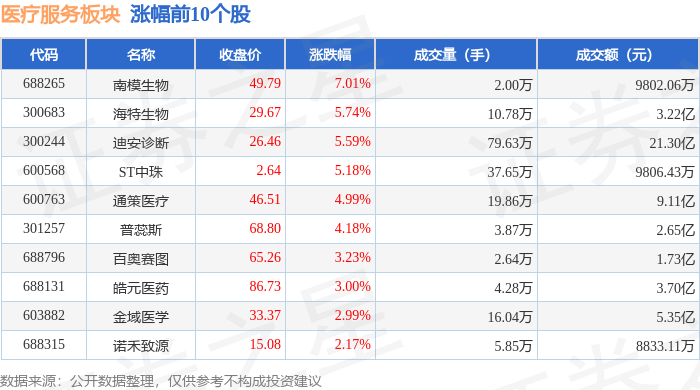
Market Overview - The medical services sector increased by 0.18% on January 21, with Nanmo Biology leading the gains [1] - The Shanghai Composite Index closed at 4116.94, up 0.08%, while the Shenzhen Component Index closed at 14255.12, up 0.7% [1] Top Gainers in Medical Services - Nanmo Biology (688265) closed at 49.79, up 7.01% with a trading volume of 20,000 shares and a transaction value of 98.02 million [1] - Hite Biology (300683) closed at 29.67, up 5.74% with a trading volume of 107,800 shares and a transaction value of 32.2 million [1] - Dean Diagnostics (300244) closed at 26.46, up 5.59% with a trading volume of 796,300 shares and a transaction value of 2.13 billion [1] - ST Zhongzhu (600568) closed at 2.64, up 5.18% with a trading volume of 376,500 shares and a transaction value of 9.81 million [1] - Tongce Medical (600763) closed at 46.51, up 4.99% with a trading volume of 198,600 shares and a transaction value of 911 million [1] Top Losers in Medical Services - Digital Human (920670) closed at 18.72, down 4.44% with a trading volume of 74,500 shares and a transaction value of 143 million [2] - Hongbo Pharmaceutical (301230) closed at 46.36, down 1.88% with a trading volume of 131,200 shares and a transaction value of 614 million [2] - Chengda Pharmaceutical (301201) closed at 41.39, down 1.76% with a trading volume of 36,600 shares and a transaction value of 153 million [2] Capital Flow in Medical Services - The medical services sector saw a net inflow of 50.51 million from institutional investors, while retail investors experienced a net outflow of 375 million [2] - The sector's overall capital flow indicates a strong interest from institutional and speculative investors, with retail investors pulling back [2][3] Notable Capital Inflows - Sanbo Brain Science (301293) had a net inflow of 91.48 million, representing 9.03% of its total capital [3] - Tongce Medical (600763) saw a net inflow of 83.46 million, accounting for 9.16% of its total capital [3] - BGI Genomics (300676) recorded a net inflow of 51.81 million, which is 8.37% of its total capital [3]




医疗创新ETF(516820)连续3天净流入,医疗器械板块持续活跃
Xin Lang Cai Jing· 2026-01-21 05:24
截至2026年1月21日 13:11,中证医药及医疗器械创新指数(931484)上涨0.03%,成分股特宝生物上涨 3.38%,甘李药业上涨2.24%,英科医疗上涨1.70%,康龙化成上涨1.23%,大博医疗上涨1.16%。医疗创 新ETF(516820)多空胶着,最新报价0.37元。 医疗创新ETF紧密跟踪中证医药及医疗器械创新指数,中证医药及医疗器械创新指数从医药卫生行业的 上市公司中,选取30只盈利能力较好且具备一定成长性和研发创新能力的上市公司证券作为指数样本, 以反映兼具盈利性与成长性的医药及医疗器械上市公司证券的整体表现。 数据显示,截至2025年12月31日,中证医药及医疗器械创新指数(931484)前十大权重股分别为药明康 德、恒瑞医药、迈瑞医疗、爱尔眼科、片仔癀、新和成、华东医药、康龙化成、艾力斯、甘李药业,前 十大权重股合计占比63.75%。 风险提示:基金有风险,投资需谨慎。基金管理人承诺以诚实信用、勤勉尽责的原则管理和运用基金资 产,但不保证本基金一定盈利,也不保证最低收益。基金管理人提醒投资人基金投资的"买者自负"原 则,在做出投资决策后,基金运营状况与基金净值变化引致的投资风险,由 ...
医疗创新ETF(516820)红盘向上,医保局首次明确机器人手术收费指引
Xin Lang Cai Jing· 2026-01-21 02:53
Group 1 - The core viewpoint of the news highlights the positive performance of the medical innovation sector, with the CSI Medical and Medical Device Innovation Index rising by 0.55% and several constituent stocks showing significant gains [1] - The Medical Innovation ETF has seen continuous net inflows over the past three days, with a maximum single-day net inflow of 6.0262 million and a total of 11.2443 million, averaging 3.7481 million per day [1] - The National Healthcare Security Administration issued a guideline aimed at standardizing pricing for surgical and treatment auxiliary services, promoting a shift from traditional treatment to precision medicine [1] Group 2 - The CSI Medical and Medical Device Innovation Index consists of 30 publicly listed companies with strong profitability, growth potential, and research innovation capabilities, reflecting the overall performance of the sector [2] - As of December 31, 2025, the top ten weighted stocks in the index include WuXi AppTec, Hengrui Medicine, Mindray Medical, and others, accounting for 63.75% of the total index weight [2]

预见2025:《2025年中国医药研发外包(CRO)行业全景图谱》(附竞争格局、行业规模等)
Qian Zhan Wang· 2026-01-21 01:09
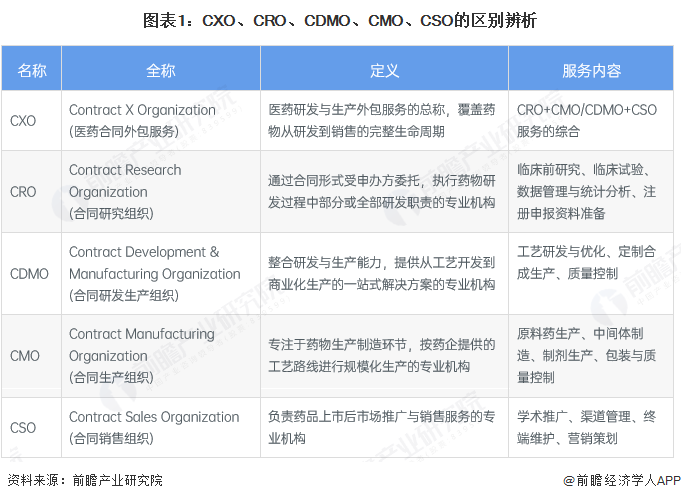
Core Insights - The CRO industry in China is experiencing significant growth, with the market size expected to expand from 90 billion yuan in 2021 to 126 billion yuan by 2024, reflecting a compound annual growth rate (CAGR) of 28%, which is substantially higher than the global average of 10% [13][26] - The industry is characterized by a clear competitive landscape, with WuXi AppTec as the dominant player, achieving revenue exceeding 20 billion yuan, while other key players include Kanglong Chemical, Tigermed, and Kelun Pharmaceutical [17][20] Industry Overview - Contract Research Organizations (CROs) are specialized entities that undertake drug development responsibilities on behalf of pharmaceutical companies, helping to reduce costs and risks while ensuring compliance [1] - The CRO industry is divided into preclinical and clinical segments, with preclinical CROs focusing on drug discovery and safety evaluations, while clinical CROs handle clinical trials and data management [1] Industry Development History - The CRO industry in China began in 1996 with the establishment of the first joint venture, and has evolved from a lack of formal organizations to a competitive landscape dominated by local leaders [9] - The industry has undergone significant changes, including the implementation of Good Clinical Practice (GCP) in 2003 and the introduction of the Marketing Authorization Holder (MAH) system, which has facilitated the growth of CRO services [11] Market Demand and Growth - The number of New Drug Applications (NDA) in China has been increasing, from 210 in 2021 to an expected 320 by 2024, driving demand for CRO services [14] - The global CRO market is projected to grow from 71 billion USD in 2021 to 90 billion USD by 2024, driven by increased healthcare demands due to aging populations and the COVID-19 pandemic [13] Competitive Landscape - The competitive structure of the Chinese CRO industry is categorized into three tiers, with WuXi AppTec leading the first tier, followed by Kanglong Chemical and Tigermed in the second tier, and smaller firms in the third tier [17] - Most companies are diversifying their services to include both CRO and CDMO (Contract Development and Manufacturing Organization) capabilities, enhancing operational efficiency [20] Regional Market Dynamics - The Yangtze River Delta region dominates the CRO market in China, accounting for approximately 43% of the market share, followed by the Beijing-Tianjin-Hebei region at 23% and the Pearl River Delta at 19% [23] Future Outlook - The Chinese CRO market is expected to continue its growth trajectory, potentially exceeding 144 billion yuan by 2028, supported by favorable policies and increasing demand for innovative therapies [26] - Despite challenges such as rising compliance costs and market saturation, the overall outlook remains positive, with expectations of sustained double-digit growth over the next five years [26]





智通港股沽空统计|1月21日
智通财经网· 2026-01-21 00:23
| 股票名称 | 沽空金额↓ | 沽空比率 | 偏离值 | | --- | --- | --- | --- | | 泡泡玛特(09992) | 10.08 亿元 | 17.14% | -7.69% | | 小米集团-W(01810) | 8.25 亿元 | 10.26% | -11.52% | | 美团-W(03690) | 7.77 亿元 | 17.49% | 1.85% | | 中国人寿(02628) | 7.18 亿元 | 23.90% | 3.47% | | 洛阳钼业(03993) | 6.87 亿元 | 35.31% | 21.99% | | 百度集团-SW(09888) | 6.24 亿元 | 21.01% | -5.12% | | 阿里巴巴-W(09988) | 6.13 亿元 | 6.91% | -7.34% | | 比亚迪股份(01211) | 4.97 亿元 | 20.25% | 0.39% | | 腾讯控股(00700) | 4.79 亿元 | 3.27% | -7.53% | | 中国平安(02318) | 3.47 亿元 | 16.40% | -12.96% | 前十大沽空偏离值排行 ...




兴业证券:A股业绩预告即将进入披露高峰 关注哪些方向?
智通财经网· 2026-01-20 10:56
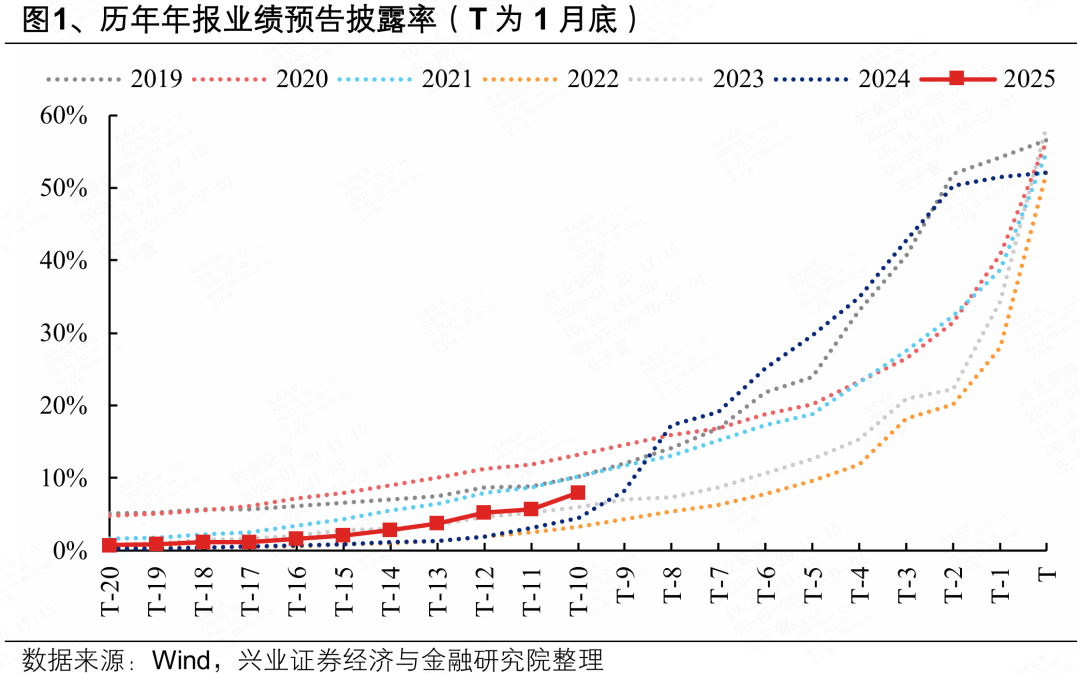
Core Viewpoint - As of January 19, the disclosure rate of annual performance forecasts for A-shares is 7.98%, with a peak expected in late January, where the final disclosure rate may reach around 55% [2][5]. Group 1: Performance Forecasts - The performance forecasts indicate that companies with significant net profit growth are primarily in sectors such as computing power, new energy, chemicals, pharmaceuticals, non-ferrous metals, and computers [6][10]. - By January 19, 447 A-share companies have released annual performance forecasts, with 144 companies expecting net profit growth exceeding 50%, mainly in computing power (semiconductors, communication equipment), new energy (batteries, photovoltaics), and chemicals [6][10]. Group 2: Market Reactions - As the performance forecasts enter their peak disclosure period, the correlation between stock prices and performance is expected to increase significantly in the latter half of January, with market sentiment returning to rationality [5]. - The market is likely to undergo a structural adjustment based on fundamentals, with previous hot sectors facing performance validation, while some low-performing but high-quality sectors may attract new capital inflows [5]. Group 3: Industry Insights - The sectors with upward revisions in profit forecasts since November include technology (especially in upstream computing hardware and downstream applications like consumer electronics and software), advanced manufacturing (new energy, military, automotive), and cyclical industries (building materials, non-ferrous metals, coal, steel) [12][13]. - The industries with lower performance growth since the last market rally include AI computing power, new energy, pharmaceuticals, and cyclical sectors like steel and glass fiber [14].

医疗四连跌,全市场规模最大医疗ETF(512170)放量失守半年线,场内高频溢价!
Sou Hu Cai Jing· 2026-01-20 06:32
Group 1 - The core viewpoint of the news is that the Medical ETF (512170) has experienced a decline of 1.61%, with the latest price at 0.366 yuan and a turnover rate of 2.25% [1] - The Medical ETF closely tracks the CSI Medical Index, which includes companies involved in medical devices, medical services, and medical information technology [1] - The latest scale of the Medical ETF is 26.117 billion yuan, with a total of 70.245 billion shares, indicating an increase of 524 million yuan in fund size over the past month [1] Group 2 - As of the previous trading day, the Medical ETF (512170) saw a net inflow of 26.1418 million yuan [2] - The top ten weighted stocks in the CSI Medical Index include WuXi AppTec, Mindray Medical, United Imaging Healthcare, Aier Eye Hospital, Kanglong Chemical, Tigermed, Lepu Medical, Yuyue Medical, New Industry, and Meinian Onehealth [2]


脑机接口概念利好不断,医疗创新ETF(516820)持续吸金
Sou Hu Cai Jing· 2026-01-20 06:32
Group 1 - The core viewpoint of the articles indicates a mixed performance in the medical and healthcare sector, with the China Medical and Medical Device Innovation Index experiencing a decline of 0.85% as of January 20, 2026, while certain stocks like Xinhecheng and Xingqi Eye Medicine showed gains [1] - The medical innovation ETF saw a decrease of 0.80%, with the latest price at 0.37 yuan, reflecting the overall market sentiment [1] - The brain-computer interface concept is gaining traction, supported by a significant investment of over 730 billion yuan in technology loans by the China Export-Import Bank, focusing on AI, brain-computer interfaces, humanoid robots, and high-end instruments [1] Group 2 - According to J.P. Morgan's conference, over 20 Chinese companies participated, highlighting the growing global interest in domestic innovative drugs and medical devices, which is expected to boost industry sentiment [1] - The China Medical and Medical Device Innovation Index includes 30 companies with strong profitability and growth potential, with the top ten stocks accounting for 63.75% of the index [2] - Recent data shows a net inflow of 1.8727 million yuan into the medical innovation ETF, with a total of 59.7643 million yuan over the past five trading days, indicating a positive trend in investor interest [2]



港股再融资迎“开门红” 募资超270亿港元
2 1 Shi Ji Jing Ji Bao Dao· 2026-01-20 05:23
Core Insights - The Hong Kong capital market has seen a significant increase in refinancing activities at the beginning of 2026, with over HKD 27 billion raised by listed companies through various methods, marking a more than 20-fold increase compared to HKD 1.1 billion in the same period of 2025 [1][2]. Group 1: Market Activity - As of January 18, 2026, Hong Kong listed companies have raised a total of HKD 27 billion through placements, rights issues, and other means, indicating a strong market confidence and financing demand [2][3]. - The robust start to refinancing in 2026 builds on a historical high in 2025, where the total refinancing scale reached HKD 325.32 billion, surpassing the IPO fundraising scale for the first time [2][3]. - Major companies like BYD, Xiaomi, and Geely have completed significant fundraising rounds in 2025, contributing to a trend of continuous capital replenishment [2][3]. Group 2: Structural Characteristics - The refinancing activities in early 2026 show a diverse industry distribution, including sectors such as oil and petrochemicals, construction, software services, and healthcare [4]. - Notably, five companies raised over HKD 1 billion each, with the majority of funds being allocated to support international expansion, enhance R&D capabilities, and optimize financial structures [4][5]. - Placement remains the dominant method for refinancing, with over 75% of the 36 cases in 2026 utilizing this approach, highlighting its efficiency and flexibility [4][5]. Group 3: Emerging Trends - A notable trend in 2026 is the strategic mutual holdings between companies through cost issuance, exemplified by the collaboration between SF Express and Jitu Express [5]. - The refinancing landscape is characterized by a higher proportion of traditional and consumer industries compared to emerging sectors, reflecting the complementary nature of Hong Kong and A-share markets [5][6]. - Future trends indicate that refinancing will maintain high levels but with a more stable growth rate, driven by ongoing demand in capital-intensive industries and an increasing focus on optimizing capital structures and enhancing R&D capabilities [6][7].
脑机接口商业化可期,医疗创新ETF(516820)交投活跃
Sou Hu Cai Jing· 2026-01-20 03:59
Group 1 - The core viewpoint is that the brain-computer interface (BCI) industry is experiencing significant policy support and technological breakthroughs, leading to a promising commercialization outlook [2] - The National Medical Products Administration has prioritized the approval of implantable BCI medical devices, with expected registration certificates to be issued gradually in the first quarter of 2026 [1][2] - The National Healthcare Security Administration is guiding local authorities to establish pricing standards for invasive and non-invasive BCI procedures, facilitating clinical application and payment pathways [1][2] Group 2 - The China Securities Medicine and Medical Device Innovation Index (931484) shows mixed performance among its constituent stocks, with New Hope leading at a 1.99% increase, while Gan Li Pharmaceutical is the biggest loser [1] - The top ten weighted stocks in the China Securities Medicine and Medical Device Innovation Index account for 63.75% of the index, including companies like WuXi AppTec and Mindray [3] - The Medical Innovation ETF closely tracks the China Securities Medicine and Medical Device Innovation Index, reflecting the overall performance of profitable and growth-oriented companies in the pharmaceutical and medical device sectors [2]