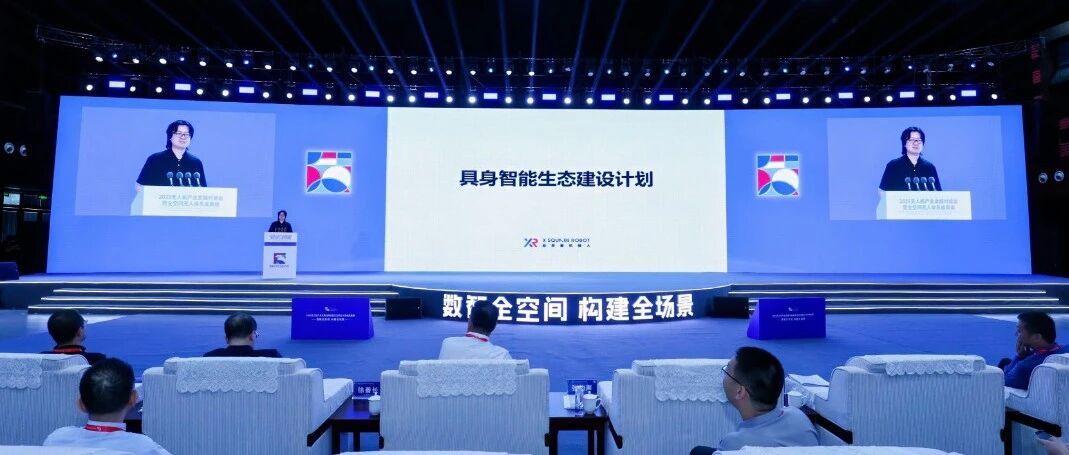
自变量机器人

Search documents
近70亿!9月具身机器人领域最新融资情况
具身智能之心· 2025-10-15 01:26
Core Insights - The article provides an overview of the investment landscape in the robotics and embodied intelligence sector for September, highlighting significant funding rounds and key players in the industry. Investment Highlights - Xingmai Innovation completed an A+ round of financing, focusing on high-end intelligent pool cleaning robots, led by Meituan Longzhu with participation from several notable investors [1]. - Zivariable Robotics secured nearly 1 billion yuan in an A+ round, led by Alibaba Cloud and Guoke Investment [2]. - Onestar, a developer of data-driven intelligent evolution robots, completed a seed round financing of several hundred million yuan, with investments from BV Baidu Ventures and other firms [3]. Detailed Financing List - A comprehensive list of companies and their financing details for September includes: - CV Anno Robotics: Angel round, several tens of millions [4] - JEBOT: A round, amount unspecified [4] - LINKHOU: A round, over 100 million yuan [4] - BrainCo: Pre-B round, 30 million USD [5] - Motorevo: A round, over 100 million yuan [5] - Beatbot: A+ round, 1 billion yuan [6] - Other companies also received funding across various rounds, indicating a robust investment environment in the robotics sector [4][5][6].

阿里巴巴(09988)组建机器人和具身智能团队 探索让AI从虚拟世界走向物理世界
智通财经网· 2025-10-09 07:49
Group 1 - Alibaba is transitioning its Tongyi Qianwen language model towards becoming an intelligent agent capable of real-world actions, utilizing tools and memory through reinforcement learning for long-horizon reasoning [1] - The company has formed a small team focused on robotics and embodied intelligence, indicating a strategic shift towards integrating AI with physical applications [1] - Alibaba has invested $140 million in the robotics company "Self-Variable Robotics" to accelerate AI and robotics technology development, product iteration, and commercialization [1] Group 2 - Alibaba's CEO stated that global AI investment is expected to reach $4 trillion over the next five years, emphasizing the need for Alibaba to keep pace with this growth [2] - The company plans to invest an additional 380 billion yuan in cloud and AI hardware infrastructure over the next three years, building on previously announced investments [2]


阿里巴巴组建机器人和具身智能团队 探索让AI从虚拟世界走向物理世界
Zhi Tong Cai Jing· 2025-10-09 07:48
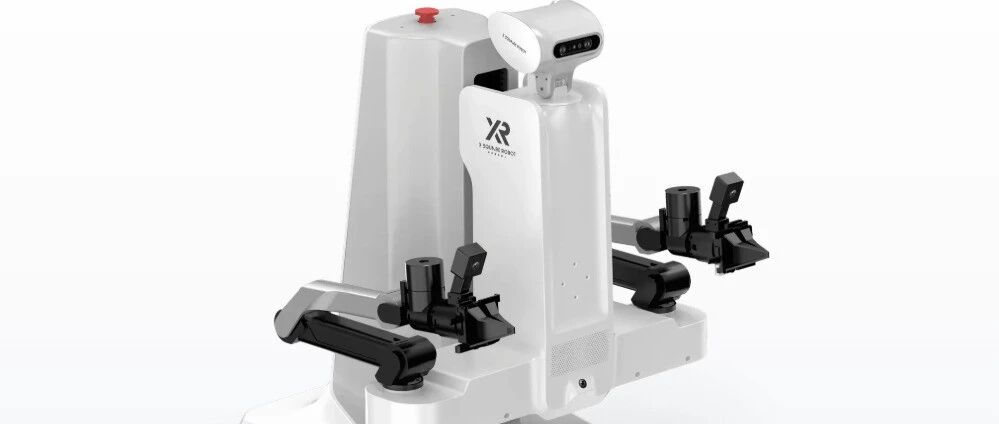
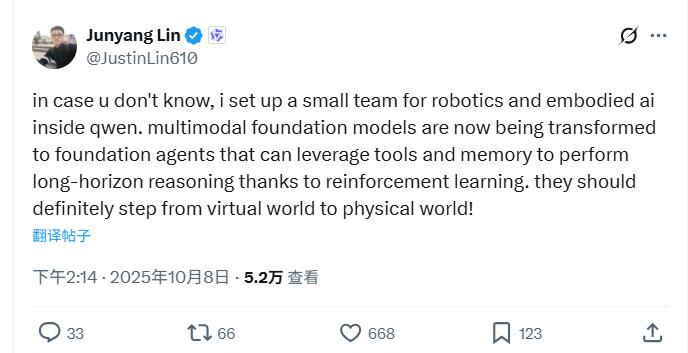
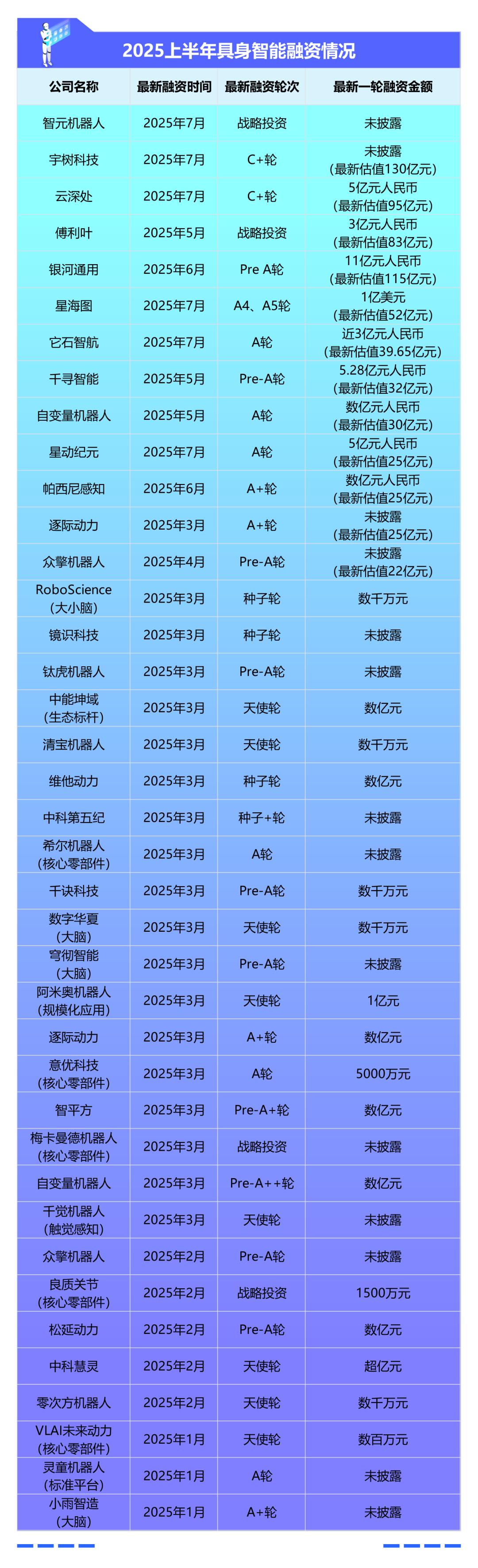
据了解,阿里巴巴(09988)正持续加码硬科技与AI产业。9月8日,阿里巴巴集团宣布领投机器人科技企 业"自变量机器人"1.4亿美元融资。本轮融资将用于加速其在全球范围内的人工智能与机器人核心技术 研发、产品迭代及商业化落地。此次领投,除资本注入外,阿里巴巴亦有望在云计算、AI平台、供应 链、全球化渠道等方面与自变量机器人展开深度协同,助力其技术产品快速规模化。未来,双方或将在 智能制造、仓储物流、家庭服务机器人等场景率先落地合作项目。 另外,在此前的2025云栖大会上,阿里巴巴CEO吴泳铭亦表示,未来五年全球AI投资总额将加速增长 到4万亿美元,阿里必须保持同步。除了2月公布的未来三年为云和AI硬件基础设施投入3800亿元外, 阿里还计划追加投入。 10月8日,阿里通义千问大语言模型负责人林俊旸在社交媒体X上发文称,已组建机器人和具身智能的 小型团队。他表示,多模态基础模型正转变为基础智能体(agents),这些智能体可以利用工具和记忆通 过强化学习进行长视野(long-horizon:需要多个步骤完成的大型任务或复杂操作序列)推理,"它们绝对应 该从虚拟世界走向物理世界"。这意味着,阿里正在探索让通义千问 ...
阿里下场,通义千问牵头组建机器人AI团队
Xuan Gu Bao· 2025-10-09 00:14
Core Insights - Alibaba Group has established an internal robotics team, marking its entry into the competitive AI hardware market alongside global tech giants [1][3] - The formation of the "Robotics and Embodied AI Group" signifies a strategic shift from AI software to hardware applications [1][3] - Alibaba Cloud has made its first investment in embodied intelligence by leading a $140 million funding round for the startup X Square Robot [1][4] Group 1: Company Developments - Alibaba's CEO stated that global AI investment is expected to accelerate to $4 trillion over the next five years, necessitating Alibaba's alignment with this growth [1] - The company plans to invest an additional $58 billion in cloud and AI hardware infrastructure over the next three years [1] - The newly formed robotics team aims to leverage Alibaba's strengths in large models and AI technology to capture a share of the rapidly growing embodied AI market [3] Group 2: Market Context - The establishment of Alibaba's robotics team coincides with significant investments in the robotics sector by other tech giants, including SoftBank's $5.4 billion acquisition of ABB's industrial robotics business [1][6] - The global robotics market is projected to reach $7 trillion by 2050, attracting substantial capital from various investors [6] - NVIDIA's CEO highlighted AI and robotics as major growth opportunities, with autonomous vehicles expected to be a primary commercial application of robotics technology [6] Group 3: Startup Investment - Alibaba's investment in X Square Robot represents its first foray into the embodied intelligence sector, with the startup having raised a total of approximately $280 million in less than two years [4] - X Square Robot has developed a humanoid robot capable of 360-degree cleaning and is currently targeting institutional clients such as schools and hotels [5] - The company plans to prepare for an IPO next year, with expectations that its "robot butler" will become a reality within five years [5]
单笔10亿融资频现!9月机器人行业融资环比激增40%,自变量机器人、首形科技引领具身智能融资热潮
机器人大讲堂· 2025-10-08 09:49
根据机器人大讲堂 &立德智库不完全统计,2025年9月,中国机器人行业融资活动呈现显著回暖态势,共发 生融资事件56起,较8月的39起环比增长超40%,市场活跃度明显提升。融资总额预估达到54亿-78亿元, 较8月28亿-47亿元的区间实现大幅跃升,反映出资本对机器人赛道,尤其是头部项目和前沿技术领域的出手 力度与信心显著增强。 从融资规模来看,大额融资事件表现尤为抢眼。 本月亿元级融资高达 13起,不仅在数量上近乎8月(7起) 的两倍,其战略意义更为深远。其中, 通用具身智能模型研发领域出现单笔高达 10亿元的A+轮融资 ,显示 出市场对这一前沿制高点的强烈追捧; 服务机器人 领域亦有龙头企业完成约 10亿元融资 ,凸显了其在商用 清洁等成熟场景中实现规模化落地的巨大潜力与商业价值。这些大额融资清晰地表明,资本正以前所未有的力 度,向那些具备定义下一代机器人平台潜力的关键技术节点集中。 融资轮次分布延续了早期为主的格局,但中后期融资活力增强 。 种子 /天使轮与A轮系列融资合计占 比达到 86 %,是创新活力的主要来源。与此同时,B轮及以后的中后期融资事件数量有所增加,如昂泰微精等企业 获得持续资本加持,反 ...

创投观察:具身智能赛道融资门槛达亿元级,然后呢?
Zheng Quan Shi Bao Wang· 2025-09-30 09:44
此外,从大额融资的事件来看,根据投中嘉川CVSource的统计,2025年前8个月具身智能赛道融资事件 达到了138起,其中亿元以上规模的融资事件达到52起。仅在7月7日到13日这一周,就有6家具身智能的 初创公司官宣了"亿元"级别以上的融资。 "亿元级融资"似乎已成为这个赛道的入场门槛,资本对这一赛道的狂热,再次让"泡沫"争议浮出水面, 毕竟如今大部分的人形机器人仍处于技术周期,离真正落地应用并走向产业化仍有不小的距离。当前凭 借"讲故事"获得巨额资金,不少人担忧"退潮"之后会一地鸡毛,但也有人认为,这次不同于过去任何一 次"泡沫",是对一次颠覆性技术崛起的押注。我们该如何看待这份热度背后的"泡沫"?资本究竟在为什 么而"买单"? 记者观察发现,看似狂热的资本背后实则有三条清晰的逻辑主线:一是抢抓时间窗口。当前人形机器人 虽品类繁多,但真正落地、尤其走进C端家庭的产品屈指可数,赛道正处于"技术突破期"的关键节点。 谁能率先实现落地并量产、让用户形成使用习惯,谁就能抢占先发优势——一旦技术成熟、市场格局定 型,后来者将很难追赶。资本愿意为这种"先到先得"的机会支付溢价,本质是在赌行业"入场券"。 日前,消费级 ...
如何看人形机器人的发展阶段、空间和后续催化?
2025-09-28 14:57
Summary of Conference Call on Humanoid Robots Development Industry Overview - The conference call focuses on the humanoid robot industry, particularly developments related to Tesla's Optimus robot and other domestic manufacturers like Chery, Leju, and Fuliye [1][2][3]. Key Points and Arguments - **Tesla's Optimus Development**: Tesla is actively developing Optimus V3, addressing hand flexibility and AI brain issues. The V2.5 version has garnered attention, and the upcoming shareholder meeting in November will showcase Optimus and propose a compensation plan linked to a production target of 1 million units, which is significant for the T-chain's future [1][2]. - **Market Dynamics**: Major overseas manufacturers are beginning factory audits in China, indicating a new wave of product mass production. The V3 version is expected to be released in October/November, featuring substantial hardware changes [1][2]. - **Investment Opportunities**: The humanoid robot sector presents notable investment opportunities, with a focus on hardware changes, supply chain dynamics, and supportive domestic policies. The fourth quarter is anticipated to be a golden period for T-chain transactions [1][3][4]. - **Policy Support**: The Chinese government has introduced 30 national standards for artificial intelligence, and Hangzhou aims for an AI terminal industry scale of 300 billion by 2027, indicating increased policy support [1][3]. Additional Important Content - **Hardware Innovations**: Key hardware trends include the development of lightweight materials, axial flux motors, and advancements in joint testing. These innovations are crucial for enhancing robot performance [5][6]. - **Supply Chain Evolution**: The supply chain is expanding product categories, moving from lead screws to joint modules and dexterous hands, which increases the value of single SPs and enhances the credibility of the industry chain [3][7]. - **Domestic Market Characteristics**: The domestic market lacks leading companies with intelligent applications recognized by the market. However, large platform companies have advantages in resource allocation and product iteration [8]. - **Future Development Directions**: The industry will focus on segments with barriers to entry, such as dexterous hands and visual modules, which require both hardware and software integration. Companies like Reiser and Opto have made significant breakthroughs in these areas [9]. - **Application Scenarios**: The successful application of humanoid robots in scenarios like inspection, textile industry labor replacement, and logistics is critical for mass production. Standardization in these applications is underway, which will influence future production trends [10].

人形与具身智能产业何以叩响“Scaling Law”之门?
机器人大讲堂· 2025-09-24 11:09
Core Viewpoint - The humanoid robot industry is at a critical transformation point, moving from early "theme speculation" to "pre-investment in industrial trends" as companies like Tesla and Figure begin small-scale production. The industry's non-linear growth hinges on breakthroughs in hardware cost reduction and advancements in intelligent robotics [1][3]. Group 1: Current Industry Landscape - The core contradiction in humanoid robotics is not about "whether to ship" but rather "whether to form a sustainable industrial flywheel." By the end of 2024 and early 2025, many domestic companies have completed deliveries of hundreds to thousands of units, primarily in research, education, and display sectors [1][3]. - Initial order numbers are not the key signal; the real turning point for the industry lies in the "Scaling Law moment" of the robotic brain, where intelligence improves non-linearly with data volume and model scale, breaking through the bottleneck of scenario generalization [1][3]. Group 2: Challenges to Scaling Law Moment - Two major challenges need to be addressed: high hardware costs and the lack of standardized solutions. For instance, Tesla's Optimus Gen1 has a high BOM cost, with a target to reduce it to $20,000 per unit. Key components for cost reduction include joint modules and sensors [3]. - The software side lacks a "robotic version of ChatGPT." The robotic brain must possess both "perception decision-making" and "motion control" capabilities, but current models face data challenges, including complex motion data modalities and high costs of real-world data collection [3][4]. Group 3: Technological Pathways - The "big and small brain collaboration" has become the mainstream engineering approach, with three clear paths for the evolution of large models in robotics. The dual-system layered VLA architecture is currently the optimal solution for engineering implementation [4][5]. - Figure's Helix system exemplifies this collaboration, utilizing a slow system for understanding natural language and a fast system for real-time control, enabling complex tasks in flexible manufacturing scenarios [7][9]. Group 4: Commercialization Pathways - The commercialization of humanoid robots is expected to follow a "from easy to difficult" path, starting with ToG (research and education), then ToB (industrial manufacturing), and finally ToC (household services). The ToB sector is becoming a critical battleground for breakthroughs [8][9]. - The apparel manufacturing industry is a typical case for ToB implementation, with a significant global workforce and high labor costs, yet low penetration of traditional industrial robots due to the flexibility of materials and rapid style changes [8][9]. Group 5: Investment Trends and Future Outlook - The flow of capital in the industry is shifting from a focus on hardware to software, with significant investments in embodied intelligent large models from companies like Google and NVIDIA. Domestic startups are also gaining traction in this space [11]. - The ultimate goal of the humanoid robot industry is to replicate the "non-linear growth curve" seen in sectors like electric vehicles and smartphones, with the "Scaling Law moment" of the robotic brain being the key trigger for this growth [13].
超越资本狂热:具身智能的死亡之谷与真实拐点
3 6 Ke· 2025-09-23 11:32
过去这段时间,关于"具身智能"的讨论和投入几乎达到了前所未有的"疯狂"状态。头部企业重仓下注,创投圈高频出手,产业巨头与创业公司同台竞技, 一时间"具身智能"成了资本和媒体的宠儿。市场上,更是频频涌现出数十亿级的融资大单,产业链上下游如火如荼,仿佛谁慢一步就要错失时代红利。 然而,热潮之下,冷静的声音并未消失。 正如《经济日报》所言,别再搞一哄而上的"人工智能+"。这句警语不仅点中了中国AI产业的"成长烦恼",也为当下这场全球范围内的具身智能竞赛敲响 了警钟。 它不仅是AI从虚拟世界走向物理世界的里程碑,更被视作"下一个通用技术平台"。但如果我们只停留在融资排行榜、Demo视频和PPT故事之中,忽视了 创新的可持续性、技术的现实边界、产业的生态健康以及社会的伦理责任,所谓的"热潮"很快就会像以往的技术泡沫一样退去,甚至带来更大失望和资源 浪费。 因此,本文希望跳出"资本狂热"和"赛道爆发"的表层逻辑,将目光转向技术创新、产业落地、责任治理、社会价值等更具深度与可持续性的议题。 让我一起从热闹的背后去反思:热潮之下还有哪些值得思考的创新命题?在资本和技术之外,我们需要怎样的产业耐心和培育机制?只有这样,这场AI ...
以具身基础模型驱动产业生态发展,自变量机器人释放真实落地需求
机器人大讲堂· 2025-09-23 01:22
Core Viewpoint - Hefei is strategically developing a comprehensive ecosystem for embodied intelligence, transitioning from a fragmented innovation model to a collaborative cluster approach, focusing on full-chain layout, element synergy, and scene implementation [1][11]. Group 1: Industry Development - Hefei's approach emphasizes "scene innovation" to bridge the gap between technology and application, integrating embodied intelligence into real-world production and life scenarios [1][11]. - The city aims to cultivate embodied robots as effective productivity tools, highlighting the need for a "smart brain" that understands the physical world and "chain master enterprises" that can integrate the industry chain [1][11]. Group 2: Strategic Collaborations - On September 20, a strategic cooperation agreement was signed between the International Advanced Technology Application Promotion Center (Hefei), Hefei High-tech Zone Management Committee, and other entities to promote the development of the drone industry and embodied intelligence [2]. - Self-variable Robotics, a pioneer in end-to-end general embodied intelligence models, is collaborating with Hefei's industrial chain to create impactful robot products and meet local application demands worth hundreds of millions [5][12]. Group 3: Technological Innovations - The "WALL-A" model developed by Self-variable Robotics demonstrates strong generalization capabilities, enabling robots to understand and solve physical world problems autonomously [5][8]. - The newly released open-source model "WALL-OSS" aims to lower industry entry barriers and accelerate the large-scale application of embodied intelligence by attracting more enterprises and developers [6][10]. Group 4: Application and Commercialization - Hefei's established industrial ecosystem provides a testing ground for embodied intelligence robots, facilitating the transition from technology concepts to market products through real-world scenario validation [11][12]. - The collaboration between Self-variable Robotics and Hefei will focus on various application scenarios, including public services, manufacturing, and logistics, to create replicable and valuable robot application demonstration systems [13][14]. Group 5: Education and Research - The partnership will also involve building industry-academia-research platforms with universities to foster cutting-edge embodied intelligence technology development and promote deep integration of research and industry [14].