Arm

Search documents
ArmUnlocked速递(2):端侧AI与光追革新,Lumex平台重塑消费电子算力底座
Haitong Securities International· 2025-09-10 13:38
Investment Rating - The report does not explicitly state an investment rating for the industry or specific companies involved Core Insights - The Arm Lumex platform integrates CPU, GPU, and System IP for enhanced performance and energy efficiency, achieving double-digit IPC improvements for six consecutive years and boosting on-device AI inference performance by up to 5x and energy efficiency by 3x through SME2 technology [1][2][3] - The Mali G1-Ultra GPU features a new hardware ray tracing architecture, claiming a 2x increase in ray tracing performance and a 20% improvement in gaming and AI performance, which redefines the efficiency of art budgets and power consumption in mobile devices [3][15] - SME2 technology enhances on-device AI capabilities, allowing for significant performance improvements in various applications while maintaining the CPU as a versatile execution vehicle for AI tasks [4][16] - Arm emphasizes the importance of ecosystem standardization and collaboration with OEMs to promote scalable AI PC/tablet solutions, addressing challenges such as memory and bandwidth constraints [6][19] Summary by Sections Event Overview - On September 10, 2025, Arm's Unlocked event focused on the development of on-device AI and introduced the Lumex platform, which features a C1 CPU cluster and Mali G1 series GPU, achieving significant performance and efficiency improvements [1][13] Platform Engineering - The Lumex platform represents a shift from traditional CPU/GPU configurations to a co-optimized system, with various CPU tiers designed for different performance needs, corroborated by real-world performance metrics [2][14] GPU Advancements - The Mali G1-Ultra GPU's new architecture allows for high-quality rendering and user-generated content creation, with a focus on stable power control and predictable image quality improvements [3][15] AI Development - SME2 technology supports a full-stack software ecosystem, enhancing development efficiency and enabling various AI applications to run effectively on CPUs, while allowing for GPU offloading in high-load scenarios [4][16][18] Ecosystem and Standardization - Arm identifies key development directions in the AI PC/tablet domain, focusing on system standardization, collaboration with domestic solution providers, and leveraging software compatibility to enhance performance and reduce costs [6][19]
Intel announces key executive shake-up, says products chief Holthaus will exit
Yahoo Finance· 2025-09-08 20:12
Executive Changes - Intel announced significant executive changes, including the departure of products chief Michelle Johnston Holthaus after over 30 years with the company [1] - Holthaus will remain as a strategic adviser for the coming months [1] - Kevork Kechichian has joined as executive vice president and general manager of the data center group, coming from Arm [2] Leadership Restructuring - CEO Lip-Bu Tan is working to flatten the leadership structure, with key chip groups reporting directly to him [2] - A new central engineering group will be established, led by Srinivasan Iyengar, to build a custom silicon business for external customers [3] - Naga Chandrasekaran will expand his role to include Foundry Services, while Jim Johnson has been appointed as general manager of Intel's client computing group [4] Market Context - The changes occur during a challenging period for Intel, with U.S. President Donald Trump announcing a potential 10% government stake in the company [4] - Trump has also called for CEO Tan to resign due to conflicts of interest [4]

联发科回应英伟达收购传闻!
国芯网· 2025-09-05 12:48
Core Viewpoint - The article discusses the collaboration between MediaTek and NVIDIA to develop the GB10 super chip, alongside speculation regarding a potential acquisition of MediaTek by NVIDIA for $73 billion, which MediaTek has denied [1]. Group 1 - MediaTek and NVIDIA are working together on the GB10 super chip, indicating a strong technological complementarity and close partnership between the two companies [1]. - There are rumors about NVIDIA considering acquiring MediaTek for $73 billion, but MediaTek has officially stated that these rumors are not true [1]. - NVIDIA previously attempted to acquire Arm for $40 billion in 2022, but the deal was blocked by regulatory concerns over monopoly issues, suggesting that a similar challenge could arise if NVIDIA pursues MediaTek [2][3]. Group 2 - The article also mentions the upcoming 2025 Bay Area Semiconductor Industry Ecosystem Expo, scheduled for October 15-17, 2025, at the Shenzhen Convention Center, with an exhibition area of 60,000 m² and over 600 participating companies [4].


英伟达收购联发科?官方回应!
半导体芯闻· 2025-09-05 10:29
Core Viewpoint - The article discusses the rumors surrounding NVIDIA's potential acquisition of MediaTek for approximately $73 billion, which MediaTek has denied as untrue [2]. Group 1: Acquisition Rumors - MediaTek has publicly refuted rumors of a $73 billion acquisition by NVIDIA, stating "not true" in response to market speculation [2]. - The speculation was fueled by NVIDIA's announcement of a collaboration with MediaTek on the GB10 super chip, highlighting the close technological partnership between the two companies [2]. Group 2: GB10 Super Chip Details - The GB10 super chip combines MediaTek's CPU and memory design with NVIDIA's Blackwell GPU, featuring 20 Arm v9.2 CPU cores, 31 TFLOPs FP32 performance, and up to 128GB LPDDR5X unified memory, utilizing TSMC's N3 process [2]. - The launch of the GB10 chip has been delayed from its original schedule of July 2025 [2]. Group 3: Regulatory Challenges - Large acquisitions face significant challenges, as evidenced by NVIDIA's failed attempt to acquire Arm for $40 billion in 2022 due to regulatory concerns [3]. - If NVIDIA were to pursue MediaTek, it would likely encounter strict regulatory scrutiny, particularly from the Taiwanese government, which may oppose the acquisition of a key semiconductor company by a U.S. firm [3].
从软件定义到AI定义,Arm如何加速汽车芯片商用?
2 1 Shi Ji Jing Ji Bao Dao· 2025-09-03 04:19
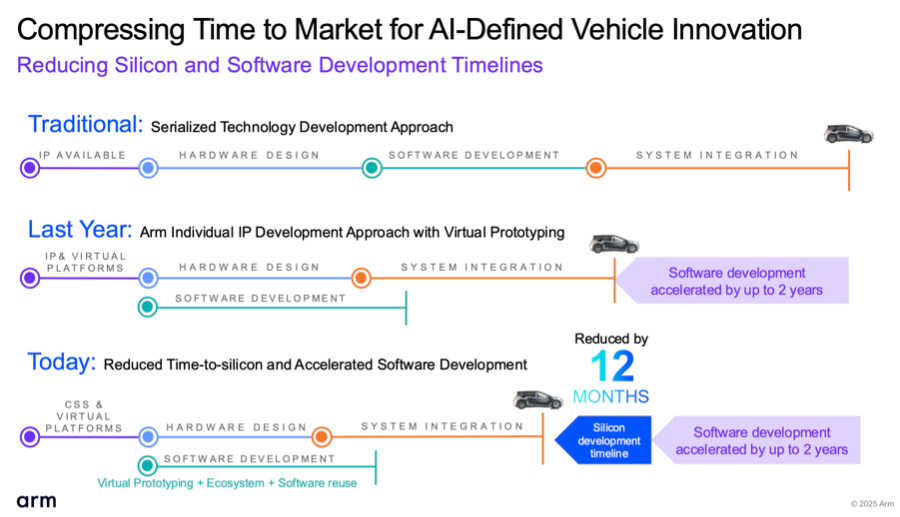
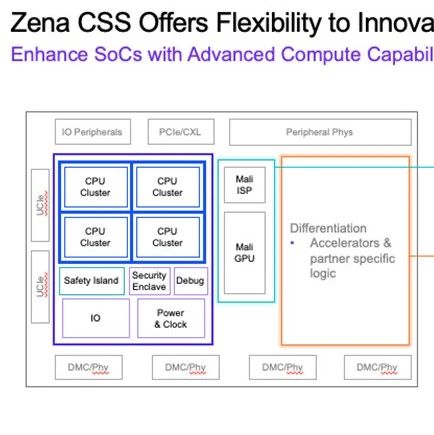
Core Insights - The automotive industry is entering the "AI-defined car" era, which significantly increases the demand for computing power in vehicles [1][2] - Arm has launched the Arm Zena Compute Subsystem (CSS), a standardized and pre-integrated computing platform that can help automakers shorten development cycles by up to 12 months [1][8] - Over 10 global partners, including automakers and chip designers, are collaborating with Arm, with some having obtained technical authorization for Zena CSS [1][2] AI-Defined Cars - The current phase of AI model development is early, leading to a gradual accumulation of functionalities in automotive applications [2] - Features previously exclusive to high-end models, such as real-time driver monitoring and adaptive in-vehicle infotainment systems, are becoming standard in new models [2] - The complexity of automotive development is increasing, necessitating a modular, secure, and high-performance computing platform to meet evolving safety standards and reduce integration risks [2][4] Zena CSS Features - Zena CSS is built on the Armv9 architecture and includes 16 Cortex-A720AE cores, with scalability options allowing for configurations up to 32 cores [3][9] - Arm emphasizes the importance of software capabilities, ensuring that AI tools, workflows, and software libraries are in place to support the latest AI applications [3][4] - The Arm KleidiAI software library has been expanded to optimize the performance of large language models on Arm CPUs [3] Accelerating Time to Market - The speed of vehicle updates has increased compared to traditional fuel vehicles, making it crucial to accelerate the commercialization of new models [5][8] - Arm has introduced virtual prototyping technology to allow software developers to begin work on platforms as soon as Arm IP is released, effectively reducing development delays by two years [5][8] - Zena CSS integrates hardware and firmware components, which can reduce chip development cycles by up to 12 months and lower overall development costs by decreasing the number of engineering resources required by approximately 20% [8][9] Chiplet Architecture - The chiplet architecture is seen as a key direction for reducing costs and accelerating the update and launch of automotive chips [8][9] - Zena CSS supports chiplet architecture and provides necessary standard interfaces for customers and partners to design based on this architecture [9][12]
一颗RISC-V芯片,打破常规!
半导体行业观察· 2025-09-01 01:17
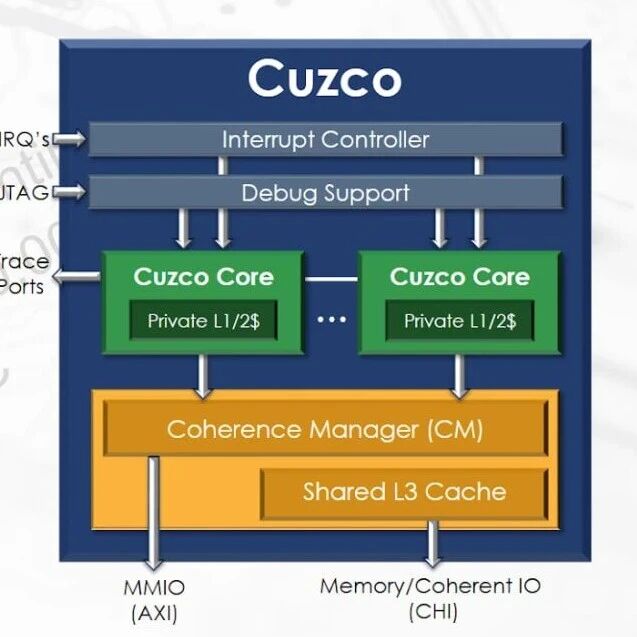
Core Insights - Condor Computing, a subsidiary of Andes Technology, focuses on developing licensable RISC-V cores, similar to Arm and SiFive, and has prior RISC-V design experience before its establishment in 2023 [2] - The Cuzco core, to be showcased at Hot Chips 2025, is a high-performance RISC-V design featuring advanced out-of-order execution capabilities and sophisticated branch predictors, expected to outperform existing RISC-V cores like Alibaba's T-HEAD C910 and SiFive's P550 [2][6] Core Overview - Cuzco is an 8-wide out-of-order core with 256 ROB entries, targeting clock speeds of approximately 2 GHz to 2.5 GHz on TSMC's 5nm process, with a 12-stage pipeline [6][10] - The core employs a static scheduling approach to save power and reduce complexity, which does not require modifications to the ISA or compiler for optimal performance [4][10] Execution Resources - Cuzco's execution resources are grouped into multiple slices, each capable of executing all supported RISC-V instructions, allowing for easy scalability by adjusting the number of slices [33] - Each slice has a set of execution queues (XEQ) that hold micro-operations waiting for functional units, with a maximum of two micro-operations executed per cycle [33] Branch Prediction - The core utilizes a complex branch predictor, TAGE-SC-L, which efficiently manages branch predictions by selecting the most suitable history length for each branch [11][12] - Cuzco features an 8K entry branch target buffer (BTB) and a 32-entry return stack for predicting return values, with instruction fetching supported by a 64 KB instruction cache [14] Load/Store Architecture - Cuzco's load/store unit includes a 64-entry load queue, a 64-entry store queue, and a 64-entry data cache miss queue, with a maximum load bandwidth of 64B per cycle [36][38] - The L1D cache is 64 KB with an 8-way set associative design, while the L2 cache can be configured up to 8 MB, and the L3 cache is shared among eight cores [38][43] Performance and Efficiency - Cuzco's design aims to achieve high performance while maintaining low power consumption, with a focus on minimizing replay penalties and optimizing resource utilization through a time resource matrix (TRM) [23][25] - The core's architecture allows for dynamic scheduling and effective handling of cache misses through instruction replay mechanisms [50][52]
加速汽车芯片落地,Arm放大招
半导体芯闻· 2025-08-27 10:40
Core Insights - Arm has been a significant player in the automotive chip market for over 25 years, with a notable increase in chip shipments based on Arm architecture, tripling in the past five years [1] - The semiconductor market is projected to grow from $68 billion in 2024 to $132 billion by 2030, with automotive semiconductor value per vehicle increasing from $759 to approximately $1,332 [3][7] - The shift towards electric and intelligent vehicles is driving demand for advanced semiconductor technologies, particularly in power electronics and AI integration [7][8] Group 1: Automotive Chip Market Dynamics - The automotive industry is transitioning from internal combustion engines to hybrid and electric vehicles, increasing the demand for advanced semiconductor components [7] - New safety regulations are requiring even entry-level vehicles to be equipped with additional sensors and controllers, further driving semiconductor demand [7] - The complexity of automotive systems is increasing due to AI integration, necessitating advanced computing solutions [8] Group 2: Arm's Strategic Innovations - Arm is addressing the challenges of increasing complexity in automotive chip design by introducing Compute Subsystems (CSS) to streamline development processes [12][17] - The launch of the Arm Zena CSS aims to provide a standardized, pre-integrated computing platform that can reduce chip development cycles by up to 12 months [20][25] - Zena CSS supports a flexible architecture that allows for easy integration of custom accelerators and logic components, enhancing differentiation for automotive manufacturers [25][27] Group 3: Future Outlook and AI Integration - Arm anticipates that AI will play a larger role in automotive functionalities, including driving decision-making and user interaction [8][10] - The company emphasizes the importance of innovation flexibility, scalability of AI applications, and reduced time-to-market for automotive solutions [10] - Arm's long-term commitment to the automotive sector is expected to accelerate innovation in the Chinese automotive market, leveraging its established expertise [31]
东南亚半导体也要崛起了?马来西亚发布首款边缘 AI 芯片
3 6 Ke· 2025-08-27 02:08
Core Insights - SkyeChip has launched Malaysia's first self-developed edge AI chip, MARS1000, marking the country's entry into the AI chip race [1][2] - The MARS1000 chip is based on 7nm process technology and is designed for smart IoT applications, showcasing potential in various sectors such as smart agriculture, Industry 4.0, and smart cities [1][3] Industry Overview - The development of the MARS1000 chip is a result of Malaysia's strategic upgrade in the semiconductor industry, with the government planning to invest 25 billion MYR and attract at least 500 billion MYR in local and foreign investments [3][4] - Malaysia's semiconductor industry has evolved from traditional backend manufacturing to high-value segments, contributing 13% of global semiconductor packaging and testing capacity [5][6] Economic Impact - In 2023, Malaysia's semiconductor exports exceeded 120 billion USD, accounting for 62% of its electrical and electronic product exports and contributing to a quarter of the national GDP [5] - Malaysia holds a strategic position in the global semiconductor trade, producing about 20% of the chips for the United States [5][6] Investment and Development - The semiconductor industry in Malaysia has attracted significant foreign direct investment, with Penang alone drawing 13 billion USD in 2023, surpassing the total of the previous seven years [8] - The government has signed a 10-year, 250 million USD technology licensing agreement with Arm to support local chip design [8] Competitive Landscape - Despite the emergence of local companies like SkyeChip, the semiconductor industry in Malaysia is still dominated by international giants such as Intel and Infineon, which control core technologies and market shares [8][9] - The potential impact of the MARS1000 chip's launch on the market will depend on the reactions of major chip companies [10]
服务器CPU,变局已至
3 6 Ke· 2025-08-26 11:25
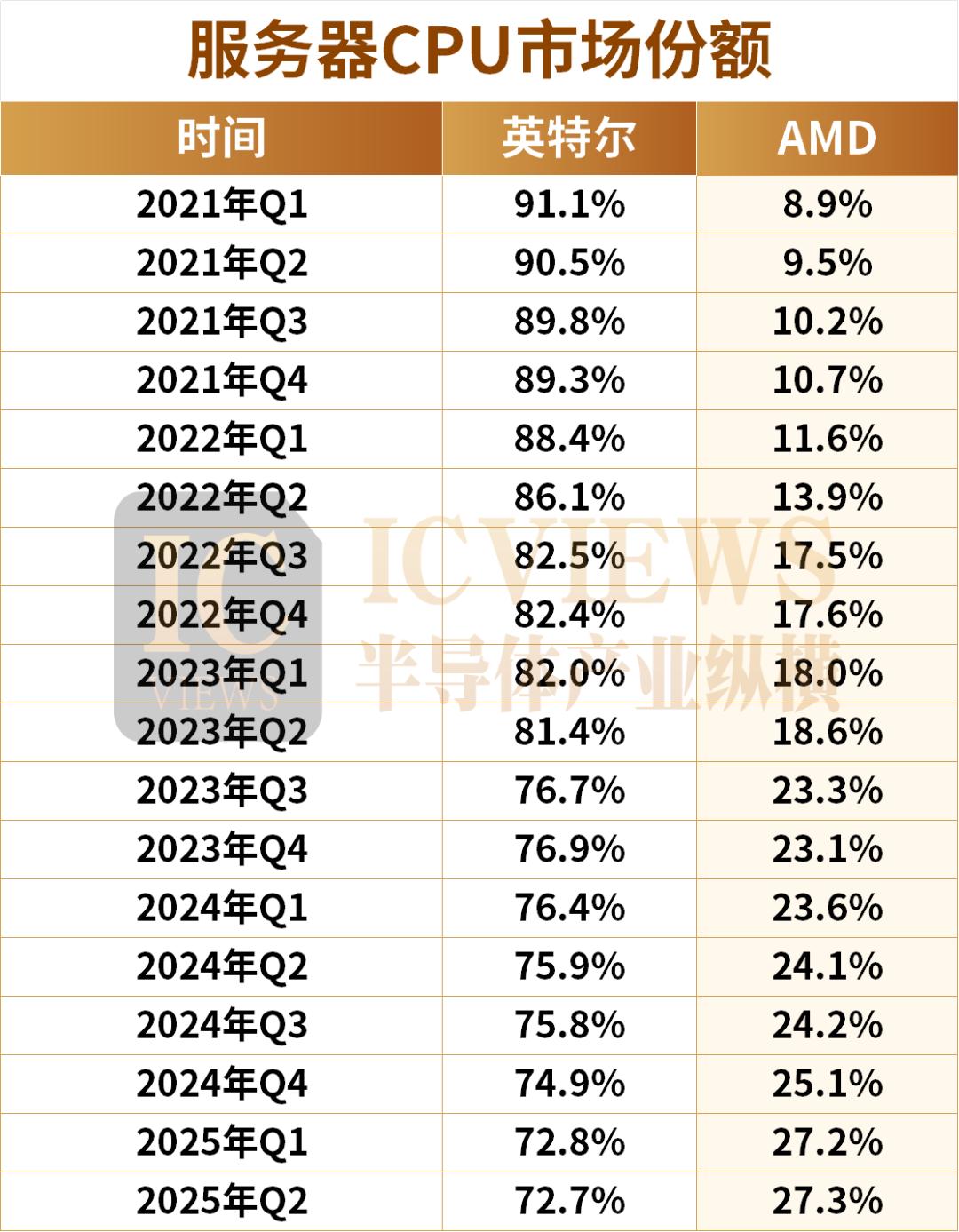
Group 1: Market Overview - The semiconductor value for data center servers is projected to reach $500 billion by 2030, indicating a rapidly expanding market [1] - IDC's VP Mario Morales predicts that data centers will become the fastest-growing sector in the semiconductor industry over the next five years [1] Group 2: Server CPU Landscape - The server CPU market is undergoing a silent architectural revolution with x86, ARM, and RISC-V architectures competing for dominance [2] - x86 architecture has historically dominated the server CPU market, primarily led by Intel, but this stronghold is beginning to weaken [3] Group 3: Market Share Dynamics - Intel's market share in server CPUs has been declining, from 91.1% in January 2021 to 72.7% in Q2 2025, while AMD's share has increased from 8.9% to 27.3% in the same period [5][8] - AMD's EPYC series has significantly contributed to its market penetration, with expectations to become the largest x86 CPU supplier in data centers by 2026 [8] Group 4: ARM Architecture Growth - ARM architecture has shown a growth rate of 70% since 2018, with cloud service providers increasingly adopting ARM-based CPUs for their efficiency and cost advantages [10][15] - Amazon AWS has been a pioneer in deploying ARM CPUs, with over 2 million units shipped since the launch of its Graviton series [12] Group 5: RISC-V Architecture Emergence - RISC-V architecture is gaining attention as a new path in server CPUs, although its current influence is less than that of ARM [17][18] - RISC-V's open-source nature allows for customized chip development, which could disrupt the traditional x86 and ARM markets [19][20] Group 6: New Entrants in the Market - Qualcomm is re-entering the server CPU market with a focus on ARM architecture, having previously exited due to ecosystem challenges [22] - Nvidia is making significant strides in the CPU space with its Grace CPU, designed to work closely with its GPUs for enhanced performance [25][26]

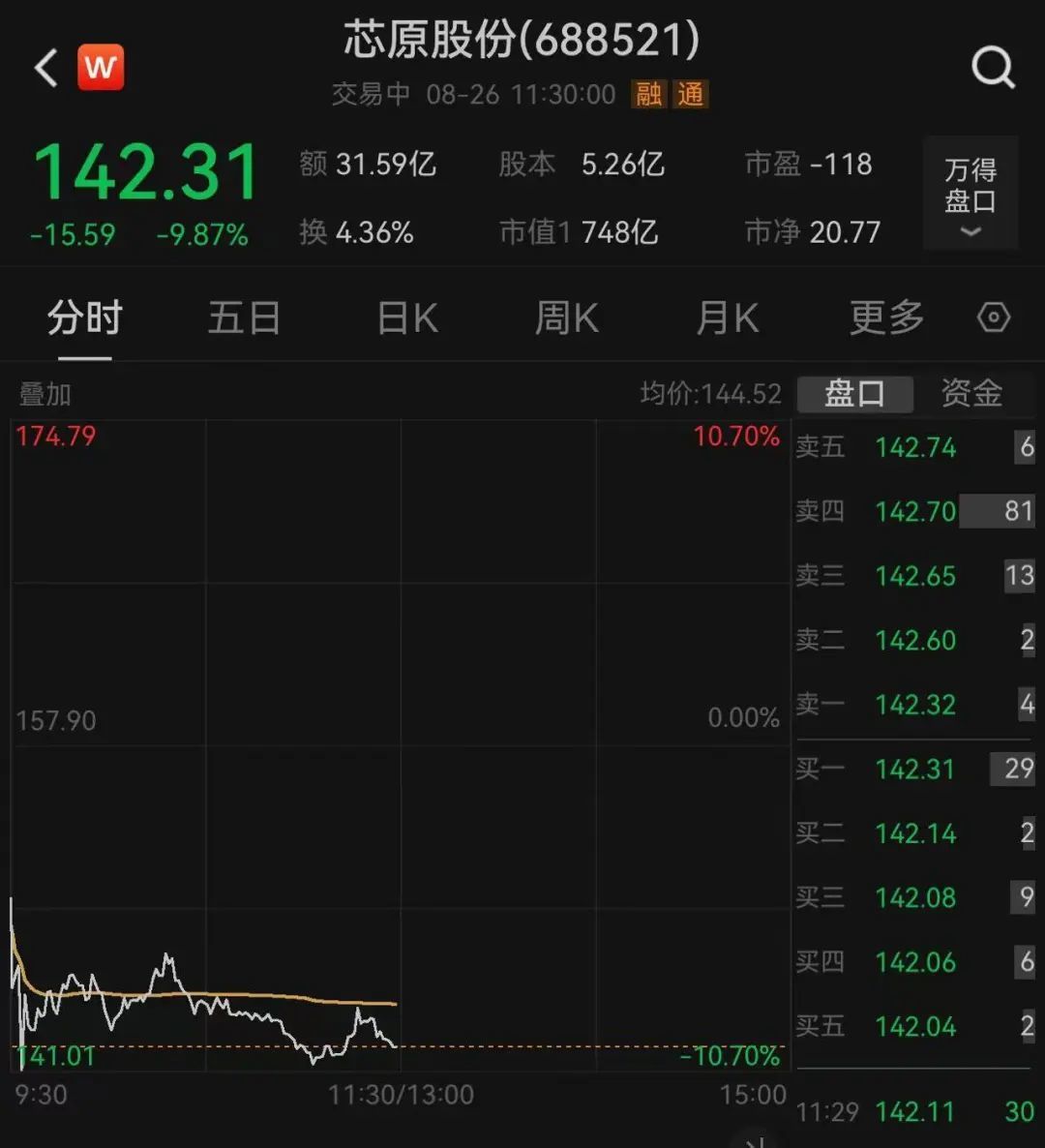
套现27亿!大牛股多位股东折价卖票:股价150多元,只卖105元
Mei Ri Jing Ji Xin Wen· 2025-08-26 04:01
Core Viewpoint - The article discusses the recent share transfer pricing and performance of VeriSilicon Limited, highlighting a significant drop in share price and the company's revenue structure, which is heavily reliant on one-time licensing fees rather than ongoing royalties. Group 1: Share Transfer and Pricing - VeriSilicon Limited has set a share transfer price of 105.21 CNY per share, which is approximately 66.63% of the closing price of 157.90 CNY on August 25 [1] - The total number of shares to be transferred accounts for 5.00% of the company's total share capital, with 37 institutional investors participating in the transfer [1] - The total transaction value is expected to exceed 2.7 billion CNY based on the transfer price [1] Group 2: Stock Performance - Over the past year, from September 24 to August 25, the stock price of VeriSilicon Limited has increased by over 500% [1] - Following the announcement, the stock price experienced a significant drop of 9.87% in the morning session [2] Group 3: Revenue Structure - The company's revenue is primarily derived from one-time licensing fees, which accounted for 84.64% of its IP business in the first half of 2025, while royalty fees made up 15.36% [4] - The knowledge property licensing fees for the first half of 2025 were 281 million CNY, reflecting a year-on-year increase of 8.20% [4] - In contrast, the royalty fees showed a slight decline of 0.03%, totaling 50.74 million CNY [4] Group 4: Business Model and Market Position - VeriSilicon Limited is recognized as a leader in AI ASIC chip design, providing customized solutions for various applications, including smart devices and automotive technology [11][12] - The company has shipped nearly 200 million AI chips globally, indicating a strong market presence in embedded AI/NPU sectors [12] - However, the gross margin for its one-stop custom services is relatively low at 18.17%, compared to industry leaders like Broadcom and Marvell, which have gross margins around 60% to 75% [13][14]