科大讯飞

Search documents
谁在逆势增长?10月AIGC增速榜发布:Meta AI翻倍,视频、翻译工具强势崛起
Sou Hu Cai Jing· 2025-11-22 09:18
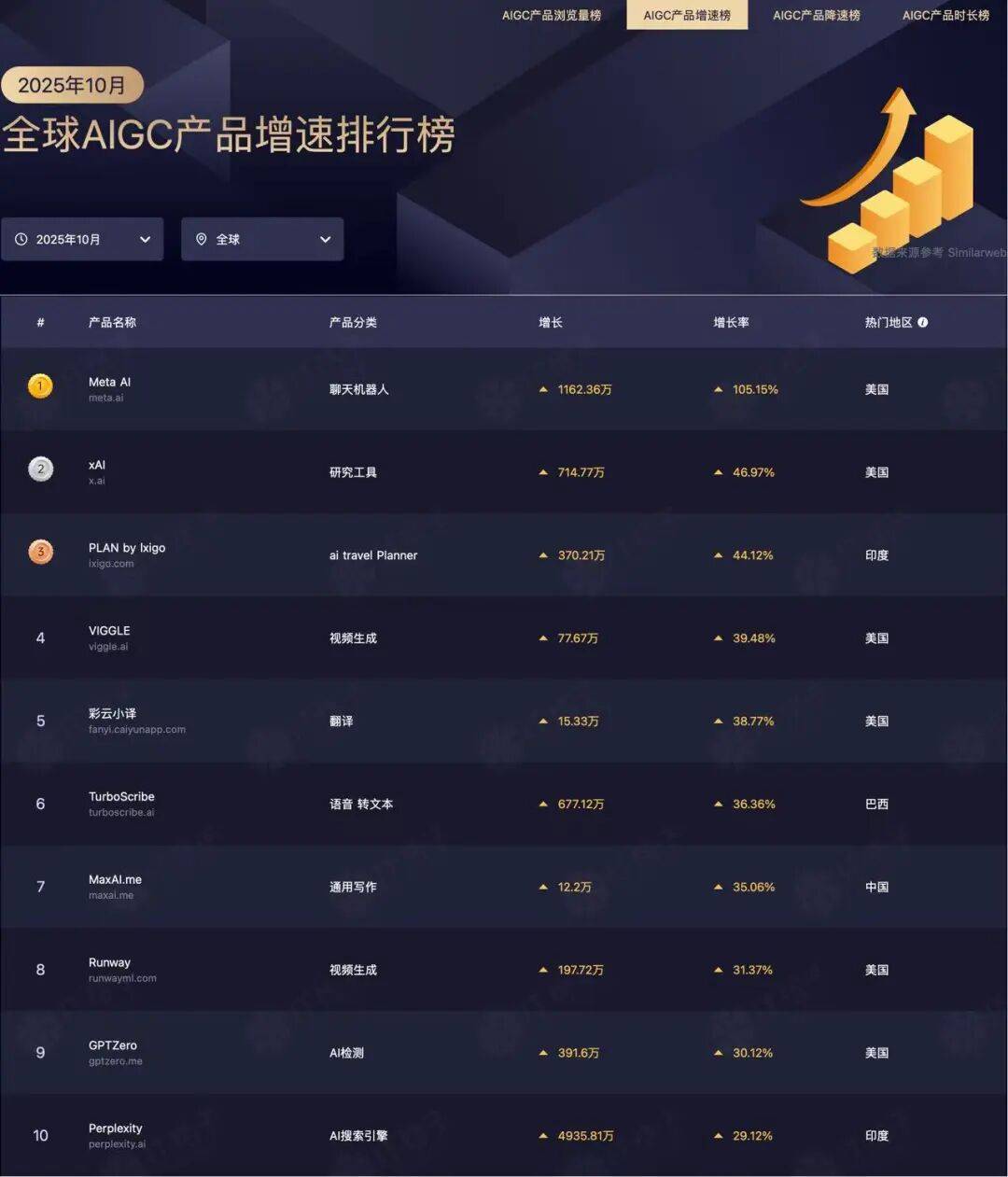
Core Insights - The article highlights the significant growth of AIGC products globally, with a focus on the fastest-growing products in October 2025, showcasing a diverse range of applications and market dynamics [1][2][3]. Global AIGC Product Growth - The global AIGC product growth leaderboard for October 2025 shows that video generation and multifunctional platforms are leading the growth, with Meta AI achieving a remarkable growth rate of 105.15% [2][5]. - Other notable products include xAI (46.97%) and PLAN by ixigo (44.12%), indicating a strong performance in the AI-driven content generation sector [2][5]. - The top ten products feature significant contributions from video generation tools (VIGGLE, Runway) and AI search engines (Perplexity), reflecting a diverse growth landscape [2][5]. Market Dynamics - The U.S. remains the dominant market, with 70% of the products listed being popular in this region, while emerging markets like India are also showing potential with products like PLAN by ixigo and Perplexity [3][4]. - The growth dynamics indicate a shift from a focus on educational tools to a broader range of applications driven by multimedia content generation and large AI platforms [5][6]. Key Characteristics of Growth 1. **Video Generation and Large Platforms as Growth Engines**: The growth is primarily driven by major players in video generation and multifunctional platforms, indicating a shift in consumer demand towards these technologies [4][5]. 2. **Sustained Demand for Practical Tools**: There is a strong market demand for practical tools, with products like translation tools (Caiyun) and voice-to-text tools (TurboScribe) showing growth rates exceeding 30%, highlighting the need for AI integration in specific workflows [6][7]. 3. **Significant Growth Disparities Between China and the U.S.**: The top ten products are predominantly from the U.S., with seven products listed, while Chinese products like MaxAI.me (35.06%) show reliance on the domestic market, contrasting with the global appeal of U.S. products [7][8]. Domestic AIGC Product Growth - In the domestic market, translation tools like Caiyun lead with a growth rate of 38.77%, followed by iFlytek's chatbot and Baidu's Orange AI, indicating strong performance in the translation and AI chatbot sectors [9][10]. - The growth of Baidu's ecosystem products reflects a collaborative advantage, although their performance is heavily reliant on the U.S. market [11][12]. Emerging Trends 1. **Practical Lightweight Tools Gaining Popularity**: Tools focusing on high-frequency, user-friendly needs, such as Caiyun and video editing tools, are preferred, indicating a shift towards practical solutions [12][13]. 2. **Divergence in Domestic and International Market Performance**: Many domestic products show a strong user base in the U.S., suggesting a dependency on international markets, which may pose risks for future growth [13].


10月全媒介之星中国AI应用榜发布:前二十强中“大厂”占八成
Bei Ke Cai Jing· 2025-11-22 07:30
Core Insights - The report highlights the top 20 AI applications in China for October 2025, based on media volume and monthly active users (MAU), providing a reference for the development trends of domestic AI applications [1][6][10] Group 1: Rankings and Performance - Doubao continues to lead the rankings for the fourth consecutive period, dominating both media volume (7.46 million) and MAU (272 million), with a month-on-month growth of 5.6% [7][11] - The top three applications, Doubao, Quark, and DeepSeek, maintain a stronghold in the market, with Quark and DeepSeek having MAUs of 95.46 million and 163 million respectively [10][11] - Tencent Yuanbao has shown a consistent upward trend, moving from ninth in August to fourth in October, with a media volume of 1.53 million and MAU of 53 million, indicating potential to challenge the top three [12][10] Group 2: New Entrants and Exits - 360 AI Search makes its debut in the top 20, while AiPPT.cn and Qwen drop out of the rankings, reflecting fluctuating user interest [13][18] - Xunfei AI Learning and Kimi return to the top 20, with Kimi achieving an MAU of 25.81 million [14][18] Group 3: Company Analysis - Major tech companies dominate the rankings, with 16 out of the top 20 applications coming from these firms, showcasing their strong market presence [9][20] - ByteDance leads with seven applications in the top 20 by media volume, while Baidu has one application in the media volume ranking but four in the MAU ranking, indicating a strong user base [9][21] - The applications from ByteDance cover various sectors, including chatbots, image generation, and AI education, demonstrating a comprehensive ecosystem [22] Group 4: Market Dynamics - The report indicates a stable top-tier structure in the AI application market, with significant competition among the leading players [10][20] - Despite the dominance of large companies, emerging startups like DeepSeek and Kimi are gaining traction, highlighting opportunities for innovation and user engagement in the AI sector [24]

2025智能机器人大赛初赛集结号!解锁技术竞技与产业落地双重机遇
机器人大讲堂· 2025-11-22 04:00
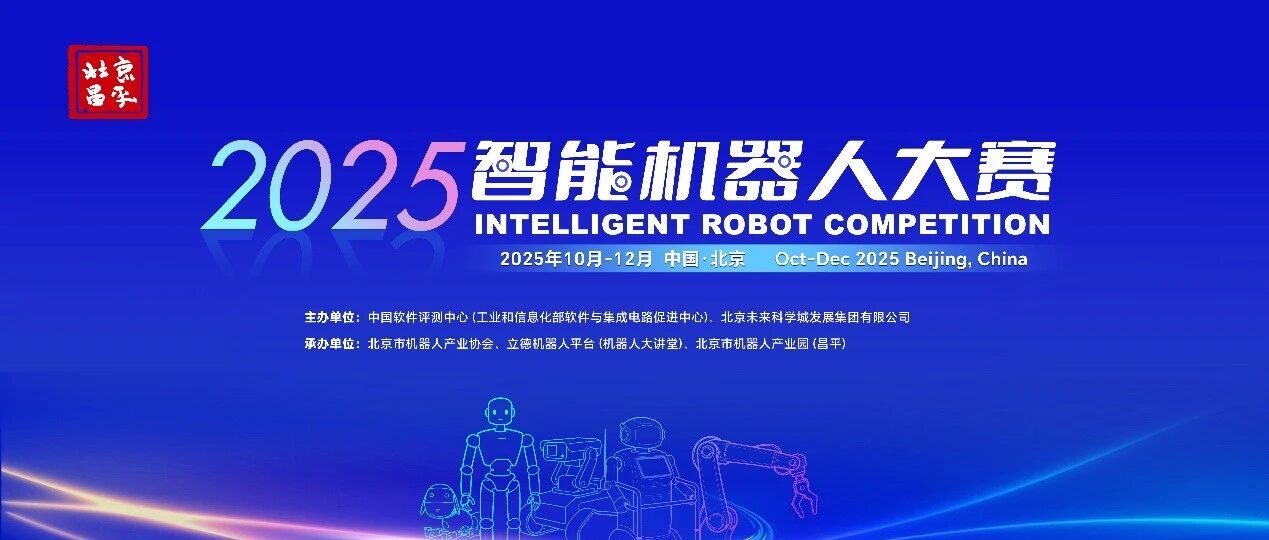
Group 1 - The 2025 Intelligent Robot Competition will officially start on November 27 in Beijing, focusing on showcasing innovative achievements and promoting cooperation in the field of intelligent robotics [1] - The competition has attracted over 100 excellent teams to participate in 180 tasks, highlighting the industry's vibrant innovation potential [1] - Four main tracks have been established: manufacturing, rehabilitation and elderly care, safety and emergency, and innovation, aimed at addressing new technological and industrial demands [1] Group 2 - A professional evaluation system will be implemented, with a focus on selecting "seed players" that demonstrate high technological innovation, strong product leadership, and significant application potential [3] - The preliminary round will adopt a zoned grouping and centralized offline evaluation model, with experts from the industry and technical leaders participating in the assessment [3] Group 3 - Teams are advised to establish contact with the competition organizing committee in advance to prepare for the preliminary defense, display materials, and robots [4] - The competition aims to provide a platform for teams to embark on a new journey of technology implementation in the industrial arena [5]
无锡首个人工智能特色产业园开园AI赋能,推动制造迈向智造
Xin Hua Ri Bao· 2025-11-22 00:10
Core Insights - The Wuxi Artificial Intelligence Industrial Park has officially opened, marking a significant milestone for Wuxi's AI development and its integration with the real economy [1] - Wuxi High-tech Zone has a solid foundation for AI industry development, with a sensor industry scale exceeding 60 billion and a complete industrial chain [1] - The AI core industry in Wuxi has reached a scale of 19 billion, with key enterprises like Hikvision and Dazhu Robotics emerging [1][2] Group 1 - The newly opened AI industrial park is the first of its kind in Wuxi, focusing on multimodal large models, generative AI, and humanoid robots [2] - The park aims to create an AI industry ecosystem by leveraging three key platforms: the Wuxi AI Industry Service Platform, the Wuxi AI Industry Association, and the Wuxi AI Scene Innovation Promotion Center [2] - Wuxi has over 80,000 industrial enterprises, providing vast potential for AI applications across various sectors such as machinery, electronics, and automotive [2] Group 2 - The establishment of the Wuxi Industrial Acceleration Center by iFlytek aims to enhance the AI industry ecosystem and support digital transformation [3] - The center will adopt a three-step strategy to gather a group of AI ecosystem enterprises in Wuxi within five years [3] - iFlytek plans to empower developers and startups through technology, investment, market access, management, branding, and policy support [3]
“千问恐慌”背后:全球AI价值正在重估
Huan Qiu Shi Bao· 2025-11-21 22:45
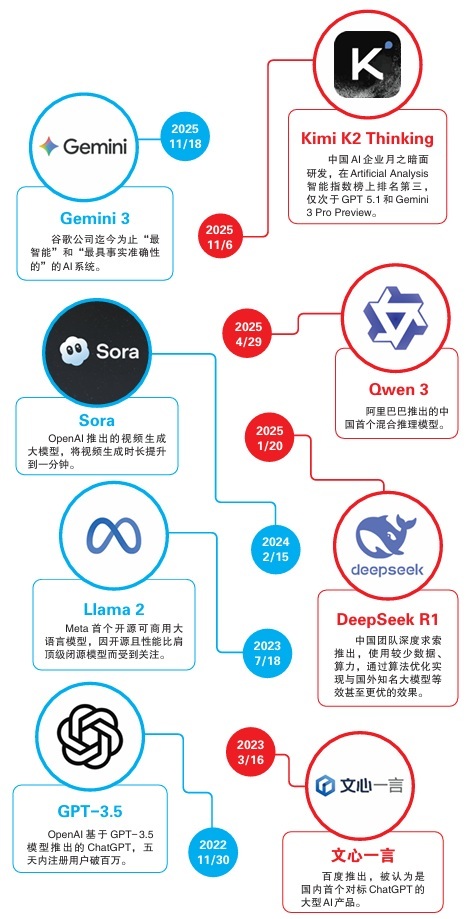
Core Insights - The article discusses the rising prominence of Chinese AI models, particularly highlighting the emergence of applications like Qwen from Alibaba, which are challenging established players in Silicon Valley [1][11][12]. Industry Overview - The Chinese AI market is transitioning from a "hundred models battle" to a differentiated competition phase, with applications covering various aspects of life and work [3]. - The launch of advanced models such as Baidu's Wenxin 5.0 and Alibaba's Qwen indicates a significant leap in capabilities, with Qwen already demonstrating the ability to generate comprehensive reports and presentations [3][6]. Competitive Landscape - Chinese AI models are not only catering to local users but are also gaining traction globally, with platforms like MiniMax's Hai Luo AI being utilized in over 200 countries [7]. - The performance gap between Chinese and American AI models has narrowed significantly, with reports indicating a mere 0.3% difference in capabilities [16]. Strategic Shifts - Chinese companies are moving away from the capital-intensive strategies of their American counterparts, focusing instead on algorithm optimization and cost-effective solutions [16][17]. - The trend of adopting Chinese AI models in Silicon Valley reflects a shift in preference towards open-source and cost-effective solutions, posing a challenge to traditional closed-source models from American firms [12][13]. Future Projections - Experts predict a surge in "national-level" AI applications around mid-2026 to mid-2027, as the technology matures and integrates more deeply into everyday life [10]. - The next phase of competition will focus on practical applications and user retention, with a need for AI to evolve from being merely entertaining to being genuinely useful [10][18]. Geopolitical Considerations - The geopolitical landscape is influencing the global AI market, with Chinese firms needing to navigate high regulatory barriers in Western markets while exploring opportunities in regions like ASEAN and the Middle East [19].

AI赋能,推动制造迈向智造
Xin Hua Ri Bao· 2025-11-21 22:05
Core Insights - The opening of the Wuxi Artificial Intelligence Industrial Park marks a significant milestone for Wuxi's AI development and aims to integrate AI with the real economy [1] - Wuxi High-tech Zone has a solid foundation for AI industry development, with a sensor industry scale exceeding 60 billion and a complete industrial chain [1] - The AI core industry in Wuxi has reached a scale of 19 billion, with key enterprises like Hikvision and others being cultivated [1][2] Group 1 - The newly opened AI industrial park is the first of its kind in Wuxi, focusing on multimodal large models, generative AI, and humanoid robots [2] - The park will leverage three key platforms: Wuxi AI Industry Service Platform, Wuxi AI Industry Association, and Wuxi AI Scene Innovation Promotion Center to create an AI ecosystem [2] - Wuxi has over 80,000 industrial enterprises, providing vast potential for AI applications in various sectors such as machinery, electronics, and automotive [2] Group 2 - iFlytek is a key partner for Wuxi High-tech Zone in building an influential AI industry cluster, focusing on digital transformation and ecosystem development [3] - The iFlytek Wuxi Industrial Acceleration Center will act as a large incubator, aiming to gather a number of AI ecosystem enterprises within five years [3] - iFlytek plans to enhance local AI enterprises through technology, investment, market, management, brand, and policy support [3]

AI+组合系列报告之四:AI+教育:ToC赛道领跑,突破“不可能三角”
Shenwan Hongyuan Securities· 2025-11-21 13:42
Group 1 - The core driving force behind the rapid growth of "AI + Education" comes from the resonance of policy, technology, and market factors. Policies since 2024 have emphasized the integration of AI technology into all aspects of education [2][5][8] - AI's core value in education lies in breaking the traditional "impossible triangle" of achieving scale, quality, and personalization simultaneously. AI can expand services at low cost while maintaining personalized and interactive teaching content [2][6][8] - Successful overseas examples, such as Duolingo, provide a replicable commercialization model for "AI + Education," demonstrating the dual potential of AI educational products in enhancing learning outcomes and achieving commercial monetization [2][15][16] Group 2 - The domestic "AI + Education" business model is primarily divided into To G, To B, and To C categories, each serving different scenarios and needs. The To G model focuses on educational equity and compliance governance, while To B aims to enhance teaching and management efficiency in schools, and To C directly targets students and parents [2][20][24] - The To G model emphasizes using AI to ensure educational fairness and compliance, with typical applications including "smart examination rooms" and "AI scoring systems." Companies deeply rooted in educational information technology are expected to have advantages in this area [2][24][25] - The To B model aims to improve internal teaching and management efficiency within schools. Traditional educational hardware companies are likely to dominate the "AI classroom" hardware segment, while publishing and media companies with close ties to teaching materials are expected to excel in "AI teaching assistant" software [2][26][27] Group 3 - The To C model focuses on providing highly personalized learning experiences directly to students and parents. Key product forms include "AI learning machines" and "AI tutoring" applications. Leading companies in the To C segment need to possess internet technology development capabilities to support real-time interaction and algorithm iteration [2][29][30] - Several listed companies have actively laid out in the To C "AI + Education" field, forming competitive product portfolios. For example, Visionox provides integrated AI teaching solutions through its "Xihuo" brand, while iFlytek has launched AI learning machines and smart blackboards based on self-developed large models [2][34][35] - Despite being in the early stages of development, "AI + Education" has vast application scenarios and strong future growth momentum. The industry still has room for improvement in technology integration depth and market penetration, but the speed of product adoption is expected to accelerate as costs decrease and user awareness increases [2][37]


互动体验先行 主分会场联动 2025年全球首发节智能科技首发站正式启幕
Bei Jing Shang Bao· 2025-11-21 12:00
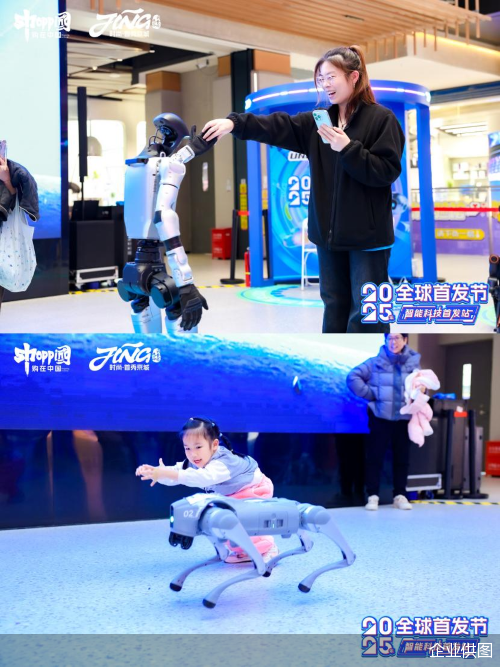
Core Insights - The event "2025 Global Launch Festival Smart Technology Launch Station" took place from November 21 to 23, showcasing a variety of smart technology products and creating an immersive consumer experience [1][14] - The event featured a combination of "display, sales, interaction, and experience," aiming to reshape consumer engagement with smart technology [1][14] Group 1: Event Overview - The event was co-hosted by the Beijing Municipal Bureau of Commerce and the Chaoyang District People's Government, held at JD MALL (Shuangjing) as the main venue and JD MALL (South Third Ring) as a secondary venue [1][11] - It aimed to stimulate market vitality by integrating pop-up and permanent retail experiences, creating a new consumption ecosystem [1][13] Group 2: Product Categories - The event showcased various categories including robots, smart home appliances, wearable devices, smart transportation, and AI learning tools, allowing consumers to experience the convenience and enjoyment brought by smart technology [3][5] - Notable products included humanoid robots from Yushu Technology, smart washing machines from Haier, and AI-enabled kitchen appliances from Casarte, highlighting innovations in home living [5][8] Group 3: Consumer Engagement - The interactive robot experience area was particularly popular, featuring performances and real-time interactions with the audience, effectively bridging the gap between advanced technology and everyday consumers [7][10] - The event utilized a seamless transition from "seeing" to "buying," enhancing consumer engagement through immersive experiences [10][14] Group 4: Promotional Strategies - The event implemented a "pop-up + permanent" model, creating a closed-loop of customer flow and consumption during the event [13] - Various promotional activities were offered, including limited-time gifts for store entry and exclusive offers for purchases, aimed at enhancing consumer participation [13]
如祺出行“Robotaxi+”亮相2025广州车展 加速自动驾驶技术量产应用
Zheng Quan Shi Bao Wang· 2025-11-21 10:00
Core Insights - The Guangzhou Auto Show highlighted the commercialization of autonomous driving and Robotaxi services as a key focus for the industry [1][2] Group 1: Company Strategy - The company, 如祺出行, has launched the "Robotaxi+" strategy aimed at accelerating the large-scale commercialization of Robotaxi services by providing comprehensive solutions to regulatory bodies and technology partners [2] - The strategic plan includes expanding Robotaxi operations to 100 core cities and building a fleet of over 10,000 Robotaxis within the next five years [2] - The company has already established a mixed operation platform for human-driven ride-hailing and Robotaxi services, with over 300 Robotaxis currently in operation as of September 2025 [2] Group 2: Data Solutions - High-quality data is identified as essential for the continuous iteration of autonomous driving technology, with the introduction of the "如祺智驾数据采集车" to collect data while generating revenue [3] - The company has developed a self-research data labeling platform that automates the pre-labeling of raw data, significantly reducing reliance on human labor and improving data utilization efficiency [3] - The company is expanding its data services beyond the autonomous driving sector into various industries such as healthcare, education, finance, and law, leveraging its data processing capabilities [3] Group 3: Market Presence - As of November 2023, the company has a specialized labeling team of over 1,500 people, delivering more than 700,000 labeled frames monthly to over 100 well-known enterprises [3]
联想即将打造个人超级智能体,人工智能AIETF(515070)持仓股中科星图大涨超2%
Mei Ri Jing Ji Xin Wen· 2025-11-21 06:32
Group 1 - The A-share market experienced a decline, with the Shanghai Composite Index down by 2.05%, the Shenzhen Component Index down by 2.80%, and the ChiNext Index down by 3.31% as of 14:13 on November 21 [1] - Lenovo Group announced plans to launch a personal super intelligent agent at the Lenovo Innovation Technology Conference next year, which will learn user habits and predict intentions to enhance user experience [1] - Lenovo's CEO Yang Yuanqing expressed confidence that the market will not experience an AI bubble, predicting a shift towards the popularization of AI technology, making it accessible to a broader audience [1] Group 2 - Huatai Securities noted that generative AI is entering a new development stage dominated by AI agents, with a trajectory of "first B2B, then B2C, and finally terminal" [2] - The AI ETF (515070) tracks the CS AI Theme Index (930713), focusing on companies providing technology, foundational resources, and applications in the AI sector, often referred to as the "robot brain" creators [2] - The top ten weighted stocks in the AI ETF include leading domestic technology companies such as Zhongji Xuchuang, Xinyisheng, and Hikvision, indicating a strong presence in the AI industry [2]