京东方

Search documents
京东方新成立机器人公司
WitsView睿智显示· 2025-09-29 05:43
Group 1 - Beijing BOE Robot Co., Ltd. was established on September 25 with a registered capital of 200 million yuan, focusing on industrial robot manufacturing, sales, and intelligent robot R&D, fully owned by BOE [2] - At the BOE IPC 2025 conference, BOE's chairman announced the formation of a specialized robot R&D team aimed at developing smart equipment for factory scenarios, alongside the launch of their AI factory strategy [2] - The first batch of AI factories has entered a substantial implementation phase [2] Group 2 - Other panel manufacturers like Huike and Samsung Display are also venturing into the robotics field [3] - On September 11, Huike signed a strategic cooperation agreement with Zhifang, planning to deploy over 1,000 embodied intelligent robots across global production bases within three years, with an order value close to 500 million yuan [3] - Huike aims to integrate AI edge models into production line control systems for real-time decision-making and energy management [3] Group 3 - Earlier reports indicated that Samsung Display plans to supply 8-inch OLED panels to Tesla starting in 2027 for the Optimus humanoid robot, with mass production expected in 2026 [5] - The robot's design requires a curved display, which OLED panels can provide due to their lightweight and low-power characteristics, making them suitable for the robot's upper body balance [5]



京东方A:三季度以来面板备货需求逐步恢复 行业稼动率有所恢复
Xin Lang Cai Jing· 2025-09-29 03:33
Group 1 - The core viewpoint is that BOE A indicates a recovery in panel inventory demand as the destocking trend among manufacturers comes to an end since the third quarter [1] - The industry operating rate has shown signs of recovery alongside the stabilization of LCD TV panel prices after a slight decline in certain sizes [1] - For LCD IT, the prices of MNT and NB panels have remained stable overall [1]
京东方A:三季度以来面板备货需求逐步恢复 行业稼动率有所恢复
Zheng Quan Shi Bao Wang· 2025-09-29 03:29
Group 1 - The core viewpoint is that BOE A (000725) has observed a recovery in panel inventory demand as the destocking trend among manufacturers comes to an end since the third quarter [1] - The industry operating rate has shown signs of recovery alongside the stabilization of LCD TV panel prices after a slight decline in certain sizes [1] - For the LCD IT segment, prices for MNT and NB panels have remained stable overall [1]
中建一局为构建全球一流“医教研产用”核心载体项目提供品质保障
Huan Qiu Wang· 2025-09-29 03:10
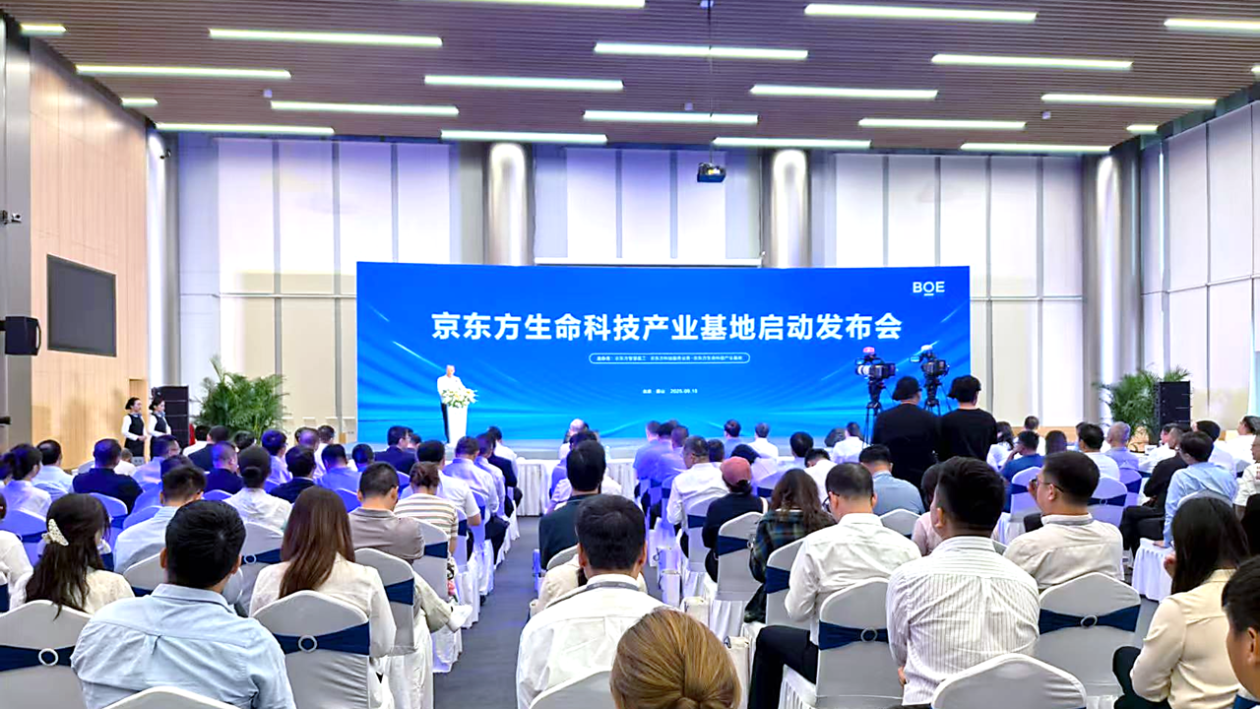
Core Insights - The Beijing BOE Life Science Technology Industrial Base has been inaugurated as part of Beijing's "Three Hundreds" key projects, aiming to enhance the integration of medical and engineering innovation and promote coordinated development in the Beijing-Tianjin-Hebei region [1] - The base consists of a Smart Medical Engineering Core Capability Center and Beijing BOE Hospital, focusing on life sciences and smart health, and aims to create a health innovation ecosystem that integrates education, research, production, and application [1][5] - The Health Cloud Computing Center project within the base is a key component that will provide robust computing power to support the establishment of a world-class health innovation ecosystem, significantly enhancing market competitiveness [1][5] Project Details - Located in the Fangshan District of Beijing, the project includes approximately 1,800 planned server cabinets, with an expected data center energy utilization efficiency of 1.149, which is significantly better than Beijing's data center energy efficiency standards [3] - The project team overcame multiple technical challenges during construction, utilizing BIM technology to achieve a model depth of LOD400 for precise positioning and to address potential conflicts between floor supports and pipelines, setting a new benchmark for data center layout [3][4] - An innovative elevated pipeline steel structure platform was developed to mitigate settlement risks associated with the original design, enhancing space utilization and providing a novel solution for roof layout in data centers [4] Impact on Industry - Upon completion, the Health Cloud Computing Center will provide high-level computing support for medical institutions and research institutes, further accelerating the digital transformation of China's healthcare industry [5] - The project contributes to Beijing's goal of becoming a globally influential technology innovation center [5]
上周“吸金”超5.3亿元,机器人ETF(159770)盘中获实时净申购450万份,机构:人形机器人国内外景气度共振
2 1 Shi Ji Jing Ji Bao Dao· 2025-09-29 02:25
Core Viewpoint - The robotics ETF (159770) is experiencing fluctuations in trading, with a slight decline of 0.27% and a significant net inflow of over 530 million yuan in the past week, indicating strong investor interest in the robotics sector [1][2]. Group 1: ETF Performance - The robotics ETF (159770) recorded a trading volume of 1.12 billion yuan, ranking first among similar products in the Shenzhen market, with a real-time net subscription of 4.5 million units [1]. - The ETF tracks the CSI Robotics Index, which includes companies involved in system solutions, digital workshops, automation equipment manufacturing, and other robotics-related sectors [2]. Group 2: Company Developments - Beijing BOE Robotics Co., Ltd. was recently established with a registered capital of 200 million yuan, focusing on intelligent robot sales and AI software development, fully owned by BOE Technology Group [2]. - UQI, a subsidiary of UBTECH, signed a procurement contract worth 30 million yuan with Tianqi Automation for the Walker S series industrial humanoid robots, contributing to a total of 430 million yuan in contracts for the Walker series [3]. - UBTECH also secured a 250 million yuan contract for humanoid robot products from a well-known domestic enterprise, marking it as the largest contract for humanoid robots globally to date [3]. Group 3: Industry Outlook - According to Dongfang Securities, the humanoid robot industry is on the verge of mass production, with both domestic and international leaders expressing optimistic production forecasts and securing large orders [4]. - The industry is expected to enter a mass production phase next year, benefiting component manufacturers with strong manufacturing and management capabilities [4].

国投证券:光学与AI选代助力智能眼镜 下一代智能终端加速普及
智通财经网· 2025-09-29 02:03
Core Insights - The report from Guotou Securities highlights the shift in focus from broad applications to specific use cases in smart glasses, driven by technological advancements and cost constraints [1] - The smart glasses industry is entering a robust growth phase in 2023, following previous stages of technology validation, commercial trials, and product diversification [1] - AI glasses are emerging as a significant market segment, with Meta's Ray-Ban Meta leading the charge and expected to capture 98.68% of global AI glasses sales in 2024 [2] Smart Glasses Development - The development of smart glasses has gone through four phases: pre-2012 (technology validation), 2012-2016 (commercial trials), 2017-2022 (product diversification), and 2023 (robust growth) [1] - Smart glasses can be categorized based on optical display systems, with AI shooting glasses focusing on photography and voice interaction, VR glasses providing immersive experiences, and AR glasses overlaying virtual information on the real world [1] AI Glasses Market - AI glasses are characterized by the integration of cameras, Bluetooth controls, and voice interaction, sacrificing optical display for lightweight and low-cost designs [2] - The core logic of AI shooting glasses is to achieve portability and practicality for all-day wear, targeting markets previously dominated by action cameras [2] AR Glasses Insights - AR glasses utilize micro-displays and optical modules to project virtual images onto real-world scenes, categorized into viewing glasses and full-domain glasses [3] - Viewing glasses are lightweight and designed for portable viewing, while full-domain glasses are used for outdoor navigation and industrial applications, albeit at a higher price point [3] VR Glasses Overview - Traditional VR glasses focus on providing an immersive experience, primarily for gaming and viewing, with a market that is relatively mature [4] - The expected sales for traditional VR glasses in Q2 2025 is 1.26 million units, reflecting a year-on-year growth of 6.7% [4] Industry Chain and Competitive Landscape - The upstream sector focuses on chips, optical modules, and screens, with Micro OLED expected to become a primary solution for XR devices by 2030 [5] - In the midstream, Thunderbird Innovation holds a 50% market share in AI/AR glasses online sales, while PICO dominates the domestic VR market [5] - The downstream sector is supported by offline channels, with Doctor Glasses establishing over 100 smart display cabinets [5] Key Companies to Watch - Companies to monitor include Luxshare Precision and GoerTek in manufacturing, Sunny Optical Technology and OFILM in optics, and various firms in storage and display technologies [7]




京东方A(000725) - 024-2025年9月28日投资者关系活动记录表
2025-09-29 01:20
Group 1: Market Trends and Product Pricing - The industry is adopting a "demand-driven production" strategy, adjusting production rates based on market demand changes [1] - In Q1 2025, due to high export demand and "trade-in" policies, the overall terminal demand was strong, leading to a price increase for mainstream LCD TV panel sizes [1] - In Q2 2025, panel procurement demand decreased due to changes in the international trade environment, prompting companies to quickly adjust production rates [1] - By Q3 2025, as inventory reduction trends ended, panel stocking demand gradually recovered, although some LCD TV panel prices experienced slight declines [2] Group 2: AMOLED Business Development - The company has established a strong capacity and technical advantage in the flexible AMOLED sector, covering major top smartphone brands and expanding into automotive and IT applications [3] - In H1 2025, the company shipped over 71 million AMOLED panels, a 7.5% year-on-year increase, maintaining the top position in China and second globally [3] - The revenue structure for display devices in H1 2025 was as follows: TV 27%, IT 37%, LCD mobile and others 12%, OLED 24% [4] Group 3: Future Industry Trends - The display industry is entering a rebalancing phase, shifting from a focus on scale and market share to high profitability, technology, and added value [7] - LCD technology will remain the mainstream application in the medium to long term, with ongoing demand optimization and a trend towards larger TV sizes [7] - The penetration of flexible AMOLED products in high-end IT applications is expected to increase, with the company investing in an 8.6-generation AMOLED production line to meet this demand [5][6] Group 4: Financial Outlook and Shareholder Returns - The company plans to allocate at least 35% of its net profit to cash dividends annually from 2025 to 2027, with a minimum of RMB 1.5 billion for share buybacks [10] - The company has completed a stock buyback worth nearly RMB 1 billion and is progressing with its A-share repurchase plan to enhance shareholder returns [11] - The depreciation of production lines is expected to peak in 2025, with ongoing efforts to optimize product line positioning and improve operational efficiency [8]
京东方成立机器人公司 注册资本2亿元
Zheng Quan Shi Bao Wang· 2025-09-29 01:08
Group 1 - Beijing BOE Robot Co., Ltd. has been established with a registered capital of 200 million yuan [1] - The company's business scope includes sales of intelligent robots, research and development of intelligent robots, general application systems for artificial intelligence, and development of basic software for artificial intelligence [1] - BOE Technology Group Co., Ltd. holds 100% ownership of the newly established company [1]
光学与AI迭代助力智能眼镜,下一代智能终端加速普及
Guotou Securities· 2025-09-28 15:12
Investment Rating - The report maintains an investment rating of "Outperform" with a target price set at 1599 CNY for the preferred stock [5][6]. Core Insights - The smart glasses industry is experiencing a significant evolution driven by optical display technology and AI integration, marking a transition into a robust growth phase since 2023 [1][17]. - The market for AI glasses, particularly those that integrate camera and voice interaction without optical display modules, is rapidly expanding, with Meta's Ray-Ban Meta leading the charge [2][38]. - The report identifies four main categories of smart glasses: AI shooting glasses, AR viewing glasses, AR full-domain glasses, and VR glasses, each with distinct technological and application characteristics [26][32]. Summary by Sections 1. Optical Technology Driving Product Iteration - The development of smart glasses can be categorized into four stages: 1) Early exploration (before 2012) focused on technology validation 2) Commercial trial (2012-2016) saw initial product launches like Google Glass 3) Product diversification (2017-2022) led to a variety of offerings 4) Robust growth phase (2023-present) characterized by significant technological advancements and market expansion [1.1][1.1.1][1.1.2][1.1.3][1.1.4]. 2. AI Glasses: A New Wave of Competition - AI glasses, particularly those that prioritize lightweight and low-cost designs by omitting optical display modules, are gaining traction. The Ray-Ban Meta has become a standout product, capturing a significant market share [2][38]. - The report notes that in 2024, Ray-Ban Meta is expected to account for 98.68% of global AI glasses sales, highlighting the competitive landscape dubbed the "Hundred Glasses War" [2][38]. 3. AR Glasses: The Ultimate Form of AI Glasses - AR glasses are categorized into AR viewing glasses and AR full-domain glasses, with the former focusing on portable viewing experiences and the latter on interactive applications like navigation and translation [3][30]. - The report emphasizes the ongoing technological iterations in AR glasses, particularly in display technologies such as Micro OLED and light guide systems, which are expected to enhance user experience [3.2][3.3]. 4. Traditional VR Glasses: Focus on Immersive Experience - Traditional VR glasses are designed for complete immersion, primarily targeting gaming and viewing experiences. The report notes that the market for VR glasses is relatively mature, with key players like Meta and PICO driving innovation [4][4.3]. 5. Industry Chain and Competitive Landscape - The upstream segment focuses on core components like chips and optical modules, with Micro OLED expected to become a primary solution for XR devices. The report forecasts that global Micro OLED shipments will reach approximately 399.57 million units by 2030 [10][10.1]. - The midstream market is dominated by companies like 雷鸟创新 and PICO, while the downstream segment is crucial for the practical deployment of smart glasses [10.2][10.3]. 6. Key Investment Targets - The report suggests monitoring key players in various segments, including manufacturing (立讯精密, 歌尔股份), optical technology (舜宇光学科技, 蓝特光学), and storage chips (佰维存储) [11][11.1].

全国融资活跃城市20强出炉,珠海嘉兴成黑马
Sou Hu Cai Jing· 2025-09-28 13:11
Core Insights - Chengdu's state-owned capital achieved a remarkable investment success with Haiguang Information, turning an investment of less than 1 billion yuan into a market value exceeding 100 billion yuan, showcasing the city's growing influence in venture capital [2] - The competition among "venture capital cities" in China is intensifying, with different cities adopting unique strategies in capital operations and industry investments [2][12] Investment Landscape - The majority of investment activities are concentrated in the eastern coastal regions, particularly in cities like Shanghai, Hangzhou, Nanjing, and Suzhou, which form a capital-dense area [3] - Beijing leads in financing scale with 26.2 billion yuan and transaction volume, followed by Shanghai and Guangdong, indicating a dual-core structure in the Beijing-Tianjin-Hebei region [4][6] Regional Financing Dynamics - The financing scale in Beijing, Shanghai, and Guangdong accounts for nearly 60% of the national total, highlighting a significant concentration effect [4] - The top three industries attracting capital investments are new energy vehicles, digital economy, and industrial internet [4][5] City Rankings and Performance - In the top 20 cities for financing activity, first-tier cities dominate, but non-first-tier cities like Zhuhai and Jiaxing have emerged due to favorable industrial policies and regional collaboration [8][11] - Chengdu ranks 11th in financing scale, with a focus on medical services and digital economy, reflecting its unique investment landscape [9] Investment Strategies - Different cities exhibit distinct investment strategies; for instance, Hefei's approach is characterized by large bets on key industries, while Chengdu's strategy focuses on smaller, high-potential investments [12][13] - The rise of cities like Zhuhai and Jiaxing illustrates the importance of regional integration and institutional advantages in attracting capital [12][13]