
OpenAI

Search documents
X @Bloomberg
Bloomberg· 2026-02-06 01:20
SoftBank’s third-quarter earnings next week will be the first opportunity for the Japanese tech giant to respond to reports it’s considering raising its investment in OpenAI https://t.co/NlgJE3tmia ...
帮主郑重:昨夜全球资产大洗牌,你的钱袋子还好吗?
Sou Hu Cai Jing· 2026-02-06 01:11
Group 1: Market Overview - The recent decline in various asset classes, including U.S. stocks, gold, and Bitcoin, is attributed to a clear logic of deleveraging and market corrections [3][4][6] - Bitcoin's sharp drop is primarily due to investors using leverage, leading to forced liquidations as prices fell, creating a domino effect [3] - Gold and silver prices have also decreased, influenced by reduced geopolitical tensions and a stronger U.S. dollar, alongside selling pressure from investors needing to cover margin calls [3][4] Group 2: U.S. Stock Market Dynamics - The Dow Jones Industrial Average fell nearly 600 points, with the S&P 500 erasing its gains for the year, driven by concerns over weak employment data and a potential shift in Federal Reserve interest rate expectations [4] - The market is undergoing a repricing phase, reflecting uncertainty about economic conditions and interest rate policies [4] Group 3: Technology Sector Insights - The technology sector is experiencing a divergence, with companies like OpenAI advancing AI applications while others, such as those involved in traditional finance, face challenges [4][6] - The release of AI models capable of financial research has raised concerns about the impact on traditional financial services, indicating a potential industry transformation [6] Group 4: Investment Strategies - Investors are advised to avoid leverage, particularly in volatile assets like cryptocurrencies, and to focus on long-term, stable investment strategies [5] - It is recommended to refrain from chasing market trends or attempting to time the market during periods of panic, instead waiting for clearer signals before making investment decisions [5] - Diversification across asset classes, including U.S. stocks and precious metals, is emphasized to mitigate risks associated with market fluctuations [5] Group 5: Macro Trends and Policy Implications - Global uncertainties are increasing, influenced by geopolitical developments and policy changes, which can subtly affect market dynamics [5] - Investors should align their strategies with broader policy trends and industry developments rather than acting against prevailing market sentiments [5]


Agentic Memory开年就卷起来了?刚刚,华人团队MemBrain拿下多项SOTA!
机器之心· 2026-02-06 01:05
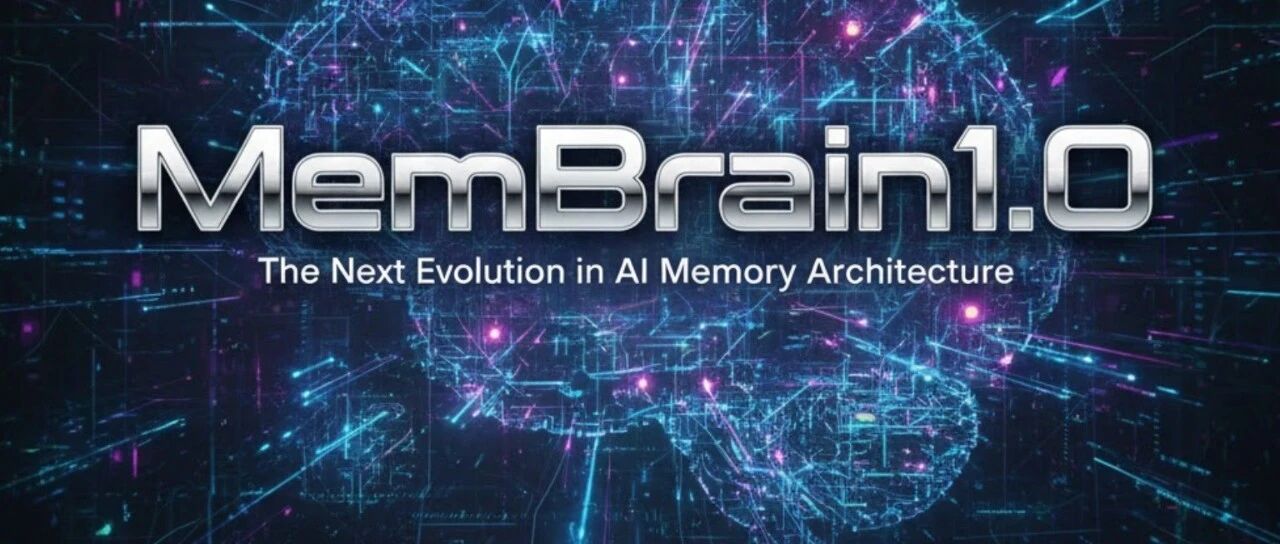
Core Insights - The article discusses the rapid evolution of Agentic Memory in AI, emphasizing that without memory, AI agents are merely advanced autocomplete tools. To handle complex projects or long-term tasks, AI must possess a structured long-term memory mechanism [1][3]. Industry Trends - There is a significant shift in the AI industry towards persistent memory as a critical capability for agents, with major players like OpenAI and Anthropic pushing the limits of context windows [1][3]. - Sequoia Capital highlights that one of the core challenges for future agents is achieving persistent identity, which involves remembering user interactions over time while maintaining consistent understanding and context [3]. Company Highlights - Feeling AI, a newly established startup, has recently launched MemBrain1.0, achieving state-of-the-art (SOTA) results in several memory benchmarks, surpassing existing systems like MemOS and EverMemOS [4][5]. - The team behind Feeling AI is led by Dr. Dai Bo, a young scientist in generative AI, who has previously worked at NTU and Shanghai AI Lab. The team has completed two rounds of funding exceeding 100 million yuan, focusing on world models and 3D dynamic interaction [4][19]. MemBrain1.0 Performance - MemBrain1.0 achieved new SOTA with accuracy rates of 93.25% and 84.6% on the LoCoMo and LongMemEval benchmarks, respectively, due to its refined entity-time context management design [9]. - In the PersonaMem-v2 benchmark, MemBrain1.0 outperformed existing methods with an accuracy of 51.50%, demonstrating deep insights into user preferences [10]. Technical Innovations - MemBrain's architecture allows for flexible deployment and asynchronous memory updates, enhancing the system's adaptability [15]. - The system's design focuses on precise extraction of entities and timestamps, which is crucial for high-level tasks like associative analysis and logical reasoning [16]. - MemBrain organizes information into semantic units that can be loaded on demand, allowing for deeper participation of large language models (LLMs) in reasoning tasks [17]. Future Outlook - The article suggests that the ability to solve the "forgetting syndrome" of agents will be key to advancing towards Artificial General Intelligence (AGI) [27]. - The evolution of memory capabilities is seen as a transition from "stateless" single calls to "conscious" continuous improvement, marking a new beginning for AI in user interaction and co-creation [27].
Claude Opus 4.6 和GPT-5.3 Codex接管软件世界
3 6 Ke· 2026-02-06 00:54
Core Insights - The AI competition has shifted from a focus on conversational abilities to a new phase characterized by autonomous agents, marking the beginning of the "Agent Autonomy Era" [1][5] Group 1: Company Strategies - Anthropic emphasizes controlled agent behavior, task decomposition, execution stability, and clear human oversight, focusing on minimizing errors [2][4] - OpenAI adopts a more aggressive approach, promoting stronger autonomous planning capabilities and accountability for complex goals, allowing agents to manage entire task processes [3][4] - The competition between Anthropic and OpenAI represents a fundamental debate on whether AI should be a reliable execution tool or a highly autonomous action system [5] Group 2: Market Dynamics - The urgency for this shift is driven by stagnation in chat product engagement, the need for automation in enterprise processes, and the race to define the next generation of AI infrastructure [6] - The introduction of agents signifies a transformation in product logic, positioning agents as digital employees that connect models, tools, and the real world [7] Group 3: SaaS Implications - The rise of agents challenges the traditional SaaS model, which has relied on selling tool usage rights, as agents can automate tasks across systems [10][12] - As agents take over task execution, the value of SaaS interfaces diminishes, leading to concerns about the future pricing and profitability of SaaS products [12][22] - SaaS companies must adapt by either evolving into command and control platforms for agents or becoming high-quality, modular APIs to remain relevant [15][17] Group 4: Future of SaaS - The emergence of agents forces SaaS to confront a critical question: whether they are selling tools or results, with a shift towards task completion becoming paramount [19][20] - The traditional model of charging per user is threatened as agents can perform tasks that previously required multiple human operators, leading to potential revenue declines for SaaS providers [18][19] - The transition to an agent-centric model may result in SaaS companies becoming backend service providers, losing control over user interactions [22] Group 5: Digital Ecosystem Changes - The introduction of agents is expected to disrupt existing software ecosystems, as they can bypass traditional app interfaces and directly execute tasks for users [23][24] - This shift may lead to a decentralization of hardware requirements, as the need for complex user interfaces diminishes in favor of simpler, more efficient interactions with agents [25][26] - The ongoing evolution signifies a move away from a software-centric internet towards a task-centric digital world, where the focus is on achieving results rather than navigating software [26][27]
SpaceX 100万颗卫星申请获受理,马斯克否认将推出星链手机;李斌兑现承诺!蔚来:2025年Q4经营利润至少7个亿;千问APP启动30亿免单
雷峰网· 2026-02-06 00:46
Key Points - SpaceX's application to launch 1 million satellites has been accepted by the FCC, aiming to create a data center network in orbit to support advanced AI models [4][5] - NIO has announced a profit forecast for Q4 2025, expecting an adjusted operating profit between RMB 700 million (approximately $100 million) and RMB 1.2 billion (approximately $172 million), marking its first quarterly profit [7][8] - The 2025 Hurun China 500 list shows TSMC retaining the top position with a value increase of RMB 3.5 trillion, while Xiaomi enters the top ten for the first time with a valuation of RMB 1 trillion [13][14] - Alibaba has unified its AI model branding under "Qwen" and launched a promotional campaign offering 3 billion RMB in discounts through its Qwen app [15][16] - Baidu plans to distribute dividends for the first time in 2026 and has authorized a share buyback program of up to $5 billion [16][17] - Li Auto is set to implement a "store partner" program to enhance operational efficiency and market responsiveness, giving store managers greater decision-making power [19] - Intel has appointed a new chief GPU architect, while Qualcomm has lost three key executives in a month [45][46] - Coupang has reported an expansion of a personal information leak affecting an additional 165,000 accounts, following a previous incident [53][54]






全球大公司要闻 | 亚马逊谷歌资本支出激增,英伟达首次推迟游戏芯片发布
Wind万得· 2026-02-06 00:43
Group 1 - Meituan has agreed to acquire Dingdong Fresh Holding Limited for $717 million, which will make Dingdong a wholly-owned subsidiary of Meituan, enhancing its core competitive advantages on a larger platform [3] - Nvidia will not launch new gaming graphics chips this year due to a shortage of storage chips, marking the first time in thirty years, and will reduce the production of the current GeForce RTX50 series [3] - Amazon announced a capital expenditure of approximately $200 billion for 2026, exceeding market expectations, primarily for cloud infrastructure and AI technology development [3] Group 2 - Alphabet's Q4 revenue reached $113.83 billion, a year-on-year increase of 18%, with Google Cloud revenue growing by 48% to $17.66 billion [4] - NIO expects to achieve an adjusted operating profit of 700 million to 1.2 billion yuan in Q4 2025, marking its first quarterly profit [4] Group 3 - Baidu's board has approved a $5 billion share buyback plan and a dividend policy, with the first dividend expected in 2026, reflecting confidence in its growth prospects [6] - TSMC plans to invest approximately $17 billion in its Kumamoto plant for 3nm chip production, while also evaluating adjustments to its second wafer fab's process planning [6] - Guoxuan High-Tech plans to issue A-shares to raise up to 5 billion yuan for various battery projects and to supplement working capital [6] Group 4 - Samsung Electronics announced the construction of a dedicated HBM4 DRAM production line at its P4 plant, aiming to increase production capacity by nearly 20% [12] - Toyota continues to focus on hybrid vehicles after achieving six consecutive years of global sales leadership, with a projected decline in net profit for Q3 [12] - Sony Group's Q3 operating profit was 515.04 billion yen, exceeding market expectations, and it raised its full-year operating profit forecast to 1.54 trillion yen [12]



1年估值暴涨超500亿,黄仁勋安利的AI创企融资35亿,计划IPO
3 6 Ke· 2026-02-06 00:37
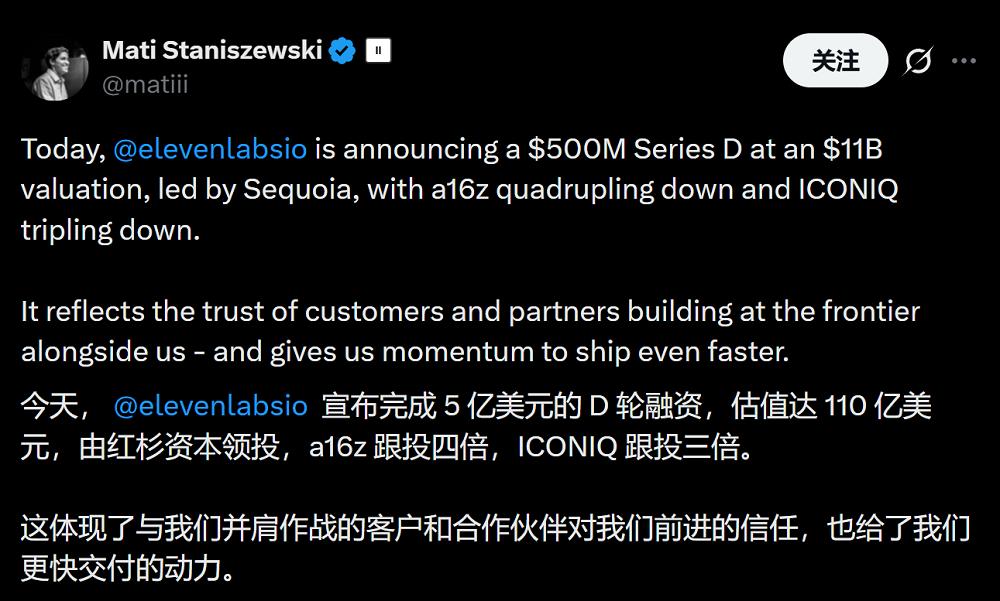
Core Insights - ElevenLabs, a UK-based AI audio unicorn, has completed a $500 million Series D funding round, achieving a valuation of $11 billion, which represents a more than 230% increase from its valuation of $3.3 billion at the beginning of last year [1][2] - The company is considering an IPO and has raised a total of $781 million since its inception in 2022 [1][2] Company Overview - Founded in 2022 in London, ElevenLabs initially focused on text-to-speech models and has since expanded into various audio generation fields, including speech-to-text, AI sound effects, dubbing, and music models [2] - The company provides voice API services to enterprises and offers an audio generation platform called ElevenCreative for creators and brands [2] - By the end of 2025, ElevenLabs is projected to exceed an annual recurring revenue (ARR) of $330 million [2] Growth and Market Position - ElevenLabs has rapidly gained traction, reaching over 1 million users within six months of launch and accumulating over 33 million users by November 2024 [5] - The company has established itself as a leader in the global AI audio sector, leveraging effective marketing strategies and a strong product offering [3][9] Strategic Focus - ElevenLabs aims to address the broader issue of human interaction with technology, moving beyond just audio models to develop conversational AI agents [10][11] - The company has shifted its focus towards deploying dialogue intelligence and enhancing user interaction with technology products [11] Competitive Advantage - ElevenLabs differentiates itself by combining AI models with product development, rather than solely focusing on computational power or data volume [14] - The company emphasizes the importance of model architecture and has recruited top talent in the field to drive innovation [6][14] Future Directions - With the new funding, ElevenLabs plans to accelerate the development of its intelligent agent products and introduce new dialogue models for better emotional understanding and expression [14][15] - The company is expanding internationally, establishing localized marketing teams in various global cities to enhance its market presence [15]
OpenAI:GPT-5.3-Codex正式发布
Di Yi Cai Jing· 2026-02-06 00:34
(文章来源:第一财经) OpenAI创始人奥尔特曼:GPT-5.3-Codex来了!它拥有最佳编码性能,任务执行过程中的可操控性和实 时更新功能,对于相同任务处理量,它仅需5.2-Codex一半的tokens,单 token处理速度提升25%以上, 此外,它将能高效利用计算机资源。 ...
闭源美国,开源中国!Kimi代码称王,通义数学夺冠,这份榜单必须转发
Xin Lang Cai Jing· 2026-02-06 00:30
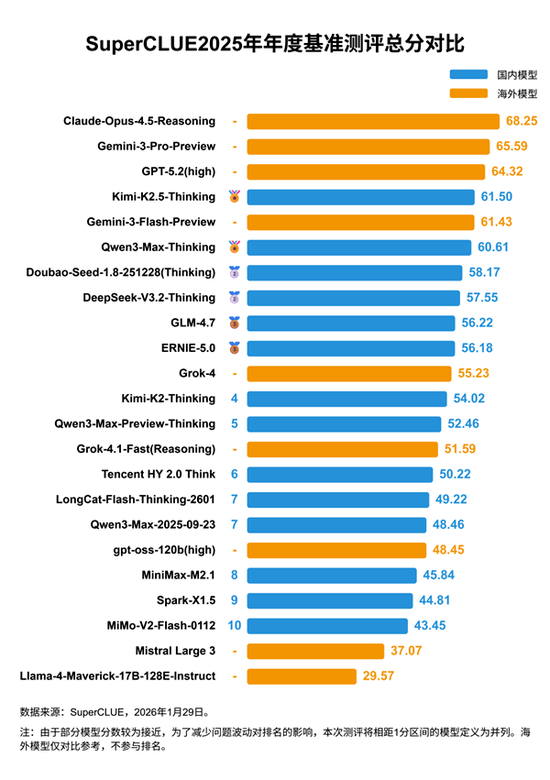
Core Insights - The SuperCLUE report for 2025 highlights significant advancements in Chinese AI models, indicating a shift from "follower" to "peer" status in the global AI landscape, particularly in code generation and mathematical reasoning [1][11][12] Group 1: Global Model Rankings - The top three global models are closed-source, with Anthropic's Claude-Opus-4.5-Reasoning scoring 68.25, Google's Gemini-3-Pro-Preview at 65.59, and OpenAI's GPT-5.2 at 64.32 [2][12] - The highest-ranked Chinese model, Kimi-K2.5-Thinking, achieved 61.50, placing it fourth overall, while Qwen3-Max-Thinking from Alibaba Cloud secured the sixth position with 60.61 [2][12] Group 2: Performance in Specific Domains - In the code generation category, Kimi-K2.5-Thinking scored 53.33, surpassing both GPT-5.2 and Gemini-3-Pro, showcasing its strong potential in algorithm logic and cross-language adaptability [5][15] - In mathematical reasoning, Qwen3-Max-Thinking and Google's Gemini-3-Pro-Preview tied for first place with a score of 80.87, marking a significant achievement for Chinese models in complex reasoning tasks [5][15] Group 3: Open Source Model Dominance - All top five open-source models are from China, with Kimi-K2.5-Thinking leading the pack, demonstrating substantial advancements in scientific reasoning and knowledge application [6][16] - The rise of Chinese open-source models is seen as a victory for the AI ecosystem, providing low-cost and high-control AI solutions for various sectors [6][16] Group 4: Evolution of Chinese AI Models - The Chinese AI industry has transitioned from a focus on "parameter competition" to "capability enhancement," emphasizing precision, stability, and safety [6][17] - Innovations in model architecture and data processing are driving this evolution, supported by national standards in AI safety and compliance [7][17]
X @Decrypt
Decrypt· 2026-02-06 00:29
OpenAI and Anthropic Roll Out Rival AI Models as Competition for Enterprise Heats Uphttps://t.co/vng78WrV9V ...