
格力电器

Search documents
从“卖产品”到“定规则”,广货如何行天下?
2 1 Shi Ji Jing Ji Bao Dao· 2026-02-12 10:14
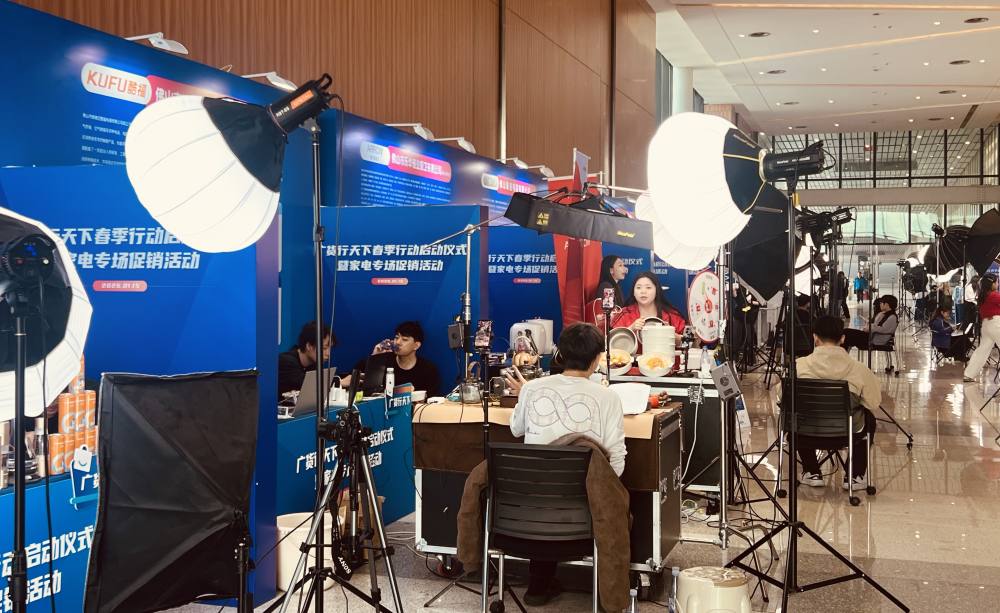
Core Viewpoint - The "Guangdong Products Going Global" spring campaign marks the beginning of the 2026 Guangdong product promotion activities, highlighting the transformation of Guangdong goods from merely exporting products to setting standards and influencing global markets [2][3]. Group 1: Evolution of Guangdong Products - Guangdong products have evolved from relying on geographical advantages and low labor costs to seeking new competitive strategies due to rising production costs and increased competition [2]. - The export structure of Guangdong goods has significantly upgraded since 2010, with a growing proportion of high-tech products such as home appliances, consumer electronics, machinery, and automobiles [3]. Group 2: Standard Setting and Global Influence - The establishment of product and industry standards is crucial for a country's manufacturing strength and its position in the global value chain [3]. - Companies like DJI and GAC Group have taken the lead in setting international standards, with DJI's drone safety standards being adopted by the International Organization for Standardization (ISO) [4][5]. Group 3: Technological Innovations and Market Leadership - The Guangdong mobile phone industry has seen active technological innovations, with companies like Huawei and OPPO becoming standard setters in the foldable phone market [5]. - Gree Electric Appliances has made significant strides by leading the development of international standards for refrigeration compressors, marking a breakthrough for Chinese companies in the international standards arena [5]. Group 4: Future Directions and Cultural Impact - The transformation of Guangdong products signifies a shift from merely selling products to defining rules and standards, indicating a new phase in their global journey [6]. - Future efforts will focus on integrating into local economies and cultures while promoting Chinese values and lifestyle globally [6][7].

A股狂撒3488亿春节红包!这6家每手分红超百元
2 1 Shi Ji Jing Ji Bao Dao· 2026-02-12 07:04
21世纪经济报道记者崔文静 春节临近,不少上市公司派发分红"大礼包"。 在1月1日—2月11日的短短42天内,已经有100余家上市公司分红派现。其中不乏达仁堂、泸州老窖、欧 派家居、招商银行、古井贡酒、格力电器等每手(最小持股单位)分红超100元的上市公司。 ④ 民企分红意愿明显提升,金额翻倍增长 民企春节前分红金额616亿元,同比增长1.3倍,在春节前分红中占比由2025年的8%升至18%。 科技型龙头工业富联,格力电器、伊利股份等"现金奶牛"均首次实施春节前分红,分别派发66亿元、56 亿元和30亿元。 (文章来源:21世纪经济报道) ② 金融和大消费行业继续成为分红主力 茅台、五粮液、海天味业等大消费龙头合计分红448亿元;银行业分红2434亿元,占比近七成;保险业 合计分红54亿元;11家券商分红55亿元。 ③ 分红时点整体前移,"又好又快"回馈投资者 2025年12月实施分红2647亿元,是2024年12月分红金额的3.7倍,占春节前分红总额的比重提升至七成 以上。 相较于往年,今年上市公司分红呈现四大亮点: ① 春节前分红金额再创新高 2025年12月至2026年1月底,沪深北证券交易所235家上 ...
基本面120ETF嘉实(159910)开盘涨0.08%
Xin Lang Cai Jing· 2026-02-12 01:44
Group 1 - The core point of the article highlights the performance of the Basic Fundamental 120 ETF managed by Harvest Fund Management, which opened at 2.504 yuan with a slight increase of 0.08% [1] - The ETF's performance benchmark is the Shenzhen Basic Fundamental 120 Index, and it has achieved a return of 150.22% since its inception on August 1, 2011, with a recent one-month return of 1.30% [1] Group 2 - Major holdings in the ETF include companies such as CATL, which increased by 0.54%, and Midea Group, which decreased by 0.29% [1] - Other notable stock performances include Gree Electric Appliances down by 0.21%, BOE Technology Group unchanged, Ping An Bank unchanged, Luxshare Precision up by 0.22%, Vanke A up by 0.82%, TCL Technology down by 0.21%, Wuliangye down by 0.13%, and Weichai Power up by 1.62% [1]





800现金流ETF汇添富(563680)开盘跌0.30%
Xin Lang Cai Jing· 2026-02-12 01:37
声明:市场有风险,投资需谨慎。本文基于第三方数据库自动发布,不代表新浪财经观点,任何在本文 出现的信息均只作为参考,不构成个人投资建议。如有出入请以实际公告为准。如有疑问,请联系 biz@staff.sina.com.cn。 800现金流ETF汇添富(563680)业绩比较基准为中证800自由现金流指数收益率,管理人为汇添富基金 管理股份有限公司,基金经理为何丽竹,成立(2025-04-30)以来回报为33.75%,近一个月回报为 5.42%。 来源:新浪基金∞工作室 2月12日,800现金流ETF汇添富(563680)开盘跌0.30%,报1.337元。800现金流ETF汇添富(563680) 重仓股方面,中国海油开盘涨0.55%,上汽集团跌0.14%,格力电器跌0.21%,中远海控涨0.07%,牧原 股份跌0.48%,中国铝业跌0.45%,TCL科技跌0.21%,宝钢股份跌0.14%,长城汽车涨0.29%,正泰电器 涨0.13%。 ...
沪深北235家公司春节前分红3488亿元创纪录,金融消费行业领跑
Jin Shi Shu Ju· 2026-02-12 01:29
Group 1 - The core viewpoint of the article highlights the increasing trend of pre-Spring Festival dividends among listed companies, with a total amount of 348.8 billion yuan, surpassing the previous year's total of 344.6 billion yuan, setting a new record [1] - The financial and consumer sectors continue to dominate dividend distributions, with the banking sector contributing 243.4 billion yuan, accounting for nearly 70% of the total, and major companies like China Merchants Bank and Industrial Bank joining the trend [1] - The willingness of private enterprises to distribute dividends has significantly increased, with a total of 61.6 billion yuan, a year-on-year growth of 130%, indicating a broader reach to investors [3] Group 2 - Major companies such as Yangtze Power and Luxshare Precision are showing strong dividend intentions, with Yangtze Power planning to distribute over 5.1 billion yuan, maintaining a high dividend rate due to its stable power generation capabilities [2] - The overall timing of dividend distributions has advanced, with a significant increase in the amount distributed in December 2025, which is 3.7 times that of December 2024, benefiting investors by allowing them to enjoy the time value of money [3] - Regulatory bodies have been promoting improvements in the dividend system, transitioning from "soft constraints" to "hard requirements," which has encouraged companies to prioritize shareholder returns [3][4]
2026年中国立体仓库设备行业产业链、市场规模及发展趋势研判:行业加速向高质量发展转型,以自动化升级、定制化方案推动降本增效与产值提升[图]
Chan Ye Xin Xi Wang· 2026-02-12 01:15
Industry Overview - The Chinese automated warehouse equipment industry is transitioning from rapid expansion to high-quality development, with a market size projected to reach approximately 43.52 billion yuan in 2024, reflecting a year-on-year growth of 12.52% [1][9] - The fundamental purpose of investing in automated warehouse equipment is shifting from "storing goods" to "optimizing processes," aiming for cost reduction through semi/full automation and intelligence [1][9] - The current trend involves upgrading traditional high-rise warehouses to automated storage and retrieval systems (AS/RS), integrating shuttle cars, AGVs, and WMS systems [1][9] Market Size - The area of automated warehouses in China is expected to reach about 450 million square meters in 2024, with a year-on-year growth of 4.65% [6][7] - The growth in warehouse area directly reflects strong demand in industrial production, e-commerce logistics, and cold chain transportation, leading to increased equipment renovation and system integration needs [7][9] Industry Chain - The upstream of the automated warehouse equipment industry includes raw materials and components such as steel, aluminum alloys, sensors, and PLCs [4] - The midstream involves the manufacturing and system integration of automated warehouse equipment, while the downstream applications span various sectors including e-commerce, pharmaceuticals, and renewable energy [4] Key Companies - Leading companies in the industry include Qingdao Maoyuan, Kunshan Intelligent, and Beizi Technology, which dominate large complex projects due to their strong capital and technical backgrounds [9] - Companies like Jiangsu Liuwi and Hefei Jingsong are recognized for their dynamic market presence, transitioning from equipment manufacturing to solution providers [9] Industry Development Trends 1. The future of automated warehouses will evolve beyond simple "automated storage and retrieval" functions to become "intelligent warehouse brains" with capabilities for perception, decision-making, and execution [11] 2. Market demand is shifting from general scenarios to high-growth niche industries such as new energy vehicles and biomedicine, leading to customized solutions [12] 3. The focus of market competition is shifting from equipment sales to providing comprehensive intelligent warehouse solutions, which will concentrate resources among leading system integrators [13][14]


申万宏源研究晨会报告-20260212
Shenwan Hongyuan Securities· 2026-02-12 00:42
Group 1: AI High Prosperity Spillover - The report reviews the storage and lithium battery market since September 2025, summarizing the basic rules of the "high prosperity spillover" trend, indicating that while the fundamental elasticity may not be as strong as the high prosperity itself, spillover trends can still exhibit elasticity [2][11] - It highlights that the spillover trend has basic bottom-line requirements, necessitating a clear confirmation of the prosperity cycle's bottom, including manageable demand risks and sufficient supply clearance [11] - The report suggests focusing on industries experiencing AI price spillover, recommending fiberglass due to its reasonable valuation and visible price increases, and optical fiber due to traditional recovery and short-term AI business progress [2][11] Group 2: January Policy Tracking - The report notes that the longest Spring Festival holiday in 2026 is expected to boost consumer spending, which is crucial for driving domestic demand in the first quarter and solidifying the foundation for economic recovery throughout the year [2][10] - It emphasizes the collaborative efforts of multiple ministries to accelerate support for the economy, particularly in consumption, equipment investment, and the private sector, with significant increases in government bond financing [10][13] - Local governments are proactively deploying economic work, moving away from a wait-and-see attitude, with many regions advancing their annual work deployment to early January [10][13] Group 3: January Inflation Analysis - The report discusses the January inflation data released by the National Bureau of Statistics, indicating a CPI increase of 0.2% year-on-year, down from 0.8% previously, and a PPI decrease of 1.4% year-on-year, with a month-on-month increase of 0.4% [3][12] - It identifies the divergence in inflation as being influenced by the timing of the Spring Festival, external factors, and weak demand, with a notable narrowing of the PPI decline primarily driven by rising copper prices [12][16] - The report also highlights that the CPI remains weak overall, with significant declines in food prices and core commodity CPI, reflecting ongoing challenges in the economy [12][16] Group 4: Home Appliance Industry Insights - The report indicates that the home appliance sector has seen significant sales through the "old-for-new" policy, with over 6.81 million units sold in January, generating substantial revenue [15][18] - It notes that the home appliance market is facing high base pressure in 2025, with a focus on core categories for subsidies, which are expected to benefit leading brands [18] - The report highlights the competitive landscape in the home appliance market, with leading brands gaining market share, particularly in the offline market, while online competition is intensifying [18][19] Group 5: Tourism and Service Industry Outlook - The report anticipates a significant increase in travel during the 2026 Spring Festival, with a projected 95 million passengers expected to travel by air, marking a 5.3% increase year-on-year [21] - It emphasizes the diverse recovery in the domestic tourism market, with family and senior travelers driving demand for high-quality accommodations and unique travel experiences [21][20] - The report suggests that the tourism sector is poised for a strong recovery, with a focus on cross-border travel and differentiated experiences becoming key growth drivers [21][20] Group 6: Banking Sector Analysis - The report discusses the recent approval for a major shareholder of Nanjing Bank to increase their stake above 15%, which is expected to unlock significant incremental capital for the bank [22][23] - It highlights the bank's strong performance, with a projected revenue growth of 10.5% and a net profit growth of approximately 8.1% for 2025, indicating a positive outlook for 2026 [22][23] - The report recommends Nanjing Bank as a buy due to its solid performance, high dividend yield, and the potential for valuation recovery driven by major shareholder support [22][23]

分红金额再创新高 上市公司春节前派发超3000亿元“红包”
Zhong Guo Zheng Quan Bao· 2026-02-11 21:01
Core Viewpoint - The total dividend amount distributed by listed companies before the Spring Festival has exceeded the previous year, reaching a new high of 348.8 billion yuan, indicating a strong commitment to enhancing investor returns and satisfaction [1] Group 1: Dividend Distribution Overview - From December 2025 to January 2026, 235 listed companies on the Shanghai and Shenzhen stock exchanges distributed a total of 348.8 billion yuan in dividends before the Spring Festival, surpassing the 344.6 billion yuan from the previous year [1] - The financial and consumer sectors remain the primary contributors to dividend distributions, with banking companies alone distributing 243.4 billion yuan, accounting for nearly 70% of the total [1][2] Group 2: Industry-Specific Insights - Major banks, including China Merchants Bank and Industrial Bank, have joined the trend of pre-Spring Festival dividends, distributing a total of 37.5 billion yuan [2] - Leading consumer companies such as Kweichow Moutai, Wuliangye, and Haitian Flavoring & Food have collectively distributed 44.8 billion yuan in dividends, reflecting their commitment to enhancing intrinsic value and investor confidence [3] Group 3: Changes in Dividend Timing - The timing of dividend distributions has shifted earlier, with a total of 264.7 billion yuan distributed in December 2025, which is 3.7 times the amount from December 2024, and now accounting for over 70% of the total pre-Spring Festival dividends [4] - Major banks have also advanced their dividend payments to December 2025, with a combined total of 189.9 billion yuan [4] Group 4: Private Company Dividend Trends - The willingness of private listed companies to distribute dividends has significantly increased, with a total of 61.6 billion yuan distributed, representing a year-on-year growth of 130% and an increase in their share of total dividends from 8% to 18% [5] - Notable private companies such as Industrial Fulian, Gree Electric, and Yili have also initiated pre-Spring Festival dividends for the first time, distributing 6.6 billion yuan, 5.6 billion yuan, and 3 billion yuan respectively [5]


上市公司春节前派发超3000亿元“红包”
Zhong Guo Zheng Quan Bao· 2026-02-11 20:23
Group 1 - The total dividend amount distributed by listed companies before the Spring Festival has exceeded the previous year, reaching a new high of 348.8 billion yuan, surpassing the 344.6 billion yuan from the previous year [1] - Financial and consumer sectors continue to be the main contributors to dividends, with banking companies distributing 243.4 billion yuan, accounting for nearly 70% of the total [1] - The trend of pre-Spring Festival dividends reflects companies' commitment to enhancing investor returns and aligning dividend distribution with shareholder expectations [1][2] Group 2 - Major consumer companies such as Kweichow Moutai and Wuliangye collectively distributed 44.8 billion yuan in dividends, indicating a strong commitment to enhancing company value and investor confidence [2] - The timing of dividend distributions has generally advanced, allowing investors to benefit from earlier cash returns and better cash flow planning for the new year [3] - The willingness of private companies to distribute dividends has significantly increased, with a total of 61.6 billion yuan distributed, a 130% year-on-year growth, now accounting for 18% of the total pre-Spring Festival dividends [3] Group 3 - Regulatory bodies are promoting improvements in the dividend system, which includes restrictions on major shareholders' sell-offs for companies with low or no dividends, encouraging companies to prioritize shareholder returns [4] - The increase in cash dividends, especially among private companies, is seen as a significant indicator of the high-quality development of the capital market [4]
上市公司派发超3000亿“春节红包”
Xin Lang Cai Jing· 2026-02-11 18:46
Group 1 - The total amount of dividends distributed by 235 listed companies before the Spring Festival reached 348.8 billion yuan, surpassing the previous year's total of 344.6 billion yuan, marking a new high [1] - The increase in dividend distribution is attributed to stable corporate profits and a strengthened awareness of shareholder returns, reflecting improved corporate governance [1] - The financial and consumer sectors remain the primary contributors to dividends, with the banking sector distributing 243.4 billion yuan, accounting for nearly 70% of the total [1] Group 2 - Major companies such as Yangtze Power and Luxshare Precision are actively participating in dividend distribution, with Yangtze Power proposing over 5.1 billion yuan in dividends, leading the distribution [2] - Small and medium-sized enterprises are also engaging in dividend distribution, focusing on specialized fields and benefiting investors, with three companies from the Beijing Stock Exchange distributing a total of 4.45 million yuan [2] - The overall timing of dividend distributions has advanced, with 264.7 billion yuan distributed in December 2025, 3.7 times that of December 2024, enhancing investor cash flow planning [2] Group 3 - The willingness of private enterprises to distribute dividends has significantly increased, with a total of 61.6 billion yuan distributed, a year-on-year growth of 130%, now accounting for 18% of the total [3] - Regulatory efforts have been made to improve the dividend system, transitioning from "soft constraints" to "hard requirements," which has pressured companies to prioritize shareholder returns [3] - The evolving dividend ecosystem in the stock market is fostering a culture of value investment, with predictable returns enhancing investor confidence and attracting long-term capital [3]
