Panasonic

Search documents
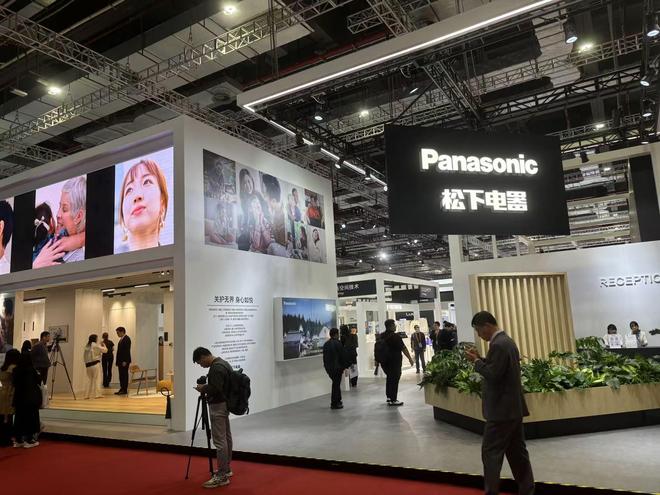
松下加码投资中国AI相关产业,9月将在上海建新工厂
Di Yi Cai Jing Zi Xun· 2025-09-01 12:11
Group 1 - Panasonic is increasing investments in China's AI-related industries, with a new electronic materials factory set to open in Shanghai in September [2] - In the Northeast Asia region, Panasonic's sales revenue for the fiscal year 2024 is expected to grow by 3% year-on-year, with operating profit increasing by 10% [2] - The first quarter of fiscal year 2025 (April to June 2023) also saw revenue and profit growth, with sales up by 3% and operating profit up by 26% [2] Group 2 - Panasonic's investment in the electronic materials factory in Guangzhou, which began construction in June 2020, amounts to 790 million yuan and is set to produce multilayer substrates for AI servers [3] - A new factory in Suzhou, with an investment of 600 million yuan, is scheduled to start construction in October 2024 and will produce new materials for integrated circuits [3] - An additional factory in Shanghai, with an investment of 120 million yuan, is planned to begin construction in September 2025, focusing on electronic materials for AI servers [3] Group 3 - Panasonic's sales of capacitors and electronic materials for AI servers to Western markets increased by 133% year-on-year [3] - The company has signed contracts for cooling liquid circulation pumps for servers, with plans for production at its Hangzhou motor factory [3] Group 4 - Panasonic is enhancing internal AI applications by integrating large models like Chat GPT and DeepSeek into its systems [4] - The company is promoting AI technology through internal competitions and has developed its own small model for generative AI servers [4] - Panasonic plans to share its AI application practices with other Japanese companies operating in China [4]

Panasonic's New Bets Look Likely To Pay Off
Seeking Alpha· 2025-08-30 05:58
Core Insights - Panasonic Holdings Corporation is undergoing a significant transformation aimed at becoming a leaner, more profitable, and more valuable company [1] Group 1 - The current reorganization is a culmination of the company's transformation efforts over the past decade [1]

股债齐涨:流动性宽松下的市场共振现象
Sou Hu Cai Jing· 2025-08-25 02:49
Group 1 - The core phenomenon of simultaneous rise in stocks and bonds is a rare occurrence, typically indicating a "seesaw" effect between these asset classes, but current liquidity easing signals have led to this unusual market behavior [2][3] - The Federal Reserve's policy shift, particularly the dovish signals from Chairman Powell regarding potential interest rate cuts, has significantly influenced global market liquidity expectations, leading to increased capital flows into emerging markets [2][3] - Historical precedents show that abundant liquidity is a crucial prerequisite for simultaneous gains in both stocks and bonds, as seen during the period from January 2019 to March 2020 in China [3][4] Group 2 - Today's market performance indicates a preference for growth sectors such as computer and communication industries, reflecting a focus on policy-supported areas and technological growth [4] - The bond market benefits from expectations of declining interest rates, attracting funds in a liquidity-rich environment, similar to the stock and bond bull market from September 2014 to June 2015 [4][5] - The simultaneous rise in stocks and bonds is a collective interpretation of the policy environment, suggesting a re-evaluation of emerging market assets in light of global capital flow changes [4][5] Group 3 - Overall, the simultaneous rise in stocks and bonds is a direct response to global liquidity easing expectations, driven by external policy signals and internal funding allocation needs [5] - Understanding the liquidity-driven market characteristics is more crucial for investors than focusing on individual indicators, as liquidity often dictates asset price movements [5]

EMC_从铜到光-面向光子封装的先进覆铜板解决方案
2025-08-21 04:45
Summary of Key Points from the Conference Call Company and Industry Overview - **Company**: EMC, a Taiwan-based substrate materials manufacturer, specializes in high-speed and halogen-free laminate materials for the electronics industry, particularly in HDI (High-Density Interconnect) applications [58][59][72]. - **Industry**: The global copper-clad laminate (CCL) market is experiencing a structural shift towards high-frequency, high-speed advanced CCLs, driven by the rise of AI servers and high-speed communication applications [21][27]. Core Insights and Arguments - **Market Growth**: The global high-end CCL market is projected to achieve a compound annual growth rate (CAGR) of 26% from 2024 to 2026, significantly outpacing the overall CCL market's growth rate of around 9% [27]. - **EMC's Revenue Growth**: EMC's revenue growth surged from $74 million USD annually from 2003 to 2021 to $231 million USD annually from 2021 to 2024, with projected revenue reaching approximately $2.5 billion USD by 2025 [59]. - **Technological Leadership**: EMC is the only mSAP and IC substrate material manufacturer outside of Japan and Korea with fully in-house developed capabilities, emphasizing its commitment to proprietary technology development [68]. - **Market Position**: EMC holds a dominant position in the HDI laminate market with a 70% market share and ranks third globally in the green laminate market with annual sales of $1.13 billion USD, representing 33% of the total market [77][72]. Important Trends and Developments - **Shift to High-Speed Materials**: The demand for ultra-low-loss materials like M8-grade CCLs is increasing, particularly for AI servers and 800G network switches [23][29]. - **Regional Market Dynamics**: High-end CCL supply is concentrated in Asia, with Taiwan, South Korea, and Japan leading the market, while Chinese manufacturers lag in technology and certification for ultra-high-frequency materials [28][29]. - **Impact of U.S.-China Tech Tensions**: American tech companies are increasingly relying on supply chains in Taiwan, Korea, and Japan for AI servers and high-speed network switches, boosting shipments from Taiwanese manufacturers [29]. Additional Noteworthy Content - **Product Roadmap**: EMC's roadmap includes advanced materials for FCBGA (Flip-Chip Ball Grid Array) and SiP (System-in-Package) technologies, focusing on low CTE (Coefficient of Thermal Expansion) and high modulus solutions [119][137]. - **Antenna-in-Package (AiP)**: AiP technology integrates RF front-end components directly within the package substrate, enhancing signal integrity and miniaturization, critical for 5G smartphones and IoT applications [138][141]. - **Sustainability Focus**: EMC's halogen-free and environmentally friendly materials align with increasing ESG standards in the electronics supply chain, positioning the company favorably in the market [72][76]. This summary encapsulates the key points discussed in the conference call, highlighting EMC's strategic positioning, market dynamics, and technological advancements within the substrate materials industry.
中国工业月度报告(2025 年 7 月)-整体需求不错,本土化进程加快IA Monthly (Jul 2025) – Overall Demand Not Bad, and Localization Accelerated
2025-08-18 02:53
Summary of Key Points from the Conference Call Industry Overview - The report focuses on the **Industrial Automation (IA)** sector in **China** and highlights the ongoing trends in demand and market dynamics as of **July 2025** [1][2][13]. Core Insights - **Demand Trends**: - Local IA suppliers experienced a sales growth of **+19% YoY** in July, up from **+18% YoY** in June and **+15% YoY** in May [2][13]. - Inovance's IA order growth improved to over **20% YoY** in July, up from **15% YoY** in June [2][13]. - Key sectors showing solid growth include **logistics, hoisting, battery, auto, woodworking, food & beverage, textile, machine tool, and packaging** [2][13]. - **Overseas Brands Performance**: - Sales growth for leading overseas IA suppliers moderated to **+1% YoY** in July from **+6% YoY** in June [3][13]. - Yaskawa's servo sales growth remained strong at **+25% YoY**, while inverter sales in China dropped to **-11% YoY** [3][13]. - ABB's inverter sales fell to **-6% YoY** from **+10% YoY**, indicating competitive pricing pressures [3][13]. - **Taiwanese Peers**: - Hiwin's sales were weak at **-6% YoY** in July, while Airtac maintained a firm growth of **+7% YoY** [4][13]. - Management expects automation demand to pick up in Q4 as interest rates are cut in the EU and US [4][13]. Macro Indicators - **Manufacturing PMI**: - The Manufacturing PMI declined slightly to **49.3** in July from **49.7** in June, indicating softened confidence in the manufacturing sector [5][67]. - High-end, large, and small companies' PMIs all dropped, while mid-sized companies' PMI recovered to **49.5** [5][67]. - **Business Conditions Index (BCI)**: - The BCI remained at **53.4** in July, down from a peak of **57.7** in April, reflecting cautious investment outlooks among SMEs [67]. - **Export Growth**: - Container export volumes in major ports increased to **+1.9%** in June from **+1.3%** in May, while total exports improved to **+7.2%** in July from **+5.9%** [67]. Sector-Specific Insights - **Servo and Inverter Demand**: - Projected servo demand growth remained at **+12% YoY** in July, while inverter demand fell back to **-2% YoY** [13][18]. - The top downstream applications for servos include **lithium battery, 3C electronics, industrial robots, solar, and machine tools** [24][30]. - **Downstream Demand Trends**: - Demand for servos from top applications slowed to **+15% YoY** in June from **+82% YoY** in May, primarily due to deteriorating solar demand [26][30]. - Inverter demand from top applications improved slightly to **+3% YoY** in June from **+2% YoY** in May, driven by recovery in machine tools and power sectors [26][30]. Conclusion - The IA sector in China is experiencing a divergence in growth between local and overseas suppliers, with local players showing stronger performance amid ongoing macroeconomic challenges. The outlook for the second half of 2025 remains cautiously optimistic, supported by favorable government policies and potential recovery in key sectors.
中信证券:继续重点推荐海外份额持续提升、盈利能力领先、具备显著估值优势的国内头部电池企业
Zheng Quan Shi Bao Wang· 2025-08-12 00:56
Core Viewpoint - The research from CITIC Securities indicates that while the overall profitability of four major Japanese and South Korean battery companies (LGES, Samsung SDI, SKI, Panasonic) has improved quarter-on-quarter in Q2 2025, excluding the impact of the US IRA subsidies, LGES and Panasonic are barely profitable, while Samsung SDI and SKI remain in a loss position, highlighting a significant gap in profitability compared to domestic leader CATL [1] Group 1 - The European electric vehicle market is experiencing a significant recovery in demand, leading to a notable increase in CATL's market share, while the overall share of Japanese and South Korean companies has declined sharply [1] - The US electric vehicle market is expected to face pressure due to the cancellation of subsidies, prompting Japanese and South Korean companies to shift their production lines towards the energy storage market [1] - Chinese companies are facing increased entry barriers into the US energy storage market due to tariffs and FEOC policies, but they can expand their capacity and technology licensing in Southeast Asia to enter the US market [1] Group 2 - The demand for energy storage in AI data centers is growing beyond expectations, which is likely to provide significant incremental contributions to leading domestic and international battery companies [1] - Continued emphasis is placed on recommending domestic leading battery companies that are enhancing their overseas market share, demonstrating superior profitability, and possessing significant valuation advantages [1]


松下生产科技二期项目竣工
Xin Lang Cai Jing· 2025-08-07 09:44
Core Insights - The completion of the second phase project of Suzhou Panasonic Production Technology Co., Ltd. marks a significant step in the company's strategy to deepen its presence in the Chinese market [1] - The new phase will double the production capacity upon reaching full operational status [1] - The project incorporates the latest energy-saving designs and environmental concepts, emphasizing the application of automation and robotics technology [1] - The factory's smart level will be comprehensively enhanced through digital transformation [1]
从玻璃纤维到覆铜板(CCL ):支撑 CoWOP 封装新时代的材料支柱-From Glass Fiber to CCL The Material Backbone Powering the New Era of CoWoP Packaging
2025-08-06 03:33
Summary of Key Points from the Conference Call Industry Overview - The conference call discusses advancements in the semiconductor packaging industry, particularly focusing on the evolution of packaging technologies such as CoWoS (Chip-on-Wafer-on-Substrate), CoPoS (Chip-on-Panel-on-Substrate), and CoWoP (Chip-on-Wafer-on-PCB) [9][18][24]. Core Concepts and Technologies - **CCL (Copper Clad Laminate)** is identified as a core material for the electronics industry, essential for high-frequency and high-speed circuits, with major suppliers including TUC, EMC, Unimicron, Resonac, MGC, and Panasonic [5][6]. - **CoWoP** aims to eliminate the traditional ABF (Ajinomoto Build-up Film) package substrate, allowing direct mounting of chip and silicon interposer modules onto high-precision PCBs, theoretically offering shorter signal paths and improved thermal management [10][25][30]. - **Technical Challenges**: CoWoP faces significant challenges, including the need for PCB precision below 10 μm, thermo-mechanical reliability issues, and manufacturing yield challenges [12][29][30]. Market Dynamics - The demand for high-end CCL and PCB materials is rising sharply due to the expansion of AI accelerators and data center computing needs, with a notable shift from M7-grade to M8 and M9-grade materials [74][76][81]. - NVIDIA's next-generation Rubin platform and Google's chip are expected to adopt M9-grade CCL, indicating a significant increase in material costs associated with advanced AI computing platforms [77][80]. Future Outlook - CoWoP is not expected to enter mass production in the near term, with industry consensus suggesting that NVIDIA will continue to rely on a mix of CoWoS and CoPoS solutions for product reliability and supply stability [13][26][37]. - The transition to CoWoP may require one to two more product generations before it can reshape the packaging models and supply chain ecosystem for high-performance computing and AI servers [14][28]. Key Suppliers and Innovations - **Mitsui Mining** is highlighted as a dominant supplier of ultra-thin copper foil, critical for SLP and CoWoP applications, with the market entering a high-growth phase due to increasing demand from AI and HPC sectors [41][55]. - **Shin-Etsu Chemical** has developed innovative equipment and methods for advanced packaging substrates, aiming to enhance production capabilities for next-generation chiplet and high-frequency packaging [66][70]. Material Specifications - The specifications for high-speed PCB materials are becoming increasingly stringent, with targets for dielectric constant (Dk) ≤ 3.3 and dissipation factor (Df) ≤ 0.005 to minimize signal loss and ensure impedance stability [48][49]. - Electronic-grade glass fiber fabric is emphasized as a critical reinforcement material for CCL, playing a vital role in ensuring signal integrity and power integrity in high-performance applications [82][86]. Conclusion - The semiconductor packaging industry is undergoing significant transformations driven by advancements in technologies like CoWoP, with increasing demands for high-performance materials and innovative manufacturing processes shaping the future landscape of AI and HPC systems [22][73].

新兴市场及亚太地区股票策略:关税上调的布局情况-EM & APAC Equity Strategy_ The set-up into the tariff step-up
2025-08-05 03:15
Summary of Conference Call Records Industry Overview - **Industry**: Emerging Markets (EM) and Asia-Pacific (APAC) Equity Strategy - **Context**: The call discusses the implications of increased tariff rates on corporate profitability and market dynamics, particularly focusing on the US and its trading partners. Key Points Tariff Implications - **Tariff Rates**: The weighted average tariff rates on US imports are projected to exceed 18% starting from August 1, 2025, a level not seen in 92 years [1][7] - **US Import Tariffs**: Currently, less than 50% of US imports are subject to tariffs, up from under 30% prior to recent changes [1][26] - **Customs Revenue**: US customs revenues from import tariffs have increased significantly, with an annualized additional revenue of approximately USD 220 billion as of June 2025 [1][21] Corporate Responses to Tariffs - **Impact on Earnings**: US-based importers experienced a minor impact in the first half of the year due to pre-buying strategies but anticipate a larger hit in the second half [2] - **Mitigation Strategies**: Companies are managing tariff impacts through supply chain optimization, cost-sharing with suppliers, and implementing 'tariff surcharges' on end-customer prices [2] - **Sector-Specific Concerns**: Korean and Japanese firms have expressed significant concerns regarding tariff impacts [2] Market Reactions - **Earnings Cuts**: EM stocks with high US exposure (25% or more) have seen a consensus earnings cut of approximately 2.5-3% since March 31, 2025, while stocks with no US revenue exposure have remained stable [3][49] - **Stock Performance**: Stocks with higher US exposure have underperformed those without by about 4% during the same period [3][48] - **Market Sentiment**: There is a prevailing belief in the market that tariffs are temporary, leading to a lack of concern about tariff risks [3] Investment Strategy - **Market Selection Framework**: Tariffs are a significant theme in market selection, with a focus on companies with higher domestic exposure and lower US exposure [4] - **Geographical Focus**: The strategy is overweight on markets such as China, Brazil, Indonesia, Malaysia, and the Philippines, with projected upside of 7% for MSCI EM and 8% for MSCI AxJ by 2026 [4][9] Sector Performance - **Operating Profits**: Most EM manufacturing companies reported stable to upward momentum in operating profits, with 13% of MSCI EM revenue linked to the US [4][33] - **Sector Vulnerability**: The manufacturing sector is particularly vulnerable due to tightly knit global supply chains, with potential profitability pressures expected in the second half of the year [4] Company-Specific Insights - **Dixon Technologies (India)**: Reported a 10% import tariff impact on camera modules, with significant negative effects on margins [57] - **Hyundai Motor Co. (Korea)**: Anticipated a 39.5% drop in operating profit due to tariffs [57] - **Panasonic (Japan)**: Estimated a 1% impact on consolidated business profit for the second half of the year [57] - **NIDEC (Japan)**: Experienced a minor impact from tariffs, with management indicating that the overall effect is manageable [57] Additional Observations - **Tariff Uncertainty**: Companies across various sectors are facing uncertainty due to tariffs, leading to cautious spending and project delays [58] - **Hedging Strategies**: Some firms, like Arca Continental in Mexico, are employing hedging strategies to mitigate tariff impacts [58] Conclusion The conference call highlights the significant impact of rising tariffs on corporate profitability and market dynamics in the EM and APAC regions. Companies are adapting through various strategies, but concerns remain about the long-term implications of these tariffs on earnings and market performance.
全球及中国光纤传感器放大器行业规划研究及发展动向分析报告2025~2031年
Sou Hu Cai Jing· 2025-08-02 16:17
Market Overview - The global and Chinese fiber optic sensor amplifier industry is projected to experience significant growth from 2025 to 2031, driven by increasing demand across various applications [1][3]. - The report categorizes fiber optic sensor amplifiers into digital and analog types, highlighting their respective growth trends [4]. Growth Trends - The market size for different product types of fiber optic sensor amplifiers is expected to show substantial growth from 2020 to 2031, with specific revenue forecasts provided for 2024 and 2031 [4][5]. - The report outlines the growth trends in various applications, including semiconductor and electronics sectors, indicating a robust demand for fiber optic sensor amplifiers [4][6]. Industry Development - The current state of the fiber optic sensor amplifier industry is analyzed, focusing on overall development, key characteristics, and influencing factors [4][7]. - The report identifies both favorable and unfavorable factors impacting the industry, along with barriers to entry for new players [4][8]. Supply and Demand Analysis - A comprehensive analysis of global supply and demand for fiber optic sensor amplifiers from 2020 to 2031 is presented, including production capacity, output, and utilization rates [4][9]. - The report also provides insights into the Chinese market's supply and demand dynamics, including production capacity and market demand forecasts [4][10]. Regional Analysis - The report includes a detailed analysis of the fiber optic sensor amplifier market across major regions, such as North America, Europe, and Asia-Pacific, with sales revenue and market share data [5][6]. - Specific trends in production and sales volumes for each region are forecasted for 2020, 2024, and 2031 [5][6]. Competitive Landscape - The competitive landscape of the fiber optic sensor amplifier market is examined, highlighting major manufacturers, their market shares, and revenue rankings for 2024 [6][8]. - The report categorizes manufacturers into different tiers based on their market presence and product offerings [6][8]. Product and Application Analysis - The report analyzes the sales and revenue trends for different types of fiber optic sensor amplifiers, providing market share data and future forecasts [4][10]. - It also explores the sales and revenue trends across various applications, indicating the sectors with the highest growth potential [4][10]. Industry Environment - The report discusses the development trends within the fiber optic sensor amplifier industry, identifying key drivers and regulatory factors affecting the market [4][10]. - A SWOT analysis of Chinese enterprises in the fiber optic sensor amplifier sector is included, providing insights into their strengths, weaknesses, opportunities, and threats [4][10].