三星

Search documents
美政府已颁发许可证,批准韩企向中国出口芯片制造设备
Huan Qiu Wang· 2025-12-30 23:11
然而,今年8月,美国商务部宣布撤销三星和SK海力士在其中国工厂使用美国设备的豁免,相关措施在12月正式生效。这意味着此后将美国芯片制造设备运 往这些公司的在华工厂需要获得美国的出口许可证。 韩联社援引消息人士的信息称,美国商务部工业与安全局已修改政策,允许三星和SK海力士向其中国工厂出口芯片设备,只需每年获得批准。为此,美国 要求企业提交年度计划,列明所需设备类型和数量,并按年度审批。业内人士认为,新制度比之前的逐批出货许可流程要简便得多。 两名知情人士30日对路透社表示,美国政府已向三星和SK海力士颁发年度许可证,允许其在2026年向其位于中国的工厂出口芯片制造设备。"这项批准对韩 国企业来说只是暂时缓解。"路透社称,三星和SK海力士拒绝置评,台积电暂未回应置评请求。 《朝鲜日报》称,虽然新制度比"VEU"制度更为严格,但与逐案审批相比,依然降低了韩国企业在中国运营工厂的不确定性,"局限性在于难以准确预测每 年所需的设备和零部件数量"。 "据消息人士透露,三星和SK海力士已获美国批准,在2026年向中国出口芯片制造设备。"路透社30日报道称,在今年早些时候撤销一些科技公司在美国芯 片制造设备出口方面的许可豁 ...


英媒:美政府已颁发许可证,批准韩企向中国出口芯片制造设备
Huan Qiu Shi Bao· 2025-12-30 22:34
韩联社援引消息人士的信息称,美国商务部工业与安全局已修改政策,允许三星和SK海力士向其中国 工厂出口芯片设备,只需每年获得批准。为此,美国要求企业提交年度计划,列明所需设备类型和数 量,并按年度审批。业内人士认为,新制度比之前的逐批出货许可流程要简便得多。 两名知情人士30日对路透社表示,美国政府已向三星和SK海力士颁发年度许可证,允许其在2026年向 其位于中国的工厂出口芯片制造设备。"这项批准对韩国企业来说只是暂时缓解。"路透社称,三星和 SK海力士拒绝置评,台积电暂未回应置评请求。 《朝鲜日报》称,虽然新制度比"VEU"制度更为严格,但与逐案审批相比,依然降低了韩国企业在中国 运营工厂的不确定性,"局限性在于难以准确预测每年所需的设备和零部件数量"。 【环球时报特约记者 文简】"据消息人士透露,三星和SK海力士已获美国批准,在2026年向中国出口芯 片制造设备。"路透社30日报道称,在今年早些时候撤销一些科技公司在美国芯片制造设备出口方面的 许可豁免后,美国暂时松绑了对韩国企业的限制。 报道称,三星、SK海力士和台积电此前受益于美国对华芯片相关出口全面限制的豁免政策,即"经验证 最终用户(VEU)"制度 ...
产值冲刺8000亿元 全球市场占比近54% 新型显示从“链式生态” 迈向“AI+显示”新纪元
Shang Hai Zheng Quan Bao· 2025-12-30 19:24
Core Insights - The new display industry in China is projected to reach a production value of 740 billion yuan in 2024, with a year-on-year growth of 12%, and a global market share exceeding 49% [2] - By 2025, the industry is expected to approach 800 billion yuan in production value, with a global market share nearing 54% [2] - The industry has transitioned from a "point model" to a "chain model," establishing a new ecosystem characterized by interconnectedness and synergy [2] Industry Development - The Chinese new display industry has moved from catching up to being a global leader, dominating 55% of the panel market and 43% of the materials market [2] - The industry has formed clusters in regions such as the Yangtze River Delta and the Pearl River Delta, with Anhui province achieving a full industry chain layout [3] - OLED technology is expanding from mobile devices to larger screens, with significant cost reductions anticipated for higher generation production lines [3] Technological Advancements - The global market for silicon-based OLED displays is expected to grow at a compound annual growth rate of 94.11%, from 1.27 billion yuan in 2024 to 67.93 billion yuan by 2030 [4] - The integration of AI and display technology is creating new application scenarios, enhancing human-computer interaction through intelligent interfaces [6] - Companies are developing innovative "AI-native" display solutions, such as flexible AMOLED displays with advanced features [6] Strategic Pathways - The industry is encouraged to strengthen top-level design and coordination, focusing on high-quality development while maintaining LCD production advantages [7] - There is a need for breakthroughs in common key technologies and the establishment of a multi-level innovation system from research to industrialization [7] - Enhancing supply chain autonomy and optimizing intellectual property strategies are essential for high-quality development [7]
产值冲刺8000亿元 全球市场占比近54% 新型显示从“链式生态”迈向“AI+显示”新纪元
Shang Hai Zheng Quan Bao· 2025-12-30 19:17
Core Insights - The article discusses the rapid advancements in display technology, predicting a future where displays are integrated into various environments and applications, significantly transforming human-computer interaction and creating new market opportunities [1][2]. Industry Overview - China's new display industry has evolved from catching up to leading in certain areas, now holding over 49% of the global market share and 55% of the panel market share, with a projected industry value of 740 billion yuan in 2024, a 12% increase year-on-year [2]. - The industry is transitioning from a "point model" to a "chain model," establishing a new ecosystem that promotes synergy across the supply chain [2]. Technological Advancements - OLED technology is pushing the boundaries of display capabilities, expanding from mobile devices to larger screens, with significant cost reductions expected in production [4]. - The micro-display technology is anticipated to drive a new wave of industry transformation, particularly in the XR device market, with a projected annual growth rate of 94.11% for silicon-based OLED displays from 2024 to 2030 [4][5]. Strategic Directions - The "14th Five-Year Plan" emphasizes original innovation, key technology breakthroughs, and the establishment of a modern industrial system centered on advanced manufacturing [1]. - Four strategic paths for the new display industry include enhancing top-level design, breaking through common key technologies, strengthening supply chain collaboration, and optimizing intellectual property strategies [8]. Market Dynamics - The display industry is forming clusters in regions like the Yangtze River Delta and the Pearl River Delta, with provinces like Anhui achieving significant revenue and production capacity [3]. - The integration of AI with display technology is expected to create new interactive applications, enhancing user experience and driving the evolution of human-computer interaction [7].
一个剑指中国的联盟成立,几大亚洲国家加入,中国把丑话说在前头
Sou Hu Cai Jing· 2025-12-30 17:51
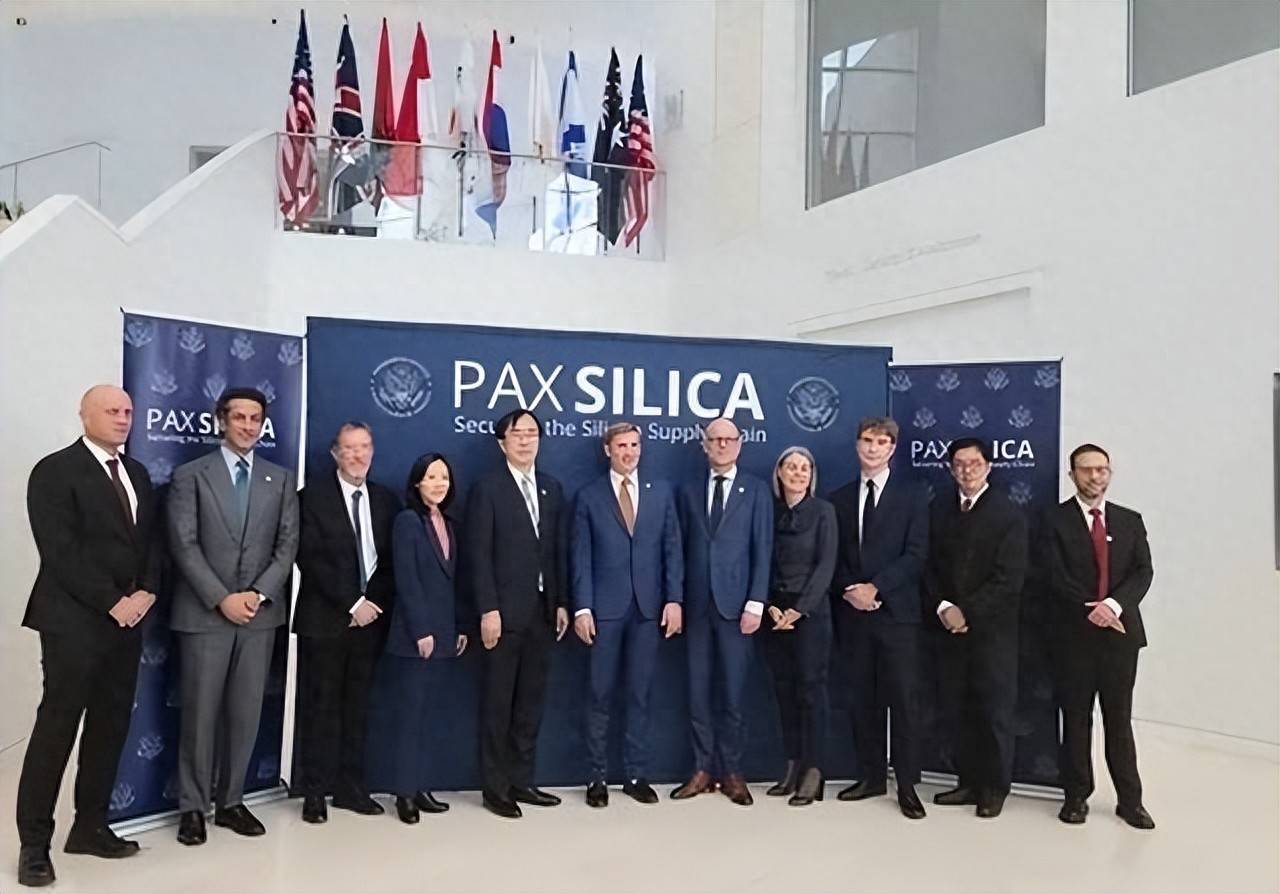
美国又搞了个新联盟,叫硅和平倡议,英文是Pax Silica,直译成硅的和平。这东西在2025年12月12日正式启动,华盛顿那边开峰会,七国签了份宣言。表 面上看是谈技术合作,保障AI和半导体的供应链安全,但明眼人都知道,这剑锋直指中国,目的是想在关键矿产和芯片领域绕开中国的主导地位。 成员里有美国、日本、韩国、澳大利亚、新加坡、荷兰、以色列、英国、加拿大和阿联酋,这些国家在科技链条上各有分工,美国带头拉帮结派,试图重塑 全球格局。 中国这边没被邀请,外交部直接表态,反对这种排他性小圈子,强调要按市场规则办事,谁想另起炉灶就得自己掂量后果。 这个倡议不是凭空冒出来的,早几年美国就在补贴本土芯片产业,同时全球到处拉盟友。2025年12月11日,美国国务院副国务卿雅各布·赫尔伯格主持峰 会,12日各国代表签字。 名单选得很精,日本管精密制造,韩国有三星和SK海力士这样的芯片巨头,澳大利亚提供矿产资源,新加坡负责物流和金融,荷兰握着ASML的光刻机技 术,以色列擅长算法和软件,英国和加拿大补位资金和技术,阿联酋带点中东影响力。 韩国政府表面配合美国,但私下得权衡经济账。新加坡靠开放中立吃饭,加入这种排他联盟,会不会 ...
华尔街日报:人工智能芯片准备迎接增长更猛的2026年
美股IPO· 2025-12-30 16:23
Core Viewpoint - The AI chip industry is poised for significant growth in 2026, driven by the explosive demand for computing power, despite facing challenges such as component shortages and increasing competition from major tech companies [3][9]. Group 1: Market Dynamics - Nvidia is currently the market leader, with its revenue more than doubling year-over-year, but it faces intense competition from companies like Google and Amazon [3][4]. - The global semiconductor sales are projected to exceed $400 billion in 2025, marking the highest sales record in the chip industry [3]. - Nvidia is expected to sell $383 billion worth of GPUs and other hardware in 2026, representing a 78% increase from the previous year [9]. Group 2: Competitive Landscape - Companies like AMD are entering the AI chip market, with AMD set to launch a significant GPU in 2026 to challenge Nvidia's dominance [4]. - Google and Amazon are developing their own custom chips (TPU and Trainium, respectively) to compete with Nvidia's offerings [4][9]. - The AI race is shifting focus from training to providing the fastest and most cost-effective inference solutions, creating new competitive arenas [4]. Group 3: Supply Chain Challenges - There are significant shortages of critical components, such as ultra-thin silicon substrates and memory chips, which are essential for AI processors [9][10]. - The construction of data centers is hindered by shortages of power transformers and gas turbines, affecting the ability to meet the growing demand for computing clusters [9][10]. - Micron Technology, a major manufacturer of high-bandwidth memory chips, has indicated that they are unable to meet customer demand, which is expected to persist for some time [10]. Group 4: Financial Sustainability and Investor Sentiment - Concerns exist regarding the financial sustainability of large clients like OpenAI, which are rapidly scaling their chip procurement [12][14]. - Investor sentiment has turned cautious, with a sell-off of AI stocks due to fears that the financing behind AI infrastructure may not be as robust as previously thought [12][14]. - Analysts predict that 2026 could be a peak year for data center construction, with potential slowdowns in 2027 if significant funding announcements do not materialize [14].


欧美芯片企业严重警告!如果中国再降价,世界芯片产业将被毁灭
Sou Hu Cai Jing· 2025-12-30 14:46
Core Viewpoint - The Chinese chip industry has made significant strides, particularly in the mid-range segment, with the ability to produce 28nm chips at competitive prices, disrupting the market previously dominated by Western companies [1][3][12]. Group 1: Market Dynamics - SMIC has set a price of $1,500 for 28nm chips, significantly undercutting the previous market price of $2,500, which has led to a surge in orders from Asia [3][12]. - The decline in prices is attributed to a fully domestic supply chain, improved production efficiency, and increased output, allowing China to capture market share in the mid-range segment while Western companies focus on high-end products [3][19]. - The global chip market is experiencing a shake-up as China's pricing strategy forces Western companies to reconsider their positions, with ASML's stock dropping 16% due to fears of losing market share [5][14]. Group 2: Impact on Western Companies - European and American companies are increasingly reliant on the Chinese market, particularly in the electric vehicle chip sector, which is projected to reach $17.6 billion by 2027 [5][17]. - The U.S. Department of Commerce has added 140 Chinese entities to its control list, indicating a strategy to restrict China's technological advancements, but this has prompted China to accelerate its domestic production capabilities [7][23]. - The competitive landscape is shifting, with Chinese companies aiming for a self-sufficiency target of 70% by 2025, reducing reliance on foreign chips [11][19]. Group 3: Future Outlook - China's chip self-sufficiency has increased from 30% in 2019 to nearly 40%, with a strong focus on expanding production and exports, particularly in the electric vehicle sector [25][26]. - The semiconductor market is expected to undergo significant changes, with China's advancements in technology and production capabilities posing a challenge to Western dominance [30]. - The ongoing competition is not a zero-sum game; rather, it represents a reshaping of the global semiconductor landscape, with China poised to play a more prominent role in the future [30].


逸豪新材:公司目前未有商业航天领域的客户
Zheng Quan Ri Bao Wang· 2025-12-30 12:16
证券日报网讯 12月30日,逸豪新材(301176)在互动平台回答投资者提问时表示,公司PCB产品已与 LG、三星、格力电器(000651)、TCL、聚飞光电(300303)、视源股份(002841)、兆驰股份 (002429)等优质品牌厂商建立了稳定的合作关系。公司目前未有商业航天领域的客户。 ...
特斯拉全球第900万辆电动车在上海超级工厂下线;创始人向董事会发难,Lululemon陷权力斗争;美股三大期指齐涨,百度涨超4.5%【美股盘前】
Mei Ri Jing Ji Xin Wen· 2025-12-30 11:41
Group 1 - Major stock indices futures show slight increases, with Dow futures up 0.02%, S&P 500 futures up 0.03%, and Nasdaq futures up 0.04% [1] - Large tech stocks exhibit mixed performance, with Tesla rising over 1%, while Amazon, Apple, and Google A remain flat, and Meta, Microsoft, and Nvidia declining by 0.1% [2] - Baidu's stock rises over 4.5% despite reporting a net loss of 11.232 billion yuan for Q3 2025, primarily due to long-term asset impairment of 16.19 billion yuan; however, its non-GAAP net profit stands at 3.77 billion yuan, indicating resilience in core business [2] - Meta is set to acquire AI startup Manus for over $2 billion, with no changes to Manus's operational structure; Meta's stock is down 0.22% [2] - Tesla announces the production of its 9 millionth electric vehicle at its Shanghai Gigafactory, specifically a Model Y, with stock up 1.02% [2] Group 2 - Faraday Future's stock rises nearly 2% as the company plans a special shareholder meeting on February 13, 2026, to vote on proposals including a name change to Faraday Future AI Electric Vehicle Inc. [3] - Boeing secures an $8.5 billion contract from the U.S. Department of Defense for the F-15 project, with stock up 0.6% [3] Group 3 - The U.S. International Trade Commission (ITC) initiates a 337 investigation into specific DRAM equipment and its downstream products, naming Samsung and Google among the defendants [4] - KKR announces the acquisition of the Incheon Cheongna Logistics Center in South Korea, marking the largest single-asset logistics transaction in the country to date [4] Group 4 - Lululemon faces a rare power struggle as founder Chip Wilson attempts to oust the current board, nominating three candidates for board positions, with stock rising nearly 0.5% [5]

2025年,那些活下来的AI硬件,都做对了一件事
3 6 Ke· 2025-12-30 11:29
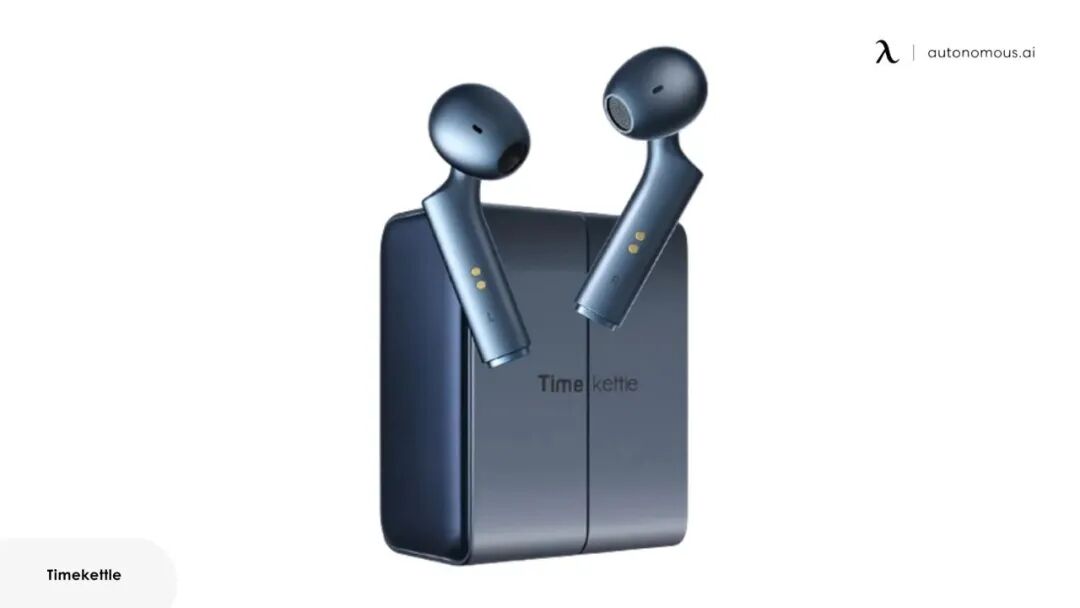
Core Insights - The article discusses the evolution of AI hardware, highlighting the shift from universal solutions to specialized products that address specific user needs in various environments [1][2][4]. Group 1: Scene Revolution - Chinese AI hardware is focusing on niche markets, such as translation-specific devices, rather than attempting to create all-encompassing products [1][2]. - The Timekettle W4 utilizes bone conduction technology and dual microphone noise reduction algorithms to achieve 93% accuracy in noisy environments, such as trade shows [1]. - The Anker Soundcore Aerofit 2 is designed for comfort during long wear and supports real-time translation in over 100 languages, catering to both business and travel needs [1]. Group 2: Function Evolution - The evolution of robotic vacuum cleaners is marked by advancements that transform them from mere cleaning tools to home assistants [4]. - The Roborock G30 Space features a bionic arm that can pick up scattered objects, indicating a shift in product positioning [4]. - The Ecovacs X30 Pro employs advanced AI technology to recognize over 30 household items and create a home map, enhancing its operational efficiency [4]. Group 3: Ecological Barriers - Overseas giants are strengthening their competitive advantages through integrated ecosystems, making it difficult for single-product solutions to compete [6][7]. - Meta's smart glasses create a seamless user experience by integrating with its AI assistant and social media platforms, enhancing user engagement [6]. - Samsung's smart ring connects with its ecosystem of devices, allowing for comprehensive health data monitoring and user interaction [6]. Group 4: Lessons from Failures - The downfall of products like the Humane Ai Pin illustrates the risks of relying on unproven technology without solid user value [9]. - The Rabbit R1's failure highlights the importance of functionality over novelty, as users found it lacking in practical applications [9]. - The acquisition of Limitless by Meta underscores the challenges faced by smaller companies in a market dominated by larger players [9]. Group 5: Core Challenges - The AI hardware market faces a paradox where software evolves rapidly while hardware updates remain slow due to physical constraints [11]. - Some companies are exploring modular designs and cloud-based computing to keep pace with software advancements [11]. - The future of AI hardware may focus on the ability to update and adapt rather than merely achieving peak performance [11].