东风汽车

Search documents
积极推进市场监管公平统一——加快建设全国统一大市场一线观察之六
Xin Hua She· 2025-07-11 14:29
Group 1 - Fair competition is a fundamental principle of market economy and a requirement for building a unified national market [1][3] - The government is implementing measures to standardize procurement and bidding, and to enhance law-based market regulation [1][5] - The recent focus on addressing "involution" competition highlights the need for comprehensive regulation of local government and enterprise behavior [3][7] Group 2 - The solar energy sector is experiencing significant developments, with Trina Solar announcing a contract to supply over 700MW of photovoltaic components to an Austrian energy giant [2] - The Ministry of Industry and Information Technology is promoting orderly competition in the photovoltaic industry and encouraging technological innovation [2][6] - The automotive industry is also focusing on innovation, with companies like Dongfeng Motor and JAC collaborating with tech firms to enhance product quality [6][7] Group 3 - The implementation of the Fair Competition Review Regulations aims to strengthen source constraints and address the abuse of administrative power [5][12] - Recent legislative efforts, including the Private Economy Promotion Law, are designed to create a stable and transparent environment for private enterprises [12][13] - The establishment of a "white list" system in Jilin province aims to enhance credit risk management and support the vitality of businesses [13]
车圈一个月换了35名高管,六大车企集体换防,东风一口气调整600人
创业邦· 2025-07-11 09:21
Core Viewpoint - The automotive industry is experiencing a significant wave of executive changes, particularly among China's top six domestic automakers, reflecting an intensifying competitive landscape as the market approaches 2025 [5][8][36]. Group 1: Executive Changes in Domestic Automakers - Over the past month, 15 automakers have undergone executive changes, including major players like BYD, Geely, SAIC, Chery, Changan, and Great Wall [5][19]. - Notably, Chery has seen multiple rounds of adjustments, while Changan and SAIC have also made significant changes [5][6]. - The scale of personnel adjustments is particularly pronounced at Dongfeng, which has seen a turnover of around 600 employees [6][20]. Group 2: Impact on New Energy and Technology - New energy vehicle companies like Li Auto and NIO are also facing talent attrition, particularly among technical executives, as competition for skilled personnel intensifies [11][14]. - Li Auto has restructured its autonomous driving team, leading to the departure of key technical leaders, which may be attributed to escalating disagreements over technical direction [12][13]. - NIO's chief expert in technology planning has also left, indicating a broader trend of talent movement within the new energy sector [14][18]. Group 3: Strategic Adjustments Among Traditional Automakers - Traditional automakers are making aggressive changes to enhance strategic focus and management efficiency, with a notable emphasis on integrating software development teams [19][21]. - Dongfeng has established a new subsidiary to consolidate its three major brands, reflecting a commitment to enhancing its new energy business [20]. - Chery has undergone multiple organizational adjustments to strengthen its focus on new energy and intelligent driving [23][24]. Group 4: International Automakers' Executive Changes - International brands like Tesla and Volkswagen are also experiencing significant executive shifts, with a growing demand for local Chinese executives as they deepen their engagement in the electric vehicle market [31][35]. - Tesla's restructuring includes the direct involvement of CEO Elon Musk in managing sales in Europe and North America, indicating a strategic pivot in response to market challenges [32][33]. - Mercedes-Benz has appointed a new digital and communications vice president to enhance its market competitiveness, showcasing the importance of digital transformation in the automotive sector [35]. Group 5: Future Outlook - The recent executive changes across the automotive industry signal a preparation for an increasingly competitive environment in the second half of 2025, as companies adapt to rapid market shifts and technological advancements [36][38].





工信部开通重点车企践行账期承诺线上问题(建议)反映窗口
Guan Cha Zhe Wang· 2025-07-11 07:36
Core Viewpoint - The Ministry of Industry and Information Technology (MIIT) has launched an online platform to address complaints from small and medium-sized enterprises (SMEs) regarding payment delays by key automotive companies, aiming to ensure compliance with the 60-day payment commitment and the "Regulations on Guaranteeing Payment to SMEs" [1][2]. Group 1: Issues Addressed by the Online Platform - The platform will handle four main types of issues: 1. Key automotive companies failing to adhere to the 60-day payment commitment as stipulated in procurement contracts [2]. 2. Unreasonable payment terms set by key automotive companies, including delays in providing inspection or acceptance certificates, which effectively extend payment periods [2]. 3. Coercion or indirect coercion of SMEs to accept non-cash payment methods such as commercial bills or electronic receivables [2]. 4. Other issues related to the inadequate implementation of the "Regulations on Guaranteeing Payment to SMEs" by key automotive companies [2]. Group 2: Commitment from Automotive Companies - Seventeen key automotive companies, including FAW, Dongfeng, and GAC, have publicly committed to ensuring that supplier payment periods do not exceed 60 days, receiving positive social feedback [2][7]. - Some companies, such as BAIC and SAIC, have also pledged not to use commercial acceptance bills to alleviate financial pressure on suppliers [7]. Group 3: Regulatory Framework - The "Regulations on Guaranteeing Payment to SMEs" came into effect on June 1, 2023, mandating large enterprises to pay SMEs within 60 days of delivery unless otherwise agreed [5]. - The regulations prohibit the forced acceptance of non-cash payment methods and require clear contractual agreements regarding such methods [5][6]. - The regulations establish a complaint handling mechanism, requiring timely processing of complaints related to payment delays by large enterprises [6].
重汽6连冠,福田/远程/徐工6连增,奇瑞进前十!上半年重卡销54万辆增7% | 头条
第一商用车网· 2025-07-11 03:28
Core Viewpoint - The heavy truck market in China experienced significant growth in June 2025, with sales reaching 97,900 units, marking a 37% year-on-year increase and a 10% month-on-month increase, contributing to a "three consecutive months of growth" in the second quarter [4][5][22]. Sales Performance - In June 2025, the total sales of trucks (including chassis and tractors) amounted to 316,200 units, reflecting an 8% increase both month-on-month and year-on-year [5]. - The heavy truck market's sales for the first half of 2025 totaled 539,200 units, a 7% increase compared to the same period last year, with a net increase of approximately 35,000 units [10][17]. Historical Context - The June 2025 heavy truck sales of 97,900 units is the second highest in the last five years and the fifth highest in the last decade, indicating a recovery from previous years where sales were below historical averages [6][8]. Market Share and Competition - In June 2025, five companies achieved sales exceeding 10,000 units, with the top five companies capturing over 90% of the market share [13]. - The leading companies in June included Heavy Truck with 24,600 units sold, followed by Dongfeng, Shaanxi Automobile, Jiefang, and Foton [13]. Growth Trends - All top ten companies in the heavy truck market reported year-on-year sales growth in June, with Foton and Beiqi Heavy Truck leading with increases of 116% and 125%, respectively [15]. - The market concentration has increased, with the top ten companies accounting for 98.04% of total sales, and the top five companies holding a combined market share of 90.94% [19]. Future Outlook - The heavy truck market is expected to continue its growth trend into the second half of 2025, despite July and August being traditionally slower months for sales [22].


国有企业:中国经济发展的中流砥柱
Sou Hu Cai Jing· 2025-07-10 22:54
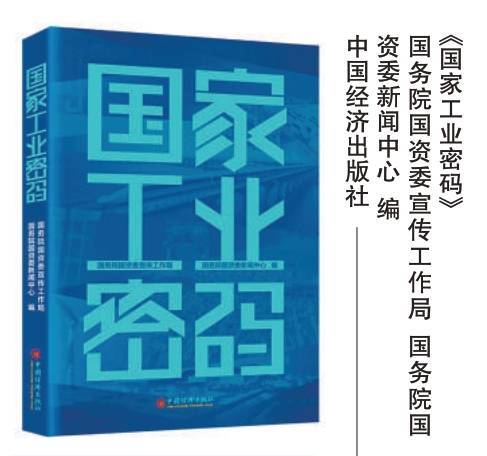
Group 1 - The article emphasizes the significant role of state-owned enterprises (SOEs) in China's industrialization and economic development since the establishment of the new China and the reform and opening-up policy [2][3] - It highlights the importance of a unified and ambitious government in achieving industrialization, contrasting China's efforts with earlier attempts during the Self-Strengthening Movement [3] - The strategic choice to prioritize heavy industry in the early years of the new China is discussed, showcasing the influence of Soviet models and the resulting structure of SOEs [3][4] Group 2 - The article outlines the advantages of China's socialist system in mobilizing resources for large-scale projects, citing examples like the "Two Bombs, One Satellite" and major infrastructure achievements [4] - It discusses the role of party leadership in building a dedicated workforce, exemplified by the spirit of workers and scientists who contributed to the industrial system's resilience and growth [5] - The narrative of reform and opening-up is presented, illustrating how China capitalized on technological advancements and market opportunities to develop a comprehensive industrial system [5][6] Group 3 - The article addresses the current challenges posed by Western pressures on China's industrialization, emphasizing the critical role of SOEs as the backbone of the socialist economy [6] - It advocates for the digital transformation of SOEs, highlighting the need for innovation and modernization in traditional industries to enhance productivity [6][7] - The importance of strategic emerging industries is discussed, with examples of SOEs diversifying into renewable energy, biotechnology, and new materials [7] Group 4 - The article stresses the pivotal role of SOEs in the new type of national system, which combines market mechanisms with government initiatives to foster innovation [7][8] - It emphasizes the need for talent development and the cultivation of skilled professionals to support the long-term goals of new industrialization [8] - The publication of the book "National Industrial Code" is positioned as a guide for future industrial development, aiming to inspire collaboration among stakeholders in the industrial sector [8]
车企“账期不超过60天”承诺迎“大考”
Zhong Guo Zheng Quan Bao· 2025-07-10 20:53
Core Viewpoint - The Ministry of Industry and Information Technology (MIIT) has launched an online feedback platform to address issues related to the 60-day payment commitment made by key automotive enterprises, aiming to protect the rights of small and medium-sized enterprises (SMEs) and ensure compliance with payment regulations [1][2]. Group 1: Issues Addressed by the Feedback Platform - The platform will handle four main types of issues: 1) failure to adhere to the 60-day payment commitment; 2) unreasonable payment terms or delays in providing necessary documentation; 3) coercion to accept non-cash payment methods; 4) other issues related to the enforcement of the payment regulations [2][3]. - The initiative is expected to exert pressure on automotive companies to fulfill their payment commitments and provide a channel for creditors to report overdue payments [2][3]. Group 2: Challenges in Implementation - Despite the commitment from automotive companies, the actual implementation of the 60-day payment term remains challenging, with accounts payable turnover days for various companies ranging from 127.23 days to 247.7 days [3]. - Companies are facing cash flow pressures, making it difficult to shorten payment terms without risking financial stability and potential debt defaults [3][4]. Group 3: Industry Dynamics and Recommendations - The automotive industry has a historical tendency towards longer payment cycles, and the sudden shift to a 60-day term poses significant challenges for financial planning [4][5]. - Experts suggest that financial support policies are necessary to help automotive companies manage cash flow and reduce reliance on supplier payments [5][6]. - There is a call for the elimination of commercial acceptance bills, which are viewed as risky and detrimental to healthy business practices [5][6]. Group 4: Future Directions - The MIIT plans to guide the development of payment norms and contract templates for the automotive industry to promote a healthier supply chain ecosystem [6].

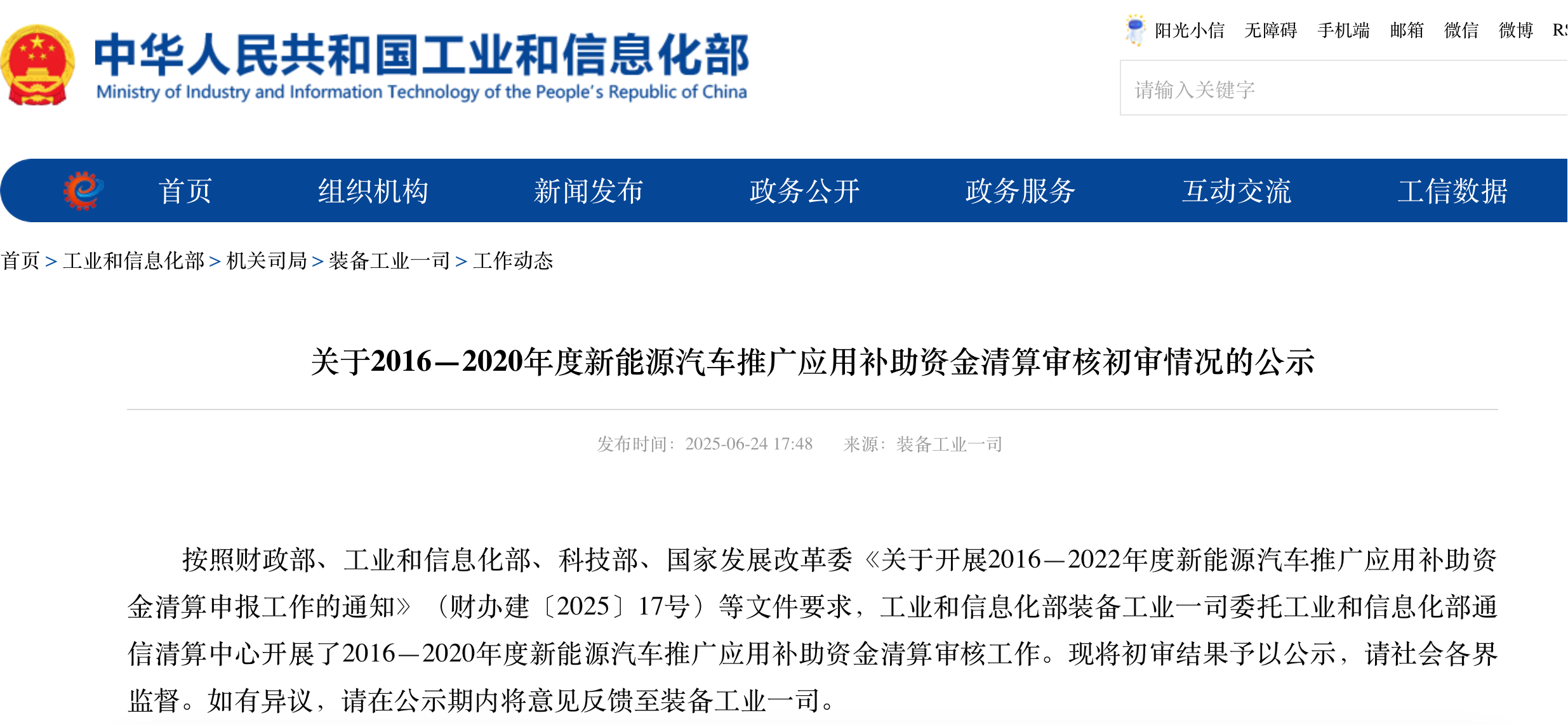
工信部复查五年新能源推广补助资金:行业整体核减约8.6亿元!有车企核减约1.4亿元
Mei Ri Jing Ji Xin Wen· 2025-07-10 11:10
Core Viewpoint - The Ministry of Industry and Information Technology (MIIT) has published a public notice regarding the audit of subsidy funds for the promotion and application of new energy vehicles (NEVs) from 2016 to 2020, revealing significant reductions in the actual subsidies received by various car manufacturers compared to their applications [1][4]. Summary by Relevant Sections Subsidy Audit Findings - The total number of NEVs reported by domestic manufacturers during the five-year period was 75,814, while the approved number was only 54,089 [4]. - The total amount applied for subsidy funds was approximately 2.93 billion yuan, but the approved amount was about 2.07 billion yuan, resulting in a difference of approximately 860 million yuan [4]. Specific Company Cases - BYD, one of the companies receiving subsidies, reported a significant reduction in actual subsidy amounts. In 2019, BYD applied for 83.035 million yuan but received only about 8.11 million yuan, a decrease of approximately 74.925 million yuan. Over the five years, BYD's actual subsidy amount was reduced by about 140 million yuan compared to its applications [6][7]. - Beijing New Energy Automobile Co., Ltd. also experienced a reduction of approximately 97.04 million yuan in actual subsidies compared to its applications during the same period [7]. Reasons for Subsidy Reductions - The main reasons for the reductions in subsidies were non-compliance with the requirements for vehicle-related documentation and failure to upload vehicle operation data as required [7][9]. Industry Trends - The NEV industry has transitioned from being heavily reliant on subsidies to a more self-sustaining model, focusing on core technological advancements and cost control. This shift is seen as a move from policy-driven growth to market-driven development [10][13]. - The sales of NEVs in China have shown significant growth, with 2020 sales reaching 1.367 million units, a year-on-year increase of 10.9%. Projections for 2024 estimate sales to be around 12.866 million units, reflecting a growth rate of 35.5% [10][13].
东风股份: 东风汽车股份有限公司2024年年度权益分派实施公告
Zheng Quan Zhi Xing· 2025-07-10 10:12
Core Points - The company announced a cash dividend of 0.005 CNY per share (before tax) for its A shares [1] - The dividend distribution plan was approved at the annual shareholders' meeting on May 20, 2025 [1] - The record date for the dividend is July 16, 2025, with the ex-dividend date and payment date both set for July 17, 2025 [1] Dividend Distribution Details - The total share capital before the distribution is 2,000,000,000 shares, making the total cash dividend distribution amount 10 million CNY [1] - The cash dividends for individual shareholders and securities investment funds will not have income tax withheld at the time of distribution, but will be calculated based on the holding period upon stock transfer [2] - For individual shareholders with a holding period of less than or equal to 1 month, the actual tax burden is 20% of the dividend income; for those holding between 1 month and 1 year, it is 10%; and for those holding over 1 year, the dividend income is exempt from personal income tax [2] Taxation for Different Shareholder Categories - Qualified Foreign Institutional Investors (QFII) will have a 10% corporate income tax withheld, resulting in a net dividend of 0.0045 CNY per share [3] - Hong Kong Stock Exchange investors will also receive a net dividend of 0.0045 CNY per share after a 10% tax withholding [3] - Other institutional investors and corporate shareholders will receive a net dividend of 0.005 CNY per share, with the responsibility for tax payment resting on the taxpayer [4] Contact Information - For inquiries regarding the dividend distribution, shareholders can contact the company's comprehensive management department at the provided phone numbers [4]
东风股份(600006) - 东风汽车股份有限公司2024年年度权益分派实施公告
2025-07-10 10:00
证券代码:600006 证券简称:东风股份 公告编号:2025--045 东风汽车股份有限公司 2024年年度权益分派实施公告 本公司董事会及全体董事保证本公告内容不存在任何虚假记载、误导性陈述或者重大遗 漏,并对其内容的真实性、准确性和完整性承担法律责任。 重要内容提示: 每股分配比例 A 股每股现金红利0.005元(含税) 相关日期 | 股份类别 | 股权登记日 | 最后交易日 | 除权(息)日 | 现金红利发放日 | | --- | --- | --- | --- | --- | | A股 | 2025/7/16 | - | 2025/7/17 | 2025/7/17 | 差异化分红送转: 否 一、通过分配方案的股东大会届次和日期 本次利润分配方案经东风汽车股份有限公司(以下简称"公司")2025 年 5 月 20 日的2024 年年度股东会审议通过。 二、分配方案 1. 发放年度:2024年年度 2. 分派对象: 截至股权登记日下午上海证券交易所收市后,在中国证券登记结算有限责任公司上海分 公司(以下简称"中国结算上海分公司")登记在册的本公司全体股东。 3. 分配方案: (1)对于自然人股东及证券投 ...
省气又高效!630马力东康Z15N FE一体化动力链让张师傅无惧高原
第一商用车网· 2025-07-10 06:58
"跑长途赶时效,还是东风康明斯大马力燃气一体化动力链给力,有劲、可靠,还节约成本。" 在超长运距、复杂路况、极端温差等严苛工况条件下,来自江苏南通的卡友张师傅为何认为, 东风康明斯Z15N FE燃气一体化动力链才是绿通运输中降本增效的"先天胜者"?近日,第一 商用车网通过与这位车主的深度对话,为大家揭晓了其中缘由。 长距离坡道接连不断 东康一体化动力链不惧时效压力 对于承接绿通业务多年的张师傅而言,发动机的动力性能不仅是运输效率的核心指标,更是直 接关联运营收益的底线。 从云贵川到新疆、西藏及青海,沿途路况涵盖丘陵、山区、荒漠地带。张师傅承运绿通这类时 效性极强的货物,为保证货物品质,单程4000公里的在途时间不能超过三天。而正是东风康 明斯Z15N FE大马力燃气一体化动力链所具备的强劲动力优势,使他成功破解了货主频繁高 时效要求的困局。 "现在,跑车不好干,我上一辆进口卡车确实扛不住这么高的油价,更换天然气车才是更划算 的路子。听不少西北同行讲,东风康明斯的燃气发动机劲头大、皮实耐用、售后服务也到位。 今年3月初,我准备换新车,正巧赶上新款630马力的东风旗舰版本在我们那里上市,我就赶 忙买了一辆。"张师 ...