
罗氏

Search documents
质谱仪该以什么形态服务产业?这35款新品给出答案
仪器信息网· 2026-01-10 09:01
Core Insights - The article discusses the significant breakthroughs in mass spectrometry products released in 2025, highlighting the technological advancements and market trends that shape the industry [1] Group 1: Import Market Developments - In 2025, 15 new mass spectrometry products were launched by import manufacturers, including various types such as Orbitrap, Q-TOF, and triple quadrupole systems [2] - Key players like PerkinElmer, Thermo Fisher, Bruker, Waters, SCIEX, and Agilent released multiple high-impact products, showcasing trends towards higher sensitivity, smarter data collection, and broader application coverage [2][3] - The focus of technological innovation has shifted from optimizing single performance parameters to a comprehensive breakthrough in software and hardware collaboration, application processes, and data systems [3] Group 2: Domestic Market Developments - In 2025, domestic manufacturers launched 20 new mass spectrometry products, with triple quadrupole systems accounting for 50% of the releases, emphasizing real-world application scenarios [7][8] - Notable products include the TQ9200 series from Anhui Wanyi and the YS iFAS from Shandong Yingsheng, both of which are designed for clinical applications [8] - The trend in domestic products is towards automation and standardization in clinical testing, providing essential support for widespread clinical applications [9] Group 3: Technological Innovations - Shimadzu's LCMS-8065XE integrates innovative technology with energy-saving features, reducing power consumption by approximately 31% [4][5] - Waters introduced the Xevo charge detection mass spectrometer (CDMS), enhancing capabilities for measuring large biomolecules, which is crucial for next-generation therapeutics and vaccine development [5] - The emergence of products like the CANRE-120 from Huayi Ningchuang and the CRAIV-2110 from Huayi Ningchuang reflects a focus on rapid response and flexibility in various application scenarios [9][10] Group 4: Market Trends and Future Directions - The mass spectrometry industry is increasingly addressing the question of how to effectively serve research, clinical, and industrial needs, moving beyond just performance metrics [11] - The competitive landscape is shifting towards a complete technological ecosystem and application maturity rather than just individual instrument performance [5][11]


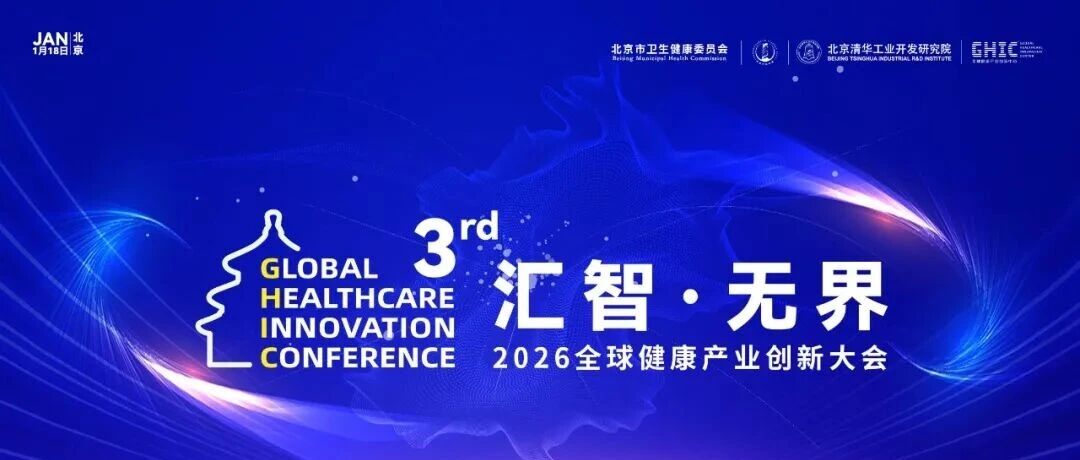
报名:1月18日北京, “汇智·无界前沿”2026第三届全球健康产业创新大会!
思宇MedTech· 2026-01-10 01:09
Group 1 - The article emphasizes the importance of the "2026 Global Health Industry Innovation Conference" to promote high-quality development in the health sector, aligning with national strategies for innovation and health [2][5] - The global health industry is undergoing a transformation driven by disruptive technologies such as artificial intelligence and big data, which are reshaping traditional medical practices and providing new solutions for public health challenges [4] - The conference will gather experts from various fields, including government officials, academicians, and industry representatives, to discuss the future of the health industry and collaborate on innovative solutions [5][6] Group 2 - The conference is scheduled for January 18, 2026, at the Zhongguancun International Innovation Center in Beijing, with various supporting and co-organizing institutions involved [15][16] - A series of parallel forums will take place during the conference, focusing on topics such as medical service innovation, AI in healthcare, and the integration of traditional Chinese medicine with modern technology [19][20] - The main forum will feature distinguished speakers discussing topics like brain-machine interfaces, intelligent medical imaging, and the role of AI in healthcare, highlighting the integration of technology in medical practices [20][21]



J&J Strikes Drug Pricing Deal With Trump, Gets Tariff Reprieve
ZACKS· 2026-01-09 16:55
Core Insights - Johnson & Johnson (JNJ) has signed a significant agreement with the Trump administration to lower drug prices in the U.S. [1] - JNJ is part of a broader trend among large-cap pharmaceutical companies committing to similar agreements to reduce drug prices [2] Agreement Details - Under the agreement, JNJ will reduce prescription drug prices to align with those in comparable developed countries, supporting the Most Favored Nation (MFN) pricing proposal [3] - JNJ will benefit from a limited-period exemption from import tariffs on pharmaceutical ingredients, contingent upon expanding its domestic manufacturing operations [4] Financial and Operational Impact - JNJ's shares have increased by 30.6% over the past six months, outperforming the industry growth of 20.4% [5] - The company is advancing a $55 billion plan to enhance U.S. manufacturing, research, and technology capabilities by early 2029 [6][7] - JNJ is constructing new facilities in Pennsylvania and North Carolina, including a $2 billion biologics plant expected to create approximately 5,000 jobs [8] Industry Trends - Other large-cap pharmaceutical companies are also investing significantly in U.S.-based manufacturing and R&D, with AstraZeneca committing $50 billion by 2030 and AbbVie planning over $10 billion by 2035 [9][10][13] - Lilly has announced a $27 billion investment to develop new manufacturing sites, enhancing production capacity for its marketed drugs [14]


速递|在大脑实施减肥疗法,新西兰肥胖症生物技术公司寻求合作伙伴
GLP1减重宝典· 2026-01-09 13:06
Core Viewpoint - Zealand Pharma is seeking partners for innovative weight loss treatments that target the brain directly, emphasizing the central nervous system's role in metabolic regulation and immune response [4][6]. Group 1: Strategic Collaborations - Zealand Pharma is exploring collaborations to develop therapies that can cross the blood-brain barrier, with a focus on "shuttle technology" to safely deliver drugs to the brain [4][6]. - The company has engaged in discussions with Roche and other institutions regarding brain-targeted research, acknowledging the high difficulty of these projects but recognizing their potential to fundamentally change metabolic disease treatment [6]. - Zealand recently announced a $20 million upfront payment to OTR Therapeutics, with a total potential of $30 million, to leverage its oral small molecule platform for discovering new metabolic disease therapies [8]. Group 2: Product Pipeline and Development - Zealand's pipeline includes the promising drug petrelintide, which is expected to show an average weight loss of 8.6% over 16 weeks in its Phase II trial, with results anticipated in mid-2026 [9]. - The company is also advancing the dual agonist survodutide in Phase III trials for obesity and MASH, alongside other projects targeting short bowel syndrome and congenital hyperinsulinemia [9]. - Zealand's strategy includes a roadmap titled "Metabolic Frontier 2030," aiming to launch five products by 2030, indicating a long-term vision for growth in the metabolic disease sector [9]. Group 3: Market Position and Future Outlook - Zealand's entry into oral small molecule collaborations is seen as a risk mitigation strategy amid rising competition in the oral weight loss drug market, particularly with Novo Nordisk's oral semaglutide awaiting regulatory approval [8]. - The company believes it has sufficient research capabilities and financial reserves to navigate uncertainties in the market, positioning itself for continuous iteration and improvement [9]. - Zealand's future innovations may include improving insulin sensitivity unrelated to weight and eventually directly modulating brain receptors, showcasing a commitment to long-term health impact [10].

记者观察:瑞士制药业的“美国劫”
Sou Hu Cai Jing· 2026-01-09 12:46
新华社日内瓦1月9日电制药业是瑞士第一大出口产业,药品出口占全国出口总额的40%,其中60%以上 出口至美国。2024年,瑞士对美国的药品出口约为350亿美元,美国总统特朗普认为这是在"占美国便 宜",一度威胁要对瑞士药品征收100%关税。在美国胁迫下,欧洲"药谷"不得不调整其产业发展布局。 瑞士"风光行业" 苏黎世联邦理工学院瑞士经济研究所的统计数据显示,2025年制药业在瑞士GDP的占比超过7%,药品 出口占瑞士出口总额的40%左右。 这是2024年1月20日在瑞士伯尔尼拍摄的城市风光(无人机照片)。新华社记者孟鼎博摄 美国是瑞士药品的最大市场,以瑞士最大两家药企为例,近两年,罗氏制药全球收入的约50%来自美 国,诺华公司的这一比例约为40%。 制药业是瑞士的科技创新引擎。截至2025年,瑞士已连续15年在世界知识产权组织发布的全球创新排行 榜上占据首位,而制药业在瑞士全国研发支出中占比最高。根据瑞士联邦政府统计数据,2021年瑞士研 发活动总投资为168亿瑞郎,其中制药业投资达62亿瑞郎,占比约37%。 近几年来,瑞士经济的传统支柱如工业制造和银行业几乎不再贡献增长点,而制药业因药品需求的高度 刚性,受 ...

一周医药速览(1.5-1.9)
Cai Jing Wang· 2026-01-09 09:16
Group 1 - Insilico Medicine announced a collaboration with Servier valued at $888 million focused on the discovery and development of innovative anti-cancer therapies [1] - Insilico will receive up to $32 million in upfront and milestone payments, leveraging its AI-driven drug development platform [1] - Servier will lead the clinical validation and commercialization of promising drug candidates globally [1] Group 2 - Weigao Blood Products announced a major asset restructuring involving the acquisition of 100% equity in Weigao Purui for approximately $8.511 billion [2] - Post-transaction, Weigao Purui will become a wholly-owned subsidiary, expanding the company's business into pharmaceutical packaging [2] - Weigao's shareholding in Weigao Blood Products will increase to 84.36%, maintaining absolute control [2] Group 3 - Earendil Labs (HuaShen ZhiYao) entered a strategic partnership with Sanofi worth up to $2.56 billion for the development of bispecific candidates targeting autoimmune and inflammatory diseases [3] - Earendil Labs will receive up to $160 million in upfront and milestone payments linked to early project outcomes [3] - The agreement includes tiered royalties based on net sales [3] Group 4 - WuXi AppTec announced that its controlling shareholders have reduced their stake by 2%, totaling 59.68 million shares [4] - The reduction was completed as per the previously disclosed plan, with the controlling shareholders holding 18.211% of the total shares before the reduction [4] Group 5 - Nanhua Biological announced plans for a significant asset restructuring to acquire 51% of Huize Pharmaceutical for cash [5] - The transaction is expected to constitute a major asset restructuring without involving share issuance or control changes [5] - Due diligence and negotiations are ongoing, with no formal agreement signed yet [5] Group 6 - Kangchen Pharmaceutical projected a net profit of between 145 million to 175 million yuan for 2025, representing a year-on-year increase of 243% to 315% [6] - The expected net profit excluding non-recurring gains is projected to be between 140 million to 170 million yuan, reflecting a significant increase from the previous year [6] Group 7 - Yilian Biotech signed a new exclusive licensing agreement with Roche for the YL201 project, with an upfront payment of $570 million [7] - The agreement allows Roche exclusive rights to develop and commercialize the YL201 project globally, excluding mainland China and certain regions [7] - This partnership builds on a successful collaboration on the YL211 project, aiming to accelerate the development of YL201 [7]



【环球财经】记者观察:瑞士制药业的“美国劫”
Xin Hua She· 2026-01-09 08:54
Group 1: Industry Overview - The pharmaceutical industry is Switzerland's largest export sector, accounting for 40% of the country's total exports, with over 60% of these exports going to the United States [1] - By 2025, the pharmaceutical sector is projected to contribute over 7% to Switzerland's GDP, maintaining its status as a key driver of economic growth [2] - The pharmaceutical industry is a significant source of high-value employment in Switzerland, with over 50,000 employees, translating to approximately one in every 200 people working in this sector [4] Group 2: Economic Impact and Investment - In 2021, Switzerland's total investment in research and development was 16.8 billion Swiss francs, with the pharmaceutical sector accounting for 6.2 billion Swiss francs, or about 37% of the total [4] - The pharmaceutical industry is seen as a resilient sector, less affected by economic fluctuations due to the inelastic demand for medicines, making it one of the last remaining growth drivers for the Swiss economy [4] Group 3: U.S. Trade Relations and Tariffs - In 2025, the Trump administration initiated a "232 investigation" targeting Swiss pharmaceuticals, citing concerns over trade imbalances and potential tariffs [5] - Following negotiations, the U.S. decided to impose a maximum tariff of 15% on Swiss goods, with pharmaceuticals being treated separately, indicating ongoing tensions in trade relations [6] - Major Swiss pharmaceutical companies, such as Roche and Novartis, have expressed willingness to adapt by potentially relocating production to the U.S. and reducing intermediaries in their supply chains [6][8] Group 4: Future Outlook and Challenges - The pharmaceutical sector is undergoing a transformation due to external pressures, with companies like Novartis and Roche planning significant investments in the U.S. to mitigate tariff impacts [8] - Despite the challenges posed by U.S. tariffs and other pressures, the construction of pharmaceutical production facilities typically requires several years, indicating that a complete withdrawal from Switzerland is unlikely in the short term [8] - The industry faces additional challenges, including debates over executive compensation and trade agreements with the EU, which may affect its long-term sustainability [10]

小核酸-大时代-靶向治疗新纪元
2026-01-08 16:02
Summary of Key Points from the Conference Call Industry Overview - The conference call discusses the advancements in the small nucleic acid drug sector, particularly focusing on companies like Wave Life Sciences and Arrowhead Pharmaceuticals, which have shown promising data in weight loss and fat reduction therapies [1][4][5]. Core Insights and Arguments - **Advantages of Small Nucleic Acid Drugs**: These drugs demonstrate long-lasting effects, improved safety by reducing the dosage of GLP-1 drugs, and the ability to achieve high-quality weight loss by specifically targeting visceral fat while preserving lean body mass [1][5]. - **Clinical Developments**: Key catalysts for 2026 include advancements in major indications such as severe hypertriglyceridemia (SHTG), cardiovascular outcomes related to LPA, and IgA nephropathy. Arrowhead's OX7 data is expected to show significant clinical changes in humans [1][8]. - **Market Position of Chinese Companies**: Chinese firms are leveraging engineering advantages to enhance specificity and delivery efficiency, positioning themselves to develop best-in-class molecules, particularly in non-liver diseases [1][9]. - **Emerging Targets in Hyperlipidemia**: New targets like LP(a) are gaining attention, with major Chinese pharmaceutical companies like Hengrui and Shiyao licensing oral small molecule LP(a) inhibitors to multinational corporations for approximately $2 billion each [3][20]. Additional Important Content - **Recent Progress in Small Nucleic Acid Research**: Recent data from Wave Life Sciences and Arrowhead Pharmaceuticals confirm the efficacy of small nucleic acid drugs in weight loss and fat reduction, with significant results observed in clinical trials [4][24]. - **Commercialization and Development Trends**: The small nucleic acid drug sector has seen a resurgence since 2016, with successful commercialization efforts leading to substantial market valuations, such as Alnylam's peak market cap of $60 billion [17][18]. - **Challenges in Delivery Systems**: While advancements have been made in delivery systems, many remain in early stages, indicating a need for further innovation to enhance efficacy and safety in non-liver delivery systems [16][24]. - **Trends in MNC Transactions**: There is a notable trend of large pharmaceutical companies showing interest in early-stage small nucleic acid drugs, with significant transaction values even at the preclinical stage, indicating strong market confidence [19]. This summary encapsulates the critical developments and insights from the conference call, highlighting the potential and challenges within the small nucleic acid drug industry.
EXEL Collaborates With Natera for Late-Stage Colorectal Cancer Study
ZACKS· 2026-01-08 14:50
Core Insights - Exelixis, Inc. (EXEL) has announced a collaboration with Natera (NTRA) for the STELLAR-316 study, a phase III trial evaluating zanzalintinib in patients with resected stage II/III colorectal cancer (CRC) [1][3] - Following the announcement, Exelixis' stock rose by 6% on January 7, and the shares have increased by 33.9% over the past year, outperforming the industry gain of 17.2% [1] Study Details - The STELLAR-316 study is set to begin in mid-2026 and will assess zanzalintinib, a novel oral kinase inhibitor, both alone and in combination with an immune checkpoint inhibitor [3][7] - Eligible patients for the trial are those with molecular residual disease (MRD)-positive CRC, as determined by Natera's Signatera test, after definitive therapy [3][4] - The primary endpoint of the study is disease-free survival, with a secondary endpoint focusing on the clearance of circulating tumor DNA [4][7] Zanzalintinib Development - Zanzalintinib is also being evaluated for advanced solid tumors, including CRC, kidney cancer, and neuroendocrine tumors [8] - Exelixis has submitted a new drug application (NDA) to the FDA for zanzalintinib in combination with Roche's Tecentriq for previously treated metastatic colorectal cancer, supported by positive results from the STELLAR-303 study [9][10] - The STELLAR-303 trial demonstrated a statistically significant reduction in the risk of death compared to Stivarga, with consistent overall survival benefits across various subgroups [10][11] Future Plans - Exelixis is planning additional pivotal trials for zanzalintinib, including studies in post-chemotherapy adjuvant CRC settings and high-grade recurrent meningiomas [12][13] - The company aims to expand its oncology portfolio beyond its lead drug, Cabometyx, which has recently received label expansion for treating neuroendocrine tumors [14]


?新一轮流感来袭! 美国多地流感用药告急 奥司他韦紧缺程度堪比DDR内存条
Zhi Tong Cai Jing· 2026-01-08 13:50
Group 1 - The core issue is the severe shortage of the antiviral drug Oseltamivir (Tamiflu) in the U.S. and globally, particularly in cold regions facing high flu activity [1][2][4] - The American Society of Health-System Pharmacists (ASHP) reported that the demand for Tamiflu has surged, with hospital visits for flu-like symptoms reaching the highest level in over 20 years [1][4] - The shortage of Oseltamivir is compared to the scarcity of DDR memory chips, indicating a critical supply-demand mismatch in the pharmaceutical sector [1][2] Group 2 - CVS Health reported a significant increase in demand for Oseltamivir, although it stated that there is not a widespread shortage across the U.S., with some areas experiencing more severe shortages than others [3] - The flu season has been exacerbated by a new variant of the flu virus, known as subclade K, which has led to a notable increase in hospital visits due to flu symptoms [4][5] - The Centers for Disease Control and Prevention (CDC) noted that only 43% of Americans have received the antiviral vaccine, contributing to the severity of the current flu season [4][6] Group 3 - Oseltamivir is classified as a neuraminidase inhibitor, effective in treating Influenza A and B, and is most effective when administered within 48 hours of symptom onset [5][6] - The FDA has approved Oseltamivir for use in individuals aged 2 weeks and older, with an emphasis on early treatment for high-risk populations [6] - Other antiviral medications listed by the CDC include Zanamivir, Peramivir, and Baloxavir, each with different mechanisms of action [6]


