
阿迪达斯

Search documents
Will lululemon's Cost Controls Buffer Against Margin Compression?
ZACKS· 2026-01-20 15:15
Core Insights - lululemon athletica inc. (LULU) is implementing a comprehensive cost-control strategy that focuses on supply-chain redesign, inventory precision, operational restructuring, and selective pricing to maintain brand integrity while enhancing efficiency [2][3][4]. Cost Control Strategy - The company's cost-control strategy includes vendor negotiations, improving distribution center efficiency, and optimizing logistics to lower fixed costs while maintaining core capabilities [2]. - LULU is prioritizing core franchises and higher-margin products to reduce markdowns and protect gross margins, alongside targeted pricing actions to preserve customer loyalty [3][11]. Expense Management - Expense discipline is crucial, with strict controls on selling, general, and administrative expenses, particularly in marketing and technology investments, aimed at mitigating inflationary pressures [4][6]. Margin Pressures - Tariff-related pressures and sourcing complexities are significant challenges for lululemon, contributing to ongoing gross margin pressure due to higher product costs and increased markdowns [5][11]. - Despite cost-control measures, the effectiveness of these strategies in fully alleviating margin compression remains uncertain, particularly in light of persistent cost headwinds [6]. Competitive Landscape - Key competitors include NIKE, Inc. and adidas AG, both of which are also facing margin pressures and are implementing their own cost-control strategies to enhance efficiency and manage tariffs [7][8][9]. Financial Performance - LULU's shares have declined by 9.6% over the past six months, compared to a 6.4% decline in the industry [12]. - The company trades at a forward price-to-earnings ratio of 15.79X, slightly below the industry average of 16.42X [13]. - The Zacks Consensus Estimate indicates a year-over-year earnings drop of 10.7% for fiscal 2025 and 2.4% for fiscal 2026, with recent EPS estimates showing slight upward adjustments [14][15].



打造新品全链路生态,天猫官宣2026年全面加码优质新品扶持
36氪· 2026-01-20 13:38
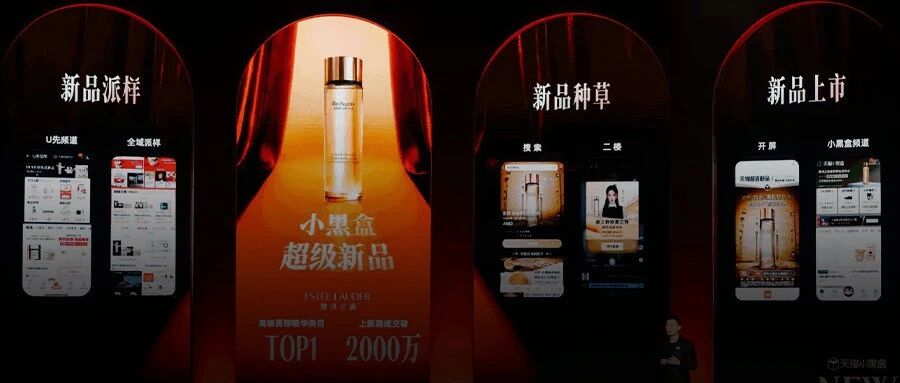
为什么能跑出来?平台如何把确定性放大? 消费环境在变,但增长的主线更清晰:需求更细分、决策更理性,真正"有价值的新"更容易被看见、被理解、被购买。上新不再只是品牌的阶段性动作,而 是打开新增量、建立心智、获得可持续增长的重要驱动力。 在NEWty2026天猫超级新品盛典现场,淘天集团天猫品牌营销中心总经理苏誉表示:"我们相信手中的新品不单单是一个生意的载体,更多是这个时代技术 变革、社会进步背后折射出的消费行为和消费美学。" 淘天集团天猫品牌营销中心总经理苏誉 对天猫而言,新品一直以来是套长期工程:从趋势洞察、产品孵化到首发引爆、长线经营,平台用系统化能力把新品增长跑成闭环——让好新品更快上市、 更稳打爆、更久长红。 什么样的新品更容易跑出来? 天猫超级新品盛典正是一个绝佳的观察窗口:它一边集中呈现那些真正跑出来的新品,另一边也把"为什么能跑出来"变成行业可复用的判断体系与平台方法 论。 新品分化更清晰 好新品更"吃香" 的确有很多人把"性价比"放到更高优先级,决策更谨慎。但也仍有人愿意为明确价值、差异化体验付费,但要求的基准线显著提高。市场总量的变化或许有 限,但在不同层级的需求已经被重新切割。 而在天猫, ...
华为、比亚迪供应商,发泡材料龙头签约中科院
DT新材料· 2026-01-19 22:33
【DT新材料】 获悉,1月16日, 苏州申赛新材料股份有限公司 (下称"申赛新材")与 中国科学院长春应用化学研究所 (下称"应化所")在长春签署 战略合作协议,双方将基于应化所唐涛课题组开创性的 "热塑/热固聚合物共混泡沫材料 "专利技术开展合作研究,共同推动该专利技术的产业化落地。 应化所所长刘俊、申赛新材董事长姜修磊等出席签约仪式。 唐涛课题组在国际上率先提出了 "增塑-发泡-增强"(PFR)结构功能一体化的聚合物轻量化策略,采用热塑性聚合物和热固性聚合物单体为原料,将 反应性增塑和反应诱导相分离与超临界发泡技术相结合,制备了一系列新型热塑/热固聚合物合金泡沫材料 。 机器人、无人机、商业航天、碳纤维、改性塑料、半导体、固态电池. FINE 2026 × Carbontech 该技术不仅实现了热塑性聚合物与热固性聚合物特性的有机结合,而且克服了特种材料性能(机械性能、耐热性能等)与超临界发泡工艺特性之间的矛 盾,有效解决了部分工程塑料和特种工程塑料难以实现超临界发泡的困难。该技术将为 航空航天、海洋装备、轨道交通、半导体 等对材料性能要求严 格的尖端应用领域提供兼具高性能、轻量化优势的创新解决方案。 根 ...

NIKE's Turnaround Test: Will Innovation Offset Weak Global Demand?
ZACKS· 2026-01-19 20:05
Core Insights - NIKE Inc. is in a critical phase of turnaround amid uneven global consumer demand and pressure on discretionary spending [1] - The company is refocusing on sport-led innovation to rebuild product credibility and brand momentum through performance categories like Running, Basketball, and Football [1][8] - The key question for investors is whether NIKE's innovation can generate sufficient demand to counteract softer macro conditions [1] Product Strategy - NIKE is accelerating innovation cycles and diversifying its product portfolio, closely tying launches to athletes and sports moments [2] - Early results in North America indicate stronger sell-through in performance footwear and a healthier wholesale channel, supporting top-line stability [2] - The company aims to restore its premium brand positioning by reducing promotional intensity and enhancing consumer experience across digital and physical channels [2] Regional Challenges - Challenges persist outside the United States, particularly in Greater China and parts of EMEA, where demand recovery is slower and competitive pressure is high [3] - Factors such as inventory cleanup, tariff-related cost headwinds, and cautious consumer behavior are impacting near-term margins [3] - Successfully scaling the innovation-led strategy across regions while maintaining inventory and cost discipline could strengthen NIKE's business [3] Competitive Landscape - Key competitors include adidas AG and lululemon athletica inc., both of which are also focusing on product innovation and core performance categories to reignite consumer interest [4][5] - adidas is tightening assortments and improving speed to market while lululemon is leveraging its innovation-driven model to maintain pricing power and customer loyalty [5][6] Financial Performance - NIKE shares have declined by 4.8% over the past three months, compared to a 4.2% decline in the industry [7] - The company trades at a forward 12-month price-to-earnings ratio of 30.82X, higher than the industry's average of 27.57X [9] - The Zacks Consensus Estimate for NIKE's fiscal 2026 earnings indicates a year-over-year decline of 28.2%, while fiscal 2027 suggests a growth of 54.2% [10]

鞋服行业分化显现:国产品牌领跑传统企业谋转型
Zhong Guo Jing Ying Bao· 2026-01-19 12:26
Core Insights - The Chinese footwear and apparel industry is experiencing significant differentiation in 2025 due to dual influences of market adjustment and industrial transformation, with the sports and outdoor segment leading the way [1][2] - Domestic brands are reshaping the market landscape through technological innovation and globalization, while traditional brands struggle with high inventory and rigid channels [1][2] Industry Performance - In the first three quarters, revenue for large apparel enterprises fell by 4.63% year-on-year, with total profits declining by 16.19%, reflecting severe industry pressure [1] - The sports footwear and apparel market is projected to reach a scale of 598.9 billion yuan, with predictions of exceeding 896.3 billion yuan by 2030 [1] Brand Dynamics - Traditional brands are facing significant growth challenges, with examples like Fuqiniaos declaring bankruptcy and Red Dragonfly reporting losses [2] - In contrast, domestic sports brands are rising, with local brands expected to hold about 60% of the market share among the top 20 brands by 2025 [2] Market Concentration - The market is shifting towards concentration, with the top 20 companies accounting for over 30% market penetration, leading to a widening gap between large and small enterprises [3] - Adidas reported a 10% year-on-year revenue increase in the Greater China region, while Nike faced a 17% decline in revenue, highlighting the contrasting fortunes of international brands [3] Channel Innovation - The industry is witnessing a shift towards deep exploration of niche markets and a reconstruction of channel models, with a focus on offline large stores and online instant retail [4][6] - Major brands are opening large stores, with Anta planning to add 160 new "super stores" by 2025, which can achieve 2-2.5 times the sales efficiency of regular stores [6] Globalization and High-End Trends - The industry is expected to see trends of high-end, global, and technological advancements, with brands needing to differentiate and operate finely to survive [7][8] - Domestic brands are increasingly expanding overseas, with companies like Semir and HLA establishing over 100 stores in Southeast Asia, although many are still in the early stages of international branding [7] Consumer Behavior - Consumers are becoming more mature and rational, seeking high-quality and precise consumption, which poses a threat to brands lacking innovation and differentiation [9] - There remains untapped potential in the mass and middle-aged markets in China, indicating areas for future growth [9]


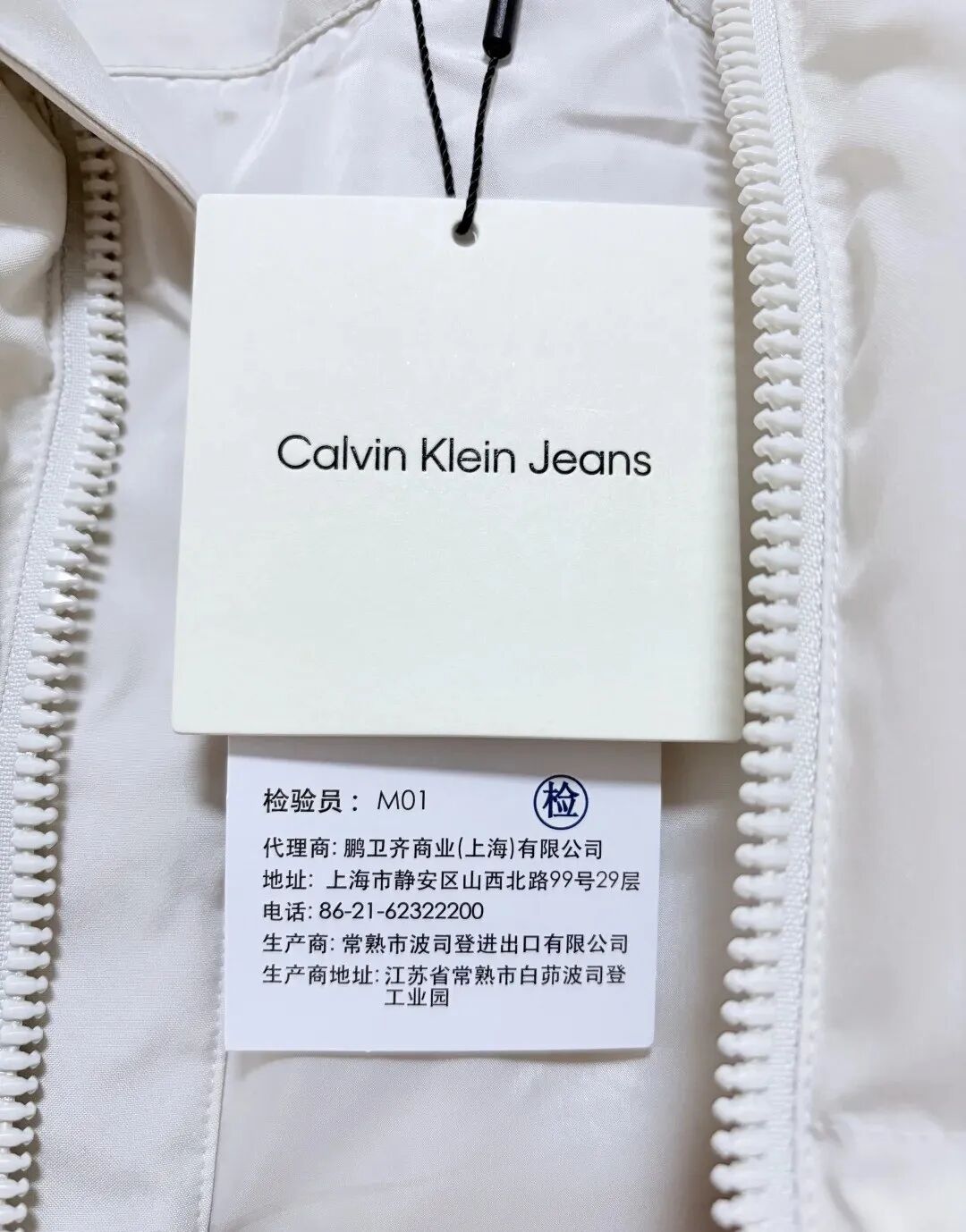
购买的CK羽绒服由波司登代工?门店回应
Xin Lang Cai Jing· 2026-01-19 12:00
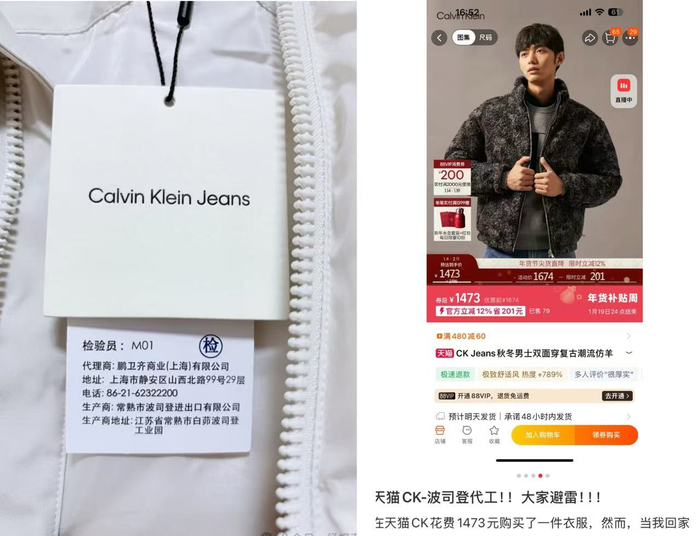
Core Viewpoint - Recent social media posts revealed that Calvin Klein Jeans' white down jacket is manufactured by Bosideng, indicating a trend of international brands utilizing local manufacturers for production [1][4]. Group 1: Brand and Manufacturing - Calvin Klein has confirmed that some of its down jackets are produced by Bosideng, a Chinese manufacturer [1]. - The production label indicates that the agent is Pengweiqi Commercial (Shanghai) Co., Ltd., and the manufacturing site is located in Jiangsu Province, China [1]. - Calvin Klein operates in various countries and utilizes different manufacturers based on product specifications and production batches [4]. Group 2: Market and Financial Data - The price range for Calvin Klein's down jackets on Tmall is between 1,300 to 3,000 yuan [4]. - PVH Group, Calvin Klein's parent company, reported total revenues from 2019 to 2024 as follows: $9.4 billion, $6.799 billion, $9.155 billion, $9.024 billion, $9.218 billion, and $8.653 billion [6]. - In the third quarter of 2025, PVH Group's revenue increased by 2% year-on-year to $2.294 billion [7]. Group 3: Industry Trends - The practice of outsourcing production to local manufacturers is common in the modern manufacturing industry, as seen with both Calvin Klein and Adidas utilizing local firms for their products [7]. - Consumers are encouraged to focus on product specifications such as down fill power, fill weight, fabric technology, and craftsmanship rather than solely on brand names [9].
买美国大牌羽绒服,生产商却是波司登?门店回应:部分产品确实是其代工;业内人士:专业分工是普遍现象
Mei Ri Jing Ji Xin Wen· 2026-01-19 11:46
Group 1 - A consumer recently discovered that a Calvin Klein Jeans white down jacket they purchased was manufactured by Bosideng, a prominent Chinese down jacket producer [1][4] - Calvin Klein Jeans is a subsidiary of the American fashion brand Calvin Klein, while Bosideng is known for its large-scale production capabilities and advanced manufacturing equipment [4] - The customer service of Calvin Klein confirmed that the brand has multiple production sites worldwide, and the manufacturers may vary based on product craftsmanship and production batches [4] Group 2 - Bosideng has also been reported as the manufacturer for several Adidas down jackets, sparking discussions among consumers regarding brand and pricing [5] - Some consumers have expressed dissatisfaction with the price differences between down jackets produced by Bosideng for other brands and those sold under Bosideng's own label, leading to returns [5] - Industry expert Zhan Junhao noted that it is common for clothing brands to outsource production to specialized manufacturers, allowing them to focus on design, marketing, and supply chain management [5][6]
AI进化论:天猫的新品答案
Tai Mei Ti A P P· 2026-01-19 10:11
Core Insights - The article emphasizes that AI is transforming the product innovation landscape, enabling brands to create and validate new products more efficiently and cost-effectively, leading to a higher likelihood of consumer acceptance [1][21]. Group 1: AI's Role in Product Development - AI accelerates the process of identifying consumer needs, generating creative ideas, and validating products, allowing brands to test new products at lower costs and higher frequencies [1][3]. - The TMIC (Tmall New Product Innovation Center) utilizes insights from 900 million consumers to enhance trend analysis and product development, significantly reducing the time required for market research from months to minutes [4][8]. - Over 8,000 brands have adopted TMIC's AI tools, resulting in an average increase of three times in new product development efficiency [4]. Group 2: Enhancing Consumer Experience - AI not only speeds up product creation but also improves consumer understanding of new products, making it easier for them to determine suitability and value [5][7]. - The introduction of AI-driven flagship stores, such as The Ordinary's, has led to significant consumer engagement, with over 1.1 billion visits and sales exceeding 10 million during promotional events [5]. - Brands like TOM FORD have successfully utilized AI to tailor communication strategies based on consumer preferences, resulting in the launch of highly successful products [5][9]. Group 3: Market Strategy and Execution - Tmall's strategy focuses on precise targeting and resource allocation for new product launches, moving from broad marketing to targeted campaigns [14][16]. - The collaboration with brands like Quark and Adidas demonstrates the effectiveness of AI in aligning product features with consumer interests, leading to substantial sales growth [16][20]. - Tmall aims to support over 16 million new product launches by 2025, with a projected 35% increase in the number of products achieving over one million in sales [17]. Group 4: Continuous Improvement and Feedback Loop - The integration of AI into the entire product lifecycle allows for a continuous feedback loop, enhancing product iterations based on consumer data and market trends [20][21]. - Tmall's approach transforms the platform into a critical entry point for technology brands, facilitating a deeper understanding of consumer needs and industry dynamics [20]. - The article concludes that AI is making the process of product innovation faster, clearer, and more replicable, establishing a sustainable growth engine for brands [21].

运动鞋不行了?华尔街为这事吵翻了
3 6 Ke· 2026-01-18 23:31
Core Viewpoint - The report from Bank of America suggests that the golden era of the sneaker industry may be over, predicting a significant slowdown in revenue growth due to the completion of the structural shift from specialized gear to everyday casual wear [1][4]. Group 1: Industry Growth Predictions - Bank of America forecasts that the annual growth rate of the sneaker industry may decline from approximately 9% to 4% or 5% in the long term [1][4]. - Adidas has been given a target price of €160 per share, with expectations of entering single-digit growth [1]. - The report indicates that the sneaker market's share of global footwear sales has risen from less than 25% to at least 50% over the past two decades, peaking during the pandemic [1]. Group 2: Contrasting Opinions - Analysts from Spurwink River and Circana argue that the current slowdown is merely a return to normalcy post-pandemic, with sneakers still holding a 60% share of U.S. footwear sales and experiencing a 4% growth until November of the previous year [3][4]. - UBS expresses optimism about the global sportswear sector, attributing it to an unstoppable trend of health-conscious consumption, suggesting that the market is not at its peak but rather entering a new growth phase [4]. Group 3: Market Dynamics and Competition - The competition in the sneaker market is shifting from expanding the overall market to capturing existing market share, leading to a zero-sum game where gains for one brand come at the expense of another [7]. - Brands like Brooks and Asics have seen significant growth in niche markets, indicating that specialized brands may outperform in a saturated market [8]. - The Chinese sneaker market is projected to grow from ¥598.9 billion in 2025 to ¥896.3 billion by 2030, but the penetration rate is nearing that of mature markets, indicating a shift in growth strategies [8]. Group 4: Marketing and Consumer Behavior - Bank of America questions the long-term effectiveness of large-scale sports marketing investments, suggesting that the industry's growth drivers may be insufficient [9]. - The debate highlights the need for industry players to reassess their marketing strategies and focus on niche areas where they can excel [9][10]. - The sneaker industry is transitioning from a growth phase to a competition phase that emphasizes depth, focus, and genuine value [10].
跨国时尚“首店矩阵”与上海最前沿潮流同频共振 衡复诞生1.5公里“新消费亿元街区”
Jie Fang Ri Bao· 2026-01-18 01:58
记者 舒抒 此次活动主办方之一的MUSINSA,在韩国是时尚潮流领域的"链主"企业。2025年,企业正式落地 上海,在淮海百盛开设全球首家海外旗舰店MUSINSA STANDARD,紧接着又在安福路开设其首家多 品牌集合店,集合了来自中韩等国约40个潮流品牌。 金大铉透露,在安福路新店开业前,MUSINSA在小红书搜索了大量中国消费者偏爱的风格与产品 类别进行选品,同时为中国消费者筛选了韩国最前沿的时尚消费品牌。"中韩两国的时尚风格差异在缩 小,说明双方的潮流文化、时尚文化在相互影响,年轻人之间的交流正通过各种渠道不断增长。" 说着一口流利中文的金大铉对徐汇的营商服务印象深刻。"企业落地过程中,从办公选址到员工签 证,再到税收等环节,我们有问题提出,徐汇区都会第一时间跟进解决。"以企业登记注册为例,公司 没有设立就无法为员工支付薪酬,会对企业后续开设新店产生影响。在徐汇区的协调指导下,企业在 2025年4月顺利登记注册,区相关部门还会同出入境为韩国员工及家属提供了高效的签证办理指导,保 障了韩籍员工顺利来沪。 "在安福路新店落地过程中,从解决风貌区较易发生的白蚁问题,到帮助门店达到电力供应需求, 再到指导我们 ...