
吉利汽车

Search documents
吉利汽车(00175.HK)1月5日耗资6031.47万港元回购342万股
Ge Long Hui· 2026-01-05 08:45
格隆汇1月5日丨吉利汽车(00175.HK)发布公告,2026年1月5日耗资6031.47万港元回购342万股,回购价 格每股17.52-17.9港元。 ...
电动载人汽车出海月报|11月出口额同比飙升140%,全球市场加速渗透
Xin Lang Cai Jing· 2026-01-05 08:41
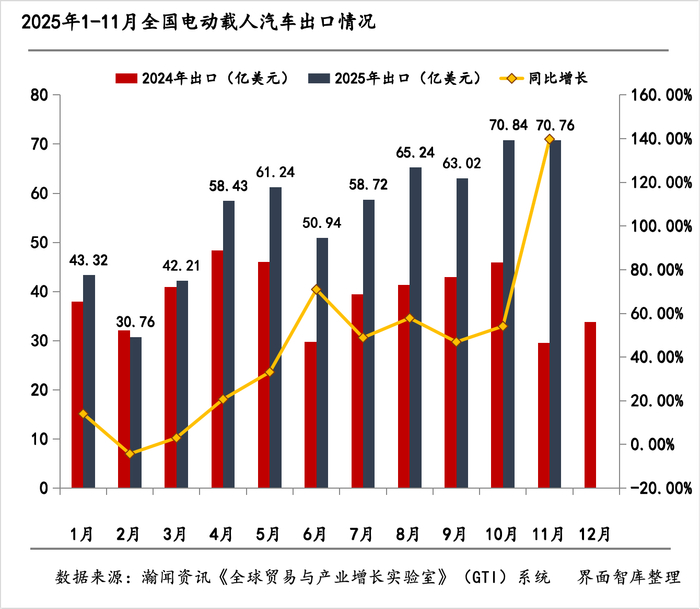
智通财经记者 | 贾璐 智通财经编辑 | 崔宇 【编者按】为了更全面、更及时、更精确地反映电动载人汽车出口状况,2025年3月起,智通财经/界面 智库和瀚闻资讯联合推出《中国电动载人汽车出海月报》。《中国电动载人汽车出海月报》旨在呈现全 国及各省电动载人汽车出口金额、出口数量和出口目的地等指标的月度变化趋势,以期为政府、企业和 投资者等提供决策参考。我们将于每月27日左右发布相关月报。 根据界面智库与瀚闻资讯统计,2025年11月,中国电动载人汽车贸易增长动能全面爆发,结构性分化态 势进一步凸显。进口方面延续收缩态势,出口方面则展现出强劲的加速势头,11月当月出口金额达 70.76亿美元,同比大幅增长139.83%,环比微降0.11%;出口数量达39.94万辆,同比激增144.93%,环 比增长6.52%。1-11月累计出口量已达337.31万辆,同比增长63.59%,增速较1-10月显著扩大6.99个百分 点,全球市场拓展进入高速增长通道。 从细分市场看,11月电动载人汽车出口分化路径更为清晰。乘用车领域呈现"量价齐升"的强劲增长格 局,在整体出口中占据绝对主导,出口量39.83万辆,占比高达99.73%, ...




港股汽车股持续走低,蔚来、长城跌超6%,小鹏跌超5%
Di Yi Cai Jing· 2026-01-05 08:40
Group 1 - The core viewpoint of the news is that Hong Kong automotive stocks are experiencing a significant decline, with major companies like NIO, Great Wall Motors, and Xpeng Motors seeing drops of over 6%, nearly 6%, and over 5% respectively, marking new lows since their listings in September 2025 [1][2] - Other Hong Kong automotive stocks such as Leap Motor, Geely, Li Auto, and BYD are also facing varying degrees of decline [2] - A document titled "2026 New Year's Day Car Market Passenger Flow Decline Communication" has circulated among institutions, indicating that passenger car traffic during the 2026 New Year's holiday has decreased compared to the same period in 2025 [3] Group 2 - The decline in passenger flow is attributed to increased vehicle purchase costs due to adjustments in the 2026 new energy vehicle purchase tax policy, leading to consumer hesitation [3] - Despite several automakers offering purchase subsidies, these "safety net" policies have not significantly attracted consumers [3] - There is potential for consumer demand to be released if the purchase costs in January are more favorable compared to December and November of the previous year, with market conditions needing to be observed in the following week [3]

港股蔚来跌超6%港股汽车股走低
Di Yi Cai Jing· 2026-01-05 08:39
Core Viewpoint - The Hong Kong automotive stocks are experiencing a significant decline, with NIO falling over 6% and other major players like Great Wall Motors and Xpeng also seeing substantial drops, attributed to a decrease in consumer traffic during the New Year holiday and rising purchase costs due to policy changes [1] Group 1: Market Performance - As of January 5, NIO's stock dropped over 6%, Great Wall Motors fell nearly 6%, Xpeng decreased by over 5%, and Chery Motors declined by nearly 4%, marking new lows since their listings in September 2025 [1] - Other Hong Kong automotive stocks, including Li Auto, Geely, and BYD, also experienced varying degrees of decline [1] Group 2: Consumer Behavior and Market Dynamics - A document titled "2026 New Year Car Market Traffic Decline Communication" circulated among institutions, revealing that consumer traffic for passenger vehicles during the 2026 New Year holiday was lower compared to the same period in 2025 [1] - One reason for the decline in consumer traffic is the adjustment of the new energy vehicle purchase tax policy, which has increased purchasing costs and led to a wait-and-see attitude among consumers [1] - Despite various car manufacturers offering purchase subsidies, these "safety net" policies have not significantly attracted consumers [1] - There is potential for consumer demand to be released if purchasing costs in January are more favorable compared to December and November of the previous year, with market conditions needing to be observed in the following week [1]
吉利汽车(00175) - 翌日披露报表
2026-01-05 08:37
FF305 翌日披露報表 (股份發行人 ── 已發行股份或庫存股份變動、股份購回及/或在場内出售庫存股份) 表格類別: 股票 狀態: 新提交 公司名稱: 吉利汽車控股有限公司 呈交日期: 2026年1月5日 如上市發行人的已發行股份或庫存股份出現變動而須根據《香港聯合交易所有限公司(「香港聯交所」)證券上市規則》(「《主板上市規則》」)第13.25A條 / 《香港聯合交易所有限公司GEM證券 上市規則》(「《GEM上市規則》」)第17.27A條作出披露,必須填妥第一章節 。 | 第一章節 | | | | | | | | | | | | --- | --- | --- | --- | --- | --- | --- | --- | --- | --- | --- | | 1. 股份分類 | | 普通股 | | 股份類別 | 不適用 | | 於香港聯交所上市 | | 是 | | | 證券代號 (如上市) | | 00175 | | 說明 | | | | | | | | 多櫃檯證券代號 | | 80175 | RMB | 說明 | | | | | | | | A. 已發行股份或庫存股份變動 | | | | | | ...
港股汽车股走低
Di Yi Cai Jing· 2026-01-05 08:22
Core Viewpoint - The Hong Kong automotive stocks have experienced a significant decline, with major players like NIO, Great Wall Motors, and Xpeng Motors seeing drops of over 6%, 6%, and 5% respectively, reaching new lows since their listings in September 2025 [2] Group 1: Market Performance - As of January 5, 2026, several Hong Kong automotive stocks, including NIO, Great Wall Motors, and Xpeng Motors, have seen substantial declines, with NIO dropping over 6% and Great Wall Motors nearly 6% [2] - Other automotive stocks such as Li Auto, Geely, and BYD also experienced varying degrees of decline [2] Group 2: Policy Changes and Consumer Behavior - Two major policy changes affecting the electric vehicle (EV) industry in 2026 include a reduction in the vehicle purchase tax incentive from full exemption to a 5% tax rate, and a shift in subsidy methods from fixed amounts to percentage-based subsidies [3] - The reduction in purchase tax has increased the cost for consumers, leading to a more cautious purchasing attitude, despite some automakers offering subsidies [3] - For example, a NIO model priced at 119,800 yuan will incur a purchase tax of nearly 6,000 yuan, while NIO only offers a 2,000 yuan subsidy, resulting in a higher overall cost for consumers compared to 2025 [3]

港股汽车股走低,蔚来跌超6%
Di Yi Cai Jing Zi Xun· 2026-01-05 07:48
2026年,新能源汽车行业迎来两大政策变动,一是新能源汽车车辆购置税优惠力度"退坡",从全额免征 调整为减半征收(按5%税率);二是汽车"两新"政策补贴方式出现变化,将定额补贴调整为按车价比 例补贴,虽然补贴上限保持不变,但低价车型补贴力度实际上也在"退坡"。 元旦假期期间,多家汽车经销商销售人员向第一财经记者表示,造车新势力因平均售价较高,所以报废 补贴和置换更新补贴的变化对其影响不大;但新能源汽车购置税"退坡"确实增加了消费者的购车成本。 记者了解到,虽然很多车企出台了"兜底"措施,但并不能完全抵消购置税成本的提升。蔚来门店销售 称,以买断价11.98万元的萤火虫车型为例,消费者2026年购买需缴纳购置税近6000元,蔚来仅提供 2000元的选配金补贴。相比2025年,消费者购买成本"会高一点点"。 1月5日,港股汽车股持续走低,截至当日下午三时许,蔚来跌超6%;长城汽车跌近6%;小鹏汽车跌超 5%;奇瑞汽车跌近4%,创下2025年9月底上市以来的新低。其他港股汽车个股如零跑汽车、吉利汽 车、理想汽车、比亚迪股份股价也均有不同程度的下跌。 消息面上,1月4日晚间,一份名为《2026元旦车市客流下滑交流》的 ...
武汉经开区2026年招商引资“开门红”
Zhong Guo Xin Wen Wang· 2026-01-05 06:38
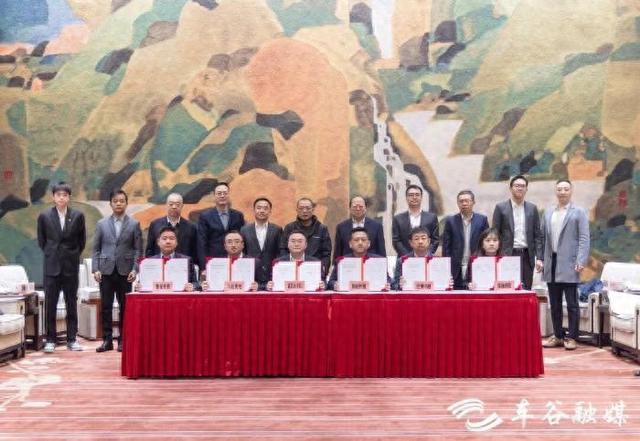
Group 1 - Wuhan Economic Development Zone held a signing event for 11 key projects with a total investment of 10.7 billion yuan, focusing on smart connected and electric vehicles, auto parts, green low-carbon, new materials, and intelligent manufacturing [1][8] - The Dito Automotive Parts Production and R&D Base project will produce key components for Geely, with an expected annual output value of 1.2 billion yuan upon full production [3] - The establishment of a joint venture, Visteon Xinyi (Wuhan) Automotive Electronics Co., aims to enhance automotive electronic product R&D capabilities in the region [4] Group 2 - The Baida Optoelectronics project plans to build a manufacturing base for high-voltage connection systems, with an expected annual output value of 2 billion yuan by 2030 [5] - The East Asia Synthetic project will enhance local automotive parts capabilities with a new production base and R&D center expected to start construction in 2026 [7] - Sunshine New Energy's project will focus on zero-carbon industrial platforms, while Wuhan Jinfa Technology will expand its new materials R&D and production base, both expected to contribute to local economic growth by 2026 [7]
“钻”在一线的内行处长——记“全省担当作为优秀干部”唐勇
Chang Sha Wan Bao· 2026-01-05 06:16
Core Insights - The article highlights the significant role of Tang Yong, the Director of the Investment Planning Department of Hunan's Industrial and Information Technology Department, in facilitating the transformation and upgrading of Hunan's manufacturing industry through proactive support for enterprises [11][13][19]. Group 1: Support for Enterprises - Tang Yong is recognized as a reliable "family member" for enterprises, always willing to help solve problems when they arise [13]. - In 2024, BYD Auto in Changsha received a 3.5 billion yuan national subsidy for new energy vehicles, which was expedited from a typical six-month process to just three months due to Tang's intervention [13]. - He emphasizes a clear philosophy: whenever enterprises have needs, he will do everything possible to assist them [13][14]. Group 2: Problem-Solving Approach - Tang Yong's approach includes balancing principles with flexibility, ensuring that policies are effectively utilized to address real-world challenges faced by businesses [13]. - He actively engages with enterprises to streamline processes, such as helping them avoid unnecessary costs and delays in obtaining necessary documentation for subsidies [14]. - His efforts have led to significant outcomes, such as facilitating the collaboration between Geely Auto and Changsha Meihua Auto, resulting in a successful project that enhanced both companies' operations [15]. Group 3: Reform and Innovation - Tang Yong is tasked with developing a high-quality research report and reform plan to establish a remanufacturing system for the engineering machinery sector, which is crucial for finding new growth avenues [19][20]. - The reform plan emphasizes practical measures that are actionable and relevant to the industry, aiming to create a comprehensive service capability from reliable repairs to deep remanufacturing [21]. - The expected export of remanufactured engineering machinery equipment is projected to exceed 3 billion yuan by 2025, with a growth rate of over 25% [23]. Group 4: Industry Expertise - Tang Yong is recognized for his deep understanding of the industry, often engaging in detailed discussions about technical issues and ensuring that proposed solutions can withstand scrutiny from experienced professionals [24][25]. - His extensive fieldwork, including visiting over 120 counties and engaging directly with workers and engineers, has informed the development of strategic plans for Hunan's automotive industry [26]. - The production of new energy vehicles in Hunan is expected to rise from less than 100,000 units in 2020 to over 1 million by 2025, showcasing the impact of his initiatives [26].
整车主线周报:2026年以旧换新政策落地,景气度向上-20260105
Soochow Securities· 2026-01-05 05:12
Investment Rating - The industry investment rating is "Overweight," indicating an expected outperformance of the industry index relative to the benchmark by more than 5% over the next six months [35]. Core Insights - The implementation of the vehicle trade-in policy in 2026 is expected to boost the industry's outlook, particularly for passenger vehicles, heavy trucks, and buses, with a focus on high-end electric vehicles and established export-oriented companies [2][26]. - The heavy truck segment is anticipated to see a sales volume of 800,000 to 850,000 units in 2026, reflecting a year-on-year increase of 3% [30]. - The bus segment is projected to maintain growth, with an estimated sales volume of 40,000 units in 2026, a 5% increase year-on-year [30]. - The motorcycle industry is expected to achieve total sales of 19.38 million units in 2026, a 14% increase, with large-displacement motorcycles projected to grow by 31% [27]. Summary by Sections Passenger Vehicles - The short-term outlook is positive due to the new subsidy policies, with expectations for a recovery in demand in Q1 2026. Key companies to watch include Jianghuai Automobile, Geely, Great Wall Motors, and BYD [2][26]. - The 2026 subsidy budget is projected at 125 billion yuan, which could drive an additional sales increase of 780,000 to 1.54 million units [15]. Heavy Trucks - The 2026 trade-in policy for heavy trucks has exceeded expectations, with subsidies remaining at previous levels. The anticipated sales volume for 2026 is optimistic, with a target of 800,000 to 850,000 units [30][19]. - Recommended companies in this segment include China National Heavy Duty Truck Group, Weichai Power, and FAW Jiefang [30]. Buses - The bus segment's policy has also exceeded expectations, with a projected sales volume of 40,000 units in 2026, reflecting a 5% year-on-year increase [30][18]. - Key recommendations include Yutong Bus and King Long [30]. Motorcycles - The motorcycle industry is expected to see a total sales volume of 19.38 million units in 2026, with large-displacement motorcycles projected to grow significantly [27]. - Recommended companies include Chunfeng Power and Longxin General [27].

