
宁波银行

Search documents
并表法国童装品牌,雅戈尔能否走出营收利润双降困局?
2 1 Shi Ji Jing Ji Bao Dao· 2025-09-02 08:36
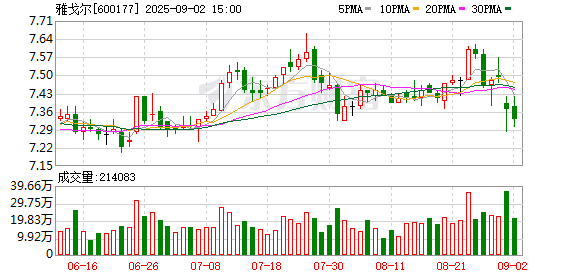
Core Viewpoint - YOUNGOR's recent acquisition of the French luxury children's clothing brand BONPOINT aims to enhance its fashion segment amidst declining revenues and profits in the first half of 2025 [2][3] Financial Performance - In the first half of 2025, YOUNGOR reported revenue of 5.11 billion yuan, a year-on-year decrease of 10.50%, and a net profit attributable to shareholders of 1.71 billion yuan, down 8.04% [2] - The fashion segment contributed a net profit of 238 million yuan, accounting for only 14% of the company's total net profit [2][3] - The investment segment, however, generated a net profit of 1.39 billion yuan, making up over 80% of the total net profit [7] Brand Strategy - YOUNGOR is implementing a multi-brand development strategy, managing eight brands including YOUNGOR, MAYOR, and HANP, and has recently integrated BONPOINT into its portfolio [3] - The fashion segment's revenue grew by 7.82% to 3.68 billion yuan in the first half of 2025, largely due to the inclusion of BONPOINT [3] Market Positioning - BONPOINT, established in 1975, targets new middle-class families in first- and second-tier cities, operating approximately 130 stores across 30 countries with an annual revenue of about 1.5 billion euros (approximately 1.15 billion yuan) [4] - The high-end children's clothing segment is seen as a potential growth area in a competitive apparel market [5] Investment Adjustments - YOUNGOR has been divesting financial assets, selling approximately 4.175 billion yuan worth of financial investments over the past year, which is about 10.13% of its audited net assets as of the end of 2024 [7] - The company is focusing on optimizing its investment structure, increasing stakes in strategic areas while reducing exposure to financial investments [8]


投资收益超去年全年,非息收入“支撑”长沙银行半年业绩
Hua Xia Shi Bao· 2025-09-02 07:51
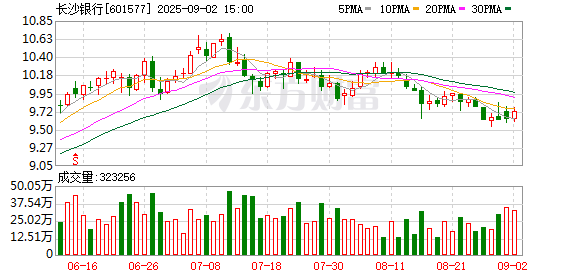
Core Viewpoint - Changsha Bank reported steady growth in its performance for the first half of 2025, with revenue increasing by 1.59% and net profit attributable to shareholders rising by 5.05%, marking the first interim dividend since its listing [2][3][10] Revenue and Profit Analysis - In the first half of 2025, Changsha Bank's operating income was 13.249 billion yuan, a year-on-year increase of 1.59%, while net profit attributable to shareholders was 4.329 billion yuan, up 5.05% [3] - The bank's net interest margin decreased to 1.87%, down 0.25 percentage points year-on-year, and net interest spread fell to 1.97%, down 0.30 percentage points [4] Income Structure - The contribution of net interest income to total revenue is declining, with net interest income at 9.659 billion yuan, down 1.74% year-on-year, accounting for 72.90% of total revenue, down from 75.37% in the same period last year [4] - Non-interest income reached 3.590 billion yuan, a year-on-year increase of 11.78%, driven primarily by investment income and net commission income, which grew by 118.82% and 14.60%, respectively [4][5] Investment Income - Investment income accounted for 88.69% of non-interest income, totaling 3.184 billion yuan, a significant increase of 118.82%, mainly due to gains from trading financial assets and other debt investments [5][6] - The balance of trading financial assets increased by 65.07% year-on-year to 182.429 billion yuan, with investment income from these assets rising by 62.31% [6][7] Market Conditions and Strategy - Despite a challenging bond market characterized by low interest rates and high volatility, Changsha Bank aims to enhance both investment scale and returns through strategic fund management [8][9] - The bank's investment strategy has shifted significantly since its listing, with investment income growing from 0.407 billion yuan in 2018 to 3.184 billion yuan in the first half of 2025, increasing its revenue share from 2.92% to 24.03% [8] Dividend Announcement - Changsha Bank's board approved a mid-term dividend plan, proposing a cash dividend of 2.00 yuan per 10 shares, totaling 804 million yuan, which represents 18.58% of net profit attributable to shareholders [10][11]
7家上市银行,首次公布!
Jin Rong Shi Bao· 2025-09-02 07:36
Core Viewpoint - The recent announcements of interim dividend plans by A-share listed banks highlight a significant trend towards enhancing shareholder returns, with major state-owned banks leading the way in dividend payouts exceeding 200 billion yuan in total [1][4]. Group 1: State-Owned Banks - Six major state-owned banks have announced their interim dividend plans for 2025, with a total proposed payout exceeding 200 billion yuan [1]. - Industrial and Commercial Bank of China (ICBC) leads with a proposed dividend of 1.414 yuan per 10 shares, totaling 503.96 billion yuan [1]. - Other state-owned banks, including Agricultural Bank of China, Bank of China, China Construction Bank, Bank of Communications, and Postal Savings Bank, have also outlined their respective dividend amounts [1]. Group 2: Joint-Stock Banks - China Merchants Bank, known as the "King of Retail," has announced its first interim profit distribution plan since its listing, proposing a cash dividend of 35% of its net profit attributable to ordinary shareholders for the first half of 2025 [2]. - Citic Bank plans to increase its interim dividend payout ratio to 30.7%, aiming to enhance investor returns and market confidence [2]. - Other joint-stock banks, including Ping An Bank, Minsheng Bank, and Huaxia Bank, have also confirmed their interim dividend plans with specific payout amounts [2]. Group 3: New Participants in Interim Dividends - Several banks, such as Changshu Bank, Ningbo Bank, and Su Nong Bank, have joined the ranks of those announcing interim dividends for the first time [3]. - Su Nong Bank plans to distribute 0.9 yuan per 10 shares, totaling 1.82 million yuan, marking its inaugural interim dividend [3]. - The focus on interim dividends is seen as a strategy to enhance shareholder satisfaction and align with regulatory expectations [3]. Group 4: Market Trends and Regulatory Influence - The introduction of the "National Nine Articles" has encouraged listed companies to adopt more frequent dividend distributions, with 23 A-share listed banks implementing interim dividends in 2024, totaling over 250 billion yuan [4]. - The trend towards interim dividends is viewed as a means to improve the stability and sustainability of dividend payouts, enhancing liquidity and cash flow certainty for investors [4][5]. - Analysts suggest that the shift towards interim dividends reflects a robust operational foundation and a commitment to shareholder returns, positively influencing market sentiment [5].


业绩回升,夯实质效
HTSC· 2025-09-02 07:16
Investment Rating - The report maintains an "Overweight" rating for the banking sector [8]. Core Insights - The banking sector has shown a recovery in performance, with revenue and net profit growth of +1.0% and +0.8% year-on-year for H1 2025, respectively, indicating an improvement compared to Q1 2025 [14][29]. - Key focus areas include accelerated non-loan driven expansion, stable credit issuance, a recovery in deposits from a low base, narrowing interest margin declines leading to a recovery in net interest income, improved growth in non-interest income, and ongoing retail risk clearance [1][2][3]. Summary by Sections Market Overview - The banking sector has experienced a slight rebound with a +13.4% absolute return year-to-date as of August 29, 2025, although it slightly underperformed the broader market [13]. - The report anticipates a potential divergence in sector performance, favoring high-quality regional banks and high-dividend Hong Kong-listed banks for investment [13]. Profitability Breakdown - The net interest margin for listed banks was measured at 1.41% for H1 2025, showing a slight improvement from Q1 2025 [3][14]. - Non-interest income has seen a year-on-year increase of 10.7% in H1 2025, driven by a recovery in capital markets [3][15]. - The report highlights a need to monitor interest rate risks due to recent market volatility [3][15]. Asset and Liability Management - Total assets and liabilities for listed banks grew by +9.6% year-on-year as of H1 2025, with significant contributions from non-loan driven growth [2][16]. - The report notes a recovery in deposits, with a year-on-year increase of +8.3% in H1 2025, attributed to a low base effect from the previous year [2][17]. Risk Assessment - The non-performing loan (NPL) ratio remained stable at 1.23% as of H1 2025, with a provision coverage ratio of 238% [4][18]. - The report indicates a slight increase in retail loan NPLs, suggesting ongoing monitoring of retail credit risks [4][18]. Market Outlook - The report suggests that the narrowing of interest margin declines and reduced non-interest income volatility will support revenue and profit growth for banks in the near term [5][14]. - It emphasizes the importance of identifying quality stocks with structural opportunities in the banking sector, particularly those with strong performance and growth potential [5][14].



中小银行也入局券商开户导流
财联社· 2025-09-02 05:36
资本市场的持续火热,会对银行的各项业务造成何种程度影响? 日前, 财联社记者查询宁波银行官方渠道发现,该行已在APP首页等渠道为券商开户导流,发布了银证通服务方案并提供相应福利,成为 近期少见的加入这一"战团"的中小银行。 财联社记者注意到,自8月以来,已经有中国银行、招商银行、中信银行、兴业银行等多家全国性商业银行通过自家APP为证券开户引流。 在业内人士看来,银行引导新客户开通银证通并为券商引流,一方面是为了顺应资本市场的变化并获得额外收入;另一方面,银行对于可能 存在的存款流失问题也存在一定程度的担忧。相比之下,大力推广固收+更为银行所青睐。 城商行入局券商开户导流 宁波银行"也干了" 近日,财联社记者查询发现,宁波银行已在其APP首页位置为券商开户进行了导流服务,其提供的银证通服务方案被放在显著位置。 财联社记者从宁波银行银行相关人士获悉,该行的确针对9月以来资本市持续火热、投资者热情高涨的机会,发布了上述银证通服务方 案。"也是刚发布未久。" 财联社记者注意到, 自9月以来,目前已经中国银行、招商银行、兴业银行参与了证券开户推广活动。 这些银行基本都在APP首页醒目位 置展示了开户引流联接,推销、引 ...

A股银行股逆势上涨,沪农商行、渝农商行涨超3%
Xin Lang Cai Jing· 2025-09-02 02:11
Group 1 - The main A-share indices experienced a general decline, while bank stocks showed an upward trend [1] - Notable gainers included Hu Nong Commercial Bank and Yu Nong Commercial Bank, both rising over 3% [1] - Other banks such as Qilu Bank, Ningbo Bank, Agricultural Bank of China, Nanjing Bank, Hangzhou Bank, China Merchants Bank, Chengdu Bank, Jiangyin Bank, and Changsha Bank all saw increases of over 1% [1]
AI如何赋能企业汇率避险?
Zhong Guo Jing Ying Bao· 2025-09-02 00:20
Core Viewpoint - The article discusses the challenges and solutions related to foreign exchange risk management for enterprises in the context of fluctuating RMB exchange rates, emphasizing the role of AI and technology in enhancing risk management capabilities [1][2][6]. Group 1: Exchange Rate Fluctuations - On September 1, the People's Bank of China announced that the central parity rate of the RMB against the USD was 7.1072, a depreciation of 42 basis points from the previous day [1]. - In August, the RMB appreciated by 466 basis points against the USD, highlighting the volatility in exchange rates that enterprises must manage [1]. Group 2: Challenges Faced by Enterprises - Enterprises face three main types of exchange rate risks: cash flow loss due to currency fluctuations in cross-border transactions, financial risks from currency translation in consolidated financial statements, and impacts on product competitiveness and profitability [2][5]. - The long order cycles (3-6 months) exacerbate cash flow loss risks, directly affecting profits [2]. Group 3: Technological Solutions - Shanghai Bank is developing AI-driven tools for risk diagnosis and automated hedging solutions to help SMEs manage market risks more efficiently [1][2]. - The integration of big data, cloud computing, and AI in products like "Foreign Exchange Gold Manager" aims to enhance risk management capabilities for enterprises [1][2]. Group 4: Online Trading Benefits - Online trading provided by Shanghai Bank allows enterprises to match their cash flow characteristics, enabling efficient foreign exchange hedging operations [3]. - The transparency and real-time nature of online trading improve market opportunity management and enhance fund management efficiency [3]. Group 5: AI Applications in Risk Management - AI applications in foreign exchange risk management are increasing, with banks like Standard Chartered and Citibank collaborating with Ant International to develop AI-driven solutions for real-time risk management [4][5]. - AI can simplify complex risk management strategies, monitor exchange rate fluctuations, and optimize hedging operations, thereby reducing operational difficulties for enterprises [5]. Group 6: Recommendations for Enterprises - Enterprises are encouraged to incorporate exchange rate fluctuations into daily financial decisions and focus on core business operations to mitigate negative impacts [6]. - Establishing dedicated risk management teams and implementing a tiered risk warning mechanism can enhance the effectiveness of foreign exchange risk management [5][6].
上海国际港务(集团)股份有限公司关于收到中国银行间市场交易商协会《接受注册通知书》的公告
Shang Hai Zheng Quan Bao· 2025-09-01 21:13
Core Viewpoint - Shanghai International Port Group has received the "Acceptance Registration Notice" from the China Interbank Market Dealers Association, allowing the company to register and issue debt financing instruments [2][3]. Group 1: Company Actions - The company held its 54th meeting of the 3rd Board of Directors on March 28, 2025, where it approved the proposal for registering and issuing debt financing instruments [1]. - The company plans to conduct debt financing tool issuance according to the requirements of the "Acceptance Registration Notice" and will fulfill its information disclosure obligations in a timely manner [3]. Group 2: Registration Details - The registration of the company's debt financing tools is valid for two years from the date of the "Acceptance Registration Notice" and can include various products such as super short-term financing bonds, short-term financing bonds, medium-term notes, perpetual notes, asset-backed securities, and green debt financing instruments [2]. - A consortium of banks, including Shanghai Bank, China Construction Bank, and others, will act as joint lead underwriters for the issuance [2].


2375亿!17家上市银行中期分红大手笔
Shen Zhen Shang Bao· 2025-09-01 16:41
Core Viewpoint - The listed banks in China have shown strong performance in the first half of the year and are preparing to reward investors with significant mid-term dividends, reflecting their profitability and commitment to shareholder returns [2][4]. Group 1: Dividend Distribution - Among the 42 listed banks in A-shares, nearly half will implement mid-term dividends for 2025, with 17 banks already disclosing their plans, totaling 237.54 billion yuan [2]. - The six major state-owned banks lead in dividend distribution, with Industrial and Commercial Bank of China (ICBC) at the forefront, distributing 50.396 billion yuan, followed by China Construction Bank and Agricultural Bank of China with 48.605 billion yuan and 41.823 billion yuan respectively [2]. - The total dividends from the six major state-owned banks account for 86% of the total dividends announced by the 17 banks [2]. Group 2: Specific Bank Plans - Among joint-stock banks, CITIC Bank, Minsheng Bank, Ping An Bank, and Huaxia Bank have announced their mid-term dividend plans, with CITIC Bank proposing a total of 10.461 billion yuan [3]. - In the city and rural commercial banks, seven banks have announced mid-term dividends, including Ningbo Bank and Shanghai Bank, with Shanghai Bank proposing a cash dividend of 3 yuan per 10 shares [3]. - Four banks have a dividend payout ratio exceeding 30%, including Shanghai Bank and Postal Savings Bank, indicating a strong commitment to returning value to shareholders [3]. Group 3: Market Implications - The expansion of banks implementing mid-term dividends and their willingness to distribute reflects the resilience of the banking sector's profitability and a positive response to shareholder return demands [4]. - This trend indicates improved cash flow and capital management capabilities among certain banks, which may help boost market confidence and attract long-term value investors [4].



让贷款成本“全透明” 北京市开展明示企业贷款综合融资成本工作
Bei Ke Cai Jing· 2025-09-01 14:52
Core Insights - The introduction of a "Loan Clarity Document" by banks enhances transparency in loan costs for enterprises, transforming previously unclear financing into a clear understanding of costs [1][2] - The initiative aims to reduce unreasonable loan fees, such as excessive guarantee fees and intermediary fees, thereby lowering overall financing costs for businesses [2] - The pilot program has received positive feedback from various enterprises and is set to expand its coverage to benefit more companies [3] Group 1 - The "Loan Clarity Document" is a comprehensive cost list that details interest and non-interest expenses associated with loans, including payment methods and cycles, ultimately presenting the actual annualized interest rate [1] - The initiative has successfully prevented enterprises from falling victim to high-cost intermediary loans by clearly outlining the true costs involved [2] - Banks are actively engaging with enterprises to customize financial services, leading to significant cost savings for businesses, such as waiving certain fees [2] Group 2 - The pilot program is currently implemented across all of Beijing, covering various types of loans for technology-based SMEs, and is well-received by the business community [3] - The People's Bank of China in Beijing plans to summarize the pilot experience and gradually expand the initiative to further reduce social financing costs and improve financial services for the real economy [3]