比亚迪

Search documents
新能源车全年渗透率首超燃油车
Mei Ri Shang Bao· 2026-01-14 23:16
Core Insights - In 2025, China's passenger car retail reached 23.744 million units, a year-on-year increase of 3.8%, with new energy vehicles (NEVs) surpassing 57% penetration rate, marking a significant shift in market dynamics [1] - BYD topped the global pure electric vehicle sales with 4.6024 million units, while China's total vehicle exports exceeded 7 million units, setting a new historical record [1] - The competition in the automotive market has shifted from price wars to value comparisons, with models like Geely's Xingyuan and Wuling's Hongguang MINIEV leading their respective segments [1] Industry Performance - In the 2025 sales rankings, domestic brands occupied seven out of the top ten spots, with NEVs leading significantly; Geely's Xingyuan sold 465,775 units, becoming the annual "dark horse" [2] - Wuling Hongguang MINIEV ranked second with 435,599 units sold, contributing nearly half of SAIC-GM-Wuling's NEV sales [2] - The top three models included Nissan's Sylphy, which sold 319,990 units, maintaining a strong market presence despite the rise of NEVs [2] New Entrants and Innovations - Among new entrants, Xiaomi's SU7 performed well with 258,164 units sold, but faced challenges due to safety concerns and controversies [3] - Leap Motor led the new force segment with 596,600 units sold, achieving a completion rate of 119.3%, marking it as the fastest-growing new force brand [3] Upcoming Models and Market Trends - The 2026 automotive market is set to intensify with the release of several flagship models, focusing on diverse technologies and smart features [4] - New models include Xiaomi's SU7, which is set to launch at a starting price of 229,900 yuan, and NIO's flagship SUV ES9, aimed at competing with luxury models like BMW X7 and Mercedes GLS [4] - The market is expected to shift from "incremental expansion" to "stock competition," with domestic brands pushing for high-end development and joint ventures accelerating technological transitions [5]

导远科技拟赴港IPO,客户集中度高
Zhong Guo Zheng Quan Bao· 2026-01-14 23:03
Group 1 - The core viewpoint of the article is that Guangdong Daoyuan Technology Co., Ltd. has submitted its listing application to the Hong Kong Stock Exchange, aiming to capitalize on the growing space-time intelligence market with a comprehensive product system [1] Group 2 - Daoyuan Technology provides a full-stack product system for the global space-time intelligence market, featuring a three-tier architecture: chips, modules, and systems, which supports physical AI applications across various sectors [2] - The company is the largest provider of space-time intelligence solutions globally, with a market share of 27.6% based on the projected vehicle installation volume in 2024 [2] - By December 25, 2025, Daoyuan Technology aims to achieve a fully autonomous manufacturing capacity of over 1 million units in China, leading the industry with an annual production capacity exceeding 3 million sets [2] Group 3 - Daoyuan Technology is expanding its technology into emerging fields such as robotics, engineering machinery, and renewable energy systems, enhancing the capabilities of intelligent systems [3] Group 4 - The company faces high customer concentration, with a significant portion of its revenue generated from a limited number of clients, which poses a risk if any major client is lost [4] - In the first three quarters of 2023, 2024, and 2025, revenue from the top five clients accounted for 84.4%, 85.3%, and 88.8% of total revenue, respectively, with the largest client contributing 42.2%, 47%, and 60.4% of total revenue during the same periods [4] - Daoyuan Technology has incurred substantial operating expenses and net losses, with operating expenses of 422 million, 286 million, and 171 million yuan for the first three quarters of 2023, 2024, and 2025, respectively, and adjusted net losses of 346 million, 182 million, and 50 million yuan [4]
“新广货”彰显中国智造全球竞争力
2 1 Shi Ji Jing Ji Bao Dao· 2026-01-14 22:54
Group 1 - The core viewpoint of the articles highlights the significant growth of China's foreign trade, with a total import and export value reaching 45.47 trillion yuan in 2025, marking a 3.8% year-on-year increase, and maintaining its position as the world's largest goods trading nation [1] - Guangdong province plays a crucial role in China's foreign trade, consistently accounting for over 20% of the national total, showcasing its evolution from labor-intensive manufacturing to a competitive global brand cluster [1][2] - The participation of over 530 companies from Guangdong at the CES in Las Vegas illustrates the province's transformation from "manufacturing" to "intelligent manufacturing," emphasizing its strong competitive edge in the global market [1] Group 2 - The globalization of "Guangdong goods" reflects the province's deep integration into the global value chain, transitioning from imitation to independent research and brand development [2] - Major companies like OPPO and vivo have over 60% of their sales from overseas, while DJI holds approximately 70% of the global consumer drone market, indicating Guangdong's significant presence in international markets [2] - The export of industrial robots from China is projected to grow by 48.7% in 2025, with the Greater Bay Area contributing about one-third of the national export volume [2] Group 3 - Guangdong enterprises are leading the trend of establishing overseas production bases, with companies like BYD and Midea setting up factories in various countries, indicating a shift from being the "world's workshop" to becoming a "nurturing ground for multinational enterprises" [3] - The new "Guangdong goods" integrate advanced technology, sustainability, and cultural elements, resulting in high-value, intelligent products that compete on quality, technology, and brand rather than just price [3] - The story of Guangdong exemplifies China's transition towards becoming a "global innovation workshop," driven by innovation and efficiency honed in a large domestic market [3]

产销连续3年保持3000万辆以上规模 汽车产业竞争力源自硬实力(经济聚焦)
Ren Min Ri Bao· 2026-01-14 21:55
Core Insights - The continuous advancement of electrification technology and the application of cutting-edge technologies have led to sustained growth in China's automotive production and sales, reflecting the resilience and dynamic momentum of the economy [1] Group 1: Automotive Production and Sales - China's automotive production and sales have maintained a scale of over 30 million units for three consecutive years, ranking first globally for 17 years [1] - The production and sales of new energy vehicles (NEVs) are projected to reach 16.626 million and 16.49 million units respectively in 2025, with year-on-year growth of 29% and 28.2%, making up 47.9% of total new car sales [2] Group 2: Technological Advancements - The average range of pure electric passenger vehicles in China is expected to approach 500 kilometers by 2025, with rapid adoption of 800V high-voltage silicon carbide platforms and fast-charging technology [2] - The integration of various technological routes, including electrification, efficient internal combustion engines, hydrogen fuel, and synthetic fuels, is advancing, with China's "super electric hybrid technology" becoming a successful example for reverse technology export [2] Group 3: Export Growth - In 2025, China's NEV exports are expected to reach 2.615 million units, doubling year-on-year, with passenger vehicle exports at 2.532 million units and commercial vehicle exports at 83,000 units, showing significant growth [3] Group 4: Intelligent Driving and Automation - Huawei's ADS 5 is transitioning from technology validation to mass production, with over 1 million units equipped and a user engagement rate exceeding 95%, indicating a shift towards large-scale deployment of autonomous driving technology [4] - The proportion of new passenger vehicles with L2-level combined auxiliary driving functions has exceeded 60%, with the first L3-level conditional autonomous driving models receiving approval [4] Group 5: Industry Transformation and Profitability - Measures to combat "price wars" and improve industry standards have been implemented, leading to a 4.4% profit growth in the automotive industry from January to October 2025, accelerating to 7.5% by November [6] - The industry is transitioning from resource-dependent, low-cost competition to a focus on technological innovation and value upgrading, with high-end domestic brands seeing over 40% year-on-year sales growth [6] Group 6: Future Outlook - The Chinese automotive industry is expected to continue its high-quality development and maintain stable market operations in 2026, supported by the smooth transition of new policies [7]
Will Tesla's Baltic Push Revive Its Momentum in Europe?
ZACKS· 2026-01-14 18:10
Core Insights - Tesla has established two new subsidiaries in Estonia and Latvia to enhance its presence in Northern Europe, with Tesla Latvia SIA registered on November 7, 2025, and Tesla Estonia OÜ on December 16, 2025, both owned by Tesla International B.V. [1] Group 1: Market Entry Strategy - Tesla's strategy in these new markets focuses on service and support, aiming to serve existing Tesla owners while preparing for future vehicle deliveries [2] - This approach is similar to Tesla's previous expansion into Lithuania, where the company first established a corporate presence, followed by a pop-up store and a permanent service center [3] Group 2: Sales and Product Strategy - In early 2025, Tesla faced a decline in sales due to a challenging European market, prompting the company to target smaller, tech-savvy countries like Estonia and Latvia for new growth opportunities [4] - To attract price-sensitive consumers, Tesla is promoting its more affordable Model 3 and Model Y Standard variants, which lower the entry cost into the Tesla ecosystem [5] Group 3: Software and Infrastructure Development - Tesla is advancing its software capabilities in Europe, particularly its Full Self-Driving (FSD) features, launching an FSD ride-along program in the fourth quarter of 2025 and extending demonstrations until March 2026 [6] - The expansion in the Baltic region is expected to reshape the local EV market, creating skilled jobs and accelerating EV adoption, while also encouraging infrastructure investment from competitors and local governments [7][8] Group 4: Competitive Landscape - BYD Co. is rapidly expanding its European presence, planning to double its sales network to around 2,000 outlets by the end of 2026, with European sales tripling in 2025 to over 80,000 vehicles [9] - Li Auto Inc. is also accelerating its overseas expansion, establishing an R&D presence in Munich, Germany, to better understand the European market [10]


ChargePoint (NYSE:CHPT) FY Conference Transcript
2026-01-14 17:02
ChargePoint Conference Call Summary Company Overview - **Company**: ChargePoint - **Industry**: Electric Vehicle (EV) Charging - **Key Executives**: Rick Wilmer (CEO), Mansi Khetani (CFO) Core Insights and Arguments - **Market Position**: ChargePoint is emerging from a challenging period and expects steady growth due to a less competitive landscape and new innovations in the market [2][5] - **Financial Improvements**: Significant debt restructuring has reduced outstanding debt from $340 million to approximately $157 million, extending maturity to 2030 and cutting annual interest expenses by about $10 million [3][43][44] - **Operational Efficiency**: Operating expenses (OpEx) have decreased from nearly $90 million per quarter to the mid-$50 million range, indicating improved cash management [5] - **Growth Strategy**: Focus on partnerships with grid builders like Eaton to lower infrastructure costs and enhance operational efficiency [6][26] - **Market Share**: ChargePoint holds a 70% market share in Level 2 charging in North America and aims to expand its presence in Europe with new product offerings [21][56] Industry Dynamics - **EV Adoption**: The company emphasizes that EV adoption is crucial but is also influenced by charging infrastructure availability and costs [11] - **Competitive Landscape**: The EV charging market has seen a reduction in competition, with many smaller players struggling to secure funding, leading to consolidation [19][20] - **Partnerships**: Collaborations with auto OEMs and energy sector players are essential for enhancing customer experience and driving growth [7][8][26] Financial Metrics and KPIs - **Active Ports**: As of the last quarter, ChargePoint managed approximately 400,000 active ports, which are critical for generating recurring revenue [34] - **Subscription Revenue**: The company reported nearly $170 million in annual recurring revenue from subscriptions, with a gross margin of 63% [34][36] - **Cash Flow Management**: The average cash burn has been halved compared to the previous year, with a focus on reaching cash flow break-even soon [36] Innovations and Product Development - **Next-Gen Charging Solutions**: ChargePoint is developing a next-gen DC charger that separates AC to DC conversion, significantly reducing costs and increasing capacity [27][28] - **Home Charging Solutions**: Innovations include smart panel technology that allows for efficient home energy management, enabling vehicle-to-home power during outages [29][31] - **Software Integration**: The company has integrated software solutions from acquisitions to create a scalable platform for managing public DC fast chargers and fleet telematics [56] Customer Segmentation - **Market Segments**: ChargePoint serves two main segments: fleet (mission-critical electric vehicle operations) and commercial (discretionary charging installations) [22][23] - **Retail Demand**: Increasing EV penetration in retail areas is driving demand for charging solutions, as businesses seek to attract customers by offering charging facilities [24][25] Future Outlook - **Growth Expectations**: ChargePoint anticipates a return to growth, with significant customer wins and partnerships expected to be announced [10][66] - **European Expansion**: The company plans to leverage favorable regulatory conditions in Europe to drive growth, with new products set to launch in the region [56][57] - **Cost Management**: Ongoing efforts to reduce product costs through lower-cost manufacturing and innovative designs are expected to enhance gross margins [45][47] Additional Considerations - **Tariffs Impact**: Tariffs have negatively affected the company's bottom line, but operations in Europe are less impacted due to direct sales [61][62] - **Inventory Management**: ChargePoint is transitioning from high inventory levels to a more balanced approach, expecting to generate cash flow as inventory is sold down [62][63] This summary encapsulates the key points discussed during the ChargePoint conference call, highlighting the company's strategic direction, financial health, and market dynamics within the EV charging industry.

Volkswagen Falls to Third Place in China's Competitive Auto Market
ZACKS· 2026-01-14 16:46
Core Insights - Volkswagen AG has fallen to third place in China's auto market, overtaken by Geely Automobile Holdings Limited, marking a significant decline for the German automaker in the world's largest vehicle market [1][9] - The shift in market leadership indicates increasing pressure on traditional foreign automakers as domestic brands strengthen their positions [1][3] Market Share Dynamics - Volkswagen's joint ventures in China accounted for a 10.9% share of retail vehicle sales, down from 12.2% in 2024, while Geely's market share increased to 11% from 7.7% in 2025 [2] - BYD remains the market leader but saw its share decrease to 14.7% from 16.2% [2] Competitive Landscape - Established global automakers like Volkswagen, General Motors, and Toyota are losing ground to Chinese competitors due to a slower transition to electric vehicles, as Chinese consumers increasingly favor EVs supported by government incentives [3] Strategic Responses - Volkswagen is enhancing its localization efforts in China, including partnerships with Xpeng and Horizon Robotics to develop electric vehicle technologies and smart vehicle chips tailored for the Chinese market [4] - The company is also exploring opportunities to export vehicles developed and manufactured in China to international markets, similar to strategies employed by Chinese automakers like BYD [5] Global Performance - Volkswagen delivered approximately 4.73 million vehicles globally, with around 382,000 fully electric vehicles delivered in 2025, reflecting a slight decline of 0.2% [6] - Battery-electric models constituted 8.1% of Volkswagen's total vehicle deliveries for the year [6] Competitor Performance - BYD achieved sales of 4.6 million vehicles in 2025, a 7.7% increase from 2024, with sales evenly split between fully electric vehicles and plug-in hybrids [7] - Geely sold 3.02 million vehicles, meeting its target, and has set a sales goal of 3.45 million vehicles for 2026, indicating a projected growth of about 14% from 2025 [8]

China, EU Agree to Ease Dispute Over Chinese EV Imports
ZACKS· 2026-01-14 16:20
Group 1 - China and the European Union (EU) are taking steps to ease their dispute over EU imports of Chinese electric vehicles (EVs), with a focus on setting minimum import prices to offset subsidies [1][9] - The EU remains open to EVs from around the world, provided competition is fair, and is willing to consider price commitments under World Trade Organization rules [2] - China's Commerce Ministry supports the move as beneficial for China-EU trade relations and the global trading system [3] Group 2 - Tensions escalated after the EU launched an anti-subsidy investigation into Chinese EVs, imposing countervailing tariffs between 7.8% and 35.3% for five years starting in late 2024 [4] - In the first half of 2025, China-made vehicles accounted for 6% of EU auto sales, a 5% increase year-over-year [5] Group 3 - BYD Company Limited significantly increased its market presence in Europe, outselling Tesla in Germany and the UK, with annual sales in Germany rising to 23,306 vehicles, an eightfold increase, while Tesla's sales dropped nearly 50% to 19,390 [6] - Geely Automobile Holdings Limited expanded into new European markets, launching the Geely EX5 in Poland and Italy in 2025 [7]
Thanks to Trump, Elon Musk’s Prophesy About Chinese EV Companies Might Come True
Yahoo Finance· 2026-01-14 15:26
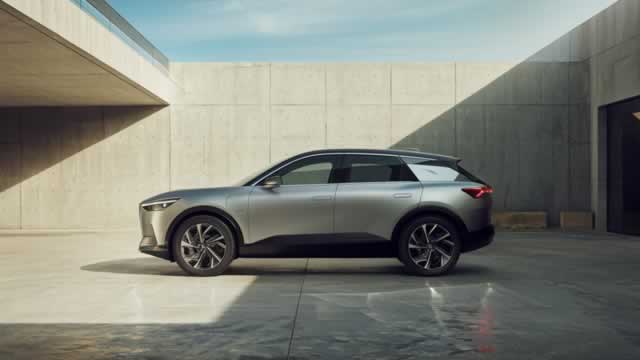
Group 1 - Chinese electric vehicle (EV) companies are becoming strong competitors to Western automakers, gaining market share not only in China but also in Western markets [1] - Elon Musk, during Tesla's Q4 2023 earnings call, acknowledged the competitiveness of Chinese car companies and suggested they could dominate globally if trade barriers are not imposed [2] - The U.S. has implemented significant tariffs on EV imports from China, quadrupling them to 100% in 2024, with Canada following suit and the EU also introducing countervailing duties ranging from 7.8% to 35.3% [5] Group 2 - Several countries have imposed tariffs to protect their markets from Chinese EV imports, with some tariffs being more severe than others, effectively limiting imports [4] - The EU is considering a shift from tariffs to a "price floor" approach, which would allow Chinese EV companies to avoid tariffs by selling above a certain price threshold [6] - China's government has welcomed the EU's potential shift in trade policy, viewing it as beneficial for China-EU economic relations and the international trade order [7]
10万港人,到广东养老
36氪· 2026-01-14 13:13
Core Viewpoint - The trend of Hong Kong retirees moving to the Greater Bay Area for a more affordable and fulfilling retirement lifestyle is gaining momentum, driven by lower living costs and better quality of life compared to Hong Kong [4][5][6]. Group 1: Retirement Lifestyle in the Greater Bay Area - A retired Hong Kong elder estimates that his retirement savings would last 20 years in Hong Kong but can stretch to 60 years in the Greater Bay Area due to lower living costs [6]. - Many retirees are sharing their experiences on platforms like YouTube, with popular videos on this topic receiving up to 600,000 views, indicating a growing interest in this lifestyle change [6]. - Official data shows that nearly 100,000 seniors aged 65 and above have settled in Guangdong Province, with a 40.5% increase over the past decade [6]. Group 2: Housing and Living Costs - Retirees like Li Miaoyan have purchased spacious homes in the Greater Bay Area for significantly lower prices compared to Hong Kong, with her 140 square meter home costing around 1.7 million HKD (approximately 1.55 million RMB) [6]. - Living expenses in the Greater Bay Area are considerably lower, with estimates suggesting that a monthly budget of 10,000 HKD is sufficient for a comfortable lifestyle [13]. - The cost of utilities and dining out is drastically reduced, with parking fees dropping from 30 HKD per hour in Hong Kong to 5 HKD in the Greater Bay Area [13]. Group 3: Government Initiatives and Support - The Hong Kong government has initiated programs to support elderly residents moving to Guangdong, including the "Guangdong Care Home Service Plan," which subsidizes care for eligible seniors [7][25]. - The plan has expanded to include 24 care homes in the Greater Bay Area, providing a viable alternative for Hong Kong seniors facing long waiting times for local care facilities [26][27]. - The government also offers financial support through a monthly allowance for seniors who meet certain criteria, making it easier for them to afford living in the Greater Bay Area [29]. Group 4: Challenges and Considerations - Despite the benefits, concerns about healthcare access and quality remain significant for retirees considering a move to the Greater Bay Area [32][34]. - Many retirees are unfamiliar with the local healthcare system and may need to purchase additional health insurance to cover potential medical expenses [35]. - The limited availability of high-quality care homes in Hong Kong, with long waiting times, further incentivizes the move to the Greater Bay Area [24][25].